

.
BS ZOLOGY 6th SEMESTER
ROLL #4029
Fusion of gametes
 Fertilization accomplishes two things:

Sex (combining genes from two genomes)

Reproduction (produce offspring)
1) Sperm formation and structure
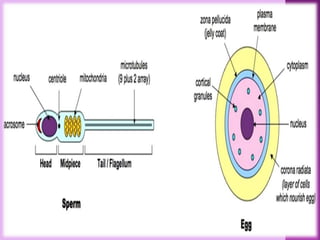
2) Egg structure and function
3) Interactions between sperm and eggs
4) Chemoattraction
5) Acrosome reaction Binding and fusion
6) Prevention of polyspermy
7) Egg activation
8) Pronuclear fusion
9) Mammalian fertilization
6
 All materials necessary to begin development are
stored in the egg.
 Proteins
 yolk (made in other organs (liver, fat bodies),
transported to egg.
 Ribosomes and tRNA
 -burst of protein synthesis after fertilization.
 mRNA
 -encode proteins for use in early development
 -some localized regionally.
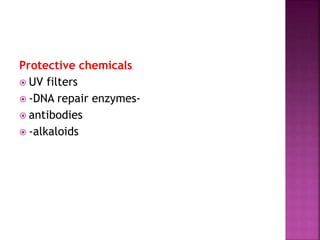
Protective chemicals
 UV filters
 -DNA repair enzymes-
 antibodies
 -alkaloids
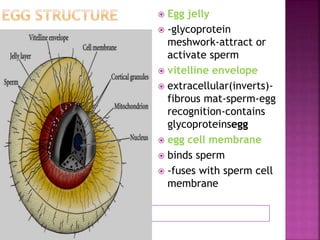
 Egg jelly
 -glycoprotein
meshwork-attract or
activate sperm
 vitelline envelope
 extracellular(inverts)-
fibrous mat-sperm-egg
recognition-contains
glycoproteinsegg
 egg cell membrane
 binds sperm
 -fuses with sperm cell
membrane
 1. Chemoattraction of sperm to egg
 -soluble molecules released by egg
 2. Exocytosis of the acrosome
 -stimulated by binding of egg molecules
 3. Binding of sperm to the extracellular envelope
 -usually a multi-step process
 -binding molecules and receptors located on each
gamete
 4. Passage of sperm through the extracellular
envelope
 5. Fusion of the egg and sperm cell membranes
 Pronuclear fusion: sperm and egg nuclei
(pronuclei) meet, fuse;
 development initiated
1) Acrosome reaction :fusion
of acrosome and cell
membranes-releases
acrosome contents.
2) Acrosome contains
enzymes
3) that digest jelly layer
4) Exposed sperm membrane
5) contains proteins that bind
6) to egg receptors
7) Sperm acrosomal process
8) membrane fuses with egg
 Why?
 More than one sperm entering
 an egg results in polyploidy;
 Usually eventual death.
 There are two types of block of polyspermy.
1)Slow block of polyspermy
2)Fast block of polyspermy
. The fast block is electrical and is mediated by
sodium ions the egg membrane resting potential
rises, and sperm can no longer fuse with the egg.
Sperm-binding
receptors
Jelly coat
Acrosome
Actin
Sperm
head
Basal body
(centriole)
Sperm plasma
membrane
Sperm
nucleusContact
Acrosomal
reaction
Acrosomal
process
Contact and fusion
of sperm and egg
membranes
Entry of sperm
nucleus
Cortical reaction
Fertilization
envelope
Egg plasma
membrane
Vitelline layer
Hydrolytic enzymes
Cortical
granule
Fused plasma
membranes
Perivitelline
space
Cortical granule
membrane
EGG CYTOPLASM
The slow block is physical and is mediated by calcium
ions. A wave of calcium ions propagates from the point
of sperm entry, causing the cortical granules to fuse
with the egg cell membrane. The released contents of
the granules cause the vitelline membrane to rise and
to harden into the fertilization envelope.
In mammals, blocks to polyspermy include the
modification of the zona proteins by the contents of the
cortical granules. Sperm can no longer bind to the
zona.
 Fertilization results in:
 1. merging of two haploid nuclei
 2. initiating the processes that start development
 These events happen in the cytoplasm
 -occur without nuclear involvement
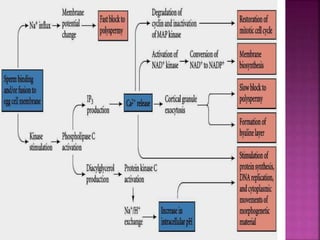
 Sperm fusion activates egg metabolism
 stimulates a preprogrammed set of metabolic
events into action
 The sharp rise in Ca2+ in the egg’s cytosol
increases the rates of cellular respiration and
protein synthesis by the egg cell
 Chemical signals from cortical cause H+ to be
transported out --> increase in pH
 Nuclei fuse
 Egg/sperm differences
 Egg contains proteins, mRNA not found in sperm
 Ca2+ injection, temperature shock can cause artificial
activation
 With these rapid changes in metabolism, the egg
is said to be activated
15) The male pronucleus and the female
pronucleus migrate toward each other,
replicating DNA as they move.
16 ) In sea urchins, the two pronuclei
merge and a diploid zygote nucleus is
formed. In mammals, the pronuclei
disintegrate as they approach each other,
and their chromosomes gather around a
common metaphase plate.
17) Some genes are transmitted differently depending
on whether they are from the egg or the sperm.
Methylation differences determine if these genes are
to be expressed in the early embryo.
18) Micro tubular changes cause cytoplasmic
movements. These rearrangements of cytoplasm can
be critical in specifying which portions of the egg are
going to develop into which organs.
Fertilization
Fertilization

Fertilization

  • 1.
  • 2.
    BS ZOLOGY 6thSEMESTER ROLL #4029
  • 3.
  • 4.
     Fertilization accomplishestwo things:  Sex (combining genes from two genomes)  Reproduction (produce offspring)
  • 5.
    1) Sperm formationand structure 2) Egg structure and function 3) Interactions between sperm and eggs 4) Chemoattraction 5) Acrosome reaction Binding and fusion 6) Prevention of polyspermy 7) Egg activation 8) Pronuclear fusion 9) Mammalian fertilization
  • 6.
  • 9.
     All materialsnecessary to begin development are stored in the egg.  Proteins  yolk (made in other organs (liver, fat bodies), transported to egg.  Ribosomes and tRNA  -burst of protein synthesis after fertilization.  mRNA  -encode proteins for use in early development  -some localized regionally.
  • 10.
    Protective chemicals  UVfilters  -DNA repair enzymes-  antibodies  -alkaloids
  • 12.
     Egg jelly -glycoprotein meshwork-attract or activate sperm  vitelline envelope  extracellular(inverts)- fibrous mat-sperm-egg recognition-contains glycoproteinsegg  egg cell membrane  binds sperm  -fuses with sperm cell membrane
  • 13.
     1. Chemoattractionof sperm to egg  -soluble molecules released by egg  2. Exocytosis of the acrosome  -stimulated by binding of egg molecules  3. Binding of sperm to the extracellular envelope  -usually a multi-step process  -binding molecules and receptors located on each gamete  4. Passage of sperm through the extracellular envelope  5. Fusion of the egg and sperm cell membranes
  • 14.
     Pronuclear fusion:sperm and egg nuclei (pronuclei) meet, fuse;  development initiated
  • 15.
    1) Acrosome reaction:fusion of acrosome and cell membranes-releases acrosome contents. 2) Acrosome contains enzymes 3) that digest jelly layer 4) Exposed sperm membrane 5) contains proteins that bind 6) to egg receptors 7) Sperm acrosomal process 8) membrane fuses with egg
  • 16.
     Why?  Morethan one sperm entering  an egg results in polyploidy;  Usually eventual death.  There are two types of block of polyspermy. 1)Slow block of polyspermy 2)Fast block of polyspermy
  • 17.
    . The fastblock is electrical and is mediated by sodium ions the egg membrane resting potential rises, and sperm can no longer fuse with the egg.
  • 18.
    Sperm-binding receptors Jelly coat Acrosome Actin Sperm head Basal body (centriole) Spermplasma membrane Sperm nucleusContact Acrosomal reaction Acrosomal process Contact and fusion of sperm and egg membranes Entry of sperm nucleus Cortical reaction Fertilization envelope Egg plasma membrane Vitelline layer Hydrolytic enzymes Cortical granule Fused plasma membranes Perivitelline space Cortical granule membrane EGG CYTOPLASM
  • 19.
    The slow blockis physical and is mediated by calcium ions. A wave of calcium ions propagates from the point of sperm entry, causing the cortical granules to fuse with the egg cell membrane. The released contents of the granules cause the vitelline membrane to rise and to harden into the fertilization envelope. In mammals, blocks to polyspermy include the modification of the zona proteins by the contents of the cortical granules. Sperm can no longer bind to the zona.
  • 21.
     Fertilization resultsin:  1. merging of two haploid nuclei  2. initiating the processes that start development  These events happen in the cytoplasm  -occur without nuclear involvement  Sperm fusion activates egg metabolism  stimulates a preprogrammed set of metabolic events into action
  • 22.
     The sharprise in Ca2+ in the egg’s cytosol increases the rates of cellular respiration and protein synthesis by the egg cell  Chemical signals from cortical cause H+ to be transported out --> increase in pH  Nuclei fuse  Egg/sperm differences  Egg contains proteins, mRNA not found in sperm  Ca2+ injection, temperature shock can cause artificial activation  With these rapid changes in metabolism, the egg is said to be activated
  • 24.
    15) The malepronucleus and the female pronucleus migrate toward each other, replicating DNA as they move. 16 ) In sea urchins, the two pronuclei merge and a diploid zygote nucleus is formed. In mammals, the pronuclei disintegrate as they approach each other, and their chromosomes gather around a common metaphase plate.
  • 25.
    17) Some genesare transmitted differently depending on whether they are from the egg or the sperm. Methylation differences determine if these genes are to be expressed in the early embryo. 18) Micro tubular changes cause cytoplasmic movements. These rearrangements of cytoplasm can be critical in specifying which portions of the egg are going to develop into which organs.