Transport in Plants
Body is too large.Diffusion from the external environment is not an optionWhy do large organisms need a transport system?
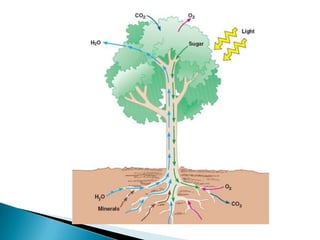
Most plants have developed complex vascular systems that move nutrients and water throughout the plant body through "tubes" of conductive cells. The vascular tissues of these plants are called xylem and phloem. Transport Systems
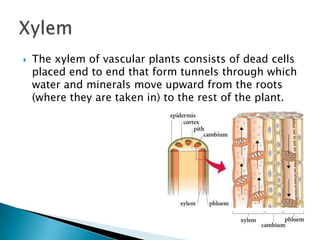
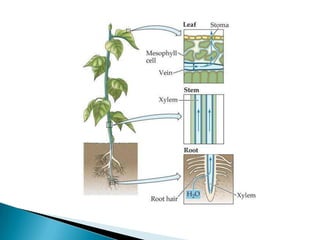
The xylem of vascular plants consists of dead cells placed end to end that form tunnels through which water and minerals move upward from the roots (where they are taken in) to the rest of the plant.Xylem
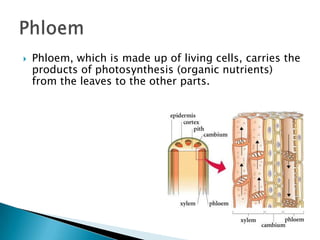
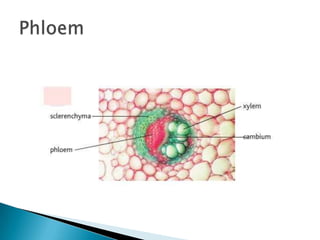
Phloem, which is made up of living cells, carries the products of photosynthesis (organic nutrients) from the leaves to the other parts. Phloem
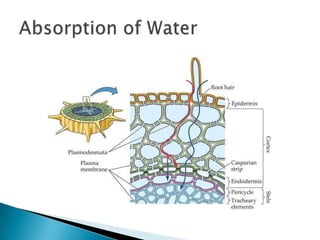
Absorption of Water
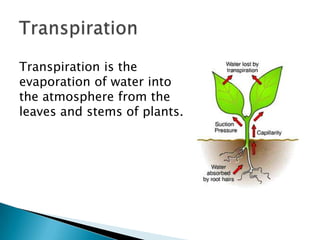
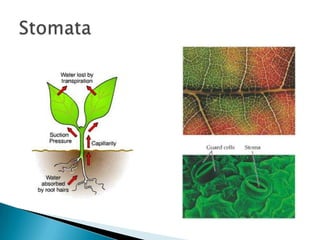
TranspirationTranspiration is the evaporation of water into the atmosphere from the leaves and stems of plants.
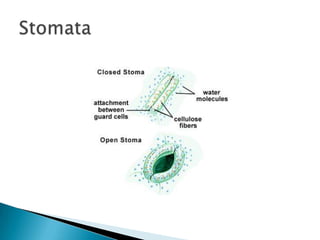
Stomata
Stomata
Transpirational pull is the main force behind the movement of water through the xylem.Transpirational Pull
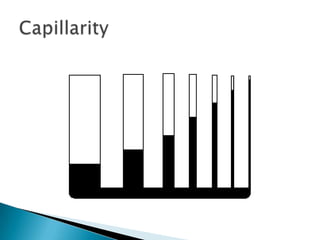
Capillarity
Xylem in rootSoil particlesLeavesRoot hair cellsXylem in stemTranspirationUse the following words to prepare a flow chart showing water transport in plants
Why organisms need a transport systemXylemPhloemTranspirationTranspirational pullCapillarityStomataGuard CellsOsmosisWhat we learned
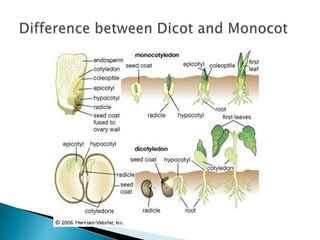
Difference between Dicot and Monocot
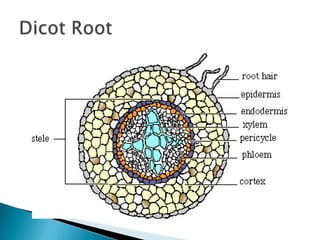
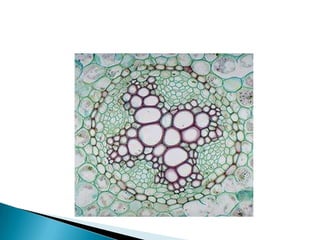
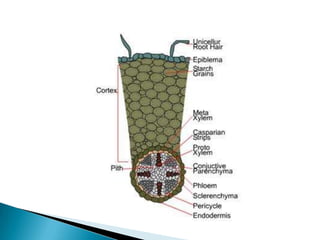
Dicot Root
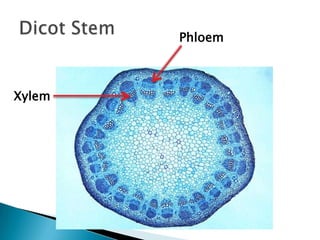
Dicot StemXylemPhloem
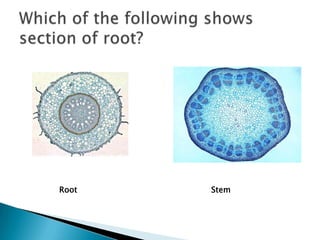
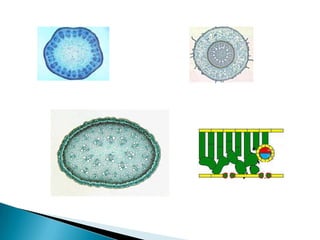
Which of the following shows section of root?RootStem
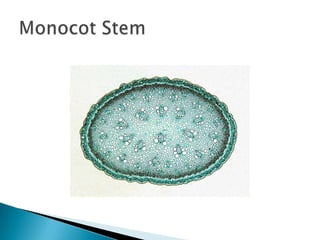
Monocot Stem
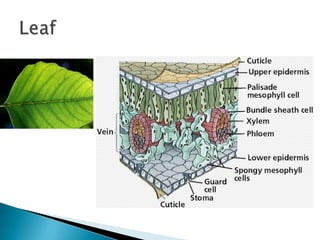
Leaf
Phloem
Viewing Xylem 13.1Looking at root hairs 13.2Demonstrate transpiration 13.3Comparing water loss from each side of leaf 13.4Stomata and water loss 13.5Measuring the rate of water uptake 13.6Experiments related to transport in plants
	Osmosis	Transpiration	DiffusionWhat is the name of the process by which water travels up through a plant from the roots to the leaves?
	Glucose	Carbon dioxide	MineralsWhat substances, necessary for growth, do plants take in along with water?
	Diffusion	Osmosis	Active absorptionThrough which method does water enter plant cells?
	They are similar to human hair	They increase surface area	They produce toxic productsWhat is special about root hair cells?
	Xylem vessels carry water from the leaves to the roots	Xylem vessels carry water from the roots to the leaves	Xylem vessels carry sugar from the roots to the leavesWhich of the following statements is true of xylem?
	Phloem tubes carry food from the leaves to the storage organs	Phloem tubes carry nitrates from the leaves to the roots	Phloem tubes carry food from the roots to the leavesWhich of the following statements is true of phloem tubes?
Water travels up through plants, from the roots to the leaves, through their __________ vessels. It is pulled up the plant by two forces ________ and _________.  The transpiration stream ends with water ________ from the leaves through the ________.	(Phloem, Osmosis, Xylem, Evaporating, Suction pressure, stomata, Water, Capillarity)

Transport in plants

  • 1.
  • 2.
    Body is toolarge.Diffusion from the external environment is not an optionWhy do large organisms need a transport system?
  • 4.
    Most plants havedeveloped complex vascular systems that move nutrients and water throughout the plant body through "tubes" of conductive cells. The vascular tissues of these plants are called xylem and phloem. Transport Systems
  • 5.
    The xylem ofvascular plants consists of dead cells placed end to end that form tunnels through which water and minerals move upward from the roots (where they are taken in) to the rest of the plant.Xylem
  • 6.
    Phloem, which ismade up of living cells, carries the products of photosynthesis (organic nutrients) from the leaves to the other parts. Phloem
  • 7.
  • 9.
    TranspirationTranspiration is theevaporation of water into the atmosphere from the leaves and stems of plants.
  • 10.
  • 11.
  • 12.
    Transpirational pull isthe main force behind the movement of water through the xylem.Transpirational Pull
  • 13.
  • 14.
    Xylem in rootSoilparticlesLeavesRoot hair cellsXylem in stemTranspirationUse the following words to prepare a flow chart showing water transport in plants
  • 15.
    Why organisms needa transport systemXylemPhloemTranspirationTranspirational pullCapillarityStomataGuard CellsOsmosisWhat we learned
  • 16.
  • 17.
  • 21.
  • 22.
    Which of thefollowing shows section of root?RootStem
  • 23.
  • 24.
  • 26.
  • 27.
    Viewing Xylem 13.1Lookingat root hairs 13.2Demonstrate transpiration 13.3Comparing water loss from each side of leaf 13.4Stomata and water loss 13.5Measuring the rate of water uptake 13.6Experiments related to transport in plants
  • 28.
    Osmosis Transpiration DiffusionWhat is thename of the process by which water travels up through a plant from the roots to the leaves?
  • 29.
    Glucose Carbon dioxide MineralsWhat substances,necessary for growth, do plants take in along with water?
  • 30.
    Diffusion Osmosis Active absorptionThrough whichmethod does water enter plant cells?
  • 31.
    They are similarto human hair They increase surface area They produce toxic productsWhat is special about root hair cells?
  • 32.
    Xylem vessels carrywater from the leaves to the roots Xylem vessels carry water from the roots to the leaves Xylem vessels carry sugar from the roots to the leavesWhich of the following statements is true of xylem?
  • 33.
    Phloem tubes carryfood from the leaves to the storage organs Phloem tubes carry nitrates from the leaves to the roots Phloem tubes carry food from the roots to the leavesWhich of the following statements is true of phloem tubes?
  • 34.
    Water travels upthrough plants, from the roots to the leaves, through their __________ vessels. It is pulled up the plant by two forces ________ and _________. The transpiration stream ends with water ________ from the leaves through the ________. (Phloem, Osmosis, Xylem, Evaporating, Suction pressure, stomata, Water, Capillarity)