Human Heart
 
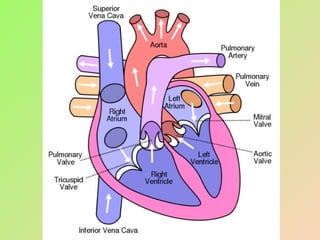
Human Heart Human heart has four chambers - two atria and two ventricles. The right side of the heart is completely separated from the left side.
Human Heart The right side of the heart receives blood from the body and pumps it to the lungs. Left side of the heart receives blood from the lungs and pumps it to the body.
Heart Muscles Heart is made up of cardiac muscles. Cardiac muscles can carry on contracting regularly without resting or getting fatigued.
Vena Cava The inferior and superior vena cava collect deoxygenated blood from the tissues and carry it to heart.
Inferior Vena Cava Collects blood from lower parts of the body and delivers it to the right atrium
Superior Vena Cava Collects blood from the upper part of the body and delivers it to the right atrium
Right Atrium Receives blood from the vena cavae. The blood is pumped into the ventricles when the atria contracts.
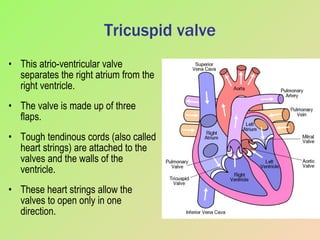
Tricuspid valve This atrio-ventricular valve separates the right atrium from the right ventricle. The valve is made up of three flaps. Tough tendinous cords (also called heart strings) are attached to the valves and the walls of the ventricle. These heart strings allow the valves to open only in one direction.
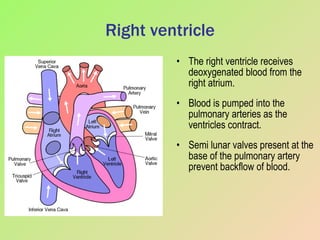
Right ventricle The right ventricle receives deoxygenated blood from the right atrium. Blood is pumped into the pulmonary arteries as the ventricles contract. Semi lunar valves present at the base of the pulmonary artery prevent backflow of blood.
Pulmonary veins The blood is carried back to the heart from lungs by pulmonary veins.
Left atrium Oxygenated blood from the lungs is collected by the left atrium. It opens into the left ventricle.
Bicuspid valve (Mitral Valve) Protects the opening between left atrium and left ventricle. The valve is made up of two flaps.
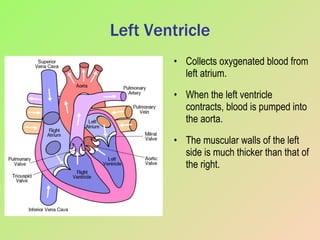
Left Ventricle Collects oxygenated blood from left atrium. When the left ventricle contracts, blood is pumped into the aorta. The muscular walls of the left side is much thicker than that of the right.
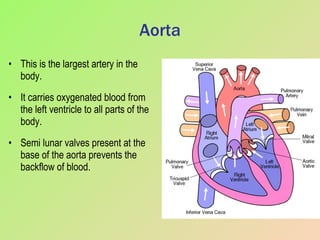
Aorta This is the largest artery in the body. It carries oxygenated blood from the left ventricle to all parts of the body. Semi lunar valves present at the base of the aorta prevents the backflow of blood.

Human heart

  • 1.
  • 2.
  • 3.
    Human Heart Humanheart has four chambers - two atria and two ventricles. The right side of the heart is completely separated from the left side.
  • 4.
    Human Heart Theright side of the heart receives blood from the body and pumps it to the lungs. Left side of the heart receives blood from the lungs and pumps it to the body.
  • 5.
    Heart Muscles Heartis made up of cardiac muscles. Cardiac muscles can carry on contracting regularly without resting or getting fatigued.
  • 6.
    Vena Cava Theinferior and superior vena cava collect deoxygenated blood from the tissues and carry it to heart.
  • 7.
    Inferior Vena CavaCollects blood from lower parts of the body and delivers it to the right atrium
  • 8.
    Superior Vena CavaCollects blood from the upper part of the body and delivers it to the right atrium
  • 9.
    Right Atrium Receivesblood from the vena cavae. The blood is pumped into the ventricles when the atria contracts.
  • 10.
    Tricuspid valve Thisatrio-ventricular valve separates the right atrium from the right ventricle. The valve is made up of three flaps. Tough tendinous cords (also called heart strings) are attached to the valves and the walls of the ventricle. These heart strings allow the valves to open only in one direction.
  • 11.
    Right ventricle Theright ventricle receives deoxygenated blood from the right atrium. Blood is pumped into the pulmonary arteries as the ventricles contract. Semi lunar valves present at the base of the pulmonary artery prevent backflow of blood.
  • 12.
    Pulmonary veins Theblood is carried back to the heart from lungs by pulmonary veins.
  • 13.
    Left atrium Oxygenatedblood from the lungs is collected by the left atrium. It opens into the left ventricle.
  • 14.
    Bicuspid valve (MitralValve) Protects the opening between left atrium and left ventricle. The valve is made up of two flaps.
  • 15.
    Left Ventricle Collectsoxygenated blood from left atrium. When the left ventricle contracts, blood is pumped into the aorta. The muscular walls of the left side is much thicker than that of the right.
  • 16.
    Aorta This isthe largest artery in the body. It carries oxygenated blood from the left ventricle to all parts of the body. Semi lunar valves present at the base of the aorta prevents the backflow of blood.