CELL DIVISION &
INHERITANCE
Cell division
 For an organism to grow, cells must multiply.
 To obtain new cells with the same characteristics all
the information in the old cell must pass to the new
cells.
 Information is stored in the nucleus in a long
molecule called the DNA.
 Before cell division a copy of the DNA is made; this
is called REPLICATION.
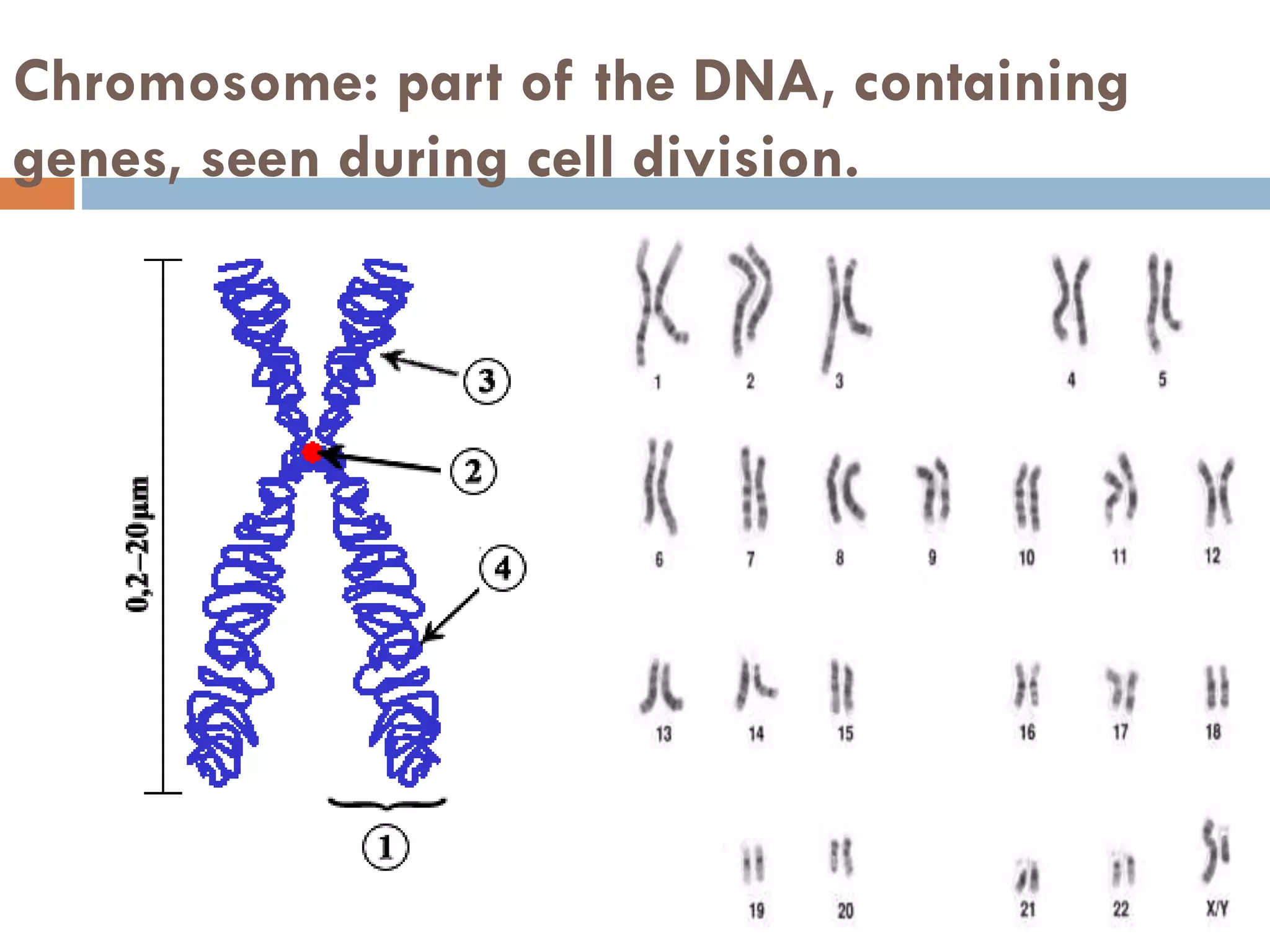
Chromosome: part of the DNA, containing
genes, seen during cell division.
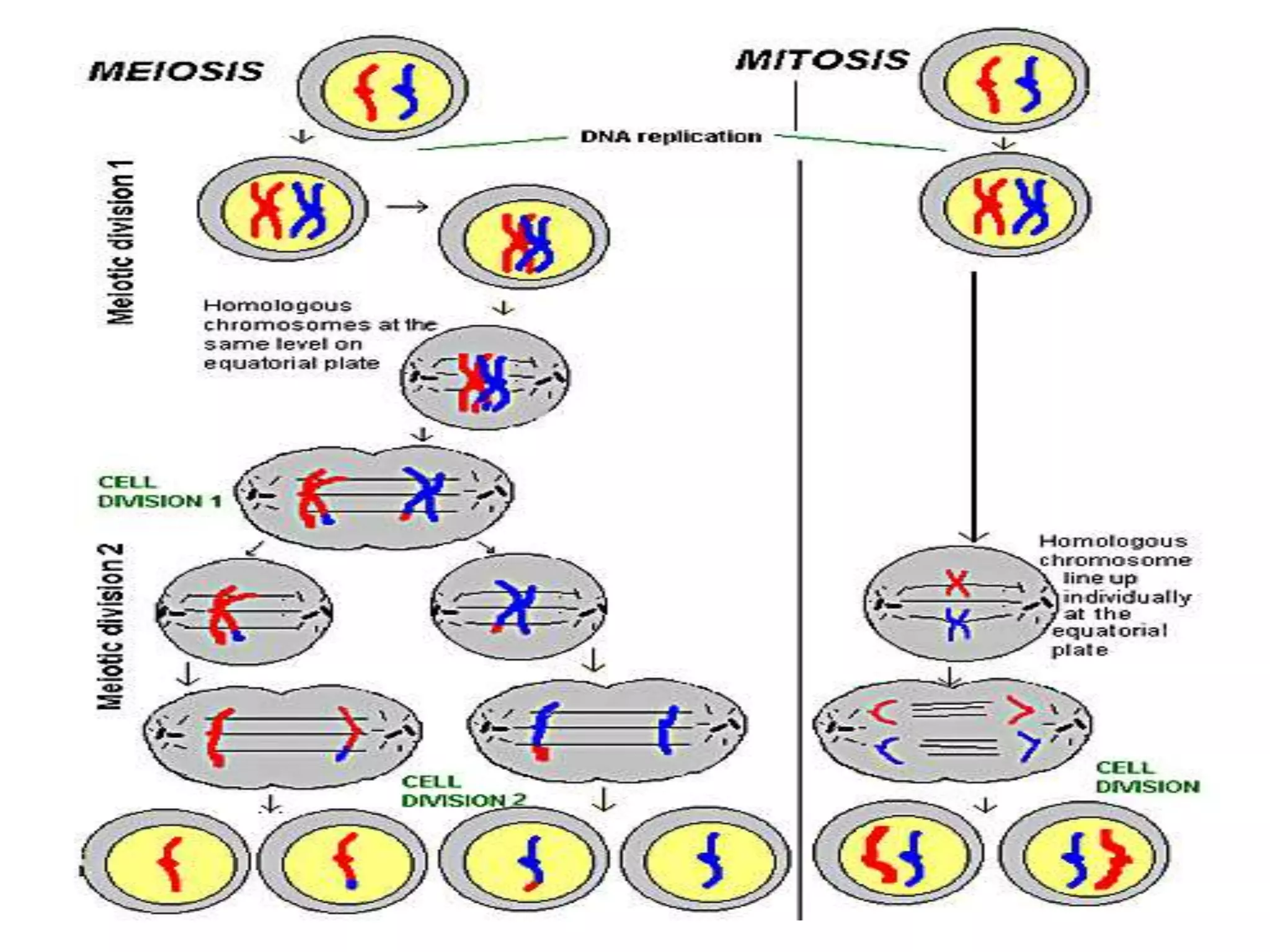
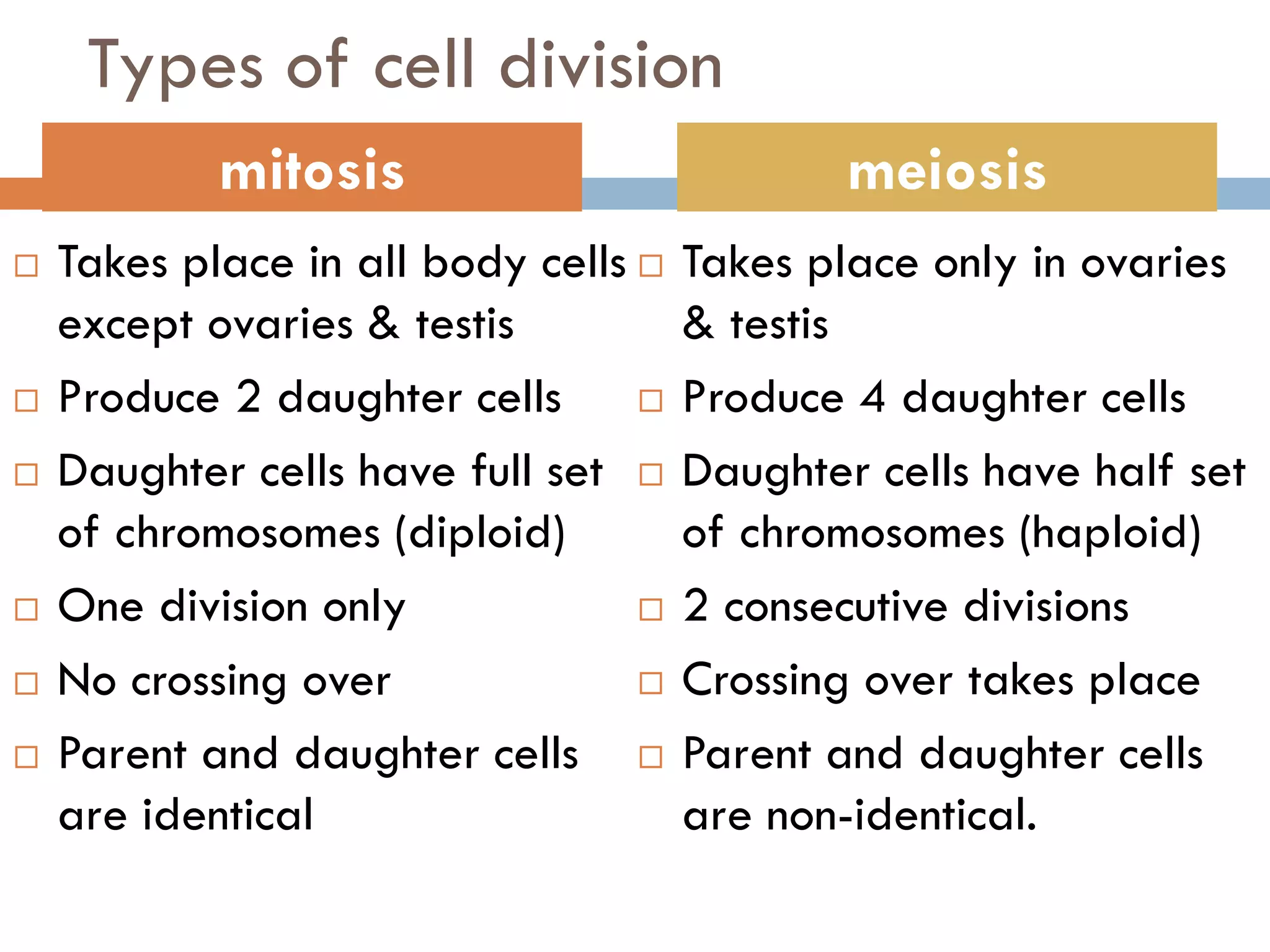
Types of cell division
 Takes place in all body cells
except ovaries & testis
 Produce 2 daughter cells
 Daughter cells have full set
of chromosomes (diploid)
 One division only
 No crossing over
 Parent and daughter cells
are identical
 Takes place only in ovaries
& testis
 Produce 4 daughter cells
 Daughter cells have half set
of chromosomes (haploid)
 2 consecutive divisions
 Crossing over takes place
 Parent and daughter cells
are non-identical.
mitosis meiosis
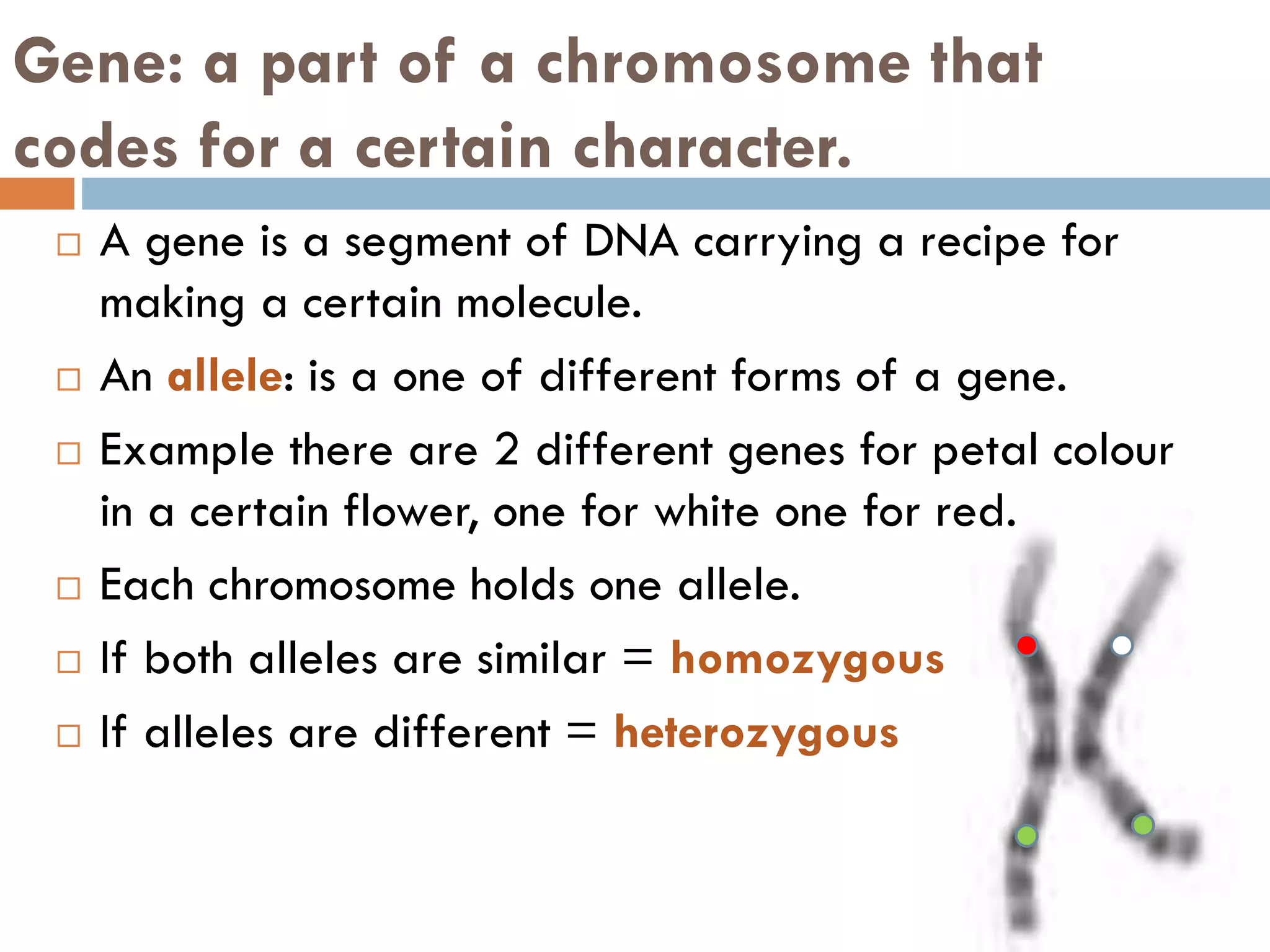
Gene: a part of a chromosome that
codes for a certain character.
 A gene is a segment of DNA carrying a recipe for
making a certain molecule.
 An allele: is a one of different forms of a gene.
 Example there are 2 different genes for petal colour
in a certain flower, one for white one for red.
 Each chromosome holds one allele.
 If both alleles are similar = homozygous
 If alleles are different = heterozygous
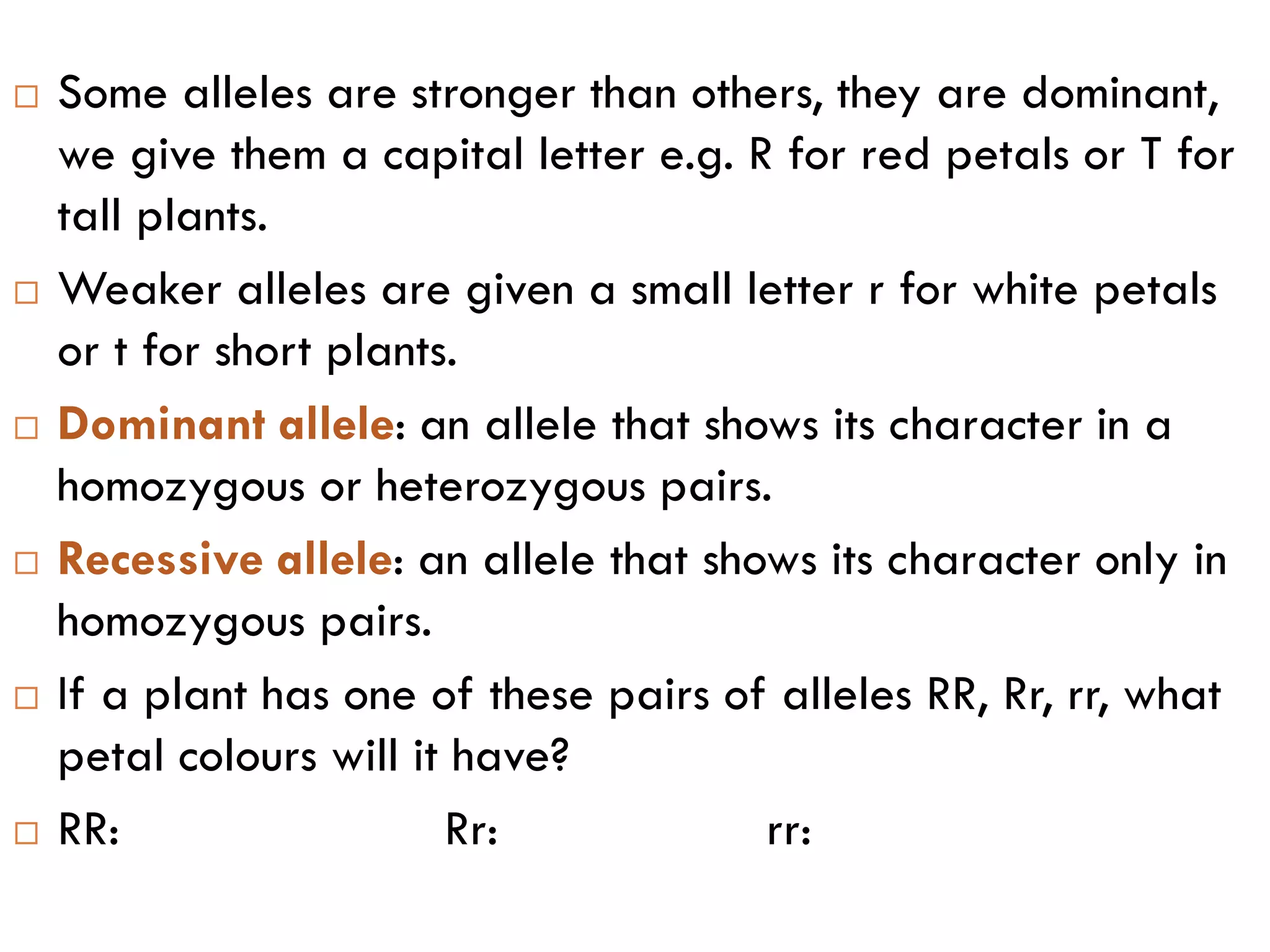
 Some alleles are stronger than others, they are dominant,
we give them a capital letter e.g. R for red petals or T for
tall plants.
 Weaker alleles are given a small letter r for white petals
or t for short plants.
 Dominant allele: an allele that shows its character in a
homozygous or heterozygous pairs.
 Recessive allele: an allele that shows its character only in
homozygous pairs.
 If a plant has one of these pairs of alleles RR, Rr, rr, what
petal colours will it have?
 RR: Rr: rr:
Predicting genotypes
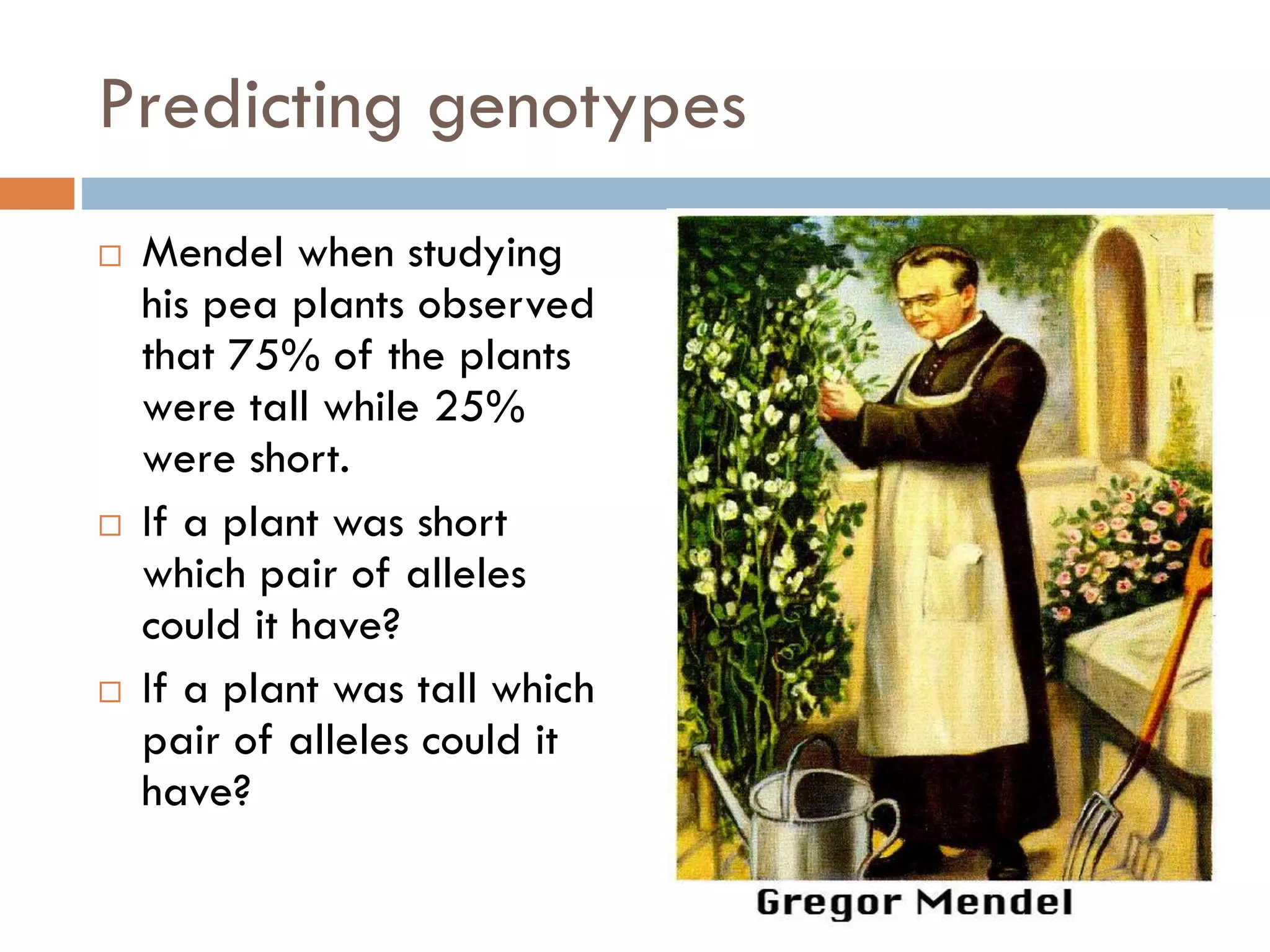
 Mendel when studying
his pea plants observed
that 75% of the plants
were tall while 25%
were short.
 If a plant was short
which pair of alleles
could it have?
 If a plant was tall which
pair of alleles could it
have?
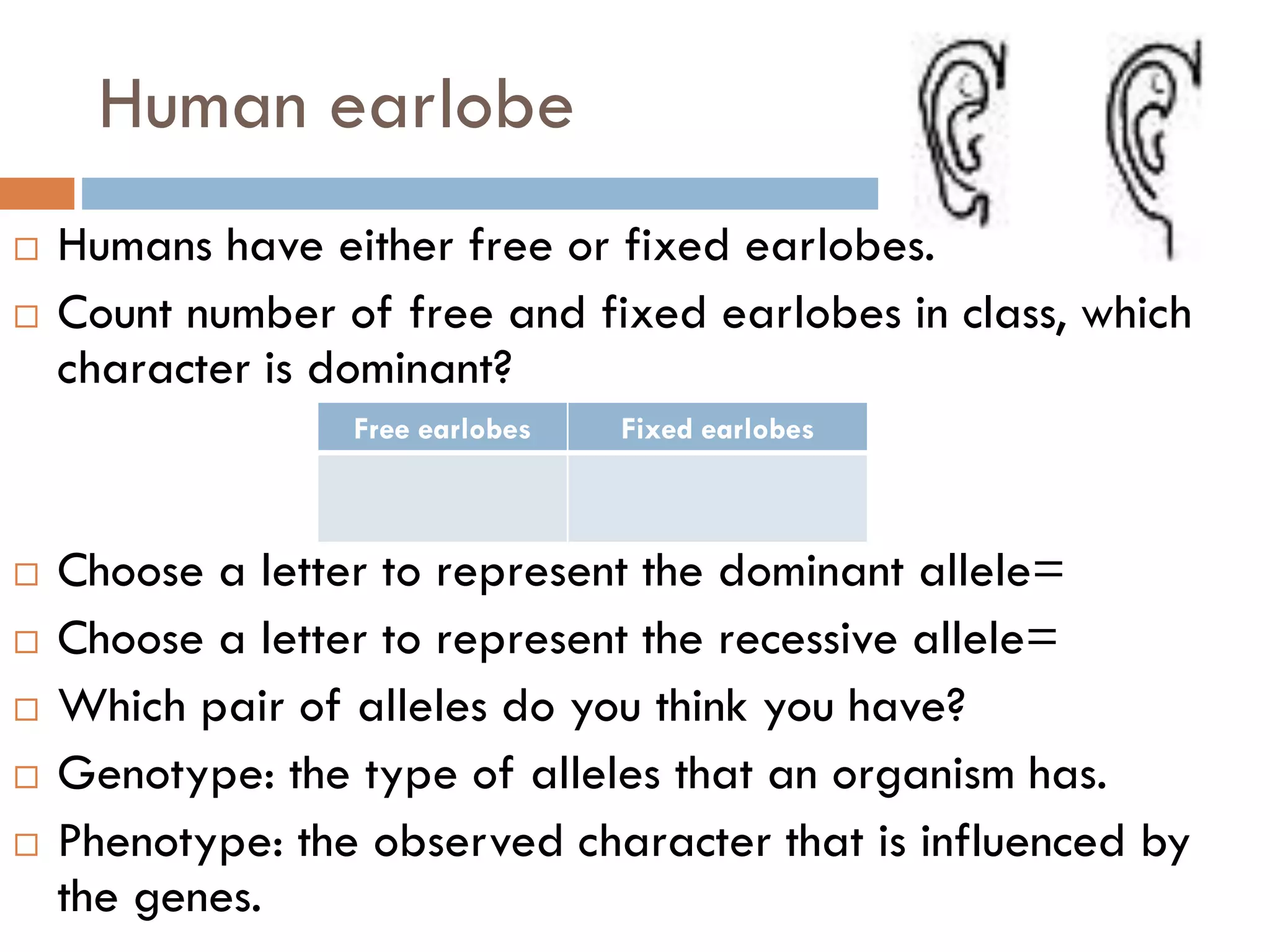
Human earlobe
 Humans have either free or fixed earlobes.
 Count number of free and fixed earlobes in class, which
character is dominant?
 Choose a letter to represent the dominant allele=
 Choose a letter to represent the recessive allele=
 Which pair of alleles do you think you have?
 Genotype: the type of alleles that an organism has.
 Phenotype: the observed character that is influenced by
the genes.
Free earlobes Fixed earlobes
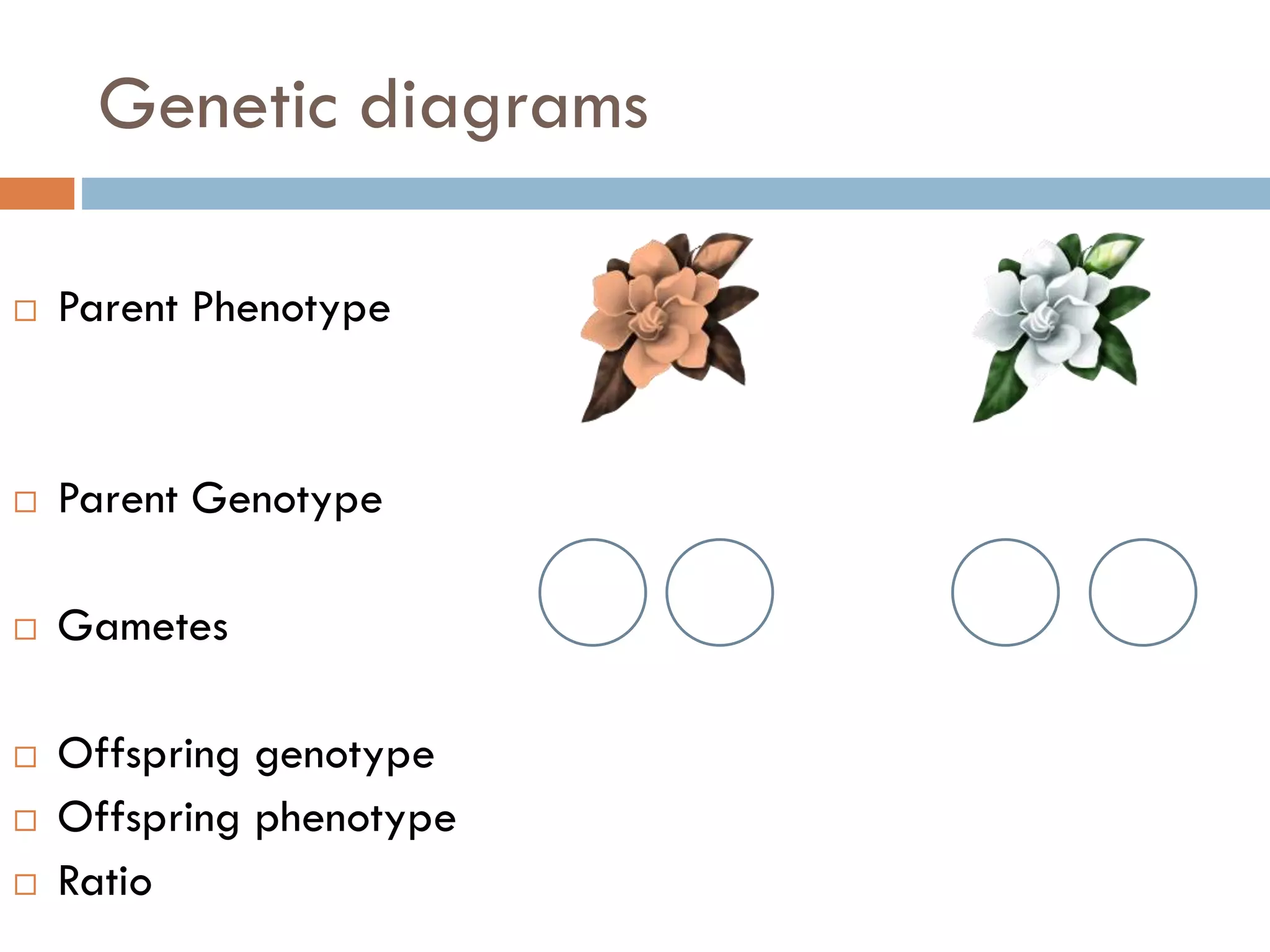
Genetic diagrams
 Parent Phenotype
 Parent Genotype
 Gametes
 Offspring genotype
 Offspring phenotype
 Ratio
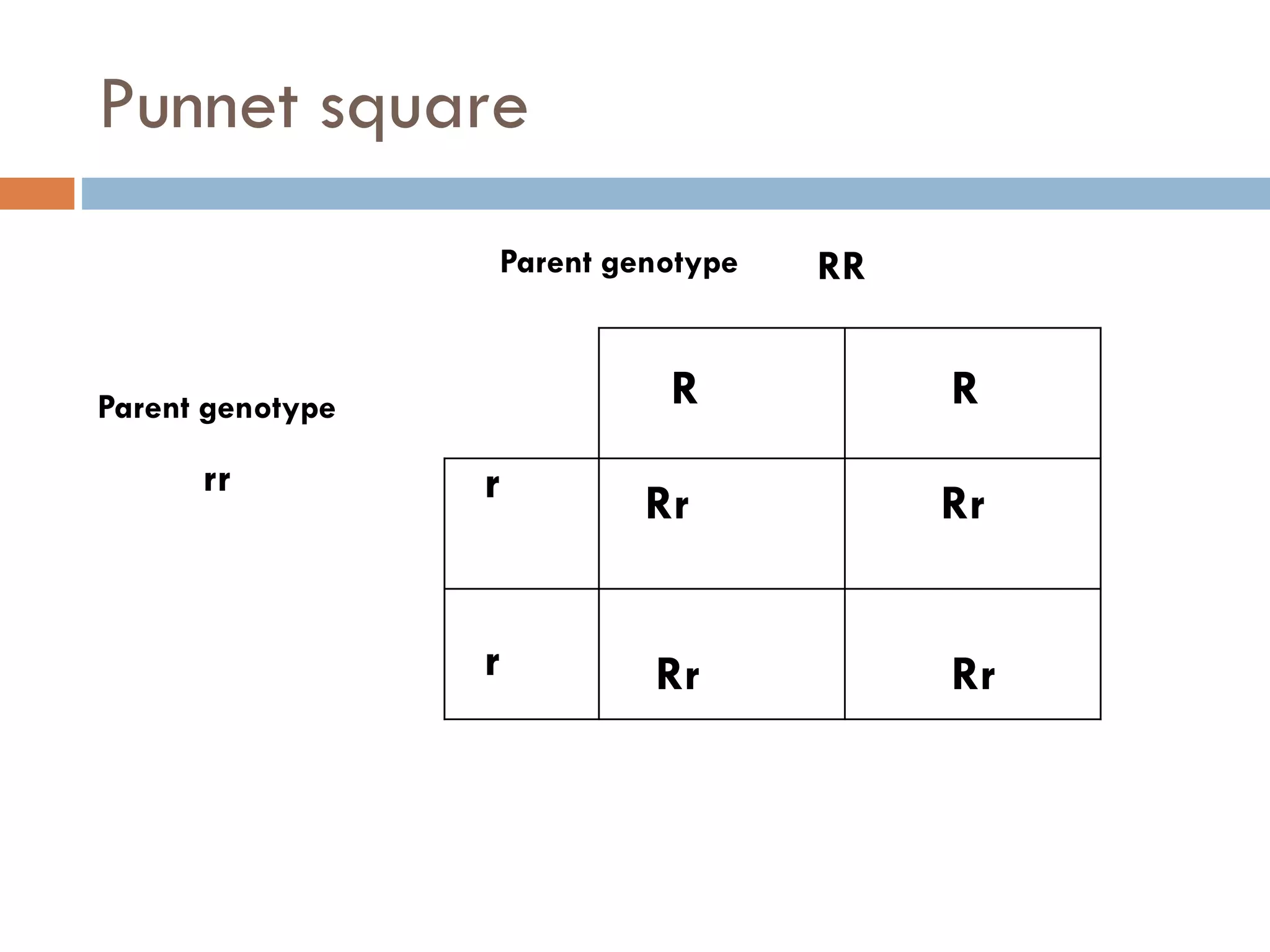
Punnet square
r
r
R R
Rr Rr
Rr Rr
Parent genotype
Parent genotype
RR
rr
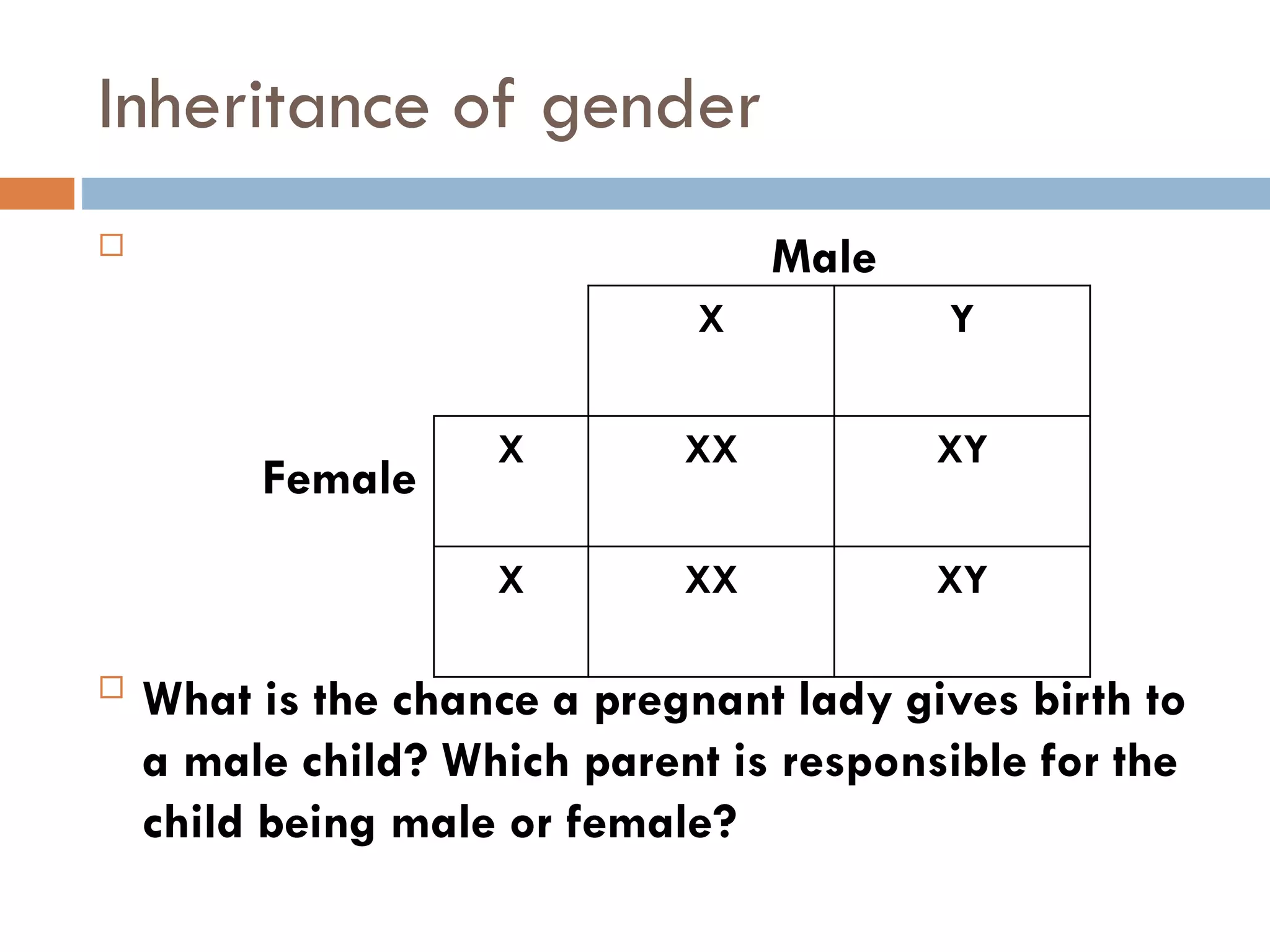
Inheritance of gender

Male
Female

What is the chance a pregnant lady gives birth to
a male child? Which parent is responsible for the
child being male or female?
X Y
X XX XY
X XX XY
Your homework!
 Try to find out your genotype for earlobe character.
You will need to observe your parents’ earlobes.
 Draw a Punnet square to show how you inherited
your free or fixed earlobe.
 How many of your brothers or sisters have free or
fixed earlobe? Does it match the ratio you got using
the Punnet square?
Codominance
 For some characteristics alleles are neither dominant
or recessive; they are codominant; which means
both alleles show their effect on the organism.
 This results in an organism having a characteristic in
between. For example if alleles for red petal colour
and white petal colour were codominant, a
heterozygous plant will have …………… petals.


Inheritance

  • 1.
  • 2.
    Cell division  Foran organism to grow, cells must multiply.  To obtain new cells with the same characteristics all the information in the old cell must pass to the new cells.  Information is stored in the nucleus in a long molecule called the DNA.  Before cell division a copy of the DNA is made; this is called REPLICATION.
  • 3.
    Chromosome: part ofthe DNA, containing genes, seen during cell division.
  • 5.
    Types of celldivision  Takes place in all body cells except ovaries & testis  Produce 2 daughter cells  Daughter cells have full set of chromosomes (diploid)  One division only  No crossing over  Parent and daughter cells are identical  Takes place only in ovaries & testis  Produce 4 daughter cells  Daughter cells have half set of chromosomes (haploid)  2 consecutive divisions  Crossing over takes place  Parent and daughter cells are non-identical. mitosis meiosis
  • 6.
    Gene: a partof a chromosome that codes for a certain character.  A gene is a segment of DNA carrying a recipe for making a certain molecule.  An allele: is a one of different forms of a gene.  Example there are 2 different genes for petal colour in a certain flower, one for white one for red.  Each chromosome holds one allele.  If both alleles are similar = homozygous  If alleles are different = heterozygous
  • 7.
     Some allelesare stronger than others, they are dominant, we give them a capital letter e.g. R for red petals or T for tall plants.  Weaker alleles are given a small letter r for white petals or t for short plants.  Dominant allele: an allele that shows its character in a homozygous or heterozygous pairs.  Recessive allele: an allele that shows its character only in homozygous pairs.  If a plant has one of these pairs of alleles RR, Rr, rr, what petal colours will it have?  RR: Rr: rr:
  • 8.
    Predicting genotypes  Mendelwhen studying his pea plants observed that 75% of the plants were tall while 25% were short.  If a plant was short which pair of alleles could it have?  If a plant was tall which pair of alleles could it have?
  • 9.
    Human earlobe  Humanshave either free or fixed earlobes.  Count number of free and fixed earlobes in class, which character is dominant?  Choose a letter to represent the dominant allele=  Choose a letter to represent the recessive allele=  Which pair of alleles do you think you have?  Genotype: the type of alleles that an organism has.  Phenotype: the observed character that is influenced by the genes. Free earlobes Fixed earlobes
  • 10.
    Genetic diagrams  ParentPhenotype  Parent Genotype  Gametes  Offspring genotype  Offspring phenotype  Ratio
  • 11.
    Punnet square r r R R RrRr Rr Rr Parent genotype Parent genotype RR rr
  • 12.
    Inheritance of gender  Male Female  Whatis the chance a pregnant lady gives birth to a male child? Which parent is responsible for the child being male or female? X Y X XX XY X XX XY
  • 13.
    Your homework!  Tryto find out your genotype for earlobe character. You will need to observe your parents’ earlobes.  Draw a Punnet square to show how you inherited your free or fixed earlobe.  How many of your brothers or sisters have free or fixed earlobe? Does it match the ratio you got using the Punnet square?
  • 14.
    Codominance  For somecharacteristics alleles are neither dominant or recessive; they are codominant; which means both alleles show their effect on the organism.  This results in an organism having a characteristic in between. For example if alleles for red petal colour and white petal colour were codominant, a heterozygous plant will have …………… petals. 