ASEXUAL REPRODUCTION IN
PLANTS
Sexual and asexual reproduction
compared
ADVANTAGE DISADVANTAGE
ASEXUAL -Only one parent needed
-- Rapid colonisation of favourable
environments
- No variation, so any change in
environment conditions will affect
all individuals
SEXUAL - Variation, so new features of
organisms may allow adaptation to
new environment
-Two parents needed
-- Fertilisation is random, so
harmful variations can occur
DRM Biology Y10 3
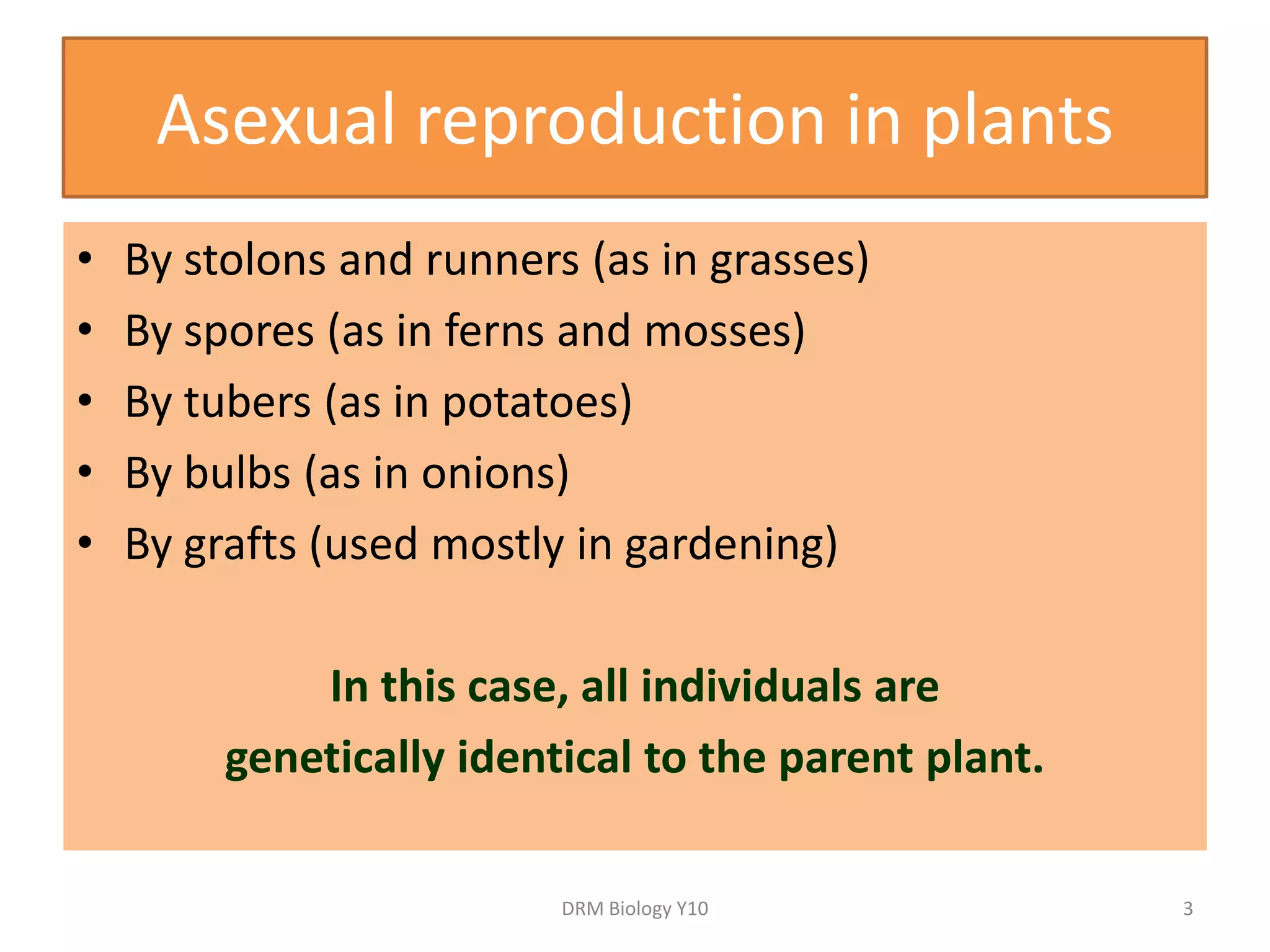
Asexual reproduction in plants
• By stolons and runners (as in grasses)
• By spores (as in ferns and mosses)
• By tubers (as in potatoes)
• By bulbs (as in onions)
• By grafts (used mostly in gardening)
In this case, all individuals are
genetically identical to the parent plant.
DRM Biology Y10 4
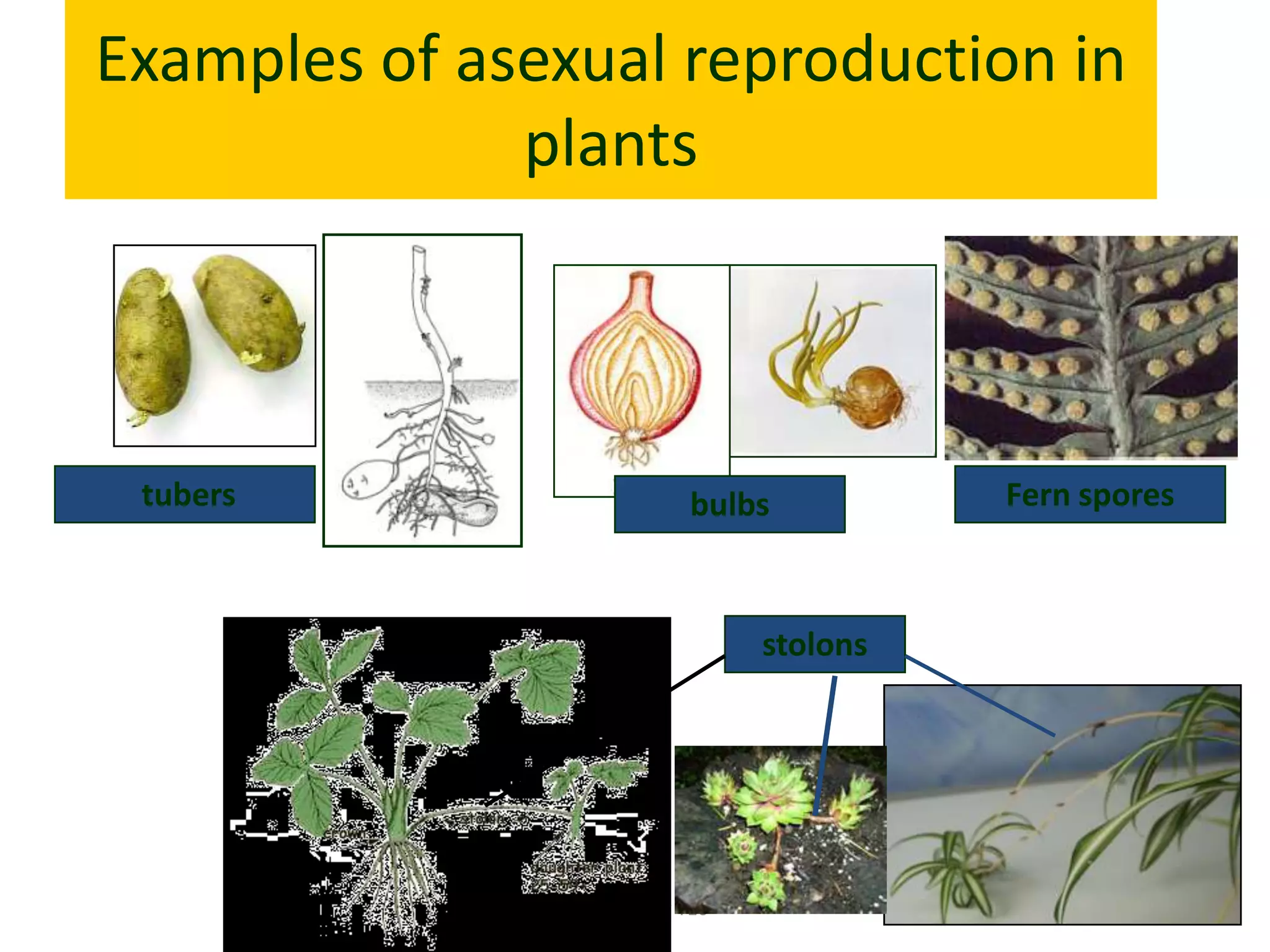
Examples of asexual reproduction in
plants
Fern spores
stolons
tubers bulbs
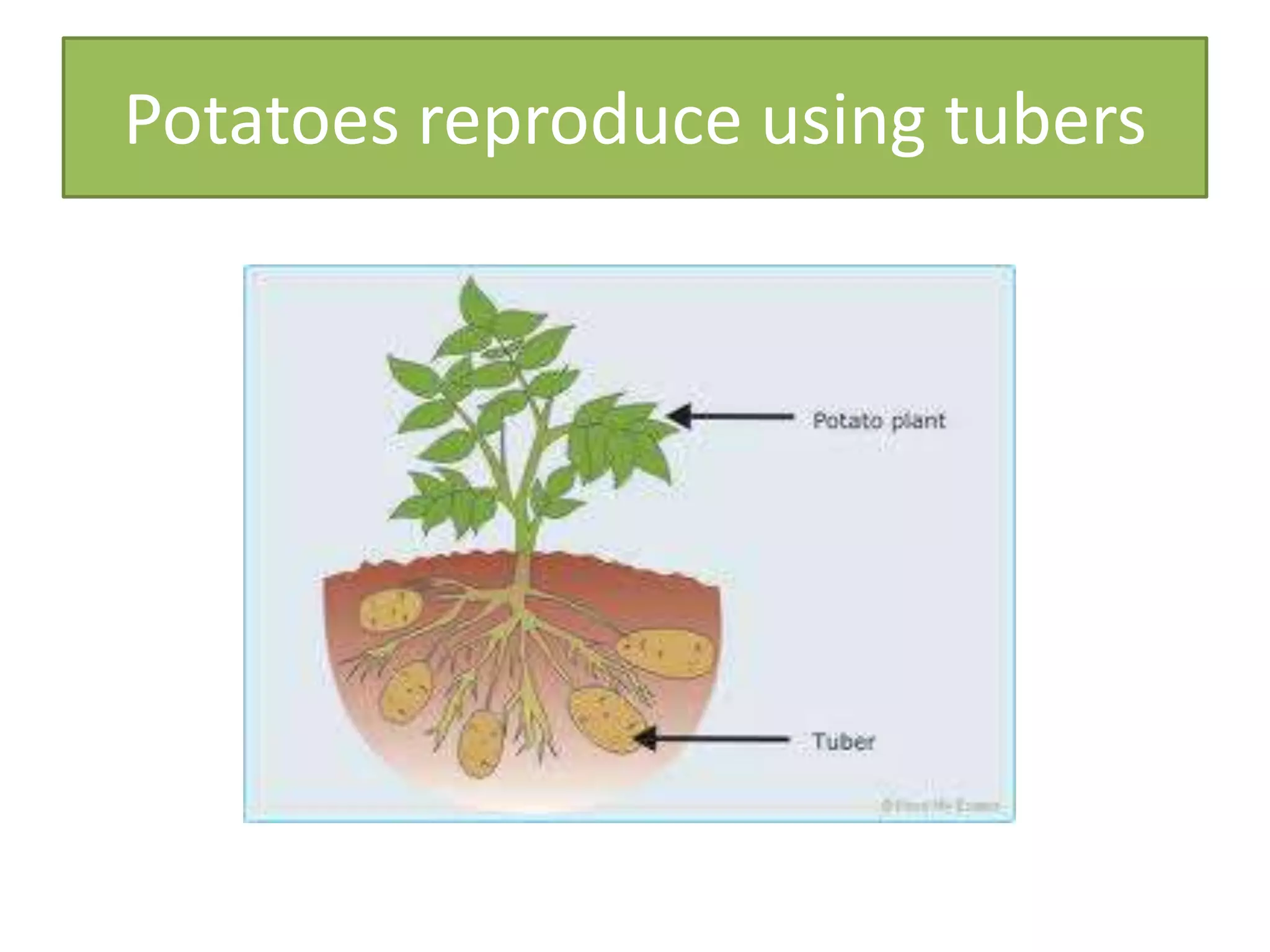
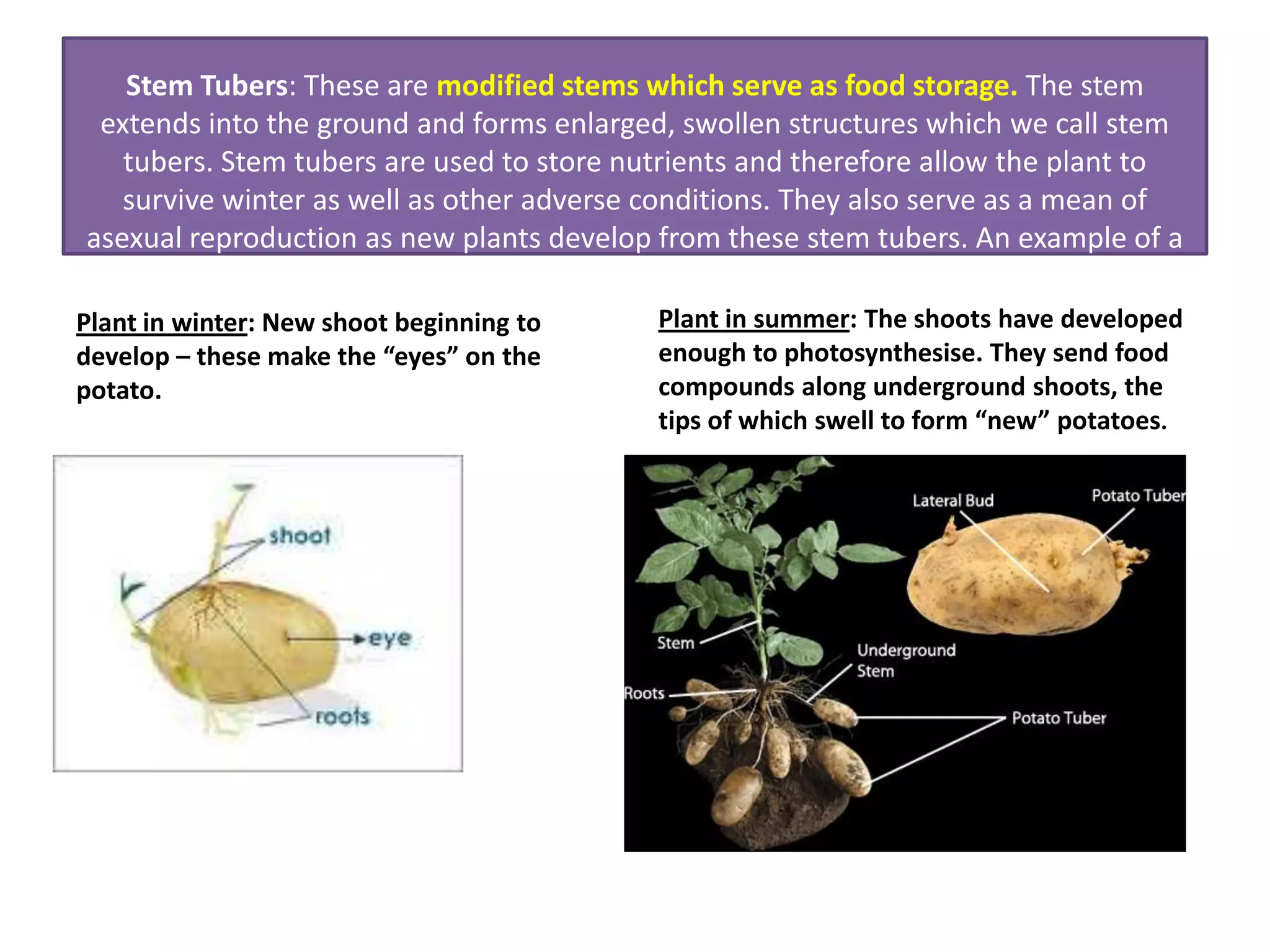
Potatoes reproduce using tubers
Stem Tubers: These are modified stems which serve as food storage. The stem
extends into the ground and forms enlarged, swollen structures which we call stem
tubers. Stem tubers are used to store nutrients and therefore allow the plant to
survive winter as well as other adverse conditions. They also serve as a mean of
asexual reproduction as new plants develop from these stem tubers. An example of a
stem tuber is a potato.
Plant in winter: New shoot beginning to
develop – these make the “eyes” on the
potato.
Plant in summer: The shoots have developed
enough to photosynthesise. They send food
compounds along underground shoots, the
tips of which swell to form “new” potatoes.
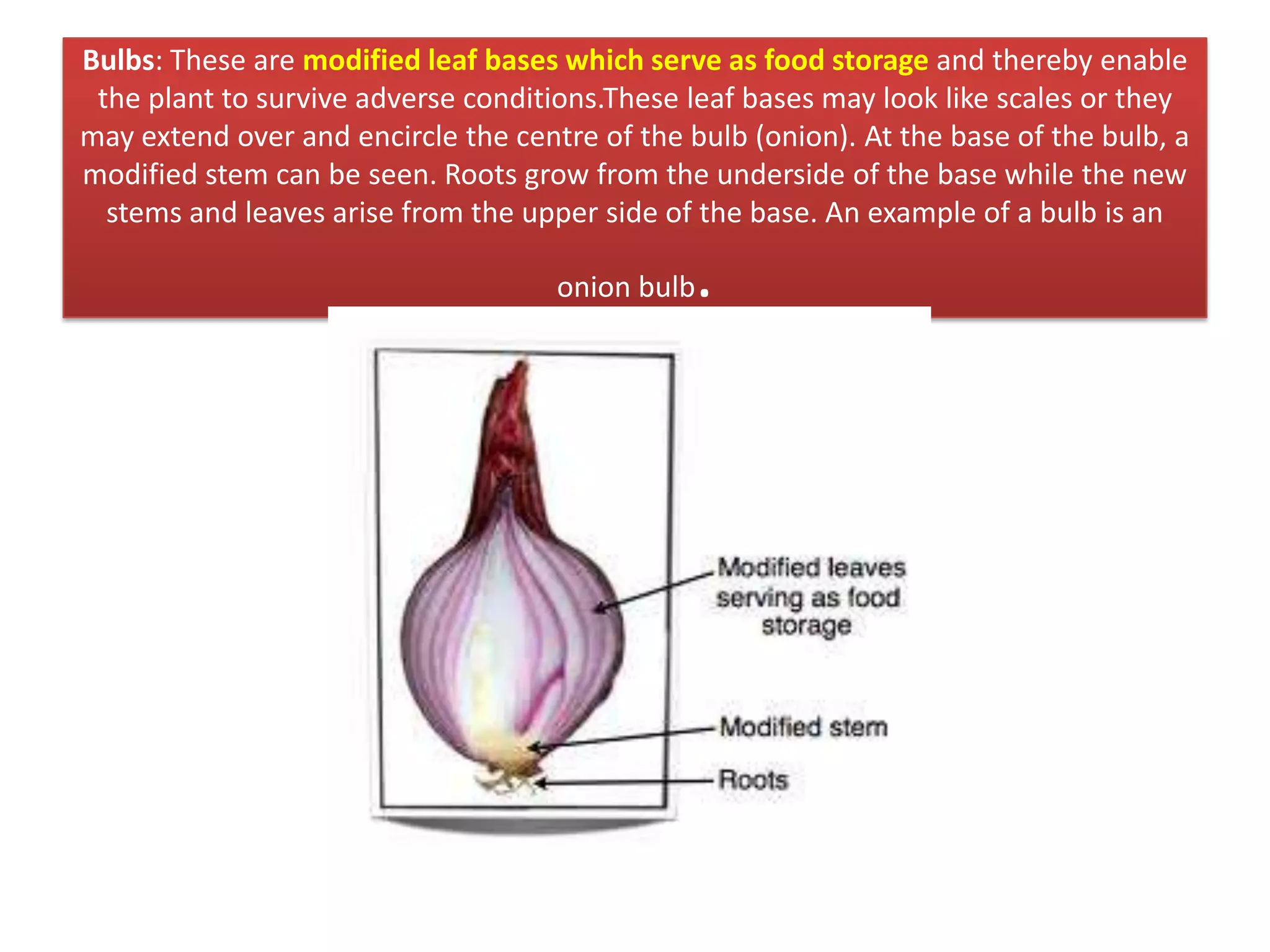
Bulbs: These are modified leaf bases which serve as food storage and thereby enable
the plant to survive adverse conditions.These leaf bases may look like scales or they
may extend over and encircle the centre of the bulb (onion). At the base of the bulb, a
modified stem can be seen. Roots grow from the underside of the base while the new
stems and leaves arise from the upper side of the base. An example of a bulb is an
onion bulb.
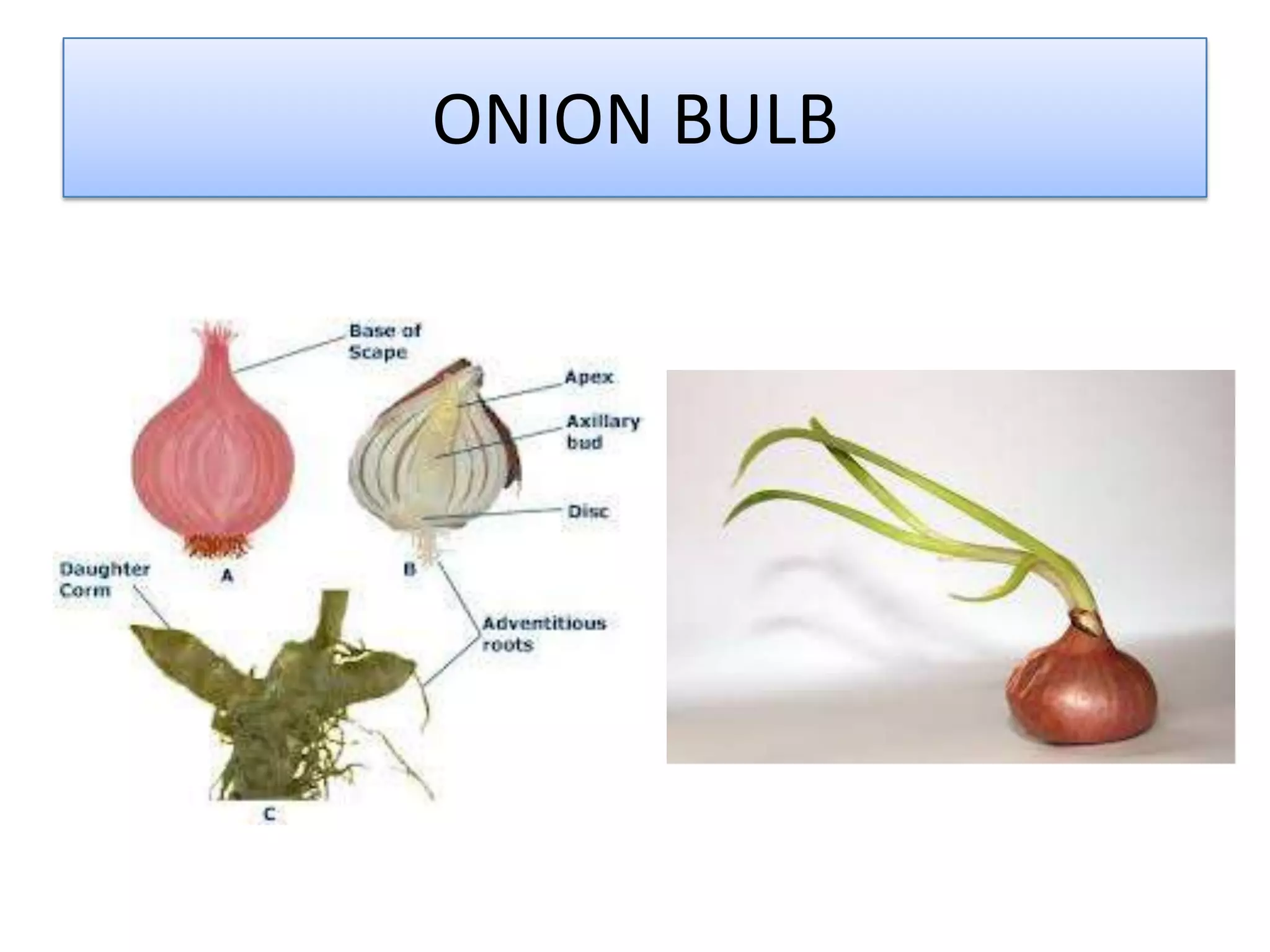
ONION BULB

Powerpoint asexual reproduction in plants

  • 1.
  • 2.
    Sexual and asexualreproduction compared ADVANTAGE DISADVANTAGE ASEXUAL -Only one parent needed -- Rapid colonisation of favourable environments - No variation, so any change in environment conditions will affect all individuals SEXUAL - Variation, so new features of organisms may allow adaptation to new environment -Two parents needed -- Fertilisation is random, so harmful variations can occur
  • 3.
    DRM Biology Y103 Asexual reproduction in plants • By stolons and runners (as in grasses) • By spores (as in ferns and mosses) • By tubers (as in potatoes) • By bulbs (as in onions) • By grafts (used mostly in gardening) In this case, all individuals are genetically identical to the parent plant.
  • 4.
    DRM Biology Y104 Examples of asexual reproduction in plants Fern spores stolons tubers bulbs
  • 5.
  • 6.
    Stem Tubers: Theseare modified stems which serve as food storage. The stem extends into the ground and forms enlarged, swollen structures which we call stem tubers. Stem tubers are used to store nutrients and therefore allow the plant to survive winter as well as other adverse conditions. They also serve as a mean of asexual reproduction as new plants develop from these stem tubers. An example of a stem tuber is a potato. Plant in winter: New shoot beginning to develop – these make the “eyes” on the potato. Plant in summer: The shoots have developed enough to photosynthesise. They send food compounds along underground shoots, the tips of which swell to form “new” potatoes.
  • 7.
    Bulbs: These aremodified leaf bases which serve as food storage and thereby enable the plant to survive adverse conditions.These leaf bases may look like scales or they may extend over and encircle the centre of the bulb (onion). At the base of the bulb, a modified stem can be seen. Roots grow from the underside of the base while the new stems and leaves arise from the upper side of the base. An example of a bulb is an onion bulb.
  • 8.