Balanced Diet
Nutrients Nutrients are substances in food that serve one or more of the following purposes Provide a source of energy Provide structure Regulate chemical reactions in the body
Balanced diet To stay healthy humans need  macronutrients (carbohydrates, proteins and fats) and  micronutrients (mineral salts and vitamins) along with water and fibre.
Macronutrients Macronutrients form the major part of diet.
Carbohydrates Carbohydrates provide energy. Carbohydrates are broken down into monosaccharides and used in cellular respiration to release energy. Some glucose is converted to glycogen and is stored in liver, muscles and brain. Any excess carbohydrate is converted to fat and stored in various parts of the body.
Carbohydrates We get carbohydrates from: Bread and grains  Rice and pasta  Vegetables  Fruits
Proteins Foods high in protein are necessary to enable us to grow and repair muscle.  Proteins are found in: Meat and fish  Beans and legumes  Nuts and Soya products  Dairy products and eggs
Functions of Proteins Form major structural material in body. Act as a source of energy. Allow internal communications system to function. Maintain immune system. Drive chemical reactions needed for life.
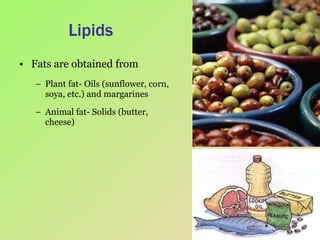
Lipids Fats are obtained from Plant fat- Oils (sunflower, corn, soya, etc.) and margarines  Animal fat- Solids (butter,  cheese)
Functions of Lipids Provide large amounts of energy. Compose the structure of cell membranes. Regulate cellular processes. Forms an insulating layer under the skin to keep the body warm.
Fibre Fibre is found in the form of plant material that we cannot absorb and is passed through the body.  It aids in intestinal digestion, binds cholesterol and passes it out of the body along with other waste products.  Fibre is found in: Vegetables and hard fruits  Whole grains and seeds  Brown rice  Oats
Water The human body is 75% water.  In ordinary living, we lose between 2 and 3 liters a day through our urine, sweating and exhaling.  When exercising the body loses even more water, and is at risk of dehydration if it is not replaced.
Functions of Water Medium that transports nutrients, gases and waste products. Serves as environment where chemical reactions occur. Regulates body temperature.
Vitamins They do NOT provide structure or energy. Functions Regulate body processes. Promote growth & development. Protect body from damaging effects of toxic compounds. Build and maintain tissues. Assist in using energy from carbohydrates, protein, and lipids. Assist in disease prevention and treatment.
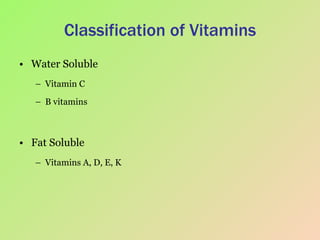
Classification of Vitamins Water Soluble Vitamin C B vitamins Fat Soluble Vitamins A, D, E, K
Mineral Salts Lack of minerals in diet can lead to a variety of serious conditions. Calcium is needed for the formation of your skeleton and teeth, for muscles to contract and for blood clotting to take place. Sodium is needed for nerves to work properly, for muscular contraction and to maintain heart beat.

Diet

  • 1.
  • 2.
    Nutrients Nutrients aresubstances in food that serve one or more of the following purposes Provide a source of energy Provide structure Regulate chemical reactions in the body
  • 3.
    Balanced diet Tostay healthy humans need macronutrients (carbohydrates, proteins and fats) and micronutrients (mineral salts and vitamins) along with water and fibre.
  • 4.
    Macronutrients Macronutrients formthe major part of diet.
  • 5.
    Carbohydrates Carbohydrates provideenergy. Carbohydrates are broken down into monosaccharides and used in cellular respiration to release energy. Some glucose is converted to glycogen and is stored in liver, muscles and brain. Any excess carbohydrate is converted to fat and stored in various parts of the body.
  • 6.
    Carbohydrates We getcarbohydrates from: Bread and grains Rice and pasta Vegetables Fruits
  • 7.
    Proteins Foods highin protein are necessary to enable us to grow and repair muscle. Proteins are found in: Meat and fish Beans and legumes Nuts and Soya products Dairy products and eggs
  • 8.
    Functions of ProteinsForm major structural material in body. Act as a source of energy. Allow internal communications system to function. Maintain immune system. Drive chemical reactions needed for life.
  • 9.
    Lipids Fats areobtained from Plant fat- Oils (sunflower, corn, soya, etc.) and margarines Animal fat- Solids (butter, cheese)
  • 10.
    Functions of LipidsProvide large amounts of energy. Compose the structure of cell membranes. Regulate cellular processes. Forms an insulating layer under the skin to keep the body warm.
  • 11.
    Fibre Fibre isfound in the form of plant material that we cannot absorb and is passed through the body. It aids in intestinal digestion, binds cholesterol and passes it out of the body along with other waste products. Fibre is found in: Vegetables and hard fruits Whole grains and seeds Brown rice Oats
  • 12.
    Water The humanbody is 75% water. In ordinary living, we lose between 2 and 3 liters a day through our urine, sweating and exhaling. When exercising the body loses even more water, and is at risk of dehydration if it is not replaced.
  • 13.
    Functions of WaterMedium that transports nutrients, gases and waste products. Serves as environment where chemical reactions occur. Regulates body temperature.
  • 14.
    Vitamins They doNOT provide structure or energy. Functions Regulate body processes. Promote growth & development. Protect body from damaging effects of toxic compounds. Build and maintain tissues. Assist in using energy from carbohydrates, protein, and lipids. Assist in disease prevention and treatment.
  • 15.
    Classification of VitaminsWater Soluble Vitamin C B vitamins Fat Soluble Vitamins A, D, E, K
  • 16.
    Mineral Salts Lackof minerals in diet can lead to a variety of serious conditions. Calcium is needed for the formation of your skeleton and teeth, for muscles to contract and for blood clotting to take place. Sodium is needed for nerves to work properly, for muscular contraction and to maintain heart beat.