LEAF STRUCTURE & 
FUNCTION
Role of leaves: 
Trap light for photosynthesis 
Exchange gases
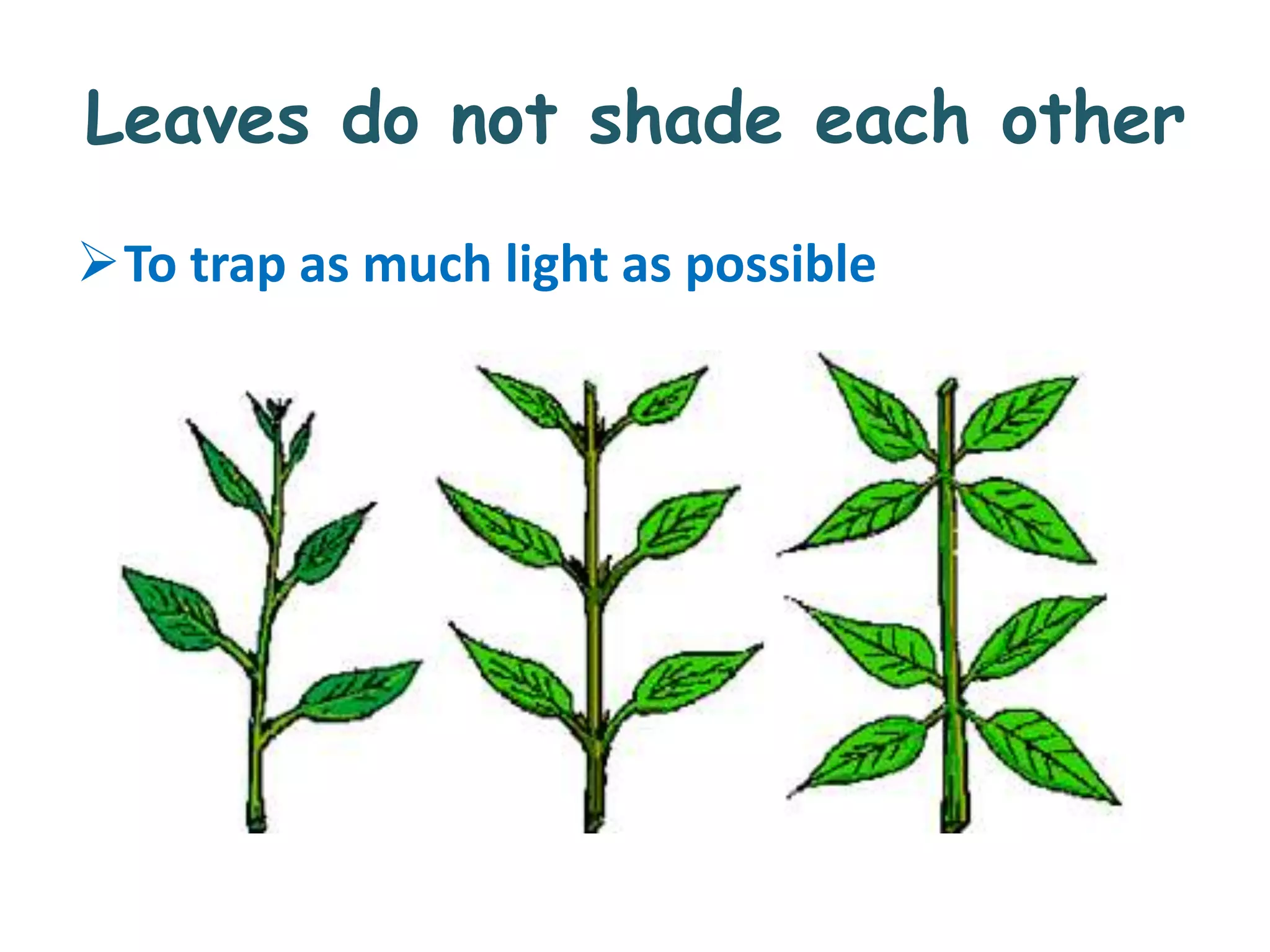
Leaves do not shade each other 
To trap as much light as possible
External structure of a leaf 
margin 
petiole 
[leaf stalk] 
midrib vein 
lamina 
[blade]
Monocot & Dicot leaves 
Long & slender leaf 
Parallel veins 
Broad leaf 
Branching veins
Veins contain 
xylem 
& 
phloem
Xylem & Phloem transport materials 
in plants 
Xylem transports: 
Water + mineral salts 
Phloem transports: 
Food [sucrose, 
amino acids]
Internal structure of a leaf 
margin 
guard cells 
Stoma 
[plural: stomata] 
palisade layer 
spongy layer 
xylem 
phloem
Internal structure of a leaf
Function of the waxy cuticle: 
 prevents loss of water
Why are epidermal cells 
transparent? 
 to allow a lot of light to pas through
Vertical section through a leaf 
8. Guard cell 7. stoma 
1. Waxy cuticle 
2. Upper epidermis 
3. Palisade 
mesophyll cell 
4. Air space 
5. Spongy mesophyll cell 
6. Lower epidermis
QUESTION: [MAY, 2010] 
Give a biological explanation for the following 
statement: 
Leaves are well adapted for efficient diffusion 
of carbon dioxide. (4)
QUESTION: [MAY, 2010] 
The flattened shape of leaves increases the surface 
area for diffusion. 1 mark 
Most plants have thin leaves – this means that the 
distance for the carbon dioxide to diffuse from the 
outside air to the photosynthesising cells is kept as 
short as possible. 2 marks 
The many air spaces inside the leaf allow carbon 
dioxide to come into contact with lots of cells – this 
provides lots of surface area for diffusion. 1 mark 
Stomata allow carbon dioxide into the leaf. 1mark
Why is the upper leaf surface darker 
green than the lower surface? 
More chloroplasts in palisade layer than in 
spongy layer.
Vascular tissue 
is present 
throughout the 
plant
What is the function of the: 
Stoma: allows exchange of gases 
Guard cells: to adjust the opening and 
closing of the stoma
When are stomata open and when 
are they closed? 
DAY NIGHT
open their stomata 
during the NIGHT
How do stomata open during the 
day? 
potassium ions 
enter the guard cells 
& water follows.
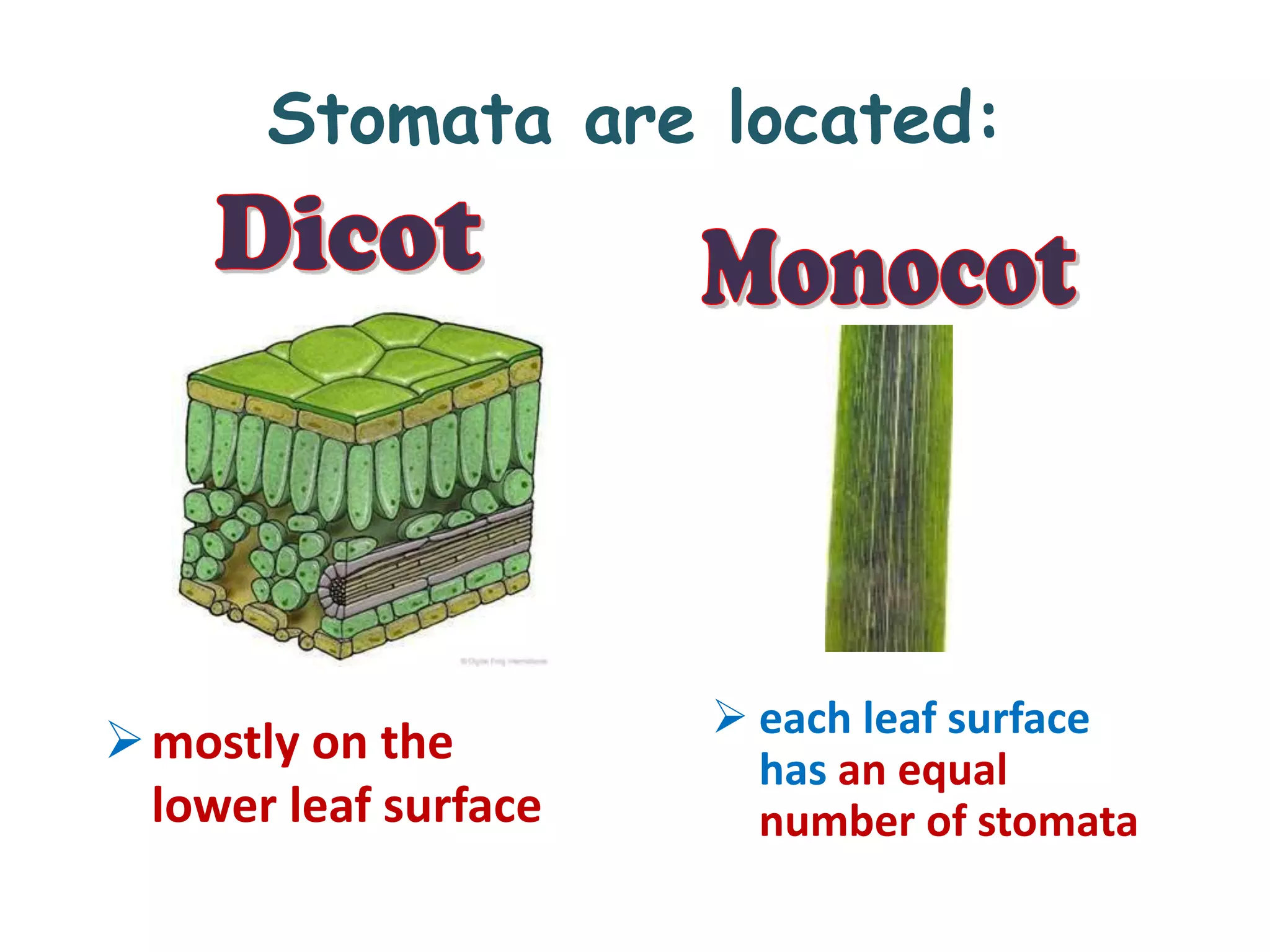
Where are stomata located in:
Stomata are located: 
mostly on the 
lower leaf surface 
 each leaf surface 
has an equal 
number of stomata
NO stomata in 
submerged leaves 
 Stomata only on 
upper leaf surface 
in floating leaves
Why are stomata located like this? 
Lower leaf surface is 
more protected from 
the sun 
Each leaf surface is 
equally exposed to 
the sun
Stomata are useless: 
they are not in 
contact with air 
Stomata allow gas 
exchange with the air
Differences between guard cells and 
the surrounding epidermal cells. 
Guard cells Epidermal cells 
1) have chloroplasts Chloroplasts absent 
2) are bean-shaped Cuboidal in shape 
3) cell walls are not 
evenly thick 
Cell walls evenly thick
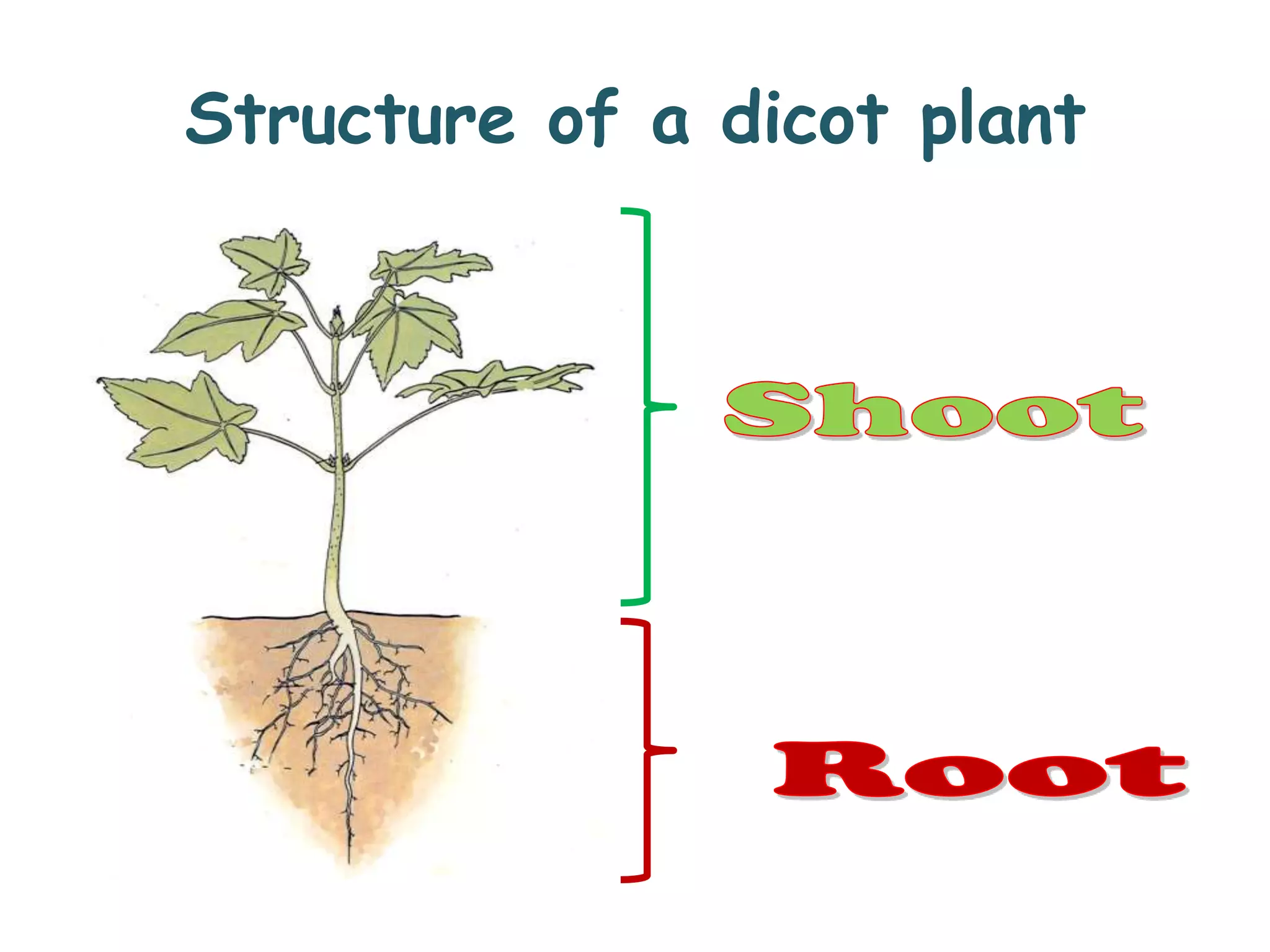
Structure of a dicot plant
Structure of a dicot plant 
Internode 
Node 
Main/tap root 
Veins 
Terminal/apical bud 
Leaf 
Petiole 
Lateral/axillary bud 
Stem 
Lateral roots
Leaf structure

Leaf structure

  • 1.
  • 2.
    Role of leaves: Trap light for photosynthesis Exchange gases
  • 3.
    Leaves do notshade each other To trap as much light as possible
  • 4.
    External structure ofa leaf margin petiole [leaf stalk] midrib vein lamina [blade]
  • 5.
    Monocot & Dicotleaves Long & slender leaf Parallel veins Broad leaf Branching veins
  • 6.
  • 7.
    Xylem & Phloemtransport materials in plants Xylem transports: Water + mineral salts Phloem transports: Food [sucrose, amino acids]
  • 8.
    Internal structure ofa leaf margin guard cells Stoma [plural: stomata] palisade layer spongy layer xylem phloem
  • 9.
  • 10.
    Function of thewaxy cuticle:  prevents loss of water
  • 11.
    Why are epidermalcells transparent?  to allow a lot of light to pas through
  • 12.
    Vertical section througha leaf 8. Guard cell 7. stoma 1. Waxy cuticle 2. Upper epidermis 3. Palisade mesophyll cell 4. Air space 5. Spongy mesophyll cell 6. Lower epidermis
  • 13.
    QUESTION: [MAY, 2010] Give a biological explanation for the following statement: Leaves are well adapted for efficient diffusion of carbon dioxide. (4)
  • 14.
    QUESTION: [MAY, 2010] The flattened shape of leaves increases the surface area for diffusion. 1 mark Most plants have thin leaves – this means that the distance for the carbon dioxide to diffuse from the outside air to the photosynthesising cells is kept as short as possible. 2 marks The many air spaces inside the leaf allow carbon dioxide to come into contact with lots of cells – this provides lots of surface area for diffusion. 1 mark Stomata allow carbon dioxide into the leaf. 1mark
  • 15.
    Why is theupper leaf surface darker green than the lower surface? More chloroplasts in palisade layer than in spongy layer.
  • 16.
    Vascular tissue ispresent throughout the plant
  • 17.
    What is thefunction of the: Stoma: allows exchange of gases Guard cells: to adjust the opening and closing of the stoma
  • 18.
    When are stomataopen and when are they closed? DAY NIGHT
  • 19.
    open their stomata during the NIGHT
  • 20.
    How do stomataopen during the day? potassium ions enter the guard cells & water follows.
  • 21.
    Where are stomatalocated in:
  • 22.
    Stomata are located: mostly on the lower leaf surface  each leaf surface has an equal number of stomata
  • 23.
    NO stomata in submerged leaves  Stomata only on upper leaf surface in floating leaves
  • 24.
    Why are stomatalocated like this? Lower leaf surface is more protected from the sun Each leaf surface is equally exposed to the sun
  • 25.
    Stomata are useless: they are not in contact with air Stomata allow gas exchange with the air
  • 26.
    Differences between guardcells and the surrounding epidermal cells. Guard cells Epidermal cells 1) have chloroplasts Chloroplasts absent 2) are bean-shaped Cuboidal in shape 3) cell walls are not evenly thick Cell walls evenly thick
  • 27.
    Structure of adicot plant
  • 28.
    Structure of adicot plant Internode Node Main/tap root Veins Terminal/apical bud Leaf Petiole Lateral/axillary bud Stem Lateral roots