WEATHER AND
CLIMATE
TOPIC 1: TEMPERATURE
Text page 72-80
TOPIC 1 - TEMPERATURE
Essential Questions Definitions Learning outcomes
A. What is the
difference
between weather
and climate?
B. Why do different
places experience
different
temperatures?
C. Why do places at
the same latitude
have different
temperatures?
- Weather refers to
a specific
condition of the
atmosphere at a
particular place
and time while
climate refers to
the long term
weather
condition.
- Differentiate between
weather and climate
- Explain daily and
seasonal variations in
temperature at a
particular location
- Compare and explain
with the aid of well-
labelled diagrams
variations in
temperature between
different locations.
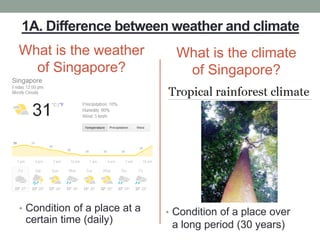
1A. Difference between weather and climate
What is the weather
of Singapore?
• Condition of a place at a
certain time (daily)
What is the climate
of Singapore?
• Condition of a place over
a long period (30 years)
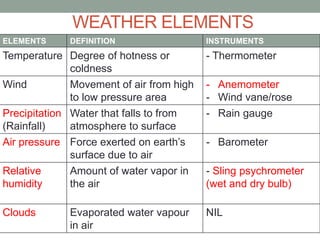
WEATHER ELEMENTS
ELEMENTS DEFINITION INSTRUMENTS
Temperature Degree of hotness or
coldness
- Thermometer
Wind Movement of air from high
to low pressure area
- Anemometer
- Wind vane/rose
Precipitation
(Rainfall)
Water that falls to from
atmosphere to surface
- Rain gauge
Air pressure Force exerted on earth’s
surface due to air
- Barometer
Relative
humidity
Amount of water vapor in
the air
- Sling psychrometer
(wet and dry bulb)
Clouds Evaporated water vapour
in air
NIL
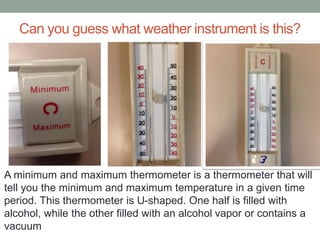
Can you guess what weather instrument is this?
A minimum and maximum thermometer is a thermometer that will
tell you the minimum and maximum temperature in a given time
period. This thermometer is U-shaped. One half is filled with
alcohol, while the other filled with an alcohol vapor or contains a
vacuum
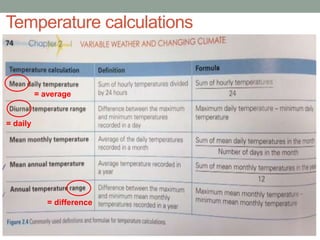
Temperature calculations
= average
= daily
= difference
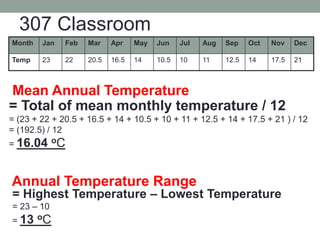
307 Classroom
Month Jan Feb Mar Apr May Jun Jul Aug Sep Oct Nov Dec
Temp 23 22 20.5 16.5 14 10.5 10 11 12.5 14 17.5 21
= Total of mean monthly temperature / 12
= (23 + 22 + 20.5 + 16.5 + 14 + 10.5 + 10 + 11 + 12.5 + 14 + 17.5 + 21 ) / 12
= (192.5) / 12
= 16.04 oC
= Highest Temperature – Lowest Temperature
= 23 – 10
= 13 oC
Mean Annual Temperature
Annual Temperature Range
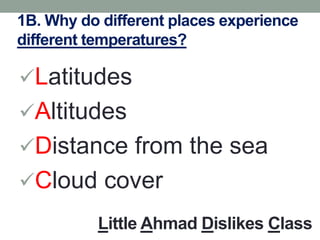
1B. Why do different places experience
different temperatures?
Latitudes
Altitudes
Distance from the sea
Cloud cover
Little Ahmad Dislikes Class
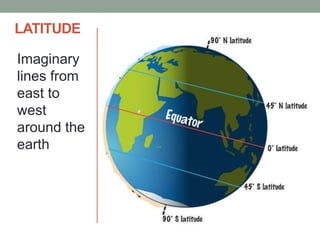
LATITUDE
Imaginary
lines from
east to
west
around the
earth
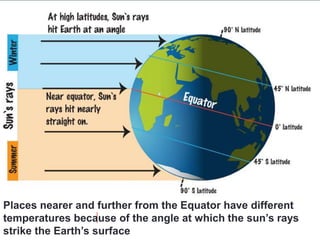
LATITUDE
Places nearer and further from the Equator have different
temperatures because of the angle at which the sun’s rays
strike the Earth’s surface
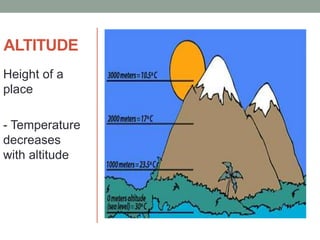
ALTITUDE
Height of a
place
- Temperature
decreases
with altitude
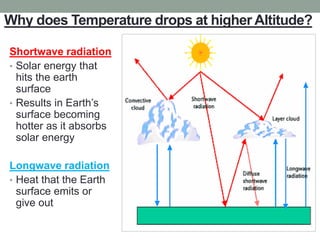
Why does Temperature drops at higher Altitude?
Shortwave radiation
• Solar energy that
hits the earth
surface
• Results in Earth’s
surface becoming
hotter as it absorbs
solar energy
Longwave radiation
• Heat that the Earth
surface emits or
give out
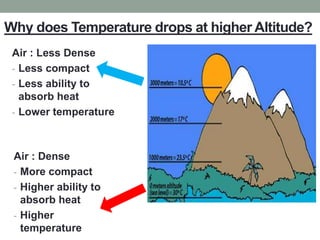
Why does Temperature drops at higher Altitude?
Air : Less Dense
- Less compact
- Less ability to
absorb heat
- Lower temperature
Air : Dense
- More compact
- Higher ability to
absorb heat
- Higher
temperature
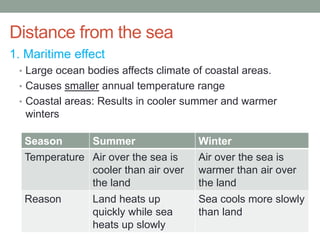
Distance from the sea
1. Maritime effect
• Large ocean bodies affects climate of coastal areas.
• Causes smaller annual temperature range
• Coastal areas: Results in cooler summer and warmer
winters
Season Summer Winter
Temperature Air over the sea is
cooler than air over
the land
Air over the sea is
warmer than air over
the land
Reason Land heats up
quickly while sea
heats up slowly
Sea cools more slowly
than land
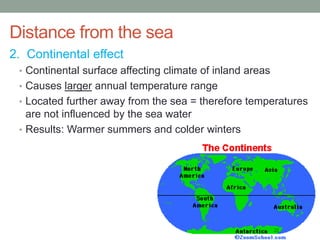
Distance from the sea
2. Continental effect
• Continental surface affecting climate of inland areas
• Causes larger annual temperature range
• Located further away from the sea = therefore temperatures
are not influenced by the sea water
• Results: Warmer summers and colder winters
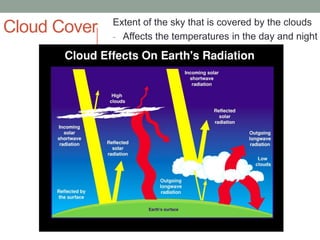
Cloud Cover Extent of the sky that is covered by the clouds
- Affects the temperatures in the day and night
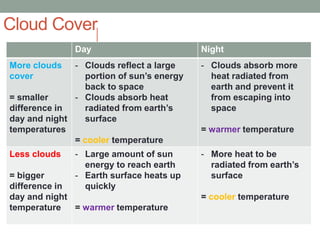
Cloud Cover
Day Night
More clouds
cover
= smaller
difference in
day and night
temperatures
- Clouds reflect a large
portion of sun’s energy
back to space
- Clouds absorb heat
radiated from earth’s
surface
= cooler temperature
- Clouds absorb more
heat radiated from
earth and prevent it
from escaping into
space
= warmer temperature
Less clouds
= bigger
difference in
day and night
temperature
- Large amount of sun
energy to reach earth
- Earth surface heats up
quickly
= warmer temperature
- More heat to be
radiated from earth’s
surface
= cooler temperature
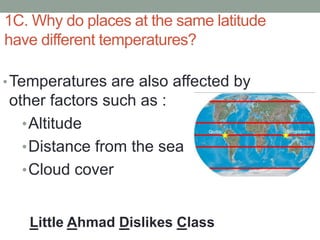
1C. Why do places at the same latitude
have different temperatures?
•Temperatures are also affected by
other factors such as :
•Altitude
•Distance from the sea
•Cloud cover
Little Ahmad Dislikes Class
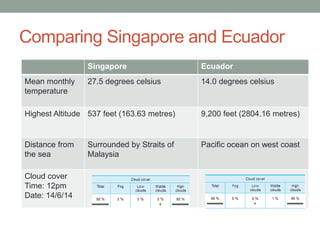
Comparing Singapore and Ecuador
Singapore Ecuador
Mean monthly
temperature
27.5 degrees celsius 14.0 degrees celsius
Highest Altitude 537 feet (163.63 metres) 9,200 feet (2804.16 metres)
Distance from
the sea
Surrounded by Straits of
Malaysia
Pacific ocean on west coast
Cloud cover
Time: 12pm
Date: 14/6/14
Homework 1
1. What is the difference between
weather and climate? [1]
2. Why do different places experience
different temperatures? [4]
3. With the aid of a well-labelled
diagram, explain why do places at the
same latitude have different
temperatures? [3]

Topic 1

  • 1.
    WEATHER AND CLIMATE TOPIC 1:TEMPERATURE Text page 72-80
  • 2.
    TOPIC 1 -TEMPERATURE Essential Questions Definitions Learning outcomes A. What is the difference between weather and climate? B. Why do different places experience different temperatures? C. Why do places at the same latitude have different temperatures? - Weather refers to a specific condition of the atmosphere at a particular place and time while climate refers to the long term weather condition. - Differentiate between weather and climate - Explain daily and seasonal variations in temperature at a particular location - Compare and explain with the aid of well- labelled diagrams variations in temperature between different locations.
  • 3.
    1A. Difference betweenweather and climate What is the weather of Singapore? • Condition of a place at a certain time (daily) What is the climate of Singapore? • Condition of a place over a long period (30 years)
  • 4.
    WEATHER ELEMENTS ELEMENTS DEFINITIONINSTRUMENTS Temperature Degree of hotness or coldness - Thermometer Wind Movement of air from high to low pressure area - Anemometer - Wind vane/rose Precipitation (Rainfall) Water that falls to from atmosphere to surface - Rain gauge Air pressure Force exerted on earth’s surface due to air - Barometer Relative humidity Amount of water vapor in the air - Sling psychrometer (wet and dry bulb) Clouds Evaporated water vapour in air NIL
  • 5.
    Can you guesswhat weather instrument is this? A minimum and maximum thermometer is a thermometer that will tell you the minimum and maximum temperature in a given time period. This thermometer is U-shaped. One half is filled with alcohol, while the other filled with an alcohol vapor or contains a vacuum
  • 6.
  • 7.
    307 Classroom Month JanFeb Mar Apr May Jun Jul Aug Sep Oct Nov Dec Temp 23 22 20.5 16.5 14 10.5 10 11 12.5 14 17.5 21 = Total of mean monthly temperature / 12 = (23 + 22 + 20.5 + 16.5 + 14 + 10.5 + 10 + 11 + 12.5 + 14 + 17.5 + 21 ) / 12 = (192.5) / 12 = 16.04 oC = Highest Temperature – Lowest Temperature = 23 – 10 = 13 oC Mean Annual Temperature Annual Temperature Range
  • 8.
    1B. Why dodifferent places experience different temperatures? Latitudes Altitudes Distance from the sea Cloud cover Little Ahmad Dislikes Class
  • 9.
  • 10.
    LATITUDE Places nearer andfurther from the Equator have different temperatures because of the angle at which the sun’s rays strike the Earth’s surface
  • 11.
    ALTITUDE Height of a place -Temperature decreases with altitude
  • 12.
    Why does Temperaturedrops at higher Altitude? Shortwave radiation • Solar energy that hits the earth surface • Results in Earth’s surface becoming hotter as it absorbs solar energy Longwave radiation • Heat that the Earth surface emits or give out
  • 13.
    Why does Temperaturedrops at higher Altitude? Air : Less Dense - Less compact - Less ability to absorb heat - Lower temperature Air : Dense - More compact - Higher ability to absorb heat - Higher temperature
  • 14.
    Distance from thesea 1. Maritime effect • Large ocean bodies affects climate of coastal areas. • Causes smaller annual temperature range • Coastal areas: Results in cooler summer and warmer winters Season Summer Winter Temperature Air over the sea is cooler than air over the land Air over the sea is warmer than air over the land Reason Land heats up quickly while sea heats up slowly Sea cools more slowly than land
  • 15.
    Distance from thesea 2. Continental effect • Continental surface affecting climate of inland areas • Causes larger annual temperature range • Located further away from the sea = therefore temperatures are not influenced by the sea water • Results: Warmer summers and colder winters
  • 16.
    Cloud Cover Extentof the sky that is covered by the clouds - Affects the temperatures in the day and night
  • 17.
    Cloud Cover Day Night Moreclouds cover = smaller difference in day and night temperatures - Clouds reflect a large portion of sun’s energy back to space - Clouds absorb heat radiated from earth’s surface = cooler temperature - Clouds absorb more heat radiated from earth and prevent it from escaping into space = warmer temperature Less clouds = bigger difference in day and night temperature - Large amount of sun energy to reach earth - Earth surface heats up quickly = warmer temperature - More heat to be radiated from earth’s surface = cooler temperature
  • 18.
    1C. Why doplaces at the same latitude have different temperatures? •Temperatures are also affected by other factors such as : •Altitude •Distance from the sea •Cloud cover Little Ahmad Dislikes Class
  • 19.
    Comparing Singapore andEcuador Singapore Ecuador Mean monthly temperature 27.5 degrees celsius 14.0 degrees celsius Highest Altitude 537 feet (163.63 metres) 9,200 feet (2804.16 metres) Distance from the sea Surrounded by Straits of Malaysia Pacific ocean on west coast Cloud cover Time: 12pm Date: 14/6/14
  • 20.
    Homework 1 1. Whatis the difference between weather and climate? [1] 2. Why do different places experience different temperatures? [4] 3. With the aid of a well-labelled diagram, explain why do places at the same latitude have different temperatures? [3]