Geostrophic Wind
Gradient Wind
A Presentation
On
Group
number 5Name Roll no
Mahmudul
Hasan
MD.Liton Khan
Mst.Sanjida Akhter
MD.Omar Faruk
Shahriar Sagor
1731023
1731048
1731050
1731051
1731055
Reg No
2263
2288
2290
2291
2295
Group
number 5
Name Roll no
Nahida Rahman
MD.Sakib Hasan
MD.Shawon Hossain
MD.Alamin Khan
MD.Rafsan Hossain khan
1731049
1731054
1731053
1731052
1731055
Reg No
2289
2294
2293
2292
2295
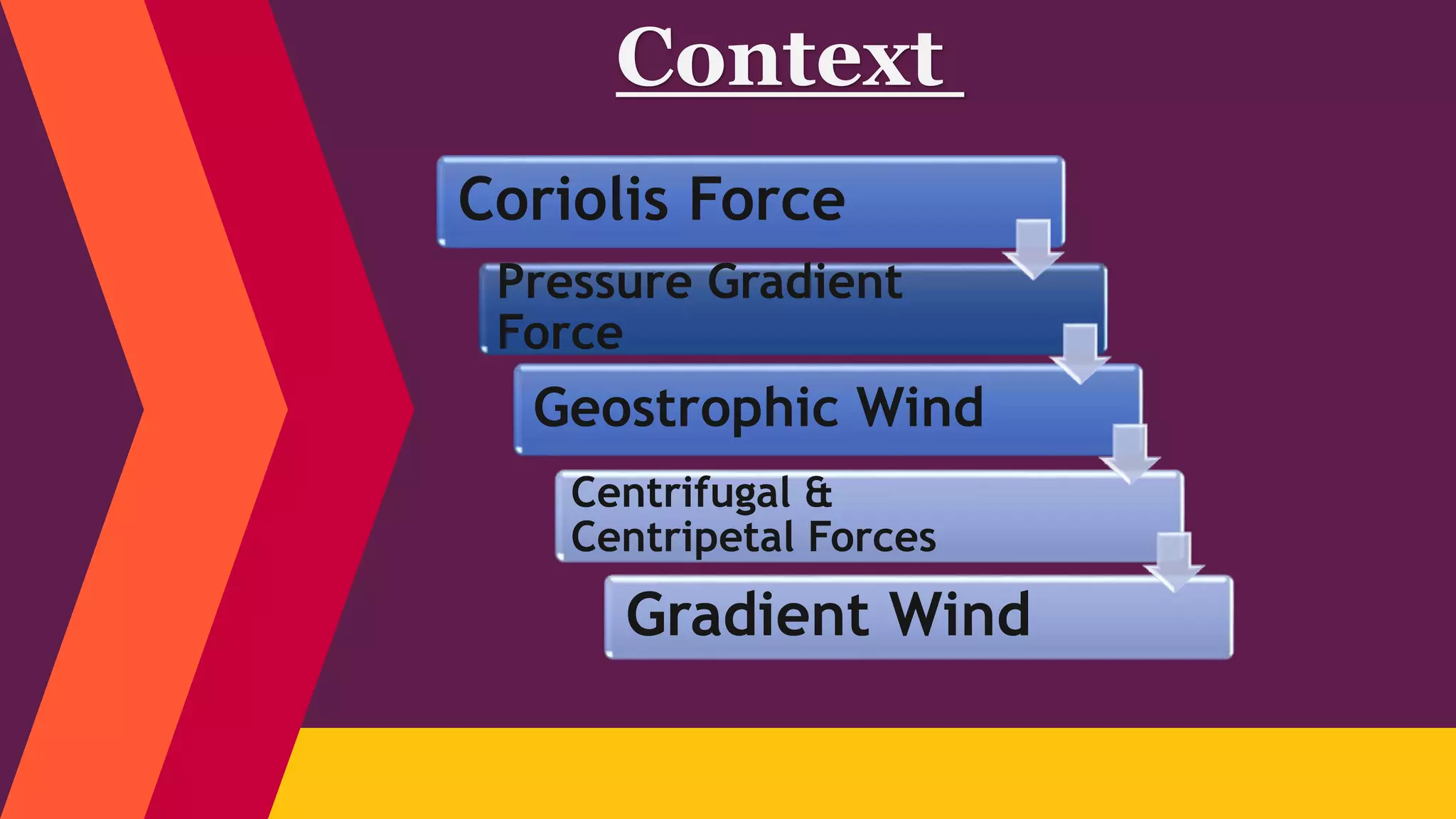
Context
Pressure Gradient
Force
Coriolis Force
Gradient Wind
Centrifugal &
Centripetal Forces
Geostrophic Wind
Coriolis Force
The Coriolis force is a force which acts
upon any moving body in an
independently rotating system.The
most well known application of the coriolis
force is for the movement or
flow of air across the earth
The effect is named after the
French physicist Gaspard de
Gustave Coriolis (1792-1843),
who first analyzed the
phenomenon mathematically.
Who discovered this!!!!!
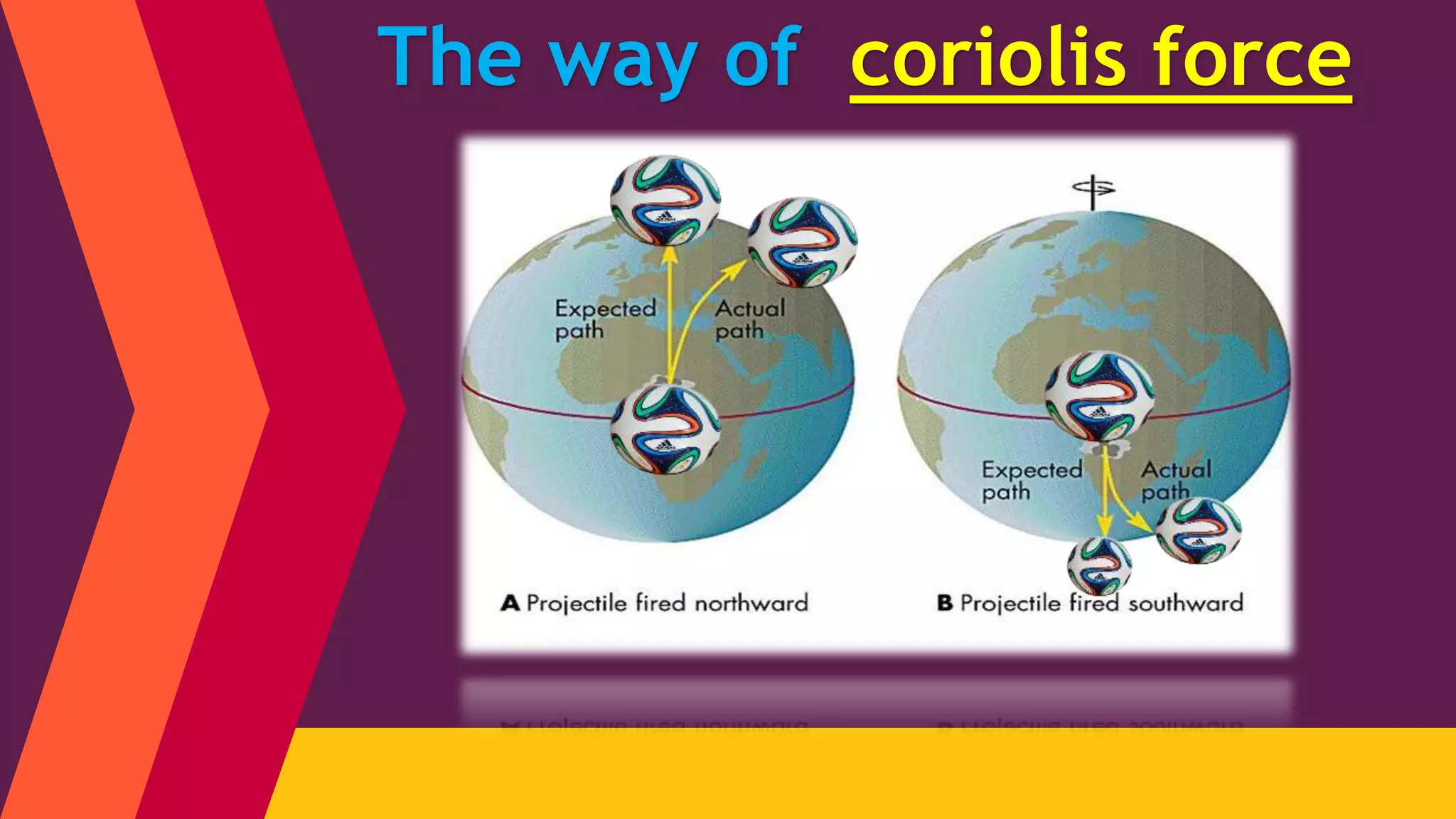
The Earth rotates about its axis from west to
east once every 24 hours. Consequently, an
object moving above the Earth in a generally
northerly or southerly direction, and with a
constant speed relative to space, will be
deflected in relation to the rotation of the
Earth.
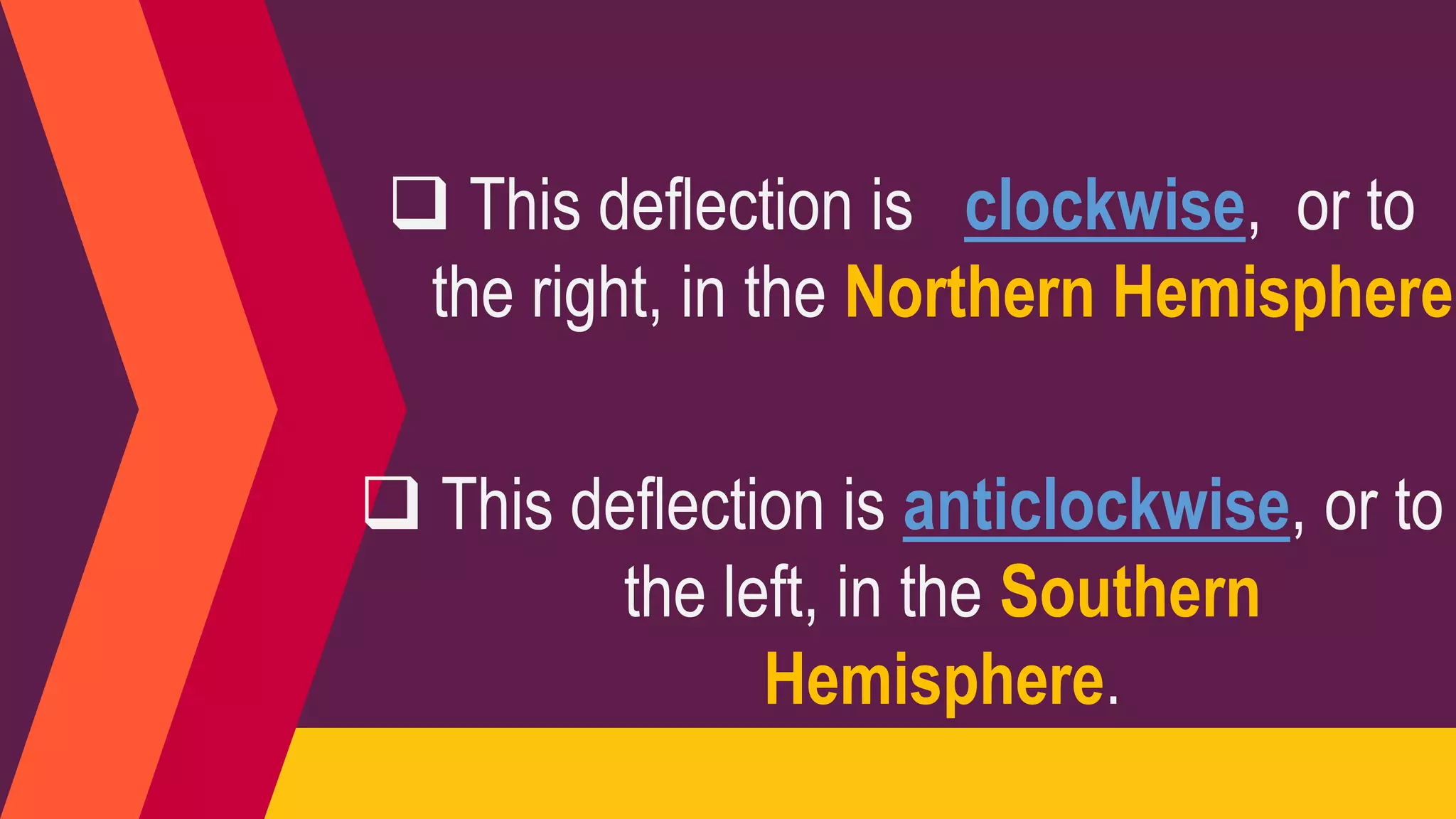
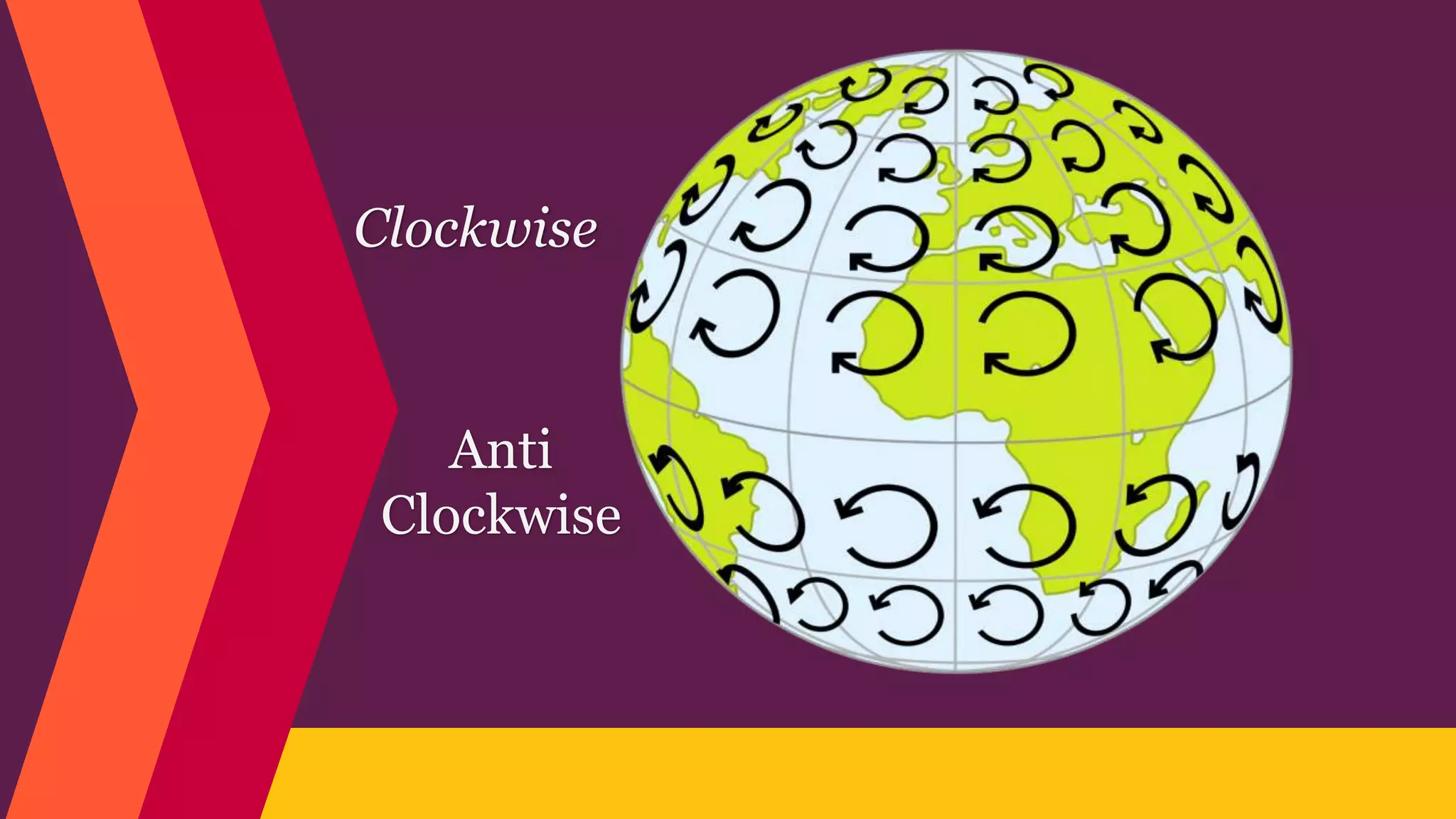
 This deflection is clockwise, or to
the right, in the Northern Hemisphere
 This deflection is anticlockwise, or to
the left, in the Southern
Hemisphere.
Clockwise
Anti
Clockwise
The way of coriolis force
Pressure Gradient Force
Pressure differences must create a force in
order to drive the wind. This force is the
pressure gradient force
The force is from higher pressure to
lower pressure and is perpendicular to
isobars or contours
 Whenever a pressure difference develops over an
area, the pressure gradient force begins moving
the air directly across the isobars
 The closer the spacing of isobars, the stronger is
the pressure gradient force
 The stronger the pressure gradient here force, the
stronger is the wind
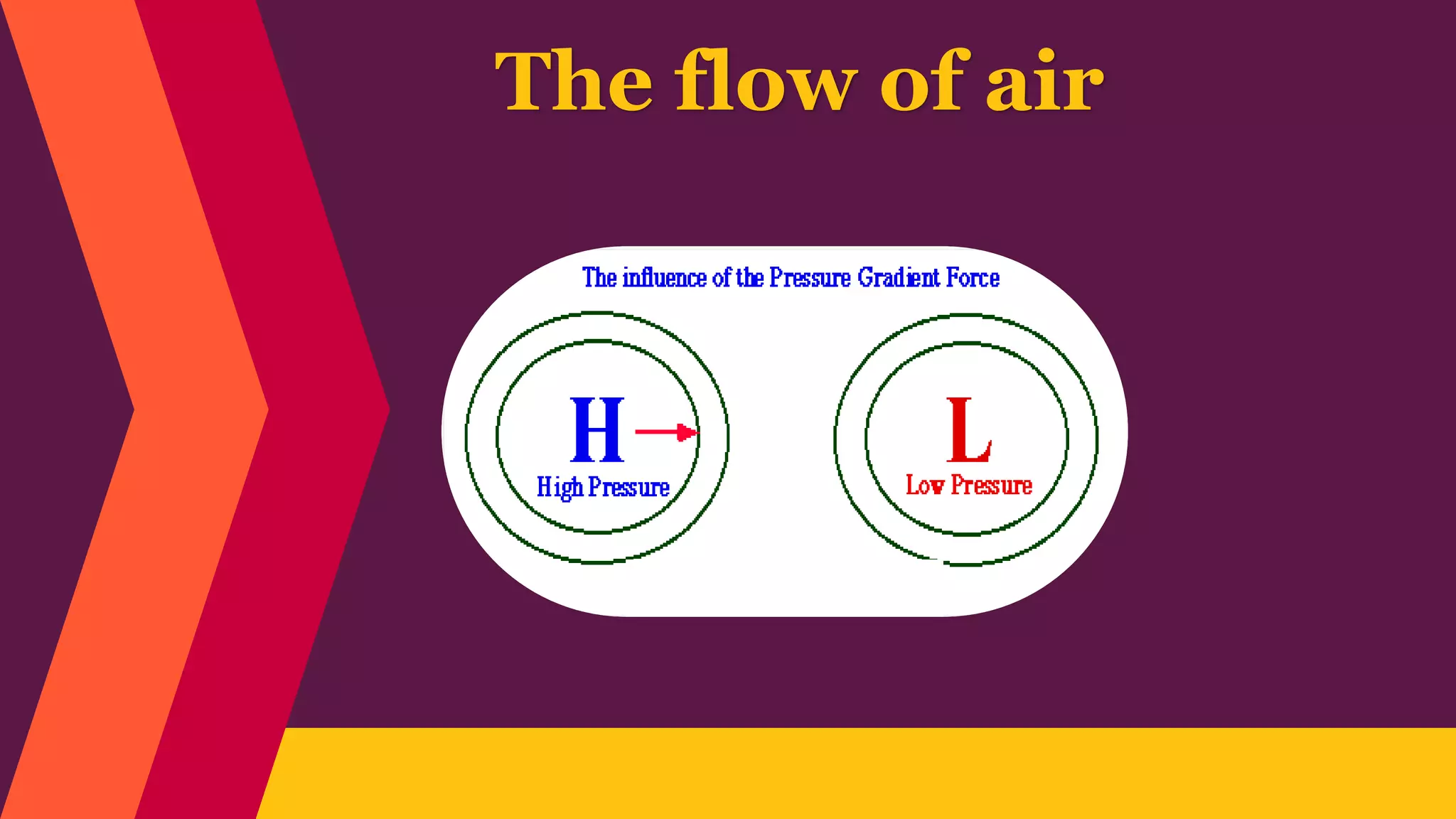
The flow of air
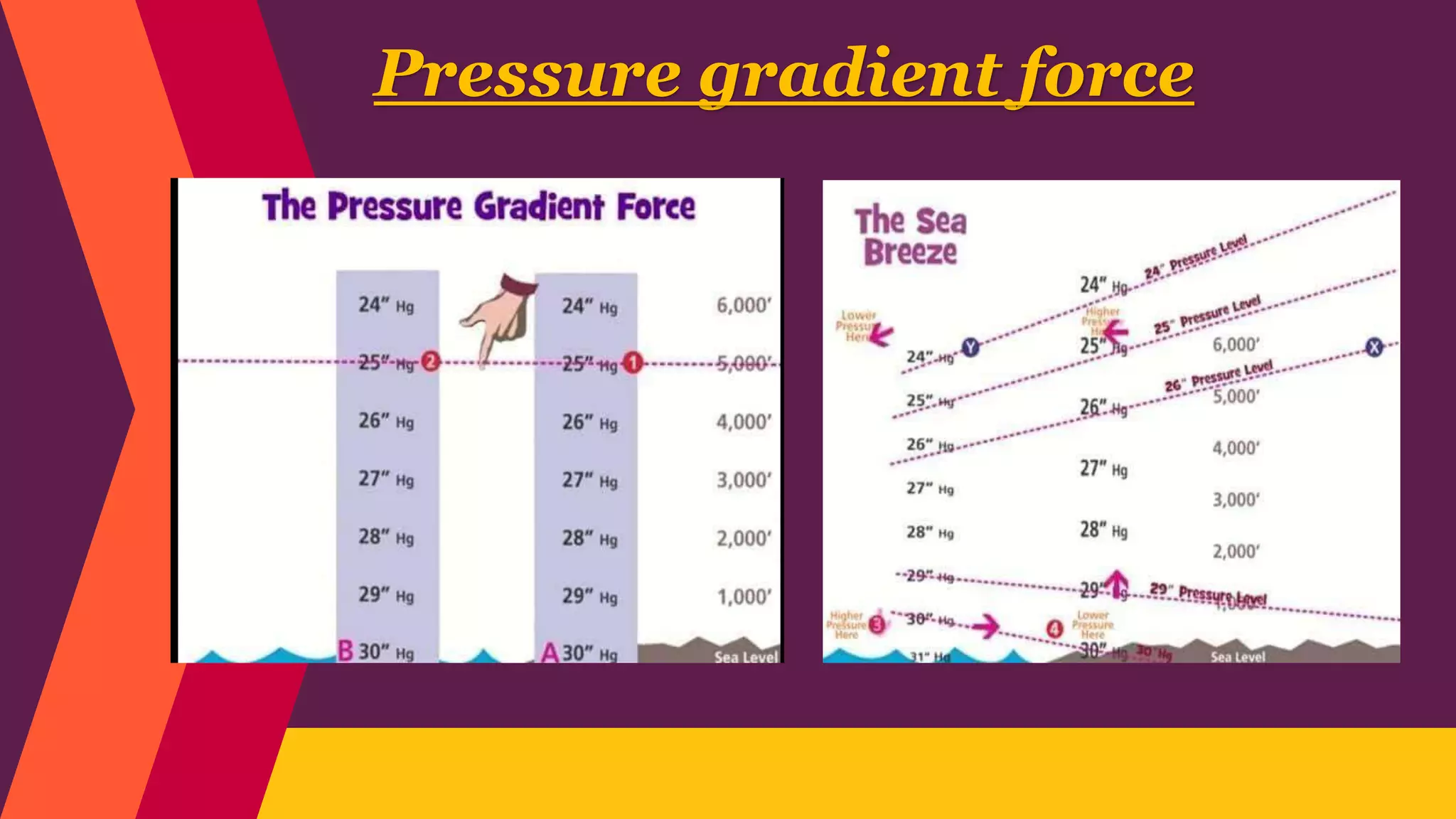
the pressure gradient force is balanced
by the gravitational force, maintaining
hydrostatic equilibrium. In Earth's
atmosphere, for example, air pressure
decreases at altitudes above Earth's
surface, thus providing a pressure gradient
force which counteracts the force of gravity
on the atmosphere.
Pressure gradient force
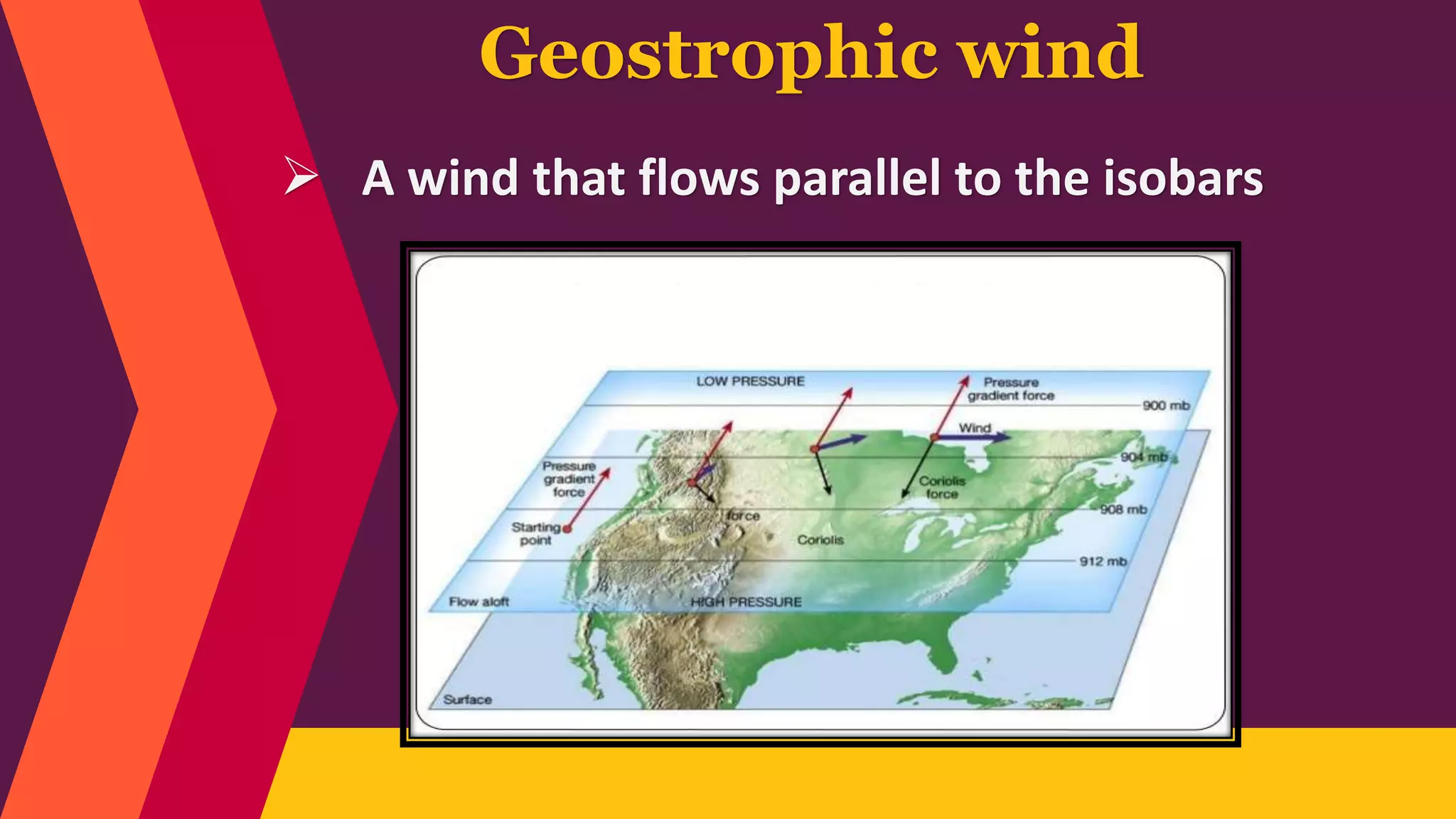
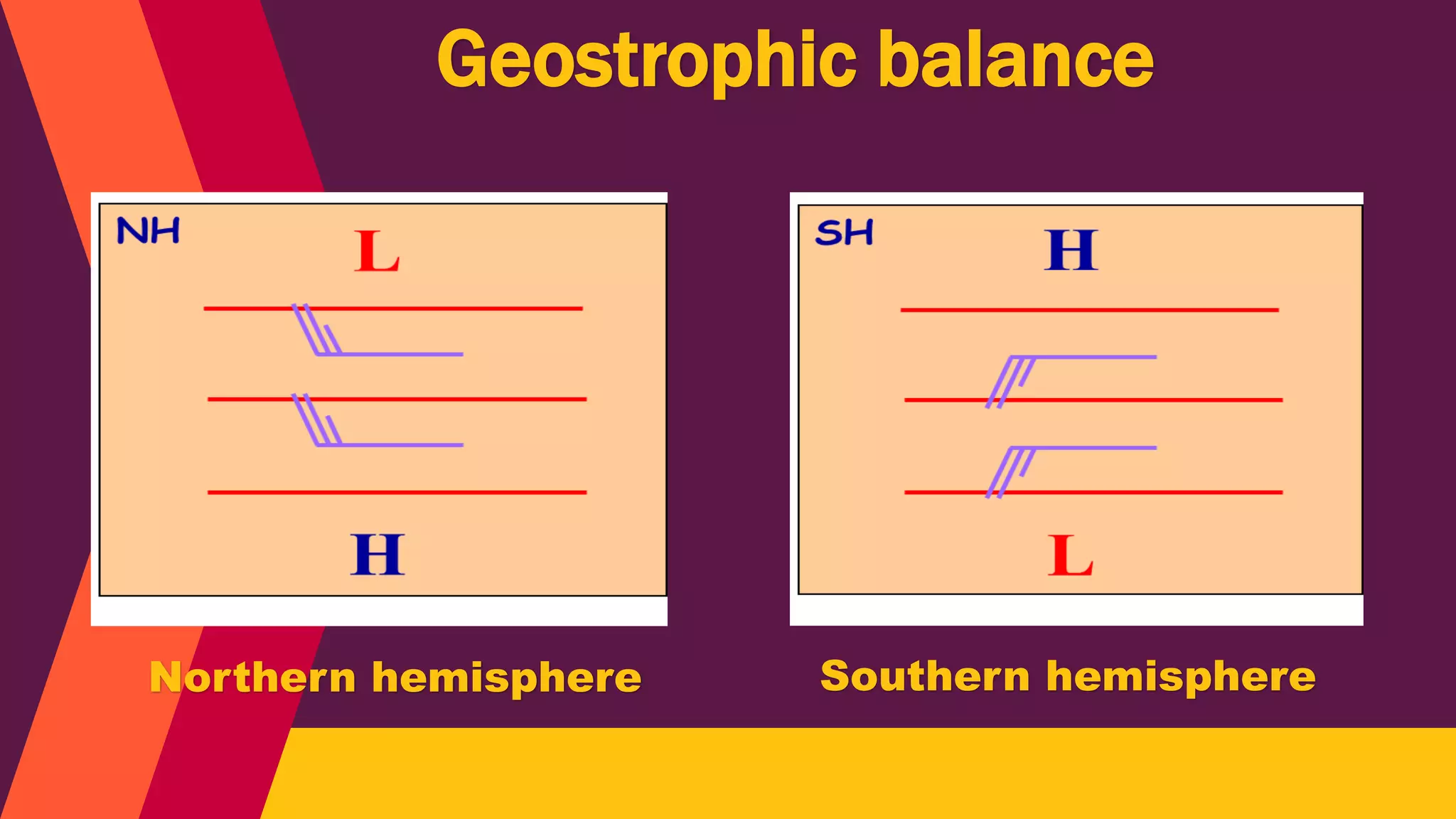
Geostrophic wind describes a steady-state of
flow in a spatially varying pressure field when
Geostrophic wind
 frictional effects are neglected; and
 the entire pressure gradient exactly
balances the Coriolis force alone
(resulting in no curvature).
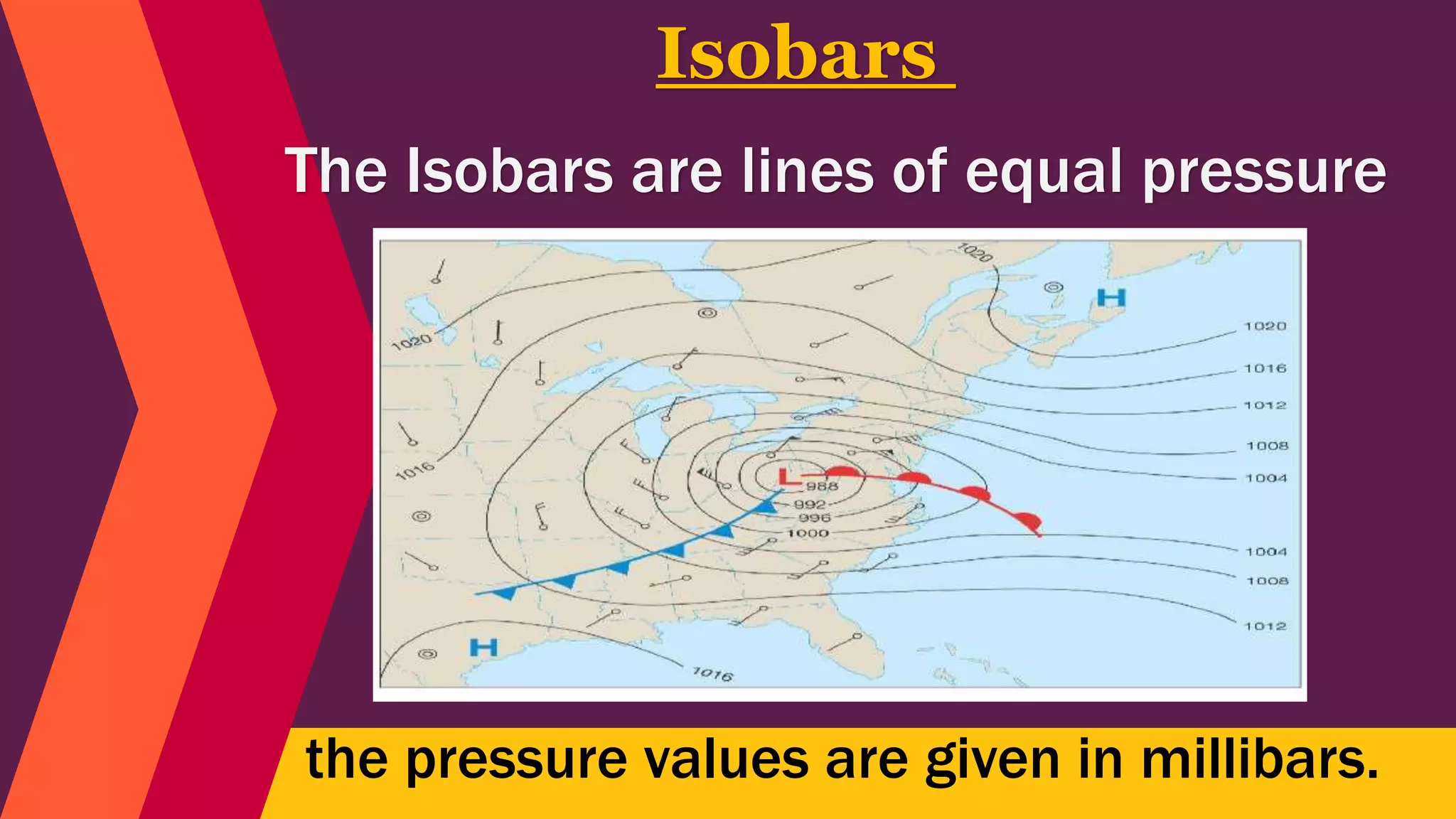
Isobars
The Isobars are lines of equal pressure
the pressure values are given in millibars.
Geostrophic wind
 A wind that flows parallel to the isobars
Geostrophic balance
Northern hemisphere Southern hemisphere
The conception of centrifugal force has evolved
since the time of Huygens, Newton, Leibniz,
and Hooke who expressed early conceptions of
it. Its modern conception as a fictitious force
arising in a rotating reference frame evolved in
the eighteenth and nineteenth centuries
Centrifugal Force
The concept of centrifugal force can be
applied in rotating devices, such
as centrifuges, centrifugal
pumps, centrifugal governors,
and centrifugal clutches, and
in centrifugal railways, planetary
orbits and banked curves, when they are
analyzed in a rotating coordinate system.
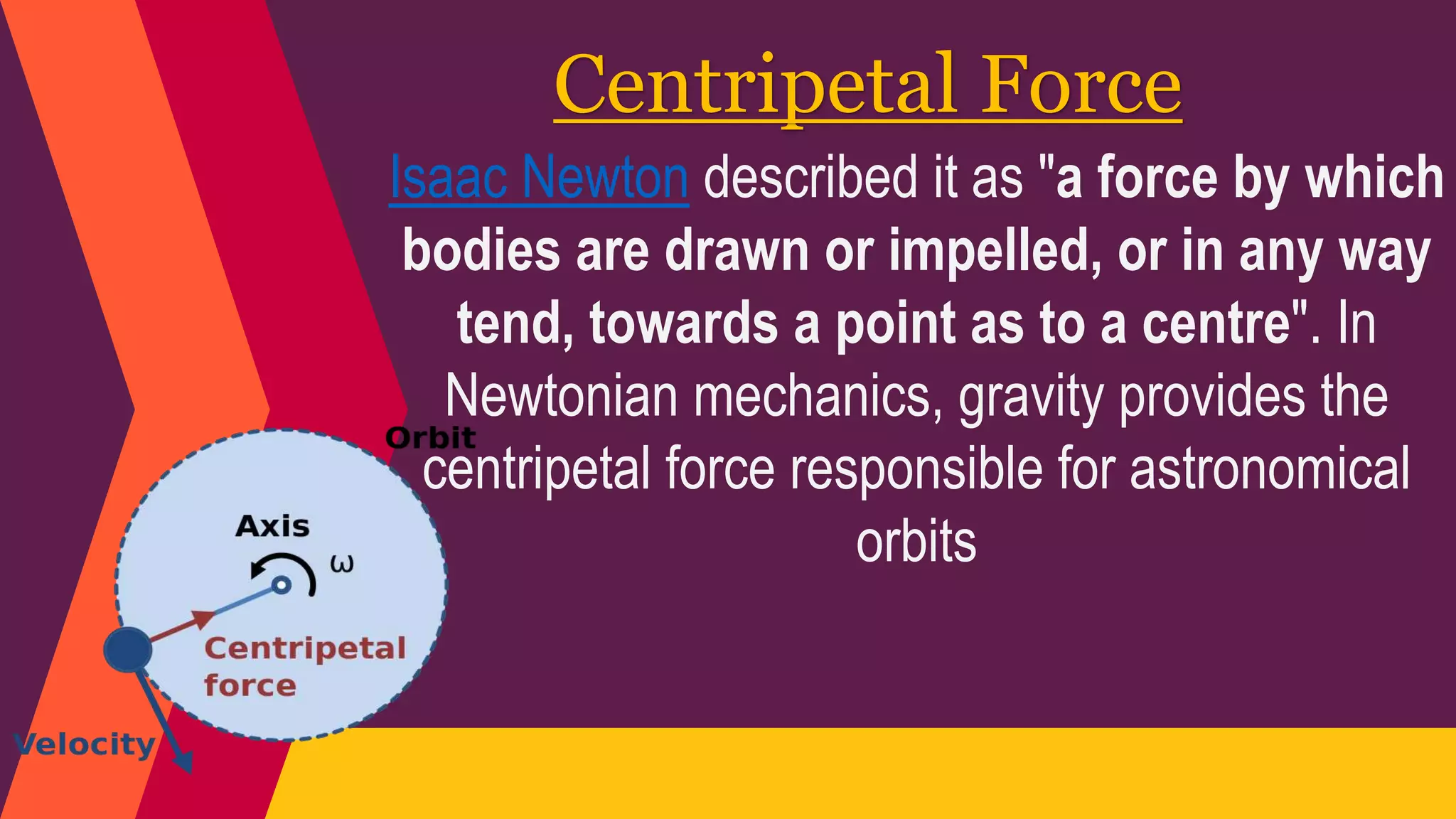
Centripetal Force
Isaac Newton described it as "a force by which
bodies are drawn or impelled, or in any way
tend, towards a point as to a centre". In
Newtonian mechanics, gravity provides the
centripetal force responsible for astronomical
orbits
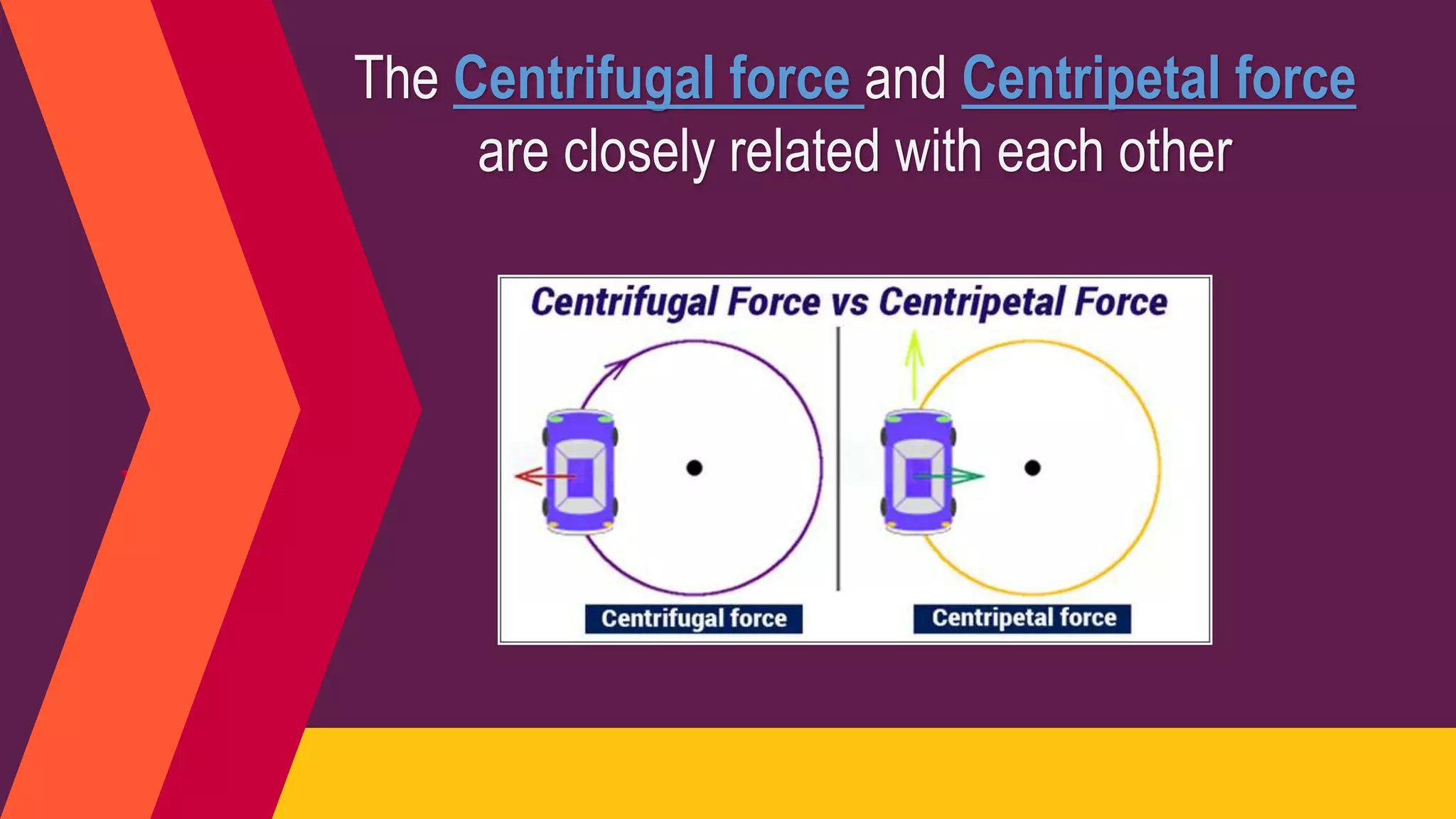
The Centrifugal force and Centripetal force
are closely related with each other
Gradient Wind
The gradient wind is a balance of the Pressure
Gradient Force, centrifugal and Coriolis
A geostrophic wind becomes a gradient wind
when the wind begins flowing through curved
height contours
The gradient wind occurs aloft (no
friction) within curved height
contours. The wind stays parallel to
the height contours throughout the
curve. The two examples will be
used to show how the flow stays
parallel to the height contours.
Example 1
Example 2
Geostrophic Cyclostrophic Inertial
Gradient (H-
pressure)
Gradie
nt (L-
pressu
re)
R=100 km 7.45 9.25 11.50 N/A 5.15
R=300 km 7.45 16.00 34.50 10.90 6.30
https://en.wikipedia.org/wiki/Balanced_flowsource
The chart shows how the different speeds change in the conditions
chosen above and with increasing radius of curvature.
Taking two of such distances R as 100 km
and 300 km, the speeds are (in m/s)
Balanced-flow speeds compared
Each balanced-flow idealisation gives a different estimate
for the wind speed in the same conditions. Here we focus
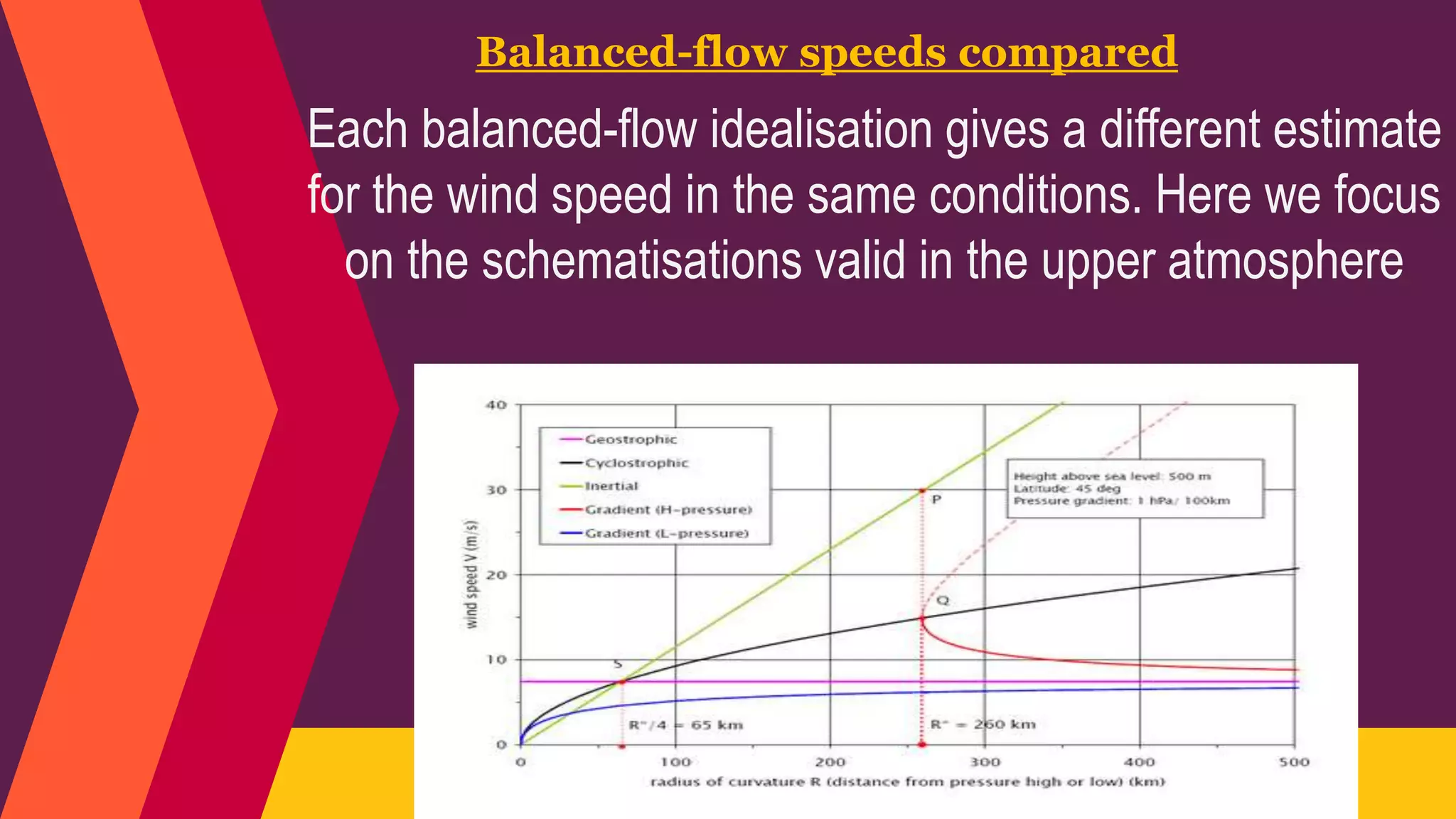
on the schematisations valid in the upper atmosphere
So we learned about
Coriolis Force
Gradient Wind
Centrifugal & Centripetal force
Pressure Gradient Force
Geostrophic Wind
THANK YOU ALL
Any Questions ?

Geostrophic wind & Gradient wind

  • 1.
  • 2.
    Group number 5Name Rollno Mahmudul Hasan MD.Liton Khan Mst.Sanjida Akhter MD.Omar Faruk Shahriar Sagor 1731023 1731048 1731050 1731051 1731055 Reg No 2263 2288 2290 2291 2295
  • 3.
    Group number 5 Name Rollno Nahida Rahman MD.Sakib Hasan MD.Shawon Hossain MD.Alamin Khan MD.Rafsan Hossain khan 1731049 1731054 1731053 1731052 1731055 Reg No 2289 2294 2293 2292 2295
  • 4.
    Context Pressure Gradient Force Coriolis Force GradientWind Centrifugal & Centripetal Forces Geostrophic Wind
  • 5.
    Coriolis Force The Coriolisforce is a force which acts upon any moving body in an independently rotating system.The most well known application of the coriolis force is for the movement or flow of air across the earth
  • 6.
    The effect isnamed after the French physicist Gaspard de Gustave Coriolis (1792-1843), who first analyzed the phenomenon mathematically. Who discovered this!!!!!
  • 7.
    The Earth rotatesabout its axis from west to east once every 24 hours. Consequently, an object moving above the Earth in a generally northerly or southerly direction, and with a constant speed relative to space, will be deflected in relation to the rotation of the Earth.
  • 8.
     This deflectionis clockwise, or to the right, in the Northern Hemisphere  This deflection is anticlockwise, or to the left, in the Southern Hemisphere.
  • 9.
  • 10.
    The way ofcoriolis force
  • 11.
    Pressure Gradient Force Pressuredifferences must create a force in order to drive the wind. This force is the pressure gradient force The force is from higher pressure to lower pressure and is perpendicular to isobars or contours
  • 12.
     Whenever apressure difference develops over an area, the pressure gradient force begins moving the air directly across the isobars  The closer the spacing of isobars, the stronger is the pressure gradient force  The stronger the pressure gradient here force, the stronger is the wind
  • 13.
  • 14.
    the pressure gradientforce is balanced by the gravitational force, maintaining hydrostatic equilibrium. In Earth's atmosphere, for example, air pressure decreases at altitudes above Earth's surface, thus providing a pressure gradient force which counteracts the force of gravity on the atmosphere.
  • 15.
  • 16.
    Geostrophic wind describesa steady-state of flow in a spatially varying pressure field when Geostrophic wind  frictional effects are neglected; and  the entire pressure gradient exactly balances the Coriolis force alone (resulting in no curvature).
  • 17.
    Isobars The Isobars arelines of equal pressure the pressure values are given in millibars.
  • 18.
    Geostrophic wind  Awind that flows parallel to the isobars
  • 19.
  • 20.
    The conception ofcentrifugal force has evolved since the time of Huygens, Newton, Leibniz, and Hooke who expressed early conceptions of it. Its modern conception as a fictitious force arising in a rotating reference frame evolved in the eighteenth and nineteenth centuries Centrifugal Force
  • 21.
    The concept ofcentrifugal force can be applied in rotating devices, such as centrifuges, centrifugal pumps, centrifugal governors, and centrifugal clutches, and in centrifugal railways, planetary orbits and banked curves, when they are analyzed in a rotating coordinate system.
  • 22.
    Centripetal Force Isaac Newtondescribed it as "a force by which bodies are drawn or impelled, or in any way tend, towards a point as to a centre". In Newtonian mechanics, gravity provides the centripetal force responsible for astronomical orbits
  • 23.
    The Centrifugal forceand Centripetal force are closely related with each other
  • 24.
    Gradient Wind The gradientwind is a balance of the Pressure Gradient Force, centrifugal and Coriolis A geostrophic wind becomes a gradient wind when the wind begins flowing through curved height contours
  • 25.
    The gradient windoccurs aloft (no friction) within curved height contours. The wind stays parallel to the height contours throughout the curve. The two examples will be used to show how the flow stays parallel to the height contours.
  • 26.
  • 27.
    Geostrophic Cyclostrophic Inertial Gradient(H- pressure) Gradie nt (L- pressu re) R=100 km 7.45 9.25 11.50 N/A 5.15 R=300 km 7.45 16.00 34.50 10.90 6.30 https://en.wikipedia.org/wiki/Balanced_flowsource The chart shows how the different speeds change in the conditions chosen above and with increasing radius of curvature. Taking two of such distances R as 100 km and 300 km, the speeds are (in m/s)
  • 28.
    Balanced-flow speeds compared Eachbalanced-flow idealisation gives a different estimate for the wind speed in the same conditions. Here we focus on the schematisations valid in the upper atmosphere
  • 29.
    So we learnedabout Coriolis Force Gradient Wind Centrifugal & Centripetal force Pressure Gradient Force Geostrophic Wind
  • 30.
  • 31.