FACTORS INFLUENCING
TEMPERATURE
ALTITUDE
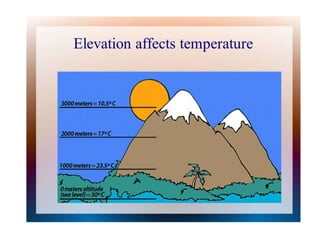
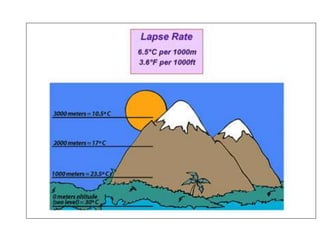
• Going upwards it becomes cooler an average
rate of about 0.6°C for every 100 metre gained
in height.
– This is known as the lapse rate.
• If the temperature at sea level at the foot of a
mountain were 26°C, what would you expect
the temperature to be near the top of the
mountain at a height of 1000 metre?
• What is the main reason why places in the Blue
Mountains are cooler than places near to sea
level?
DISTANCE FROM THE SEA
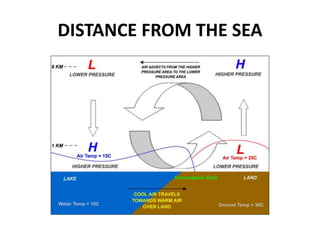
• In places that are far away from the Equator and
therefore have well developed summer and
winter seasons, this is important.
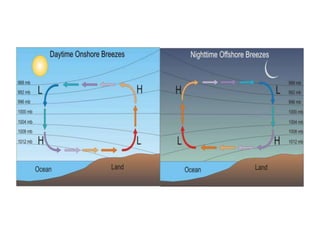
– During the summer the sea warms up less quickly
than the land, and places near to the sea tend to be
cooled by it.
– However, during the winter, the sea cools down less
quickly than the land, and so places near to the sea
tend to be warmed by it.
– As a result, places which are far inland usually have
greater extremes temperature than do places which
are near the coast/sea.
LATITUDE
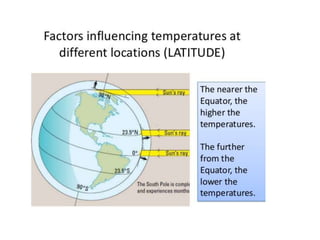
• Generally, the highest average annual
temperatures occur near the Equator and
going towards the poles it becomes cooler.
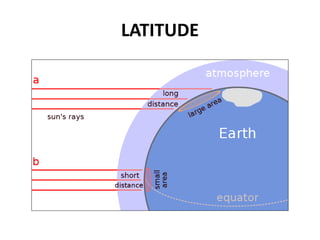
• At the Equator, the sun at midday is always
high in the sky. Therefore, its heating power is
concentrated on a relatively small area, and so
each part of that area gets a lot of heat.
• At the Equator, the sun’s rays have a shorter
distance of atmosphere to travel through
before reaching the earth’s surface. Therefore,
less heat is lost during the journey.
OCEAN CURRENT
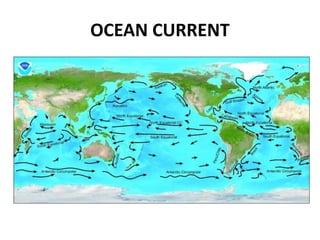
• These are surface movements of sea
water.
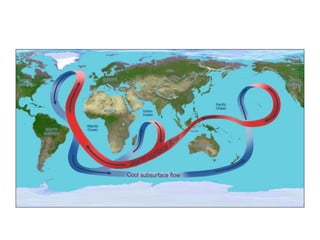
• The currents which flow towards the
Equator bring relatively cool water, while
those which flow away from the Equator
bring relatively warm water.
• Example, the Gulf Stream Drift or North
Atlantic Drift.
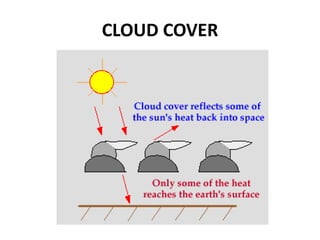
CLOUD COVER
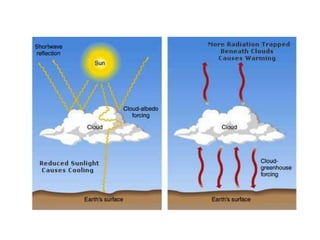
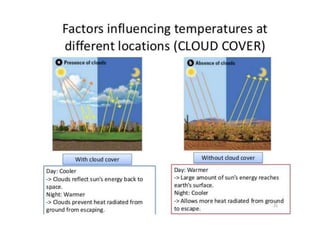
• The amount of cloud cover has an important
effect upon the daily range of temperature.
• Cloudless skies allow quick loss of heat during
the day. But, it also allows quick loss of heat at
night.
• Dense cloud protects the earth’s surface from
the full force of the sun’s rays during the day.
But, it also prevents the quick loss of heat at
night.
END

Factors influencing temperature

  • 1.
  • 3.
  • 6.
    • Going upwardsit becomes cooler an average rate of about 0.6°C for every 100 metre gained in height. – This is known as the lapse rate. • If the temperature at sea level at the foot of a mountain were 26°C, what would you expect the temperature to be near the top of the mountain at a height of 1000 metre? • What is the main reason why places in the Blue Mountains are cooler than places near to sea level?
  • 7.
  • 9.
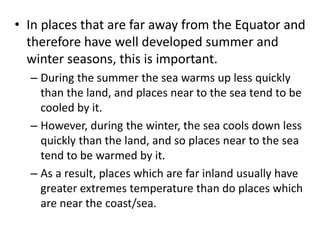
    • In placesthat are far away from the Equator and therefore have well developed summer and winter seasons, this is important. – During the summer the sea warms up less quickly than the land, and places near to the sea tend to be cooled by it. – However, during the winter, the sea cools down less quickly than the land, and so places near to the sea tend to be warmed by it. – As a result, places which are far inland usually have greater extremes temperature than do places which are near the coast/sea.
  • 10.
  • 12.
    • Generally, thehighest average annual temperatures occur near the Equator and going towards the poles it becomes cooler. • At the Equator, the sun at midday is always high in the sky. Therefore, its heating power is concentrated on a relatively small area, and so each part of that area gets a lot of heat. • At the Equator, the sun’s rays have a shorter distance of atmosphere to travel through before reaching the earth’s surface. Therefore, less heat is lost during the journey.
  • 13.
  • 15.
    • These aresurface movements of sea water. • The currents which flow towards the Equator bring relatively cool water, while those which flow away from the Equator bring relatively warm water. • Example, the Gulf Stream Drift or North Atlantic Drift.
  • 16.
  • 19.
    • The amountof cloud cover has an important effect upon the daily range of temperature. • Cloudless skies allow quick loss of heat during the day. But, it also allows quick loss of heat at night. • Dense cloud protects the earth’s surface from the full force of the sun’s rays during the day. But, it also prevents the quick loss of heat at night.
  • 20.