Downloaded 252 times
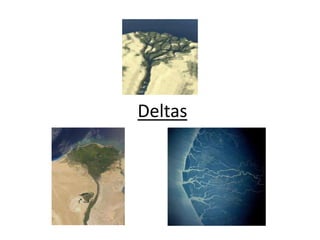
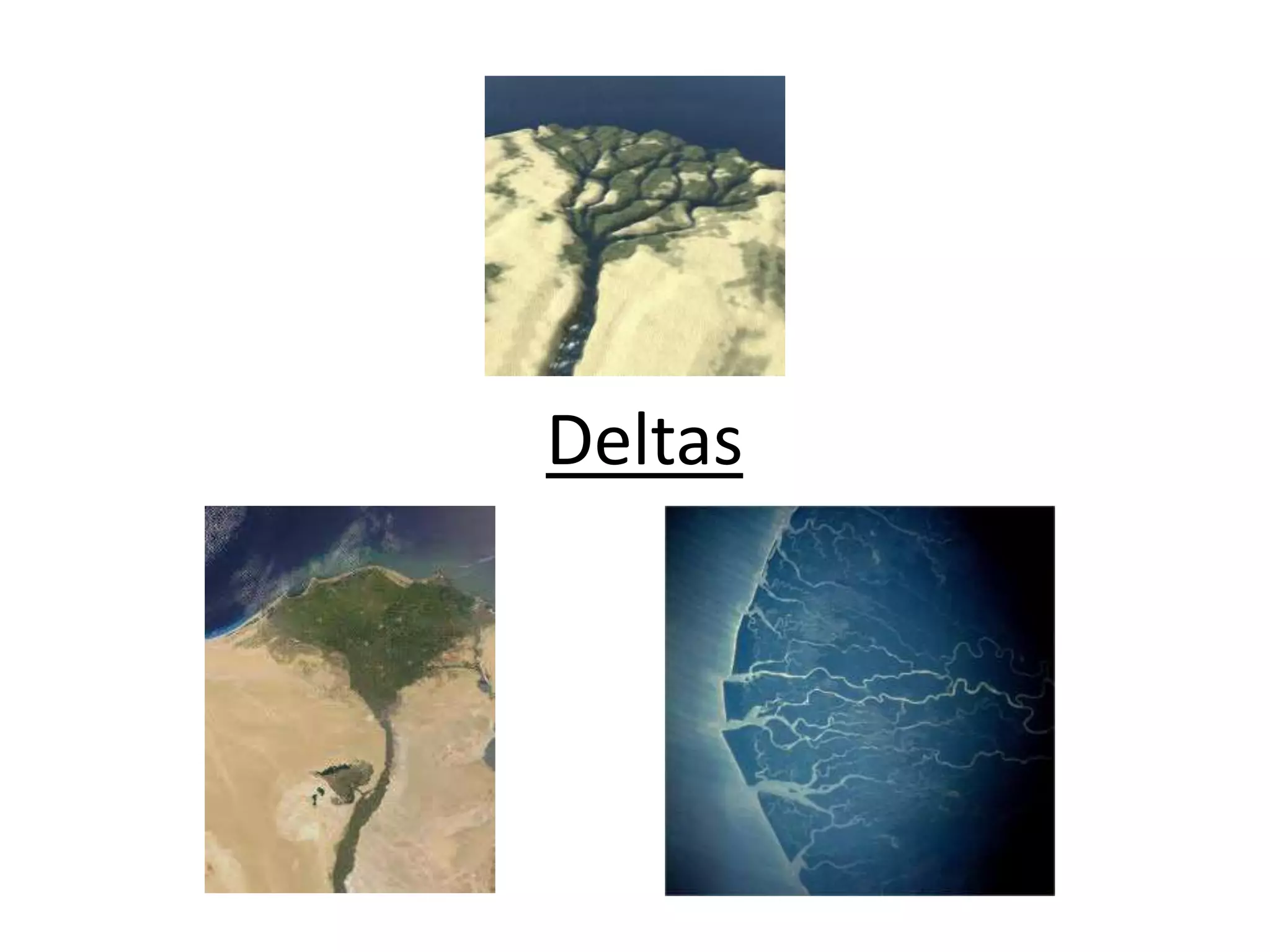
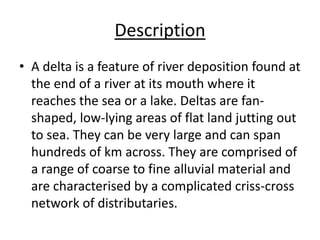
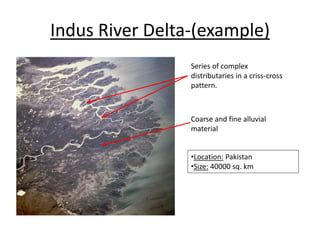
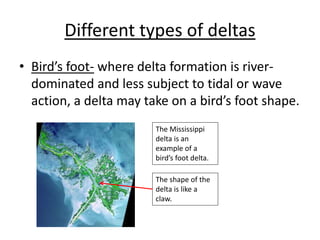
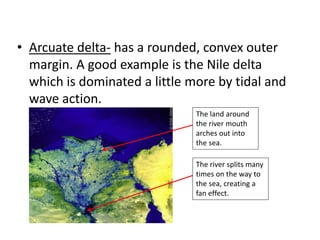
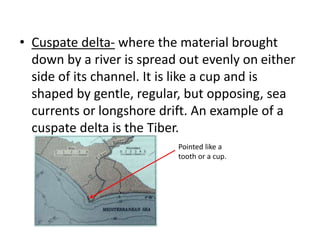
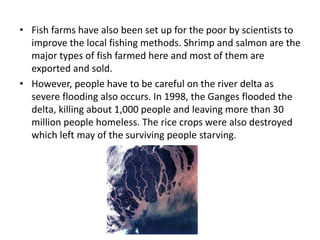

Deltas are landforms formed at river mouths where sediment is deposited as the river enters a sea or lake. They are fan-shaped areas that can span hundreds of kilometers. The Indus River Delta in Pakistan covers 40,000 square kilometers and has a complex network of distributaries. Deltas form as rivers slow down at their mouths, causing sediment to flocculate and settle, building up over time. Different types of deltas include bird's foot, arcuate, and cuspate shapes, depending on factors like tidal influence. Deltas provide fertile land and resources but are also at high risk of flooding and channel migration due to their unstable sediments.


