Thyroid Hormone
(Mode Of Action)
DANISH HASSAN
LECTURER, UNIVERSITY OF SARGODHA
Mode Of Action Of Thyroid
Hormones
 Thyroid hormone acts on target cells (particularly cells
of liver, muscle and kidney), most of the T4 is
deiodinated to form T3.
 True intracellular hormone is T3, rather than T4.
 Moreover, T3 is found freely in the plasma and T4 is
usually bound with plasma proteins.
 So, at the site of action, T3 acts more quickly than T4.
 T3 also has got high binding affinity for thyroid hormone
receptor.
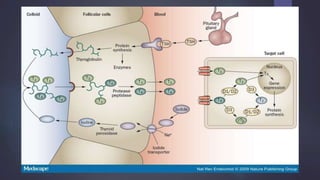
 Thyroid hormones act by activating the genes and
increasing the genetic transcription.
 In addition, the thyroid hormone also acts at
mitochondrial level by stimulating the synthesis of
proteins and RNA.
 Sequence of Events
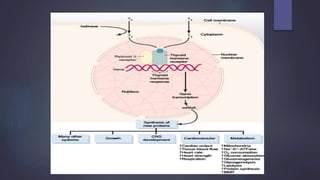
1. Thyroid hormones enter the nucleus of cell and
bind with thyroid hormone receptors (TR), which
are either attached to DNA genetic strands or in
close proximity to them.
2. TR is always bound to another receptor called
retinoid X receptor (RXR).
3. Thyroid hormones bind with receptors and form the
hormone-receptor complex..
5. This complex initiates the transcription process by
activating the enzymes such as RNA polymerase
and phospho-protein kinases.
6. It also stimulates the synthesis of nuclear proteins.
7. Thus, a large number of mRNA is formed, which
activate the ribosomes to synthesize the new
proteins
8. New proteins are involved in many activities
including the enzymatic actions
Regulation Of Secretion Of Thyroid
Hormones
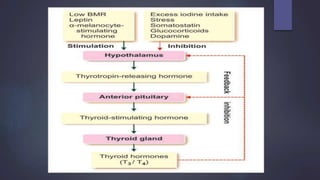
 Secretion of thyroid hormones is controlled by anterior
pituitary and hypothalamus through feedback
mechanism.
 Many factors are involved in the regulation of thyroid
secretion.
 Thyroid-Stimulating Hormone
 TSH secreted by anterior pituitary is the major factor
regulating the synthesis and release of thyroid
hormones.
 It is also necessary for the growth and the secretory
activity of the thyroid gland.
 Thus, TSH influences every stage of formation and
release of thyroid hormones.
 Chemistry
 Thyroid-stimulating hormone is a peptide hormone
with one α-chain and one β-chain.
 Half-life and Plasma Level
 Half-life of TSH is about 60 minutes.
 The normal plasma level of TSH is approximately 2
U/mL.
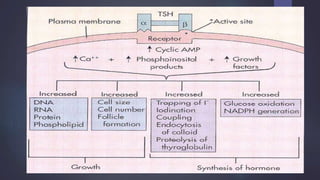
 Actions of Thyroid-stimulating Hormone
 Thyroid-stimulating hormone increases:
1. The number of follicular cells of thyroid
2. The conversion of cuboidal cells in thyroid gland into
columnar cells and thereby it causes the
development of thyroid follicles
3. Size and secretory activity of follicular cells
4. Iodide pump and iodide trapping in follicular cells
5. Thyroglobulin secretion into follicles.
6. Iodination of tyrosine and coupling to form the
hormones
7. Effect of TSH on other stages in thyroxine synthesis
takes place after some hours, days or weeks.
8. Proteolysis of the thyroglobulin, by which release of
hormone is enhanced and colloidal substance is
decreased.
9. Immediate effect of TSH is proteolysis of the
thyroglobulin, by which thyroxine is released within 30
minutes.
 Mode of Action of TSH
 TSH acts through cyclic AMP mechanism.
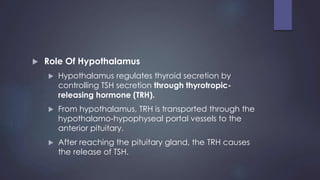
 Role Of Hypothalamus
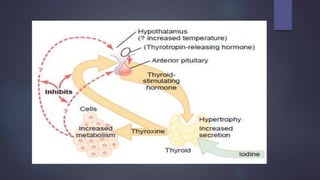
 Hypothalamus regulates thyroid secretion by
controlling TSH secretion through thyrotropic-
releasing hormone (TRH).
 From hypothalamus, TRH is transported through the
hypothalamo-hypophyseal portal vessels to the
anterior pituitary.
 After reaching the pituitary gland, the TRH causes
the release of TSH.
 Feedback Control
 Thyroid hormones regulate their own secretion
through negative feedback control, by inhibiting
the release of TRH from hypothalamus and TSH from
anterior pituitary.
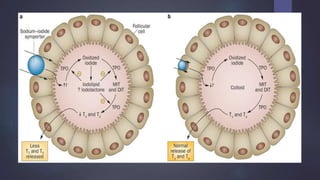
 Role Of Iodide
 Iodide is an important factor regulating the synthesis
of thyroid hormones.
 When the dietary level of iodine is moderate, the
blood level of thyroid hormones is normal.
 However, when iodine intake is high, the enzymes
necessary for synthesis of thyroid hormones are
inhibited by iodide itself, resulting in suppression of
hormone synthesis.
 This effect of iodide is called Wolff- Chaikoff effect.
 Role Of Other Factors
 Many other factors are involved in the regulation of
thyroid secretion in accordance to the needs of the
body.
Factors Inc. Thyroid Sec
1. Low basal metabolic
rate
2. Leptin
3. α-melanocyte-
stimulating hormone
4. Low body
temperature
Factors Dec. Thyroid Sec
1. Excess iodide intake
2. Stress
3. Somatostatin
4. Glucocorticoids
5. Dopamine.
Thyroid hormone (mode of action)

Thyroid hormone (mode of action)

  • 1.
    Thyroid Hormone (Mode OfAction) DANISH HASSAN LECTURER, UNIVERSITY OF SARGODHA
  • 2.
    Mode Of ActionOf Thyroid Hormones  Thyroid hormone acts on target cells (particularly cells of liver, muscle and kidney), most of the T4 is deiodinated to form T3.  True intracellular hormone is T3, rather than T4.  Moreover, T3 is found freely in the plasma and T4 is usually bound with plasma proteins.  So, at the site of action, T3 acts more quickly than T4.  T3 also has got high binding affinity for thyroid hormone receptor.
  • 3.
     Thyroid hormonesact by activating the genes and increasing the genetic transcription.  In addition, the thyroid hormone also acts at mitochondrial level by stimulating the synthesis of proteins and RNA.
  • 4.
     Sequence ofEvents 1. Thyroid hormones enter the nucleus of cell and bind with thyroid hormone receptors (TR), which are either attached to DNA genetic strands or in close proximity to them. 2. TR is always bound to another receptor called retinoid X receptor (RXR). 3. Thyroid hormones bind with receptors and form the hormone-receptor complex..
  • 5.
    5. This complexinitiates the transcription process by activating the enzymes such as RNA polymerase and phospho-protein kinases. 6. It also stimulates the synthesis of nuclear proteins. 7. Thus, a large number of mRNA is formed, which activate the ribosomes to synthesize the new proteins 8. New proteins are involved in many activities including the enzymatic actions
  • 7.
    Regulation Of SecretionOf Thyroid Hormones  Secretion of thyroid hormones is controlled by anterior pituitary and hypothalamus through feedback mechanism.  Many factors are involved in the regulation of thyroid secretion.
  • 8.
     Thyroid-Stimulating Hormone TSH secreted by anterior pituitary is the major factor regulating the synthesis and release of thyroid hormones.  It is also necessary for the growth and the secretory activity of the thyroid gland.  Thus, TSH influences every stage of formation and release of thyroid hormones.
  • 9.
     Chemistry  Thyroid-stimulatinghormone is a peptide hormone with one α-chain and one β-chain.
  • 10.
     Half-life andPlasma Level  Half-life of TSH is about 60 minutes.  The normal plasma level of TSH is approximately 2 U/mL.
  • 11.
     Actions ofThyroid-stimulating Hormone  Thyroid-stimulating hormone increases: 1. The number of follicular cells of thyroid 2. The conversion of cuboidal cells in thyroid gland into columnar cells and thereby it causes the development of thyroid follicles 3. Size and secretory activity of follicular cells 4. Iodide pump and iodide trapping in follicular cells 5. Thyroglobulin secretion into follicles.
  • 12.
    6. Iodination oftyrosine and coupling to form the hormones 7. Effect of TSH on other stages in thyroxine synthesis takes place after some hours, days or weeks. 8. Proteolysis of the thyroglobulin, by which release of hormone is enhanced and colloidal substance is decreased. 9. Immediate effect of TSH is proteolysis of the thyroglobulin, by which thyroxine is released within 30 minutes.
  • 13.
     Mode ofAction of TSH  TSH acts through cyclic AMP mechanism.
  • 16.
     Role OfHypothalamus  Hypothalamus regulates thyroid secretion by controlling TSH secretion through thyrotropic- releasing hormone (TRH).  From hypothalamus, TRH is transported through the hypothalamo-hypophyseal portal vessels to the anterior pituitary.  After reaching the pituitary gland, the TRH causes the release of TSH.
  • 17.
     Feedback Control Thyroid hormones regulate their own secretion through negative feedback control, by inhibiting the release of TRH from hypothalamus and TSH from anterior pituitary.
  • 18.
     Role OfIodide  Iodide is an important factor regulating the synthesis of thyroid hormones.  When the dietary level of iodine is moderate, the blood level of thyroid hormones is normal.  However, when iodine intake is high, the enzymes necessary for synthesis of thyroid hormones are inhibited by iodide itself, resulting in suppression of hormone synthesis.  This effect of iodide is called Wolff- Chaikoff effect.
  • 20.
     Role OfOther Factors  Many other factors are involved in the regulation of thyroid secretion in accordance to the needs of the body.
  • 21.
    Factors Inc. ThyroidSec 1. Low basal metabolic rate 2. Leptin 3. α-melanocyte- stimulating hormone 4. Low body temperature Factors Dec. Thyroid Sec 1. Excess iodide intake 2. Stress 3. Somatostatin 4. Glucocorticoids 5. Dopamine.