REGULATION OF THYROID
HORMONE SECRETION
Dr. Nusrat Tariq
Associate Professor
Physiology Department
Thyroid-Stimulating Hormone (TSH)
• Regulates thyroid hormone production,
secretion, and growth
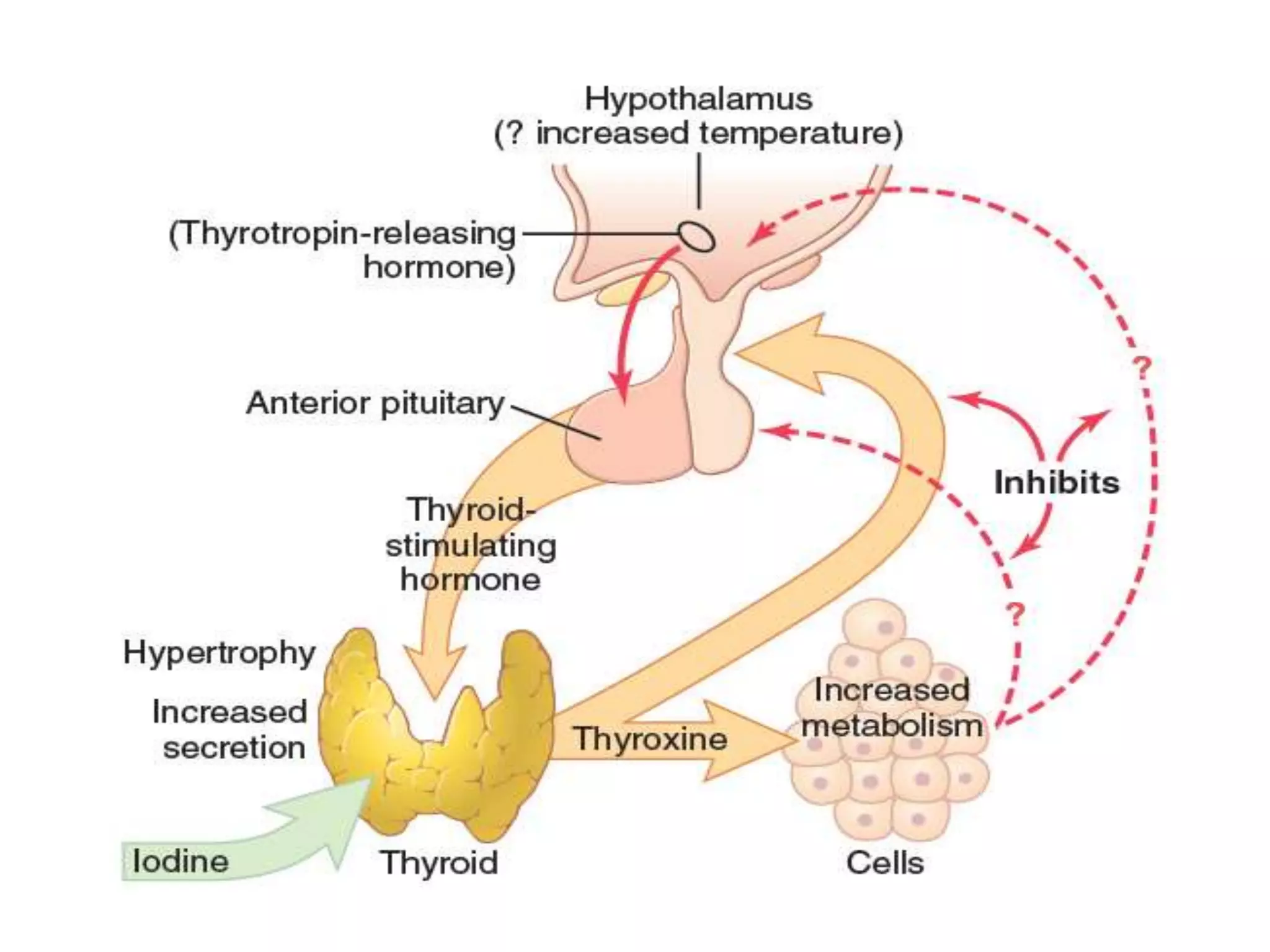
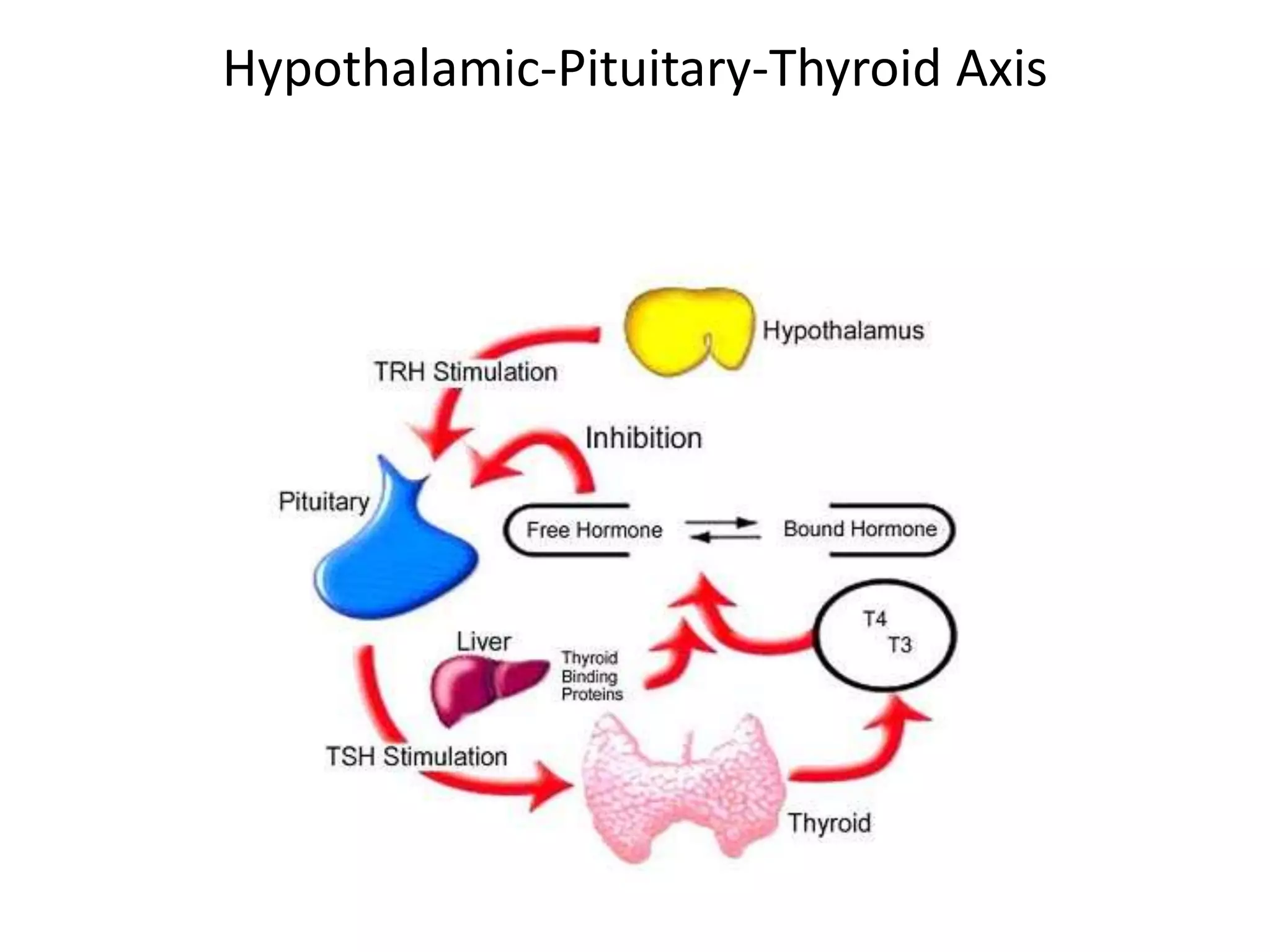
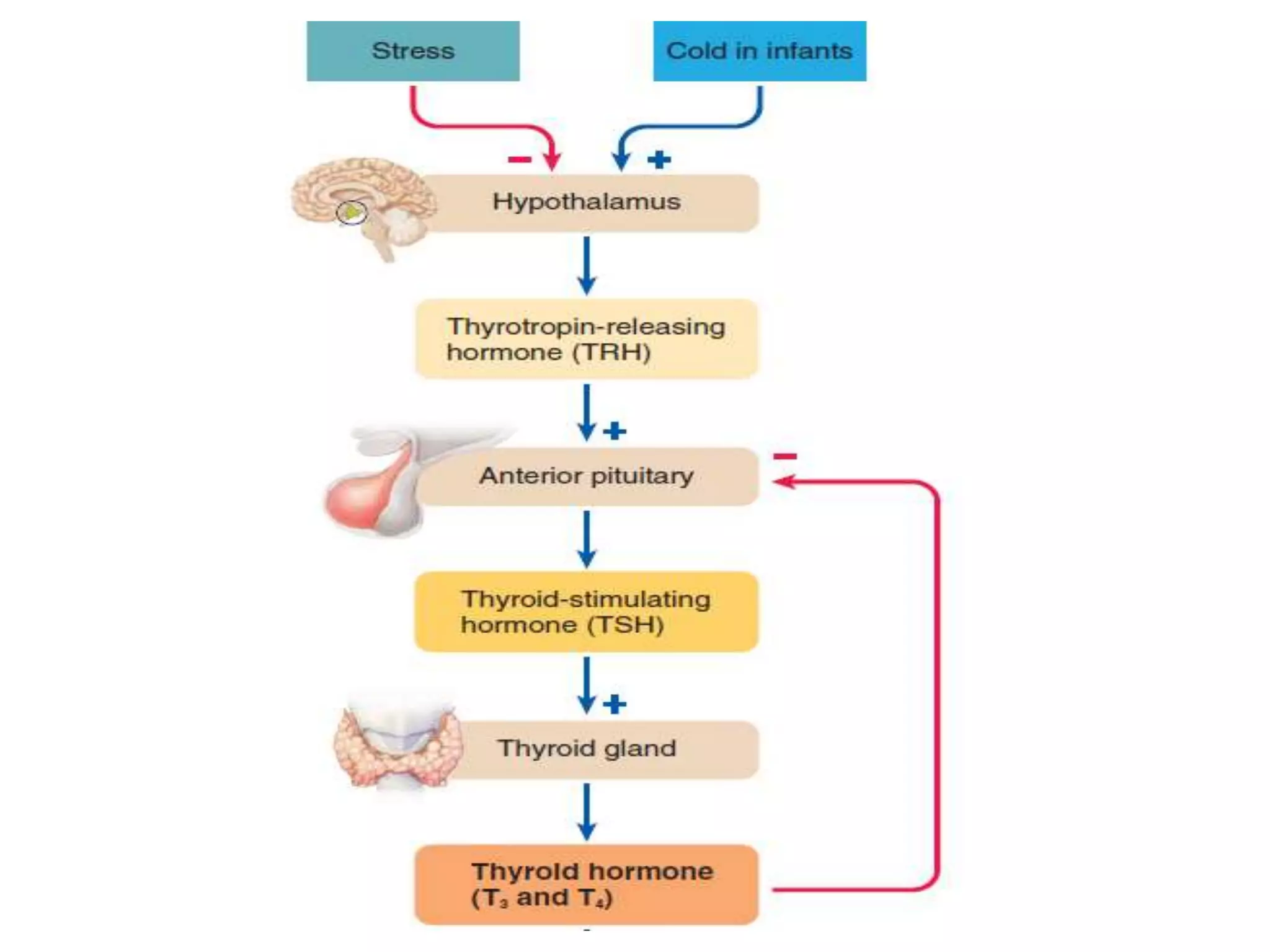
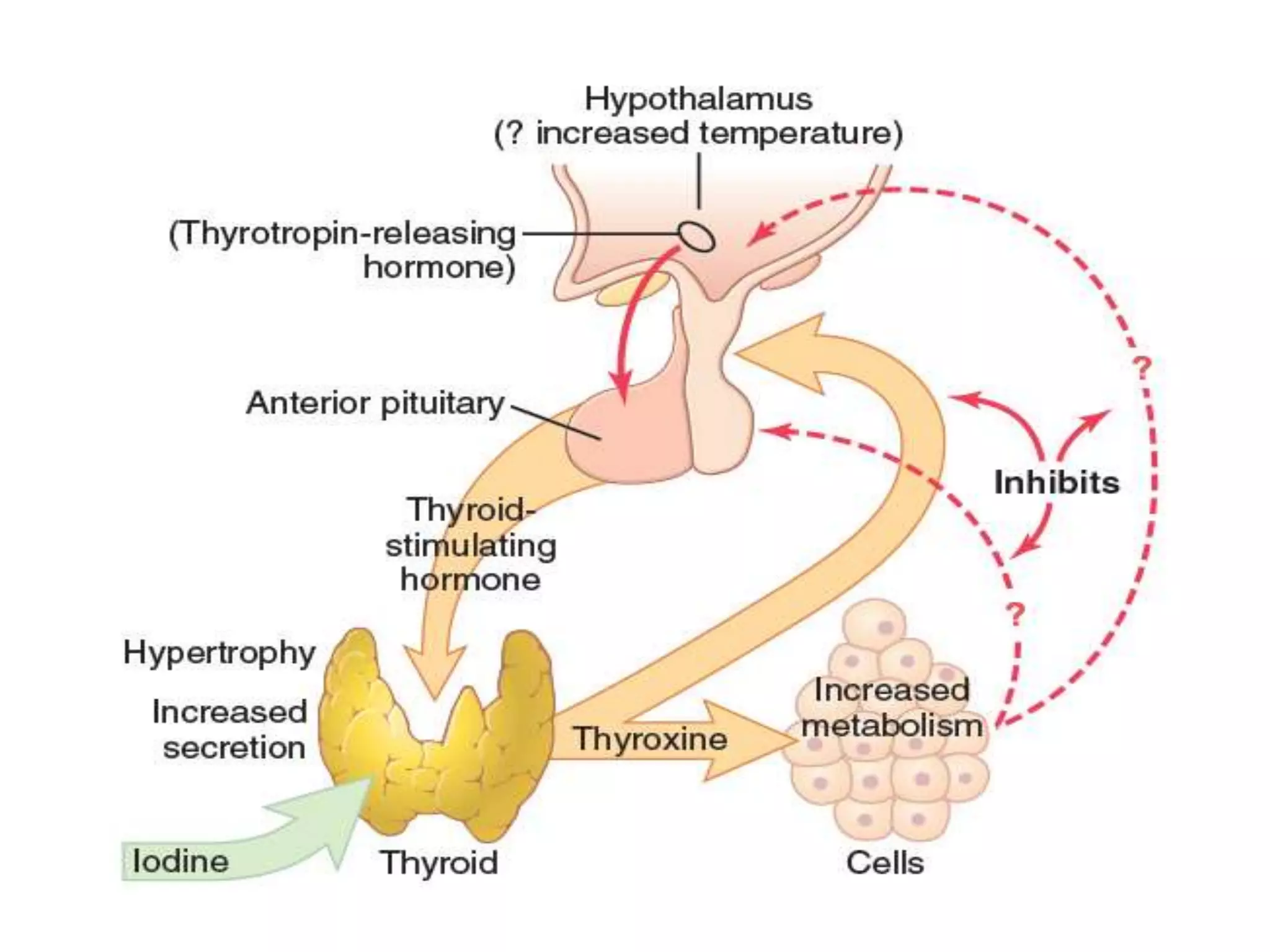
• TSH is regulated by the negative
feedback action of T4 and T3
Hypothalamic-Pituitary-Thyroid Axis
TSH INCREASES THYROID SECRETION
TSH has following specific effects on Thyroid Gland
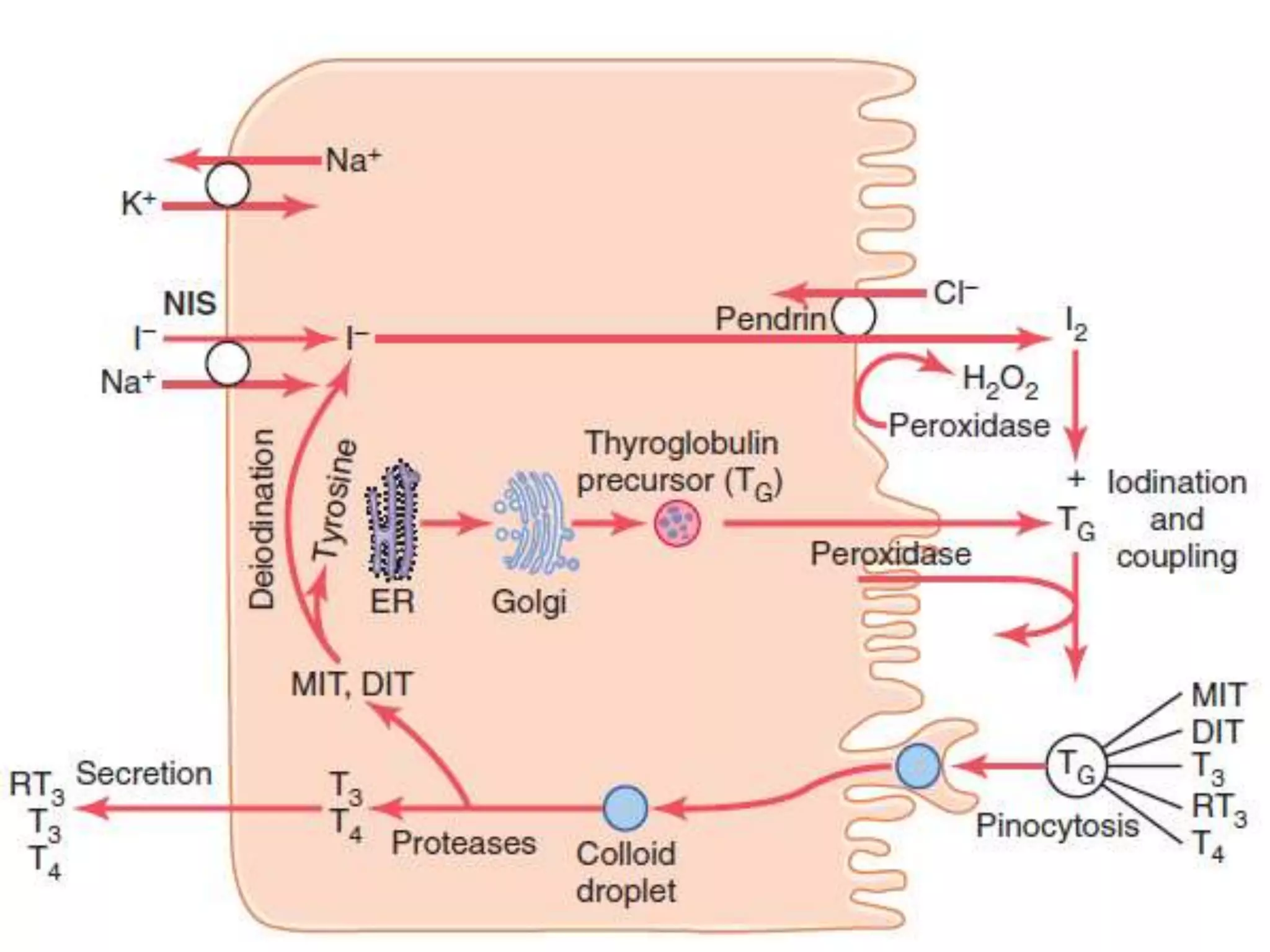
1. Increased proteolysis of the thyroglobulin
releasing T3 & T4
2. Increased activity of the iodide pump.
3. Increased iodination of tyrosine
4. Increased size and increased secretory activity of
the thyroid cells.
5. Increased number of thyroid cells plus a change
from cuboidal to columnar cells
Cyclic AMP Mediates the
Stimulatory Effect of TSH
Most of the varied effects of TSH on the thyroid cell
result from activation of the second messenger
cAMP system of the cell.
ANTERIOR PITUITARY SECRETION OF TSH IS
REGULATED BY THYROTROPIN-RELEASING
HORMONE FROM THE HYPOTHALAMUS
The molecular mechanism by which TRH causes
TSH-secreting cells of the anterior pituitary to
produce TSH
TSH binds with TRH receptors in the pituitary cell
membrane.
This binding in turn activates the phospholipase
second messenger system inside the pituitary cells to
produce large amounts of phospholipase C,
This is followed by a cascade of other second
messengers, including calcium ions and diacyl
glycerol, which eventually leads to TSH release.
Effects of Cold and Other
Neurogenic Stimuli on TRH and
TSH Secretion
• Exposure of an animal to cold → ↑ TRH
secretion by the hypothalamus → ↑TSH
secretion by the anterior pituitary gland →
↑T4 & T3
• This effect results from excitation of the
hypothalamic centers for body temperature
control.
• Excitement and anxiety—cause an acute
decrease in secretion of TSH.
• These states greatly stimulate the
sympathetic nervous system and increase the
metabolic rate and body heat and therefore
exert an inverse effect on the heat control
center.
FEEDBACK EFFECT OF THYROID
HORMONE TO DECREASE ANTERIOR
PITUITARY SECRETION OF TSH
Antithyroid Substances Suppress
Thyroid Secretion
The best known antithyroid drugs are:
• Thiocyanate,
• Propylthiouracil,
• High Concentrations of Inorganic Iodides.
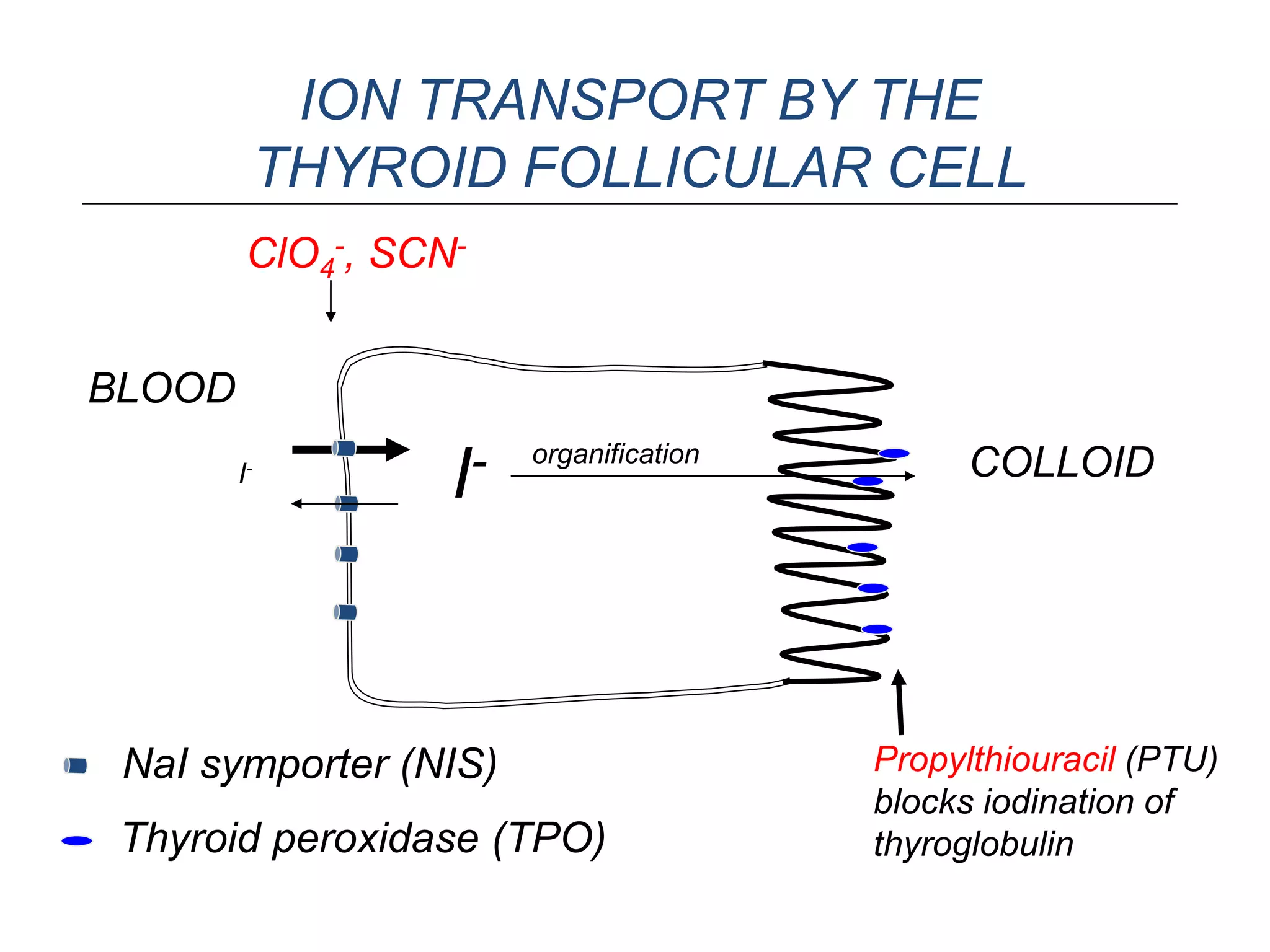
ION TRANSPORT BY THE
THYROID FOLLICULAR CELL
I-
I- organification
Propylthiouracil (PTU)
blocks iodination of
thyroglobulin
COLLOID
BLOOD
NaI symporter (NIS)
Thyroid peroxidase (TPO)
ClO4
-, SCN-
The mechanism of action
• Thiocyanate Ions Decrease Iodide Trapping. The
same active pump that transports iodide ions into
the thyroid cells can also pump thiocyanate ions,
perchlorate ions, and nitrate ions.
• The administration of thiocyanate in a high
enough concentration can cause competitive
inhibition of iodide transport into the cell—
inhibition of the iodide-trapping mechanism.
• Development of Goiter as this drug does not
prevent formation of thyroglobulin
• Propylthiouracil Decreases Thyroid Hormone
Formation.
• Propylthiouracil , methimazole and carbimazole)
prevents formation of thyroid hormone from
iodides and tyrosine.
• Block the peroxidase enzyme that is required for
iodination of tyrosine and partly block the coupling
of two iodinated tyrosines to form thyroxine or
triiodothyronine.
• Development Of Goiter as this drug does not
prevent formation of thyroglobulin
Iodides in High Concentrations Decrease
Thyroid Activity and Thyroid Gland Size.
• The effect is to reduce the rate of iodide
trapping and rate of iodination of tyrosine
• The normal endocytosis of colloid from the
follicles by the thyroid glandular cells is
paralyzed.
• Iodides in high concentrations decrease all
phases of thyroid activity, so decrease the
size of the thyroid gland and decrease its
blood supply

Thyroid gland regulation

  • 1.
    REGULATION OF THYROID HORMONESECRETION Dr. Nusrat Tariq Associate Professor Physiology Department
  • 3.
    Thyroid-Stimulating Hormone (TSH) •Regulates thyroid hormone production, secretion, and growth • TSH is regulated by the negative feedback action of T4 and T3
  • 4.
  • 5.
    TSH INCREASES THYROIDSECRETION TSH has following specific effects on Thyroid Gland 1. Increased proteolysis of the thyroglobulin releasing T3 & T4 2. Increased activity of the iodide pump. 3. Increased iodination of tyrosine 4. Increased size and increased secretory activity of the thyroid cells. 5. Increased number of thyroid cells plus a change from cuboidal to columnar cells
  • 6.
    Cyclic AMP Mediatesthe Stimulatory Effect of TSH Most of the varied effects of TSH on the thyroid cell result from activation of the second messenger cAMP system of the cell.
  • 9.
    ANTERIOR PITUITARY SECRETIONOF TSH IS REGULATED BY THYROTROPIN-RELEASING HORMONE FROM THE HYPOTHALAMUS
  • 10.
    The molecular mechanismby which TRH causes TSH-secreting cells of the anterior pituitary to produce TSH TSH binds with TRH receptors in the pituitary cell membrane. This binding in turn activates the phospholipase second messenger system inside the pituitary cells to produce large amounts of phospholipase C, This is followed by a cascade of other second messengers, including calcium ions and diacyl glycerol, which eventually leads to TSH release.
  • 11.
    Effects of Coldand Other Neurogenic Stimuli on TRH and TSH Secretion • Exposure of an animal to cold → ↑ TRH secretion by the hypothalamus → ↑TSH secretion by the anterior pituitary gland → ↑T4 & T3 • This effect results from excitation of the hypothalamic centers for body temperature control.
  • 12.
    • Excitement andanxiety—cause an acute decrease in secretion of TSH. • These states greatly stimulate the sympathetic nervous system and increase the metabolic rate and body heat and therefore exert an inverse effect on the heat control center.
  • 14.
    FEEDBACK EFFECT OFTHYROID HORMONE TO DECREASE ANTERIOR PITUITARY SECRETION OF TSH
  • 16.
    Antithyroid Substances Suppress ThyroidSecretion The best known antithyroid drugs are: • Thiocyanate, • Propylthiouracil, • High Concentrations of Inorganic Iodides.
  • 18.
    ION TRANSPORT BYTHE THYROID FOLLICULAR CELL I- I- organification Propylthiouracil (PTU) blocks iodination of thyroglobulin COLLOID BLOOD NaI symporter (NIS) Thyroid peroxidase (TPO) ClO4 -, SCN-
  • 19.
    The mechanism ofaction • Thiocyanate Ions Decrease Iodide Trapping. The same active pump that transports iodide ions into the thyroid cells can also pump thiocyanate ions, perchlorate ions, and nitrate ions. • The administration of thiocyanate in a high enough concentration can cause competitive inhibition of iodide transport into the cell— inhibition of the iodide-trapping mechanism. • Development of Goiter as this drug does not prevent formation of thyroglobulin
  • 20.
    • Propylthiouracil DecreasesThyroid Hormone Formation. • Propylthiouracil , methimazole and carbimazole) prevents formation of thyroid hormone from iodides and tyrosine. • Block the peroxidase enzyme that is required for iodination of tyrosine and partly block the coupling of two iodinated tyrosines to form thyroxine or triiodothyronine. • Development Of Goiter as this drug does not prevent formation of thyroglobulin
  • 21.
    Iodides in HighConcentrations Decrease Thyroid Activity and Thyroid Gland Size. • The effect is to reduce the rate of iodide trapping and rate of iodination of tyrosine • The normal endocytosis of colloid from the follicles by the thyroid glandular cells is paralyzed. • Iodides in high concentrations decrease all phases of thyroid activity, so decrease the size of the thyroid gland and decrease its blood supply