Adrenocortical Hormones
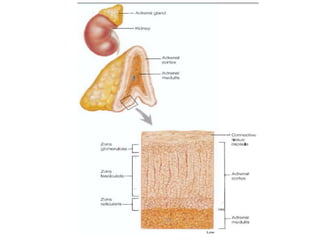
• The two adrenal glands,
• Each of which weighs about 4 grams,
• Lie at the superior poles of the two kidneys
• Each gland is composed of two distinct parts,
the adrenal medulla and the adrenal cortex.
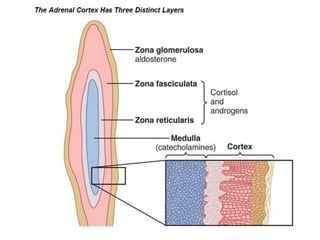
• The adrenal medulla, the central 20 percent of
the gland, is functionally related to the
sympathetic nervous system.
• It secretes the hormones epinephrine and
norepinephrine in response to sympathetic
stimulation.
• The adrenal cortex secretes an entirely
different group of hormones, called
corticosteroids.
Adrenocortical Hormones
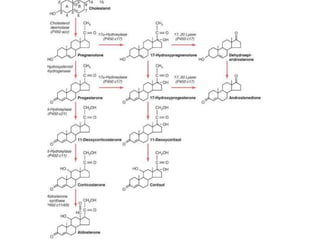
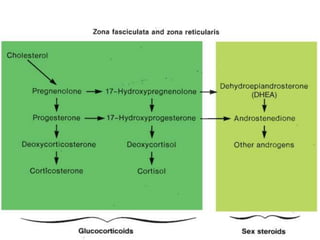
• These hormones are all synthesized from the
steroid cholesterol, and they all have similar
chemical formulas.
• Slight differences in their molecular structures
give them several different but very important
functions.
Two major types of adrenocortical
hormones
• The mineralocorticoids (especially affect the
electrolytes (the "minerals") of the extracellular
fluids, especially sodium and potassium)
• and the glucocorticoids, (exhibit important
effects that increase blood glucose concentration)
• small amounts of sex hormones are secreted,
especially androgenic hormones, which exhibit
about the same effects in the body as the male
sex hormone testosterone.
• More than 30 steroids have been isolated
from the adrenal cortex, but two are of
exceptional importance to the normal
endocrine function of the human body:
• aldosterone, which is the principal
mineralocorticoid,
• cortisol, which is the principal glucocorticoid.
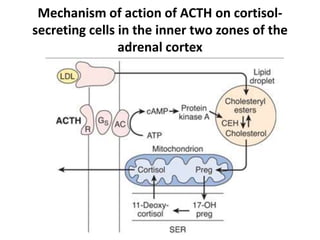
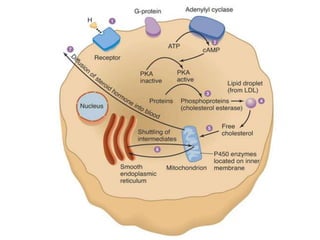
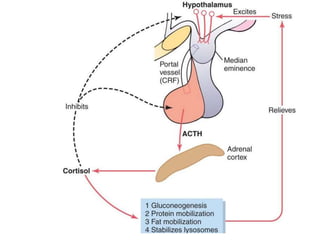
Mechanism of action of ACTH on cortisol-
secreting cells in the inner two zones of the
adrenal cortex
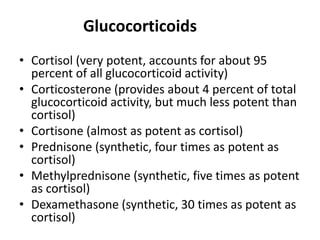
Glucocorticoids
• Cortisol (very potent, accounts for about 95
percent of all glucocorticoid activity)
• Corticosterone (provides about 4 percent of total
glucocorticoid activity, but much less potent than
cortisol)
• Cortisone (almost as potent as cortisol)
• Prednisone (synthetic, four times as potent as
cortisol)
• Methylprednisone (synthetic, five times as potent
as cortisol)
• Dexamethasone (synthetic, 30 times as potent as
cortisol)
Transport
• Approximately 90 to 95 percent of the cortisol
in the plasma binds to plasma proteins,
• especially a globulin called cortisol-binding
globulin or transcortin and, to a lesser extent,
to albumin.
• This high degree of binding to plasma proteins
slows the elimination of cortisol from the
plasma;
• cortisol has a relatively long half-life of 60 to
90 minutes.
Adrenocortical Hormones Are
Metabolized in the Liver
• The adrenal steroids are degraded mainly in the
liver and conjugated especially to glucuronic acid
and, to a lesser extent, sulfates.
• About 25 percent of these conjugates are
excreted in the bile and then in the feces.
• The remaining conjugates formed by the liver
enter the circulation but are not bound to plasma
proteins, are filtered readily by the kidneys and
excreted in the urine.
• Diseases of the liver markedly depress the rate of
inactivation, and kidney diseases reduce the
excretion of the inactive conjugates.
Levels in Blood
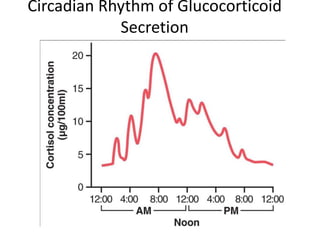
• The concentration of cortisol in the blood
averages 12 μg/100 ml..
•
• Blood concentration and secretion rate of
cortisol fluctuate throughout the day, rising in
the early morning and declining in the
evening.
Functions of the Glucocorticoids
(mainly cortisol)
Effects of Cortisol on Carbohydrate Metabolism
1) Stimulation of Gluconeogenesis
– Cortisol increases the enzymes required to
convert amino acids into glucose in the liver cells.
– Cortisol causes mobilization of amino acids from
the extrahepatic tissues mainly from muscle
– increase glycogen storage in the liver cells.
– This effect of cortisol allows other glycolytic
hormones, such as epinephrine and glucagon, to
mobilize glucose in times of need, such as
between meals(permissive effect).
2) Decreased Glucose Utilization by Cells
Cortisol also causes a moderate decrease in
the rate of glucose utilization by most cells in
the body
glucocorticoids depress the oxidation of
nicotinamide-adenine dinucleotide (NADH) to
form NAD+.
Because NADH must be oxidized to allow
glycolysis, this effect could account for the
diminished utilization of glucose by the cells.
ADRENAL DIABETES
• increased rate of gluconeogenesis and
• the moderate reduction in the rate of glucose
utilization by the cells cause the blood glucose
concentrations to rise. The rise in blood glucose
in turn stimulates secretion of insulin.
• The increased plasma levels of insulin are not
effective in maintaining BSL
• high levels of glucocorticoid reduce the sensitivity
of many tissues, especially skeletal muscle and
adipose tissue, to the stimulatory effects of
insulin on glucose uptake and utilization
Possible explanation:
• high levels of fatty acids may impair insulin's
actions on the tissues.
• The increase in blood glucose concentration is
occasionally great enough (50 percent or more
above normal), the condition is called adrenal
diabetes.
• Administration of insulin is not very effective?
Effects of Cortisol on Protein
Metabolism
1) Reduction in Cellular Protein
– decreased protein synthesis and increased
catabolism of protein in the cells. Due to
i) decreased amino acid transport into
extrahepatic tissues,
ii) depressed formation of RNA and subsequent
protein synthesis in many extrahepatic tissues,
especially in muscle and lymphoid tissue.
2) Increased Liver and Plasma Proteins
i) enhanced amino acid transport into liver
cells (but not into most other cells)
ii) enhanced liver enzymes required for
protein synthesis.
3)Increased Blood Amino Acids, Diminished
Transport of Amino Acids into Extrahepatic
Cells
• The decreased transport of amino acids into
extrahepatic cells decreases their intracellular
amino acid concentrations and consequently
decreases the synthesis of protein.
• catabolism of proteins in the cells continues to
release amino acids from the already existing
proteins, and these diffuse out of the cells to
increase the plasma amino acid concentration.
• The result is mobilization of amino acids from
the nonhepatic tissues and diminished stores of
protein in the tissues.
Enhanced Transport into Hepatic Cells
Enhanced transport can be due to enhanced
utilization of amino acids by the liver to cause
such effects as
• (1) increased rate of deamination of amino acids
by the liver,
• (2) increased protein synthesis in the liver,
• (3) increased formation of plasma proteins by the
liver, and
• (4) increased conversion of amino acids to
glucose-that is, enhanced gluconeogenesis.
Effects of Cortisol on Fat Metabolism
• Mobilization of Fatty Acids
i) promotes mobilization of fatty acids from adipose
tissue.
ii) increases the concentration of free fatty acids in the
plasma,
iii) increases their utilization for energy.
iv) enhances the oxidation of fatty acids in the cells.
Mechanism:
Due to diminished transport of glucose into the fat
cells.
α-glycerophosphate, which is derived from glucose, is
required for both deposition and maintenance of
triglycerides in these cells. In its absence the fat cells
begin to release fatty acids.
• The increased mobilization of fats by cortisol,
combined with increased oxidation of fatty
acids in the cells, helps shift the metabolic
systems of the cells from utilization of glucose
for energy to utilization of fatty acids in times
of starvation or other stresses.
• The increased use of fatty acids for metabolic
energy is an important factor for long-term
conservation of body glucose and glycogen.
Role in stress
• Almost any type of stress, whether physical or
neurogenic, causes an immediate and marked
increase in ACTH secretion by the anterior
pituitary gland, followed within minutes by
greatly increased adrenocortical secretion of
cortisol.
Types of stress in which cortisol is
increased
• Trauma of almost any type
• Infection
• Intense heat or cold
• Injection of norepinephrine and other
sympathomimetic drugs
• Surgery
• Injection of necrotizing substances beneath the
skin
• Restraining an animal so that it cannot move
• Almost any debilitating disease
• Glucocorticoids cause rapid mobilization of
amino acids and fats from their cellular stores,
making them immediately available both for
energy and for synthesis of other compounds,
including glucose, needed by the different
tissues of the body.
Anti-Inflammatory Effects of High
Levels of Cortisol
• When tissues are damaged by trauma or
infection they become "inflamed."
• In some conditions, such as in rheumatoid
arthritis, the inflammation is more damaging
than the trauma or disease itself.
• The administration of large amounts of
cortisol can usually block this inflammation or
even reverse many of its effects once it has
begun.
Five main stages of inflammation:
• (1) release from the damaged tissue cells of
chemical substances that activate the
inflammation process-chemicals such as
histamine, bradykinin, proteolytic enzymes,
prostaglandins, and leukotrienes;
• (2) an increase in blood flow in the inflamed
area caused by some of the released products
from the tissues, an effect called erythema;
• (3) leakage of large quantities of almost pure
plasma out of the capillaries into the damaged
areas because of increased capillary
permeability, followed by clotting of the tissue
fluid, thus causing a nonpitting type of edema;
• (4) infiltration of the area by leukocytes; and
• (5) after days or weeks, ingrowth of fibrous
tissue that often helps in the healing process.
cortisol has two basic anti-inflammatory
effects:
• (1) it can block the early stages of the
inflammation process before inflammation
even begins, or
•
• (2) if inflammation has already begun, it
causes rapid resolution of the inflammation
and increased rapidity of healing.
Cortisol prevents inflammation:
• Cortisol stabilizes the lysosomal membranes:
Therefore, most of the proteolytic enzymes that
are released by damaged cells to cause
inflammationare released in greatly decreased
quantity.
• Cortisol decreases the permeability of the
capillaries:
probably as a secondary effect of the reduced
release of proteolytic enzymes. This prevents loss
of plasma into the tissues.
• Cortisol decreases both migration of white
blood cells into the inflamed area and
phagocytosis of the damaged cells:
diminishes the formation of prostaglandins
and leukotrienes that otherwise would
increase vasodilation, capillary permeability,
and mobility of white blood cells.
• Cortisol suppresses the immune system,
causing lymphocyte reproduction to decrease
markedly:
The T lymphocytes are especially suppressed.
In turn, reduces inflammation.
• Cortisol attenuates fever mainly because it
reduces the release of interleukin-1 from the
white blood cells:
which is one of the principal excitants to the
hypothalamic temperature control system.
The decreased temperature in turn reduces
the degree of vasodilation.
Cortisol Causes Resolution of
Inflammation
• If Inflammation has established, the
administration of cortisol can often reduce it
within hours to a few days.
• cortisol plays a major role in combating certain
types of diseases, such as rheumatoid arthritis,
rheumatic fever, and acute glomerulonephritis.
SIGNIFICANCE:When cortisol or other
glucocorticoids are administered to patients with
these diseases, almost invariably the
inflammation begins to subside within 24 hours.
Other Effects of Cortisol
• Cortisol Blocks the Inflammatory Response to
Allergic Reactions :
the inflammatory response is responsible for
many of the serious and sometimes lethal effects
of allergic reactions, administration of cortisol,
followed by its effect in reducing inflammation
and the release of inflammatory products, can be
lifesaving.
For instance, cortisol effectively prevents shock
or death in anaphylaxis, which otherwise kills
many people,
Effect on Blood Cells and on Immunity
in Infectious Diseases
• Cortisol decreases the number of eosinophils
and lymphocytes in the blood;
• the administration of large doses of cortisol
causes significant atrophy of all the lymphoid
tissue throughout the body, which in turn
decreases the output of both T cells and
antibodies from the lymphoid tissue.
• This occasionally can lead to fulminating infection
e.g. fulminating tuberculosis.
• Useful in preventing immunological rejection of
transplanted hearts, kidneys, and other tissues.
• Cortisol increases the production of red blood
cells.
Mechanism of Action
• first interacting with intracellular receptors in
target cells.
• cortisol is lipid soluble, binds with its protein
receptor in the cytoplasm, and the hormone-
receptor complex then interacts with specific
regulatory DNA sequences, called glucocorticoid
response elements, to induce or repress gene
transcription.
• Other proteins in the cell, called transcription
factors, are also necessary for the hormone-
receptor complex to interact appropriately with
the glucocorticoid response elements.
• Glucocorticoids increase or decrease
transcription of many genes to alter synthesis
of mRNA for the proteins that mediate their
multiple physiological effects.
• requires 45 to 60 minutes for proteins to be
synthesized, and up to several hours or days to
fully develop.
• At high concentrations, may also have some
rapid nongenomic effects on cell membrane
ion transport that may contribute to their
therapeutic benefits.
Regulation of Cortisol Secretion by
Adrenocorticotropic Hormone from the
Pituitary Gland:
• secretion of cortisol is controlled almost
entirely by ACTH secreted by the anterior
pituitary gland.
• This hormone, also called corticotropin or
adrenocorticotropin, also enhances the
production of adrenal androgens.
Chemistry of ACTH
• ACTH has been isolated in pure form from the
anterior pituitary.
• It is a large polypeptide, having a chain length
of 39 amino acids.
• A smaller polypeptide, a digested product of
ACTH having a chain length of 24 amino acids,
has all the effects of the total molecule.
Corticotropin-releasing factor (CRF)
• CRF is a peptide composed of 41 amino acids.
• The cell bodies of the neurons that secrete
CRF are located mainly in the paraventricular
nucleus of the hypothalamus.
• This nucleus in turn receives many nervous
connections from the limbic system and lower
brain stem. The anterior pituitary gland can
secrete only minute quantities of ACTH in the
absence of CRF.
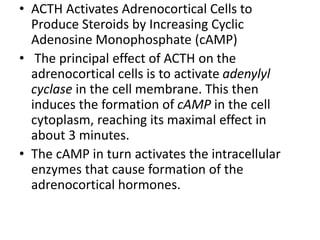
• ACTH Activates Adrenocortical Cells to
Produce Steroids by Increasing Cyclic
Adenosine Monophosphate (cAMP)
• The principal effect of ACTH on the
adrenocortical cells is to activate adenylyl
cyclase in the cell membrane. This then
induces the formation of cAMP in the cell
cytoplasm, reaching its maximal effect in
about 3 minutes.
• The cAMP in turn activates the intracellular
enzymes that cause formation of the
adrenocortical hormones.
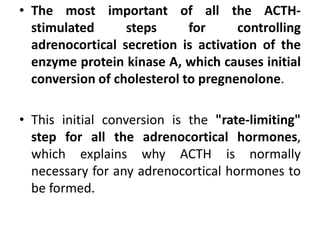
• The most important of all the ACTH-
stimulated steps for controlling
adrenocortical secretion is activation of the
enzyme protein kinase A, which causes initial
conversion of cholesterol to pregnenolone.
• This initial conversion is the "rate-limiting"
step for all the adrenocortical hormones,
which explains why ACTH is normally
necessary for any adrenocortical hormones to
be formed.
Physiological Stress Increases ACTH and
Adrenocortical Secretion
• almost any type of physical or mental stress
can lead within minutes to greatly enhanced
secretion of ACTH and consequently cortisol
as well, often increasing cortisol secretion as
much as 20-fold.
• Pain stimuli caused by physical stress or tissue
damage are transmitted first upward through
the brain stem and eventually to the median
eminence of the hypothalamus,
• Mental stress can cause an equally rapid
increase in ACTH secretion. This is believed to
result from increased activity in the limbic
system, especially in the region of the
amygdala and hippocampus, both of which
then transmit signals to the posterior medial
hypothalamus.
Circadian Rhythm of Glucocorticoid
Secretion
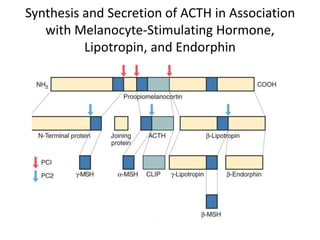
Synthesis and Secretion of ACTH in Association
with Melanocyte-Stimulating Hormone,
Lipotropin, and Endorphin
• In melanocytes located in abundance between
the dermis and epidermis of the skin, MSH
stimulates formation of the black pigment
melanin and disperses it to the epidermis.
• ACTH, because it contains an MSH sequence,
has about 1/30 as much melanocyte-
stimulating effect as MSH.
• Quantities of pure MSH secreted in the human
being are extremely small, whereas those of
ACTH are large, it is likely that ACTH is
normally more important than MSH in
determining the amount of melanin in the
skin.
Aldosterone
• Aldosterone Is the Major Mineralocorticoid,
exerts nearly 90 percent of the mineralocorticoid
activity of the adrenocortical secretions, but
cortisol, the major glucocorticoid secreted by the
adrenal cortex, also provides a significant amount
of mineralocorticoid activity.
• Aldosterone's mineralocorticoid activity is about
3000 times greater than that of cortisol, but the
plasma concentration of cortisol is nearly 2000
times that of aldosterone.
• Cortisol can also bind to mineralocorticoid
receptors with high affinity. However, the
renal epithelial cells also contain the enzyme
11β-hydroxysteroid dehydrogenase type 2,
which converts cortisol to cortisone.
• Because cortisone does not avidly bind
mineralocorticoid receptors, cortisol does not
normally exert significant mineralocorticoid
effects.
Apparent mineralocorticoid excess
syndrome (AME)
• In patients with genetic deficiency of 11β-
hydroxysteroid dehydrogenase type 2 activity,
cortisol may have substantial mineralocorticoid
effects.
• This condition is called apparent
mineralocorticoid excess syndrome (AME).
• The patient has essentially the same
pathophysiological changes as a patient with
excess aldosterone secretion, except that plasma
aldosterone levels are very low.
• Ingestion of large amounts of licorice, which
contains glycyrrhetinic acid, may also cause AME
due to its ability to block 11β-hydroxysteroid
dehydrogenase type 2 enzyme activity.
Transport
Only about 60 percent of circulating
aldosterone combines with the plasma
proteins, so about 40 percent is in the free
form; as a result, aldosterone has a relatively
short half-life of about 20 minutes.
Levels in blood
• The normal concentration of aldosterone in
blood is about 6 nanograms (6 billionths of a
gram) per 100 milliliters.
• The blood concentration of aldosterone,
however, depends greatly on several factors
including dietary intake of sodium and
potassium.
Renal and Circulatory Effects of
Aldosterone
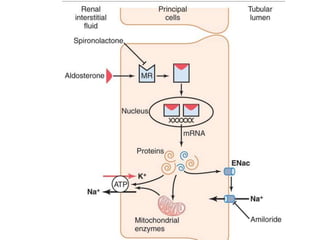
• increases reabsorption of sodium
• and increases secretion of potassium by the
renal tubular epithelial cells, especially in the
principal cells of the collecting tubules and, to
a lesser extent, in the distal tubules and
collecting ducts.
• Secretion of H+ ions in renal tubules
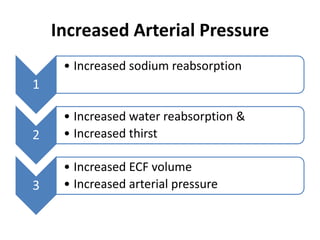
Increased Arterial Pressure
1
• Increased sodium reabsorption
2
• Increased water reabsorption &
• Increased thirst
3
• Increased ECF volume
• Increased arterial pressure
Aldosterone Escape
• Increased ECF
• Increased arterial pressure(15-25mmHg)
• Pressure diuresis
• Pressure natriuresis
Effect on Sweat Glands, Salivary
Glands, and Intestinal Epithelial Cells
• greatly increases the reabsorption of sodium
chloride and the secretion of potassium by the
ducts.
• to conserve body salt in hot environments, and to
conserve salt when excessive quantities of saliva
are lost.
• Aldosterone also greatly enhances sodium
absorption by the intestines, especially in the
colon, which prevents loss of sodium in the
stools.
Nongenomic Actions of Aldosterone and Other
Steroid Hormones
• genomic effects have a latency of 60 to 90
minutes and require gene transcription and
synthesis of new proteins,
• but more rapid nongenomic effects take place in
a few seconds or minutes(through second
messenger systems)
• For example, aldosterone has been shown to
increase formation of cAMP in vascular smooth
muscle cells and in epithelial cells of the renal
collecting tubules in less than 2 minutes,
• It can rapidly stimulate the phosphatidylinositol
second messenger system.
Regulation of Aldosterone Secretion
1. Increased potassium ion concentration in the
extracellular fluid greatly increases aldosterone
secretion.
2. Increased angiotensin II concentration in the
extracellular fluid also greatly increases
aldosterone secretion.
3. Increased sodium ion concentration in the
extracellular fluid very slightly decreases
aldosterone secretion.
4. ACTH from the anterior pituitary gland is
necessary for aldosterone secretion but has little
effect in controlling the rate of secretion in most
physiological conditions.
Hypoadrenalism (Adrenal
Insufficiency)-Addison's Disease
• Addison's disease (Primary adrenal in sufficiency)
results from an inability of the adrenal cortices to
produce sufficient adrenocortical hormones.
Causes:
• primary atrophy or injury of the adrenal cortices
autoimmunity, tuberculous destruction or cancer.
• Secondary adrenal insufficiency due to impaired
function of the pituitary gland and insufficient
ACTH
a) Mineralocorticoid Deficiency
• Decreased renal tubular sodium reabsorption
with loss of sodium ions, chloride ions, and water
and greatly decreased ECF volume.
• hyponatremia,
• hyperkalemia,
• and mild acidosis
• plasma volume falls,
• red blood cell concentration rises markedly,
• cardiac output and blood pressure decrease,
• The patient dies in shock, death usually occurring
in the untreated patient 4 days to 2 weeks after
complete cessation of mineralocorticoid
secretion.
b) Glucocorticoid Deficiency
• Lack of gluconeogenesis makes it impossible to
maintain BSL in between meals.
• Lack of mobilization of both proteins and fats
from the tissues, thereby depressing many other
metabolic functions of the body.
• Sluggishness of energy mobilization even when
excess quantities of glucose and other nutrients
are available,
• Weakness of muscles
• Glucocorticoids are necessary to maintain other
metabolic functions of the tissues in addition to
energy metabolism.
• Inability to tolerate stress, and even a mild
respiratory infection can cause death.
c) Melanin Pigmentation
• Melanin pigmentation of the mucous membranes
and skin is a charecterstic feature of Addisons
disease.
• This melanin is deposited in blotches, and it is
deposited especially in the thin skin areas, such
as the mucous membranes of the lips and the
thin skin of the nipples.
• The cause of the melanin deposition is believed
to be the following: When cortisol secretion is
depressed, the normal negative feedback to the
hypothalamus and anterior pituitary gland is also
depressed, therefore allowing tremendous rates
of ACTH secretion.
Treatment of Addison's disease
• An untreated person with total adrenal
destruction dies within a few days to a few
weeks because of weakness and usually
circulatory shock.
• Yet such a person can live for years if small
quantities of mineralocorticoids and
glucocorticoids are administered daily.
Addisonian Crisis
• In a person with Addison's disease, the output
of glucocorticoids does not increase during
stress.
• In stress e.g. trauma, surgery etc ,must be
given 10 or more times the normal quantities
of glucocorticoids to prevent death.
• This critical need for extra glucocorticoids and
the associated severe debility in times of
stress is called an addisonian crisis.
Hyperadrenalism-Cushing's Syndrome
Causes:
(1) adenomas of the anterior pituitary
(2) abnormal function of the hypothalamus that
causes high levels of corticotropin-releasing
hormone (CRH
(3) "ectopic secretion" of ACTH by a tumor
elsewhere in the body, such as an abdominal
carcinoma
(4) adenomas of the adrenal cortex.
When Cushing's syndrome is secondary to excess
secretion of ACTH by the anterior pituitary, this is
referred to as Cushing's disease.
• Excess ACTH secretion is the most common
cause of Cushing's syndrome and is characterized
by high plasma levels of ACTH and cortisol.
• Primary overproduction of cortisol by the adrenal
glands accounts for about 20 to 25 percent of
clinical cases of Cushing's syndrome and is usually
associated with reduced ACTH levels due to
cortisol feedback inhibition of ACTH secretion by
the anterior pituitary gland.
• Administration of large doses of
dexamethasone, a synthetic glucocorticoid,
can be used to distinguish between ACTH-
dependent and ACTH-independent Cushing's
syndrome.
• In patients who have overproduction of ACTH
due to an ACTH-secreting pituitary adenoma
or to hypothalamic-pituitary dysfunction,
even large doses of dexamethasone usually
do not suppress ACTH secretion.
• In contrast, patients with primary adrenal
overproduction of cortisol (ACTH-
independent) usually have low or
undetectable levels of ACTH.
• Cushing's disease refers only to hypercortisolism secondary
to excess production of ACTH from a corticotroph pituitary
adenoma (secondary hypercortisolism/hypercorticism) or
due to excess production of hypothalamus CRH
(Corticotropin releasing hormone) (tertiary
hypercortisolism/hypercorticism). This causes the blood
ACTH levels to be elevated along with cortisol from the
adrenal gland. The ACTH levels remain high because the
tumor is unresponsive to negative feedback from high
cortisol levels.
• Cushing's disease is not to be confused with ectopic
Cushing syndrome[21] (ectopic ACTH syndrome), which is
often seen in paraneoplastic syndrome.
• When Cushing's syndrome is suspected, either
a dexamethasone suppression test (administration of
dexamethasone and frequent determination of cortisol and
ACTH level), or a 24-hour urinary measurement for cortisol
offers equal detection rates.
• Dexamethasone is a glucocorticoid and simulates the
effects of cortisol, including negative feedback on the
pituitary gland.
• When dexamethasone is administered and a blood sample
is tested, cortisol levels >50 nmol/l (1.81 µg/dl) would be
indicative of Cushing's syndrome because an ectopic source
of cortisol or ACTH (such as adrenal adenoma) exists which
is not inhibited by the dexamethasone
• The dexamethasone test, although widely
used, can sometimes give an incorrect
diagnosis because some ACTH-secreting
pituitary tumors respond to dexamethasone
with suppressed ACTH secretion. Therefore, it
is usually considered to be a first step in the
differential diagnosis of Cushing's syndrome.
• Cushing's syndrome can also occur when large
amounts of glucocorticoids are administered
over prolonged periods for therapeutic
purposes.
• For example, patients with chronic
inflammation associated with diseases such as
rheumatoid arthritis.
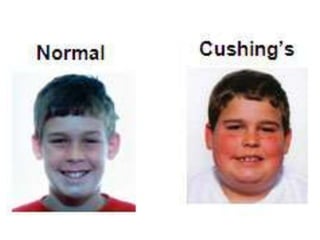
• Signs and symp:
• mobilization of fat from the lower part of the
body, with concomitant extra deposition of fat in
the thoracic and upper abdominal regions, giving
rise to a buffalo torso.
• an edematous appearance of the face called
moon face
• the androgenic potency of some of the
hormones sometimes causes acne and hirsutism
(excess growth of facial hair)
• About 80 percent of patients have hypertension,
presumably because of the mineralocorticoid
effects of cortisol
Effects on Carbohydrate and Protein Metabolism
• increased blood glucose concentration,
sometimes to values as high as 200 mg/dl after
meals-as much as twice normal.
• greatly decreased tissue proteins almost
everywhere in the body with the exception of the
liver; the plasma proteins also remain unaffected.
The loss of protein from the muscles in particular
causes severe weakness.
• The loss of protein synthesis in the lymphoid
tissues leads to a suppressed immune system, so
many of these patients die of infections.
Effect on skin
Even the protein collagen fibers in the
subcutaneous tissue are diminished so that
the subcutaneous tissues tear easily, resulting
in development of large purplish striae where
they have torn apart.
Effect on bones
severely diminished protein deposition in the
bones often causes severe osteoporosis with
consequent weakness of the bones.
Cushing's syndrome
• describes the signs and
symptoms associated with
prolonged exposure to
inappropriately high levels of
the hormone cortisol. This can
be caused by
taking glucocorticoid drugs, or
diseases that result in excess
cortisol, adrenocorticotropic
hormone (ACTH), or CRH
levels.[1]
Cushing's disease
• refers to a pituitary-
dependent cause of Cushing's
syndrome: a tumor
(adenoma) in the pituitary
gland produces large amounts
of ACTH, causing the adrenal
glands to produce elevated
levels of cortisol.
• It is the most common non-
iatrogeniccause of Cushing's
syndrome, responsible for
70% of cases excluding
glucocorticoid related
cases.[2][3]
Cushing’s syndrome
• Primary due to adrenal
tumor cortisol-secreting
adenoma in the cortex of the
adrenal gland (primary
hypercortisolism/hypercorticis
m).
• The adenoma causes cortisol
levels in the blood to be very
high, and negative feedback
on the pituitary from the high
cortisol levels causes ACTH
levels to be very low.
Cushing disease
• hypercortisolism secondary to
excess production of ACTH from a
corticotroph pituitary
adenoma (secondary
hypercortisolism/hypercorticism)
or due to excess production of
hypothalamus CRH (Corticotropin
releasing hormone) (tertiary
hypercortisolism/hypercorticism).
This causes the blood ACTH levels
to be elevated along with cortisol
from the adrenal gland. The ACTH
levels remain high because the
tumor is unresponsive to negative
feedback from high cortisol levels.
Treatment of Cushing's Syndrome
• Hypertrophied pituitary glands or even small
tumors in the pituitary that oversecrete ACTH can
sometimes be surgically removed or destroyed by
radiation.
• Drugs that block steroidogenesis, such as
metyrapone, ketoconazole, and
aminoglutethimide, or that inhibit ACTH
secretion, such as serotonin antagonists and
GABA-transaminase inhibitors, can also be used
when surgery is not feasible.
• If ACTH secretion cannot easily be decreased, the
only satisfactory treatment is usually bilateral
partial (or even total) adrenalectomy, followed by
administration of adrenal steroids to make up for
any insufficiency that develops.
Primary Aldosteronism (Conn's
Syndrome)
• small tumor of the zona glomerulosa cells occ
secretes large amounts of aldosterone; the
resulting condition is called "primary
aldosteronism" or "Conn's syndrome."
• Sometimes rarely hyperplastic adrenal cortices
secrete aldosterone rather than cortisol.
• hypokalemia,
• mild metabolic alkalosis,
• slight increase in extracellular fluid volume and
blood volume,
• very slight increase in plasma sodium
concentration (usually > 4 to 6 mEq/L increase)
• almost always, hypertension.
• Especially interesting in primary aldosteronism
are occasional periods of muscle paralysis
caused by the hypokalemia.
• The paralysis is caused by a depressant effect of
low extracellular potassium concentration on
action potential transmission by the nerve
fibers.
• One of the diagnostic criteria of primary
aldosteronism is a decreased plasma renin
concentration.
• This results from feedback suppression of renin
secretion caused by the excess aldosterone or by
the excess extracellular fluid volume and arterial
pressure resulting from the aldosteronism.
Treatment :
• surgical removal of the tumor or of most of the
adrenal tissue when hyperplasia is the cause.
• Another option for treatment is pharmacological
antagonism of the mineralocorticoid receptor
with spironolactone or eplerenone.
Adrenogenital Syndrome
• An occasional adrenocortical tumor secretes excessive
quantities of androgens that cause intense
masculinizing effects throughout the body.
• In females:
• virile characteristics, including growth of a beard,
• a much deeper voice,
• occasionally baldness if she also has the genetic trait
for baldness,
• masculine distribution of hair on the body and the
pubis,
• growth of the clitoris to resemble a penis, and
deposition of proteins in the skin and especially in the
muscles to give typical masculine characteristics.
• In the prepubertal male, a virilizing adrenal
tumor causes the same characteristics as in
the female plus rapid development of the
male sexual organs.
• In the adult male, the virilizing characteristics
of adrenogenital syndrome are usually
obscured by the normal virilizing
characteristics of the testosterone secreted by
the testes.
• It is often difficult to make a diagnosis of
adrenogenital syndrome in the adult male.
• In adrenogenital syndrome, the excretion of
17-ketosteroids (which are derived from
androgens) in the urine may be 10 to 15 times
normal. This finding can be used in diagnosing
the disease.

Adrenocortical hormones

  • 1.
  • 3.
    • The twoadrenal glands, • Each of which weighs about 4 grams, • Lie at the superior poles of the two kidneys • Each gland is composed of two distinct parts, the adrenal medulla and the adrenal cortex.
  • 4.
    • The adrenalmedulla, the central 20 percent of the gland, is functionally related to the sympathetic nervous system. • It secretes the hormones epinephrine and norepinephrine in response to sympathetic stimulation. • The adrenal cortex secretes an entirely different group of hormones, called corticosteroids.
  • 6.
    Adrenocortical Hormones • Thesehormones are all synthesized from the steroid cholesterol, and they all have similar chemical formulas. • Slight differences in their molecular structures give them several different but very important functions.
  • 7.
    Two major typesof adrenocortical hormones • The mineralocorticoids (especially affect the electrolytes (the "minerals") of the extracellular fluids, especially sodium and potassium) • and the glucocorticoids, (exhibit important effects that increase blood glucose concentration) • small amounts of sex hormones are secreted, especially androgenic hormones, which exhibit about the same effects in the body as the male sex hormone testosterone.
  • 8.
    • More than30 steroids have been isolated from the adrenal cortex, but two are of exceptional importance to the normal endocrine function of the human body: • aldosterone, which is the principal mineralocorticoid, • cortisol, which is the principal glucocorticoid.
  • 9.
    Mechanism of actionof ACTH on cortisol- secreting cells in the inner two zones of the adrenal cortex
  • 13.
    Glucocorticoids • Cortisol (verypotent, accounts for about 95 percent of all glucocorticoid activity) • Corticosterone (provides about 4 percent of total glucocorticoid activity, but much less potent than cortisol) • Cortisone (almost as potent as cortisol) • Prednisone (synthetic, four times as potent as cortisol) • Methylprednisone (synthetic, five times as potent as cortisol) • Dexamethasone (synthetic, 30 times as potent as cortisol)
  • 14.
    Transport • Approximately 90to 95 percent of the cortisol in the plasma binds to plasma proteins, • especially a globulin called cortisol-binding globulin or transcortin and, to a lesser extent, to albumin. • This high degree of binding to plasma proteins slows the elimination of cortisol from the plasma; • cortisol has a relatively long half-life of 60 to 90 minutes.
  • 15.
    Adrenocortical Hormones Are Metabolizedin the Liver • The adrenal steroids are degraded mainly in the liver and conjugated especially to glucuronic acid and, to a lesser extent, sulfates. • About 25 percent of these conjugates are excreted in the bile and then in the feces. • The remaining conjugates formed by the liver enter the circulation but are not bound to plasma proteins, are filtered readily by the kidneys and excreted in the urine. • Diseases of the liver markedly depress the rate of inactivation, and kidney diseases reduce the excretion of the inactive conjugates.
  • 16.
    Levels in Blood •The concentration of cortisol in the blood averages 12 μg/100 ml.. • • Blood concentration and secretion rate of cortisol fluctuate throughout the day, rising in the early morning and declining in the evening.
  • 17.
    Functions of theGlucocorticoids (mainly cortisol)
  • 18.
    Effects of Cortisolon Carbohydrate Metabolism 1) Stimulation of Gluconeogenesis – Cortisol increases the enzymes required to convert amino acids into glucose in the liver cells. – Cortisol causes mobilization of amino acids from the extrahepatic tissues mainly from muscle – increase glycogen storage in the liver cells. – This effect of cortisol allows other glycolytic hormones, such as epinephrine and glucagon, to mobilize glucose in times of need, such as between meals(permissive effect).
  • 19.
    2) Decreased GlucoseUtilization by Cells Cortisol also causes a moderate decrease in the rate of glucose utilization by most cells in the body glucocorticoids depress the oxidation of nicotinamide-adenine dinucleotide (NADH) to form NAD+. Because NADH must be oxidized to allow glycolysis, this effect could account for the diminished utilization of glucose by the cells.
  • 20.
    ADRENAL DIABETES • increasedrate of gluconeogenesis and • the moderate reduction in the rate of glucose utilization by the cells cause the blood glucose concentrations to rise. The rise in blood glucose in turn stimulates secretion of insulin. • The increased plasma levels of insulin are not effective in maintaining BSL • high levels of glucocorticoid reduce the sensitivity of many tissues, especially skeletal muscle and adipose tissue, to the stimulatory effects of insulin on glucose uptake and utilization
  • 21.
    Possible explanation: • highlevels of fatty acids may impair insulin's actions on the tissues. • The increase in blood glucose concentration is occasionally great enough (50 percent or more above normal), the condition is called adrenal diabetes. • Administration of insulin is not very effective?
  • 22.
    Effects of Cortisolon Protein Metabolism 1) Reduction in Cellular Protein – decreased protein synthesis and increased catabolism of protein in the cells. Due to i) decreased amino acid transport into extrahepatic tissues, ii) depressed formation of RNA and subsequent protein synthesis in many extrahepatic tissues, especially in muscle and lymphoid tissue.
  • 23.
    2) Increased Liverand Plasma Proteins i) enhanced amino acid transport into liver cells (but not into most other cells) ii) enhanced liver enzymes required for protein synthesis.
  • 24.
    3)Increased Blood AminoAcids, Diminished Transport of Amino Acids into Extrahepatic Cells • The decreased transport of amino acids into extrahepatic cells decreases their intracellular amino acid concentrations and consequently decreases the synthesis of protein. • catabolism of proteins in the cells continues to release amino acids from the already existing proteins, and these diffuse out of the cells to increase the plasma amino acid concentration. • The result is mobilization of amino acids from the nonhepatic tissues and diminished stores of protein in the tissues.
  • 25.
    Enhanced Transport intoHepatic Cells Enhanced transport can be due to enhanced utilization of amino acids by the liver to cause such effects as • (1) increased rate of deamination of amino acids by the liver, • (2) increased protein synthesis in the liver, • (3) increased formation of plasma proteins by the liver, and • (4) increased conversion of amino acids to glucose-that is, enhanced gluconeogenesis.
  • 26.
    Effects of Cortisolon Fat Metabolism • Mobilization of Fatty Acids i) promotes mobilization of fatty acids from adipose tissue. ii) increases the concentration of free fatty acids in the plasma, iii) increases their utilization for energy. iv) enhances the oxidation of fatty acids in the cells. Mechanism: Due to diminished transport of glucose into the fat cells. α-glycerophosphate, which is derived from glucose, is required for both deposition and maintenance of triglycerides in these cells. In its absence the fat cells begin to release fatty acids.
  • 27.
    • The increasedmobilization of fats by cortisol, combined with increased oxidation of fatty acids in the cells, helps shift the metabolic systems of the cells from utilization of glucose for energy to utilization of fatty acids in times of starvation or other stresses. • The increased use of fatty acids for metabolic energy is an important factor for long-term conservation of body glucose and glycogen.
  • 28.
    Role in stress •Almost any type of stress, whether physical or neurogenic, causes an immediate and marked increase in ACTH secretion by the anterior pituitary gland, followed within minutes by greatly increased adrenocortical secretion of cortisol.
  • 29.
    Types of stressin which cortisol is increased • Trauma of almost any type • Infection • Intense heat or cold • Injection of norepinephrine and other sympathomimetic drugs • Surgery • Injection of necrotizing substances beneath the skin • Restraining an animal so that it cannot move • Almost any debilitating disease
  • 30.
    • Glucocorticoids causerapid mobilization of amino acids and fats from their cellular stores, making them immediately available both for energy and for synthesis of other compounds, including glucose, needed by the different tissues of the body.
  • 31.
    Anti-Inflammatory Effects ofHigh Levels of Cortisol • When tissues are damaged by trauma or infection they become "inflamed." • In some conditions, such as in rheumatoid arthritis, the inflammation is more damaging than the trauma or disease itself. • The administration of large amounts of cortisol can usually block this inflammation or even reverse many of its effects once it has begun.
  • 32.
    Five main stagesof inflammation: • (1) release from the damaged tissue cells of chemical substances that activate the inflammation process-chemicals such as histamine, bradykinin, proteolytic enzymes, prostaglandins, and leukotrienes; • (2) an increase in blood flow in the inflamed area caused by some of the released products from the tissues, an effect called erythema;
  • 33.
    • (3) leakageof large quantities of almost pure plasma out of the capillaries into the damaged areas because of increased capillary permeability, followed by clotting of the tissue fluid, thus causing a nonpitting type of edema; • (4) infiltration of the area by leukocytes; and • (5) after days or weeks, ingrowth of fibrous tissue that often helps in the healing process.
  • 34.
    cortisol has twobasic anti-inflammatory effects: • (1) it can block the early stages of the inflammation process before inflammation even begins, or • • (2) if inflammation has already begun, it causes rapid resolution of the inflammation and increased rapidity of healing.
  • 35.
    Cortisol prevents inflammation: •Cortisol stabilizes the lysosomal membranes: Therefore, most of the proteolytic enzymes that are released by damaged cells to cause inflammationare released in greatly decreased quantity. • Cortisol decreases the permeability of the capillaries: probably as a secondary effect of the reduced release of proteolytic enzymes. This prevents loss of plasma into the tissues.
  • 36.
    • Cortisol decreasesboth migration of white blood cells into the inflamed area and phagocytosis of the damaged cells: diminishes the formation of prostaglandins and leukotrienes that otherwise would increase vasodilation, capillary permeability, and mobility of white blood cells.
  • 37.
    • Cortisol suppressesthe immune system, causing lymphocyte reproduction to decrease markedly: The T lymphocytes are especially suppressed. In turn, reduces inflammation. • Cortisol attenuates fever mainly because it reduces the release of interleukin-1 from the white blood cells: which is one of the principal excitants to the hypothalamic temperature control system. The decreased temperature in turn reduces the degree of vasodilation.
  • 38.
    Cortisol Causes Resolutionof Inflammation • If Inflammation has established, the administration of cortisol can often reduce it within hours to a few days. • cortisol plays a major role in combating certain types of diseases, such as rheumatoid arthritis, rheumatic fever, and acute glomerulonephritis. SIGNIFICANCE:When cortisol or other glucocorticoids are administered to patients with these diseases, almost invariably the inflammation begins to subside within 24 hours.
  • 39.
    Other Effects ofCortisol • Cortisol Blocks the Inflammatory Response to Allergic Reactions : the inflammatory response is responsible for many of the serious and sometimes lethal effects of allergic reactions, administration of cortisol, followed by its effect in reducing inflammation and the release of inflammatory products, can be lifesaving. For instance, cortisol effectively prevents shock or death in anaphylaxis, which otherwise kills many people,
  • 40.
    Effect on BloodCells and on Immunity in Infectious Diseases • Cortisol decreases the number of eosinophils and lymphocytes in the blood; • the administration of large doses of cortisol causes significant atrophy of all the lymphoid tissue throughout the body, which in turn decreases the output of both T cells and antibodies from the lymphoid tissue. • This occasionally can lead to fulminating infection e.g. fulminating tuberculosis. • Useful in preventing immunological rejection of transplanted hearts, kidneys, and other tissues. • Cortisol increases the production of red blood cells.
  • 41.
    Mechanism of Action •first interacting with intracellular receptors in target cells. • cortisol is lipid soluble, binds with its protein receptor in the cytoplasm, and the hormone- receptor complex then interacts with specific regulatory DNA sequences, called glucocorticoid response elements, to induce or repress gene transcription. • Other proteins in the cell, called transcription factors, are also necessary for the hormone- receptor complex to interact appropriately with the glucocorticoid response elements.
  • 42.
    • Glucocorticoids increaseor decrease transcription of many genes to alter synthesis of mRNA for the proteins that mediate their multiple physiological effects. • requires 45 to 60 minutes for proteins to be synthesized, and up to several hours or days to fully develop. • At high concentrations, may also have some rapid nongenomic effects on cell membrane ion transport that may contribute to their therapeutic benefits.
  • 43.
    Regulation of CortisolSecretion by Adrenocorticotropic Hormone from the Pituitary Gland: • secretion of cortisol is controlled almost entirely by ACTH secreted by the anterior pituitary gland. • This hormone, also called corticotropin or adrenocorticotropin, also enhances the production of adrenal androgens.
  • 44.
    Chemistry of ACTH •ACTH has been isolated in pure form from the anterior pituitary. • It is a large polypeptide, having a chain length of 39 amino acids. • A smaller polypeptide, a digested product of ACTH having a chain length of 24 amino acids, has all the effects of the total molecule.
  • 45.
    Corticotropin-releasing factor (CRF) •CRF is a peptide composed of 41 amino acids. • The cell bodies of the neurons that secrete CRF are located mainly in the paraventricular nucleus of the hypothalamus. • This nucleus in turn receives many nervous connections from the limbic system and lower brain stem. The anterior pituitary gland can secrete only minute quantities of ACTH in the absence of CRF.
  • 46.
    • ACTH ActivatesAdrenocortical Cells to Produce Steroids by Increasing Cyclic Adenosine Monophosphate (cAMP) • The principal effect of ACTH on the adrenocortical cells is to activate adenylyl cyclase in the cell membrane. This then induces the formation of cAMP in the cell cytoplasm, reaching its maximal effect in about 3 minutes. • The cAMP in turn activates the intracellular enzymes that cause formation of the adrenocortical hormones.
  • 47.
    • The mostimportant of all the ACTH- stimulated steps for controlling adrenocortical secretion is activation of the enzyme protein kinase A, which causes initial conversion of cholesterol to pregnenolone. • This initial conversion is the "rate-limiting" step for all the adrenocortical hormones, which explains why ACTH is normally necessary for any adrenocortical hormones to be formed.
  • 48.
    Physiological Stress IncreasesACTH and Adrenocortical Secretion • almost any type of physical or mental stress can lead within minutes to greatly enhanced secretion of ACTH and consequently cortisol as well, often increasing cortisol secretion as much as 20-fold. • Pain stimuli caused by physical stress or tissue damage are transmitted first upward through the brain stem and eventually to the median eminence of the hypothalamus,
  • 49.
    • Mental stresscan cause an equally rapid increase in ACTH secretion. This is believed to result from increased activity in the limbic system, especially in the region of the amygdala and hippocampus, both of which then transmit signals to the posterior medial hypothalamus.
  • 51.
    Circadian Rhythm ofGlucocorticoid Secretion
  • 52.
    Synthesis and Secretionof ACTH in Association with Melanocyte-Stimulating Hormone, Lipotropin, and Endorphin
  • 53.
    • In melanocyteslocated in abundance between the dermis and epidermis of the skin, MSH stimulates formation of the black pigment melanin and disperses it to the epidermis. • ACTH, because it contains an MSH sequence, has about 1/30 as much melanocyte- stimulating effect as MSH. • Quantities of pure MSH secreted in the human being are extremely small, whereas those of ACTH are large, it is likely that ACTH is normally more important than MSH in determining the amount of melanin in the skin.
  • 54.
    Aldosterone • Aldosterone Isthe Major Mineralocorticoid, exerts nearly 90 percent of the mineralocorticoid activity of the adrenocortical secretions, but cortisol, the major glucocorticoid secreted by the adrenal cortex, also provides a significant amount of mineralocorticoid activity. • Aldosterone's mineralocorticoid activity is about 3000 times greater than that of cortisol, but the plasma concentration of cortisol is nearly 2000 times that of aldosterone.
  • 55.
    • Cortisol canalso bind to mineralocorticoid receptors with high affinity. However, the renal epithelial cells also contain the enzyme 11β-hydroxysteroid dehydrogenase type 2, which converts cortisol to cortisone. • Because cortisone does not avidly bind mineralocorticoid receptors, cortisol does not normally exert significant mineralocorticoid effects.
  • 56.
    Apparent mineralocorticoid excess syndrome(AME) • In patients with genetic deficiency of 11β- hydroxysteroid dehydrogenase type 2 activity, cortisol may have substantial mineralocorticoid effects. • This condition is called apparent mineralocorticoid excess syndrome (AME). • The patient has essentially the same pathophysiological changes as a patient with excess aldosterone secretion, except that plasma aldosterone levels are very low. • Ingestion of large amounts of licorice, which contains glycyrrhetinic acid, may also cause AME due to its ability to block 11β-hydroxysteroid dehydrogenase type 2 enzyme activity.
  • 57.
    Transport Only about 60percent of circulating aldosterone combines with the plasma proteins, so about 40 percent is in the free form; as a result, aldosterone has a relatively short half-life of about 20 minutes.
  • 58.
    Levels in blood •The normal concentration of aldosterone in blood is about 6 nanograms (6 billionths of a gram) per 100 milliliters. • The blood concentration of aldosterone, however, depends greatly on several factors including dietary intake of sodium and potassium.
  • 59.
    Renal and CirculatoryEffects of Aldosterone • increases reabsorption of sodium • and increases secretion of potassium by the renal tubular epithelial cells, especially in the principal cells of the collecting tubules and, to a lesser extent, in the distal tubules and collecting ducts. • Secretion of H+ ions in renal tubules
  • 60.
    Increased Arterial Pressure 1 •Increased sodium reabsorption 2 • Increased water reabsorption & • Increased thirst 3 • Increased ECF volume • Increased arterial pressure
  • 61.
    Aldosterone Escape • IncreasedECF • Increased arterial pressure(15-25mmHg) • Pressure diuresis • Pressure natriuresis
  • 62.
    Effect on SweatGlands, Salivary Glands, and Intestinal Epithelial Cells • greatly increases the reabsorption of sodium chloride and the secretion of potassium by the ducts. • to conserve body salt in hot environments, and to conserve salt when excessive quantities of saliva are lost. • Aldosterone also greatly enhances sodium absorption by the intestines, especially in the colon, which prevents loss of sodium in the stools.
  • 64.
    Nongenomic Actions ofAldosterone and Other Steroid Hormones • genomic effects have a latency of 60 to 90 minutes and require gene transcription and synthesis of new proteins, • but more rapid nongenomic effects take place in a few seconds or minutes(through second messenger systems) • For example, aldosterone has been shown to increase formation of cAMP in vascular smooth muscle cells and in epithelial cells of the renal collecting tubules in less than 2 minutes, • It can rapidly stimulate the phosphatidylinositol second messenger system.
  • 65.
    Regulation of AldosteroneSecretion 1. Increased potassium ion concentration in the extracellular fluid greatly increases aldosterone secretion. 2. Increased angiotensin II concentration in the extracellular fluid also greatly increases aldosterone secretion. 3. Increased sodium ion concentration in the extracellular fluid very slightly decreases aldosterone secretion. 4. ACTH from the anterior pituitary gland is necessary for aldosterone secretion but has little effect in controlling the rate of secretion in most physiological conditions.
  • 66.
    Hypoadrenalism (Adrenal Insufficiency)-Addison's Disease •Addison's disease (Primary adrenal in sufficiency) results from an inability of the adrenal cortices to produce sufficient adrenocortical hormones. Causes: • primary atrophy or injury of the adrenal cortices autoimmunity, tuberculous destruction or cancer. • Secondary adrenal insufficiency due to impaired function of the pituitary gland and insufficient ACTH
  • 67.
    a) Mineralocorticoid Deficiency •Decreased renal tubular sodium reabsorption with loss of sodium ions, chloride ions, and water and greatly decreased ECF volume. • hyponatremia, • hyperkalemia, • and mild acidosis • plasma volume falls, • red blood cell concentration rises markedly, • cardiac output and blood pressure decrease, • The patient dies in shock, death usually occurring in the untreated patient 4 days to 2 weeks after complete cessation of mineralocorticoid secretion.
  • 68.
    b) Glucocorticoid Deficiency •Lack of gluconeogenesis makes it impossible to maintain BSL in between meals. • Lack of mobilization of both proteins and fats from the tissues, thereby depressing many other metabolic functions of the body. • Sluggishness of energy mobilization even when excess quantities of glucose and other nutrients are available, • Weakness of muscles • Glucocorticoids are necessary to maintain other metabolic functions of the tissues in addition to energy metabolism. • Inability to tolerate stress, and even a mild respiratory infection can cause death.
  • 69.
    c) Melanin Pigmentation •Melanin pigmentation of the mucous membranes and skin is a charecterstic feature of Addisons disease. • This melanin is deposited in blotches, and it is deposited especially in the thin skin areas, such as the mucous membranes of the lips and the thin skin of the nipples. • The cause of the melanin deposition is believed to be the following: When cortisol secretion is depressed, the normal negative feedback to the hypothalamus and anterior pituitary gland is also depressed, therefore allowing tremendous rates of ACTH secretion.
  • 70.
    Treatment of Addison'sdisease • An untreated person with total adrenal destruction dies within a few days to a few weeks because of weakness and usually circulatory shock. • Yet such a person can live for years if small quantities of mineralocorticoids and glucocorticoids are administered daily.
  • 71.
    Addisonian Crisis • Ina person with Addison's disease, the output of glucocorticoids does not increase during stress. • In stress e.g. trauma, surgery etc ,must be given 10 or more times the normal quantities of glucocorticoids to prevent death. • This critical need for extra glucocorticoids and the associated severe debility in times of stress is called an addisonian crisis.
  • 72.
    Hyperadrenalism-Cushing's Syndrome Causes: (1) adenomasof the anterior pituitary (2) abnormal function of the hypothalamus that causes high levels of corticotropin-releasing hormone (CRH (3) "ectopic secretion" of ACTH by a tumor elsewhere in the body, such as an abdominal carcinoma (4) adenomas of the adrenal cortex. When Cushing's syndrome is secondary to excess secretion of ACTH by the anterior pituitary, this is referred to as Cushing's disease.
  • 73.
    • Excess ACTHsecretion is the most common cause of Cushing's syndrome and is characterized by high plasma levels of ACTH and cortisol. • Primary overproduction of cortisol by the adrenal glands accounts for about 20 to 25 percent of clinical cases of Cushing's syndrome and is usually associated with reduced ACTH levels due to cortisol feedback inhibition of ACTH secretion by the anterior pituitary gland.
  • 74.
    • Administration oflarge doses of dexamethasone, a synthetic glucocorticoid, can be used to distinguish between ACTH- dependent and ACTH-independent Cushing's syndrome. • In patients who have overproduction of ACTH due to an ACTH-secreting pituitary adenoma or to hypothalamic-pituitary dysfunction, even large doses of dexamethasone usually do not suppress ACTH secretion.
  • 75.
    • In contrast,patients with primary adrenal overproduction of cortisol (ACTH- independent) usually have low or undetectable levels of ACTH.
  • 76.
    • Cushing's diseaserefers only to hypercortisolism secondary to excess production of ACTH from a corticotroph pituitary adenoma (secondary hypercortisolism/hypercorticism) or due to excess production of hypothalamus CRH (Corticotropin releasing hormone) (tertiary hypercortisolism/hypercorticism). This causes the blood ACTH levels to be elevated along with cortisol from the adrenal gland. The ACTH levels remain high because the tumor is unresponsive to negative feedback from high cortisol levels. • Cushing's disease is not to be confused with ectopic Cushing syndrome[21] (ectopic ACTH syndrome), which is often seen in paraneoplastic syndrome.
  • 77.
    • When Cushing'ssyndrome is suspected, either a dexamethasone suppression test (administration of dexamethasone and frequent determination of cortisol and ACTH level), or a 24-hour urinary measurement for cortisol offers equal detection rates. • Dexamethasone is a glucocorticoid and simulates the effects of cortisol, including negative feedback on the pituitary gland. • When dexamethasone is administered and a blood sample is tested, cortisol levels >50 nmol/l (1.81 µg/dl) would be indicative of Cushing's syndrome because an ectopic source of cortisol or ACTH (such as adrenal adenoma) exists which is not inhibited by the dexamethasone
  • 78.
    • The dexamethasonetest, although widely used, can sometimes give an incorrect diagnosis because some ACTH-secreting pituitary tumors respond to dexamethasone with suppressed ACTH secretion. Therefore, it is usually considered to be a first step in the differential diagnosis of Cushing's syndrome.
  • 79.
    • Cushing's syndromecan also occur when large amounts of glucocorticoids are administered over prolonged periods for therapeutic purposes. • For example, patients with chronic inflammation associated with diseases such as rheumatoid arthritis.
  • 80.
    • Signs andsymp: • mobilization of fat from the lower part of the body, with concomitant extra deposition of fat in the thoracic and upper abdominal regions, giving rise to a buffalo torso. • an edematous appearance of the face called moon face • the androgenic potency of some of the hormones sometimes causes acne and hirsutism (excess growth of facial hair) • About 80 percent of patients have hypertension, presumably because of the mineralocorticoid effects of cortisol
  • 81.
    Effects on Carbohydrateand Protein Metabolism • increased blood glucose concentration, sometimes to values as high as 200 mg/dl after meals-as much as twice normal. • greatly decreased tissue proteins almost everywhere in the body with the exception of the liver; the plasma proteins also remain unaffected. The loss of protein from the muscles in particular causes severe weakness. • The loss of protein synthesis in the lymphoid tissues leads to a suppressed immune system, so many of these patients die of infections.
  • 82.
    Effect on skin Eventhe protein collagen fibers in the subcutaneous tissue are diminished so that the subcutaneous tissues tear easily, resulting in development of large purplish striae where they have torn apart. Effect on bones severely diminished protein deposition in the bones often causes severe osteoporosis with consequent weakness of the bones.
  • 83.
    Cushing's syndrome • describesthe signs and symptoms associated with prolonged exposure to inappropriately high levels of the hormone cortisol. This can be caused by taking glucocorticoid drugs, or diseases that result in excess cortisol, adrenocorticotropic hormone (ACTH), or CRH levels.[1] Cushing's disease • refers to a pituitary- dependent cause of Cushing's syndrome: a tumor (adenoma) in the pituitary gland produces large amounts of ACTH, causing the adrenal glands to produce elevated levels of cortisol. • It is the most common non- iatrogeniccause of Cushing's syndrome, responsible for 70% of cases excluding glucocorticoid related cases.[2][3]
  • 84.
    Cushing’s syndrome • Primarydue to adrenal tumor cortisol-secreting adenoma in the cortex of the adrenal gland (primary hypercortisolism/hypercorticis m). • The adenoma causes cortisol levels in the blood to be very high, and negative feedback on the pituitary from the high cortisol levels causes ACTH levels to be very low. Cushing disease • hypercortisolism secondary to excess production of ACTH from a corticotroph pituitary adenoma (secondary hypercortisolism/hypercorticism) or due to excess production of hypothalamus CRH (Corticotropin releasing hormone) (tertiary hypercortisolism/hypercorticism). This causes the blood ACTH levels to be elevated along with cortisol from the adrenal gland. The ACTH levels remain high because the tumor is unresponsive to negative feedback from high cortisol levels.
  • 87.
    Treatment of Cushing'sSyndrome • Hypertrophied pituitary glands or even small tumors in the pituitary that oversecrete ACTH can sometimes be surgically removed or destroyed by radiation. • Drugs that block steroidogenesis, such as metyrapone, ketoconazole, and aminoglutethimide, or that inhibit ACTH secretion, such as serotonin antagonists and GABA-transaminase inhibitors, can also be used when surgery is not feasible. • If ACTH secretion cannot easily be decreased, the only satisfactory treatment is usually bilateral partial (or even total) adrenalectomy, followed by administration of adrenal steroids to make up for any insufficiency that develops.
  • 88.
    Primary Aldosteronism (Conn's Syndrome) •small tumor of the zona glomerulosa cells occ secretes large amounts of aldosterone; the resulting condition is called "primary aldosteronism" or "Conn's syndrome." • Sometimes rarely hyperplastic adrenal cortices secrete aldosterone rather than cortisol.
  • 89.
    • hypokalemia, • mildmetabolic alkalosis, • slight increase in extracellular fluid volume and blood volume, • very slight increase in plasma sodium concentration (usually > 4 to 6 mEq/L increase) • almost always, hypertension. • Especially interesting in primary aldosteronism are occasional periods of muscle paralysis caused by the hypokalemia. • The paralysis is caused by a depressant effect of low extracellular potassium concentration on action potential transmission by the nerve fibers.
  • 90.
    • One ofthe diagnostic criteria of primary aldosteronism is a decreased plasma renin concentration. • This results from feedback suppression of renin secretion caused by the excess aldosterone or by the excess extracellular fluid volume and arterial pressure resulting from the aldosteronism. Treatment : • surgical removal of the tumor or of most of the adrenal tissue when hyperplasia is the cause. • Another option for treatment is pharmacological antagonism of the mineralocorticoid receptor with spironolactone or eplerenone.
  • 91.
    Adrenogenital Syndrome • Anoccasional adrenocortical tumor secretes excessive quantities of androgens that cause intense masculinizing effects throughout the body. • In females: • virile characteristics, including growth of a beard, • a much deeper voice, • occasionally baldness if she also has the genetic trait for baldness, • masculine distribution of hair on the body and the pubis, • growth of the clitoris to resemble a penis, and deposition of proteins in the skin and especially in the muscles to give typical masculine characteristics.
  • 92.
    • In theprepubertal male, a virilizing adrenal tumor causes the same characteristics as in the female plus rapid development of the male sexual organs.
  • 93.
    • In theadult male, the virilizing characteristics of adrenogenital syndrome are usually obscured by the normal virilizing characteristics of the testosterone secreted by the testes. • It is often difficult to make a diagnosis of adrenogenital syndrome in the adult male. • In adrenogenital syndrome, the excretion of 17-ketosteroids (which are derived from androgens) in the urine may be 10 to 15 times normal. This finding can be used in diagnosing the disease.

Editor's Notes

  • #6 The zona glomerulosa, a thin layer of cells that lies just underneath the capsule, constitutes about 15 percent of the adrenal cortex. These cells are the only ones in the adrenal gland capable of secreting significant amounts of aldosterone because they contain the enzyme aldosterone synthase, which is necessary for synthesis of aldosterone. The secretion of these cells is controlled mainly by the extracellular fluid concentrations of angiotensin II and potassium, both of which stimulate aldosterone secretion. The zona fasciculata, the middle and widest layer, constitutes about 75 percent of the adrenal cortex and secretes the glucocorticoids cortisol and corticosterone, as well as small amounts of adrenal androgens and estrogens. The secretion of these cells is controlled in large part by the hypothalamic-pituitary axis via adrenocorticotropic hormone (ACTH). The zona reticularis, the deep layer of the cortex, secretes the adrenal androgens dehydroepiandrosterone (DHEA) and androstenedione, as well as small amounts of estrogens and some glucocorticoids. ACTH also regulates secretion of these cells, although other factors such as cortical androgen-stimulating hormone, released from the pituitary, may also be involved. The mechanisms for controlling adrenal androgen production, however, are not nearly as well understood as those for glucocorticoids and mineralocorticoids.
  • #62 Thereafter, the rate of gain of salt and water by the body is zero, and balance is maintained between salt and water intake and output by the kidneys despite continued excess aldosterone. In the meantime, however, the person has developed hypertension, which lasts as long as the person remains exposed to high levels of aldosterone.