Glucagon
Dr. Rupali A. Patil
Associate Professor, Pharmacology Department
GES’s Sir Dr. M. S. Gosavi College of Pharmaceutical
Education & Research, Nashik
GLUCAGON
• Peptide hormone secreted by pancreatic alpha cells.
• Glucagon is a polypeptide (29 amino acid) with a molecular weight of 3500.
• Counterregulatory hormone: opposes insulin action.
• Other counter-regulatory hormones: epinephrine, norepinephrine, cortisol, GH.
• Binds G-protein coupled receptors in specific tissues (i.e. liver).
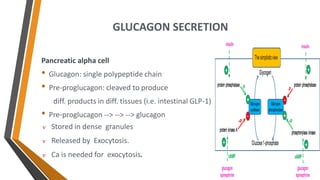
GLUCAGON SECRETION
Pancreatic alpha cell
• Glucagon: single polypeptide chain
• Pre-proglucagon: cleaved to produce
diff. products in diff. tissues (i.e. intestinal GLP-1)
• Pre-proglucagon --> --> --> glucagon
 Stored in dense granules
 Released by Exocytosis.
 Ca is needed for exocytosis.
PLASMA LEVELS
 Circulating Glucagon – Unbound.
 Basal level in Fasting – 100-150 pg/ml.
 Half life – 6 min (5-9 min)
 Secretion Rate 100 -150 μg/day.
 Degradation – in liver & kidney
Activate secretion:
• Low blood glucose (primary stimulus)
• Stress hormones: (nor)epinephrine override alpha cell's response during
physiologic stress
• Amino acids: high protein meal stimulates glucagon secretion (counters insulin
secretion)
• Gi hormones (cck, gastrin)
• Cortisol, growth hormone
• Exercise
• Infections
•  Adrenergic stimulus, ACh
Inhibitors
 Elevated plasma [glucose]
 Somatostatin
 Secretin
 FFA, ketones
 Insulin
-Adrnergic stimulation, GABA
Regulation of secretion
 Role of blood levels of
Nutrients.
 Blood Glucose level – BSL
• >70mg% stimulate
 Plasma amino acids-
protein rich meal
specially Arginine &
Alanine.
 Free fatty acids & keto-
acids – Negative feedback
relationship.
 Role of GIT hormones –
CCK-PZ, Gastrin, GIP
stimulates
 Role of Nervous system
–sympathetic nerve
stimulation – increases
 Stress, fasting, exercise,
infection – increases
 Vagal stimulation,
acetylcholine – increases.
Mechanism of action
ACTIONSOFGLUCAGON
 Mobilization of storednutrients
• Glucose, fatty acids, ketoacids.
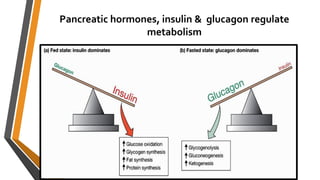
 Action exactly opposite to insulin.
 Hormone of energy release.
ACTIONSOF GLUCAGON
 Carbohydrate metabolism
 Protein metabolism
 Fat metabolism
 Other actions
Actions
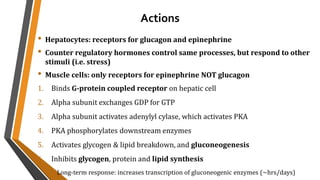
• Hepatocytes: receptors for glucagon and epinephrine
• Counter regulatory hormones control same processes, but respond to other
stimuli (i.e. stress)
• Muscle cells: only receptors for epinephrine NOT glucagon
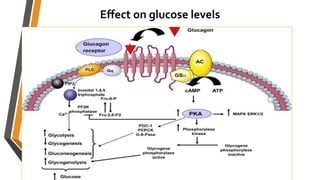
1. Binds G-protein coupled receptor on hepatic cell
2. Alpha subunit exchanges GDP for GTP
3. Alpha subunit activates adenylyl cylase, which activates PKA
4. PKA phosphorylates downstream enzymes
5. Activates glycogen & lipid breakdown, and gluconeogenesis
6. Inhibits glycogen, protein and lipid synthesis
Long-term response: increases transcription of gluconeogenic enzymes (~hrs/days)
Effect on glucose levels
Carbohydrate metabolism
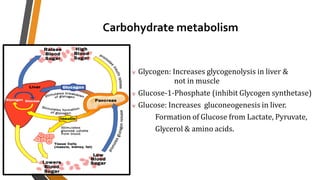
 Glycogen: Increases glycogenolysis in liver &
not in muscle
 Glucose-1-Phosphate (inhibit Glycogen synthetase)
 Glucose: Increases gluconeogenesis in liver.
Formation of Glucose from Lactate, Pyruvate,
Glycerol & amino acids.
Fat metabolism
 Increases lipolysis – excess FFA oxidized – energy production -
ketogenesis in liver.
 Increases release of FFA & Glycerol from adipose tissue and makes it
available for peripheral utilization.
 Prevents synthesis of triglycerides
 Thus Glucagon – Ketogenic & Hyperglycemic Hormone.
Protein metabolism
 Increases Gluconeogenesis by increasing transport of Amino Acids into liver.
 Lowers plasma amino acids.
 CALORIGENIC EFFECT
• Due to increased hepatic deamination of amino acids
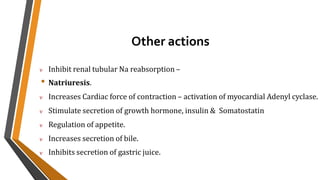
Other actions
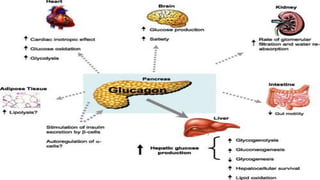
 Inhibit renal tubular Na reabsorption –
• Natriuresis.
 Increases Cardiac force of contraction – activation of myocardial Adenyl cyclase.
 Stimulate secretion of growth hormone, insulin & Somatostatin
 Regulation of appetite.
 Increases secretion of bile.
 Inhibits secretion of gastric juice.
Pancreatic hormones, insulin & glucagon regulate
metabolism
Actions
CLINICAL CORRELATION
• Hypoglycaemia
• Acute drop in blood glucose levels to below 60 mg/dL
• Symptoms range from dizziness to coma and even death
• Brain and red blood cells depend on glucose for energy
PREVENTIONOF OCCURRENCE OF HYPERGLYCEMIA
 Hyperglycemia after a carbohydrate meal or mixed meal is
prevented by 4-5 times increase in INSULIN secretion.
 Increase uptake & utilization as chief fuel
 Promotes store of glucose as glycogen in liver & TG in adipose tissue.
 Inhibit Gluconeogenesis & Glycogenolysis.
PREVENTIONOF OCCURRENCE OF HYPERGLYCEMIA…..
• There is only one hormone to prevent Hyperglycemia – Insulin
• But 4 hormones to prevent Hypoglycemia
• Glycogen, Growth hormone, Glucocorticoids & Epinephrine.
• Organs cannot use any fuel other than glucose so vulnerable to
Hypoglycemia are –
Brain, Retina & Germinal Epithelium of gonads
PREVENTIONOF OCCURRENCE OF HYPERGLYCEMIA
 Role of Glucagon – prevent hypoglycemia between meals (few hours).
 Promotes Glycogenolysis & Gluconeogenesis.
 Lipolysis in adipose tissue& use FFA as chief fuel.
 Role of Epinephrine (Many hours) – stimulate sympathetic nervous
system through Hypothalamus
 Supplement actions of Glycogen
 Increase FFA production by lipolysis.
 Role of growth hormones & Glucocorticoids(Few days) – decrease
peripheral use of Glucose.
THANKYOU …….

Glucagon

  • 1.
    Glucagon Dr. Rupali A.Patil Associate Professor, Pharmacology Department GES’s Sir Dr. M. S. Gosavi College of Pharmaceutical Education & Research, Nashik
  • 2.
    GLUCAGON • Peptide hormonesecreted by pancreatic alpha cells. • Glucagon is a polypeptide (29 amino acid) with a molecular weight of 3500. • Counterregulatory hormone: opposes insulin action. • Other counter-regulatory hormones: epinephrine, norepinephrine, cortisol, GH. • Binds G-protein coupled receptors in specific tissues (i.e. liver).
  • 3.
    GLUCAGON SECRETION Pancreatic alphacell • Glucagon: single polypeptide chain • Pre-proglucagon: cleaved to produce diff. products in diff. tissues (i.e. intestinal GLP-1) • Pre-proglucagon --> --> --> glucagon  Stored in dense granules  Released by Exocytosis.  Ca is needed for exocytosis.
  • 4.
    PLASMA LEVELS  CirculatingGlucagon – Unbound.  Basal level in Fasting – 100-150 pg/ml.  Half life – 6 min (5-9 min)  Secretion Rate 100 -150 μg/day.  Degradation – in liver & kidney
  • 5.
    Activate secretion: • Lowblood glucose (primary stimulus) • Stress hormones: (nor)epinephrine override alpha cell's response during physiologic stress • Amino acids: high protein meal stimulates glucagon secretion (counters insulin secretion) • Gi hormones (cck, gastrin) • Cortisol, growth hormone • Exercise • Infections •  Adrenergic stimulus, ACh
  • 6.
    Inhibitors  Elevated plasma[glucose]  Somatostatin  Secretin  FFA, ketones  Insulin -Adrnergic stimulation, GABA
  • 7.
    Regulation of secretion Role of blood levels of Nutrients.  Blood Glucose level – BSL • >70mg% stimulate  Plasma amino acids- protein rich meal specially Arginine & Alanine.  Free fatty acids & keto- acids – Negative feedback relationship.  Role of GIT hormones – CCK-PZ, Gastrin, GIP stimulates  Role of Nervous system –sympathetic nerve stimulation – increases  Stress, fasting, exercise, infection – increases  Vagal stimulation, acetylcholine – increases.
  • 8.
  • 9.
    ACTIONSOFGLUCAGON  Mobilization ofstorednutrients • Glucose, fatty acids, ketoacids.  Action exactly opposite to insulin.  Hormone of energy release.
  • 10.
    ACTIONSOF GLUCAGON  Carbohydratemetabolism  Protein metabolism  Fat metabolism  Other actions
  • 11.
    Actions • Hepatocytes: receptorsfor glucagon and epinephrine • Counter regulatory hormones control same processes, but respond to other stimuli (i.e. stress) • Muscle cells: only receptors for epinephrine NOT glucagon 1. Binds G-protein coupled receptor on hepatic cell 2. Alpha subunit exchanges GDP for GTP 3. Alpha subunit activates adenylyl cylase, which activates PKA 4. PKA phosphorylates downstream enzymes 5. Activates glycogen & lipid breakdown, and gluconeogenesis 6. Inhibits glycogen, protein and lipid synthesis Long-term response: increases transcription of gluconeogenic enzymes (~hrs/days)
  • 12.
  • 13.
    Carbohydrate metabolism  Glycogen:Increases glycogenolysis in liver & not in muscle  Glucose-1-Phosphate (inhibit Glycogen synthetase)  Glucose: Increases gluconeogenesis in liver. Formation of Glucose from Lactate, Pyruvate, Glycerol & amino acids.
  • 14.
    Fat metabolism  Increaseslipolysis – excess FFA oxidized – energy production - ketogenesis in liver.  Increases release of FFA & Glycerol from adipose tissue and makes it available for peripheral utilization.  Prevents synthesis of triglycerides  Thus Glucagon – Ketogenic & Hyperglycemic Hormone.
  • 15.
    Protein metabolism  IncreasesGluconeogenesis by increasing transport of Amino Acids into liver.  Lowers plasma amino acids.  CALORIGENIC EFFECT • Due to increased hepatic deamination of amino acids
  • 17.
    Other actions  Inhibitrenal tubular Na reabsorption – • Natriuresis.  Increases Cardiac force of contraction – activation of myocardial Adenyl cyclase.  Stimulate secretion of growth hormone, insulin & Somatostatin  Regulation of appetite.  Increases secretion of bile.  Inhibits secretion of gastric juice.
  • 18.
    Pancreatic hormones, insulin& glucagon regulate metabolism
  • 19.
  • 20.
    CLINICAL CORRELATION • Hypoglycaemia •Acute drop in blood glucose levels to below 60 mg/dL • Symptoms range from dizziness to coma and even death • Brain and red blood cells depend on glucose for energy
  • 21.
    PREVENTIONOF OCCURRENCE OFHYPERGLYCEMIA  Hyperglycemia after a carbohydrate meal or mixed meal is prevented by 4-5 times increase in INSULIN secretion.  Increase uptake & utilization as chief fuel  Promotes store of glucose as glycogen in liver & TG in adipose tissue.  Inhibit Gluconeogenesis & Glycogenolysis.
  • 22.
    PREVENTIONOF OCCURRENCE OFHYPERGLYCEMIA….. • There is only one hormone to prevent Hyperglycemia – Insulin • But 4 hormones to prevent Hypoglycemia • Glycogen, Growth hormone, Glucocorticoids & Epinephrine. • Organs cannot use any fuel other than glucose so vulnerable to Hypoglycemia are – Brain, Retina & Germinal Epithelium of gonads
  • 23.
    PREVENTIONOF OCCURRENCE OFHYPERGLYCEMIA  Role of Glucagon – prevent hypoglycemia between meals (few hours).  Promotes Glycogenolysis & Gluconeogenesis.  Lipolysis in adipose tissue& use FFA as chief fuel.  Role of Epinephrine (Many hours) – stimulate sympathetic nervous system through Hypothalamus  Supplement actions of Glycogen  Increase FFA production by lipolysis.  Role of growth hormones & Glucocorticoids(Few days) – decrease peripheral use of Glucose.
  • 24.