OxytocinDANISH HASSAN
LECTURER, UNIVERSITY OF SARGODHA
Oxytocin
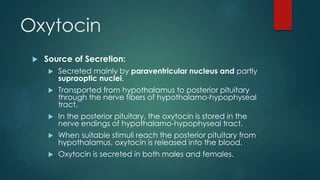
 Source of Secretion:
 Secreted mainly by paraventricular nucleus and partly
supraoptic nuclei.
 Transported from hypothalamus to posterior pituitary
through the nerve fibers of hypothalamo-hypophyseal
tract.
 In the posterior pituitary, the oxytocin is stored in the
nerve endings of hypothalamo-hypophyseal tract.
 When suitable stimuli reach the posterior pituitary from
hypothalamus, oxytocin is released into the blood.
 Oxytocin is secreted in both males and females.
 Chemistry and Half-life
 Oxytocin is a polypeptide having 9 amino acids.
 It has a half-life of about 6 minutes
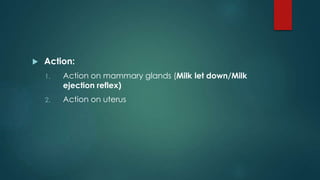
 Action:
1. Action on mammary glands (Milk let down/Milk
ejection reflex)
2. Action on uterus
 Action on mammary glands
 Causes ejection of milk from the mammary glands.
 Oxytocin causes contraction of the myoepithelial
cells and flow of milk from alveoli of mammary
glands to the exterior through duct system and
nipple.
 The process by which the milk is ejected from alveoli
of mammary glands is called milk ejection reflex or
milk letdown reflex.
 It is one of the neuro-endocrine reflexes.
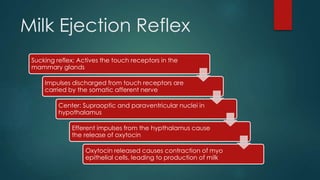
Milk Ejection Reflex
Sucking reflex; Actives the touch receptors in the
mammary glands
Impulses discharged from touch receptors are
carried by the somatic afferent nerve
Center: Supraoptic and paraventricular nuclei in
hypothalamus
Efferent impulses from the hypthalamus cause
the release of oxytocin
Oxytocin released causes contraction of myo
epithelial cells, leading to production of milk
 As this reflex is initiated by the nervous factors and
completed by the hormonal action, it is called a
neuroendocrine reflex.
 During this reflex, large amount of oxytocin is
released by positive feedback mechanism
 Action on Uterus:
 Oxytocin acts on:
1. Pregnant uterus
2. Non-pregnant uterus.
 On pregnant uterus:
 Throughout the period of pregnancy, oxytocin
secretion is inhibited by estrogen and progesterone.
 At the end of pregnancy, the secretion of these two
hormones decreases suddenly and the secretion of
oxytocin increases.
 Oxytocin causes contraction of uterus and helps in the
expulsion of fetus.
 It is also an example of neuro-endocrine reflex and
positive feedback mechanism
On Pregnant Utreus
At the onset of labor, the cervix dilates and the
fetus descend through the birth canal
Receptors in wall of the cervix are stimulated
which respond by discharging impulses
Impulses carried to center by afferent nerve
fibers
Center: Supraoptic & paraventricular nucli in
hypothahamus
Continued……
Efferent impulses from the hypothalamus
causes the release of oxytocin
Oxytocin travels through blood and
acts on the walls of utreus
Causes powerful contarction of the
utreus that helps in the onset of labour
 On non-pregnant utreus:
 Action of oxytocin on non-pregnant uterus is to
facilitate the transport of sperms through female
genital tract up to the fallopian tube, by producing
the uterine contraction during sexual intercourse.
Stimulation of receptors in the walls of vagina
Discharge of afferent impulses from these
receptors to the hypothalmus
Center: Supraoptic and paraventricular nuclei in
the hypothalamus
Efferent impulses from the hypothalamus cause
the relaese of oxytocin
Oxytocin acts on the uterine wall and causes its
contraction towards the fallopian tube
 Action in Males
 Release of oxytocin increases during ejaculation
 It facilitates release of sperm into urethra by causing
contraction of smooth muscle fibers in reproductive
tract, particularly vas deferens

Oxytocin

  • 1.
  • 2.
    Oxytocin  Source ofSecretion:  Secreted mainly by paraventricular nucleus and partly supraoptic nuclei.  Transported from hypothalamus to posterior pituitary through the nerve fibers of hypothalamo-hypophyseal tract.  In the posterior pituitary, the oxytocin is stored in the nerve endings of hypothalamo-hypophyseal tract.  When suitable stimuli reach the posterior pituitary from hypothalamus, oxytocin is released into the blood.  Oxytocin is secreted in both males and females.
  • 3.
     Chemistry andHalf-life  Oxytocin is a polypeptide having 9 amino acids.  It has a half-life of about 6 minutes
  • 4.
     Action: 1. Actionon mammary glands (Milk let down/Milk ejection reflex) 2. Action on uterus
  • 5.
     Action onmammary glands  Causes ejection of milk from the mammary glands.  Oxytocin causes contraction of the myoepithelial cells and flow of milk from alveoli of mammary glands to the exterior through duct system and nipple.  The process by which the milk is ejected from alveoli of mammary glands is called milk ejection reflex or milk letdown reflex.  It is one of the neuro-endocrine reflexes.
  • 6.
    Milk Ejection Reflex Suckingreflex; Actives the touch receptors in the mammary glands Impulses discharged from touch receptors are carried by the somatic afferent nerve Center: Supraoptic and paraventricular nuclei in hypothalamus Efferent impulses from the hypthalamus cause the release of oxytocin Oxytocin released causes contraction of myo epithelial cells, leading to production of milk
  • 7.
     As thisreflex is initiated by the nervous factors and completed by the hormonal action, it is called a neuroendocrine reflex.  During this reflex, large amount of oxytocin is released by positive feedback mechanism
  • 9.
     Action onUterus:  Oxytocin acts on: 1. Pregnant uterus 2. Non-pregnant uterus.
  • 10.
     On pregnantuterus:  Throughout the period of pregnancy, oxytocin secretion is inhibited by estrogen and progesterone.  At the end of pregnancy, the secretion of these two hormones decreases suddenly and the secretion of oxytocin increases.  Oxytocin causes contraction of uterus and helps in the expulsion of fetus.  It is also an example of neuro-endocrine reflex and positive feedback mechanism
  • 11.
    On Pregnant Utreus Atthe onset of labor, the cervix dilates and the fetus descend through the birth canal Receptors in wall of the cervix are stimulated which respond by discharging impulses Impulses carried to center by afferent nerve fibers Center: Supraoptic & paraventricular nucli in hypothahamus
  • 12.
    Continued…… Efferent impulses fromthe hypothalamus causes the release of oxytocin Oxytocin travels through blood and acts on the walls of utreus Causes powerful contarction of the utreus that helps in the onset of labour
  • 13.
     On non-pregnantutreus:  Action of oxytocin on non-pregnant uterus is to facilitate the transport of sperms through female genital tract up to the fallopian tube, by producing the uterine contraction during sexual intercourse.
  • 14.
    Stimulation of receptorsin the walls of vagina Discharge of afferent impulses from these receptors to the hypothalmus Center: Supraoptic and paraventricular nuclei in the hypothalamus Efferent impulses from the hypothalamus cause the relaese of oxytocin Oxytocin acts on the uterine wall and causes its contraction towards the fallopian tube
  • 15.
     Action inMales  Release of oxytocin increases during ejaculation  It facilitates release of sperm into urethra by causing contraction of smooth muscle fibers in reproductive tract, particularly vas deferens