By-
Dr. Dinesh C. Sharma
Head, Zoology
Govt. P. G. College, Noida
www.gpgcnoida.org
dr_dineshsharma@hotmail.com
1
2
Thyroid is the largest endocrine gland
Weight 25-30 gm,
Slightly larger in woman,
Maximum size at sexual maturity,
Thyroid develops from endoderm it is
homologous with endostyle (groove in
mid ventral lining of pharynx of
protochordates).
3
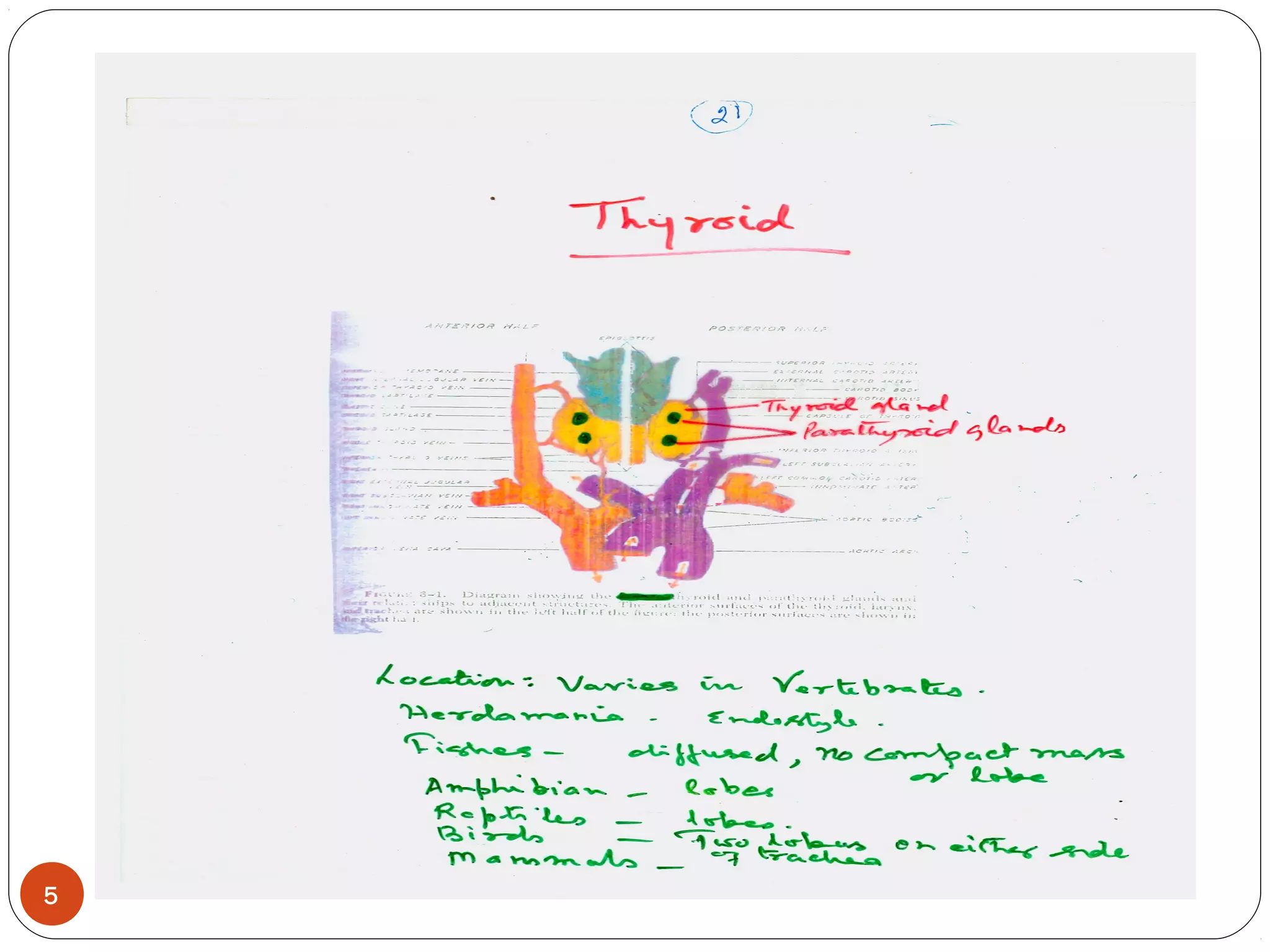
Thyroid is butter fly shaped lying ventral to Pharynx (in neck below chin).
The narrow portion between the two lobes of thyroid is called Isthmus.
Thyroid consists of numerous follicles separated by connective tissue. The
lining of follicles is of cuboidal cells.
The cavity of follicles contains thyroglobulin, which is raw material for
thyroxin. Thyroglobulin is a mixture of iodine and tyrosine AA percentage
of iodine being 65. Cuboidal cells take up both tyrosine and iodine from the
cavity of follicle, and unite them to form thyroxin.
Follicles
Isthmus
Cells
Lumen
Thyroglobulin
‘C’ Cells
4
5
6
Thyroid Gland Secretes :
1.Tetra-io-do thyronine Thyroxine (T4)
2.Tri-io-do thyronine ( T3)
3.Calcitonin (produced by ‘C’-cells)
 T3 and T4 help to regulate metabolic rate,
growth and development.
 Calcitonin is a plasma calcium
lowering hormone and involved in the
regulation of calcium levels in the blood
7
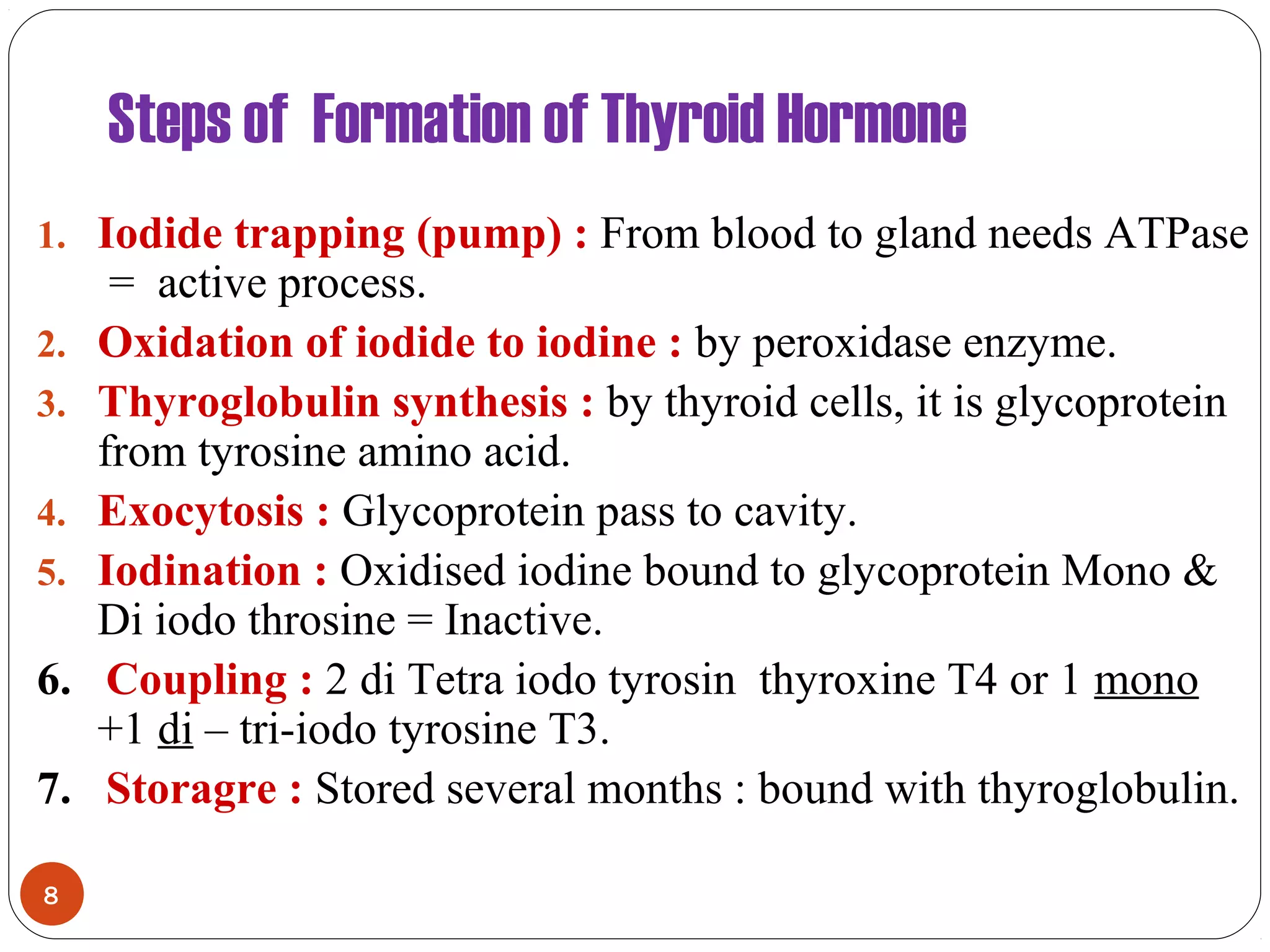
Steps of Formation of Thyroid Hormone
1. Iodide trapping (pump) : From blood to gland needs ATPase
= active process.
2. Oxidation of iodide to iodine : by peroxidase enzyme.
3. Thyroglobulin synthesis : by thyroid cells, it is glycoprotein
from tyrosine amino acid.
4. Exocytosis : Glycoprotein pass to cavity.
5. Iodination : Oxidised iodine bound to glycoprotein Mono &
Di iodo throsine = Inactive.
6. Coupling : 2 di Tetra iodo tyrosin thyroxine T4 or 1 mono
+1 di – tri-iodo tyrosine T3.
7. Storagre : Stored several months : bound with thyroglobulin.
8
Thyroid cells exert 3 functions
1. They actively collect, transport &
concentrate iodide.
2. They synthesize the colloid and secrete in
it both thyroglobulin and iodine.
3. They ingest the colloid and thyroglobulin,
separate the hormones and then secrete
them into the blood stream.
9
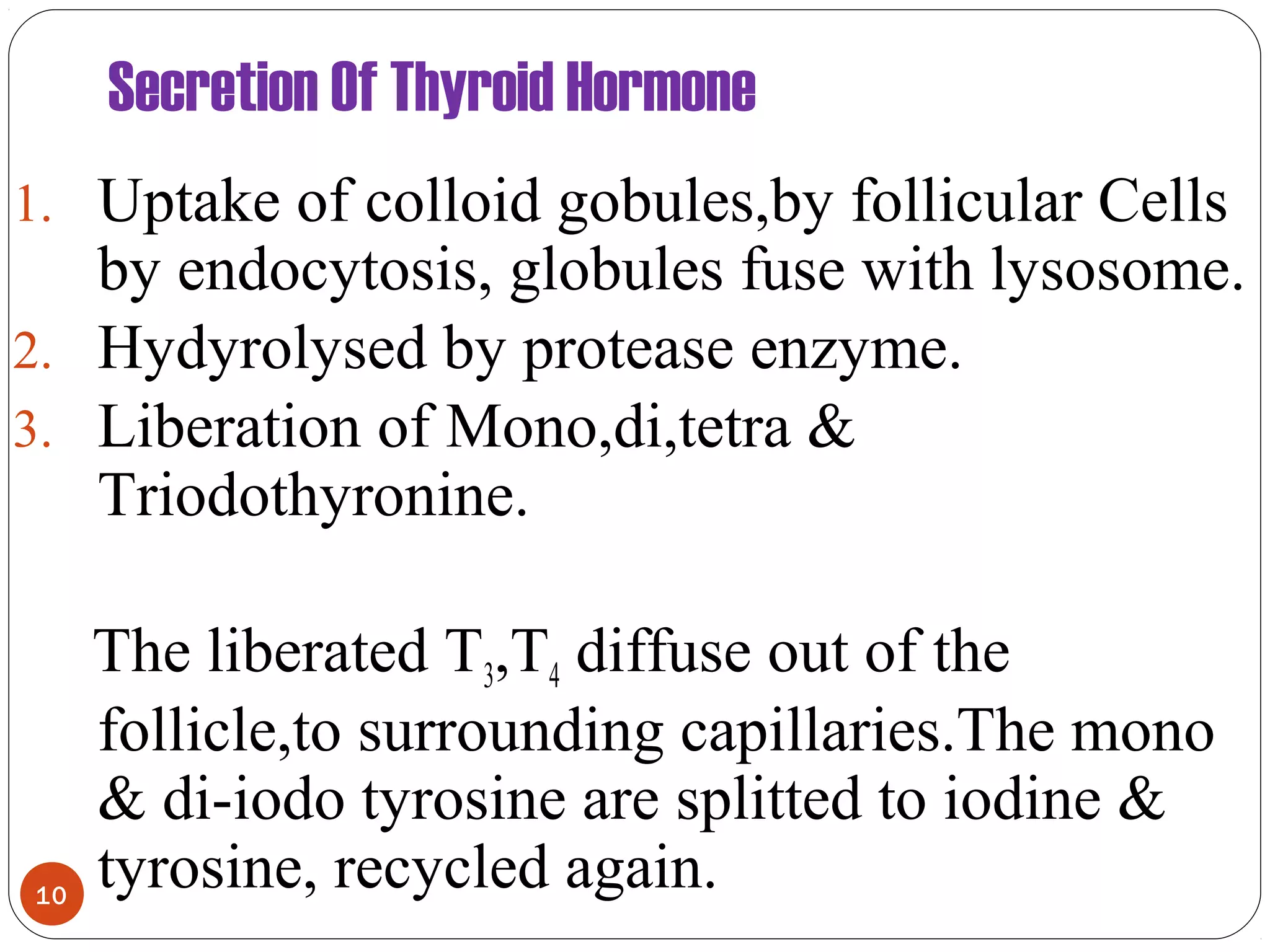
Secretion Of Thyroid Hormone
1. Uptake of colloid gobules,by follicular Cells
by endocytosis, globules fuse with lysosome.
2. Hydyrolysed by protease enzyme.
3. Liberation of Mono,di,tetra &
Triodothyronine.
The liberated T3,T4 diffuse out of the
follicle,to surrounding capillaries.The mono
& di-iodo tyrosine are splitted to iodine &
tyrosine, recycled again.10
Transport of Thyroid Hormones
Thyroxine bound to plasma protein, then
released at tissue cells as free hormone.
The protein bound fraction act as a store, the
free form on entering the cell, will bind
again with intra-cellular protein& used
slowly over days or weeks.( in plasma there
is balance between bound & free forms )
11
Functions of the Thyroid Hormones
 They have a wide spread effect because it
stimulates oxygen consumption (calorigenic
action)
A) Metabolic functions :
1. On metabolic rate : They increase the
metabolic rate and oxygen consumption of
most of tissues of the body. The BMR can
increase to as much as 60 to 100% above
normal when large quantities of the
hormones are secreted.
12
2. They increase Synthesis of many
intracellular enzymes and increase its activity
as Na+
K+ _
ATPase which increase rate of
transport of both sodium and potassium
through the cell membrane. This processes
utilized energy and increase heat production
i.e. increase metabolic rate.
3. On Mitochondria : They increase the size,
number & activity of mitochondria & this in
turn increase the rate of formation of ATP to
energise cellular function.
13
4. On Protein synthesis
 Small does of thyroid hormone increase the
rate of formation of proteins by the
ribosomes.
It increase RNA synthesis by the genes,
which leads to a generalized increase in
synthesis of many types of protein within the
cells.
Large doses of thyroid hormone lead to
excess catabolism of muscle protein.
14
5. On carbohydrate metabolism
A. It increase the rate of absorption of carbohydrate
from the gastrointestinal tract, thus the blood
glucose level increase after carbohydrate meals.
However, it normally falls again rapidly because
the rate of glucose utilization is also increased.
The effects of Thyroxine on carbohydrate result
from increase in the activity of enzymes.
B. They enhance gluconeogenesis & glycolysis,
C. they increase cell metabolic enzymes acting on
carbohydrate.
15
6.On fat metabolism
All aspects of fat metabolism are
increased under the effect of thyroid
hormone including synthesis, mobilization
and utilisation.
Thyroid hormone accelerates the
oxidation of fatty acids by the cells. Thus
lipolytic effect more than lipogenic effect.
They lower the level of, cholesterol,
phospholipid & tryglycerides in the blood.
16
7. Thyroid Hormone are
necessary for the hepatic
convertion of carotene to Vit.A,
so if thyroid hormones are
decreased carotenaemia result
causing yellow colouration of
the skin.
17
B) On growth and development
1. On skeletal growth and development
Thyroxine is essential for normal
growth of soft tissue and skeleton
due to: Its stimulation to protein
synthesis by ribosome's.
Thyroid hormones are required
for production & action of growth
hormones and insulin like growth18
2. On nervous system
 Thyroid hormone promoted growth
and development of the brain during
fetal life & for the first few years of life.
The thyroid hormones are essential for
normal myelination & development of
the nervous system in infant. If there is
a deficiency in thyroid hormone growth
& maturation of the brain is retarded,
myelination is defective, the reflex time
is prolonged.19
In adult, thyroid hormone causes
an increased response of the
brain to catecholamines &
increases activation of reticular
activating system.
An excess of thyroid hormone
leads to restlessness & hyper
excitability.
20
3-On Sleep
Because of the exhausting effect of
thyroid hormones on the
musculature and on the CNS, the
hyperthyroid subject often has a
feeling of constant Tiredness, but
because of the excitable effect of
thyroid hormone on the reticular
activating system the patient
cannot sleep.
21
C) The cardiovascular system
1. Thyroid hormone increase the
number &affinity of beta-1,
adrenergic receptors in the heart,
also it increase its sensitivity to
catecholamine (catecholamine
increase all properties of the
heart).
22
2. Increased metabolism in the
tissues causes more rapid
utilization of oxygen & causes
greater metabolic end products
to be released from the tissues.
These effects cause
vasodilatation, thus increasing
the rate of blood flow in the
skin for heat elimination.
23
3. Increase blood flow leads to
increase venous return leading to
increase in cardiac output so the
systolic blood pressure rises, but
vasodilatation causes decrease
diastolic blood pressure thus, pulse
pressure is increased.
24
D.) On Respiration
Thyroid hormone increase
respiration due to increase rate of
metabolism which increase the
utilization of oxygen & the
formation of CO2. Also it helps
dissociation of O2 from
haemoglobin by increasing the
amount of 2,3 diphophoglyceride
( DPG) in the RBCs.25
E.) On The G.I.T.
They increase the rate of
secretion of the digestive juice
and motility. This leads to
increase appetite and food
intake.
26
F.) On Sexual functions
For normal sexual function to
act thyroid hormone secretion
needs to be approximately
normal. Thyroid Hs.are essential
for normal menstrual cycles and
fertility. They increase milk
secretion in lactating women.
27
Regulation of Thyroid Hormones
secretion
1) Hypothalamic regulation :
Stimulation of the hypothalamus
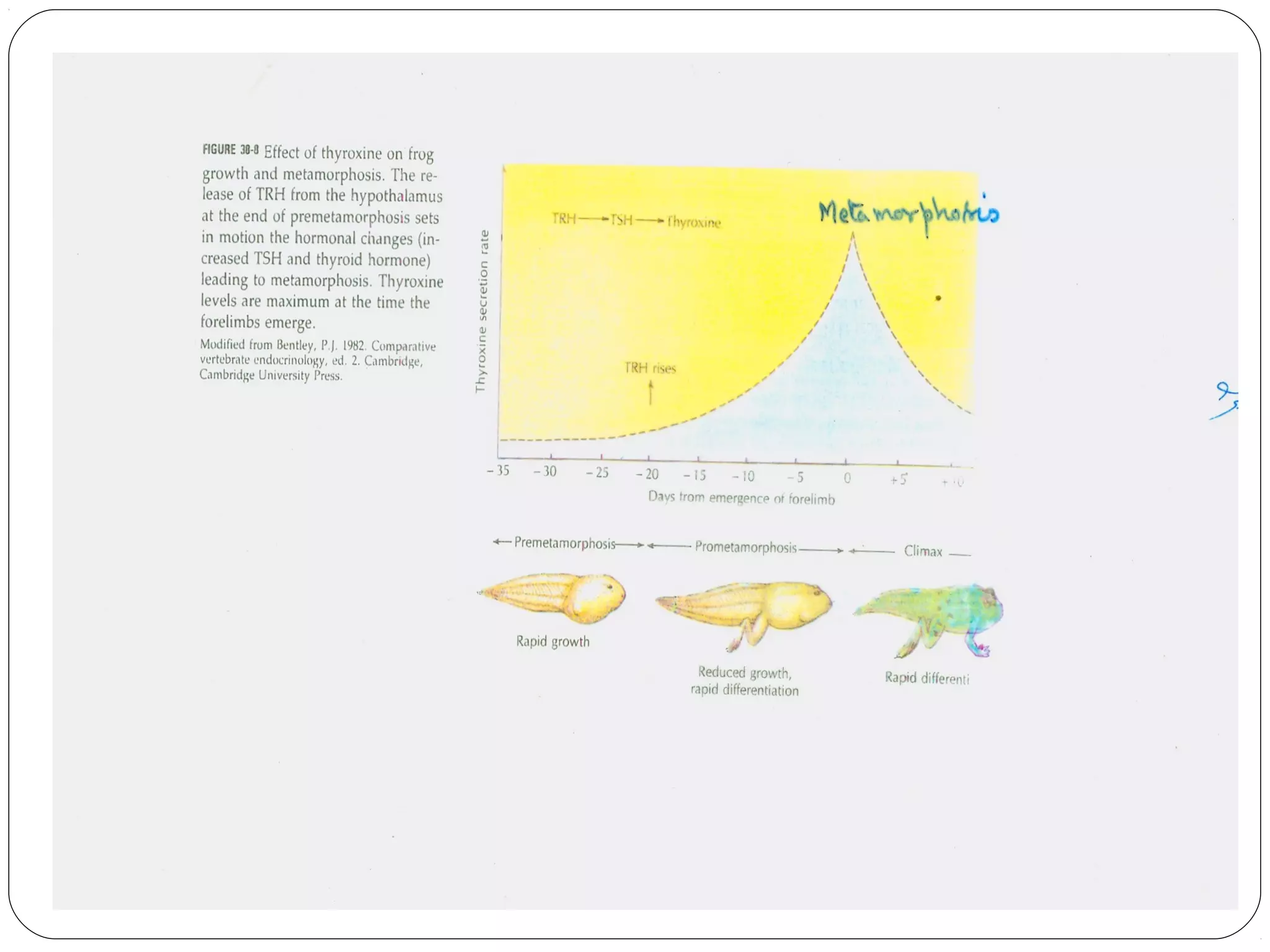
leads to release of thyrotropin releasing
hormone (TRH) which is transported to
the anterior pituitary, & directly affects
it to increase its output of thyroid –
stimulating hormone.
Hypothalamus can also inhibits
the secretion of TSH and growth
hormone by secreting somatostation.34
2) Pituitary regulation
Anterior pituitary secretes TSH which has
important role on thyroid gland. It increase
the secretion of thyroxin. TSH is a
glycoprotein. Its secretion increases by cold,
TRH and decreases by heat, stress,
somatostatin and excess thyroid hormones.
TSH activates cAMP (second messenger)
which activates phosphorylation inside
thyroid cells that increases its secretion.
35
Effects of TSH on the thyroid gland
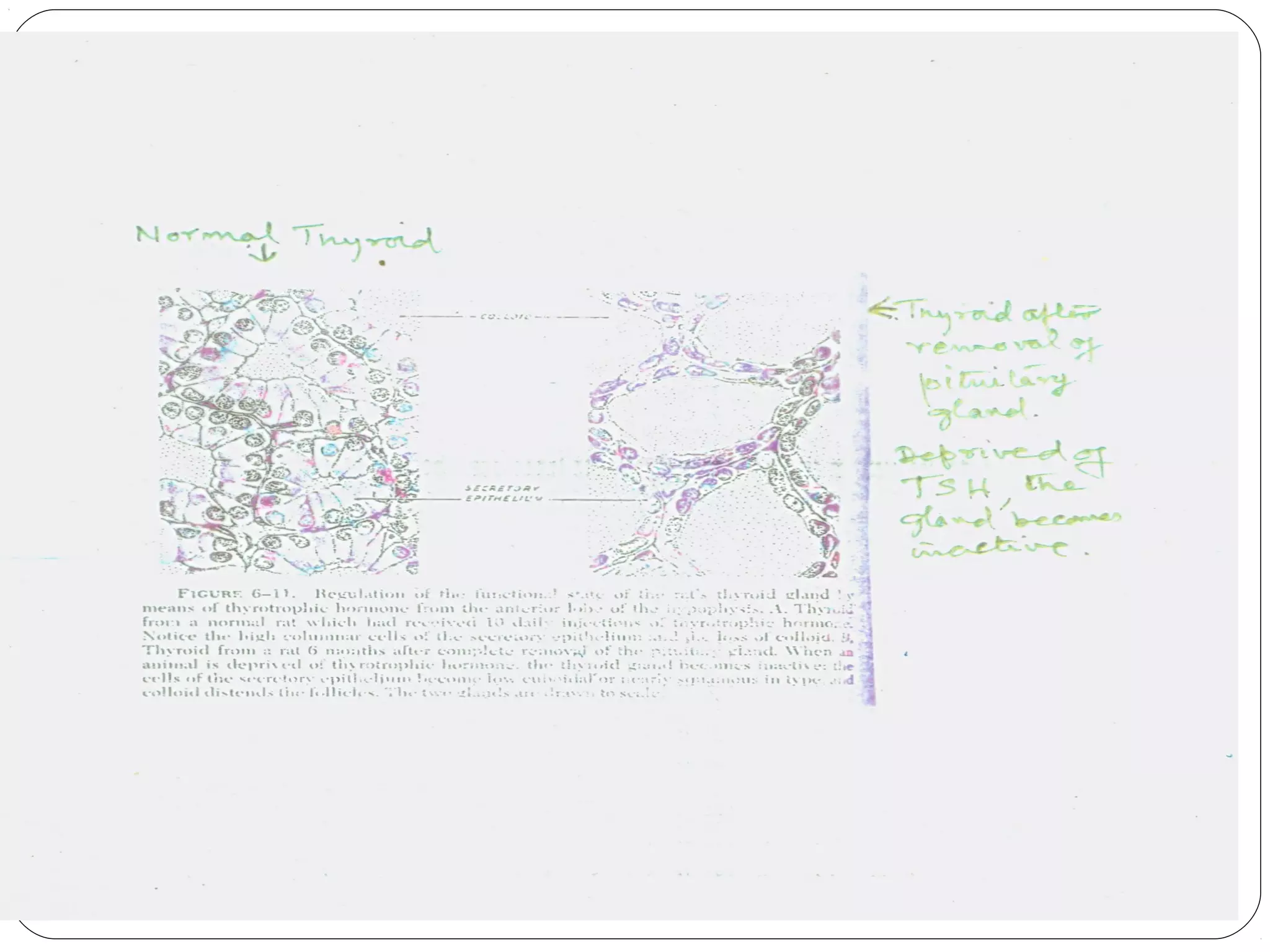
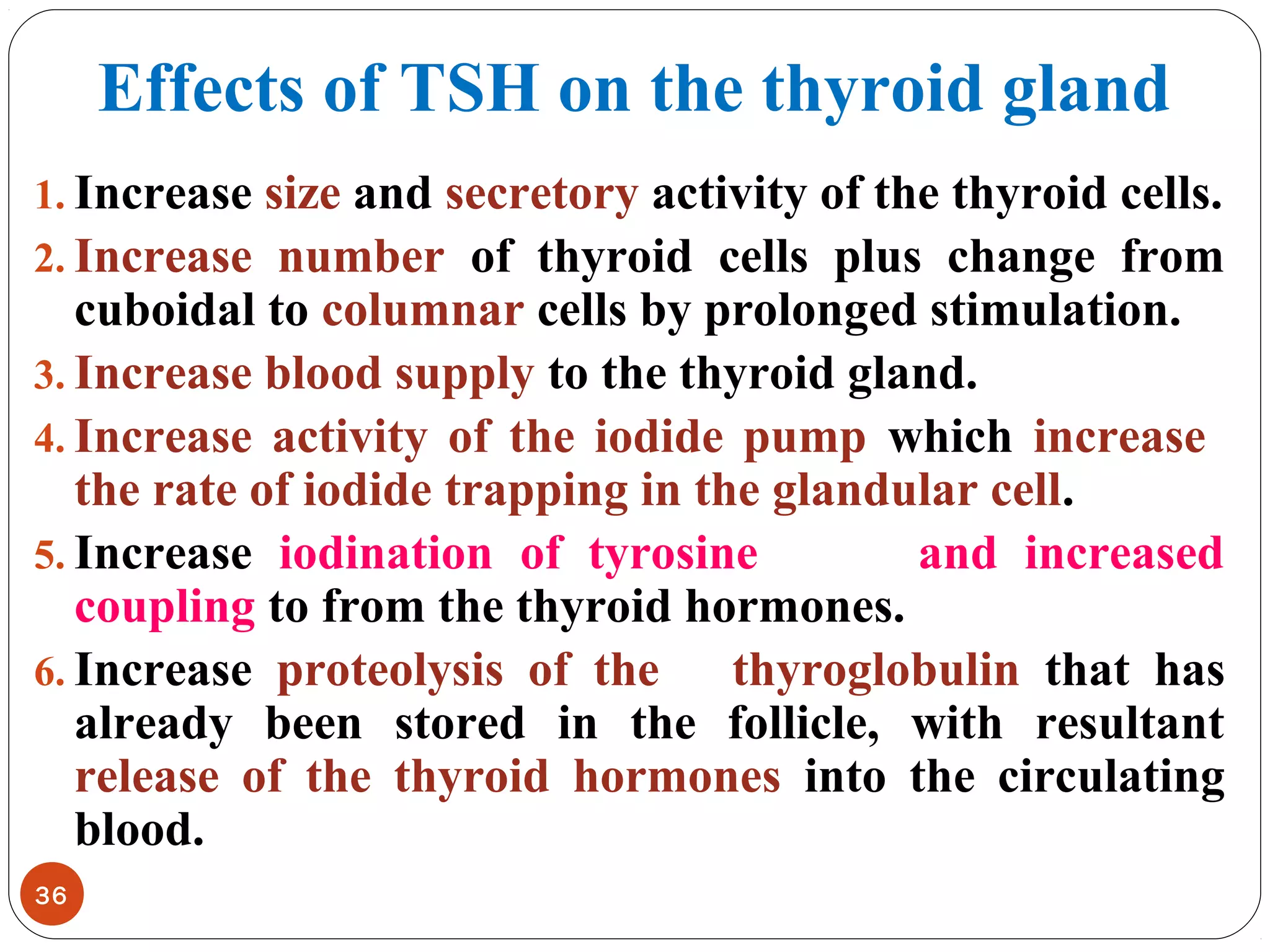
1. Increase size and secretory activity of the thyroid cells.
2. Increase number of thyroid cells plus change from
cuboidal to columnar cells by prolonged stimulation.
3. Increase blood supply to the thyroid gland.
4. Increase activity of the iodide pump which increase
the rate of iodide trapping in the glandular cell.
5. Increase iodination of tyrosine and increased
coupling to from the thyroid hormones.
6. Increase proteolysis of the thyroglobulin that has
already been stored in the follicle, with resultant
release of the thyroid hormones into the circulating
blood.
36
3) Feed back regulation of thyroid
secretion
Increased thyroid hormones decrease
the secretion of TSH by the anterior
pituitary mainly by a direct negative
feedback effect on the anterior
pituitary and secondarily by weaker
effects on the hypothalamus. This
mechanism maintains a constant
hormonal blood level.
37
4) Blood iodine level
As adequate dietary iodine intake is
essential for normal thyroid function,
when the intake of iodine falls, the
synthesis and secretion of thyroid
hormone are decreased and as a
result the secretion of TSH increases
leading to thyroid enlargement
(goiter).
38
5) Prolonged emotional reactions
can affect the output of TRH &
TSH, therefore, indirectly affect
the secretion of thyroid hormone.
Excitement and anxiety
(conditions that greatly stimulate
the sympathetic nervous system)
cause acute decrease in secretion
of TSH, perhaps because these
states increase the metabolic rate
and the body heat.39
Effect of stress on T S H
Stress leads to release of catecolamines
that increases metabolic activities and heat
production by body cells , these effects
leads to suppression of hypothalamus &
inturn suppress the TSH of anterior
pituitary ,so the thyroid gland is
suppressed .
40
6) Effect of cold on TSH &
TRH secretion
Exposure of the animal for
several weeks to very sever cold
increase the output of thyroid
hormone which increase the
(B.M.R.)
41
Antithyroid Substances
 Drugs that suppresses thyroid secretion
are thiocyanate, prophyl thiouracil, and
high concentration of inorganic iodides.
1. Thiocyanante ions : cause competitive of
iodide transport into the cell, it decrease
iodide trapping&↓hormone formation.
2. Propylthiouracil : It blocks peroxidase
enzyme thus inhibits formation of thyroid
hormone from iodides and tyrosine. It
blocks iodination of tyrosine.42
These two substances cause deficiency in
thyroid hormone which leads to increase
secretion of TSH by the anterior
pituitary gland. Excess TSH causes :
A) Overgrowth of the thyroid gland.
B) Formation of thyroglobulin.
But since there is no iodine present
to combine with thyroglobulin, the gland
fills with colloid and increases in size( =
goiter)
43
3. Excess iodides
High iodides concentration inhibit the
thyroid stimulating effect of TSH, which
lead to decrease all phase of thyroid
activity and decrease the size and the
blood supply of the thyroid gland.
Iodides are frequently administered to
patients for two or three weeks before
surgical removal of the thyroid gland to
decrease its blood supply.
44
Manifestations of hypothyroidism
1. decrease BMR& decrease tolerance to cold.
2. dry, cold, yellowish skin, brittle nails, coarse sparce
hair,
3. husky slow voice.
4. muscle weakness, cramps& stiffness.
5. decreased cardiac properties, blood flow.
6. constipation, loss of appetite& increased body wt.
7. depressed mental functions, thinking, memory&
increased sleeping hours.
8. anemia, arteriosclerosis, ↑blood lipids
45
1-Simple goitre-takes place due to lack of iodine in
food; the glands swells up and protrudesout in neck
region it may starts pressing trachea and may cause
breathing problems. It is endemic disease. Iodised
salt prevent occurrence of goitre. The enlargement
of gland is to pickup each and every molecule of
iodine from blood
Hyposecretion of thyroid cause-
46
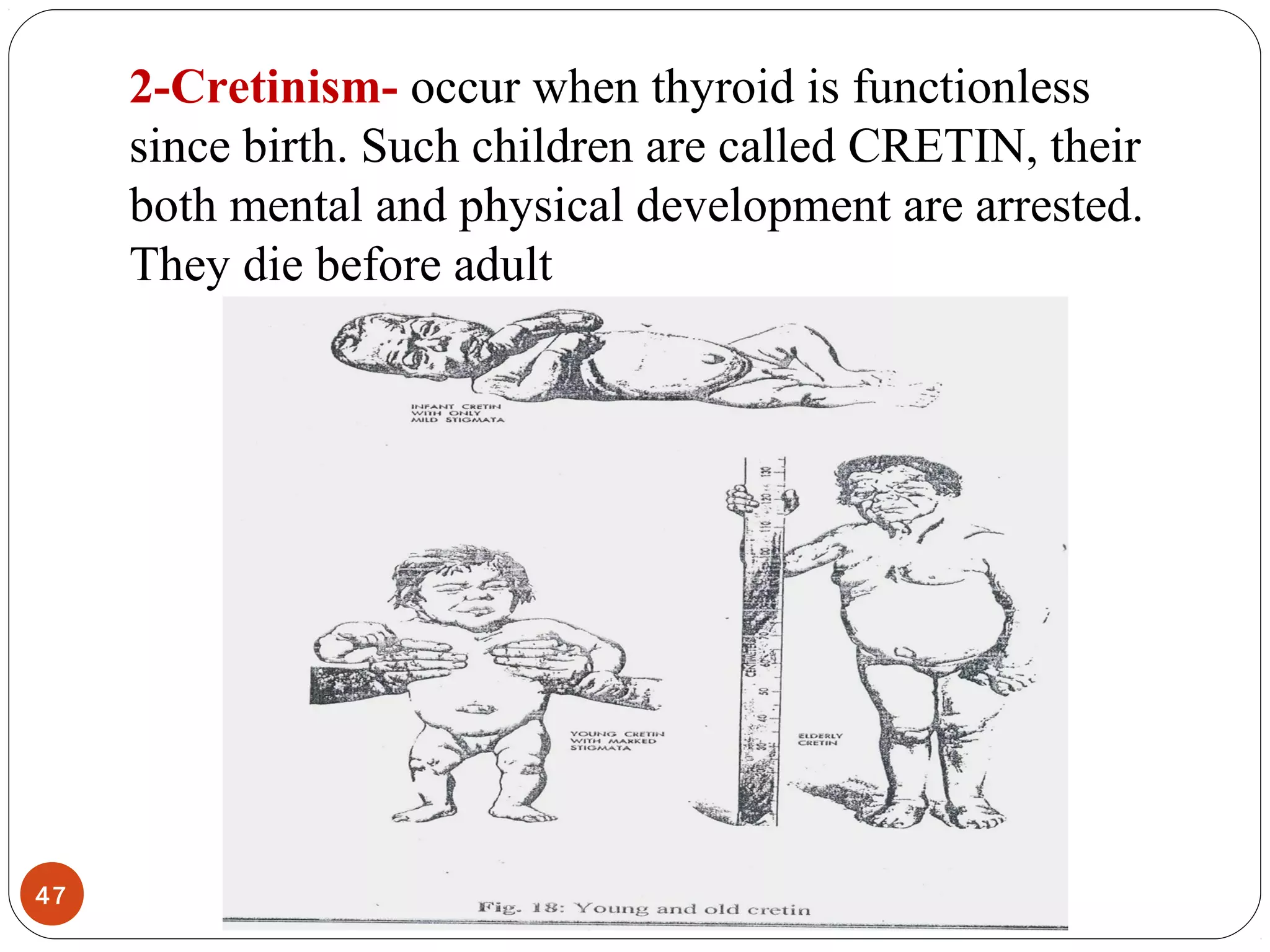
2-Cretinism- occur when thyroid is functionless
since birth. Such children are called CRETIN, their
both mental and physical development are arrested.
They die before adult
47
3-Myxedema (Mucous swelling)-occur when thyroid become
functionless at later age (after adulthood) in life. The body
swells up at places due to mucous deposition beneath skin;
and symptoms of old age appear. Edematous swelling allover
the body, face& bagging under the eyes (myxedema).
48
4-Hashimotos disease - is an
autoimmune disorder, in which
thyroid of a person is killed by
antibodies; produced in his own
body; this is also called suicide
of thyroid
49
Manifestations of hyperthyroidism
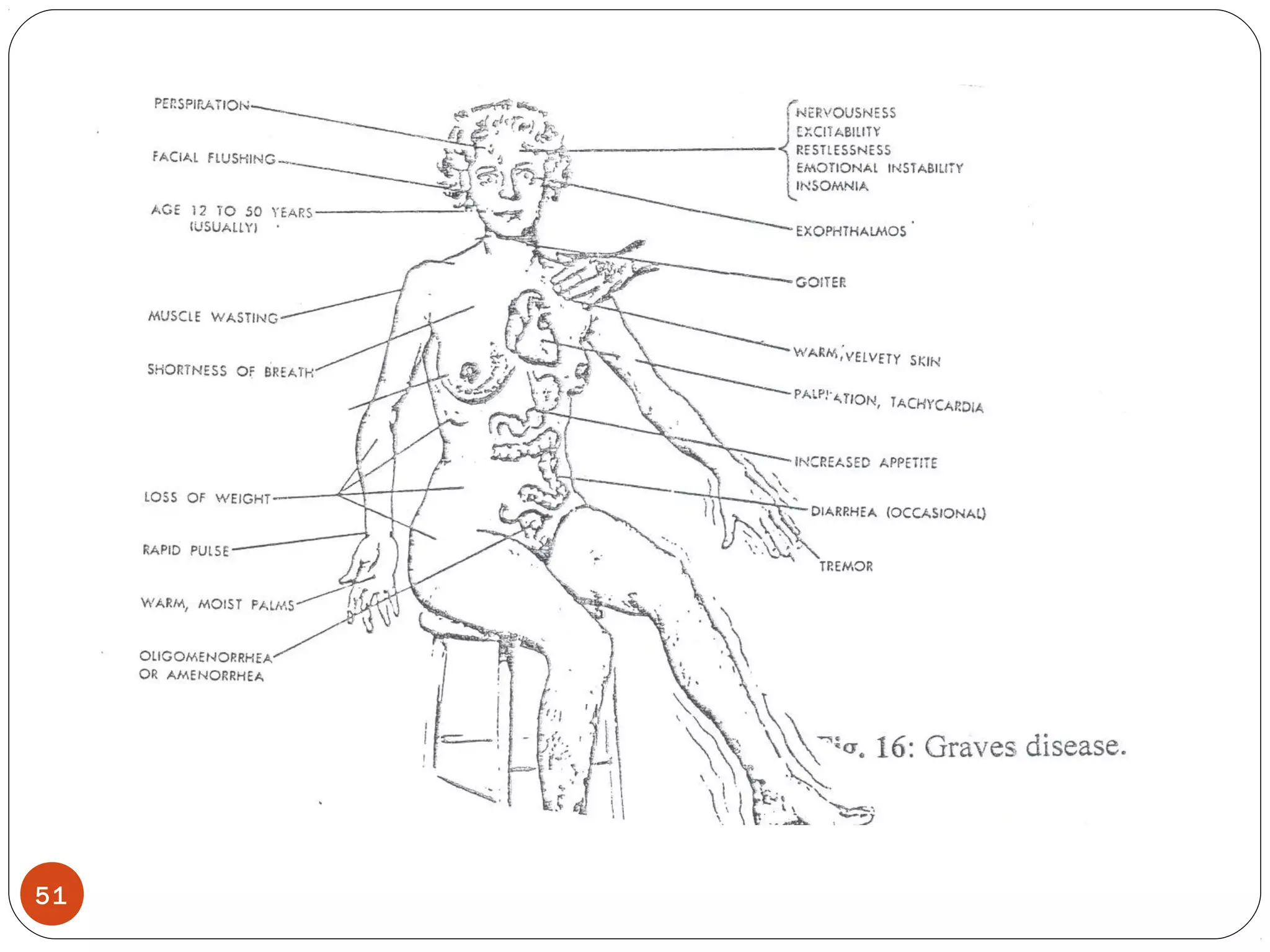
Toxic goiter or thyrotoxicosis = Graves disease is manifested
by :
1-diffusely enlarged gland with increased number of active
cells& increased rate of secretion.
2-increased metabolic rate 60-100 % above normal.
3-intolerance to heat ,↑heat production.
4-increased sweating, skin is warm.
5-tachycardia, palpitation&↑cardiac output.
6-irritability,anxiety& nervousness.
7-inability to sleep:↑reticular active . System.
8-weight loss, ↑appetite.
9-diarrhea,muscle weakness, ↑protein break- down.
10-exophthalmos due to retrobulbar tissue swelling.
50
51
1-Exopthalmic goitre- Eyes are protrudesout in
addition to the enlargement of gland this may due to
overstimulation of thyroid by pituitary; or cancer of
any of the two glands-Thyroid or Pituitary. In this
case too much heat is produced, the person always
feels excited & irritable together with trembling of
fingers occur
Hypersecretion of thyroid cause-
52
Between thyroid follicles (outside them) in connective tissue
are found certain clusters of cells called ‘C’ cells. These
produced a hormone Calcitonin.
Calcitonin decrease a level of calcium in our body fluids
(ECF)
Follicles
‘C’ Cells
Calcitonin
53

Endocrinology 70-122-thyroid

  • 1.
    By- Dr. Dinesh C.Sharma Head, Zoology Govt. P. G. College, Noida www.gpgcnoida.org dr_dineshsharma@hotmail.com 1
  • 2.
  • 3.
    Thyroid is thelargest endocrine gland Weight 25-30 gm, Slightly larger in woman, Maximum size at sexual maturity, Thyroid develops from endoderm it is homologous with endostyle (groove in mid ventral lining of pharynx of protochordates). 3
  • 4.
    Thyroid is butterfly shaped lying ventral to Pharynx (in neck below chin). The narrow portion between the two lobes of thyroid is called Isthmus. Thyroid consists of numerous follicles separated by connective tissue. The lining of follicles is of cuboidal cells. The cavity of follicles contains thyroglobulin, which is raw material for thyroxin. Thyroglobulin is a mixture of iodine and tyrosine AA percentage of iodine being 65. Cuboidal cells take up both tyrosine and iodine from the cavity of follicle, and unite them to form thyroxin. Follicles Isthmus Cells Lumen Thyroglobulin ‘C’ Cells 4
  • 5.
  • 6.
  • 7.
    Thyroid Gland Secretes: 1.Tetra-io-do thyronine Thyroxine (T4) 2.Tri-io-do thyronine ( T3) 3.Calcitonin (produced by ‘C’-cells)  T3 and T4 help to regulate metabolic rate, growth and development.  Calcitonin is a plasma calcium lowering hormone and involved in the regulation of calcium levels in the blood 7
  • 8.
    Steps of Formationof Thyroid Hormone 1. Iodide trapping (pump) : From blood to gland needs ATPase = active process. 2. Oxidation of iodide to iodine : by peroxidase enzyme. 3. Thyroglobulin synthesis : by thyroid cells, it is glycoprotein from tyrosine amino acid. 4. Exocytosis : Glycoprotein pass to cavity. 5. Iodination : Oxidised iodine bound to glycoprotein Mono & Di iodo throsine = Inactive. 6. Coupling : 2 di Tetra iodo tyrosin thyroxine T4 or 1 mono +1 di – tri-iodo tyrosine T3. 7. Storagre : Stored several months : bound with thyroglobulin. 8
  • 9.
    Thyroid cells exert3 functions 1. They actively collect, transport & concentrate iodide. 2. They synthesize the colloid and secrete in it both thyroglobulin and iodine. 3. They ingest the colloid and thyroglobulin, separate the hormones and then secrete them into the blood stream. 9
  • 10.
    Secretion Of ThyroidHormone 1. Uptake of colloid gobules,by follicular Cells by endocytosis, globules fuse with lysosome. 2. Hydyrolysed by protease enzyme. 3. Liberation of Mono,di,tetra & Triodothyronine. The liberated T3,T4 diffuse out of the follicle,to surrounding capillaries.The mono & di-iodo tyrosine are splitted to iodine & tyrosine, recycled again.10
  • 11.
    Transport of ThyroidHormones Thyroxine bound to plasma protein, then released at tissue cells as free hormone. The protein bound fraction act as a store, the free form on entering the cell, will bind again with intra-cellular protein& used slowly over days or weeks.( in plasma there is balance between bound & free forms ) 11
  • 12.
    Functions of theThyroid Hormones  They have a wide spread effect because it stimulates oxygen consumption (calorigenic action) A) Metabolic functions : 1. On metabolic rate : They increase the metabolic rate and oxygen consumption of most of tissues of the body. The BMR can increase to as much as 60 to 100% above normal when large quantities of the hormones are secreted. 12
  • 13.
    2. They increaseSynthesis of many intracellular enzymes and increase its activity as Na+ K+ _ ATPase which increase rate of transport of both sodium and potassium through the cell membrane. This processes utilized energy and increase heat production i.e. increase metabolic rate. 3. On Mitochondria : They increase the size, number & activity of mitochondria & this in turn increase the rate of formation of ATP to energise cellular function. 13
  • 14.
    4. On Proteinsynthesis  Small does of thyroid hormone increase the rate of formation of proteins by the ribosomes. It increase RNA synthesis by the genes, which leads to a generalized increase in synthesis of many types of protein within the cells. Large doses of thyroid hormone lead to excess catabolism of muscle protein. 14
  • 15.
    5. On carbohydratemetabolism A. It increase the rate of absorption of carbohydrate from the gastrointestinal tract, thus the blood glucose level increase after carbohydrate meals. However, it normally falls again rapidly because the rate of glucose utilization is also increased. The effects of Thyroxine on carbohydrate result from increase in the activity of enzymes. B. They enhance gluconeogenesis & glycolysis, C. they increase cell metabolic enzymes acting on carbohydrate. 15
  • 16.
    6.On fat metabolism Allaspects of fat metabolism are increased under the effect of thyroid hormone including synthesis, mobilization and utilisation. Thyroid hormone accelerates the oxidation of fatty acids by the cells. Thus lipolytic effect more than lipogenic effect. They lower the level of, cholesterol, phospholipid & tryglycerides in the blood. 16
  • 17.
    7. Thyroid Hormoneare necessary for the hepatic convertion of carotene to Vit.A, so if thyroid hormones are decreased carotenaemia result causing yellow colouration of the skin. 17
  • 18.
    B) On growthand development 1. On skeletal growth and development Thyroxine is essential for normal growth of soft tissue and skeleton due to: Its stimulation to protein synthesis by ribosome's. Thyroid hormones are required for production & action of growth hormones and insulin like growth18
  • 19.
    2. On nervoussystem  Thyroid hormone promoted growth and development of the brain during fetal life & for the first few years of life. The thyroid hormones are essential for normal myelination & development of the nervous system in infant. If there is a deficiency in thyroid hormone growth & maturation of the brain is retarded, myelination is defective, the reflex time is prolonged.19
  • 20.
    In adult, thyroidhormone causes an increased response of the brain to catecholamines & increases activation of reticular activating system. An excess of thyroid hormone leads to restlessness & hyper excitability. 20
  • 21.
    3-On Sleep Because ofthe exhausting effect of thyroid hormones on the musculature and on the CNS, the hyperthyroid subject often has a feeling of constant Tiredness, but because of the excitable effect of thyroid hormone on the reticular activating system the patient cannot sleep. 21
  • 22.
    C) The cardiovascularsystem 1. Thyroid hormone increase the number &affinity of beta-1, adrenergic receptors in the heart, also it increase its sensitivity to catecholamine (catecholamine increase all properties of the heart). 22
  • 23.
    2. Increased metabolismin the tissues causes more rapid utilization of oxygen & causes greater metabolic end products to be released from the tissues. These effects cause vasodilatation, thus increasing the rate of blood flow in the skin for heat elimination. 23
  • 24.
    3. Increase bloodflow leads to increase venous return leading to increase in cardiac output so the systolic blood pressure rises, but vasodilatation causes decrease diastolic blood pressure thus, pulse pressure is increased. 24
  • 25.
    D.) On Respiration Thyroidhormone increase respiration due to increase rate of metabolism which increase the utilization of oxygen & the formation of CO2. Also it helps dissociation of O2 from haemoglobin by increasing the amount of 2,3 diphophoglyceride ( DPG) in the RBCs.25
  • 26.
    E.) On TheG.I.T. They increase the rate of secretion of the digestive juice and motility. This leads to increase appetite and food intake. 26
  • 27.
    F.) On Sexualfunctions For normal sexual function to act thyroid hormone secretion needs to be approximately normal. Thyroid Hs.are essential for normal menstrual cycles and fertility. They increase milk secretion in lactating women. 27
  • 34.
    Regulation of ThyroidHormones secretion 1) Hypothalamic regulation : Stimulation of the hypothalamus leads to release of thyrotropin releasing hormone (TRH) which is transported to the anterior pituitary, & directly affects it to increase its output of thyroid – stimulating hormone. Hypothalamus can also inhibits the secretion of TSH and growth hormone by secreting somatostation.34
  • 35.
    2) Pituitary regulation Anteriorpituitary secretes TSH which has important role on thyroid gland. It increase the secretion of thyroxin. TSH is a glycoprotein. Its secretion increases by cold, TRH and decreases by heat, stress, somatostatin and excess thyroid hormones. TSH activates cAMP (second messenger) which activates phosphorylation inside thyroid cells that increases its secretion. 35
  • 36.
    Effects of TSHon the thyroid gland 1. Increase size and secretory activity of the thyroid cells. 2. Increase number of thyroid cells plus change from cuboidal to columnar cells by prolonged stimulation. 3. Increase blood supply to the thyroid gland. 4. Increase activity of the iodide pump which increase the rate of iodide trapping in the glandular cell. 5. Increase iodination of tyrosine and increased coupling to from the thyroid hormones. 6. Increase proteolysis of the thyroglobulin that has already been stored in the follicle, with resultant release of the thyroid hormones into the circulating blood. 36
  • 37.
    3) Feed backregulation of thyroid secretion Increased thyroid hormones decrease the secretion of TSH by the anterior pituitary mainly by a direct negative feedback effect on the anterior pituitary and secondarily by weaker effects on the hypothalamus. This mechanism maintains a constant hormonal blood level. 37
  • 38.
    4) Blood iodinelevel As adequate dietary iodine intake is essential for normal thyroid function, when the intake of iodine falls, the synthesis and secretion of thyroid hormone are decreased and as a result the secretion of TSH increases leading to thyroid enlargement (goiter). 38
  • 39.
    5) Prolonged emotionalreactions can affect the output of TRH & TSH, therefore, indirectly affect the secretion of thyroid hormone. Excitement and anxiety (conditions that greatly stimulate the sympathetic nervous system) cause acute decrease in secretion of TSH, perhaps because these states increase the metabolic rate and the body heat.39
  • 40.
    Effect of stresson T S H Stress leads to release of catecolamines that increases metabolic activities and heat production by body cells , these effects leads to suppression of hypothalamus & inturn suppress the TSH of anterior pituitary ,so the thyroid gland is suppressed . 40
  • 41.
    6) Effect ofcold on TSH & TRH secretion Exposure of the animal for several weeks to very sever cold increase the output of thyroid hormone which increase the (B.M.R.) 41
  • 42.
    Antithyroid Substances  Drugsthat suppresses thyroid secretion are thiocyanate, prophyl thiouracil, and high concentration of inorganic iodides. 1. Thiocyanante ions : cause competitive of iodide transport into the cell, it decrease iodide trapping&↓hormone formation. 2. Propylthiouracil : It blocks peroxidase enzyme thus inhibits formation of thyroid hormone from iodides and tyrosine. It blocks iodination of tyrosine.42
  • 43.
    These two substancescause deficiency in thyroid hormone which leads to increase secretion of TSH by the anterior pituitary gland. Excess TSH causes : A) Overgrowth of the thyroid gland. B) Formation of thyroglobulin. But since there is no iodine present to combine with thyroglobulin, the gland fills with colloid and increases in size( = goiter) 43
  • 44.
    3. Excess iodides Highiodides concentration inhibit the thyroid stimulating effect of TSH, which lead to decrease all phase of thyroid activity and decrease the size and the blood supply of the thyroid gland. Iodides are frequently administered to patients for two or three weeks before surgical removal of the thyroid gland to decrease its blood supply. 44
  • 45.
    Manifestations of hypothyroidism 1.decrease BMR& decrease tolerance to cold. 2. dry, cold, yellowish skin, brittle nails, coarse sparce hair, 3. husky slow voice. 4. muscle weakness, cramps& stiffness. 5. decreased cardiac properties, blood flow. 6. constipation, loss of appetite& increased body wt. 7. depressed mental functions, thinking, memory& increased sleeping hours. 8. anemia, arteriosclerosis, ↑blood lipids 45
  • 46.
    1-Simple goitre-takes placedue to lack of iodine in food; the glands swells up and protrudesout in neck region it may starts pressing trachea and may cause breathing problems. It is endemic disease. Iodised salt prevent occurrence of goitre. The enlargement of gland is to pickup each and every molecule of iodine from blood Hyposecretion of thyroid cause- 46
  • 47.
    2-Cretinism- occur whenthyroid is functionless since birth. Such children are called CRETIN, their both mental and physical development are arrested. They die before adult 47
  • 48.
    3-Myxedema (Mucous swelling)-occurwhen thyroid become functionless at later age (after adulthood) in life. The body swells up at places due to mucous deposition beneath skin; and symptoms of old age appear. Edematous swelling allover the body, face& bagging under the eyes (myxedema). 48
  • 49.
    4-Hashimotos disease -is an autoimmune disorder, in which thyroid of a person is killed by antibodies; produced in his own body; this is also called suicide of thyroid 49
  • 50.
    Manifestations of hyperthyroidism Toxicgoiter or thyrotoxicosis = Graves disease is manifested by : 1-diffusely enlarged gland with increased number of active cells& increased rate of secretion. 2-increased metabolic rate 60-100 % above normal. 3-intolerance to heat ,↑heat production. 4-increased sweating, skin is warm. 5-tachycardia, palpitation&↑cardiac output. 6-irritability,anxiety& nervousness. 7-inability to sleep:↑reticular active . System. 8-weight loss, ↑appetite. 9-diarrhea,muscle weakness, ↑protein break- down. 10-exophthalmos due to retrobulbar tissue swelling. 50
  • 51.
  • 52.
    1-Exopthalmic goitre- Eyesare protrudesout in addition to the enlargement of gland this may due to overstimulation of thyroid by pituitary; or cancer of any of the two glands-Thyroid or Pituitary. In this case too much heat is produced, the person always feels excited & irritable together with trembling of fingers occur Hypersecretion of thyroid cause- 52
  • 53.
    Between thyroid follicles(outside them) in connective tissue are found certain clusters of cells called ‘C’ cells. These produced a hormone Calcitonin. Calcitonin decrease a level of calcium in our body fluids (ECF) Follicles ‘C’ Cells Calcitonin 53