Prepared By; Archana Dubey
Assistant Professor
Department of Education
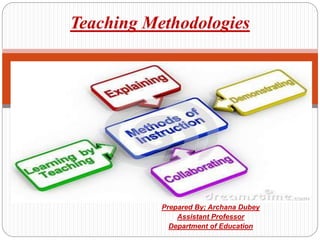
Teaching Methodologies
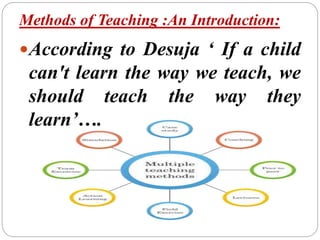
Methods of Teaching :An Introduction:
According to Desuja ‘ If a child
can't learn the way we teach, we
should teach the way they
learn’….
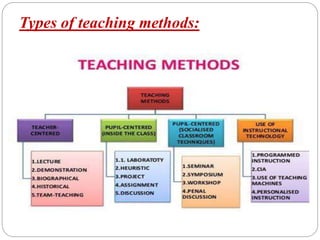
Types of teaching methods:
Contd….
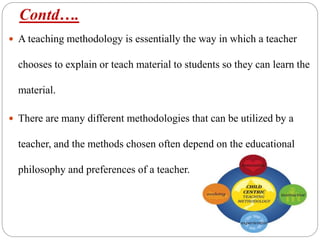
 A teaching methodology is essentially the way in which a teacher
chooses to explain or teach material to students so they can learn the
material.
 There are many different methodologies that can be utilized by a
teacher, and the methods chosen often depend on the educational
philosophy and preferences of a teacher.
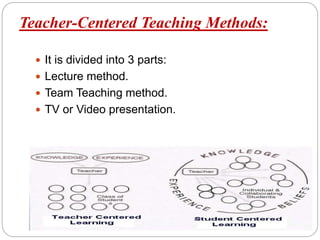
Teacher-Centered Teaching Methods:
 It is divided into 3 parts:
 Lecture method.
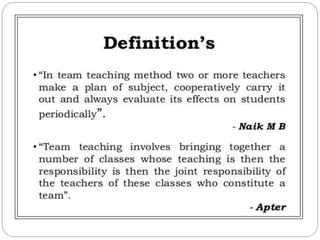
 Team Teaching method.
 TV or Video presentation.
Lecture method:
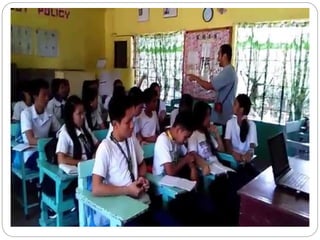
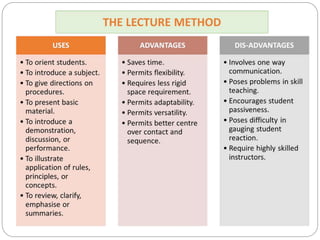
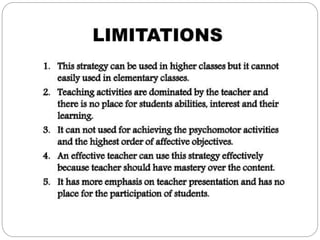
 Lecture method is the most conventional and dominating
teaching method and is preferred by many teachers.
 Here, the teacher is an active participant, the students are
assumed to be passive listeners.
 That way, it is one way communication.
 The teacher talks more or less continuously to the class.
 The class listens, writes and notes facts and the ideas for
remembering and to think them over later.
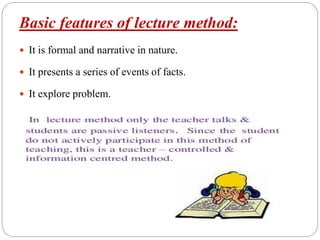
Basic features of lecture method:
 It is formal and narrative in nature.
 It presents a series of events of facts.
 It explore problem.
TV or Video Presentation:
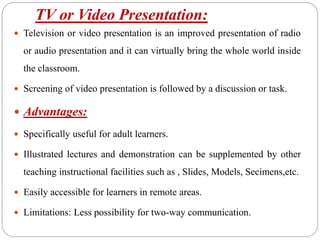
 Television or video presentation is an improved presentation of radio
or audio presentation and it can virtually bring the whole world inside
the classroom.
 Screening of video presentation is followed by a discussion or task.
 Advantages:
 Specifically useful for adult learners.
 Illustrated lectures and demonstration can be supplemented by other
teaching instructional facilities such as , Slides, Models, Secimens,etc.
 Easily accessible for learners in remote areas.
 Limitations: Less possibility for two-way communication.
Mixed Teaching Methods:
Contd….
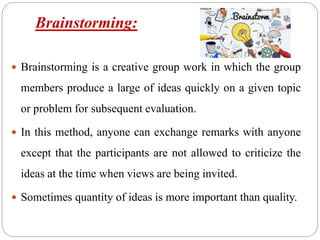
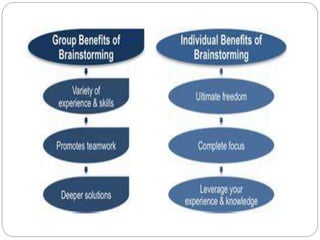
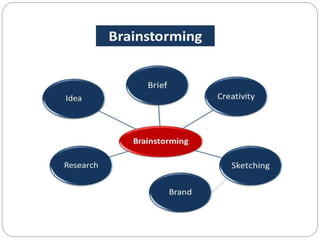
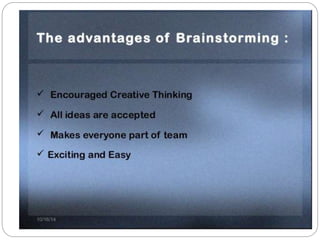
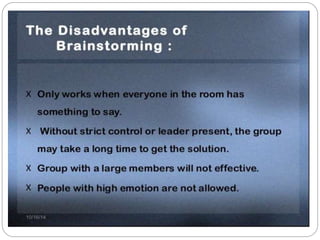
Brainstorming:
 Brainstorming is a creative group work in which the group
members produce a large of ideas quickly on a given topic
or problem for subsequent evaluation.
 In this method, anyone can exchange remarks with anyone
except that the participants are not allowed to criticize the
ideas at the time when views are being invited.
 Sometimes quantity of ideas is more important than quality.
Contd….
 This can be described as both a small group and an
individualized instruction.
 In this method, the students are allowed to explore and
experience their environment through their senses and direct their
own learning by their individual interests.
 Very little is taught from the textbooks and the emphasis is on
experimental learning rather than rote learning and
memorization.
Teaching methodologies

Teaching methodologies

  • 1.
    Prepared By; ArchanaDubey Assistant Professor Department of Education Teaching Methodologies
  • 2.
    Methods of Teaching:An Introduction: According to Desuja ‘ If a child can't learn the way we teach, we should teach the way they learn’….
  • 3.
  • 4.
    Contd….  A teachingmethodology is essentially the way in which a teacher chooses to explain or teach material to students so they can learn the material.  There are many different methodologies that can be utilized by a teacher, and the methods chosen often depend on the educational philosophy and preferences of a teacher.
  • 5.
    Teacher-Centered Teaching Methods: It is divided into 3 parts:  Lecture method.  Team Teaching method.  TV or Video presentation.
  • 7.
    Lecture method:  Lecturemethod is the most conventional and dominating teaching method and is preferred by many teachers.  Here, the teacher is an active participant, the students are assumed to be passive listeners.  That way, it is one way communication.  The teacher talks more or less continuously to the class.  The class listens, writes and notes facts and the ideas for remembering and to think them over later.
  • 8.
    Basic features oflecture method:  It is formal and narrative in nature.  It presents a series of events of facts.  It explore problem.
  • 25.
    TV or VideoPresentation:  Television or video presentation is an improved presentation of radio or audio presentation and it can virtually bring the whole world inside the classroom.  Screening of video presentation is followed by a discussion or task.  Advantages:  Specifically useful for adult learners.  Illustrated lectures and demonstration can be supplemented by other teaching instructional facilities such as , Slides, Models, Secimens,etc.  Easily accessible for learners in remote areas.  Limitations: Less possibility for two-way communication.
  • 26.
  • 29.
  • 38.
    Brainstorming:  Brainstorming isa creative group work in which the group members produce a large of ideas quickly on a given topic or problem for subsequent evaluation.  In this method, anyone can exchange remarks with anyone except that the participants are not allowed to criticize the ideas at the time when views are being invited.  Sometimes quantity of ideas is more important than quality.
  • 44.
    Contd….  This canbe described as both a small group and an individualized instruction.  In this method, the students are allowed to explore and experience their environment through their senses and direct their own learning by their individual interests.  Very little is taught from the textbooks and the emphasis is on experimental learning rather than rote learning and memorization.