The job of an educator is to teach students to see the
vitality in themselves
- Joseph Campbell
INTRODUCTION
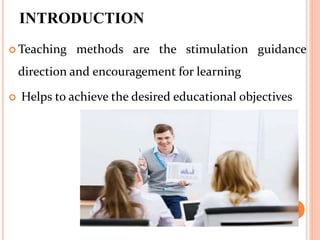
 Teaching methods are the stimulation guidance
direction and encouragement for learning
 Helps to achieve the desired educational objectives
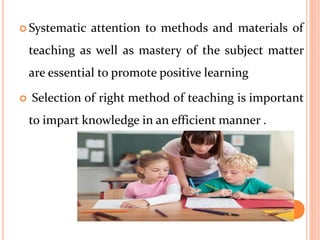
 Systematic attention to methods and materials of
teaching as well as mastery of the subject matter
are essential to promote positive learning
 Selection of right method of teaching is important
to impart knowledge in an efficient manner .
SYMPOSIUM
Investigation of a single problem from
several points by a group with the special
knowledge of the subject.
INTRODUCTION
A symposium is a systematic presentation of
different approaches of a single problem by
group of two or more persons belonging to a
particular discipline with the special knowledge
of the subject.
DEFINITION
The symposium can be defined as a
method of group discussion in which two or
more persons under the direction of a chairman
present separate speeches which give answers
to several aspects of one question
-Hiedgerken
PURPOSE OF SYMPOSIUM
 To analyse a problem from several different
points of view .
 To relieve the students from the boredom of
monotonous lecture method .
 To make students active and alert as opposed
to lecture method in which students are more
or less passive listeners.
THE SYMPOSIUM TECHNIQUE
The whole discussion process could be
divided into three phases
Preparation phase
Conduction phase
Conclusion phase
PREPARATION PHASE
 The apt topic for the symposium are selected
and various aspects of the topic are spelled
out.
 Planning is the foundation for success of any
activity and full planning regarding the
discussion should be done well ahead of time.
 A group of participants who are good in
communications are to be selected and from
among them a chairman is selected.
 The ideal number of people participants in a
symposium is 4 or 5.
 There should be a clear connection of the
symposium discussion to the course
objectives
 Each member including the chairman should know
the objective of the symposium and the breadth off
topic to be discussed
 All speeches to be prepared well ahead to avoid
confusion and overlapping or repetition of
material.
 Date and venue are to be decided
CONDUCTION PHASE
 Chairman open the topic for discussion with a brief
introduction and also introduces the speakers to the
audience
 He fix the time limit for presentation of papers by the
speakers
 Chairman may also invite questions from the audience
and direct the discussion
 He maintains the sequence of information presented
 Each speakers may be given an opportunity to
make a final statement
 The chairman finally sums up after all the
speakers have spoken and close the session
CONCLUSION PHASE
 The general audience listens to the discussions
and each person from his own conclusions based
on the validity of value of the viewpoints
presented.
 The chairman gives brief summary of all the
speeches and opens the topic for discussion to the
students.
 Finally under the leadership of chairman a
consensus is reached after verifying the pros
and cons of different viewpoints expressed by
the speakers as well as the participants.
ADVANTAGES
 Promotes collaborative cooperative learning
and Peer sharing
 Facilitate comprehension and practical
application of concept
 Improve the capability of students to
approach a problem through various aspects
 Improve articulation in discussion and
communication
 It does not require any additional supplies such
as hand outs or audio visuals
 Students can learn group problem solving
technique
DISADVANTAGES
 Requires extensive preparation and planning
on the part of students
 Time consuming
 Request that students process adequate
knowledge for active discussion and
comprehension
 Inadequate opportunity to participate actively for
all the students
Methods of teaching
Methods of teaching

Methods of teaching

  • 1.
    The job ofan educator is to teach students to see the vitality in themselves - Joseph Campbell
  • 2.
    INTRODUCTION  Teaching methodsare the stimulation guidance direction and encouragement for learning  Helps to achieve the desired educational objectives
  • 3.
     Systematic attentionto methods and materials of teaching as well as mastery of the subject matter are essential to promote positive learning  Selection of right method of teaching is important to impart knowledge in an efficient manner .
  • 4.
    SYMPOSIUM Investigation of asingle problem from several points by a group with the special knowledge of the subject.
  • 5.
    INTRODUCTION A symposium isa systematic presentation of different approaches of a single problem by group of two or more persons belonging to a particular discipline with the special knowledge of the subject.
  • 6.
    DEFINITION The symposium canbe defined as a method of group discussion in which two or more persons under the direction of a chairman present separate speeches which give answers to several aspects of one question -Hiedgerken
  • 7.
    PURPOSE OF SYMPOSIUM To analyse a problem from several different points of view .  To relieve the students from the boredom of monotonous lecture method .  To make students active and alert as opposed to lecture method in which students are more or less passive listeners.
  • 8.
    THE SYMPOSIUM TECHNIQUE Thewhole discussion process could be divided into three phases Preparation phase Conduction phase Conclusion phase
  • 9.
    PREPARATION PHASE  Theapt topic for the symposium are selected and various aspects of the topic are spelled out.  Planning is the foundation for success of any activity and full planning regarding the discussion should be done well ahead of time.
  • 10.
     A groupof participants who are good in communications are to be selected and from among them a chairman is selected.  The ideal number of people participants in a symposium is 4 or 5.  There should be a clear connection of the symposium discussion to the course objectives
  • 11.
     Each memberincluding the chairman should know the objective of the symposium and the breadth off topic to be discussed  All speeches to be prepared well ahead to avoid confusion and overlapping or repetition of material.  Date and venue are to be decided
  • 12.
    CONDUCTION PHASE  Chairmanopen the topic for discussion with a brief introduction and also introduces the speakers to the audience  He fix the time limit for presentation of papers by the speakers  Chairman may also invite questions from the audience and direct the discussion  He maintains the sequence of information presented
  • 13.
     Each speakersmay be given an opportunity to make a final statement  The chairman finally sums up after all the speakers have spoken and close the session
  • 14.
    CONCLUSION PHASE  Thegeneral audience listens to the discussions and each person from his own conclusions based on the validity of value of the viewpoints presented.  The chairman gives brief summary of all the speeches and opens the topic for discussion to the students.
  • 15.
     Finally underthe leadership of chairman a consensus is reached after verifying the pros and cons of different viewpoints expressed by the speakers as well as the participants.
  • 16.
    ADVANTAGES  Promotes collaborativecooperative learning and Peer sharing  Facilitate comprehension and practical application of concept  Improve the capability of students to approach a problem through various aspects
  • 17.
     Improve articulationin discussion and communication  It does not require any additional supplies such as hand outs or audio visuals  Students can learn group problem solving technique
  • 18.
    DISADVANTAGES  Requires extensivepreparation and planning on the part of students  Time consuming
  • 19.
     Request thatstudents process adequate knowledge for active discussion and comprehension  Inadequate opportunity to participate actively for all the students