PROJECT
METHOD
DR. MAHESWARI JAIKUMAR.
maheswarijaikumar2103@gmail.com
DEFINITION
• "A project is a bit of life that has
been imparted into the school,
further in project method, learning
by living; this life has spontaneity,
purpose, significance,interest and
freedom. " Prof. Ballard
DEFINITION
• "Poject method is a whole hearted,
purposeful activity proceeding in a
social environment". Williams
Kilpatric.
DEFINITION
• "Project method is a problematic
act carried to completion in its
natural setting". Stevenson.
CHARATERISTICS OF A
PROJECT
• The method aims at teaching the
learner to get the best out of life.
• An attempt to use experience, trust
and the best master whose lessons
are unforgettable.
• The method gives opportunity for
self expression.
• The experiments of the project
aims at resetting the whole
curriculum and has potentials to
break all barriers.
• The project method proposes the
whole sequence of activities &
involves a complete
understanding.
• A project can be a large unit of
appreciational learning or of
attitude devlopment that increases
motor skills and technical
knowledge.
• A project is a play activity and
learners are engaged in carrying
out the activity.
• The project method is a complete
surrender to the learner's point of
view.
• In the project method the
procedure of school is liable to be
determined by the techique of a
workshop because the individual
learners learns much better from
his own activity than by constant
instruction.
• Project method is an attempt made
to establish a positive relation with
life.
• The project method lends itself
naturally to group work.
• It is a large unit of planning.
• The method seeks to have
individuals see and understand life
in its unity.
TYPES OF PROJECT
1. PROJECTOR TYPE.
2. CONSUMER TYPE.
3. PROBLEM TYPE.
4. DRILL TYPE.
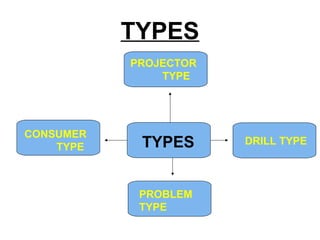
TYPES
TYPES
PROJECTOR
TYPE
DRILL TYPE
PROBLEM
TYPE
CONSUMER
TYPE
PROJECTOR TYPE
• Projects where students get an
opportunity to build or create
something like building a house or
a garden, execute a model of a
textile factore are called projector
type.
CONSUMER TYPE
• Projects in which the students set
and enjoy the direct experience
with their future expected
consumers.
• E.g., Projects related with home/
house visit to assess the elderly in
a community.
PROBLEM TYPE
• Projects where a solution to a
problem is found out or arrived at.
DRILL TYPE
• The drill type projects involve an
activity that aims at acquiring
greater skill.
• E.g., A student is given a project in
which he or she is expected to
develop in developing competency
to carry out an experiment or a
procedure.
ESSENTIALS OF A GOOD
PROJECT
• The project should stress present
and future values and experiences
that supplement and extend rather
than duplicate learning acquired
outside the school.
• The project should have a great
bearing on a variety of subjects
and the knowledge acquired
through it may be applied in a
variety of ways.
• The project should be timely.
• The project should be challenging.
• The project should be feasible.
ORGANIZING A PROJECT
THE PROCESS
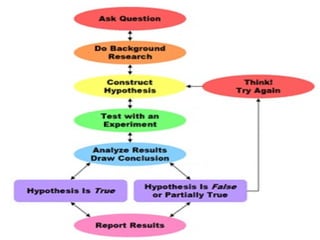
• The project method starts with
identifying a suitable problem for
which a solution is required.
• A background research is done
and hypothesis is worked out.
• Tests are carried out and analyse
the result and draw conclusion.
• This is followed by testing the
hypothesis and communicating the
research findings.
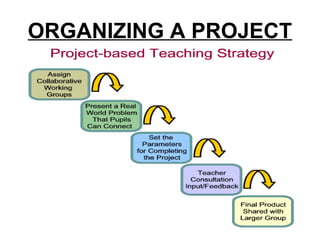
ORGANIZING A PROJECT
• The teacher must exercise
guidance in the selection of a
project.
• Good planning should be done by
the students before carrying out
the project.
• During execution of the project, the
teacher should carefully supervise
the students in manipulative skills
to prevent a waste of materials and
to guard against accidents.
• The evaluation of the project
should be done by both by the
teacher and the student.
ROLE OF A TEACHER IN A
PROJECT
• The teacher skillfully guides the
selection of the project.
• The student has to be given help
when ever required.
• The teacher should be a good
prompter.
• The relations of a teacher and
students should be much closer
and informal than in ordinary class
room teaching.
• The teacher acts like a friend with
rich and mature experience.
• The teacher acts like a director,
i.e., the teacher's knowledge
should be thorough and specific.
• The teacher must be a keen
observer and a true sympathizer.
• The teacher should be a store
house of information and
knowledge.
ADVANTAGES
• It follows psychological laws of
learning.(Law of readiness, Law of
exercise & Law of effect).
• Project method gives freedom to
the students.
• It suits to the psychological
methods of maturation.
• It has potentials to drive social
values.
• It promotes learning through
practical problem solving.
• It trains for social adjustments.
• It saves the learners from
insincerity and superficiality.
• It trains for a democratic way of
life.
• It promotes learning through
practical problem solving.
• It sets up an intrensic standard of
evaluation.
• It leads to satisfaction of
completing the whole work.
• It is ideal for science work,
handicrafts and practical
geography and dramatic work
literature.
• The method is economical; the
students take more interest and
learn in the shortest possible time.
• The method helps students and
teachers to grow. The learner
stimulated and encouraged in his
exploration of many materials will
ultimately approach other areas of
learning in a similar manner.
• The teacher will grow in their
understanding of a child's creative
developments.
DISADVANTAGES
• The role of communication in
teaching learning process is
subordinated to the glorification of
active learning.
• It is time consuming and limited by
availability and cost of materials.
• The practical difficulty of covering
syllabus rule out the project
method as the basis of teaching in
most educational institutions.
• The method provides opportunity
only for the practical enthusiast.
• It may be too ambitious; beyond
the student's capacity.
• It leaves gap in students
knowledge.
• Opportunity for the correlation with
the academic subjects is extremely
limited.
• The project method may disturb
the regular instruntional schedule.
• It ivolves difficulty to ensure any
kind of systematic progress in
instructions.
• Projects may be adopted or
abandoned at will.
• The project approach often results
in an incomplete mastry of the
tools of learning, which are
essential to student education
later.
• A complete re organization of the
school is needed for a new
teacher.
THANK YOU

Project Method

  • 3.
  • 4.
    DEFINITION • "A projectis a bit of life that has been imparted into the school, further in project method, learning by living; this life has spontaneity, purpose, significance,interest and freedom. " Prof. Ballard
  • 5.
    DEFINITION • "Poject methodis a whole hearted, purposeful activity proceeding in a social environment". Williams Kilpatric.
  • 6.
    DEFINITION • "Project methodis a problematic act carried to completion in its natural setting". Stevenson.
  • 7.
    CHARATERISTICS OF A PROJECT •The method aims at teaching the learner to get the best out of life. • An attempt to use experience, trust and the best master whose lessons are unforgettable.
  • 8.
    • The methodgives opportunity for self expression. • The experiments of the project aims at resetting the whole curriculum and has potentials to break all barriers.
  • 9.
    • The projectmethod proposes the whole sequence of activities & involves a complete understanding. • A project can be a large unit of appreciational learning or of attitude devlopment that increases motor skills and technical knowledge.
  • 10.
    • A projectis a play activity and learners are engaged in carrying out the activity. • The project method is a complete surrender to the learner's point of view.
  • 11.
    • In theproject method the procedure of school is liable to be determined by the techique of a workshop because the individual learners learns much better from his own activity than by constant instruction. • Project method is an attempt made to establish a positive relation with life.
  • 12.
    • The projectmethod lends itself naturally to group work. • It is a large unit of planning. • The method seeks to have individuals see and understand life in its unity.
  • 13.
    TYPES OF PROJECT 1.PROJECTOR TYPE. 2. CONSUMER TYPE. 3. PROBLEM TYPE. 4. DRILL TYPE.
  • 14.
  • 15.
    PROJECTOR TYPE • Projectswhere students get an opportunity to build or create something like building a house or a garden, execute a model of a textile factore are called projector type.
  • 16.
    CONSUMER TYPE • Projectsin which the students set and enjoy the direct experience with their future expected consumers. • E.g., Projects related with home/ house visit to assess the elderly in a community.
  • 17.
    PROBLEM TYPE • Projectswhere a solution to a problem is found out or arrived at.
  • 18.
    DRILL TYPE • Thedrill type projects involve an activity that aims at acquiring greater skill. • E.g., A student is given a project in which he or she is expected to develop in developing competency to carry out an experiment or a procedure.
  • 19.
    ESSENTIALS OF AGOOD PROJECT • The project should stress present and future values and experiences that supplement and extend rather than duplicate learning acquired outside the school.
  • 20.
    • The projectshould have a great bearing on a variety of subjects and the knowledge acquired through it may be applied in a variety of ways. • The project should be timely.
  • 21.
    • The projectshould be challenging. • The project should be feasible.
  • 23.
  • 24.
    THE PROCESS • Theproject method starts with identifying a suitable problem for which a solution is required. • A background research is done and hypothesis is worked out.
  • 25.
    • Tests arecarried out and analyse the result and draw conclusion. • This is followed by testing the hypothesis and communicating the research findings.
  • 27.
    ORGANIZING A PROJECT •The teacher must exercise guidance in the selection of a project. • Good planning should be done by the students before carrying out the project.
  • 28.
    • During executionof the project, the teacher should carefully supervise the students in manipulative skills to prevent a waste of materials and to guard against accidents. • The evaluation of the project should be done by both by the teacher and the student.
  • 29.
    ROLE OF ATEACHER IN A PROJECT • The teacher skillfully guides the selection of the project. • The student has to be given help when ever required.
  • 30.
    • The teachershould be a good prompter. • The relations of a teacher and students should be much closer and informal than in ordinary class room teaching.
  • 31.
    • The teacheracts like a friend with rich and mature experience. • The teacher acts like a director, i.e., the teacher's knowledge should be thorough and specific.
  • 32.
    • The teachermust be a keen observer and a true sympathizer. • The teacher should be a store house of information and knowledge.
  • 33.
    ADVANTAGES • It followspsychological laws of learning.(Law of readiness, Law of exercise & Law of effect). • Project method gives freedom to the students.
  • 34.
    • It suitsto the psychological methods of maturation. • It has potentials to drive social values. • It promotes learning through practical problem solving.
  • 35.
    • It trainsfor social adjustments. • It saves the learners from insincerity and superficiality. • It trains for a democratic way of life.
  • 36.
    • It promoteslearning through practical problem solving. • It sets up an intrensic standard of evaluation. • It leads to satisfaction of completing the whole work.
  • 37.
    • It isideal for science work, handicrafts and practical geography and dramatic work literature. • The method is economical; the students take more interest and learn in the shortest possible time.
  • 38.
    • The methodhelps students and teachers to grow. The learner stimulated and encouraged in his exploration of many materials will ultimately approach other areas of learning in a similar manner. • The teacher will grow in their understanding of a child's creative developments.
  • 39.
    DISADVANTAGES • The roleof communication in teaching learning process is subordinated to the glorification of active learning. • It is time consuming and limited by availability and cost of materials.
  • 40.
    • The practicaldifficulty of covering syllabus rule out the project method as the basis of teaching in most educational institutions. • The method provides opportunity only for the practical enthusiast.
  • 41.
    • It maybe too ambitious; beyond the student's capacity. • It leaves gap in students knowledge. • Opportunity for the correlation with the academic subjects is extremely limited.
  • 42.
    • The projectmethod may disturb the regular instruntional schedule. • It ivolves difficulty to ensure any kind of systematic progress in instructions. • Projects may be adopted or abandoned at will.
  • 43.
    • The projectapproach often results in an incomplete mastry of the tools of learning, which are essential to student education later. • A complete re organization of the school is needed for a new teacher.
  • 44.