Prepared by: Vipin Kumar Shukla
Assistant Lecturer
Complement System
Introduction:
 Complement system is defined as something which is present
in serum for the enhancement of immune response.
 The term was coined by “ Paul Ehrlich”.
 It was named complement system because it was first identified
as heat liable component of serum that complemented
antibodies for killing of bacteria.
 Complement system plays a major role in both Innate and
Adaptive immunity, and there are about (30+ soluble plasma
proteins which is present in complement system.
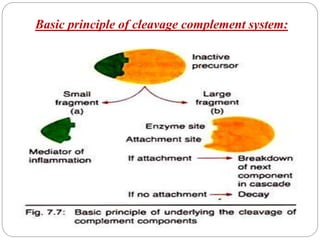
Basic principle of cleavage complement system:
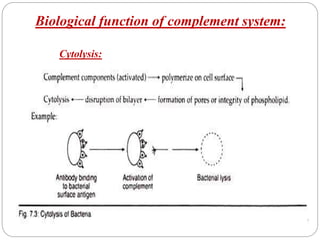
Biological function of complement system:
Cytolysis:
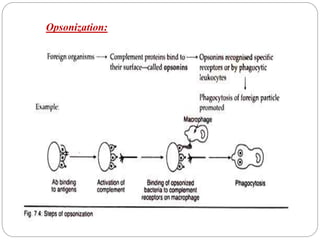
Opsonization:
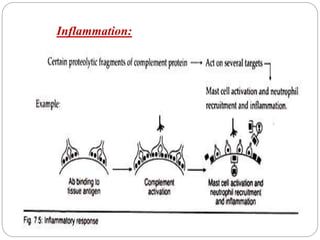
Inflammation:
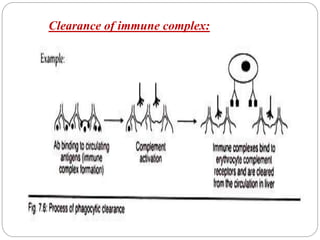
Clearance of immune complex:
Continued……
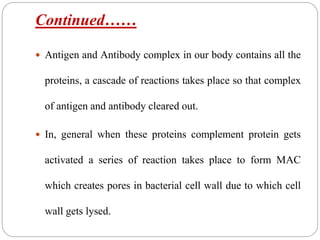
 Antigen and Antibody complex in our body contains all the
proteins, a cascade of reactions takes place so that complex
of antigen and antibody cleared out.
 In, general when these proteins complement protein gets
activated a series of reaction takes place to form MAC
which creates pores in bacterial cell wall due to which cell
wall gets lysed.
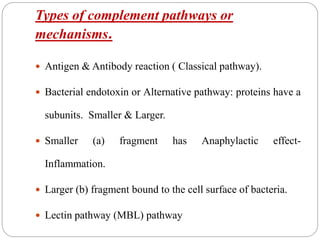
Types of complement pathways or
mechanisms.
 Antigen & Antibody reaction ( Classical pathway).
 Bacterial endotoxin or Alternative pathway: proteins have a
subunits. Smaller & Larger.
 Smaller (a) fragment has Anaphylactic effect-
Inflammation.
 Larger (b) fragment bound to the cell surface of bacteria.
 Lectin pathway (MBL) pathway
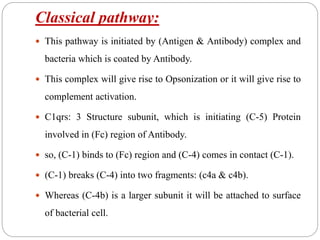
Classical pathway:
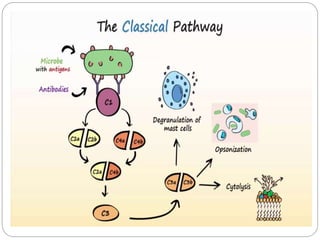
 This pathway is initiated by (Antigen & Antibody) complex and
bacteria which is coated by Antibody.
 This complex will give rise to Opsonization or it will give rise to
complement activation.
 C1qrs: 3 Structure subunit, which is initiating (C-5) Protein
involved in (Fc) region of Antibody.
 so, (C-1) binds to (Fc) region and (C-4) comes in contact (C-1).
 (C-1) breaks (C-4) into two fragments: (c4a & c4b).
 Whereas (C-4b) is a larger subunit it will be attached to surface
of bacterial cell.
Continued…….
 Now, (C-4b) will break the down into (C-2) & divided into
two fragments; (c2a & c2b).
 Here,(C-2a) will attach to (C-4b)&( C2b), were (c2a) is
released into blood stream and (c2b) binds on the bacterial
cell wall.
 Complex so formed (C4b-C2a) together act as (C-3
Convertase) which will break (C3 into (c3a & c3b), were
(c3a released into blood stream) and (c3b participate in
further reactions).
 Complex so formed (C4b-C2a-C3b) together act as (C5
Convertase) which will break as (C5a & c5b).
Continued…..
 (C5a) is released and now complex formed named as (C4b-
C2a-C3b-C5b) present on surface of bacterial cell.
 This complex will attach to (C6, C7,C8 and C9) comes in
and form pore in cell wall and here on this point pores are
formed on the surface of bacterial cell wall.
 C5b-C6,7&8) are present on the bacterial surface ( C-9)
component that induces pores on cell membrane for lysis
and complex so formed as (MAC) Membrane Attacking
Complex.
Alternative pathway;
 It is also known as ( Antibody Independent Pathway)
stimulated by ( Antigen) or triggered by Antigen only or
endotoxin).
 Many unrelated cell surface substances e.g.. Bacterial lip
polysaccharides ( Endotoxin) fungal cell wall & viral
envelops can initiate the process by binding (C3 & Factor
B).
 There is no role of C1, C4 & C2).
Continued…..
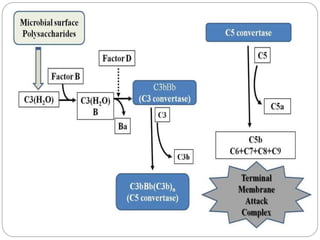
 Here (C-3) plays an important role.
 It recruits factor-B, both are inactive.
 Now factor-D attaches it makes ( C-3 active) and divided into two
fragments (c3a & c3b).
 Now, (c3b) embedded in cell membrane.
 Now, (C3b) will recruit more (C3) to which (B& D) attaches and
convert (C-3) into (c3a & c3b) by activating factor B.
 Here ( C3 Convertase) is required. This (c3b) will bind to cell
membrane and is embedded and (c3a) is released.
 In higher concentration (c3b) either go for Opsonization or by
Phagocytosis and can recruit (C5-C6,7,8&9) and induce pores on cell
membrane, complex formed (MAC) for cell lysis.
Lectin pathway or MBL pathway:
 It is also known as MBL pathway protein which is
synthesized in liver.
 It contain two parts: MBL ( Sugar binding molecule).
Mannose binding protein .
 Some bacteria have Mannose and Glucose residues in their
cell wall, on having infection the protein (MBL) recognizes
these residues and activated a proteases called (MASP).
 (Mannose binding Lectin associated Serine protease),
which binds to MBL and activates the component (C4 &
C2).
Complement system.pptx2

Complement system.pptx2

  • 1.
    Prepared by: VipinKumar Shukla Assistant Lecturer Complement System
  • 2.
    Introduction:  Complement systemis defined as something which is present in serum for the enhancement of immune response.  The term was coined by “ Paul Ehrlich”.  It was named complement system because it was first identified as heat liable component of serum that complemented antibodies for killing of bacteria.  Complement system plays a major role in both Innate and Adaptive immunity, and there are about (30+ soluble plasma proteins which is present in complement system.
  • 4.
    Basic principle ofcleavage complement system:
  • 5.
    Biological function ofcomplement system: Cytolysis:
  • 6.
  • 7.
  • 8.
  • 9.
    Continued……  Antigen andAntibody complex in our body contains all the proteins, a cascade of reactions takes place so that complex of antigen and antibody cleared out.  In, general when these proteins complement protein gets activated a series of reaction takes place to form MAC which creates pores in bacterial cell wall due to which cell wall gets lysed.
  • 10.
    Types of complementpathways or mechanisms.  Antigen & Antibody reaction ( Classical pathway).  Bacterial endotoxin or Alternative pathway: proteins have a subunits. Smaller & Larger.  Smaller (a) fragment has Anaphylactic effect- Inflammation.  Larger (b) fragment bound to the cell surface of bacteria.  Lectin pathway (MBL) pathway
  • 11.
    Classical pathway:  Thispathway is initiated by (Antigen & Antibody) complex and bacteria which is coated by Antibody.  This complex will give rise to Opsonization or it will give rise to complement activation.  C1qrs: 3 Structure subunit, which is initiating (C-5) Protein involved in (Fc) region of Antibody.  so, (C-1) binds to (Fc) region and (C-4) comes in contact (C-1).  (C-1) breaks (C-4) into two fragments: (c4a & c4b).  Whereas (C-4b) is a larger subunit it will be attached to surface of bacterial cell.
  • 12.
    Continued…….  Now, (C-4b)will break the down into (C-2) & divided into two fragments; (c2a & c2b).  Here,(C-2a) will attach to (C-4b)&( C2b), were (c2a) is released into blood stream and (c2b) binds on the bacterial cell wall.  Complex so formed (C4b-C2a) together act as (C-3 Convertase) which will break (C3 into (c3a & c3b), were (c3a released into blood stream) and (c3b participate in further reactions).  Complex so formed (C4b-C2a-C3b) together act as (C5 Convertase) which will break as (C5a & c5b).
  • 13.
    Continued…..  (C5a) isreleased and now complex formed named as (C4b- C2a-C3b-C5b) present on surface of bacterial cell.  This complex will attach to (C6, C7,C8 and C9) comes in and form pore in cell wall and here on this point pores are formed on the surface of bacterial cell wall.  C5b-C6,7&8) are present on the bacterial surface ( C-9) component that induces pores on cell membrane for lysis and complex so formed as (MAC) Membrane Attacking Complex.
  • 15.
    Alternative pathway;  Itis also known as ( Antibody Independent Pathway) stimulated by ( Antigen) or triggered by Antigen only or endotoxin).  Many unrelated cell surface substances e.g.. Bacterial lip polysaccharides ( Endotoxin) fungal cell wall & viral envelops can initiate the process by binding (C3 & Factor B).  There is no role of C1, C4 & C2).
  • 16.
    Continued…..  Here (C-3)plays an important role.  It recruits factor-B, both are inactive.  Now factor-D attaches it makes ( C-3 active) and divided into two fragments (c3a & c3b).  Now, (c3b) embedded in cell membrane.  Now, (C3b) will recruit more (C3) to which (B& D) attaches and convert (C-3) into (c3a & c3b) by activating factor B.  Here ( C3 Convertase) is required. This (c3b) will bind to cell membrane and is embedded and (c3a) is released.  In higher concentration (c3b) either go for Opsonization or by Phagocytosis and can recruit (C5-C6,7,8&9) and induce pores on cell membrane, complex formed (MAC) for cell lysis.
  • 18.
    Lectin pathway orMBL pathway:  It is also known as MBL pathway protein which is synthesized in liver.  It contain two parts: MBL ( Sugar binding molecule). Mannose binding protein .  Some bacteria have Mannose and Glucose residues in their cell wall, on having infection the protein (MBL) recognizes these residues and activated a proteases called (MASP).  (Mannose binding Lectin associated Serine protease), which binds to MBL and activates the component (C4 & C2).