TEACHING METHODOLOGY
CONTENTS


 Teaching
 Teaching Method

 List of traditional and modern teaching
  methods
 Selection of appropriate teaching method
TEACHING

 Teaching is an art and science
 Teaching is a process of imparting
  knowledge and skills
 Systematic process based on some
  educational objectives
 To communicate the message of knowledge
TEACHING METHOD

 The way that a teacher adopts to transmit
  contents to students is called a teaching
  method
 The way in which teacher uses activities and
  learning objects for enhancement of learning
  according to objectives is called teaching
  method
 Combination of techniques and activities
LIST OF SOME TRADITIONAL AND MODERN
TEACHING METHODS
Traditional Teaching Methods
 Lecture
 Discussion
 Bookish
Modern Teaching Methods
 Problem solving
 Fieldtrip
 Demonstration
SELECTION OF APPROPRIATE TEACHING
METHOD
A number of things needed to be considered
  while selecting a teaching method
 Class level
 Nature of the subject
 Number of students
 Size of the classroom
 Resources available
 Time available
LECTURE METHOD
LECTURE
LECTURE METHOD
 A lecture is a oral presentation intend to
  present information or teach people about a
  particular subject
 A politician's speech, a minister’s sermon, or
  even a businessman’s sales presentation
  may be similar in form to a lecture
 Lecture has significant role out side the
  classroom such as in churches, community
  centers,libraries,museums
PUBLIC LECTURES
LECTURE AS A TEACHING METHOD

 Lecture method is the oldest method
 Teacher role is very active in this method

 Students are generally passive

 Teacher is leader in this method

 Students just follow the instructions of
  teacher
 One way communication
LECTURE IN CLASSROOM
LECTURE COMPONENTS

 Silberman(1990) suggests five approaches
  to maximizing students’ understanding and
  retention during lectures. These can be used
  to help ensure the effective transfer of
  knowledge
 Use an opening key

 At the beginning of the lecture present major
  points
LECTURE COMPONENTS
 Present key terms
 Reduce the major points in the lecture to key
  points
 Offer examples
 When possible provide examples from real life
 Use analogies
 If possible make a comparison between the
  content of the lecture and knowledge the
  students already have
LECTURE COMPONENTS

 Use visual backups
 Use a variety of media to enable students to
  see as well as hear what is being said
A FORM OF A LECTURE
MERITS OF LECTURE METHOD
Why Lecture Method is useful?
 This method is suitable for big classes
 This method is cheap one
 It is time saving method
 An oldest method yet it is a popular
 Teacher can present the content logically and
  with sequence
 Teacher can make a better use of this method
  they are trained traditionally
DEMERITS OF LECTURE METHOD
Following are the demerits of lecture method
 Student role is passive
 Selected study Students do not make additional
  studies
 Students feel boredom due to the absence of
  activities
 Lecture method is not suitable to teach science
  and professional subjects
 It encourages rote memory
DEMERITS OF LECTURE METHOD

 Students can not concentrate on lecture for
  long time
 No interaction between teacher and student

 This method Discourage communication
  skills
SUGGESTIONS
How lecture can be effective for learning?
The following tasks should be taken in to enhance
  the effectiveness of lecture method
 Teacher should prepare the lecture in advance
 Open the lecture with good introduction
 There must be sequence between in
  information, ideas and concepts
 Additional examples should be include when
  necessary
SUGGESTIONS

 During lecture key points should be written
  on writing board
 Audio-visual aids should be used when there
  is need
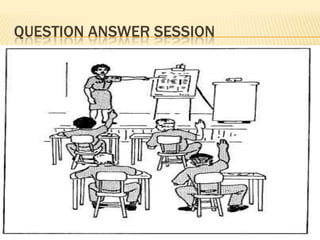
 There must be a question answer session

 Maintain eye contact with the students

 For large lecture halls, use a microphone if
  necessary
USE OF MICROPHONE
SUGGESTIONS

 Avoid the use of slang or repetitive
 Provide positive feedback when students ask
  questions
 Close the lecture with a brief but a powerful
  summary
QUESTION ANSWER SESSION
THANK YOU
WHAT IS DOING IN THIS PICTURE

Teaching methodology

  • 2.
  • 3.
    CONTENTS  Teaching  TeachingMethod  List of traditional and modern teaching methods  Selection of appropriate teaching method
  • 4.
    TEACHING  Teaching isan art and science  Teaching is a process of imparting knowledge and skills  Systematic process based on some educational objectives  To communicate the message of knowledge
  • 5.
    TEACHING METHOD  Theway that a teacher adopts to transmit contents to students is called a teaching method  The way in which teacher uses activities and learning objects for enhancement of learning according to objectives is called teaching method  Combination of techniques and activities
  • 6.
    LIST OF SOMETRADITIONAL AND MODERN TEACHING METHODS Traditional Teaching Methods  Lecture  Discussion  Bookish Modern Teaching Methods  Problem solving  Fieldtrip  Demonstration
  • 7.
    SELECTION OF APPROPRIATETEACHING METHOD A number of things needed to be considered while selecting a teaching method  Class level  Nature of the subject  Number of students  Size of the classroom  Resources available  Time available
  • 8.
  • 9.
  • 10.
    LECTURE METHOD  Alecture is a oral presentation intend to present information or teach people about a particular subject  A politician's speech, a minister’s sermon, or even a businessman’s sales presentation may be similar in form to a lecture  Lecture has significant role out side the classroom such as in churches, community centers,libraries,museums
  • 11.
  • 12.
    LECTURE AS ATEACHING METHOD  Lecture method is the oldest method  Teacher role is very active in this method  Students are generally passive  Teacher is leader in this method  Students just follow the instructions of teacher  One way communication
  • 13.
  • 14.
    LECTURE COMPONENTS  Silberman(1990)suggests five approaches to maximizing students’ understanding and retention during lectures. These can be used to help ensure the effective transfer of knowledge  Use an opening key  At the beginning of the lecture present major points
  • 15.
    LECTURE COMPONENTS  Presentkey terms  Reduce the major points in the lecture to key points  Offer examples  When possible provide examples from real life  Use analogies  If possible make a comparison between the content of the lecture and knowledge the students already have
  • 16.
    LECTURE COMPONENTS  Usevisual backups  Use a variety of media to enable students to see as well as hear what is being said
  • 17.
    A FORM OFA LECTURE
  • 18.
    MERITS OF LECTUREMETHOD Why Lecture Method is useful?  This method is suitable for big classes  This method is cheap one  It is time saving method  An oldest method yet it is a popular  Teacher can present the content logically and with sequence  Teacher can make a better use of this method they are trained traditionally
  • 19.
    DEMERITS OF LECTUREMETHOD Following are the demerits of lecture method  Student role is passive  Selected study Students do not make additional studies  Students feel boredom due to the absence of activities  Lecture method is not suitable to teach science and professional subjects  It encourages rote memory
  • 20.
    DEMERITS OF LECTUREMETHOD  Students can not concentrate on lecture for long time  No interaction between teacher and student  This method Discourage communication skills
  • 21.
    SUGGESTIONS How lecture canbe effective for learning? The following tasks should be taken in to enhance the effectiveness of lecture method  Teacher should prepare the lecture in advance  Open the lecture with good introduction  There must be sequence between in information, ideas and concepts  Additional examples should be include when necessary
  • 22.
    SUGGESTIONS  During lecturekey points should be written on writing board  Audio-visual aids should be used when there is need  There must be a question answer session  Maintain eye contact with the students  For large lecture halls, use a microphone if necessary
  • 23.
  • 24.
    SUGGESTIONS  Avoid theuse of slang or repetitive  Provide positive feedback when students ask questions  Close the lecture with a brief but a powerful summary
  • 25.
  • 26.
  • 27.
    WHAT IS DOINGIN THIS PICTURE