
Alagappa University
Education:
Education is a process of receiving or giving
systematic instruction, particularly at a school or
university.
Education is the process of learning or the
acquisition of knowledge,skill,values,beliefs and
habits.
Concept of Education
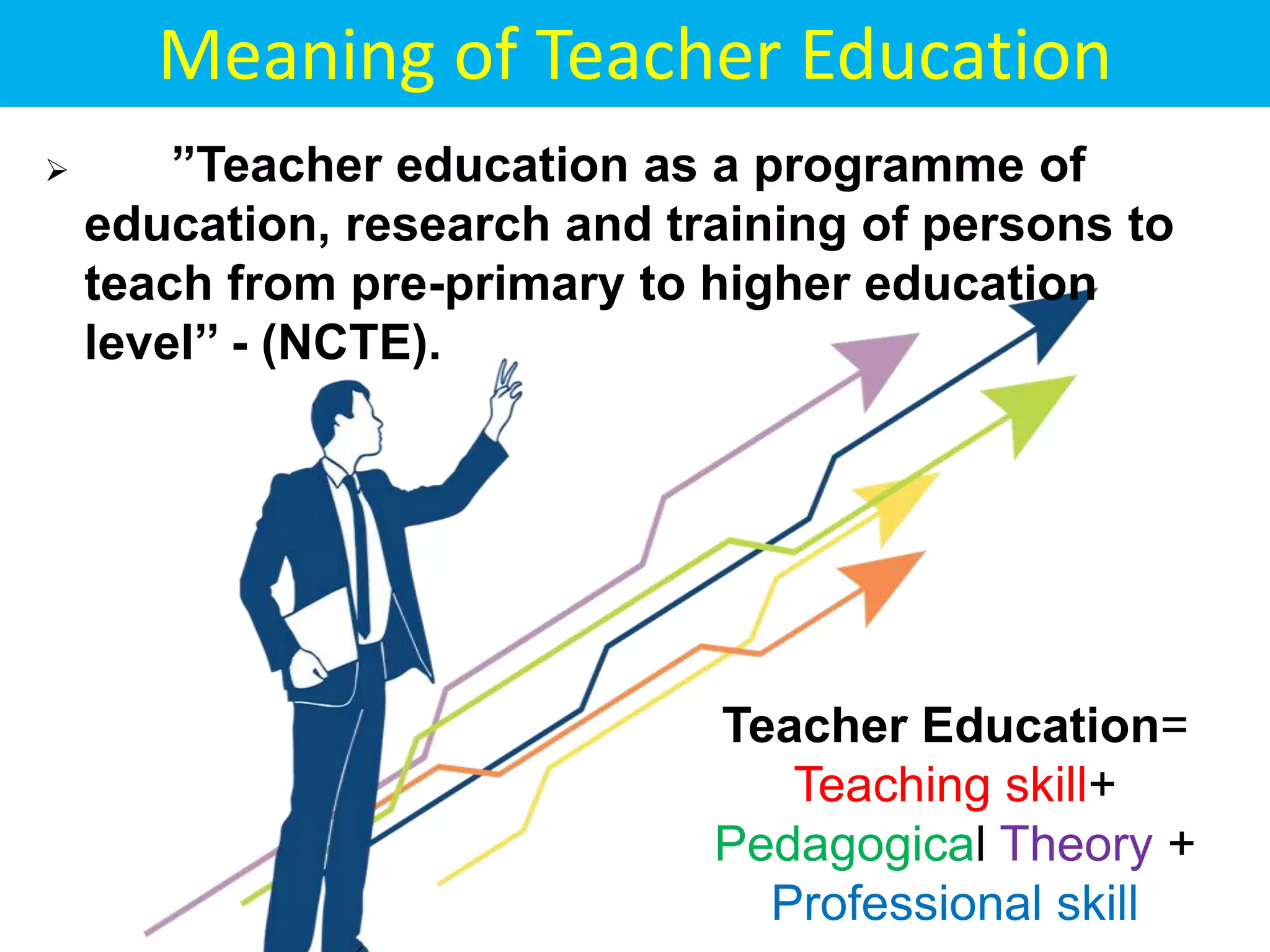
Meaning of Teacher Education
 ”Teacher education as a programme of
education, research and training of persons to
teach from pre-primary to higher education
level’’ - (NCTE).
Teacher Education=
Teaching skill+
Pedagogical Theory +
Professional skill
It is a continuous process and its pre-service
and in-service.
It is based on the theory that ―Teachers are
born, not made. Since teaching is
considered an art and a science, the teacher
has to acquire not only knowledge, but also
skills.
It is broad and comprehensive.
It is ever-evolving and dynamic.
It is a system that involves an
interdependence of its Inputs, Processes
The scope of teacher education can be
understood in the following ways;
1) It at different levels of
education.
2) Triangular basis of teacher
education .
3) Aspects of teacher education.
1) Teacher Education at different levels of Education :
Preprimary, Primary, Elementary, Secondary, Higher
Secondary and the Tertiary.
2) Triangular Basis of Teacher education :
Philosophical, Sociological and Psychological
3) Aspects of Teacher Education :
Teacher education is concerned with the aspects such as,
who (Teacher Educator), whom (Student teacher), what (Content)
and how (Teaching Strategy).
1.Pre-primary teacher education.
2.Primary teacher education.
3.Secondary teacher education.
4.Higher education programmes.
5.Vocational Teachers Training.
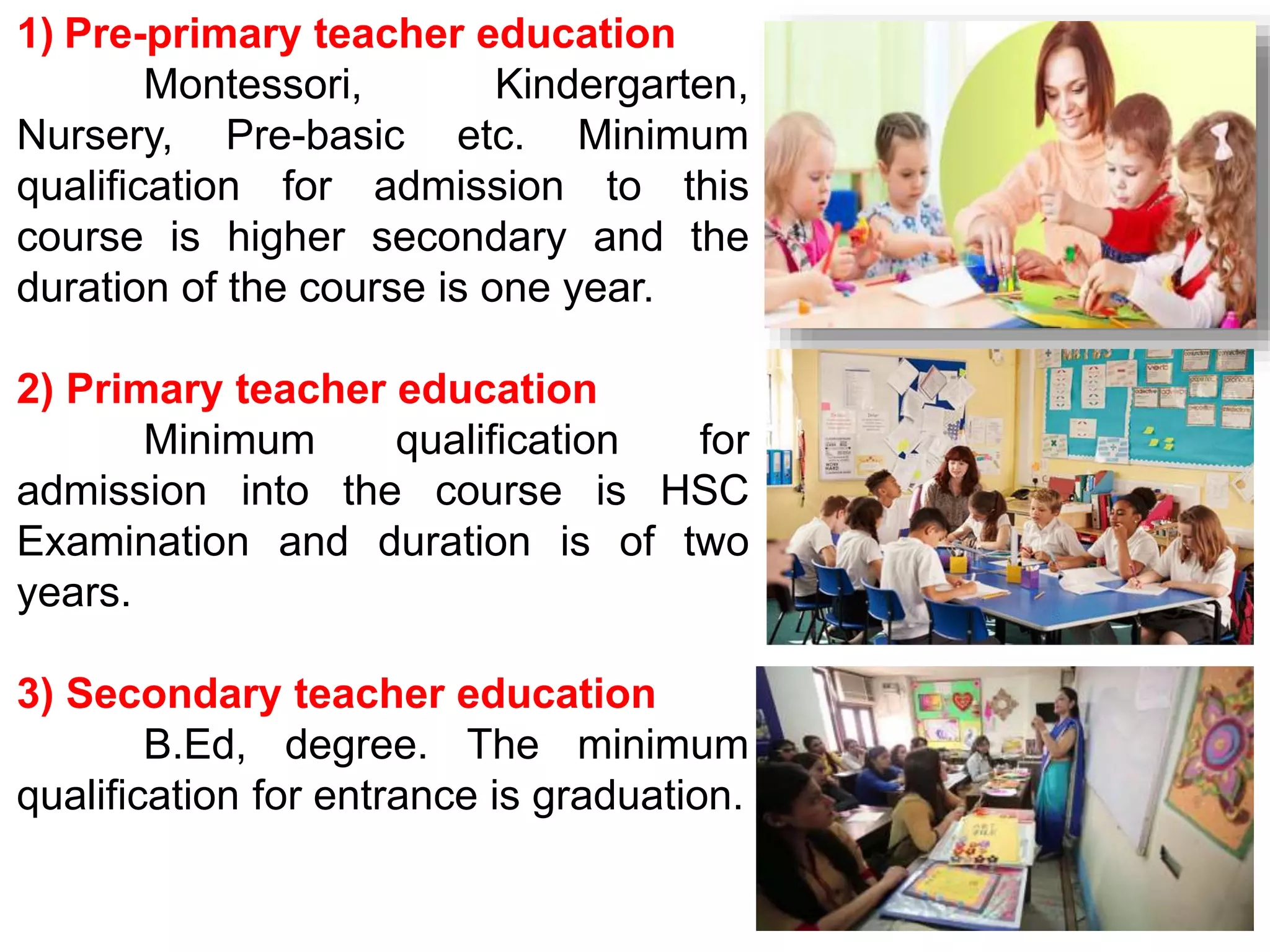
1) Pre-primary teacher education
Montessori, Kindergarten,
Nursery, Pre-basic etc. Minimum
qualification for admission to this
course is higher secondary and the
duration of the course is one year.
2) Primary teacher education
Minimum qualification for
admission into the course is HSC
Examination and duration is of two
years.
3) Secondary teacher education
B.Ed, degree. The minimum
qualification for entrance is graduation.
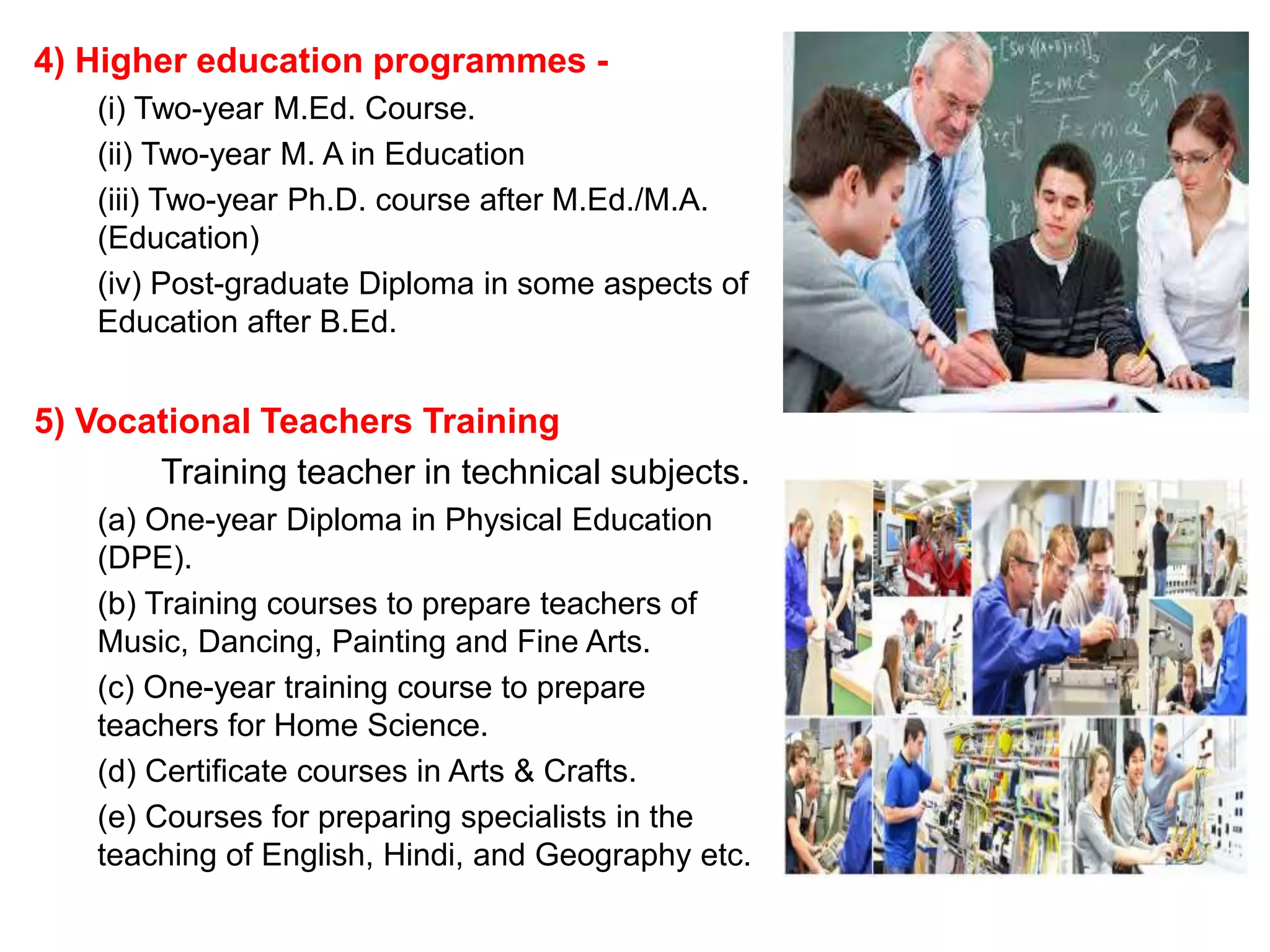
4) Higher education programmes -
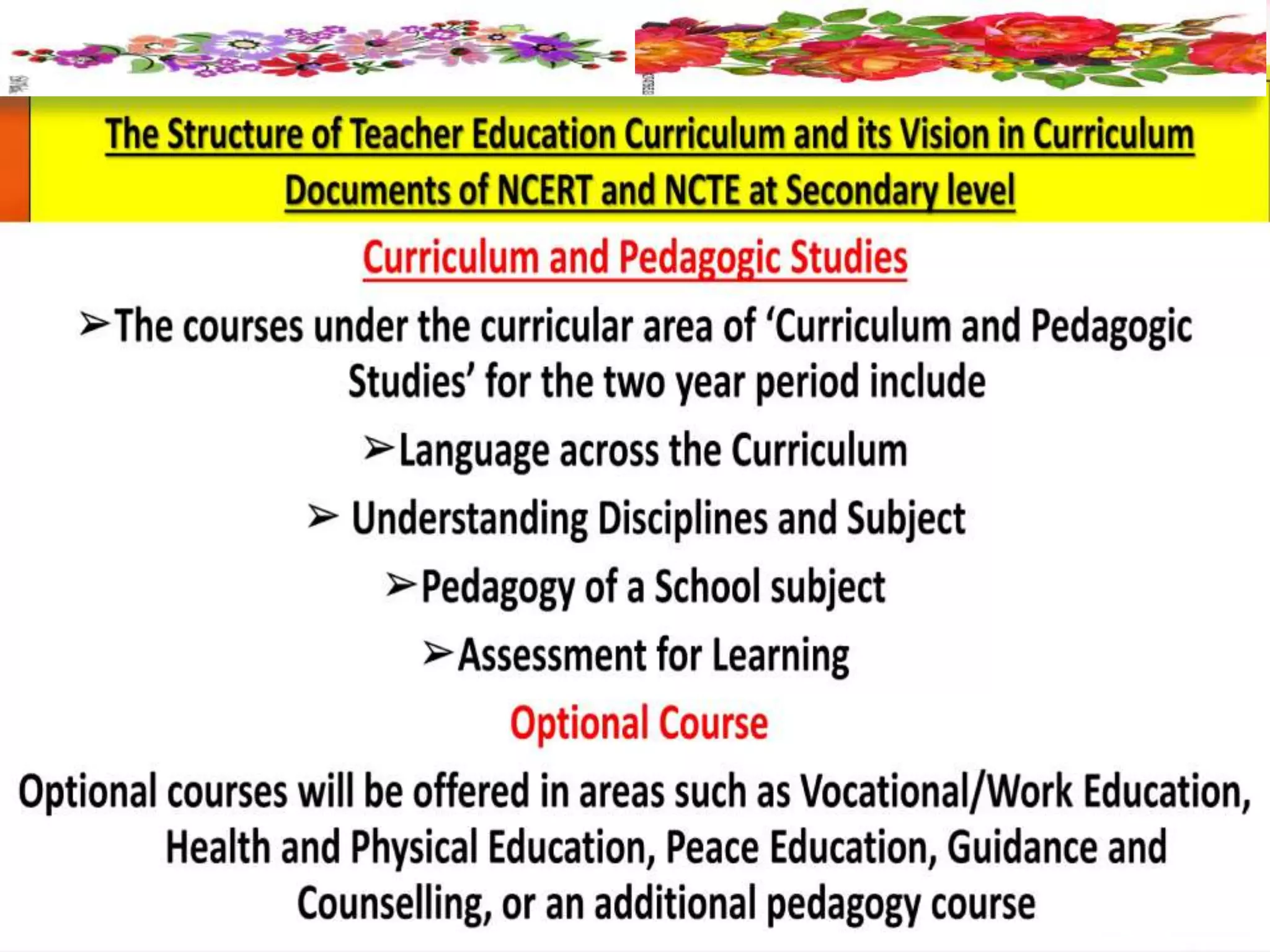
(i) Two-year M.Ed. Course.
(ii) Two-year M. A in Education
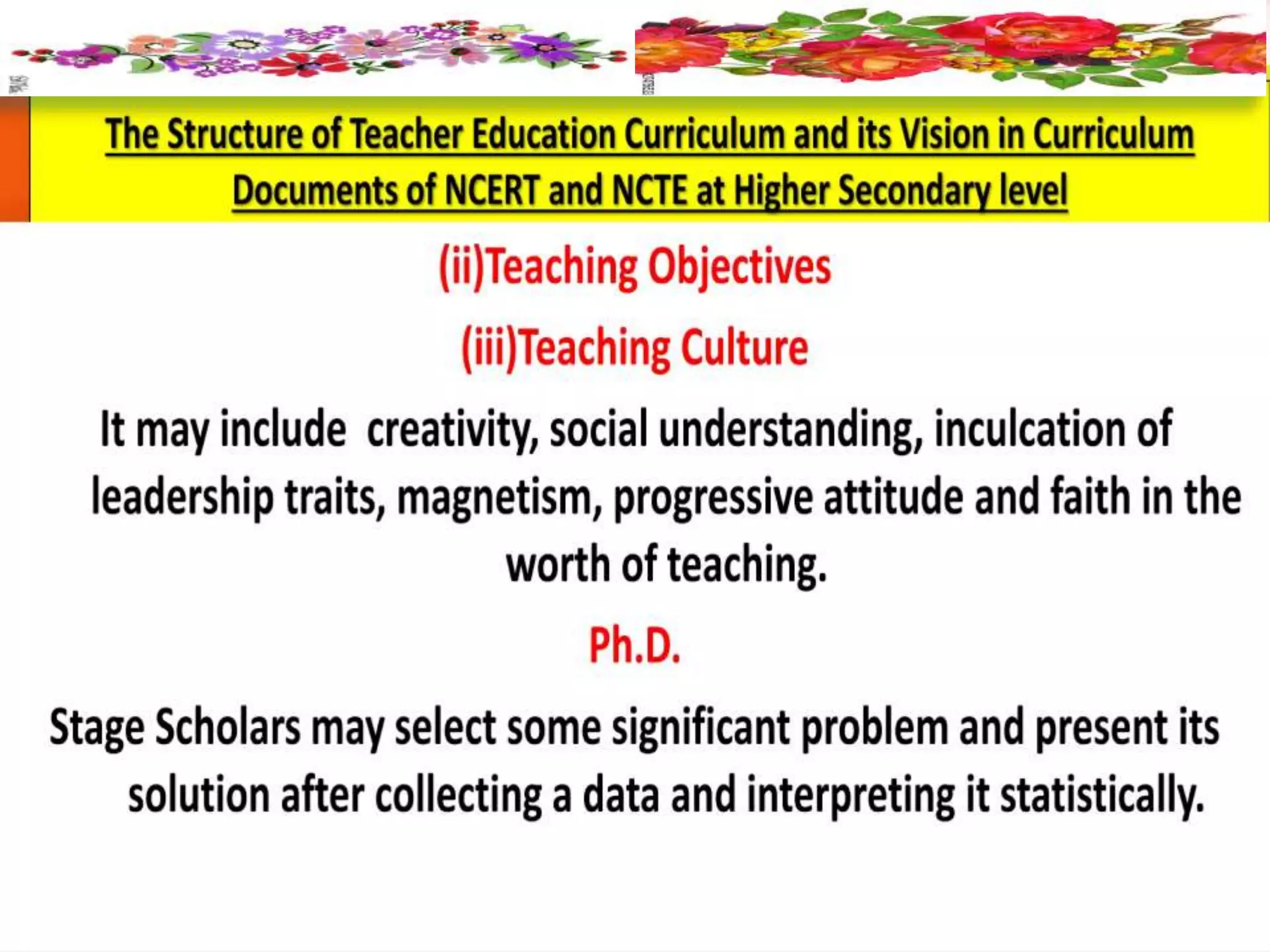
(iii) Two-year Ph.D. course after M.Ed./M.A.
(Education)
(iv) Post-graduate Diploma in some aspects of
Education after B.Ed.
5) Vocational Teachers Training
Training teacher in technical subjects.
(a) One-year Diploma in Physical Education
(DPE).
(b) Training courses to prepare teachers of
Music, Dancing, Painting and Fine Arts.
(c) One-year training course to prepare
teachers for Home Science.
(d) Certificate courses in Arts & Crafts.
(e) Courses for preparing specialists in the
teaching of English, Hindi, and Geography etc.
INTRODUCTION  TO  TEACHER  EDUCATION

INTRODUCTION TO TEACHER EDUCATION

  • 2.
  • 4.
    Education: Education is aprocess of receiving or giving systematic instruction, particularly at a school or university. Education is the process of learning or the acquisition of knowledge,skill,values,beliefs and habits. Concept of Education
  • 5.
    Meaning of TeacherEducation  ”Teacher education as a programme of education, research and training of persons to teach from pre-primary to higher education level’’ - (NCTE). Teacher Education= Teaching skill+ Pedagogical Theory + Professional skill
  • 6.
    It is acontinuous process and its pre-service and in-service. It is based on the theory that ―Teachers are born, not made. Since teaching is considered an art and a science, the teacher has to acquire not only knowledge, but also skills. It is broad and comprehensive. It is ever-evolving and dynamic. It is a system that involves an interdependence of its Inputs, Processes
  • 7.
    The scope ofteacher education can be understood in the following ways; 1) It at different levels of education. 2) Triangular basis of teacher education . 3) Aspects of teacher education.
  • 8.
    1) Teacher Educationat different levels of Education : Preprimary, Primary, Elementary, Secondary, Higher Secondary and the Tertiary. 2) Triangular Basis of Teacher education : Philosophical, Sociological and Psychological 3) Aspects of Teacher Education : Teacher education is concerned with the aspects such as, who (Teacher Educator), whom (Student teacher), what (Content) and how (Teaching Strategy).
  • 9.
    1.Pre-primary teacher education. 2.Primaryteacher education. 3.Secondary teacher education. 4.Higher education programmes. 5.Vocational Teachers Training.
  • 10.
    1) Pre-primary teachereducation Montessori, Kindergarten, Nursery, Pre-basic etc. Minimum qualification for admission to this course is higher secondary and the duration of the course is one year. 2) Primary teacher education Minimum qualification for admission into the course is HSC Examination and duration is of two years. 3) Secondary teacher education B.Ed, degree. The minimum qualification for entrance is graduation.
  • 11.
    4) Higher educationprogrammes - (i) Two-year M.Ed. Course. (ii) Two-year M. A in Education (iii) Two-year Ph.D. course after M.Ed./M.A. (Education) (iv) Post-graduate Diploma in some aspects of Education after B.Ed. 5) Vocational Teachers Training Training teacher in technical subjects. (a) One-year Diploma in Physical Education (DPE). (b) Training courses to prepare teachers of Music, Dancing, Painting and Fine Arts. (c) One-year training course to prepare teachers for Home Science. (d) Certificate courses in Arts & Crafts. (e) Courses for preparing specialists in the teaching of English, Hindi, and Geography etc.