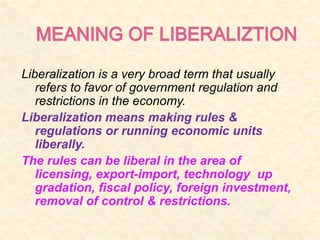
Liberalization is a very broad term that usually
refers to favor of government regulation and
restrictions in the economy.
Liberalization means making rules &
regulations or running economic units
liberally.
The rules can be liberal in the area of
licensing, export-import, technology up
gradation, fiscal policy, foreign investment,
removal of control & restrictions.
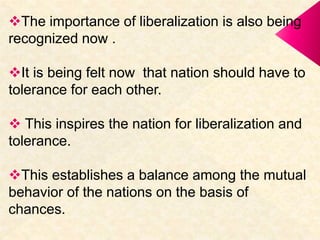
The importance of liberalization is also being
recognized now .
It is being felt now that nation should have to
tolerance for each other.
 This inspires the nation for liberalization and
tolerance.
This establishes a balance among the mutual
behavior of the nations on the basis of
chances.
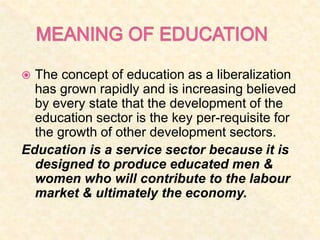
 The concept of education as a liberalization
has grown rapidly and is increasing believed
by every state that the development of the
education sector is the key per-requisite for
the growth of other development sectors.
Education is a service sector because it is
designed to produce educated men &
women who will contribute to the labour
market & ultimately the economy.
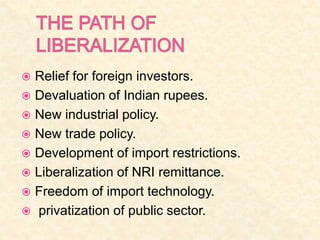
 Relief for foreign investors.
 Devaluation of Indian rupees.
 New industrial policy.
 New trade policy.
 Development of import restrictions.
 Liberalization of NRI remittance.
 Freedom of import technology.
 privatization of public sector.
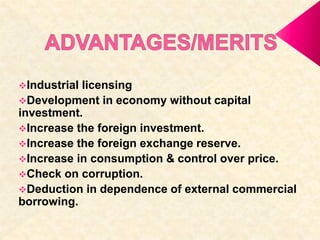
Industrial licensing
Development in economy without capital
investment.
Increase the foreign investment.
Increase the foreign exchange reserve.
Increase in consumption & control over price.
Check on corruption.
Deduction in dependence of external commercial
borrowing.
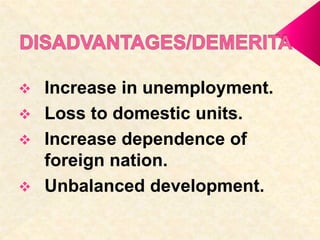
 Increase in unemployment.
 Loss to domestic units.
 Increase dependence of
foreign nation.
 Unbalanced development.
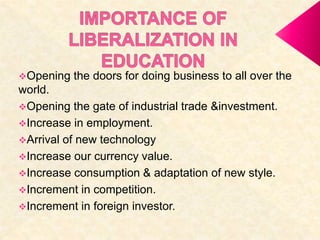
Opening the doors for doing business to all over the
world.
Opening the gate of industrial trade &investment.
Increase in employment.
Arrival of new technology
Increase our currency value.
Increase consumption & adaptation of new style.
Increment in competition.
Increment in foreign investor.
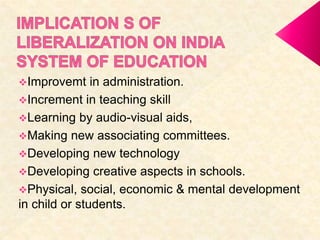
Improvemt in administration.
Increment in teaching skill
Learning by audio-visual aids,
Making new associating committees.
Developing new technology
Developing creative aspects in schools.
Physical, social, economic & mental development
in child or students.
AASTHA BHATIA

Liberasition and education

  • 2.
    Liberalization is avery broad term that usually refers to favor of government regulation and restrictions in the economy. Liberalization means making rules & regulations or running economic units liberally. The rules can be liberal in the area of licensing, export-import, technology up gradation, fiscal policy, foreign investment, removal of control & restrictions.
  • 3.
    The importance ofliberalization is also being recognized now . It is being felt now that nation should have to tolerance for each other.  This inspires the nation for liberalization and tolerance. This establishes a balance among the mutual behavior of the nations on the basis of chances.
  • 4.
     The conceptof education as a liberalization has grown rapidly and is increasing believed by every state that the development of the education sector is the key per-requisite for the growth of other development sectors. Education is a service sector because it is designed to produce educated men & women who will contribute to the labour market & ultimately the economy.
  • 5.
     Relief forforeign investors.  Devaluation of Indian rupees.  New industrial policy.  New trade policy.  Development of import restrictions.  Liberalization of NRI remittance.  Freedom of import technology.  privatization of public sector.
  • 6.
    Industrial licensing Development ineconomy without capital investment. Increase the foreign investment. Increase the foreign exchange reserve. Increase in consumption & control over price. Check on corruption. Deduction in dependence of external commercial borrowing.
  • 7.
     Increase inunemployment.  Loss to domestic units.  Increase dependence of foreign nation.  Unbalanced development.
  • 8.
    Opening the doorsfor doing business to all over the world. Opening the gate of industrial trade &investment. Increase in employment. Arrival of new technology Increase our currency value. Increase consumption & adaptation of new style. Increment in competition. Increment in foreign investor.
  • 9.
    Improvemt in administration. Incrementin teaching skill Learning by audio-visual aids, Making new associating committees. Developing new technology Developing creative aspects in schools. Physical, social, economic & mental development in child or students.
  • 10.