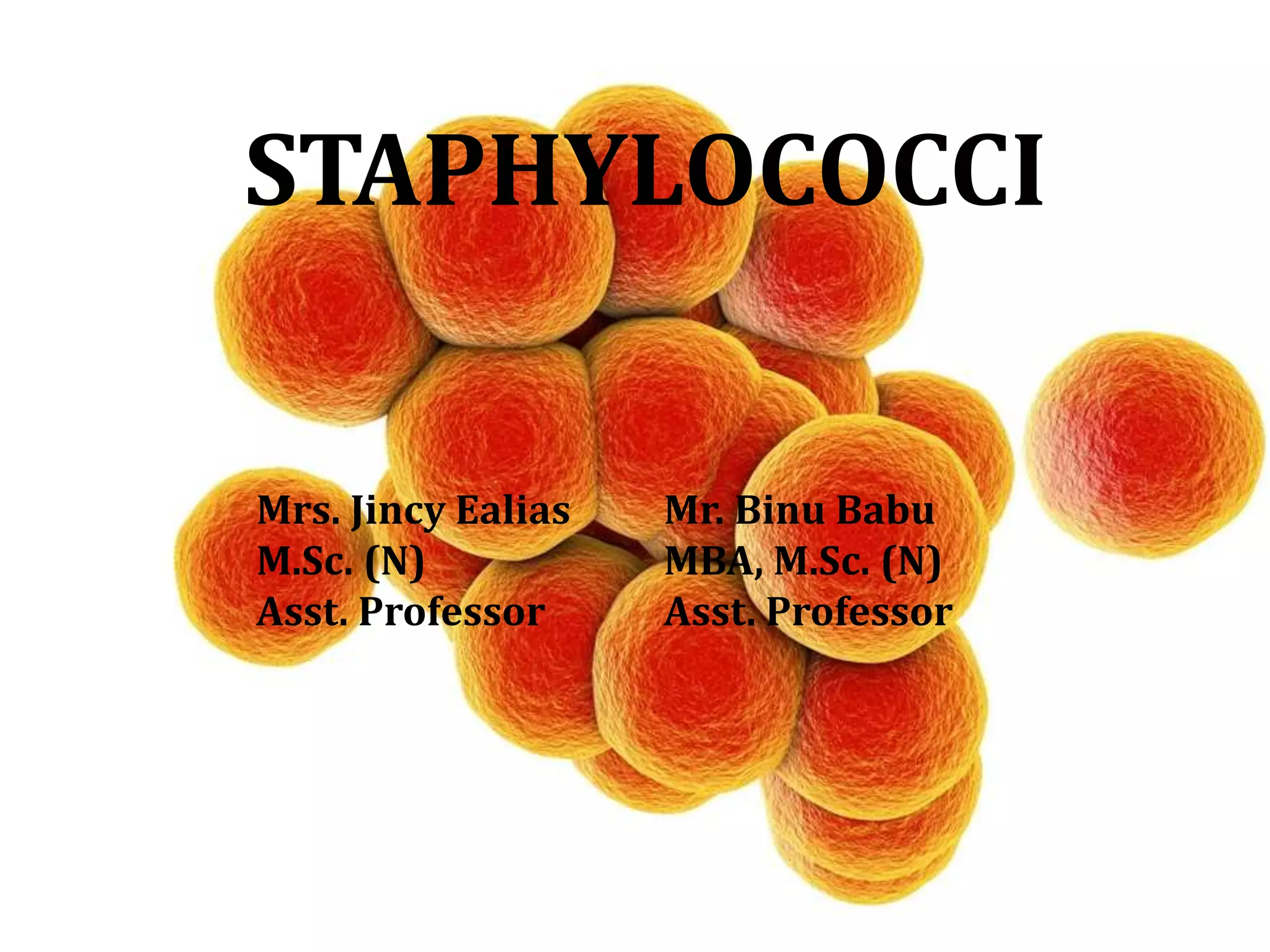
STAPHYLOCOCCI
Mrs. Jincy Ealias
M.Sc. (N)
Asst. Professor
Mr. Binu Babu
MBA, M.Sc. (N)
Asst. Professor
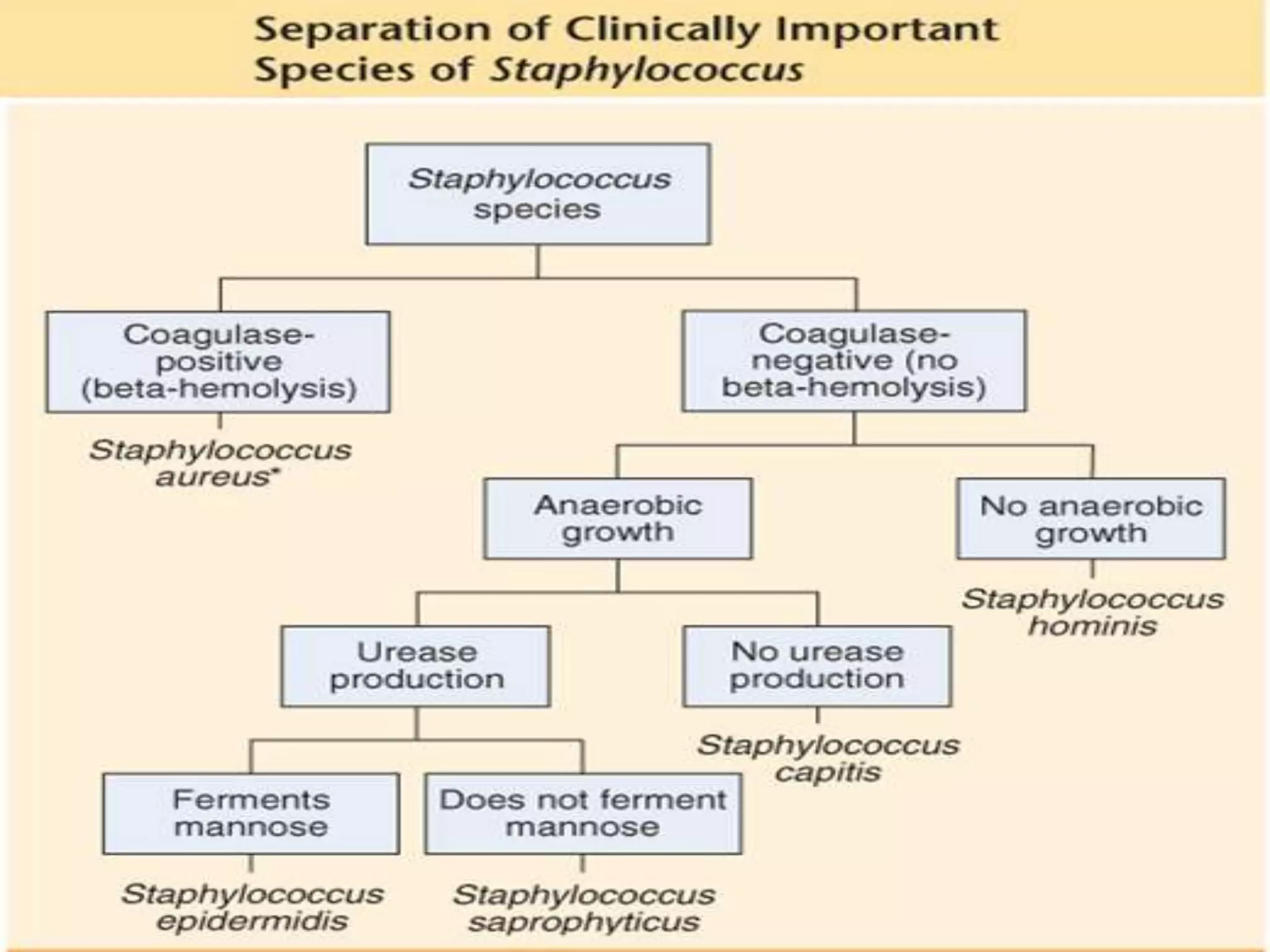
Staphylococci
Staphylococcus is a gram positive cocci. It is frequently
involved in nosocomial and opportunistic infections.
Different species of Staphylococcus are;
• S. aureus – lives in respiratory tract and skin.
• S. epidermidis – lives on skin and mucous
membranes.
• S. hominis – lives around sweat glands.
• S. capitis – live on scalp, face, external ear.
• S. saprophyticus – lives on skin, intestine, vagina.
General Characteristics of
the Staphylococci
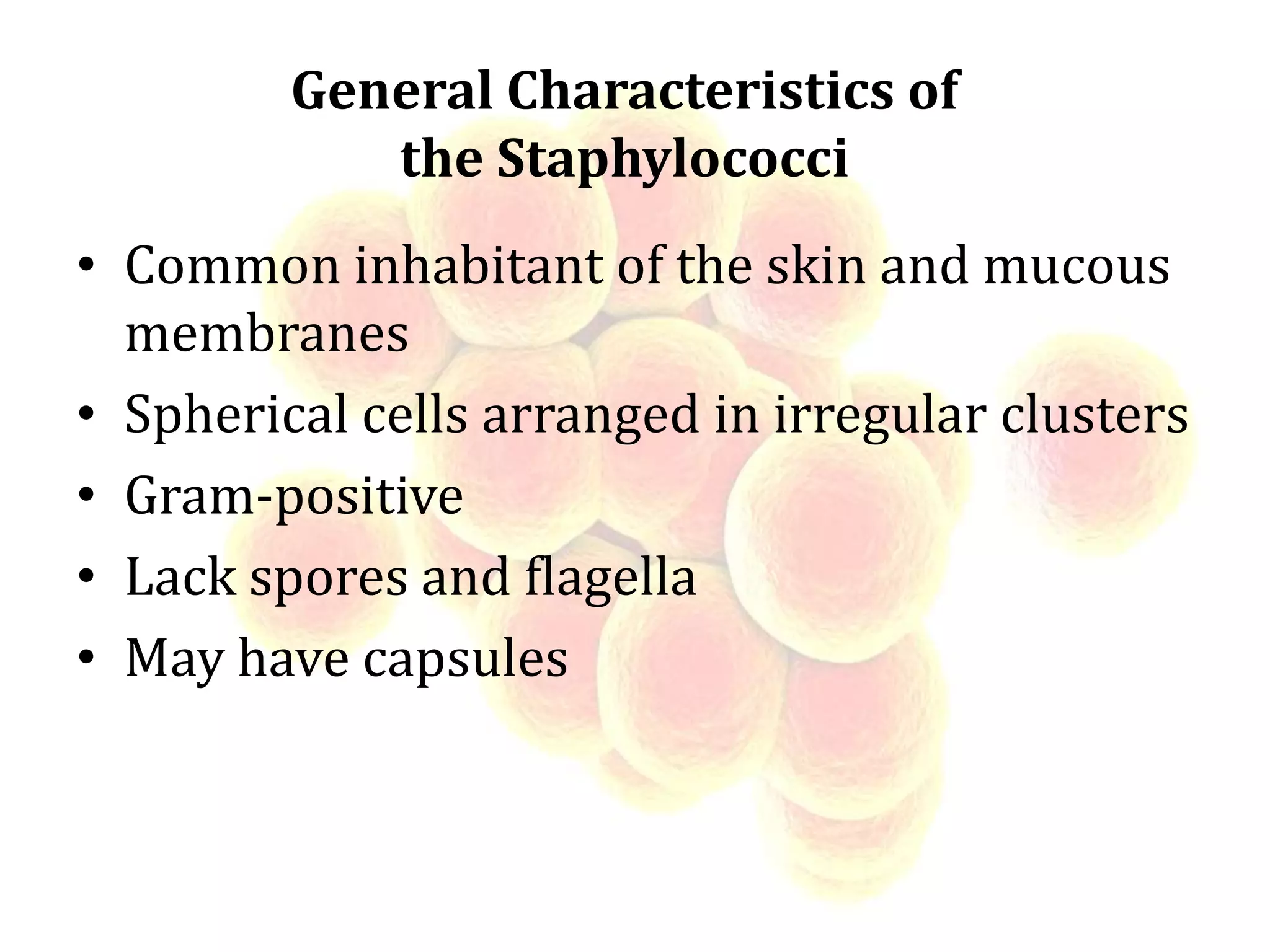
• Common inhabitant of the skin and mucous
membranes
• Spherical cells arranged in irregular clusters
• Gram-positive
• Lack spores and flagella
• May have capsules
Staphylococcus aureus
Morphology
• Non motile and non spore forming
• Gram positive cocci
• Size is 0.7 to 1.2 µm in diameter
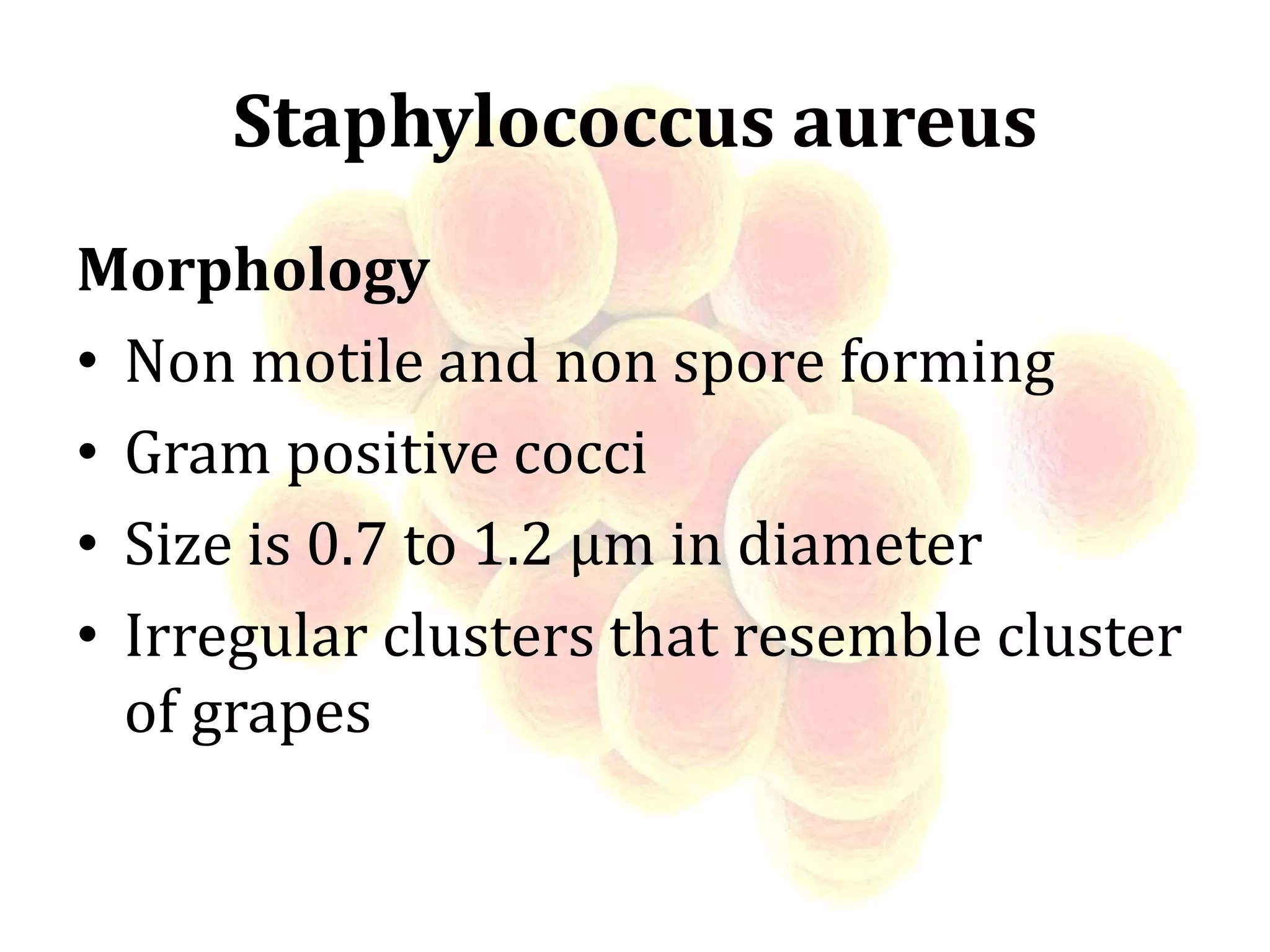
• Irregular clusters that resemble cluster
of grapes
S. Aureus Morphology
Cultural characteristics
• Grows in large, round, colonies.
• Optimum temperature of 37oC
• Facultative anaerobe
• Withstands high salt, extremes in pH, and high
temperatures
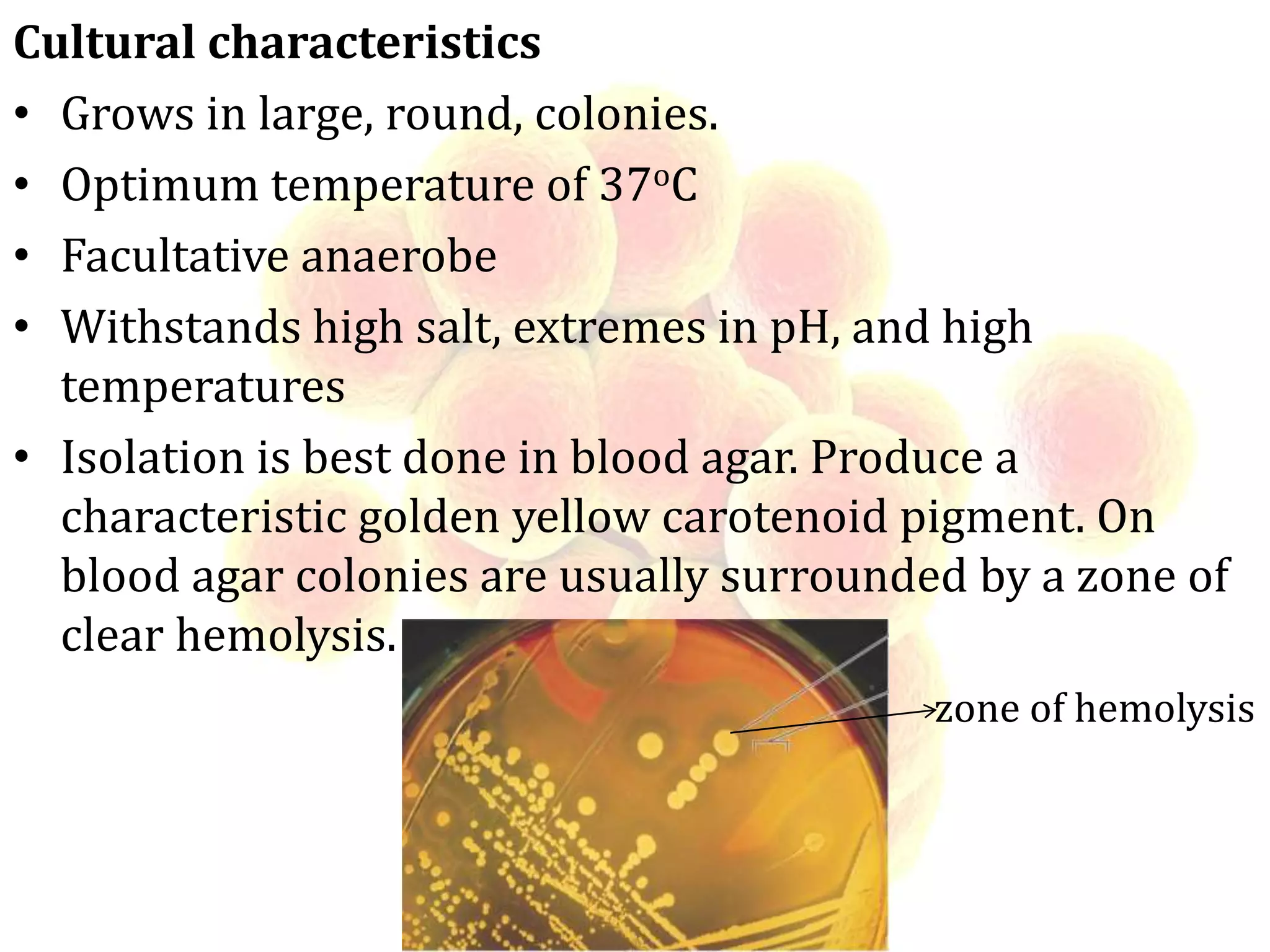
• Isolation is best done in blood agar. Produce a
characteristic golden yellow carotenoid pigment. On
blood agar colonies are usually surrounded by a zone of
clear hemolysis.
zone of hemolysis
Biochemical properties
• Produces many virulence factors. i.e
production of enzymes and toxins
Virulence factors of S. aureus
Enzymes:
• Coagulase – coagulates plasma and blood.
• Hyaluronidase – digests connective tissue
• Staphylokinase – digests blood clots
• DNase – digests DNA
• Lipases – digest oils; enhances colonization
on skin
• Penicillinase – inactivates penicillin
Toxins:
• Hemolysins – lyse red blood cells
• Leukocidin – lyses neutrophils and
macrophages
• Enterotoxin – induce gastrointestinal
distress
• Exfoliative toxin – separates the epidermis
from the dermis
• Toxic shock syndrome toxin (TSST) –
induces fever, vomiting, shock, systemic
organ damage
Pathogenesis
• Present in most environments frequented
by humans.
• Carriage rate for healthy adults is 20-60%.
• Carriage is mostly in anterior nares, skin,
nasopharynx and intestine
• Predisposition to infection include: poor
hygiene and nutrition, tissue injury,
preexisting primary infection, diabetes,
immunodeficiency.
Staphylococcal Disease
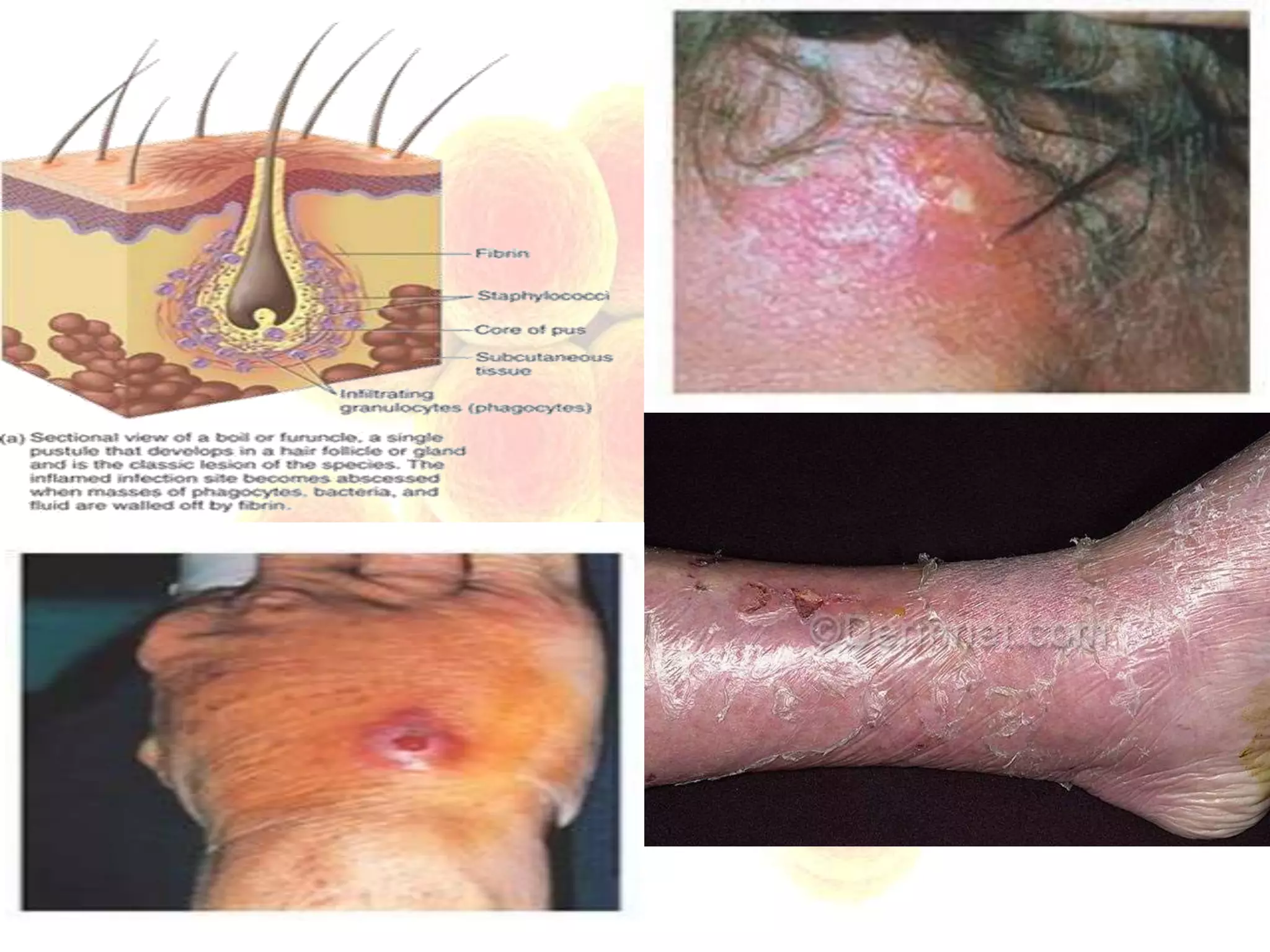
• Localized cutaneous infections – invade skin
through wounds, follicles, or glands.
• Systemic infections
– Osteomyelitis – bone infection
– Bacteremia – transmission of bacteria from one infected
site to another. Eg: endocarditis
• Toxigenic disease
– Food intoxication – ingestion of heat stable enterotoxins;
gastrointestinal distress
– Staphylococcal scalded skin syndrome – toxin induces
bright red flush, blisters, then desquamation of the
epidermis
– Toxic shock syndrome – toxemia leading to shock and
organ failure
Laboratory diagnosis
• Staphylococcus aureus is frequently isolated
from samples such as pus, tissue exudates,
sputum, urine, and blood.
• Different methods for laboratory diagnosis of
Staphylococcus aureus are;
Gram staining
Culture
Coagulase test
Gram staining
The diagnosis of staphylococcus aureus is
suggested by the finding of gram positive bacteria in
clumps in the sample.
Culture
10 ml venous blood is inoculated into 50 ml
glucose broth. Identification of staphylococcus
aureus depends on its colony characteristics in
culture media such as blood agar. The characteristics
haemolysis and yellow pigmentation suggest S.
aureus.
Coagulase test
1 ml of overnight broth suspension from agar
plate is mixed with 1 ml of 10% dilution of human
plasma (any fresh plasma). The mixture is incubated
at 37oC for 3-6 hrs. Check for presence of clot. If clot
appears it is positive and if no clot it is negative.
Treatment
• 95% S. aureus have penicillinase and are
resistant to penicillin and ampicillin.
Cephalosporins are the drug of choice in
case of penicillin resistance.
Prevention of Staphylococcal Infections
• Universal precautions by healthcare
providers to prevent nosocomial infections
• Hygiene and cleansing
Thank You

Staphylococci

  • 1.
    STAPHYLOCOCCI Mrs. Jincy Ealias M.Sc.(N) Asst. Professor Mr. Binu Babu MBA, M.Sc. (N) Asst. Professor
  • 2.
    Staphylococci Staphylococcus is agram positive cocci. It is frequently involved in nosocomial and opportunistic infections. Different species of Staphylococcus are; • S. aureus – lives in respiratory tract and skin. • S. epidermidis – lives on skin and mucous membranes. • S. hominis – lives around sweat glands. • S. capitis – live on scalp, face, external ear. • S. saprophyticus – lives on skin, intestine, vagina.
  • 3.
    General Characteristics of theStaphylococci • Common inhabitant of the skin and mucous membranes • Spherical cells arranged in irregular clusters • Gram-positive • Lack spores and flagella • May have capsules
  • 4.
    Staphylococcus aureus Morphology • Nonmotile and non spore forming • Gram positive cocci • Size is 0.7 to 1.2 µm in diameter • Irregular clusters that resemble cluster of grapes
  • 5.
  • 6.
    Cultural characteristics • Growsin large, round, colonies. • Optimum temperature of 37oC • Facultative anaerobe • Withstands high salt, extremes in pH, and high temperatures • Isolation is best done in blood agar. Produce a characteristic golden yellow carotenoid pigment. On blood agar colonies are usually surrounded by a zone of clear hemolysis. zone of hemolysis
  • 7.
    Biochemical properties • Producesmany virulence factors. i.e production of enzymes and toxins
  • 8.
    Virulence factors ofS. aureus Enzymes: • Coagulase – coagulates plasma and blood. • Hyaluronidase – digests connective tissue • Staphylokinase – digests blood clots • DNase – digests DNA • Lipases – digest oils; enhances colonization on skin • Penicillinase – inactivates penicillin
  • 9.
    Toxins: • Hemolysins –lyse red blood cells • Leukocidin – lyses neutrophils and macrophages • Enterotoxin – induce gastrointestinal distress • Exfoliative toxin – separates the epidermis from the dermis • Toxic shock syndrome toxin (TSST) – induces fever, vomiting, shock, systemic organ damage
  • 10.
    Pathogenesis • Present inmost environments frequented by humans. • Carriage rate for healthy adults is 20-60%. • Carriage is mostly in anterior nares, skin, nasopharynx and intestine • Predisposition to infection include: poor hygiene and nutrition, tissue injury, preexisting primary infection, diabetes, immunodeficiency.
  • 11.
    Staphylococcal Disease • Localizedcutaneous infections – invade skin through wounds, follicles, or glands. • Systemic infections – Osteomyelitis – bone infection – Bacteremia – transmission of bacteria from one infected site to another. Eg: endocarditis • Toxigenic disease – Food intoxication – ingestion of heat stable enterotoxins; gastrointestinal distress – Staphylococcal scalded skin syndrome – toxin induces bright red flush, blisters, then desquamation of the epidermis – Toxic shock syndrome – toxemia leading to shock and organ failure
  • 13.
    Laboratory diagnosis • Staphylococcusaureus is frequently isolated from samples such as pus, tissue exudates, sputum, urine, and blood. • Different methods for laboratory diagnosis of Staphylococcus aureus are; Gram staining Culture Coagulase test
  • 14.
    Gram staining The diagnosisof staphylococcus aureus is suggested by the finding of gram positive bacteria in clumps in the sample. Culture 10 ml venous blood is inoculated into 50 ml glucose broth. Identification of staphylococcus aureus depends on its colony characteristics in culture media such as blood agar. The characteristics haemolysis and yellow pigmentation suggest S. aureus.
  • 15.
    Coagulase test 1 mlof overnight broth suspension from agar plate is mixed with 1 ml of 10% dilution of human plasma (any fresh plasma). The mixture is incubated at 37oC for 3-6 hrs. Check for presence of clot. If clot appears it is positive and if no clot it is negative.
  • 17.
    Treatment • 95% S.aureus have penicillinase and are resistant to penicillin and ampicillin. Cephalosporins are the drug of choice in case of penicillin resistance.
  • 18.
    Prevention of StaphylococcalInfections • Universal precautions by healthcare providers to prevent nosocomial infections • Hygiene and cleansing
  • 19.