LABORATORY DIAGNOSIS
OF STAPHYLOCOCCUS
MADE BY:
SHALINI BISHT
Saturday, February 18, 2017 1
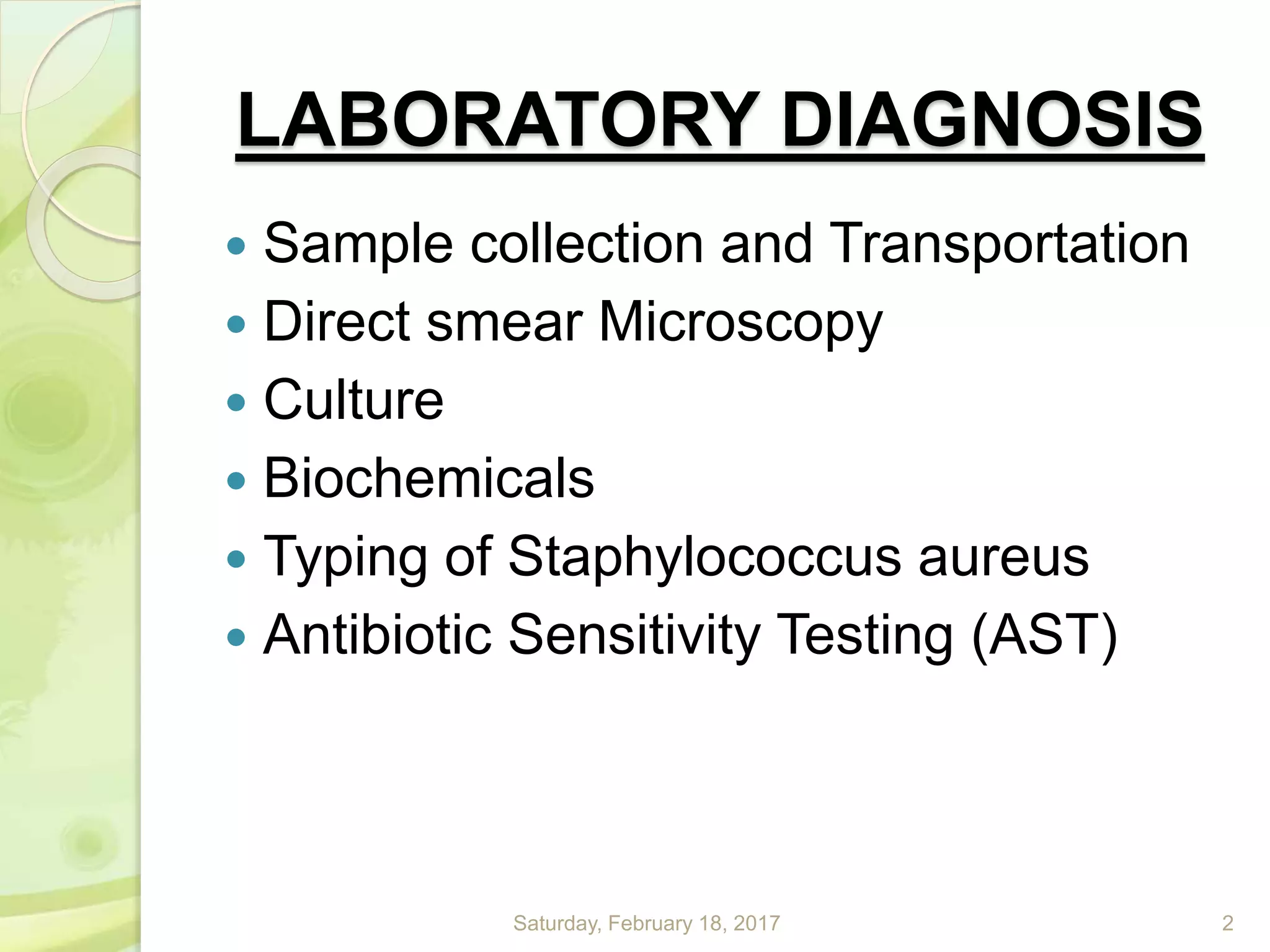
LABORATORY DIAGNOSIS
 Sample collection and Transportation
 Direct smear Microscopy
 Culture
 Biochemicals
 Typing of Staphylococcus aureus
 Antibiotic Sensitivity Testing (AST)
Saturday, February 18, 2017 2
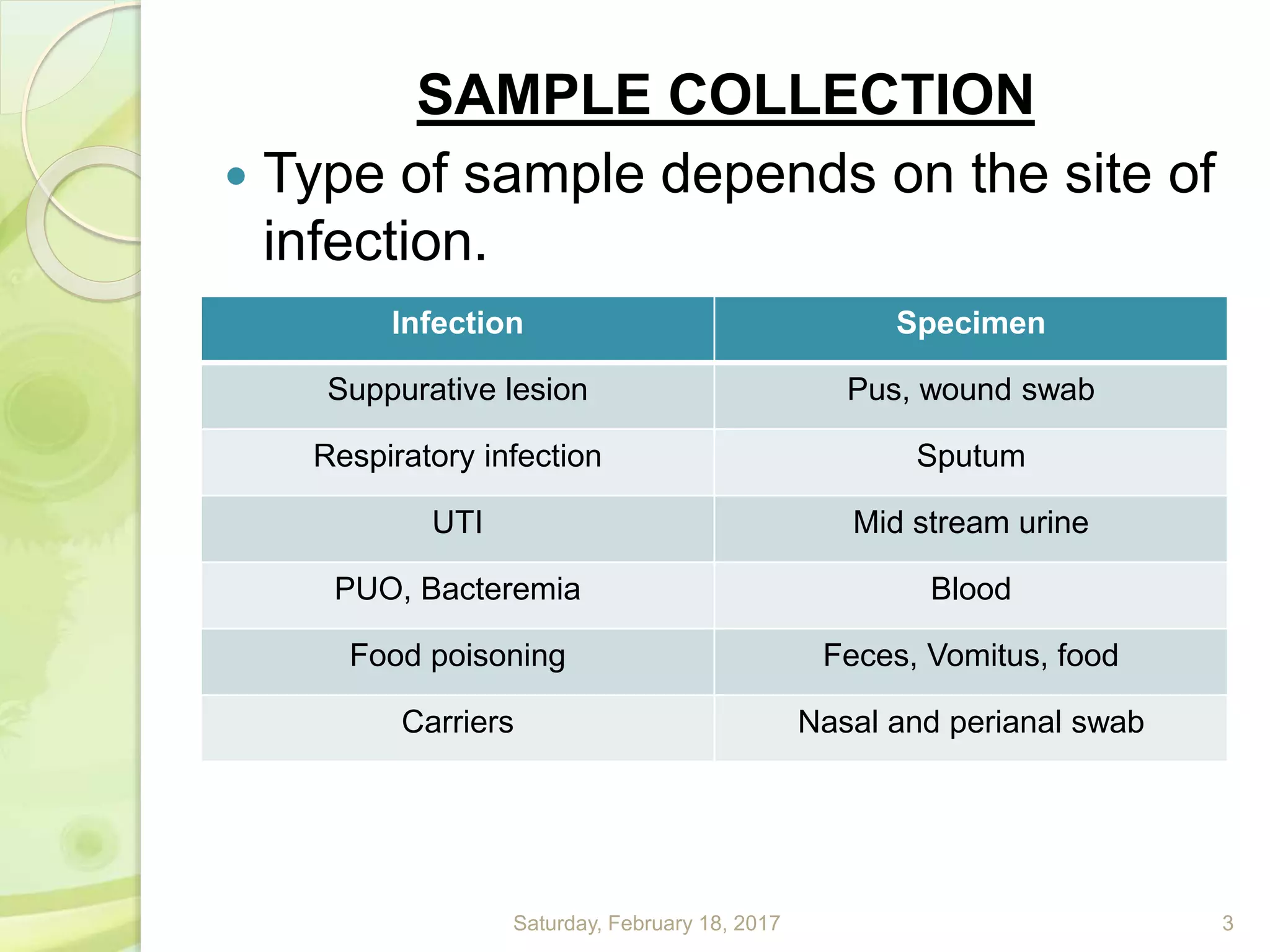
SAMPLE COLLECTION
 Type of sample depends on the site of
infection.
Saturday, February 18, 2017 3
Infection Specimen
Suppurative lesion Pus, wound swab
Respiratory infection Sputum
UTI Mid stream urine
PUO, Bacteremia Blood
Food poisoning Feces, Vomitus, food
Carriers Nasal and perianal swab
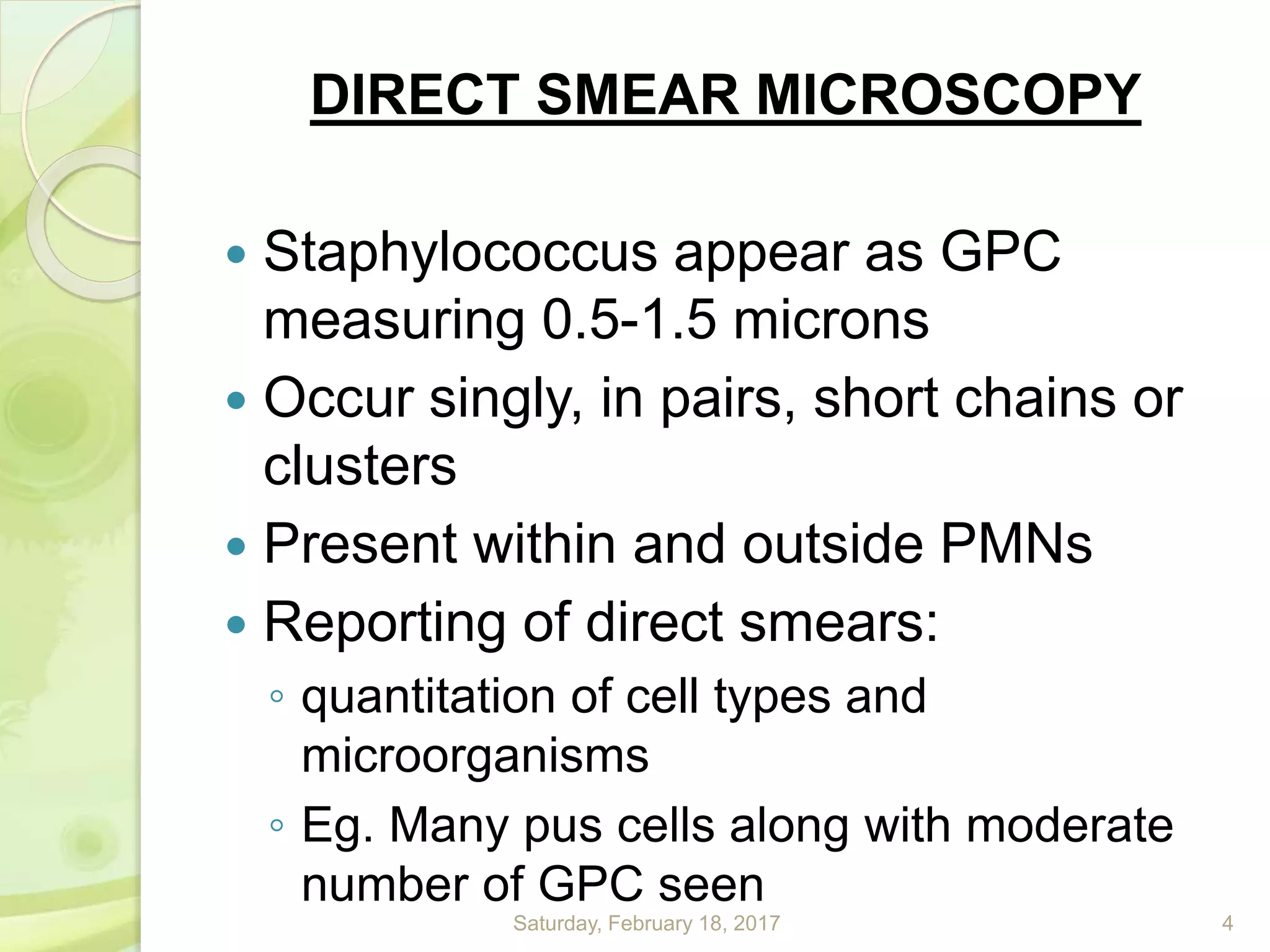
DIRECT SMEAR MICROSCOPY
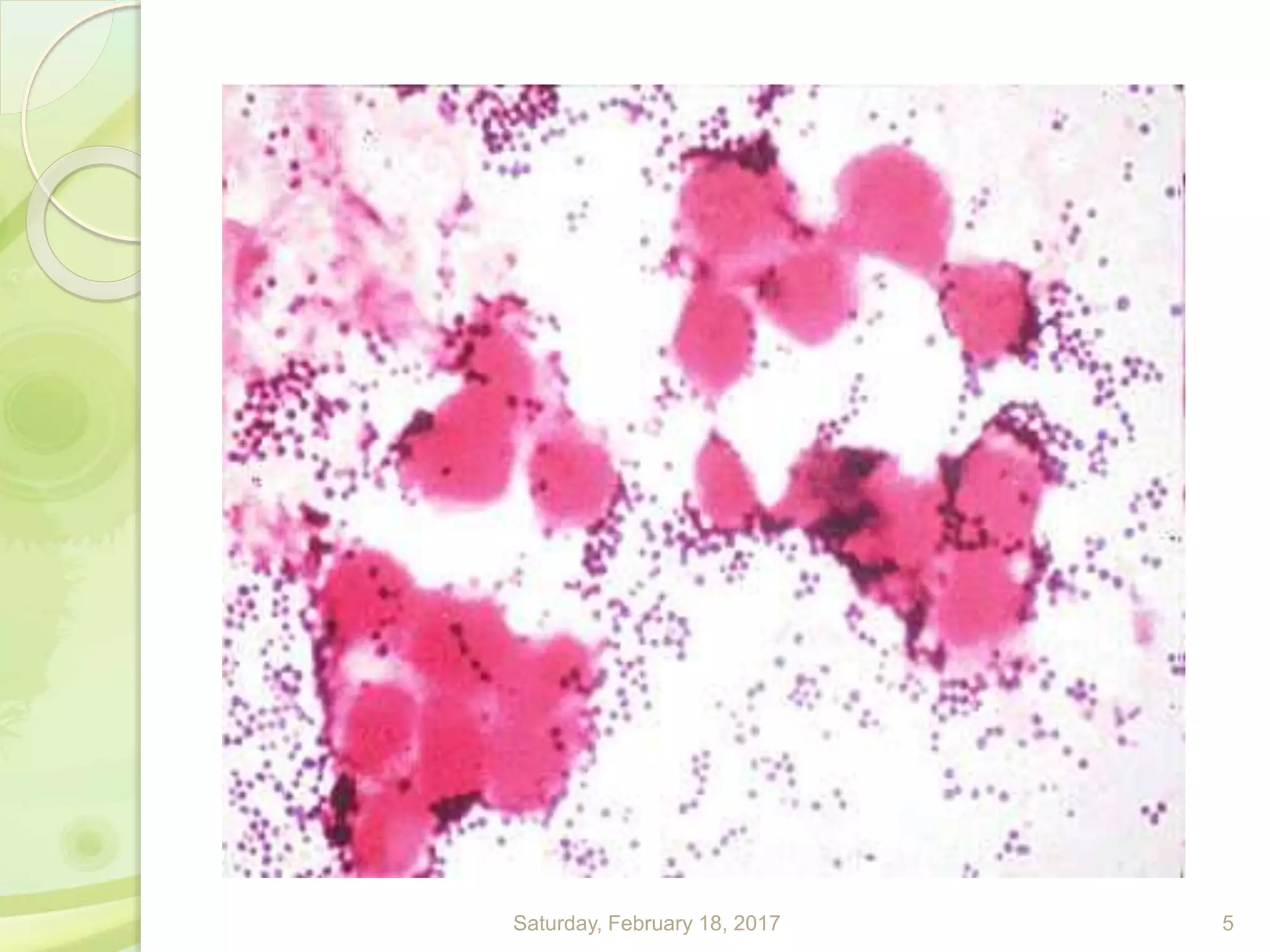
 Staphylococcus appear as GPC
measuring 0.5-1.5 microns
 Occur singly, in pairs, short chains or
clusters
 Present within and outside PMNs
 Reporting of direct smears:
◦ quantitation of cell types and
microorganisms
◦ Eg. Many pus cells along with moderate
number of GPC seen
Saturday, February 18, 2017 4
Saturday, February 18, 2017 5
CULTURE
• Specimens are inoculated onto the suitable media.
 Plates incubated for 18-24 hour at 37°C.
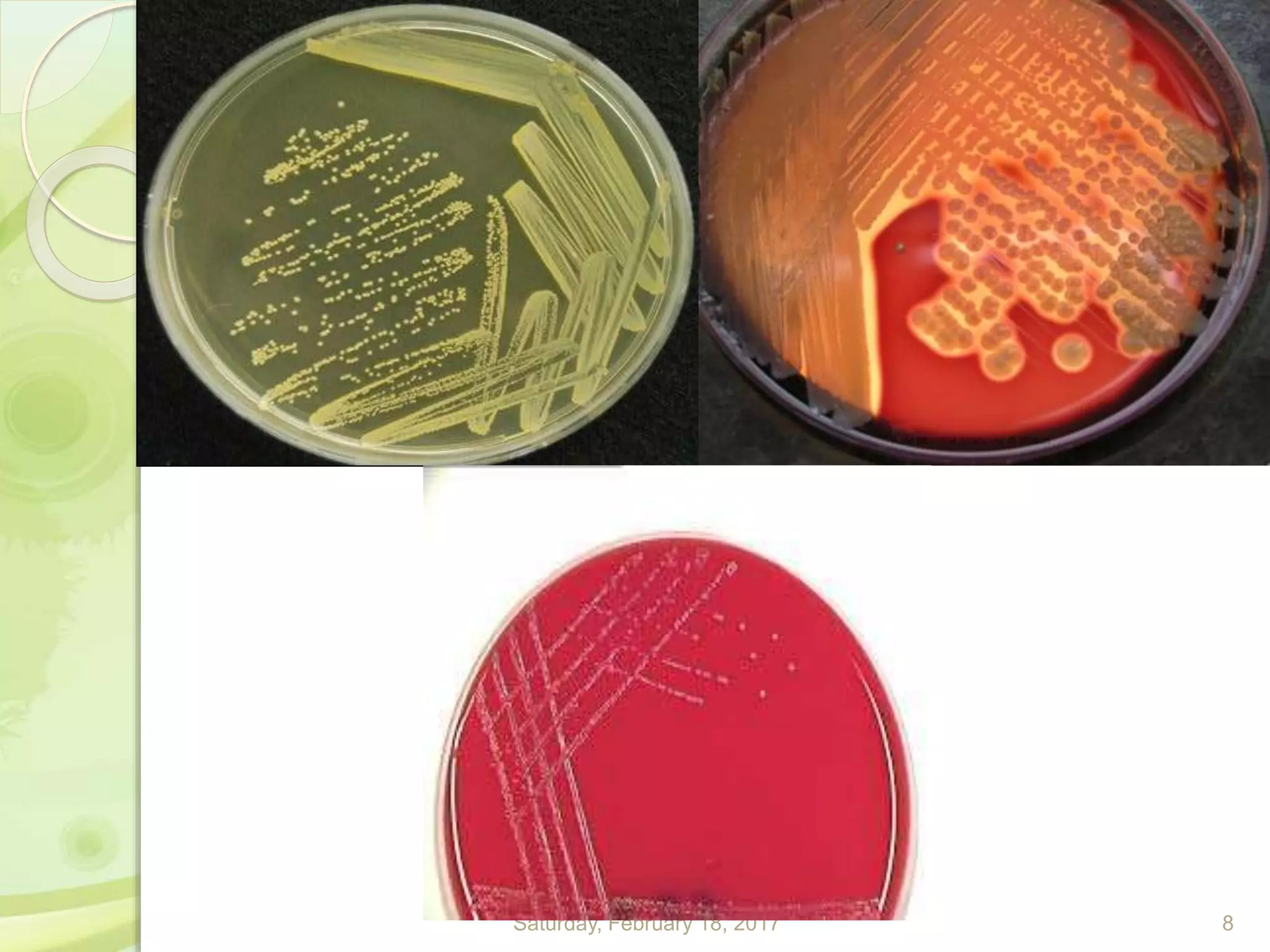
 On nutrient agar
 Colonies are golden yellow and opaque with smooth
glistening surface, 2-4 mm in diameter, circular, convex,
shiny & easily emusifiable.
(Most strains produce non diffusible Golden yellow
pigment)
 Nutrient Agar slope
◦ Confluent growth, Oil paint appearance.
Saturday, February 18, 2017 6
 Blood agar
◦ Colonies similar to those on Nutrient Agar
◦ Colonies are beta-hemolytic
 Liquid medium
◦ Uniform turbidity
 MacConkey Agar
◦ Small pink colonies due to Lactose
fermentation
Saturday, February 18, 2017 7
Saturday, February 18, 2017 8
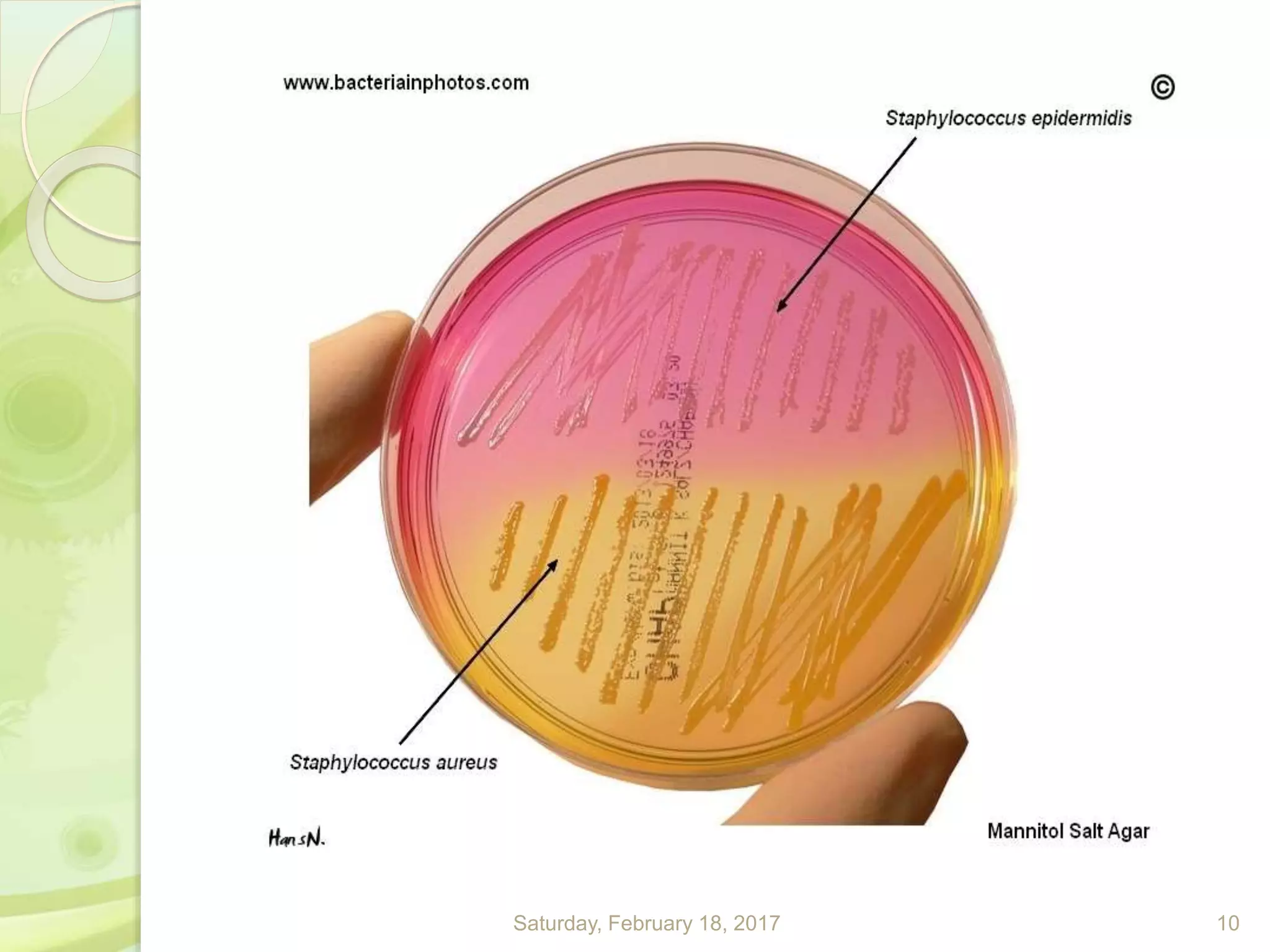
 Selective media
 MSA – 1% Mannitol + 7.5% NaCl +
phenol red
 Salt milk agar – 6.5% NaCl + 10%
skimmed milk
 Ludlam’s medium – Lithium chloride
and tellurite
Saturday, February 18, 2017 9
Saturday, February 18, 2017 10
BIOCHEMICAL REACTIONS
•Catalase : positive
•Coagulase test : positive
•Oxidase : negative
(Except S.sciuri group i.e., S.sciuri, S.lentus,
S.vitulinus)
•Ferment glucose, lactose, maltose, sucrose and
mannitol, with production of acid but no gas
•Indole : negative
•MR test : positive
•VP test : positive
•Gelatin liquefaction : positive
•Phosphatase : positiveSaturday, February 18, 2017 11
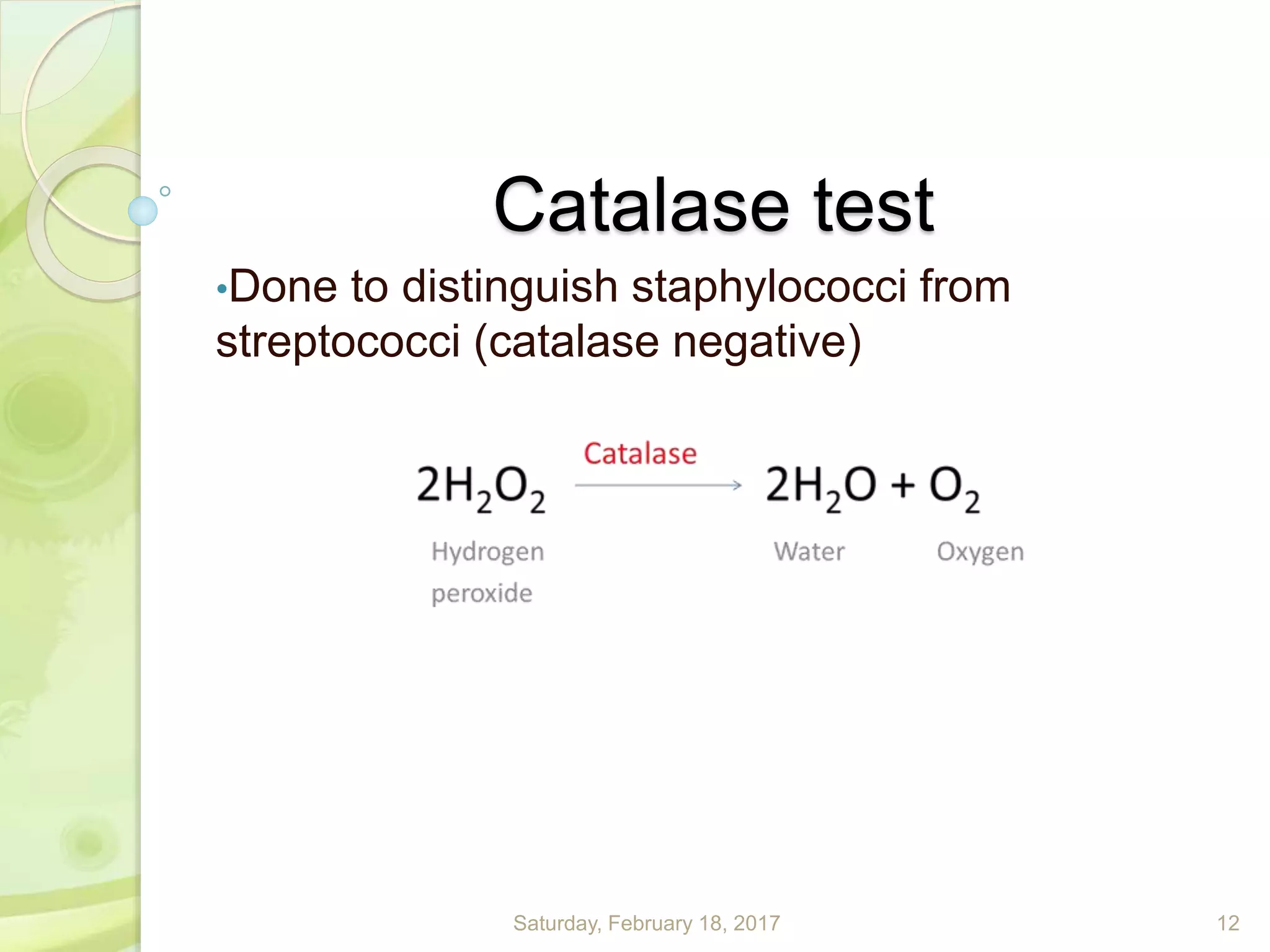
Catalase test
•Done to distinguish staphylococci from
streptococci (catalase negative)
Saturday, February 18, 2017 12
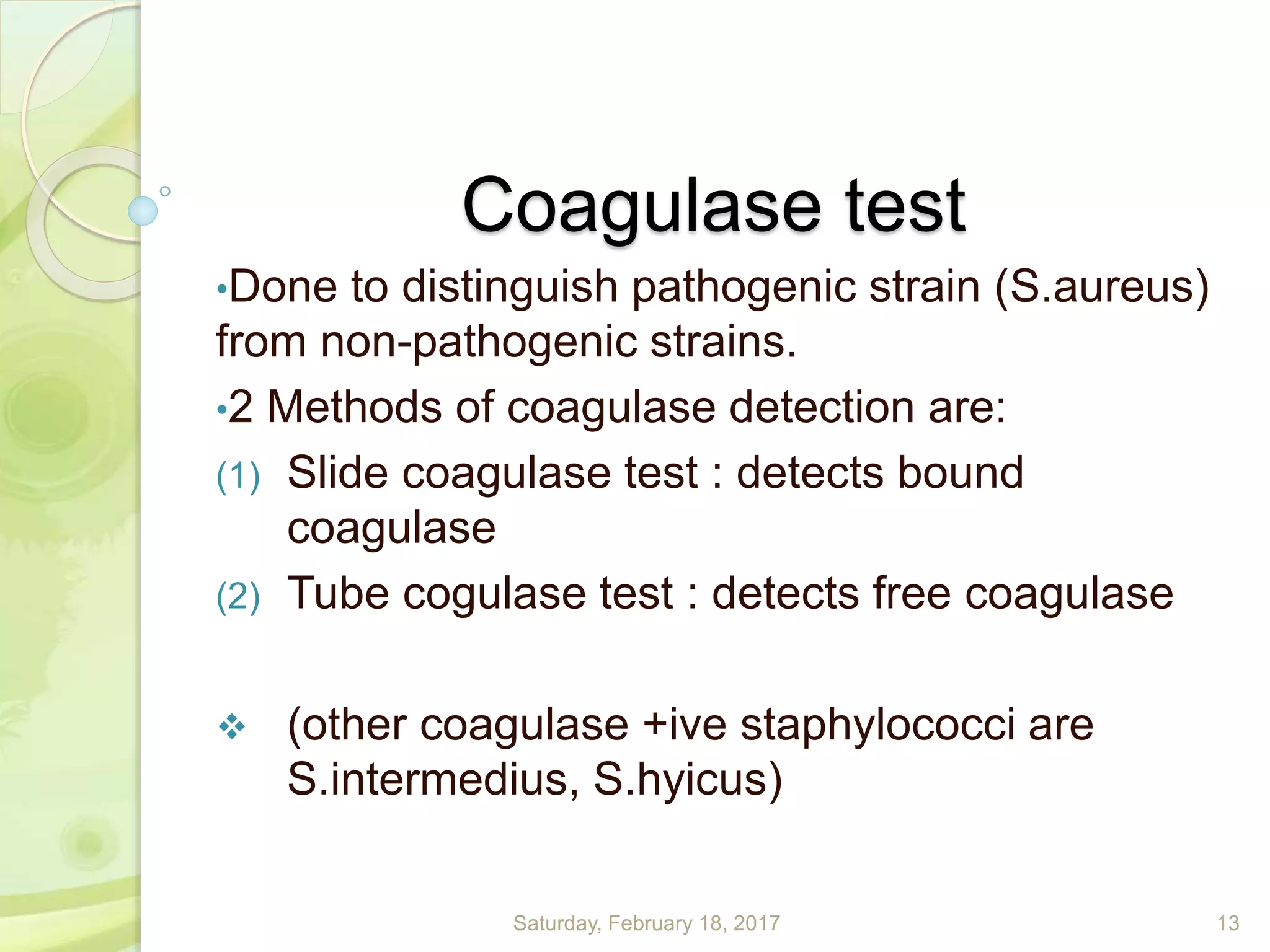
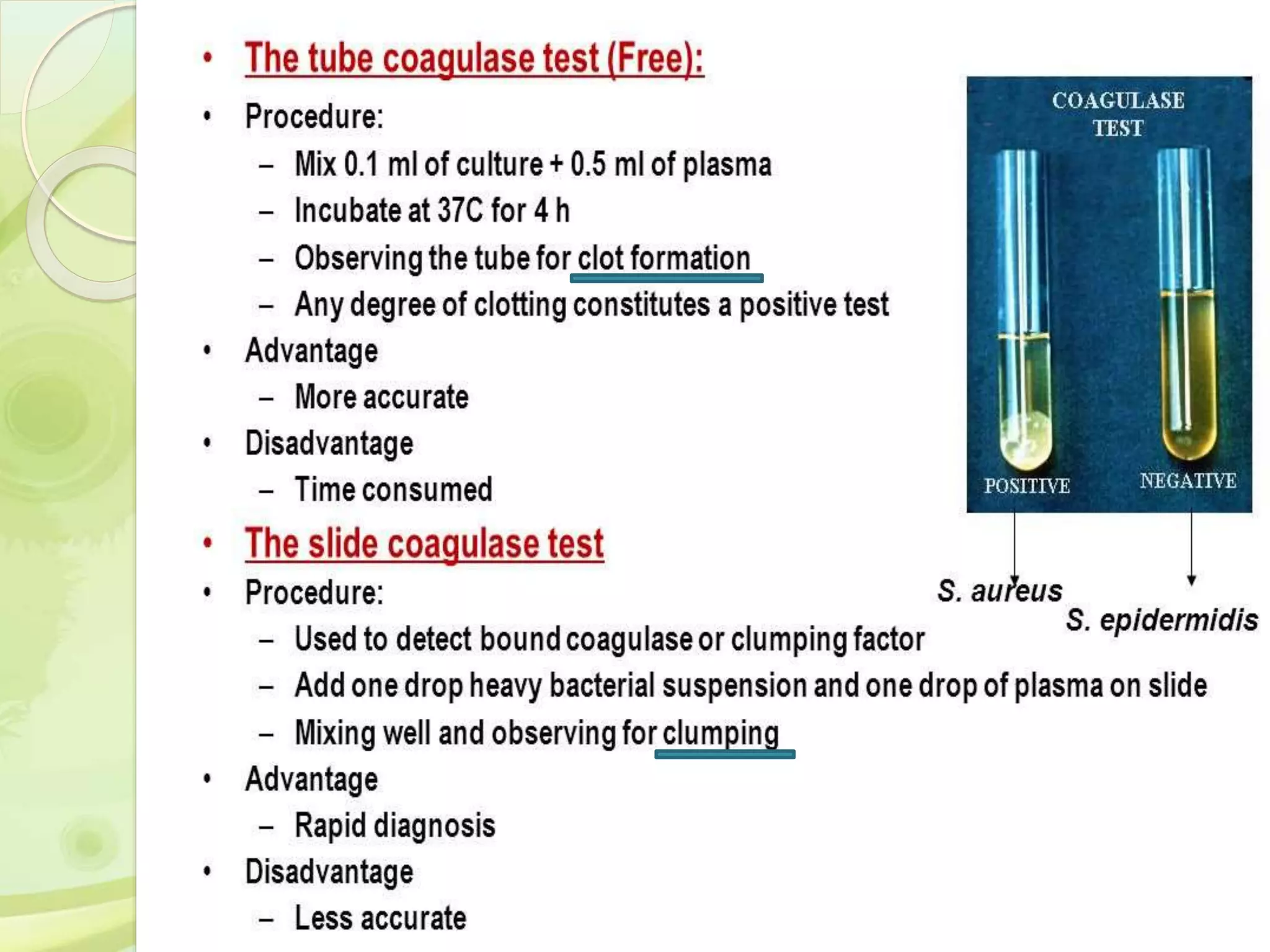
Coagulase test
•Done to distinguish pathogenic strain (S.aureus)
from non-pathogenic strains.
•2 Methods of coagulase detection are:
(1) Slide coagulase test : detects bound
coagulase
(2) Tube cogulase test : detects free coagulase
 (other coagulase +ive staphylococci are
S.intermedius, S.hyicus)
Saturday, February 18, 2017 13
Saturday, February 18, 2017 14
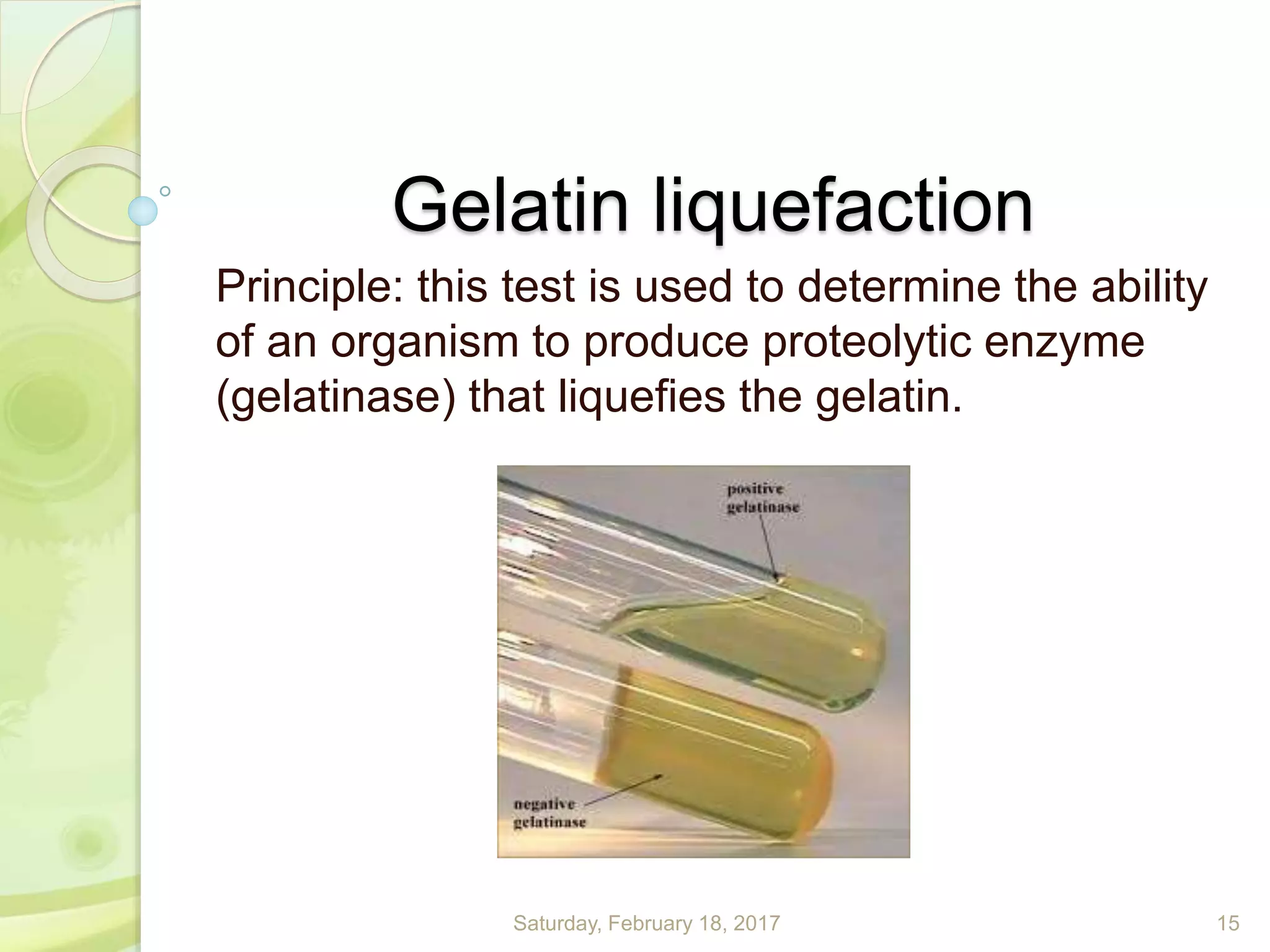
Gelatin liquefaction
Principle: this test is used to determine the ability
of an organism to produce proteolytic enzyme
(gelatinase) that liquefies the gelatin.
Saturday, February 18, 2017 15
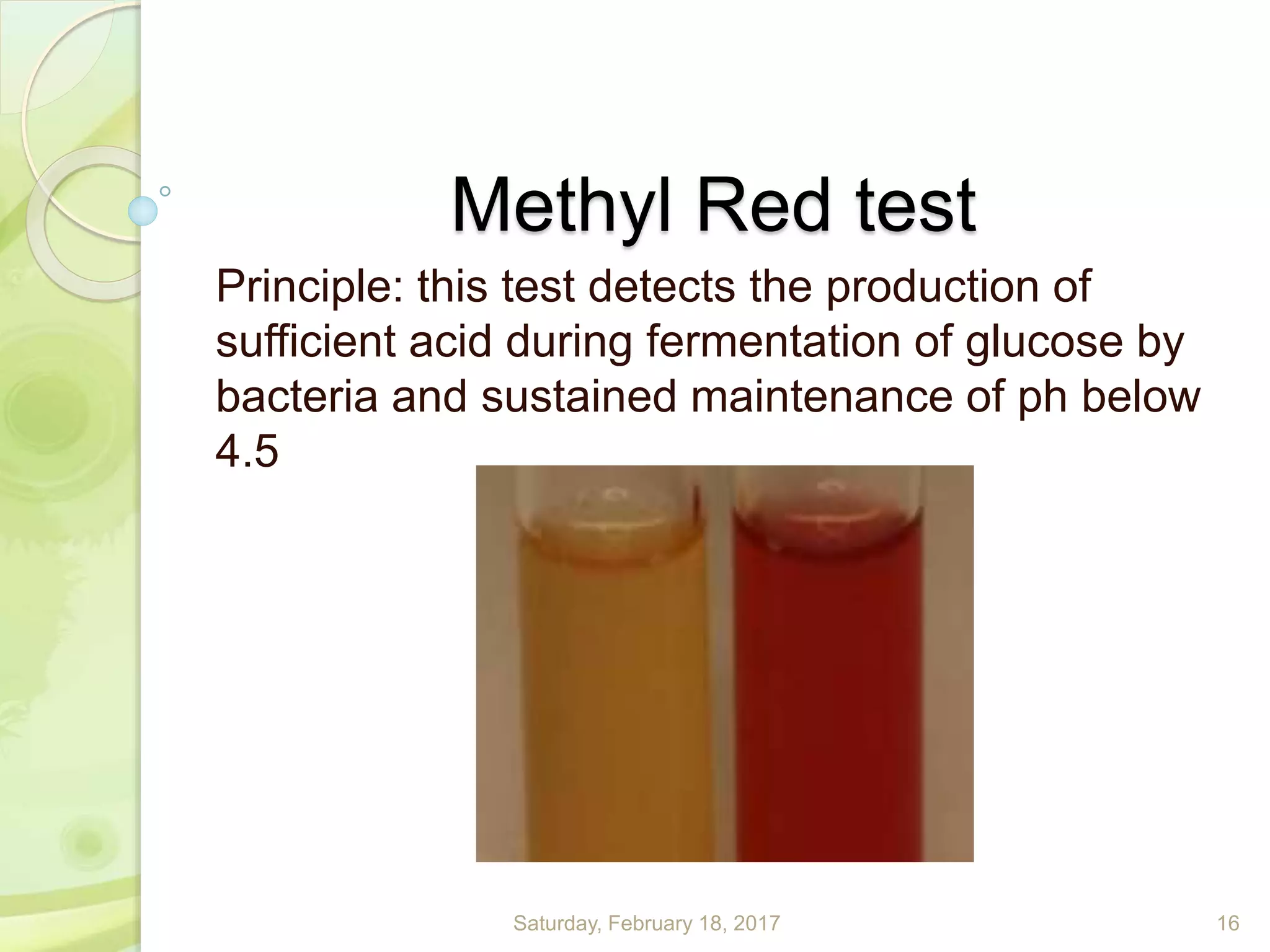
Methyl Red test
Principle: this test detects the production of
sufficient acid during fermentation of glucose by
bacteria and sustained maintenance of ph below
4.5
Saturday, February 18, 2017 16
Voges-Proskauer (VP) test
Principle: the test depends upon the production
of acetoin from pyruvic acid in the media. In the
presence of alkali & atmospheric oxygen, acetoin
is oxidised to diacetyl which reacts with alpha
naphthol to give red color.
Saturday, February 18, 2017 17
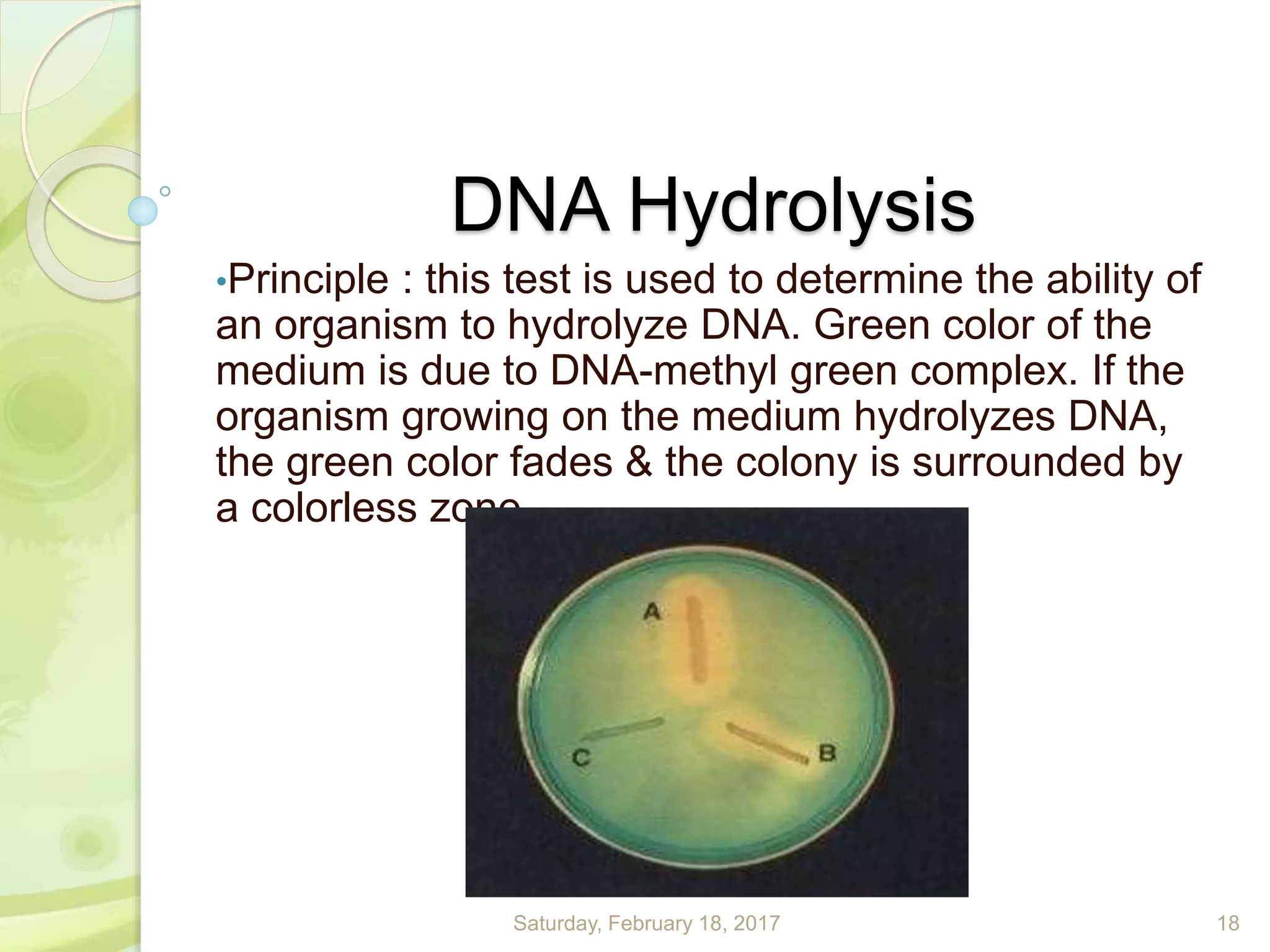
DNA Hydrolysis
•Principle : this test is used to determine the ability of
an organism to hydrolyze DNA. Green color of the
medium is due to DNA-methyl green complex. If the
organism growing on the medium hydrolyzes DNA,
the green color fades & the colony is surrounded by
a colorless zone.
Saturday, February 18, 2017 18
Phosphatase test
Principle: Staphylococci are grown on nutrient agar
containing sodium phenolphthalein diphosphate and
incubated overnight at 37°C. The plate is exposed to
ammonia vapours. The pink color of the colonies
indicate a positive result.
Saturday, February 18, 2017 19
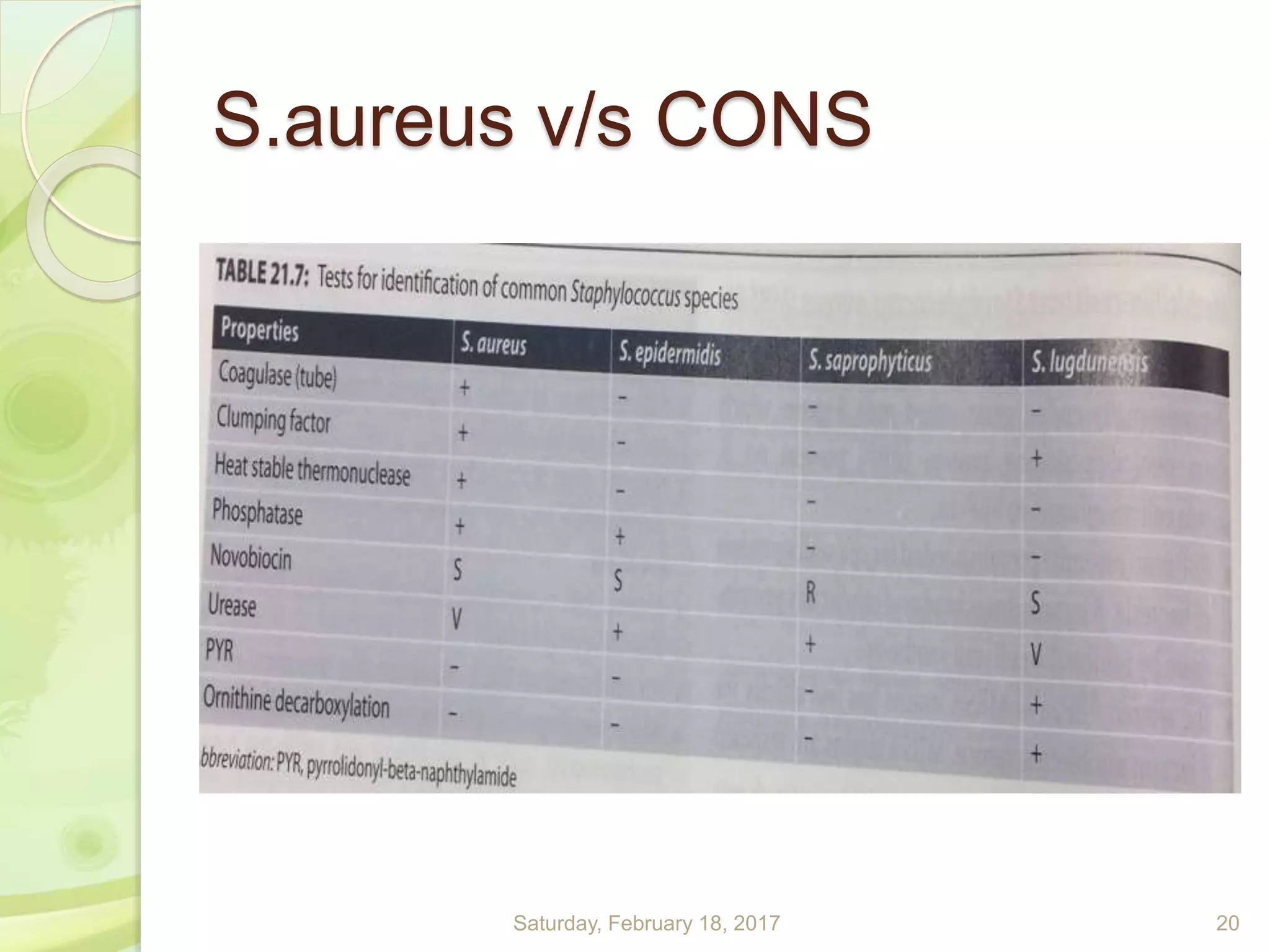
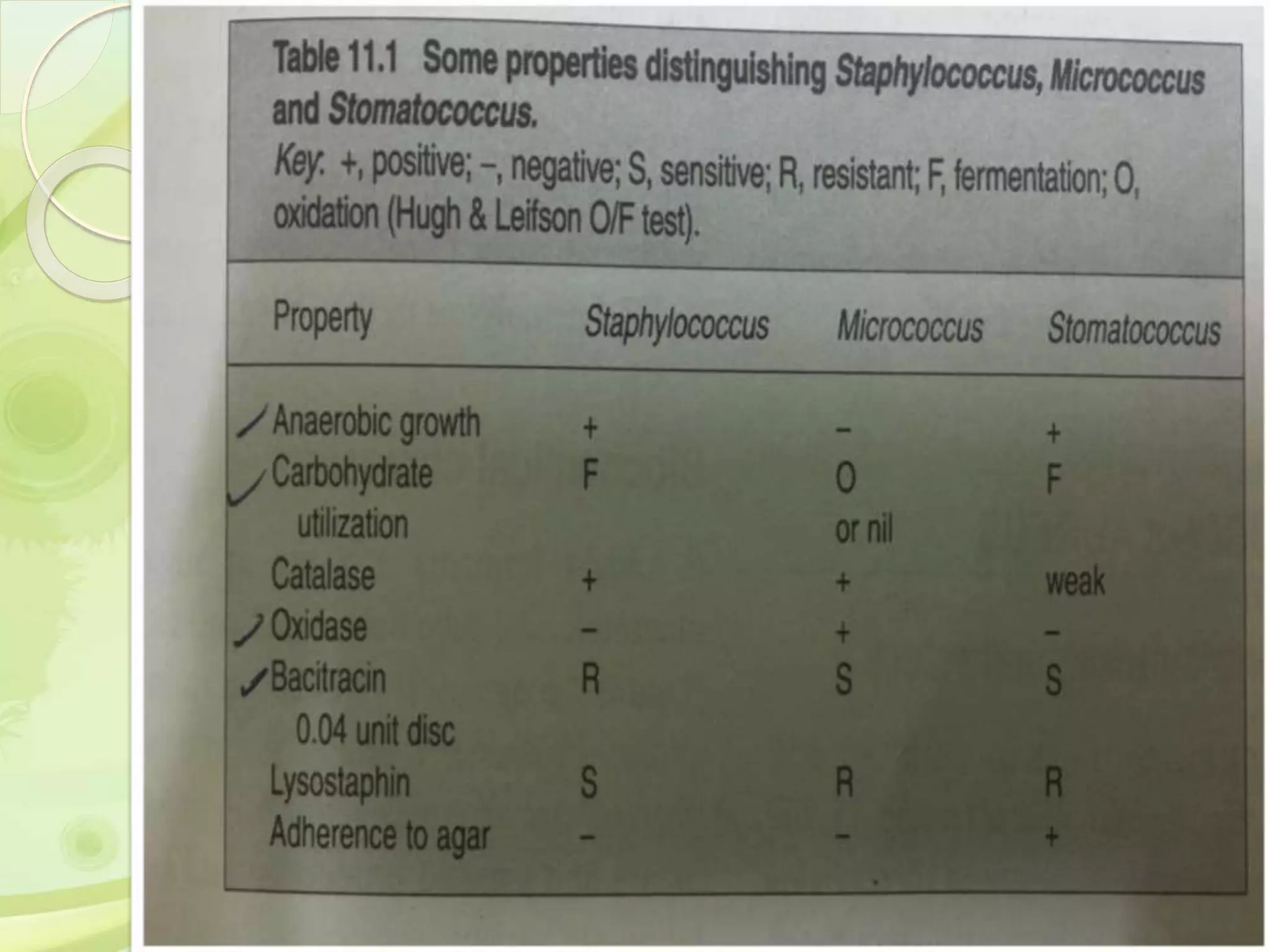
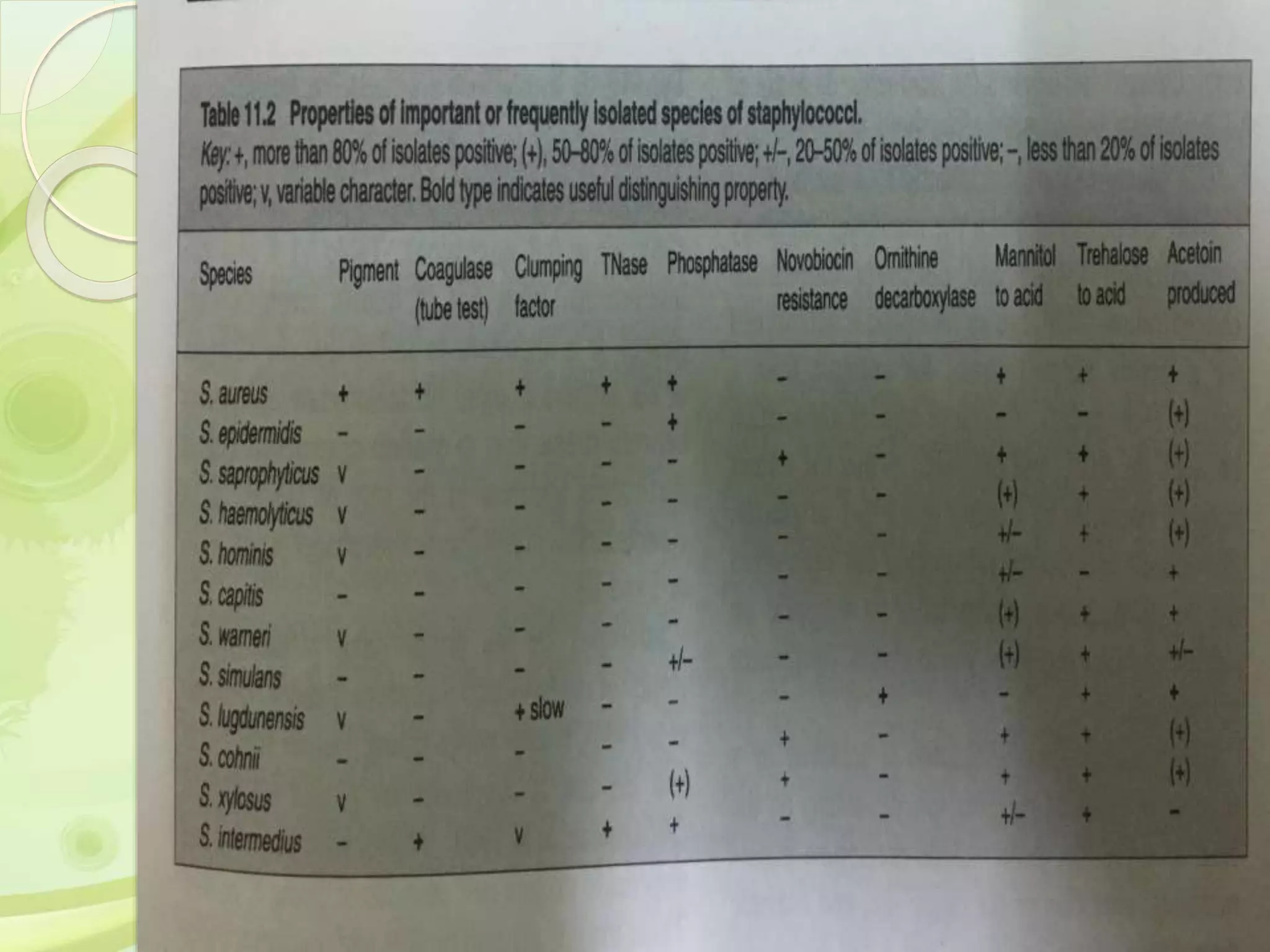
S.aureus v/s CONS
Saturday, February 18, 2017 20
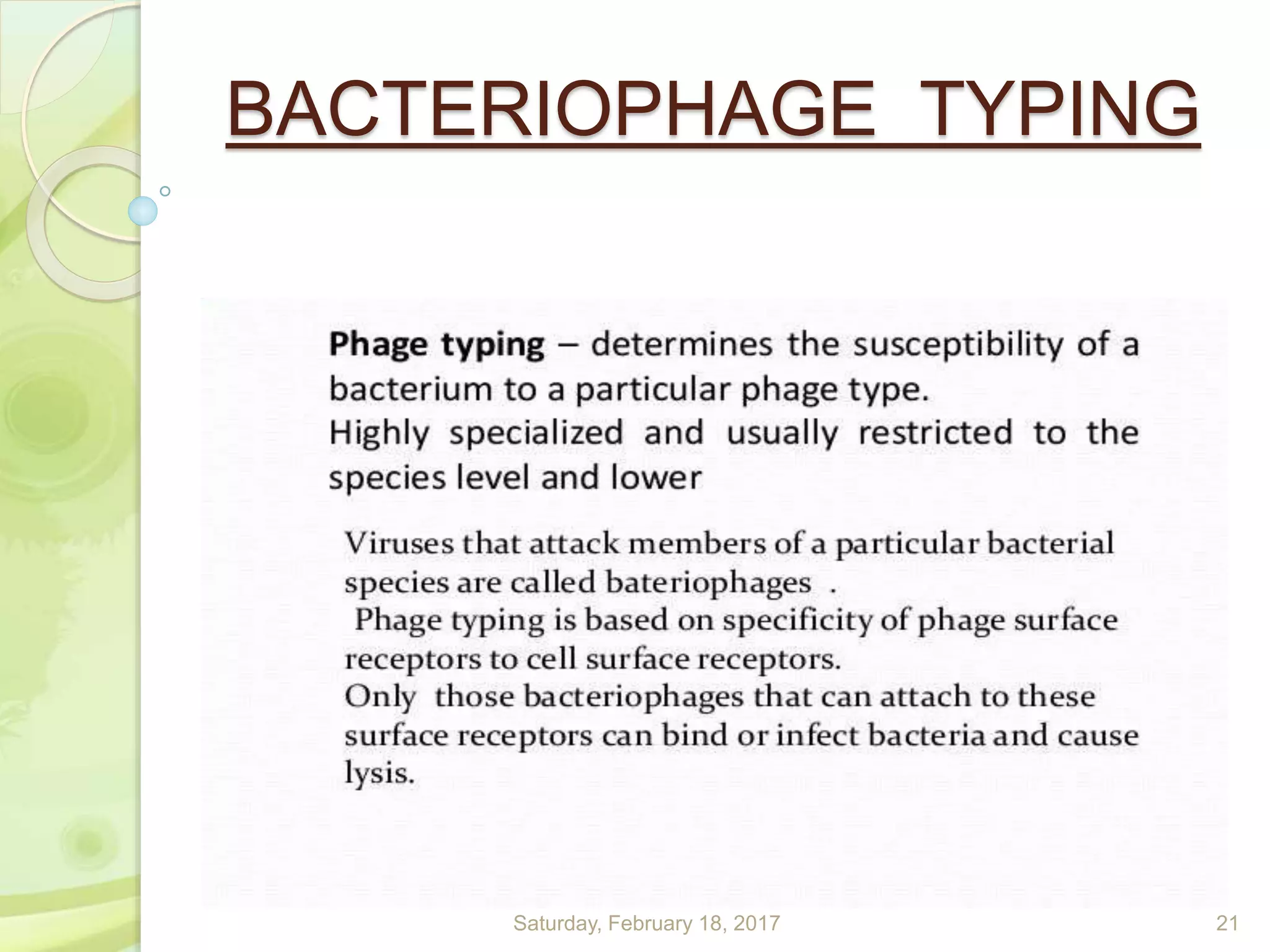
BACTERIOPHAGE TYPING
Saturday, February 18, 2017 21
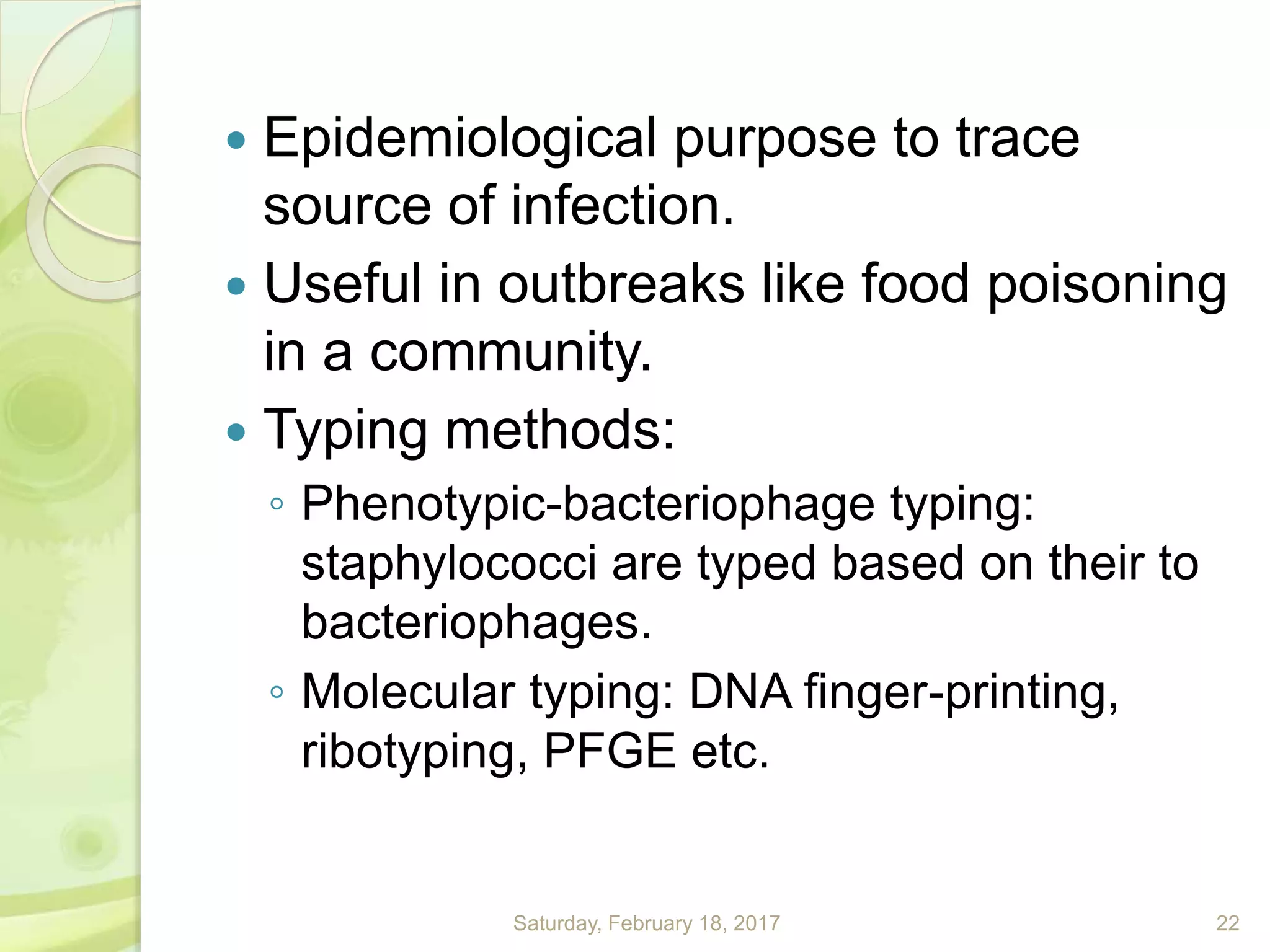
 Epidemiological purpose to trace
source of infection.
 Useful in outbreaks like food poisoning
in a community.
 Typing methods:
◦ Phenotypic-bacteriophage typing:
staphylococci are typed based on their to
bacteriophages.
◦ Molecular typing: DNA finger-printing,
ribotyping, PFGE etc.
Saturday, February 18, 2017 22
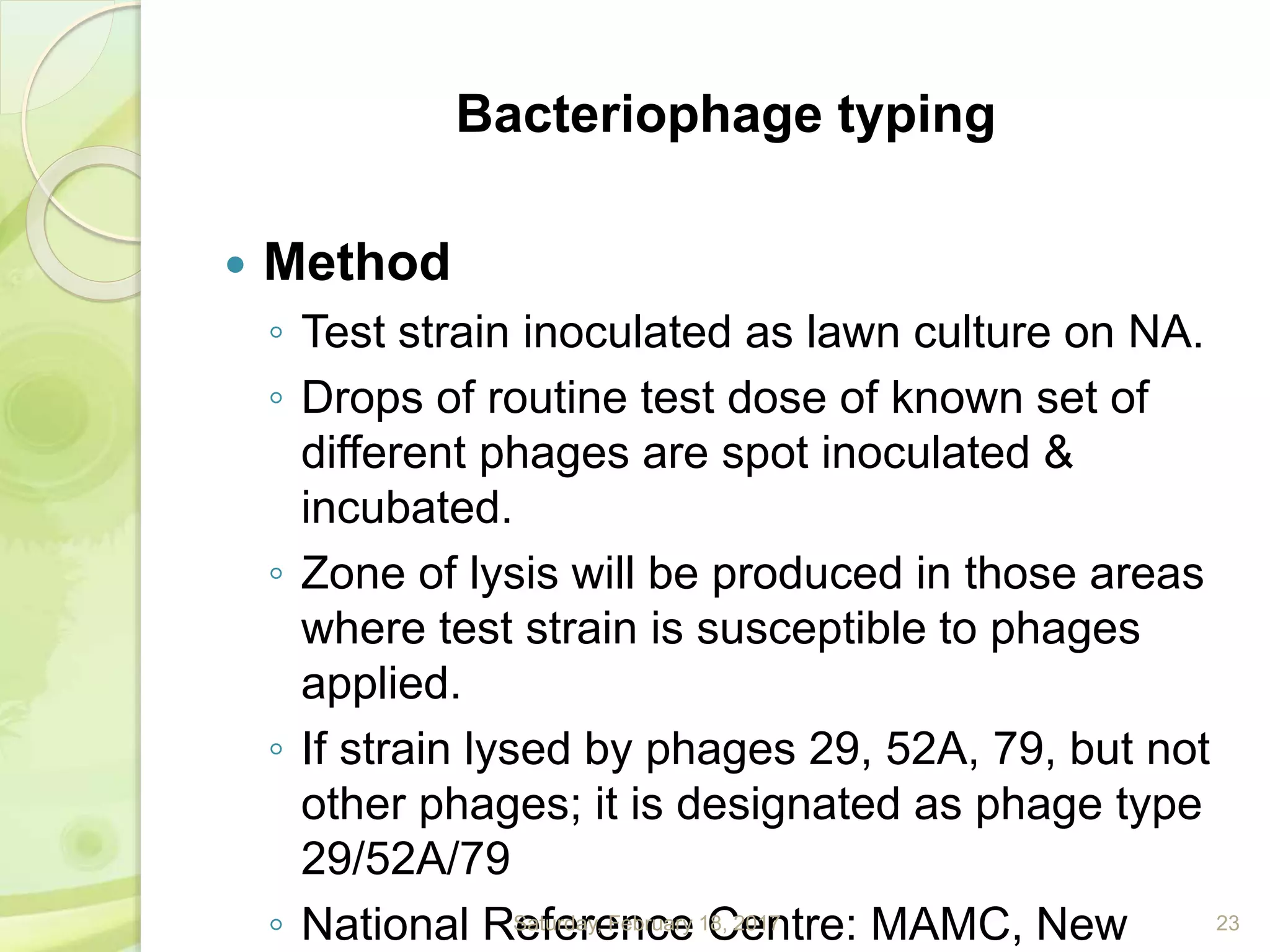
Bacteriophage typing
 Method
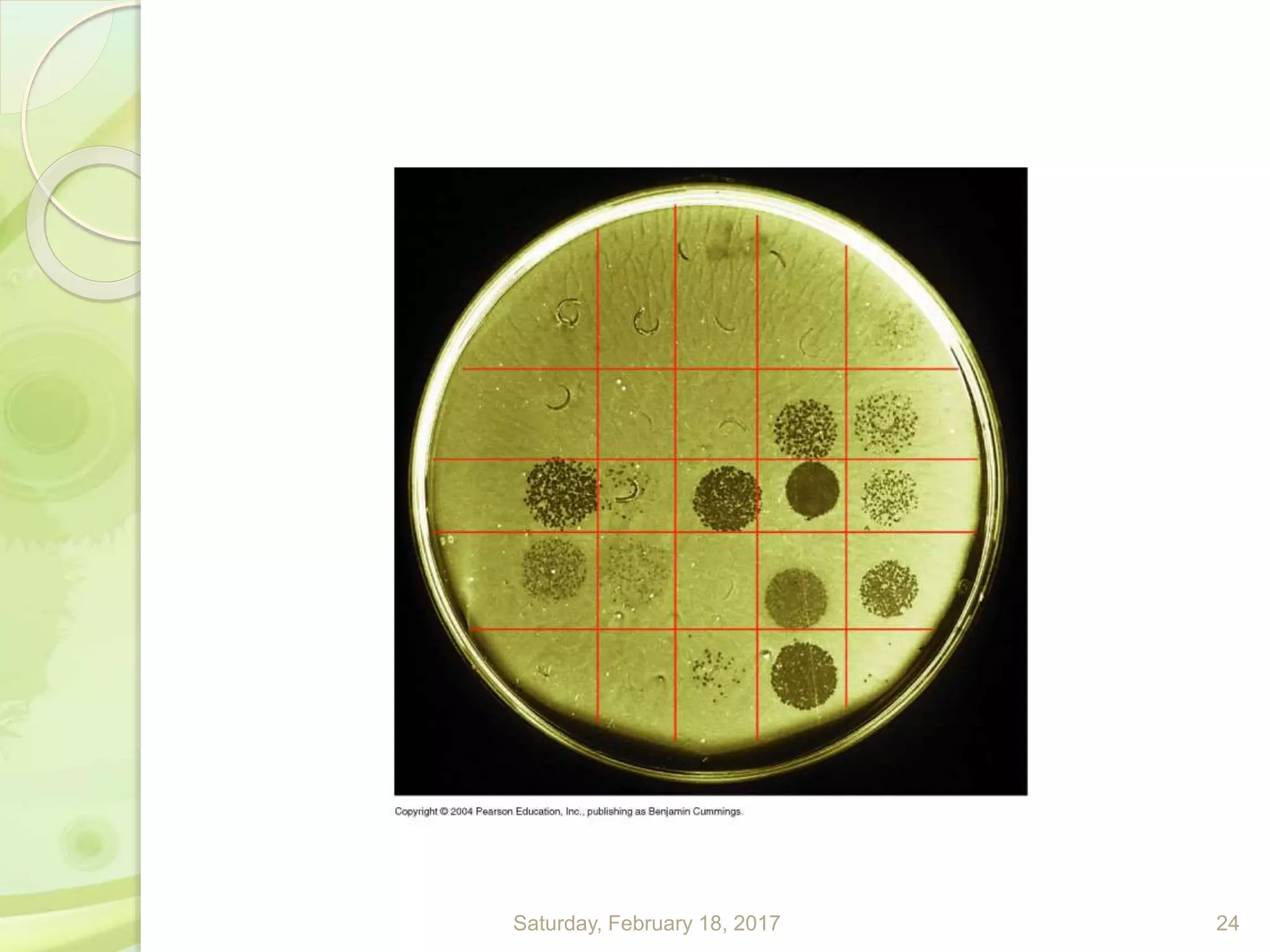
◦ Test strain inoculated as lawn culture on NA.
◦ Drops of routine test dose of known set of
different phages are spot inoculated &
incubated.
◦ Zone of lysis will be produced in those areas
where test strain is susceptible to phages
applied.
◦ If strain lysed by phages 29, 52A, 79, but not
other phages; it is designated as phage type
29/52A/79
◦ National Reference Centre: MAMC, NewSaturday, February 18, 2017 23
Saturday, February 18, 2017 24
ANTIBIOTIC SENSITIVITY TESTING
This is important as staphylococci develop
resistance to drugs readily.
Saturday, February 18, 2017 25
Why AST has become a
necessity ??
Bacteria have the ability to develop resistance
following repeated or subclinical doses, so more
advanced antibiotics are required to overcome
them.
 Antibiotic sensitivity test: A laboratory test
which determines how effective antibiotic
therapy is against a bacterial infections.
 Testing will assist the clinicians in the choice of
drugs for the treatment of infections.
 Helps in the local pattern of antibiotic
prescribing. Saturday, February 18, 2017 26
Methods of AST
•Performed on MHA by Kirby-Bauer Disc diffusion
method.
•Following antibiotics are employed for
staphylococcus:
•Amoxyclav
•Clindamycin
•Cefoxitin
•Ciprofloxacin
•Erythromycin
•Gentamicin
•Linezolid
•Levofloxacin
•Penicilin-G
•Vancomycin
•Teicoplanin Saturday, February 18, 2017 27
Kirby-Bauer method
1. Dry the agar plates (MHA) & label them.
2. Dip a sterile swab into the broth and express
any excess moisture by pressing the swab
against the side of the tube.
3. Swab is streaked as a lawn (lawn culture)
onto a Mueller-Hinton agar (in 3 directions
to ensure confluence).
4. The anitibiotic(s) disk will be placed onto the
MHA plate.
5. The plate is incubated and is examined for
resistance and sensitivity pattern the
following day.
Saturday, February 18, 2017 28
MRSA
•Methicillin-resistant S. aureus.
•First reported in 1960s.
•May colonize mucosal or epithelial surfaces,
(common : anterior nares)
•Nosocomial pathogen.
•Shows Resistant to penicillins,
cephalosporins, carbapenems,
monobactams.
•Vancomycin resistance is rare – so far
•Hospital-acquired (HA MRSA)
•Community-acquired cases now (CA MRSA)
Saturday, February 18, 2017 29
Predisposing factors for
MRSA
•Prolonged & repeated hospitalization
•Indiscriminate use of antibiotics
•Intravenous drug abuse
•Presence of indwelling medical devices
Saturday, February 18, 2017 30
MECHANISM
•MRSA contains the mecA gene which is responsible
for the production of an altered plasma (cell)
membrane-bound enzyme, penicillin-binding protein
2a (PBP- 2a.)
•The altered PBP 2a while able to perform its cell-wall
synthesis function, has a lower affinity and does not
bind to beta-lactam antibiotics
•Thus, the presence of the mecA gene confers
resistance to all beta-lactam antibiotics such as
methicillin.
Saturday, February 18, 2017 31
• Vancomycin remains the drug of choice for
treatment of infections caused by MRSA,
although it is intrinsically less active than the
antistaphylococcal penicillins.
•Combinations of vancomycin with ss-lactam
antibiotics may be synergistic in vivo against
MRSA strains, including those with intermediate
susceptibility to vancomycin.
•Given the increasing prevalence of MRSA in
hospitals and in community settings, alternative
approaches are needed for treatment of
infections caused by MRSA.Saturday, February 18, 2017 32
Preventive measures
•Isolation & treatment of MRSA patients.
•Detection of carriers among hospital staff, their
isolation & treatment.
•Avoid indiscriminate usage of antibiotics.
•Following strict aseptic technique
Saturday, February 18, 2017 33
•HAND WASHING STILL CONTINUES TO REDUCE
SEVERAL INCIDENCES OF MRSA SPREAD IN
HEALTH CARE
Saturday, February 18, 2017 34
Detection of MRSA
•MRSA is determined by disc diffusion test using
cefoxitin (30µg) disc on MHA with 2% NaCl & 104
cfu/ml inoculum and incubated at 33-35°C for 24
hour.
•As per CLSI guidelines inhibition zone of </= 21
mm was taken to be MRSA.
Saturday, February 18, 2017 35
Coagulase Negative
Staphylococci
Two species of coagulase negative
Staphylococci can cause human infections:
1. Staphylococcus epidermidis
2. Staphylococcus saprophyticus
Saturday, February 18, 2017 36
S. epidermidis:
•It is a common cause of stitch abscesses.
•It has predilection for growth on implanted
foreign bodies such as artificial valves, shunts,
intravascular catheters and prosthetic appliances
leading to bacteremia.
•In persons with structural abnormalities of
urinary tract, it can cause cystitis.
•Endocarditis may be caused, particularly in drug
addicts.
Saturday, February 18, 2017 37
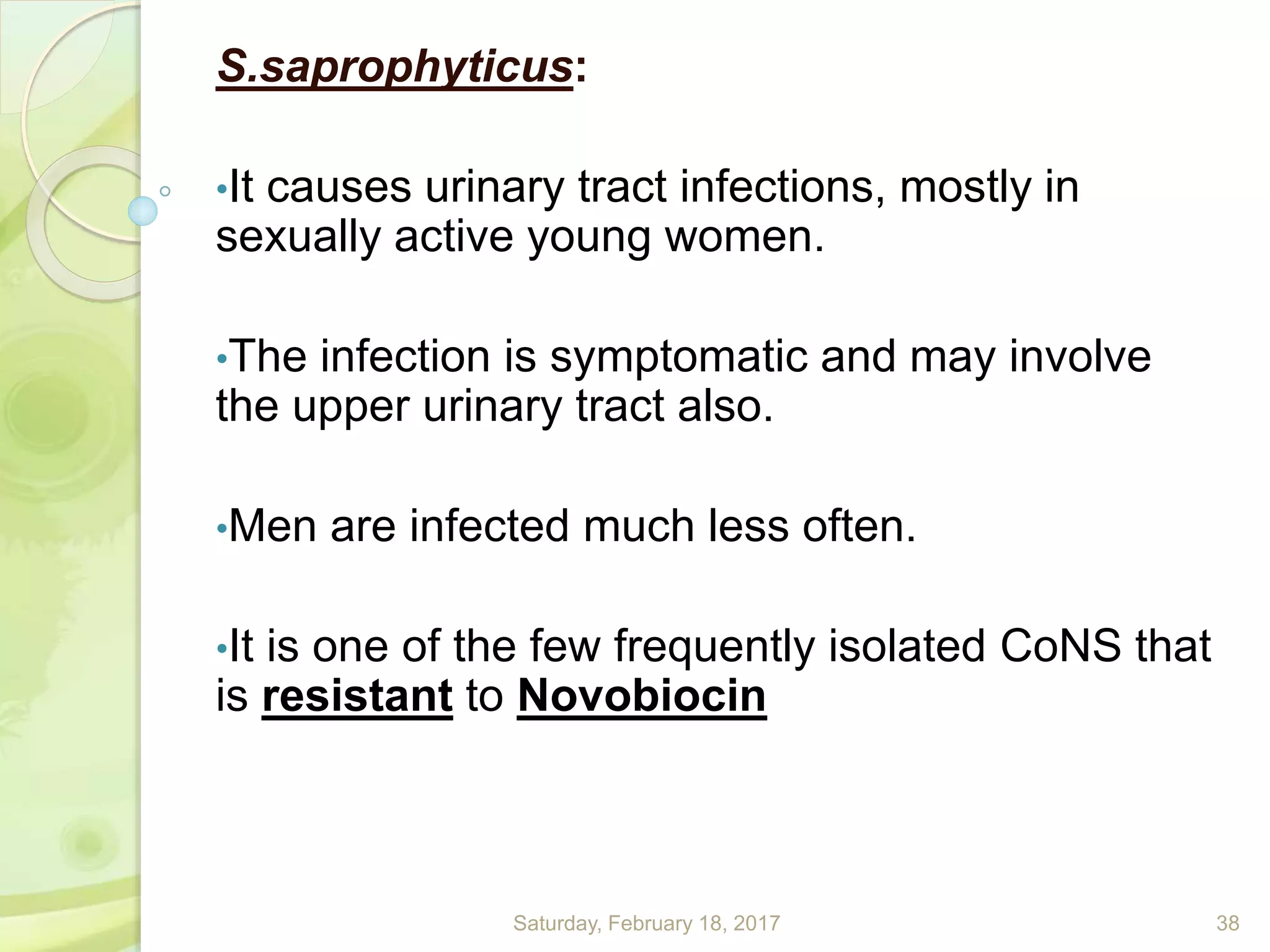
S.saprophyticus:
•It causes urinary tract infections, mostly in
sexually active young women.
•The infection is symptomatic and may involve
the upper urinary tract also.
•Men are infected much less often.
•It is one of the few frequently isolated CoNS that
is resistant to Novobiocin
Saturday, February 18, 2017 38
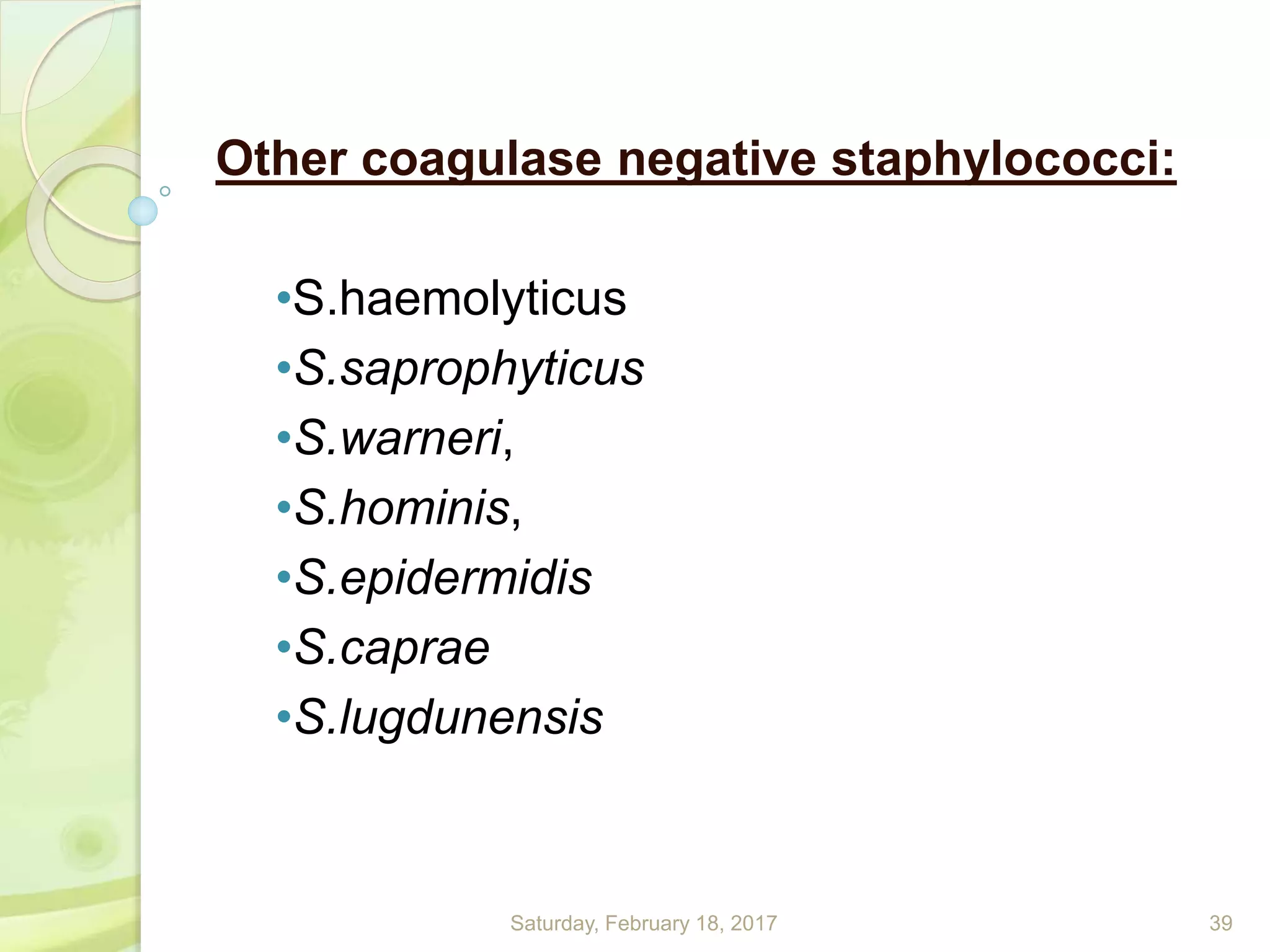
Other coagulase negative staphylococci:
•S.haemolyticus
•S.saprophyticus
•S.warneri,
•S.hominis,
•S.epidermidis
•S.caprae
•S.lugdunensis
Saturday, February 18, 2017 39
Saturday, February 18, 2017 40
Saturday, February 18, 2017 41
Saturday, February 18, 2017 42

laboratory diagnosis of staphylococcus

  • 1.
    LABORATORY DIAGNOSIS OF STAPHYLOCOCCUS MADEBY: SHALINI BISHT Saturday, February 18, 2017 1
  • 2.
    LABORATORY DIAGNOSIS  Samplecollection and Transportation  Direct smear Microscopy  Culture  Biochemicals  Typing of Staphylococcus aureus  Antibiotic Sensitivity Testing (AST) Saturday, February 18, 2017 2
  • 3.
    SAMPLE COLLECTION  Typeof sample depends on the site of infection. Saturday, February 18, 2017 3 Infection Specimen Suppurative lesion Pus, wound swab Respiratory infection Sputum UTI Mid stream urine PUO, Bacteremia Blood Food poisoning Feces, Vomitus, food Carriers Nasal and perianal swab
  • 4.
    DIRECT SMEAR MICROSCOPY Staphylococcus appear as GPC measuring 0.5-1.5 microns  Occur singly, in pairs, short chains or clusters  Present within and outside PMNs  Reporting of direct smears: ◦ quantitation of cell types and microorganisms ◦ Eg. Many pus cells along with moderate number of GPC seen Saturday, February 18, 2017 4
  • 5.
  • 6.
    CULTURE • Specimens areinoculated onto the suitable media.  Plates incubated for 18-24 hour at 37°C.  On nutrient agar  Colonies are golden yellow and opaque with smooth glistening surface, 2-4 mm in diameter, circular, convex, shiny & easily emusifiable. (Most strains produce non diffusible Golden yellow pigment)  Nutrient Agar slope ◦ Confluent growth, Oil paint appearance. Saturday, February 18, 2017 6
  • 7.
     Blood agar ◦Colonies similar to those on Nutrient Agar ◦ Colonies are beta-hemolytic  Liquid medium ◦ Uniform turbidity  MacConkey Agar ◦ Small pink colonies due to Lactose fermentation Saturday, February 18, 2017 7
  • 8.
  • 9.
     Selective media MSA – 1% Mannitol + 7.5% NaCl + phenol red  Salt milk agar – 6.5% NaCl + 10% skimmed milk  Ludlam’s medium – Lithium chloride and tellurite Saturday, February 18, 2017 9
  • 10.
  • 11.
    BIOCHEMICAL REACTIONS •Catalase :positive •Coagulase test : positive •Oxidase : negative (Except S.sciuri group i.e., S.sciuri, S.lentus, S.vitulinus) •Ferment glucose, lactose, maltose, sucrose and mannitol, with production of acid but no gas •Indole : negative •MR test : positive •VP test : positive •Gelatin liquefaction : positive •Phosphatase : positiveSaturday, February 18, 2017 11
  • 12.
    Catalase test •Done todistinguish staphylococci from streptococci (catalase negative) Saturday, February 18, 2017 12
  • 13.
    Coagulase test •Done todistinguish pathogenic strain (S.aureus) from non-pathogenic strains. •2 Methods of coagulase detection are: (1) Slide coagulase test : detects bound coagulase (2) Tube cogulase test : detects free coagulase  (other coagulase +ive staphylococci are S.intermedius, S.hyicus) Saturday, February 18, 2017 13
  • 14.
  • 15.
    Gelatin liquefaction Principle: thistest is used to determine the ability of an organism to produce proteolytic enzyme (gelatinase) that liquefies the gelatin. Saturday, February 18, 2017 15
  • 16.
    Methyl Red test Principle:this test detects the production of sufficient acid during fermentation of glucose by bacteria and sustained maintenance of ph below 4.5 Saturday, February 18, 2017 16
  • 17.
    Voges-Proskauer (VP) test Principle:the test depends upon the production of acetoin from pyruvic acid in the media. In the presence of alkali & atmospheric oxygen, acetoin is oxidised to diacetyl which reacts with alpha naphthol to give red color. Saturday, February 18, 2017 17
  • 18.
    DNA Hydrolysis •Principle :this test is used to determine the ability of an organism to hydrolyze DNA. Green color of the medium is due to DNA-methyl green complex. If the organism growing on the medium hydrolyzes DNA, the green color fades & the colony is surrounded by a colorless zone. Saturday, February 18, 2017 18
  • 19.
    Phosphatase test Principle: Staphylococciare grown on nutrient agar containing sodium phenolphthalein diphosphate and incubated overnight at 37°C. The plate is exposed to ammonia vapours. The pink color of the colonies indicate a positive result. Saturday, February 18, 2017 19
  • 20.
    S.aureus v/s CONS Saturday,February 18, 2017 20
  • 21.
  • 22.
     Epidemiological purposeto trace source of infection.  Useful in outbreaks like food poisoning in a community.  Typing methods: ◦ Phenotypic-bacteriophage typing: staphylococci are typed based on their to bacteriophages. ◦ Molecular typing: DNA finger-printing, ribotyping, PFGE etc. Saturday, February 18, 2017 22
  • 23.
    Bacteriophage typing  Method ◦Test strain inoculated as lawn culture on NA. ◦ Drops of routine test dose of known set of different phages are spot inoculated & incubated. ◦ Zone of lysis will be produced in those areas where test strain is susceptible to phages applied. ◦ If strain lysed by phages 29, 52A, 79, but not other phages; it is designated as phage type 29/52A/79 ◦ National Reference Centre: MAMC, NewSaturday, February 18, 2017 23
  • 24.
  • 25.
    ANTIBIOTIC SENSITIVITY TESTING Thisis important as staphylococci develop resistance to drugs readily. Saturday, February 18, 2017 25
  • 26.
    Why AST hasbecome a necessity ?? Bacteria have the ability to develop resistance following repeated or subclinical doses, so more advanced antibiotics are required to overcome them.  Antibiotic sensitivity test: A laboratory test which determines how effective antibiotic therapy is against a bacterial infections.  Testing will assist the clinicians in the choice of drugs for the treatment of infections.  Helps in the local pattern of antibiotic prescribing. Saturday, February 18, 2017 26
  • 27.
    Methods of AST •Performedon MHA by Kirby-Bauer Disc diffusion method. •Following antibiotics are employed for staphylococcus: •Amoxyclav •Clindamycin •Cefoxitin •Ciprofloxacin •Erythromycin •Gentamicin •Linezolid •Levofloxacin •Penicilin-G •Vancomycin •Teicoplanin Saturday, February 18, 2017 27
  • 28.
    Kirby-Bauer method 1. Drythe agar plates (MHA) & label them. 2. Dip a sterile swab into the broth and express any excess moisture by pressing the swab against the side of the tube. 3. Swab is streaked as a lawn (lawn culture) onto a Mueller-Hinton agar (in 3 directions to ensure confluence). 4. The anitibiotic(s) disk will be placed onto the MHA plate. 5. The plate is incubated and is examined for resistance and sensitivity pattern the following day. Saturday, February 18, 2017 28
  • 29.
    MRSA •Methicillin-resistant S. aureus. •Firstreported in 1960s. •May colonize mucosal or epithelial surfaces, (common : anterior nares) •Nosocomial pathogen. •Shows Resistant to penicillins, cephalosporins, carbapenems, monobactams. •Vancomycin resistance is rare – so far •Hospital-acquired (HA MRSA) •Community-acquired cases now (CA MRSA) Saturday, February 18, 2017 29
  • 30.
    Predisposing factors for MRSA •Prolonged& repeated hospitalization •Indiscriminate use of antibiotics •Intravenous drug abuse •Presence of indwelling medical devices Saturday, February 18, 2017 30
  • 31.
    MECHANISM •MRSA contains themecA gene which is responsible for the production of an altered plasma (cell) membrane-bound enzyme, penicillin-binding protein 2a (PBP- 2a.) •The altered PBP 2a while able to perform its cell-wall synthesis function, has a lower affinity and does not bind to beta-lactam antibiotics •Thus, the presence of the mecA gene confers resistance to all beta-lactam antibiotics such as methicillin. Saturday, February 18, 2017 31
  • 32.
    • Vancomycin remainsthe drug of choice for treatment of infections caused by MRSA, although it is intrinsically less active than the antistaphylococcal penicillins. •Combinations of vancomycin with ss-lactam antibiotics may be synergistic in vivo against MRSA strains, including those with intermediate susceptibility to vancomycin. •Given the increasing prevalence of MRSA in hospitals and in community settings, alternative approaches are needed for treatment of infections caused by MRSA.Saturday, February 18, 2017 32
  • 33.
    Preventive measures •Isolation &treatment of MRSA patients. •Detection of carriers among hospital staff, their isolation & treatment. •Avoid indiscriminate usage of antibiotics. •Following strict aseptic technique Saturday, February 18, 2017 33
  • 34.
    •HAND WASHING STILLCONTINUES TO REDUCE SEVERAL INCIDENCES OF MRSA SPREAD IN HEALTH CARE Saturday, February 18, 2017 34
  • 35.
    Detection of MRSA •MRSAis determined by disc diffusion test using cefoxitin (30µg) disc on MHA with 2% NaCl & 104 cfu/ml inoculum and incubated at 33-35°C for 24 hour. •As per CLSI guidelines inhibition zone of </= 21 mm was taken to be MRSA. Saturday, February 18, 2017 35
  • 36.
    Coagulase Negative Staphylococci Two speciesof coagulase negative Staphylococci can cause human infections: 1. Staphylococcus epidermidis 2. Staphylococcus saprophyticus Saturday, February 18, 2017 36
  • 37.
    S. epidermidis: •It isa common cause of stitch abscesses. •It has predilection for growth on implanted foreign bodies such as artificial valves, shunts, intravascular catheters and prosthetic appliances leading to bacteremia. •In persons with structural abnormalities of urinary tract, it can cause cystitis. •Endocarditis may be caused, particularly in drug addicts. Saturday, February 18, 2017 37
  • 38.
    S.saprophyticus: •It causes urinarytract infections, mostly in sexually active young women. •The infection is symptomatic and may involve the upper urinary tract also. •Men are infected much less often. •It is one of the few frequently isolated CoNS that is resistant to Novobiocin Saturday, February 18, 2017 38
  • 39.
    Other coagulase negativestaphylococci: •S.haemolyticus •S.saprophyticus •S.warneri, •S.hominis, •S.epidermidis •S.caprae •S.lugdunensis Saturday, February 18, 2017 39
  • 40.
  • 41.
  • 42.