Clostridium tetani
Prepared by Joevani S. Peñol
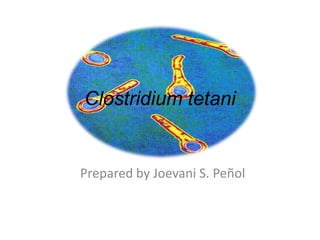
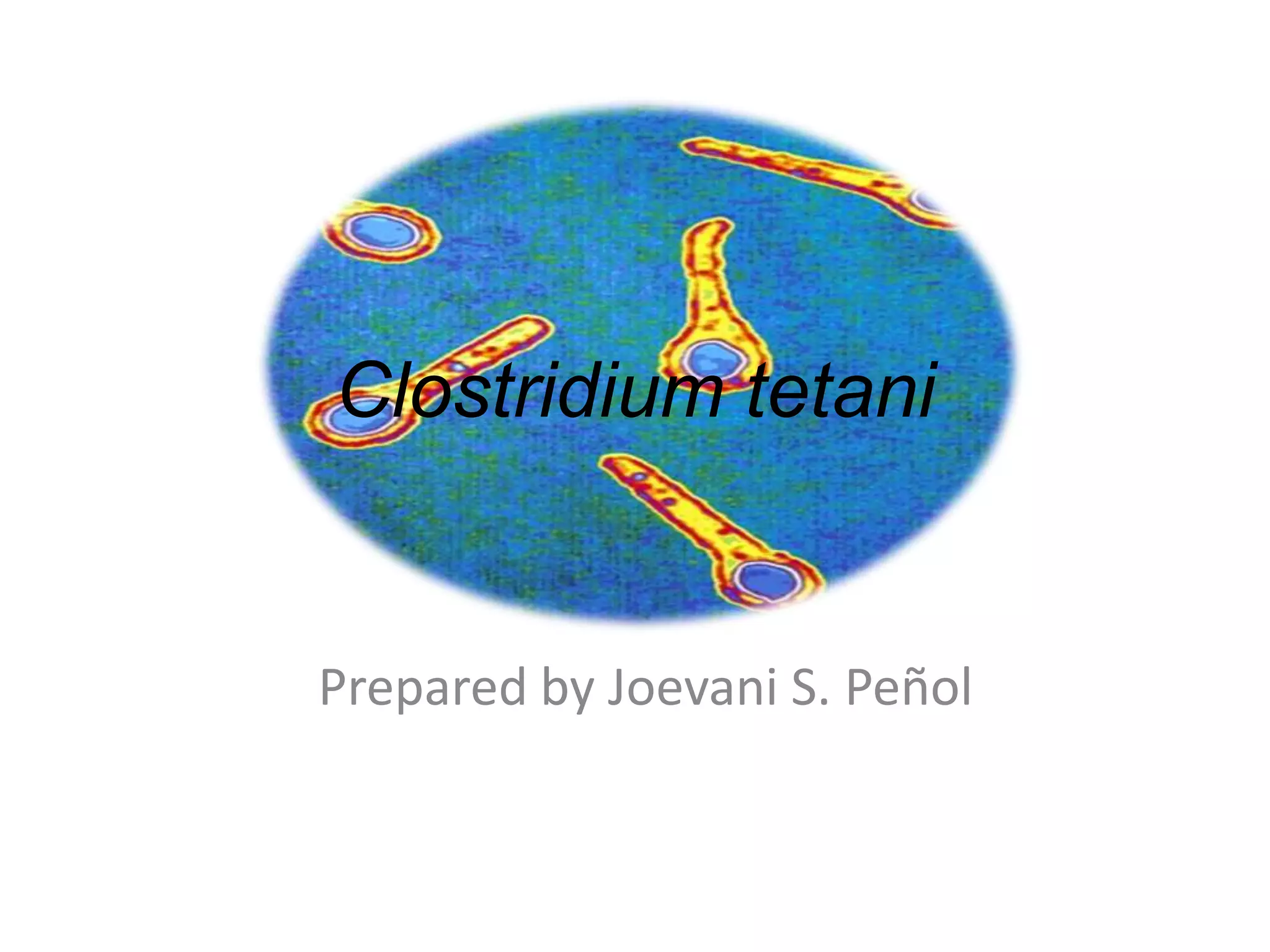
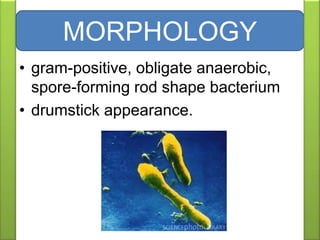
• gram-positive, obligate anaerobic,
spore-forming rod shape bacterium
• drumstick appearance.
MORPHOLOGY
• Heat resistant spores and usual
antiseptics.
• survive autoclaving at 121 C for 10-15
minutes.
• resistant to phenol and other chemical
agents.
RESISTANCE
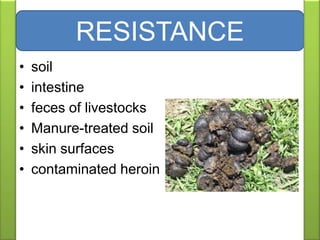
• soil
• intestine
• feces of livestocks
• Manure-treated soil
• skin surfaces
• contaminated heroin
RESISTANCE
• Organism is sensitive to heat.
• Sensitive to oxygen.
SENSITIVITY
Tetanus
• acute, often fatal, disease caused by an
exotoxin produced by Clostridium tetani.
• rigidity and convulsive spasms of skeletal
muscles.
• involves the jaw (lockjaw) and neck and then
becomes generalized.
EPIDEMIOLOGY
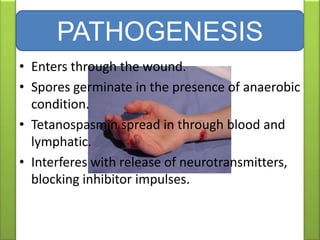
• Enters through the wound.
• Spores germinate in the presence of anaerobic
condition.
• Tetanospasmin spread in through blood and
lymphatic.
• Interferes with release of neurotransmitters,
blocking inhibitor impulses.
PATHOGENESIS
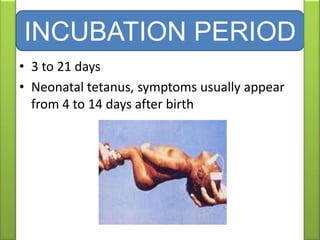
• 3 to 21 days
• Neonatal tetanus, symptoms usually appear
from 4 to 14 days after birth
INCUBATION PERIOD
Man Suffering from Tetanus
• LOCAL (Uncommon)
• CEPHALIC (Rare)
• GENERALIZED (Common)
CLASSES
• persistent contraction of muscles in
the same anatomic area as the injury.
• Precede the onset of generalized
tetanus, but is generally milder.
• 1% of cases are fatal.
LOCAL
• Occurs with otitis media (ear infections)
• Head injuries.
• Involvement of the cranial nerves,
especially in the facial area.
CEPHALIC
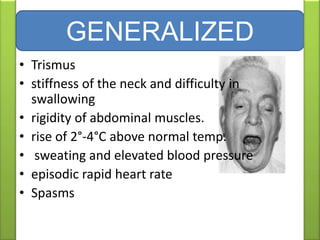
• Trismus
• stiffness of the neck and difficulty in
swallowing
• rigidity of abdominal muscles.
• rise of 2°-4°C above normal temp.
• sweating and elevated blood pressure
• episodic rapid heart rate
• Spasms
GENERALIZED
• Occurs in infant
• infection of the unhealed umbilical
• estimated >270,000 deaths worldwide per
year.
NEONATAL TETANUS
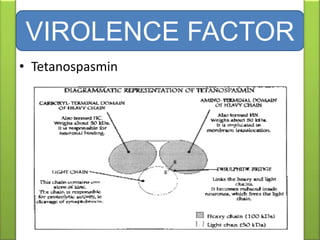
• Tetanospasmin
VIROLENCE FACTOR
VIROLENCE FACTOR
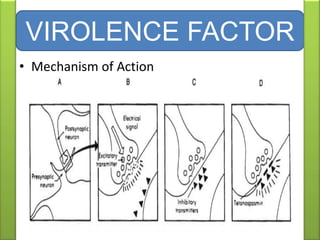
• Mechanism of Action
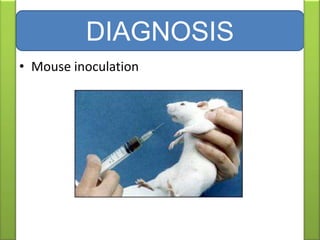
• Mouse inoculation
DIAGNOSIS
• Medical Management
 Tetanus immune globulin (TIG)
Intravenous immune globulin (IVIG)
• Wound Management
proper immunization
PREVENTION & CONTROL
• Temporary Immunity
IMMUNITY
IMPACT TO EDUCATION &
COMMUNITY

Clostridium tetani

Editor's Notes

  • #17 A Neurotransmission is controlled by the balance between excitatory and inhibitory neurotransmitters.                                     B. The inhibitory neurotransmitters (e.g., GABA, glycine) prevent depolarization of the postsynaptic membrane and conduction of the                                         electrical signal.                                     C. Tetanospasmin does not interfere with production or storage of GABA or glycine, but rather their release (presynaptic activity).                                     D. In the absence of inhibitory neurotransmitters, excitation of the neuroaxon is unrestrained.