Evidence Based Practice in
Nursing
Dr. Binu Babu
Asso. Professor
Mrs. Jincy Ealias
Asst. Professor
• What is Evidence Base Practice?
• Why Evidence Base Practice?
• What we are practicing currently?
• What change is needed?
• Is EBP has any value?
• Who will prepare evidences?
• Is EBP possible in real life situation?
Introduction
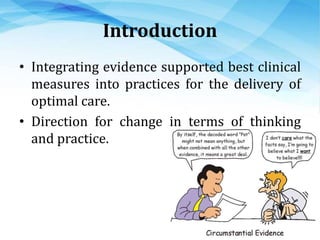
• Integrating evidence supported best clinical
measures into practices for the delivery of
optimal care.
• Direction for change in terms of thinking
and practice.
Evidence Based Practice
• Evidence based practice (EBP) is an
approach of making clinical decisions based
upon evidence, combined with clinical
experience and patients expectations.
• Is a way to minimize the theory to practice
gap.
EBP in nursing
• EBP in nursing is a way of providing nursing
care that is guided by the integration of the
best available scientific knowledge with
nursing expertise.
• This approach requires nurses to critically
assess relevant scientific data or research
evidence and to implement high quality
interventions for the nursing practice.
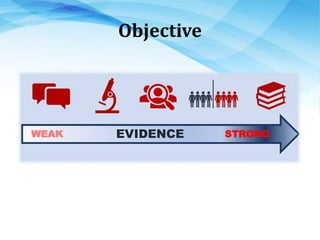
Objective
History of EBP in nursing
• Evidence-based practice was first
systematically introduced in nursing with
the Conduct and Utilization of Research in
Nursing (CURN) project in the late 1970’s.
• They reviewed the research on common
nursing procedures including Structured
Preoperative Teaching, Preventing
Decubitus Ulcers, and Reducing Diarrhea in
Tube-fed Patients.
• The project developed research-based
clinical protocols, systematically
implemented them into practice, and
measured the outcomes.
• The CURN project demonstrated that
synthesized research put into clinical
protocols would be used by clinicians with
beneficial results to patients.
Need for EBP
• Documentation and auditing
• Deliver the best possible services
with the available resources.
• Updating of theoretical and clinical
knowledge.
• Provide critical clinical judgment.
• Provide outcome based patient care.
• Develop advanced strategies for
clinical decision making
• Standardization of care and
accreditations
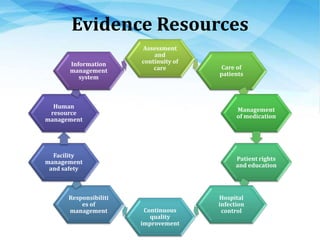
Evidence Resources
Assessment
and
continuity of
care Care of
patients
Management
of medication
Patient rights
and education
Hospital
infection
control
Continuous
quality
improvement
Responsibiliti
es of
management
Facility
management
and safety
Human
resource
management
Information
management
system
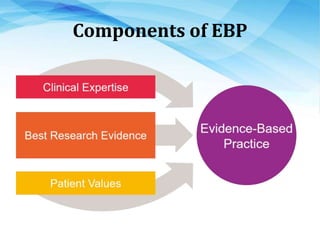
Components of EBP
Clinical expertise
Best Research Evidence
Patient values
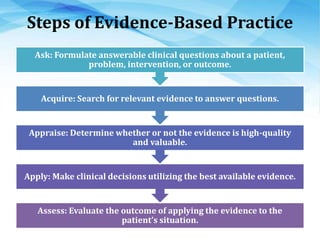
Steps of Evidence-Based Practice
Assess: Evaluate the outcome of applying the evidence to the
patient’s situation.
Apply: Make clinical decisions utilizing the best available evidence.
Appraise: Determine whether or not the evidence is high-quality
and valuable.
Acquire: Search for relevant evidence to answer questions.
Ask: Formulate answerable clinical questions about a patient,
problem, intervention, or outcome.
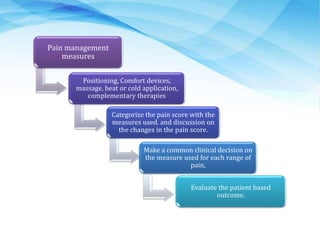
Pain management
measures
Positioning, Comfort devices,
massage, heat or cold application,
complementary therapies
Categorize the pain score with the
measures used. and discussion on
the changes in the pain score.
Make a common clinical decision on
the measure used for each range of
pain,
Evaluate the patient based
outcome.
Benefits of Evidence-Based
Practice
• Provide better patient care outcome
• Enable consistency of care
• Reduce the delay in care planning
• Client focused care
• All stages of care will be structured systematically
• Increases confidence in decision-making
• Maintain the professional standards
• Provide guidelines for further research
• Helps nurses to provide high quality patient care
• Standardization of academic quality
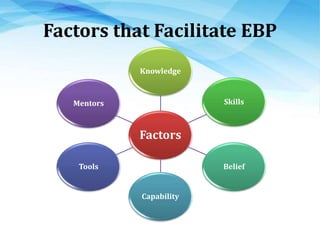
Factors that Facilitate EBP
Factors
Knowledge
Skills
Belief
Capability
Tools
Mentors
Barriers in EBP
• Lack of value for research in practice
• Difficulty in bringing change
• Lack of administrative support
• Lack of knowledge mentors
• Lack of time for research
• Lack of knowledge about research
• Research reports not easily available
• Complexity of research reports
• Lack of knowledge about EBP
• Lack of in service and continuing education
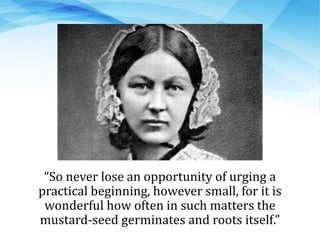
“So never lose an opportunity of urging a
practical beginning, however small, for it is
wonderful how often in such matters the
mustard-seed germinates and roots itself.”
References
• Beyea SC, Mary Jo Slattery. Evidence-based practice in
nursing : a guide to successful implementation.
Marblehead, Ma: Hcpro; 2006.
• Polly Gerber Zimmermann. Nursing management
secrets. Philadelphia: Hanley & Belfus; 2002.
• Pearson A, Field J, Jordan Z. Evidence-based clinical
practice in nursing and health care : assimilating
research, experience and expertise. Oxford ; Malden, Ma:
Blackwell Pub; 2007.
• Joshi DC, Mamta Joshi. Hospital administration. New
Delhi: Jaypee Bros. Medical Publishers; 2009.
• Mcgibony JR. Principles of hospital administration. New
York, Putnam; 1969.
Evidence Based Practice

Evidence Based Practice

  • 1.
    Evidence Based Practicein Nursing Dr. Binu Babu Asso. Professor Mrs. Jincy Ealias Asst. Professor
  • 2.
    • What isEvidence Base Practice? • Why Evidence Base Practice? • What we are practicing currently? • What change is needed? • Is EBP has any value? • Who will prepare evidences? • Is EBP possible in real life situation?
  • 3.
    Introduction • Integrating evidencesupported best clinical measures into practices for the delivery of optimal care. • Direction for change in terms of thinking and practice.
  • 4.
    Evidence Based Practice •Evidence based practice (EBP) is an approach of making clinical decisions based upon evidence, combined with clinical experience and patients expectations. • Is a way to minimize the theory to practice gap.
  • 5.
    EBP in nursing •EBP in nursing is a way of providing nursing care that is guided by the integration of the best available scientific knowledge with nursing expertise. • This approach requires nurses to critically assess relevant scientific data or research evidence and to implement high quality interventions for the nursing practice.
  • 6.
  • 7.
    History of EBPin nursing • Evidence-based practice was first systematically introduced in nursing with the Conduct and Utilization of Research in Nursing (CURN) project in the late 1970’s. • They reviewed the research on common nursing procedures including Structured Preoperative Teaching, Preventing Decubitus Ulcers, and Reducing Diarrhea in Tube-fed Patients.
  • 8.
    • The projectdeveloped research-based clinical protocols, systematically implemented them into practice, and measured the outcomes. • The CURN project demonstrated that synthesized research put into clinical protocols would be used by clinicians with beneficial results to patients.
  • 9.
    Need for EBP •Documentation and auditing • Deliver the best possible services with the available resources. • Updating of theoretical and clinical knowledge. • Provide critical clinical judgment. • Provide outcome based patient care. • Develop advanced strategies for clinical decision making • Standardization of care and accreditations
  • 10.
    Evidence Resources Assessment and continuity of careCare of patients Management of medication Patient rights and education Hospital infection control Continuous quality improvement Responsibiliti es of management Facility management and safety Human resource management Information management system
  • 11.
  • 12.
  • 13.
  • 14.
  • 15.
    Steps of Evidence-BasedPractice Assess: Evaluate the outcome of applying the evidence to the patient’s situation. Apply: Make clinical decisions utilizing the best available evidence. Appraise: Determine whether or not the evidence is high-quality and valuable. Acquire: Search for relevant evidence to answer questions. Ask: Formulate answerable clinical questions about a patient, problem, intervention, or outcome.
  • 16.
    Pain management measures Positioning, Comfortdevices, massage, heat or cold application, complementary therapies Categorize the pain score with the measures used. and discussion on the changes in the pain score. Make a common clinical decision on the measure used for each range of pain, Evaluate the patient based outcome.
  • 17.
    Benefits of Evidence-Based Practice •Provide better patient care outcome • Enable consistency of care • Reduce the delay in care planning • Client focused care • All stages of care will be structured systematically • Increases confidence in decision-making • Maintain the professional standards • Provide guidelines for further research • Helps nurses to provide high quality patient care • Standardization of academic quality
  • 18.
    Factors that FacilitateEBP Factors Knowledge Skills Belief Capability Tools Mentors
  • 19.
    Barriers in EBP •Lack of value for research in practice • Difficulty in bringing change • Lack of administrative support • Lack of knowledge mentors • Lack of time for research • Lack of knowledge about research • Research reports not easily available • Complexity of research reports • Lack of knowledge about EBP • Lack of in service and continuing education
  • 21.
    “So never losean opportunity of urging a practical beginning, however small, for it is wonderful how often in such matters the mustard-seed germinates and roots itself.”
  • 22.
    References • Beyea SC,Mary Jo Slattery. Evidence-based practice in nursing : a guide to successful implementation. Marblehead, Ma: Hcpro; 2006. • Polly Gerber Zimmermann. Nursing management secrets. Philadelphia: Hanley & Belfus; 2002. • Pearson A, Field J, Jordan Z. Evidence-based clinical practice in nursing and health care : assimilating research, experience and expertise. Oxford ; Malden, Ma: Blackwell Pub; 2007. • Joshi DC, Mamta Joshi. Hospital administration. New Delhi: Jaypee Bros. Medical Publishers; 2009. • Mcgibony JR. Principles of hospital administration. New York, Putnam; 1969.