Optimization of Auxiliary
Power at Thermal Power
Plant using Variable
Frequency Drive (VFD)
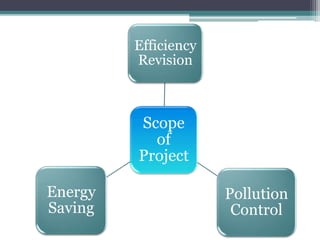
Scope
of
Project
Efficiency
Revision
Pollution
Control
Energy
Saving
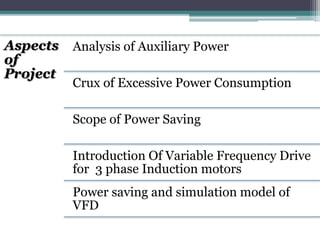
Aspects
of
Project
Analysis of Auxiliary Power
Crux of Excessive Power Consumption
Scope of Power Saving
Introduction Of Variable Frequency Drive
for 3 phase Induction motors
Power saving and simulation model of
VFD
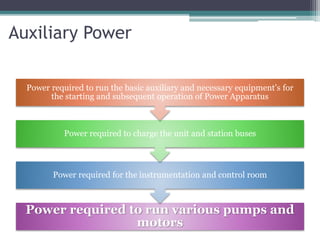
Power required to run various pumps and
motors
Power required for the instrumentation and control room
Power required to charge the unit and station buses
Power required to run the basic auxiliary and necessary equipment’s for
the starting and subsequent operation of Power Apparatus
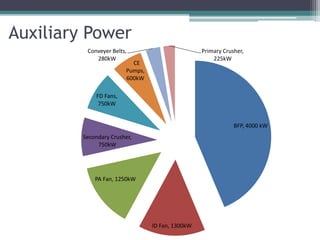
Auxiliary Power
Auxiliary Power
BFP, 4000 kW
ID Fan, 1300kW
PA Fan, 1250kW
Secondary Crusher,
750kW
FD Fans,
750kW
CE
Pumps,
600kW
Conveyer Belts,
280kW
Primary Crusher,
225kW
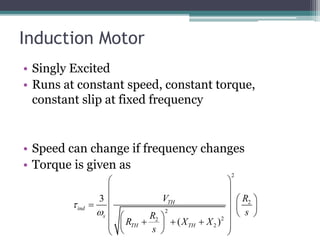
Induction Motor
• Singly Excited
• Runs at constant speed, constant torque,
constant slip at fixed frequency
• Speed can change if frequency changes
• Torque is given as
2
2
2
22
2
3
( )
TH
ind
s
TH TH
V R
sR
R X X
s


 
 
   
   
         
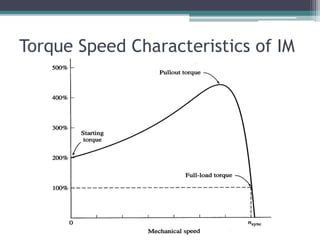
Torque Speed Characteristics of IM
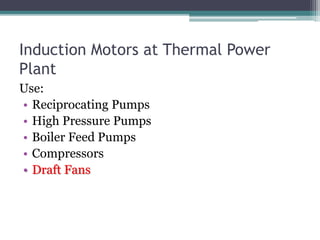
Induction Motors at Thermal Power
Plant
Use:
• Reciprocating Pumps
• High Pressure Pumps
• Boiler Feed Pumps
• Compressors
• Draft Fans
Need of Optimal Draft
• Draft is a negative pressure that has to be
maintained between stacks and boiler
• Dependency on Load Factor
• To improve the efficiency of Rankine Cycle
• To reduce the carbon foot print
• To improve the boiler efficiency
How Negative Draft is Maintained?
• By controlling the flow of flue gases.
1) By varying the speed of Motor
2) By varying the cross section through
which gases are being passed away
• Dampers are used to control the flow.
Dampers
• Provides the negative draft proportional to the
flue gases produced
• Installed at the outlet of pump
• Are operated as per the load demand
• Controlled by Servo Mechanism
• Control signal is calibrated with Electro
Governing System
Energy consumption and Dampers
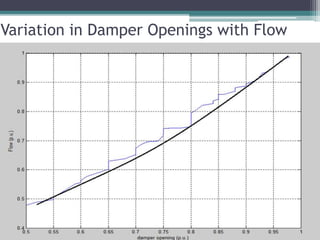
With varying position of dampers current drawn
by motor varies.
As load increases, flue gases increases
Variation in Damper Openings with Flow
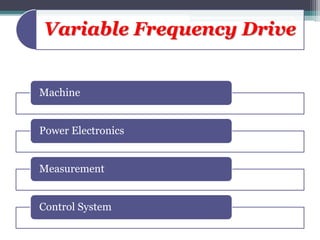
Variable Frequency Drive
Machine
Power Electronics
Measurement
Control System
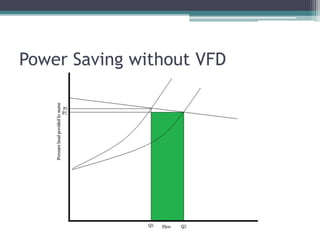
Power Saving without VFD
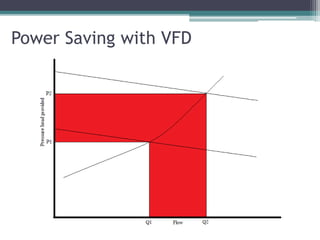
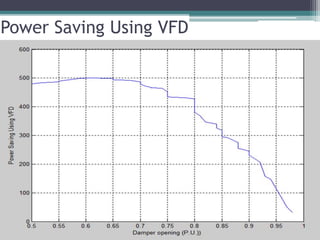
Power Saving with VFD
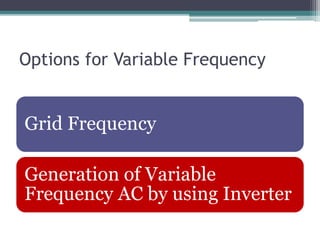
Options for Variable Frequency
Grid Frequency
Generation of Variable
Frequency AC by using Inverter
Schematic Approach of VFD
• Inverter is used to generate the 3 phase power
supply that is fed in the 3 phase IM
• Frequency of inverted 3 phase supply is
controlled by controlling the firing angle of
respective switching device
• Thus by varying the frequency speed of motor is
varied
Firing Angle Control
• Redirecting the Electro Governing Signal
• Calibration of externally excited source with the
load demand
• Measurement of flow and electrical analogous
signal corresponding to that flow
• Thermocouple interfaced with RTD’s in a
balanced bridged circuit
• Capacitive transducer that responds against the
flow and density
• PLC interfacing with the Load Curve Response
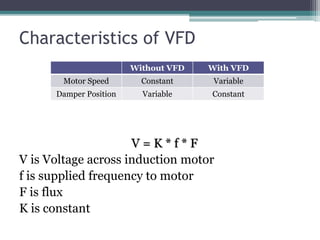
Characteristics of VFD
V = K * f * F
V is Voltage across induction motor
f is supplied frequency to motor
F is flux
K is constant
Without VFD With VFD
Motor Speed Constant Variable
Damper Position Variable Constant
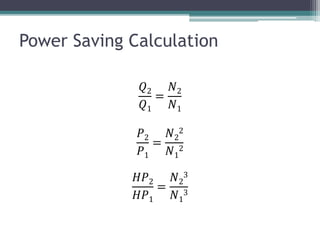
Power Saving Calculation
𝑄2
𝑄1
=
𝑁2
𝑁1
𝑃2
𝑃1
=
𝑁2
2
𝑁1
2
𝐻𝑃2
𝐻𝑃1
=
𝑁2
3
𝑁1
3
Program for Power Saving
Power Saving Using VFD
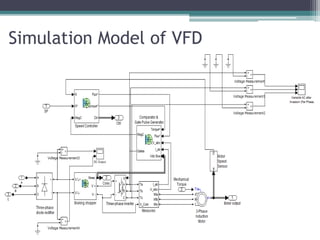
Simulation Model of VFD
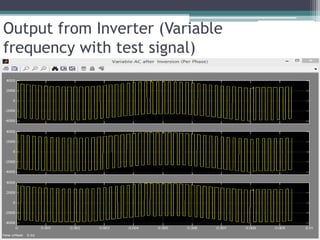
Output from Inverter (Variable
frequency with test signal)
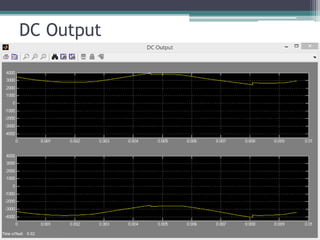
DC Output
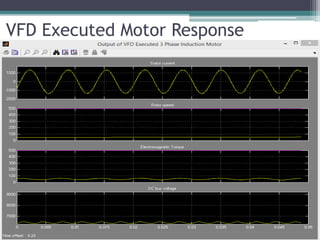
VFD Executed Motor Response
Thanks….

Speed Control of Induction Motor using Variable Frequency Drive

  • 1.
    Optimization of Auxiliary Powerat Thermal Power Plant using Variable Frequency Drive (VFD)
  • 2.
  • 3.
    Aspects of Project Analysis of AuxiliaryPower Crux of Excessive Power Consumption Scope of Power Saving Introduction Of Variable Frequency Drive for 3 phase Induction motors Power saving and simulation model of VFD
  • 4.
    Power required torun various pumps and motors Power required for the instrumentation and control room Power required to charge the unit and station buses Power required to run the basic auxiliary and necessary equipment’s for the starting and subsequent operation of Power Apparatus Auxiliary Power
  • 5.
    Auxiliary Power BFP, 4000kW ID Fan, 1300kW PA Fan, 1250kW Secondary Crusher, 750kW FD Fans, 750kW CE Pumps, 600kW Conveyer Belts, 280kW Primary Crusher, 225kW
  • 6.
    Induction Motor • SinglyExcited • Runs at constant speed, constant torque, constant slip at fixed frequency • Speed can change if frequency changes • Torque is given as 2 2 2 22 2 3 ( ) TH ind s TH TH V R sR R X X s                        
  • 7.
  • 8.
    Induction Motors atThermal Power Plant Use: • Reciprocating Pumps • High Pressure Pumps • Boiler Feed Pumps • Compressors • Draft Fans
  • 9.
    Need of OptimalDraft • Draft is a negative pressure that has to be maintained between stacks and boiler • Dependency on Load Factor • To improve the efficiency of Rankine Cycle • To reduce the carbon foot print • To improve the boiler efficiency
  • 10.
    How Negative Draftis Maintained? • By controlling the flow of flue gases. 1) By varying the speed of Motor 2) By varying the cross section through which gases are being passed away • Dampers are used to control the flow.
  • 11.
    Dampers • Provides thenegative draft proportional to the flue gases produced • Installed at the outlet of pump • Are operated as per the load demand • Controlled by Servo Mechanism • Control signal is calibrated with Electro Governing System
  • 12.
    Energy consumption andDampers With varying position of dampers current drawn by motor varies. As load increases, flue gases increases
  • 13.
    Variation in DamperOpenings with Flow
  • 14.
    Variable Frequency Drive Machine PowerElectronics Measurement Control System
  • 15.
  • 16.
  • 17.
    Options for VariableFrequency Grid Frequency Generation of Variable Frequency AC by using Inverter
  • 18.
    Schematic Approach ofVFD • Inverter is used to generate the 3 phase power supply that is fed in the 3 phase IM • Frequency of inverted 3 phase supply is controlled by controlling the firing angle of respective switching device • Thus by varying the frequency speed of motor is varied
  • 19.
    Firing Angle Control •Redirecting the Electro Governing Signal • Calibration of externally excited source with the load demand • Measurement of flow and electrical analogous signal corresponding to that flow • Thermocouple interfaced with RTD’s in a balanced bridged circuit • Capacitive transducer that responds against the flow and density • PLC interfacing with the Load Curve Response
  • 20.
    Characteristics of VFD V= K * f * F V is Voltage across induction motor f is supplied frequency to motor F is flux K is constant Without VFD With VFD Motor Speed Constant Variable Damper Position Variable Constant
  • 21.
  • 22.
  • 23.
  • 24.
  • 25.
    Output from Inverter(Variable frequency with test signal)
  • 26.
  • 27.
  • 28.

Editor's Notes

  • #5 Among all these kind of auxiliaries last one was of my interest, because it contains all the motors where substantial amount of energy or power can be saved by means of some techniques.
  • #6 Last one contains the 3 phase induction motors and they draw a significant amount of power at their MCR irrespective of the load demand.
  • #9 Mechanical shaft of all these pumps are driven by the rotor shaft of Induction Motor. But at every time these pumps are not required to run at the full load. Their effect has to be maintained. This can be done either by varying the speed or varying the flow or pressure that is being created by the running motor.
  • #11 Since speed of motor is constant, there by providing the constant torque and thrust to flue gases. Thus the only option left and that is the variation in cross section.
  • #14 As flow increase, pressure at one side of the fan increases but to maintain a negative draft, pressure at other side has to be increased. This is possible if flow is increased and this is achieved by setting the damper position at highly opened.