synchronous motor
drive
 Wound field motor
(a)cylindrical rotor wound field motor
(b) salient pole rotor wound field motor
 Permanent magnet motor
 Synchronous reluctance motor
 Hysteresis motor
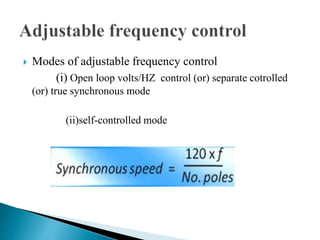
 Modes of adjustable frequency control
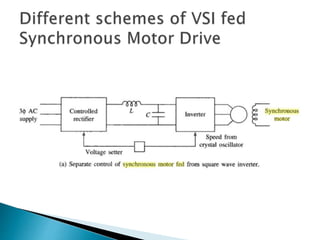
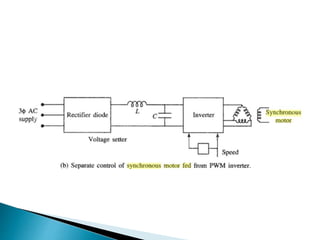
(i) Open loop volts/HZ control (or) separate cotrolled
(or) true synchronous mode
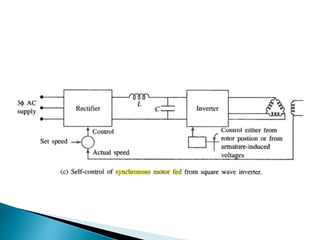
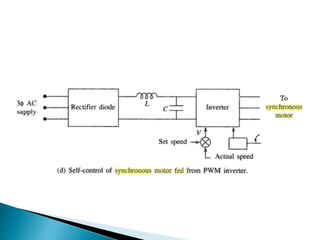
(ii)self-controlled mode
 Fiber spinning
 Textile and paper mill
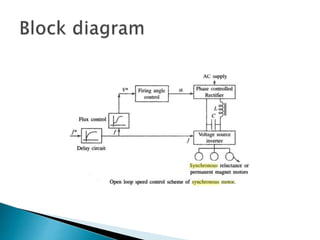
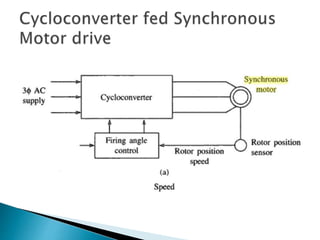
 Supply Frequency to the synchronous motor is
controlled from the inverter which receives its firing
pulses from a frequency controlled oscillator.
 The machine will exhibits conventional behavior.
 Up to base speed the motor operates at constant
torque and above base speed are obtained by
clamping the voltage at rated voltage. Frequency can
be increased and the motor operates in flux
weakening region
 Control can modify the angle between the flux
phasors
 Because of self-control, machine does not show any
stability or hunting problem of traditional
synchronous machine
 The transient response is fast – similar to dc machine
 The rotor inertia is smaller than dc machine with high
energy magnet
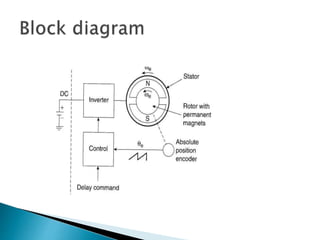
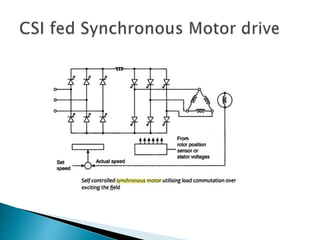
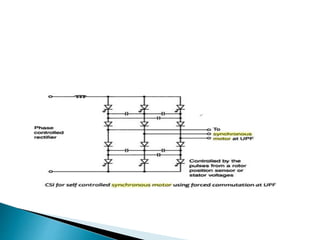
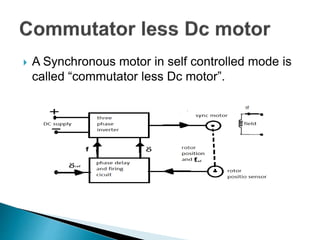
 Commutation of the converter feeding the motor is controlled
through the rotor position information from a shaft encoder.
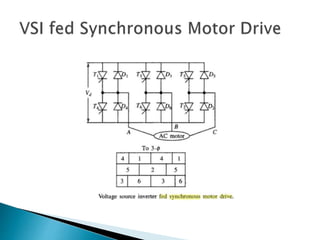
 Under over excitation the motor voltages can be employed to
commutate the thyristors at the inverter. Now the inverter
becomes simple. But at low speeds commutation assistance is
required.
 Rotor position is sensed and the firing signals to the devices
are synchronized to the motor position.
 For every 600 rotation of the rotor a new device in the
sequence is fired
 A Synchronous motor in self controlled mode is
called “commutator less Dc motor”.

Synchronous motor drive

  • 1.
  • 2.
     Wound fieldmotor (a)cylindrical rotor wound field motor (b) salient pole rotor wound field motor  Permanent magnet motor  Synchronous reluctance motor  Hysteresis motor
  • 3.
     Modes ofadjustable frequency control (i) Open loop volts/HZ control (or) separate cotrolled (or) true synchronous mode (ii)self-controlled mode
  • 6.
     Fiber spinning Textile and paper mill
  • 7.
     Supply Frequencyto the synchronous motor is controlled from the inverter which receives its firing pulses from a frequency controlled oscillator.  The machine will exhibits conventional behavior.  Up to base speed the motor operates at constant torque and above base speed are obtained by clamping the voltage at rated voltage. Frequency can be increased and the motor operates in flux weakening region
  • 8.
     Control canmodify the angle between the flux phasors  Because of self-control, machine does not show any stability or hunting problem of traditional synchronous machine  The transient response is fast – similar to dc machine  The rotor inertia is smaller than dc machine with high energy magnet
  • 10.
     Commutation ofthe converter feeding the motor is controlled through the rotor position information from a shaft encoder.  Under over excitation the motor voltages can be employed to commutate the thyristors at the inverter. Now the inverter becomes simple. But at low speeds commutation assistance is required.  Rotor position is sensed and the firing signals to the devices are synchronized to the motor position.  For every 600 rotation of the rotor a new device in the sequence is fired
  • 21.
     A Synchronousmotor in self controlled mode is called “commutator less Dc motor”.