Study of VFD Installations
Basics Construction of VFD
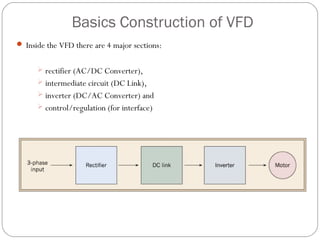
 Inside the VFD there are 4 major sections:


       rectifier (AC/DC Converter),
       intermediate circuit (DC Link),
       inverter (DC/AC Converter) and
       control/regulation (for interface)
Working of VFD
 The operation of the drive is as follows :
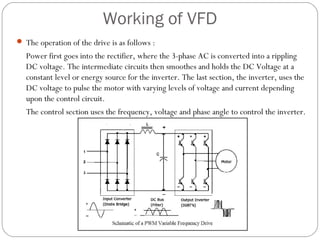
   Power first goes into the rectifier, where the 3-phase AC is converted into a rippling
   DC voltage. The intermediate circuits then smoothes and holds the DC Voltage at a
   constant level or energy source for the inverter. The last section, the inverter, uses the
   DC voltage to pulse the motor with varying levels of voltage and current depending
   upon the control circuit.
   The control section uses the frequency, voltage and phase angle to control the inverter.
Function of VFD
VFD is a system for controlling the rotational speed of a motor by
 controlling the frequency of the electrical power supplied to the
 motor
Variable speed drives gradually ramp the motor up to operating
 speed to lessen mechanical and electrical stress, reducing
 maintenance and repair costs, and extending the life of the motor
 and the driven equipment
Variable-frequency motors on fans save energy by allowing the
 volume of air moved to match the system demand. By using VFDs
 the system can maintain a constant level or pressure without
 continuously cycling the pump or fan on and off. This allows for a
 better system control of a level or pressure, instead of cycling
 between a wide differential
How to analyze the necessity for VFD at a
                location

We check for the pump valves that are throttled
If the valve is 30-40 % throttle (closed), then it indicates that
 flow required is less
In such a case VFD can be installed, the valve can be opened
 fully and fluid’s speed and flow can be controlled
For example : Back water pump 2 at PM-1, was running at 1400
 rpm taking 22 kW before installation of VFD. But after VFD
 installation, it consumes 12 kW while operating at 1100 rpm.
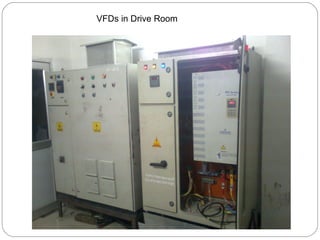
VFDs in Drive Room
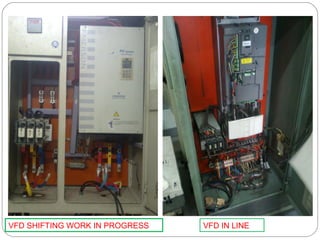
VFD SHIFTING WORK IN PROGRESS   VFD IN LINE
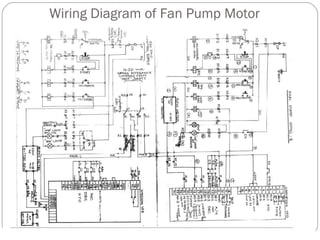
Wiring Diagram of Fan Pump Motor
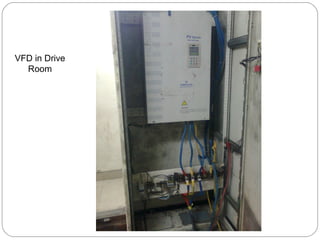
VFD in Drive
  Room
How VFD works at these locations

VFDs are installed at Fan Pump motors.
Fan pump motor responsible for providing stock to the
 Head Box
Head Box requires a control of either head or level
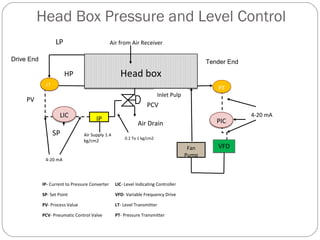
Control of a level or pressure in Head Box is done by VFD
A reference signal is fed to the VFD and using a
 comparator, an error signal is generated based on the
 deviation of current value from the reference value. The
 controller in the VFD, then, increases/decreases the speed
 based on the signals generated
Head Box Pressure and Level Control
                  LP                            Air from Air Receiver

Drive End                                                                                     Tender End
                       HP                           Head box
             LT
                                                                                                 PT
                                                                          Inlet Pulp
     PV
                                                                  PCV
                    LIC                                                                                    4-20 mA
                                      IP                                                         PIC
                                                             Air Drain
                  SP            Air Supply 1.4
                                                       0.2 To 1 kg/cm2
                                kg/cm2
                                                                                        Fan      VFD
                                                                                       Pump
             4-20 mA


            IP- Current to Pressure Converter     LIC- Level Indicating Controller

            SP- Set Point                         VFD- Variable Frequency Drive

            PV- Process Value                     LT- Level Transmitter

            PCV- Pneumatic Control Valve          PT- Pressure Transmitter
Major Considerations while installing a
                VFD
        Motor Specifications
        VFD Specifications
        VFD input/output current
        Cable Size
        Starting parameters
           Motor name plate
           Reference speed
           Overload current setting
           Operating option (keypad/remote)
           V/f ratio control
Conclusive advantages of using a
             VFD
      Energy Savings
      Better Process Control
      Reduced Maintenance
      Higher System Efficiency
      Remote Mounting
Thank You

variable frequency drive (VFD) installation

  • 1.
    Study of VFDInstallations
  • 2.
    Basics Construction ofVFD  Inside the VFD there are 4 major sections:  rectifier (AC/DC Converter),  intermediate circuit (DC Link),  inverter (DC/AC Converter) and  control/regulation (for interface)
  • 3.
    Working of VFD The operation of the drive is as follows : Power first goes into the rectifier, where the 3-phase AC is converted into a rippling DC voltage. The intermediate circuits then smoothes and holds the DC Voltage at a constant level or energy source for the inverter. The last section, the inverter, uses the DC voltage to pulse the motor with varying levels of voltage and current depending upon the control circuit. The control section uses the frequency, voltage and phase angle to control the inverter.
  • 4.
    Function of VFD VFDis a system for controlling the rotational speed of a motor by controlling the frequency of the electrical power supplied to the motor Variable speed drives gradually ramp the motor up to operating speed to lessen mechanical and electrical stress, reducing maintenance and repair costs, and extending the life of the motor and the driven equipment Variable-frequency motors on fans save energy by allowing the volume of air moved to match the system demand. By using VFDs the system can maintain a constant level or pressure without continuously cycling the pump or fan on and off. This allows for a better system control of a level or pressure, instead of cycling between a wide differential
  • 5.
    How to analyzethe necessity for VFD at a location We check for the pump valves that are throttled If the valve is 30-40 % throttle (closed), then it indicates that flow required is less In such a case VFD can be installed, the valve can be opened fully and fluid’s speed and flow can be controlled For example : Back water pump 2 at PM-1, was running at 1400 rpm taking 22 kW before installation of VFD. But after VFD installation, it consumes 12 kW while operating at 1100 rpm.
  • 6.
  • 7.
    VFD SHIFTING WORKIN PROGRESS VFD IN LINE
  • 8.
    Wiring Diagram ofFan Pump Motor
  • 9.
  • 10.
    How VFD worksat these locations VFDs are installed at Fan Pump motors. Fan pump motor responsible for providing stock to the Head Box Head Box requires a control of either head or level Control of a level or pressure in Head Box is done by VFD A reference signal is fed to the VFD and using a comparator, an error signal is generated based on the deviation of current value from the reference value. The controller in the VFD, then, increases/decreases the speed based on the signals generated
  • 11.
    Head Box Pressureand Level Control LP Air from Air Receiver Drive End Tender End HP Head box LT PT Inlet Pulp PV PCV LIC 4-20 mA IP PIC Air Drain SP Air Supply 1.4 0.2 To 1 kg/cm2 kg/cm2 Fan VFD Pump 4-20 mA IP- Current to Pressure Converter LIC- Level Indicating Controller SP- Set Point VFD- Variable Frequency Drive PV- Process Value LT- Level Transmitter PCV- Pneumatic Control Valve PT- Pressure Transmitter
  • 12.
    Major Considerations whileinstalling a VFD Motor Specifications VFD Specifications VFD input/output current Cable Size Starting parameters  Motor name plate  Reference speed  Overload current setting  Operating option (keypad/remote)  V/f ratio control
  • 13.
    Conclusive advantages ofusing a VFD Energy Savings Better Process Control Reduced Maintenance Higher System Efficiency Remote Mounting
  • 14.