UNDER THE GUIDANCE OF :
MR D.MOHAN ROA (ASST.PROF)
TEAM DETAILS
1 V.DHARMATEJAREDDY(11-245)
2 T.BHARATH KUMAR(10-217)
3 K .SINDHU REDDY(11-11-221)
4 B.SUSHMA (12-203)
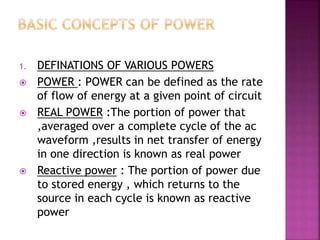
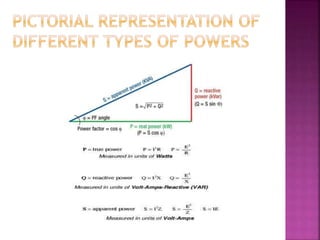
1. DEFINATIONS OF VARIOUS POWERS
 POWER : POWER can be defined as the rate
of flow of energy at a given point of circuit
 REAL POWER :The portion of power that
,averaged over a complete cycle of the ac
waveform ,results in net transfer of energy
in one direction is known as real power
 Reactive power : The portion of power due
to stored energy , which returns to the
source in each cycle is known as reactive
power
 Voltage control in an electrical power system
is very important for proper operation for
electrical power equipment to prevent
damage
 Decreasing reactive power causing voltage to
fall while increasing it causing voltage to rise
 When reactive power supply lower voltage
,as voltage drops current must increase to
maintain power supplied , causing system to
consume more reactive power which causes
cascading failures
 If the voltage drops too low ,some generators
will disconnect automatically to protect
themselves ,these will cause additional
elements of trip , leading further reduction
In voltage and loss of the load
 Reactive power is essential to move active
power through the transmission and
distribution system to the consumer
 Three reasons :
 1.It must maintain adequate voltages
throughout the transmission and distribution
system for both current and contingency
conditions
 It seeks to maintain congestion of real power
flows
 It seeks to minimize real power losses
 Voltages are controlled by providing
sufficient reactive power control margin to
supply needs through
 1.shunt capacitor and reactor compensations
 2.dynamic compensation
 3. proper voltage schedule of generation
 Reactive power does not travel very far
 Usually necessary to produce it close to the
location where it is needed
 A supplier/source close to the location of the
need is In a much better position to provide
reactive power versus one that is located far
from the location of the need
 Reactive power supplies are closely tied to
the availability to deliver real or active
power
 1.Generation
 2.synchronous condensors
 3. capacitors & inductors
 4.static var compensators ( svcs )
 5.distributed generation
 6.transmission side
 Power flow control
 Increase of transmission capability
 Voltage control
 Reactive power compensation
 Stability improvement
 Power conditioning
 Flicker mitigation
 Interconnection of renewable and distributed
generation and storages
 Static VAR compensator
 Static compensator(STATCOM)
 Series compensation
 Thyristor controlled series CAPACITORS
 SSSC
 1.STATIC VS DYNAMIC VOLTAGE SUPPORT
 2.REACTIVE RESERVES DURING VARYING
OPERATING CONDITIONS
 3.VOLTAGE COORDINATION
 PLANT VOLTAGE SCHEDULE
 TEANSFORMER TAP SETTINGS
 REACTIVE DEVICE SETTINGS
 LOAD SHEDDING SCHEMES
 VOLTAGE AND REACTIVE POWER CONTROL
 Voltage regulator
 VAR control
 Volt and VAR control type 1 –stand alone
controllers
 Smart disrtibution voltage control
 Volt and VAR control type 2 –integrated volt
and VAR control(IVVC)
 VOLT and VAR CONTROL TYPE 3- INTEGRATED
VVO
 SYNCHRONOUS CONDENSER
I. ACCURACY---GOOD
II. CONTROL FLEXIBILITY---GOOD
III. CONTROL---CONTINOUS
IV. RESPONSE TIME—SLOW
V. HARMONICS----VERY GOOD
VI. LOSSES—MODERATE
VII. COST---HIGH
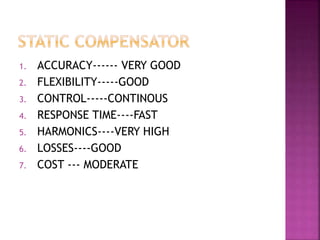
1. ACCURACY------ VERY GOOD
2. FLEXIBILITY-----GOOD
3. CONTROL-----CONTINOUS
4. RESPONSE TIME----FAST
5. HARMONICS----VERY HIGH
6. LOSSES----GOOD
7. COST --- MODERATE
 ACCURACY--- EXCELLENT
 FLEXIBILITY----EXCELLENT
 RESPONSE TIME---VERY FAST
 HARMONICS-------GOOD
 LOSSES-----VERY GOOD
 COST-----LOW

Reactive power management

  • 1.
    UNDER THE GUIDANCEOF : MR D.MOHAN ROA (ASST.PROF) TEAM DETAILS 1 V.DHARMATEJAREDDY(11-245) 2 T.BHARATH KUMAR(10-217) 3 K .SINDHU REDDY(11-11-221) 4 B.SUSHMA (12-203)
  • 2.
    1. DEFINATIONS OFVARIOUS POWERS  POWER : POWER can be defined as the rate of flow of energy at a given point of circuit  REAL POWER :The portion of power that ,averaged over a complete cycle of the ac waveform ,results in net transfer of energy in one direction is known as real power  Reactive power : The portion of power due to stored energy , which returns to the source in each cycle is known as reactive power
  • 4.
     Voltage controlin an electrical power system is very important for proper operation for electrical power equipment to prevent damage  Decreasing reactive power causing voltage to fall while increasing it causing voltage to rise  When reactive power supply lower voltage ,as voltage drops current must increase to maintain power supplied , causing system to consume more reactive power which causes cascading failures
  • 5.
     If thevoltage drops too low ,some generators will disconnect automatically to protect themselves ,these will cause additional elements of trip , leading further reduction In voltage and loss of the load  Reactive power is essential to move active power through the transmission and distribution system to the consumer
  • 6.
     Three reasons:  1.It must maintain adequate voltages throughout the transmission and distribution system for both current and contingency conditions  It seeks to maintain congestion of real power flows  It seeks to minimize real power losses
  • 7.
     Voltages arecontrolled by providing sufficient reactive power control margin to supply needs through  1.shunt capacitor and reactor compensations  2.dynamic compensation  3. proper voltage schedule of generation
  • 8.
     Reactive powerdoes not travel very far  Usually necessary to produce it close to the location where it is needed  A supplier/source close to the location of the need is In a much better position to provide reactive power versus one that is located far from the location of the need  Reactive power supplies are closely tied to the availability to deliver real or active power
  • 9.
     1.Generation  2.synchronouscondensors  3. capacitors & inductors  4.static var compensators ( svcs )  5.distributed generation  6.transmission side
  • 10.
     Power flowcontrol  Increase of transmission capability  Voltage control  Reactive power compensation  Stability improvement  Power conditioning  Flicker mitigation  Interconnection of renewable and distributed generation and storages
  • 11.
     Static VARcompensator  Static compensator(STATCOM)  Series compensation  Thyristor controlled series CAPACITORS  SSSC
  • 12.
     1.STATIC VSDYNAMIC VOLTAGE SUPPORT  2.REACTIVE RESERVES DURING VARYING OPERATING CONDITIONS  3.VOLTAGE COORDINATION  PLANT VOLTAGE SCHEDULE  TEANSFORMER TAP SETTINGS  REACTIVE DEVICE SETTINGS  LOAD SHEDDING SCHEMES  VOLTAGE AND REACTIVE POWER CONTROL
  • 13.
     Voltage regulator VAR control  Volt and VAR control type 1 –stand alone controllers  Smart disrtibution voltage control  Volt and VAR control type 2 –integrated volt and VAR control(IVVC)  VOLT and VAR CONTROL TYPE 3- INTEGRATED VVO
  • 14.
     SYNCHRONOUS CONDENSER I.ACCURACY---GOOD II. CONTROL FLEXIBILITY---GOOD III. CONTROL---CONTINOUS IV. RESPONSE TIME—SLOW V. HARMONICS----VERY GOOD VI. LOSSES—MODERATE VII. COST---HIGH
  • 15.
    1. ACCURACY------ VERYGOOD 2. FLEXIBILITY-----GOOD 3. CONTROL-----CONTINOUS 4. RESPONSE TIME----FAST 5. HARMONICS----VERY HIGH 6. LOSSES----GOOD 7. COST --- MODERATE
  • 16.
     ACCURACY--- EXCELLENT FLEXIBILITY----EXCELLENT  RESPONSE TIME---VERY FAST  HARMONICS-------GOOD  LOSSES-----VERY GOOD  COST-----LOW