INDUCTION
MOTOR
AC motors can be divided into two main categories –
 (i) Synchronous motor:
A motor having a speed directly proportional to the frequenc
y of the alternating current power that operates it.
 (ii) Asynchronous motor. Asynchronous Motors, always runs
at a speed lower than synchronous speed. Synchronous speed
means the speed of the rotating magnetic field in the stator.
An asynchronous motor is popularly called as Induction
motor.
Induction motor
 There basically 2 types of induction motor depending upon
the type of input supply –
 (i) Single phase induction motor and
 (ii) Three phase induction motor
In single phase circuit, there will be only one phase, i.e the current will
flow through only one wire and there will be one return path called neutral
line to complete the circuit.
The three phase system can be used as three single phase line so it can
act as three single phase system.
The three phase generation and single phase generation is same in the
generator except the arrangement of coil in the generator to get 120°
phase difference.
Induction motor
Single phase induction motor is usually built in small size (up
to 3 H.P).
 For small power conversion single phase induction motors
are used. The induction motors perform a variety of
services in the home, office, business, factories, etc.
 In all the domestic appliances such as refrigerators, fans,
washing machines, hair dryers, mixer grinder, etc., single
phase induction motor are used.
Three phase induction motors are mainly used in the
industry for power conversion, i.e., electrical to mechanical
power conversion in bulk or large quantity.
Induction motor
It consists of two parts:
1. Stator- It is the stationary part of the motor.
2. Rotor - It is the rotating part of the motor.
An induction motor works on
transforming action.
The stator works as the primary while
the rotor works as the secondary.
It is also called asynchronous motor.
Construction of Stator
The stator is built up of high-grade alloy steel laminations to reduce eddy
current losses. It has three main parts, namely outer frame, the stator
core and a stator winding.
Outer frame
It is the outer body of the motor.
Its main function is to support
the stator core and to protect
the inner parts of the machine.
Construction of Stator
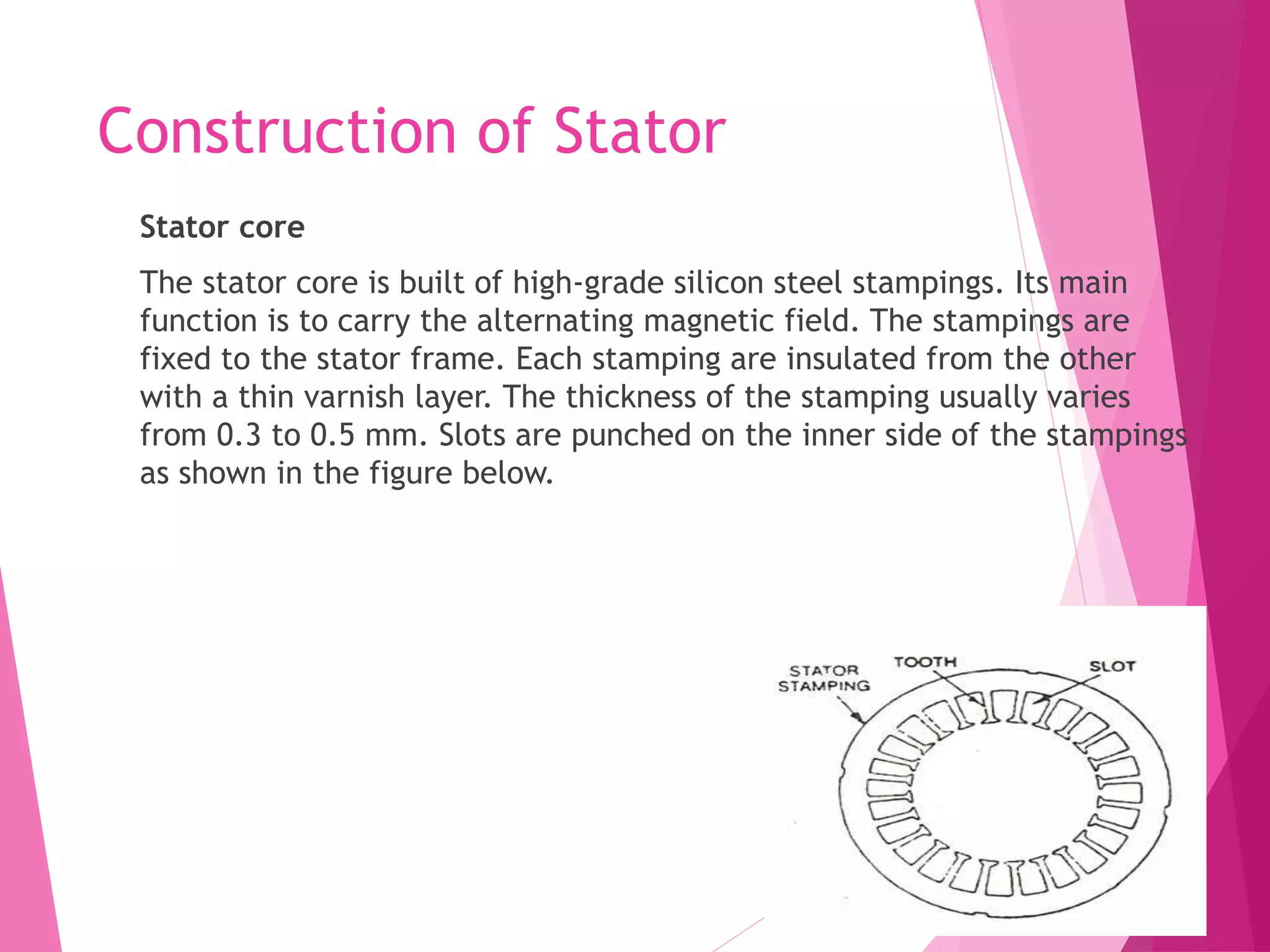
Stator core
The stator core is built of high-grade silicon steel stampings. Its main
function is to carry the alternating magnetic field. The stampings are
fixed to the stator frame. Each stamping are insulated from the other
with a thin varnish layer. The thickness of the stamping usually varies
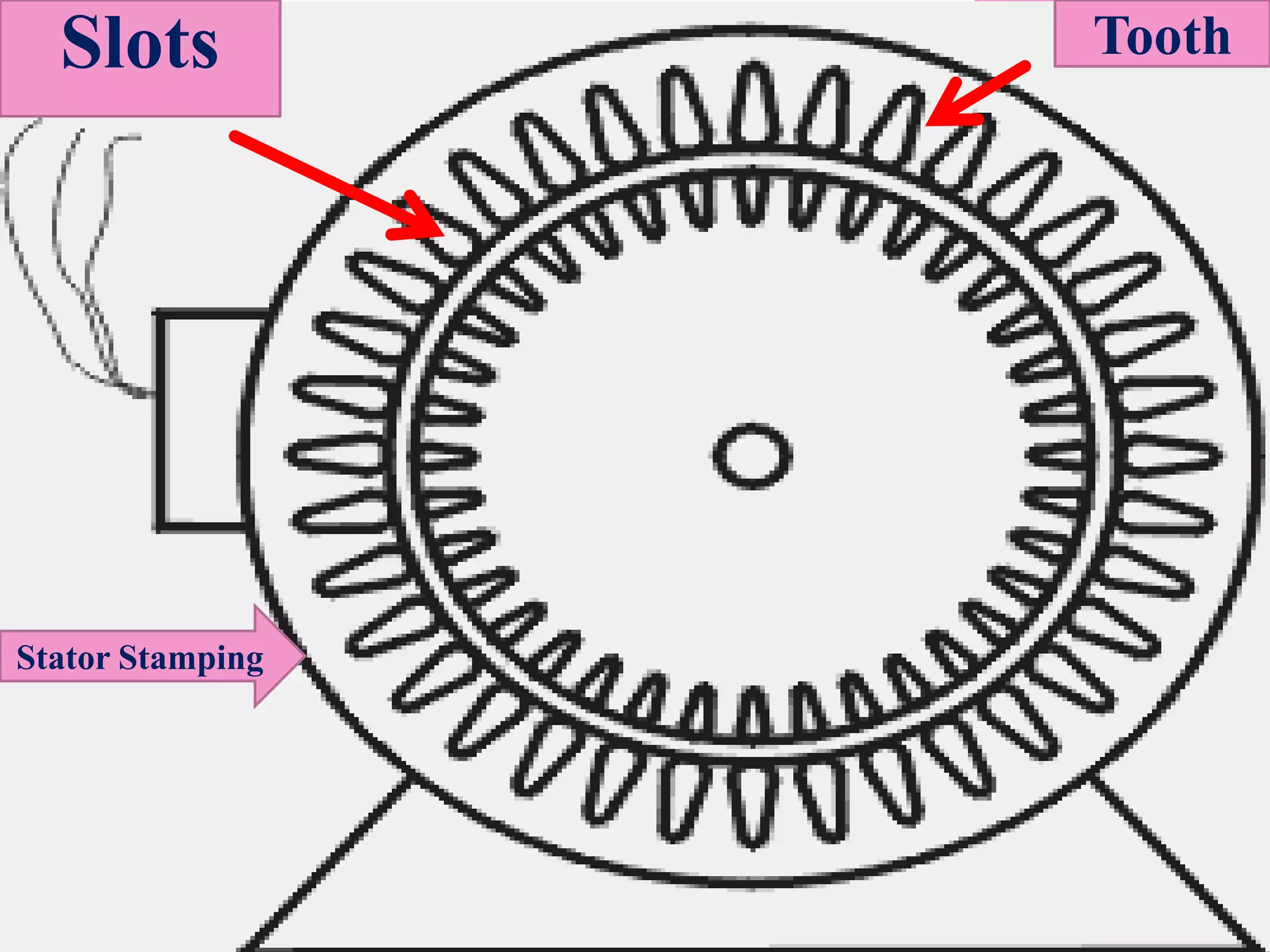
from 0.3 to 0.5 mm. Slots are punched on the inner side of the stampings
as shown in the figure below.
Construction of Stator
Stator windings
The core of the stator carries three phase windings which are usually
supplied from a three-phase supply system. The six terminals of the
windings (two of each phase) are connected in the terminal box of the
machine.
Stator Stamping
ToothSlots
CORE
WINDINGS
SLOTS
Stator has three main parts:
 Outer Frame – It is the outer body of the of the motor.
It protects the inner part of the machine.
 Stator Core – Built up of high grade silicon steel.
Carries the alternating magnetic field.
 Stator winding – Has a three phase winding.
There are two types of rotors which are
employed in 3 – phase induction motor.
 Squirrel Cage Rotor.
 Phase Wound/ Slip Ring Rotor.
 It consists of a laminated cylindrical core
having semi closed circular slots at the outer
periphery.
 Copper or aluminum bar conductors are placed
in these slots and short circuited at each end by
copper or aluminum rings called short
circuiting rings.
 The rotor winding is permanently short
circuited and it is not possible to add any
external resistance.
 The rotor slots are not parallel to the shaft but
skewed to –
Provide smoother torque for different positions
of rotor.
Reduce magnetic locking of stator and rotor.
Advantages of Squirrel Cage Rotor
The following advantages of the cage rotor are given
below.
 The cage rotor is cheaper, and the construction is
robust.
 The absence of the brushes reduces the risk of
sparking.
 Its Maintenance is less.
 The power factor is higher
 The efficiency of the cage rotor is higher.
The Phase wound rotor is also called as Slip Ring
Rotor.
It consists of a cylindrical core which is
laminated.
The outer periphery of the rotor has a semi-
closed slot which carries a 3 phase insulated
windings.
The rotor windings are connected in star.
Principle of Operation
In case of DC motor, we will give one supply to the stator
and another to the rotor through brush arrangement.
But in induction motor we give only one supply so it is really
interesting to know that how it works.
when we are giving the supply to the stator winding, flux will
generate in the coil due to flow of current in the coil.
Now the rotor winding is arranged in such a way that it becomes
short circuited in the rotor itself.
Principle of Operation
The flux from the stator will cut the coil in the rotor and since the
rotor coils are short circuited, according to Faraday's law of
electromagnetic induction, current will start flowing in the coil of the
rotor.
When the current will flow, another flux will get generated in the
rotor.
Now there will be two flux, one is stator flux and another is rotor flux
and the rotor flux will be lagging w.r.t to the stator flux.
Due to this, the rotor will feel a torque which will make the rotor to
rotate in the direction of rotating magnetic flux.
So the speed of the rotor will be depending upon the ac supply and
the speed can be controlled by varying the input supply. This is the
working principle of an induction motor of either type – single and
three phase.
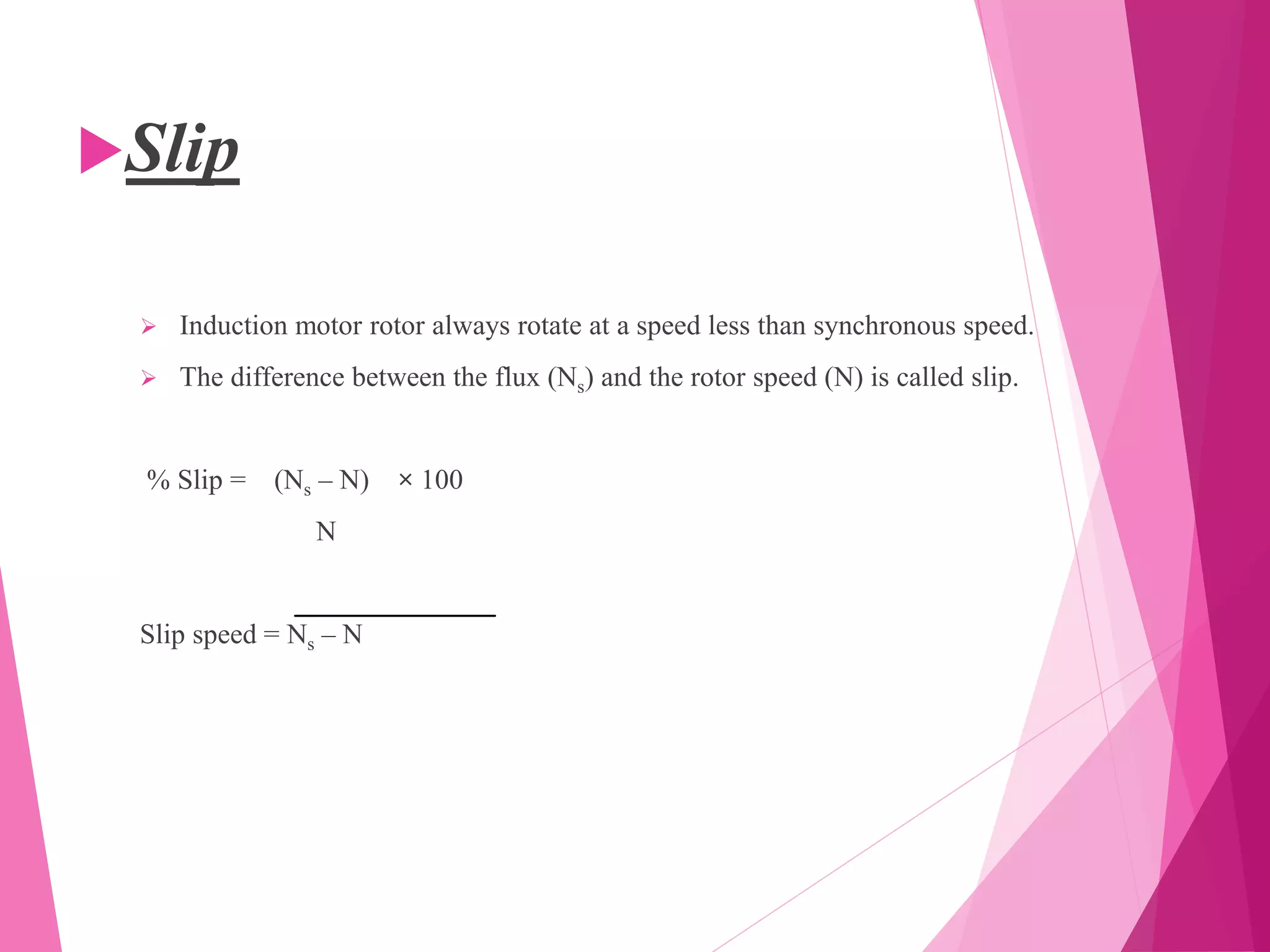
Slip
 Induction motor rotor always rotate at a speed less than synchronous speed.
 The difference between the flux (Ns) and the rotor speed (N) is called slip.
% Slip = (Ns – N) × 100
N
Slip speed = Ns – N
Induction motor
Induction motor

Induction motor

  • 1.
  • 2.
    AC motors canbe divided into two main categories –  (i) Synchronous motor: A motor having a speed directly proportional to the frequenc y of the alternating current power that operates it.  (ii) Asynchronous motor. Asynchronous Motors, always runs at a speed lower than synchronous speed. Synchronous speed means the speed of the rotating magnetic field in the stator. An asynchronous motor is popularly called as Induction motor.
  • 3.
    Induction motor  Therebasically 2 types of induction motor depending upon the type of input supply –  (i) Single phase induction motor and  (ii) Three phase induction motor In single phase circuit, there will be only one phase, i.e the current will flow through only one wire and there will be one return path called neutral line to complete the circuit. The three phase system can be used as three single phase line so it can act as three single phase system. The three phase generation and single phase generation is same in the generator except the arrangement of coil in the generator to get 120° phase difference.
  • 4.
    Induction motor Single phaseinduction motor is usually built in small size (up to 3 H.P).  For small power conversion single phase induction motors are used. The induction motors perform a variety of services in the home, office, business, factories, etc.  In all the domestic appliances such as refrigerators, fans, washing machines, hair dryers, mixer grinder, etc., single phase induction motor are used. Three phase induction motors are mainly used in the industry for power conversion, i.e., electrical to mechanical power conversion in bulk or large quantity.
  • 5.
    Induction motor It consistsof two parts: 1. Stator- It is the stationary part of the motor. 2. Rotor - It is the rotating part of the motor.
  • 6.
    An induction motorworks on transforming action. The stator works as the primary while the rotor works as the secondary. It is also called asynchronous motor.
  • 8.
    Construction of Stator Thestator is built up of high-grade alloy steel laminations to reduce eddy current losses. It has three main parts, namely outer frame, the stator core and a stator winding. Outer frame It is the outer body of the motor. Its main function is to support the stator core and to protect the inner parts of the machine.
  • 9.
    Construction of Stator Statorcore The stator core is built of high-grade silicon steel stampings. Its main function is to carry the alternating magnetic field. The stampings are fixed to the stator frame. Each stamping are insulated from the other with a thin varnish layer. The thickness of the stamping usually varies from 0.3 to 0.5 mm. Slots are punched on the inner side of the stampings as shown in the figure below.
  • 10.
    Construction of Stator Statorwindings The core of the stator carries three phase windings which are usually supplied from a three-phase supply system. The six terminals of the windings (two of each phase) are connected in the terminal box of the machine.
  • 11.
  • 12.
  • 14.
    Stator has threemain parts:  Outer Frame – It is the outer body of the of the motor. It protects the inner part of the machine.  Stator Core – Built up of high grade silicon steel. Carries the alternating magnetic field.  Stator winding – Has a three phase winding.
  • 16.
    There are twotypes of rotors which are employed in 3 – phase induction motor.  Squirrel Cage Rotor.  Phase Wound/ Slip Ring Rotor.
  • 19.
     It consistsof a laminated cylindrical core having semi closed circular slots at the outer periphery.  Copper or aluminum bar conductors are placed in these slots and short circuited at each end by copper or aluminum rings called short circuiting rings.  The rotor winding is permanently short circuited and it is not possible to add any external resistance.
  • 20.
     The rotorslots are not parallel to the shaft but skewed to – Provide smoother torque for different positions of rotor. Reduce magnetic locking of stator and rotor.
  • 21.
    Advantages of SquirrelCage Rotor The following advantages of the cage rotor are given below.  The cage rotor is cheaper, and the construction is robust.  The absence of the brushes reduces the risk of sparking.  Its Maintenance is less.  The power factor is higher  The efficiency of the cage rotor is higher.
  • 27.
    The Phase woundrotor is also called as Slip Ring Rotor. It consists of a cylindrical core which is laminated. The outer periphery of the rotor has a semi- closed slot which carries a 3 phase insulated windings. The rotor windings are connected in star.
  • 29.
    Principle of Operation Incase of DC motor, we will give one supply to the stator and another to the rotor through brush arrangement. But in induction motor we give only one supply so it is really interesting to know that how it works. when we are giving the supply to the stator winding, flux will generate in the coil due to flow of current in the coil. Now the rotor winding is arranged in such a way that it becomes short circuited in the rotor itself.
  • 30.
    Principle of Operation Theflux from the stator will cut the coil in the rotor and since the rotor coils are short circuited, according to Faraday's law of electromagnetic induction, current will start flowing in the coil of the rotor. When the current will flow, another flux will get generated in the rotor. Now there will be two flux, one is stator flux and another is rotor flux and the rotor flux will be lagging w.r.t to the stator flux. Due to this, the rotor will feel a torque which will make the rotor to rotate in the direction of rotating magnetic flux. So the speed of the rotor will be depending upon the ac supply and the speed can be controlled by varying the input supply. This is the working principle of an induction motor of either type – single and three phase.
  • 31.
    Slip  Induction motorrotor always rotate at a speed less than synchronous speed.  The difference between the flux (Ns) and the rotor speed (N) is called slip. % Slip = (Ns – N) × 100 N Slip speed = Ns – N