SIGNAL  TRANSDUCTION Marigold D.R. Majarucon-Ferrolino, M.D.
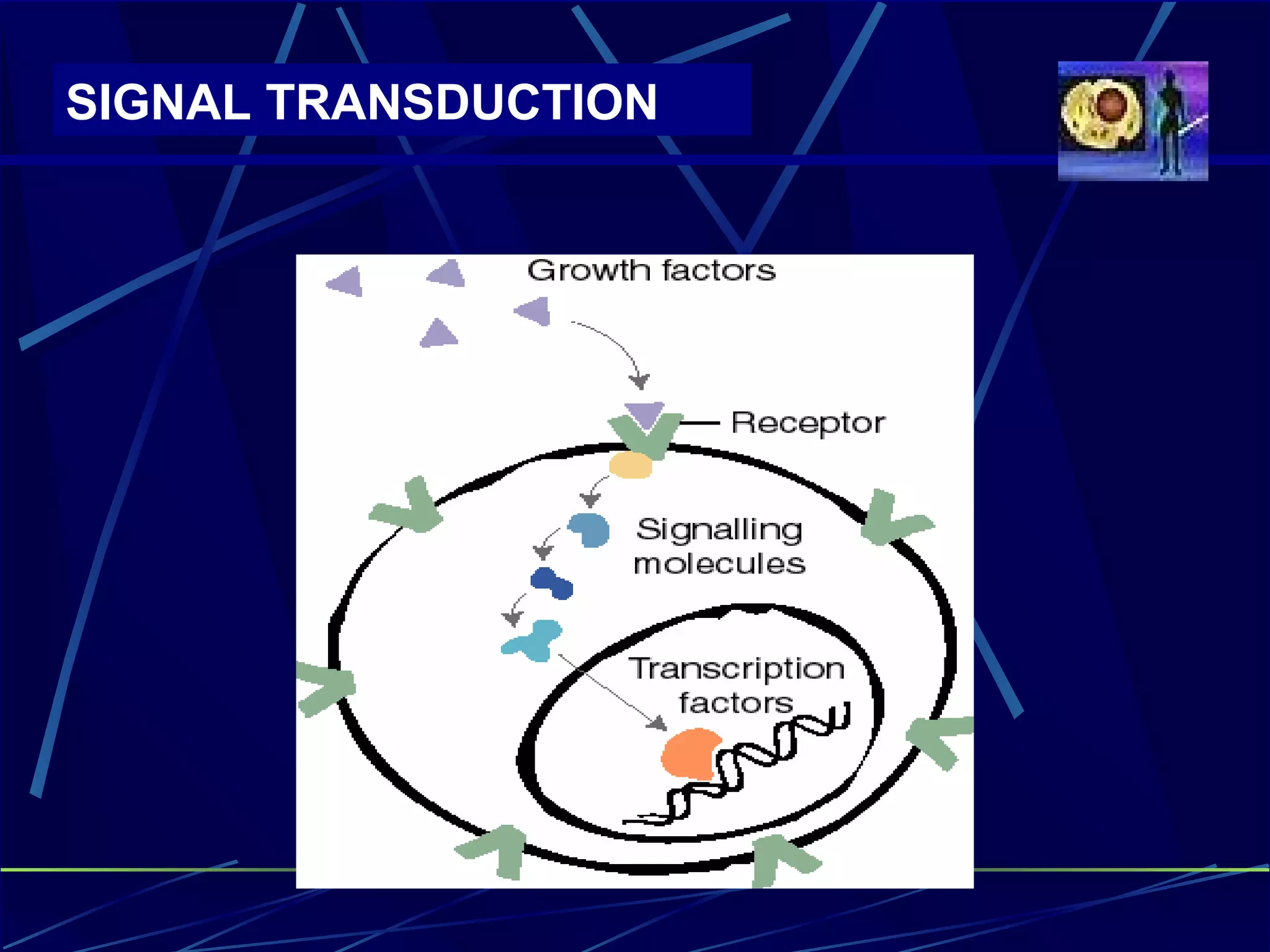
SIGNAL TRANSDUCTION The process of converting extracellular signals into cellular responses. extracellular signaling molecules  ( ligands ) - substances synthesized and released by signaling cells and produce a specific response only in target cells that have receptors for the signaling molecules.
SIGNAL TRANSDUCTION
SIGNAL TRANSDUCTION Receptor  – a specific protein  that specifically binds a signaling molecule to initiate a response in a target cell Cell responses : changes in gene expression cell morphology cell movements
SIGNAL TRANSDUCTION Communication by extracellular signals usually involves six steps: synthesis and 2) release of the signaling molecule by the signaling cell  3) transport of the signal to the target cell  4) detection of the signal by a specific receptor protein  5) a change in cellular metabolism, function, or development triggered by the receptor-signal complex ;and  6) removal of the signal, which often terminates the cellular response.
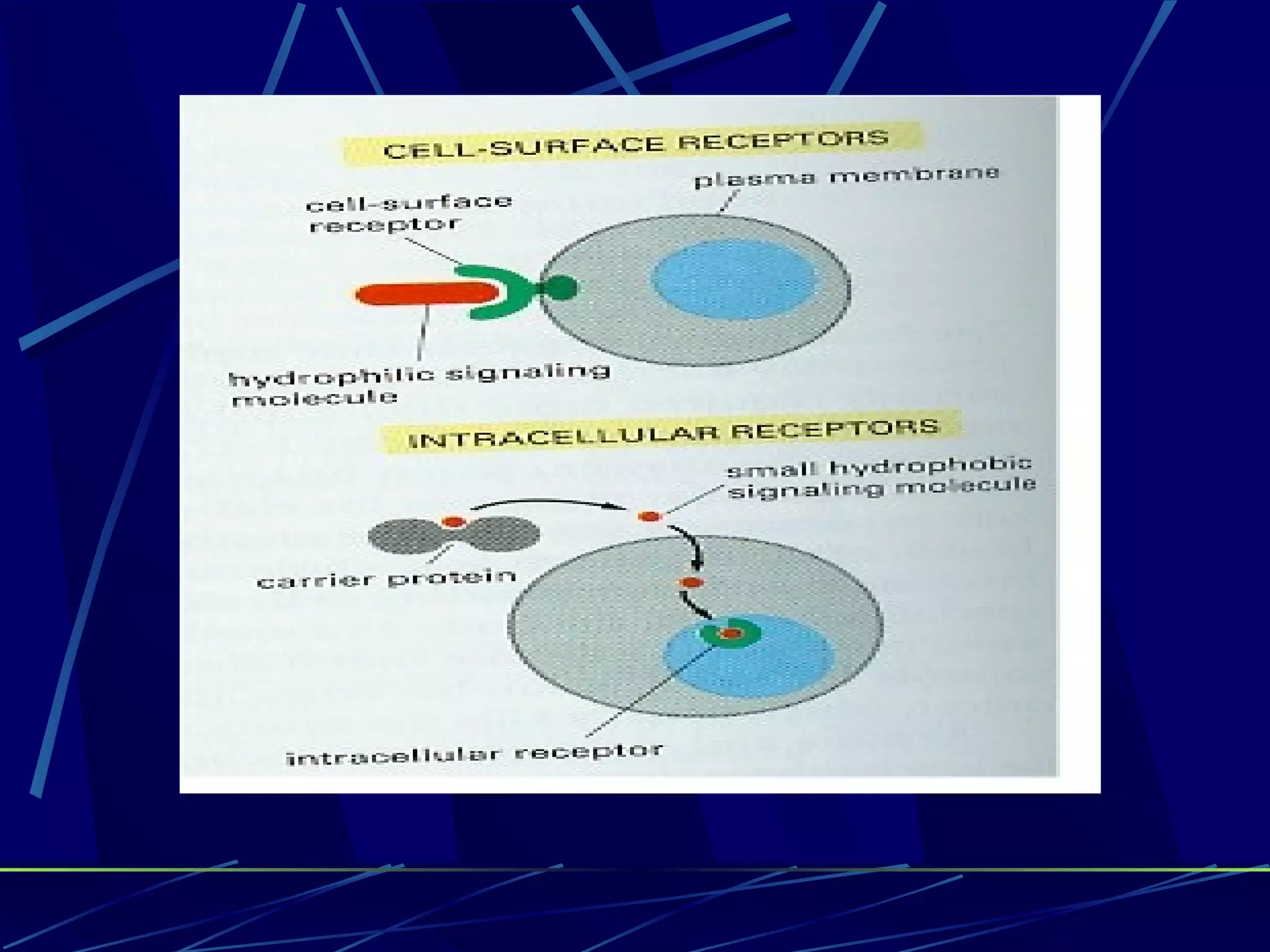
TWO GENERAL KINDS OF CELL RECEPTORS CELL SURFACE RECEPTORS LIGAND – hydrophilic signaling molecules INTRACELLULAR RECEPTORS LIGAND – hydrophobic signaling molecules
 
CHARACTERISTICS OF RECEPTOR PROTEINS LIGAND-BINDING SPECIFICITY -a ligand binds to a specific receptor EFFECTOR SPECIFICITY receptor-ligand complex mediates a specific cellular response
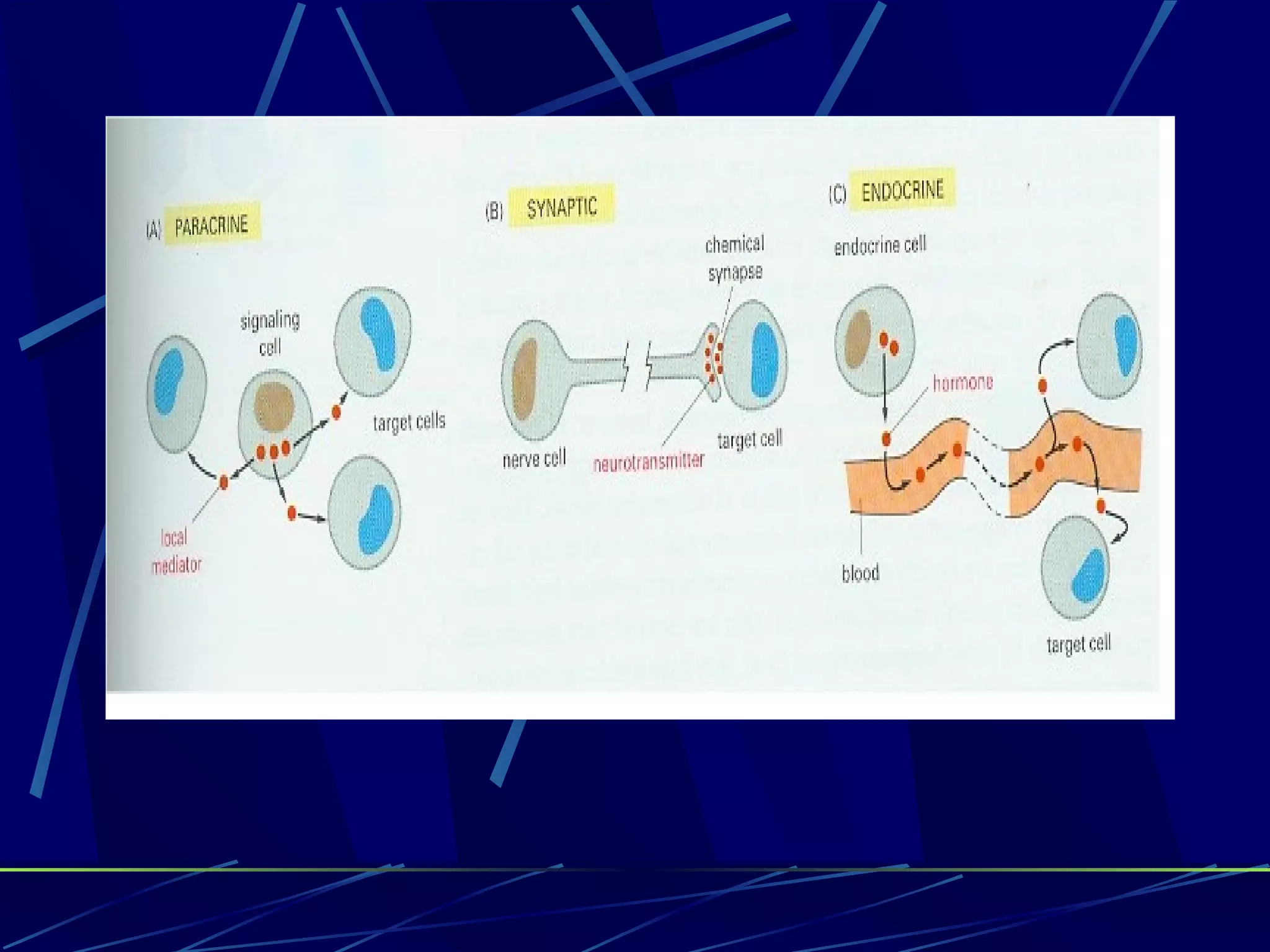
TYPES OF SIGNALING ENDOCRINE SIGNALING - signaling molecules  (hormones) act on target cells distant from their site of synthesis by cells of endocrine organs. PARACRINE SIGNALING - the signaling molecules (neurotransmitters) released by a cell only affect target cells in close proximity to it.  AUTOCRINE SIGNALING - cells respond to substances (growth factors) which they themselves release.
 
CLASSIFICATION OF HORMONES BASED ON SOLUBILITY AND RECEPTOR LOCATION SMALL LIPOPHILIC MOLECULES that diffuse across the plasma membrane and interact with intracellular receptors.  Examples: steroids, thyroxine and retinoic acid WATER-SOLUBLE HORMONES with cell-surface receptors Examples: Peptide hormones (insulin, growth factors, glucagons)
CLASSIFICATION OF HORMONES -SMALL CHARGED MOLECULES ( epinephrine, histamine) LIPOPHILIC HORMONES with cell surface receptors Examples: Prostaglandins  ( prostacyclins, thromboxanes, leukotrienes )
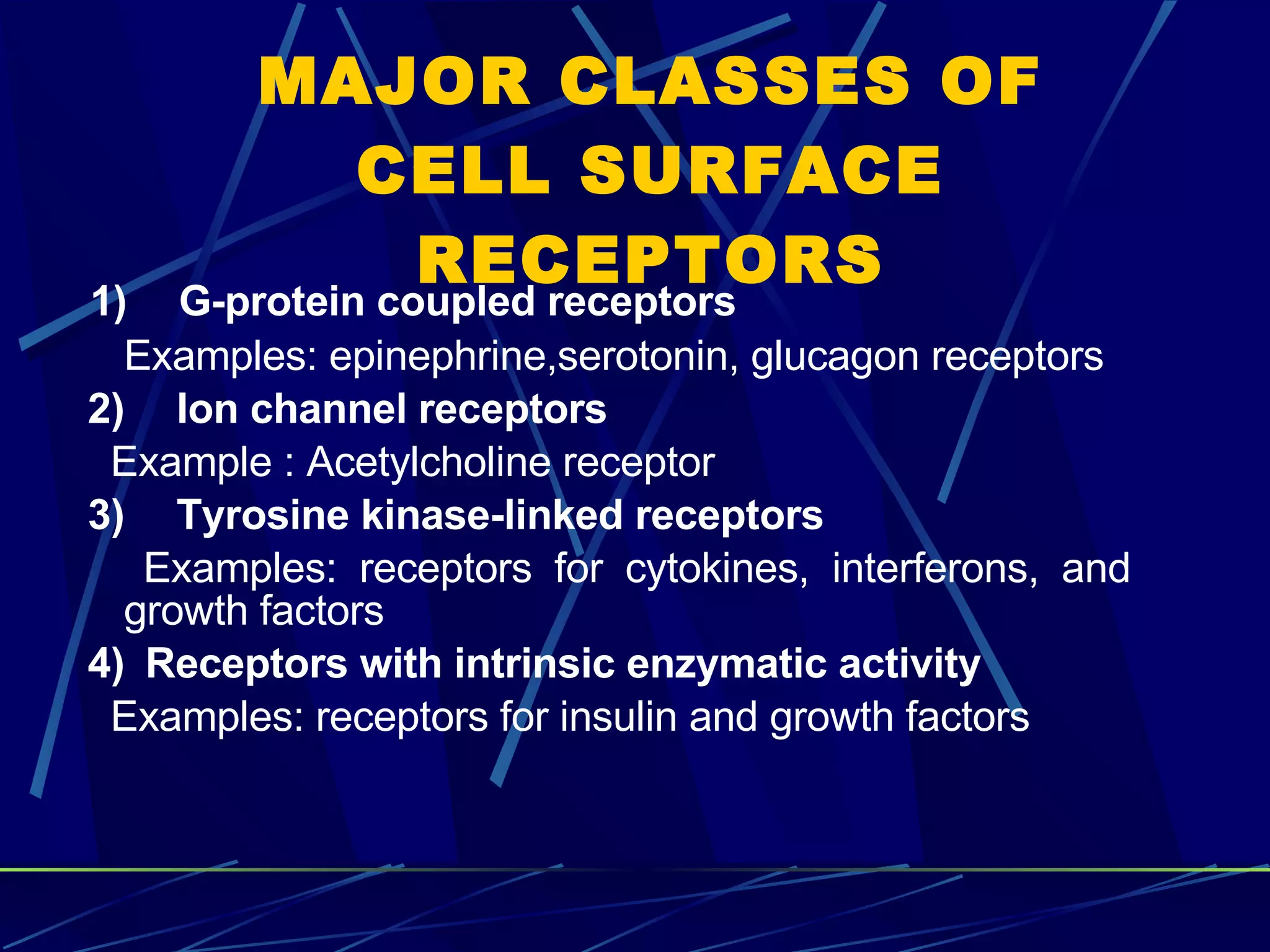
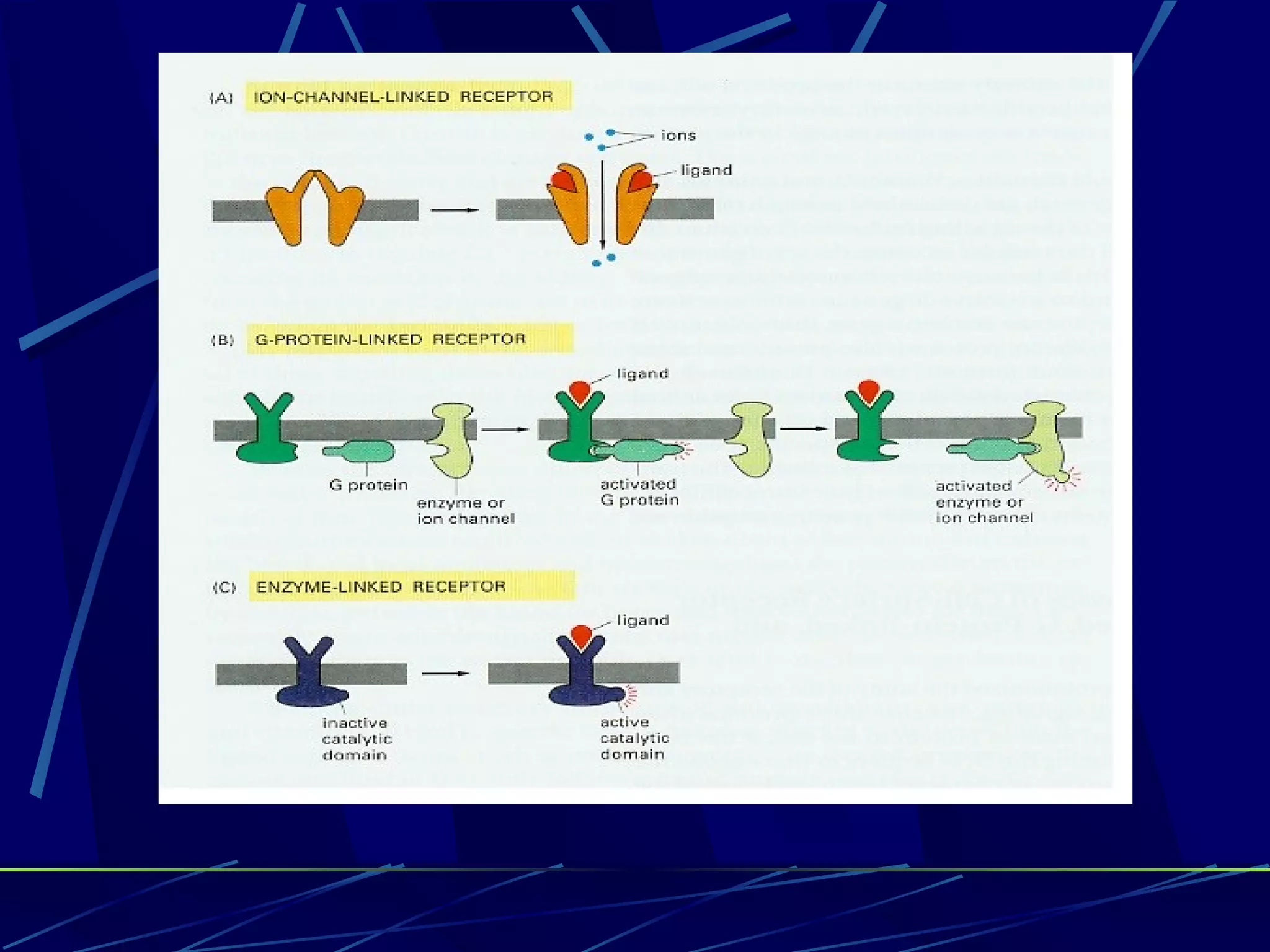
MAJOR CLASSES OF CELL SURFACE RECEPTORS 1)       G-protein coupled receptors Examples: epinephrine,serotonin, glucagon receptors 2)       Ion channel receptors Example : Acetylcholine receptor 3)       Tyrosine kinase-linked receptors Examples: receptors for cytokines, interferons, and growth factors 4)    Receptors with intrinsic enzymatic activity Examples: receptors for insulin and growth factors
 
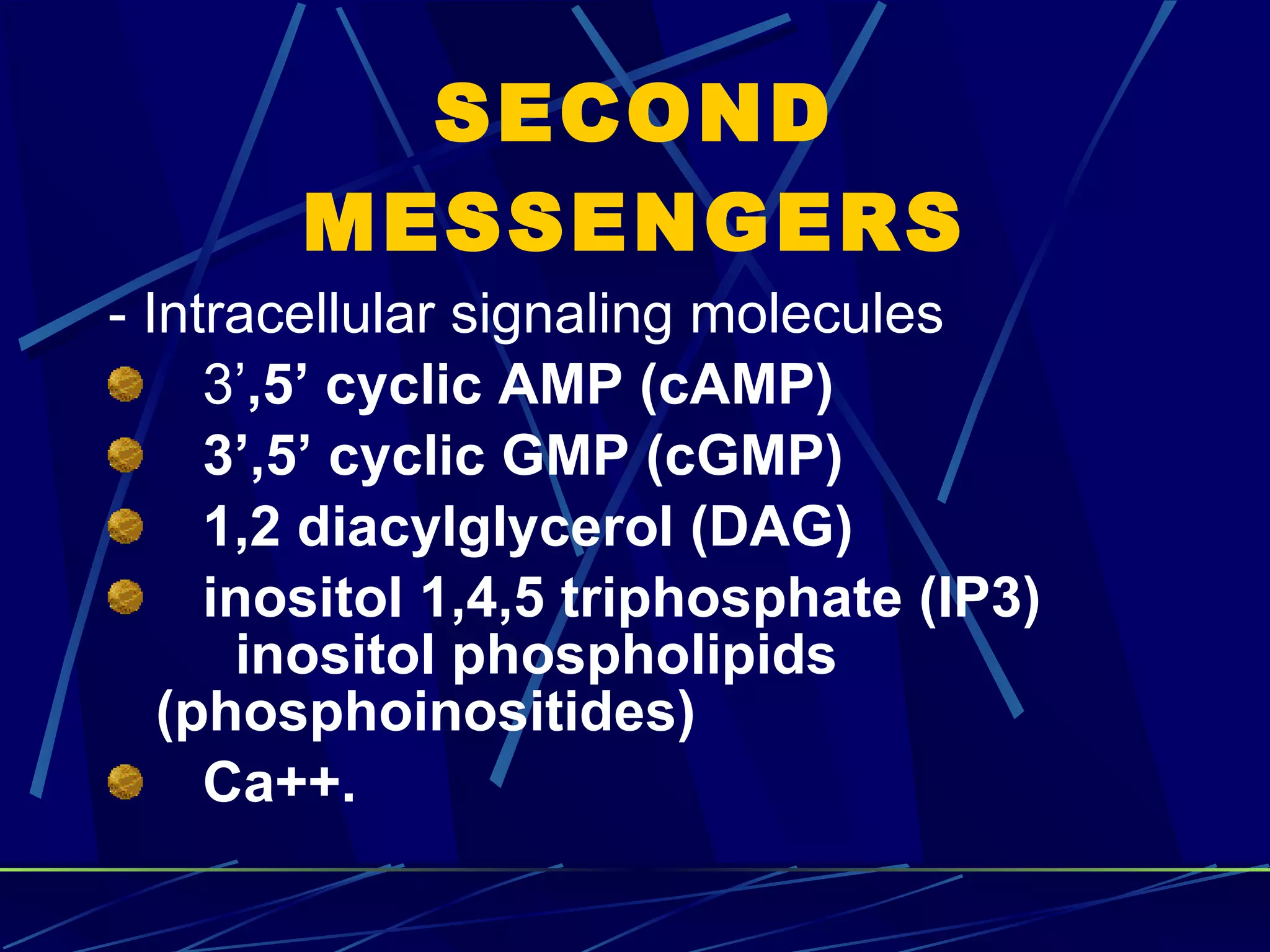
SECOND MESSENGERS - Intracellular signaling molecules  3’ ,5’ cyclic AMP (cAMP)  3’,5’ cyclic GMP (cGMP)  1,2 diacylglycerol (DAG)  inositol 1,4,5 triphosphate (IP3)  inositol phospholipids  (phosphoinositides) Ca++.
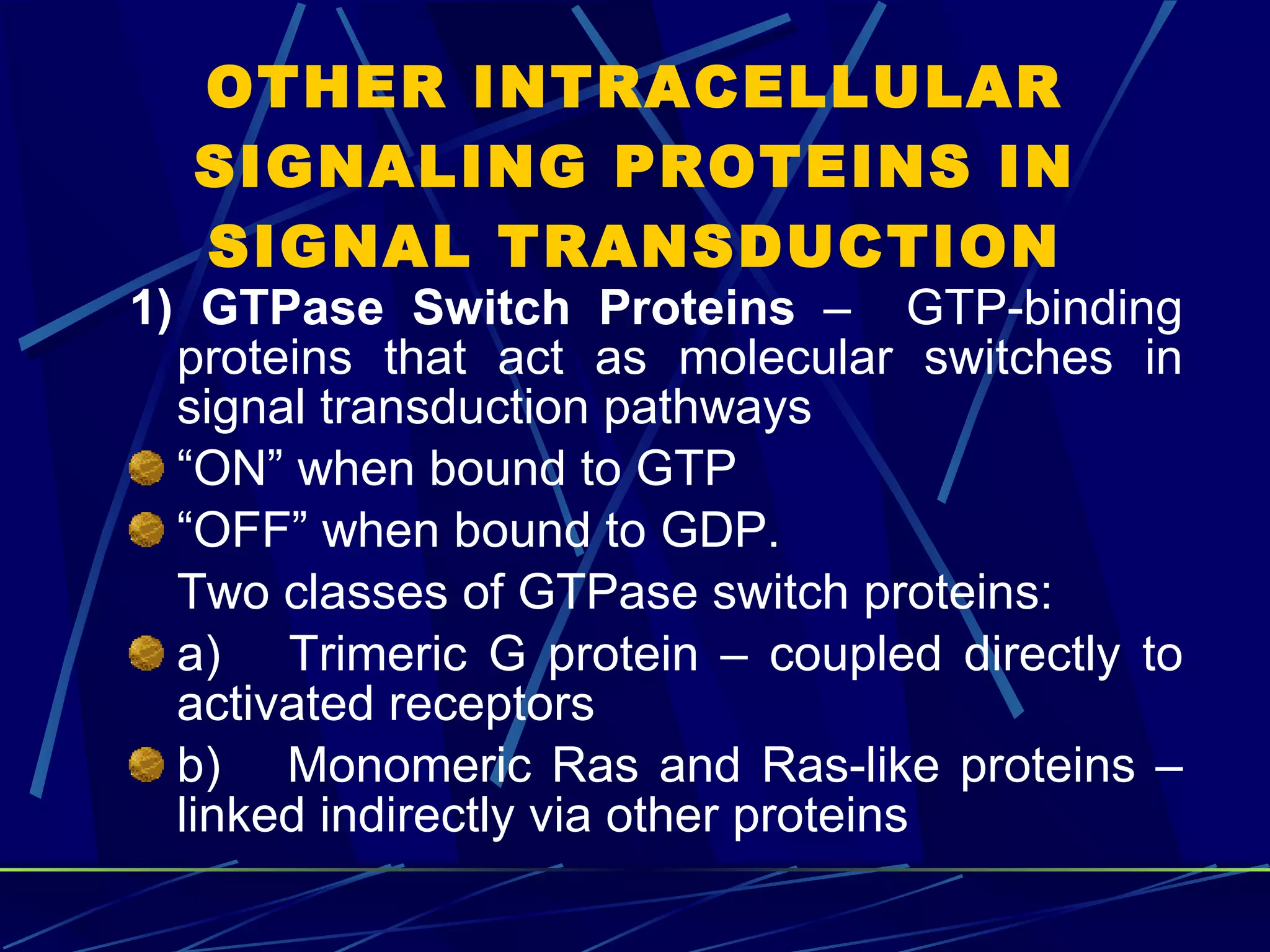
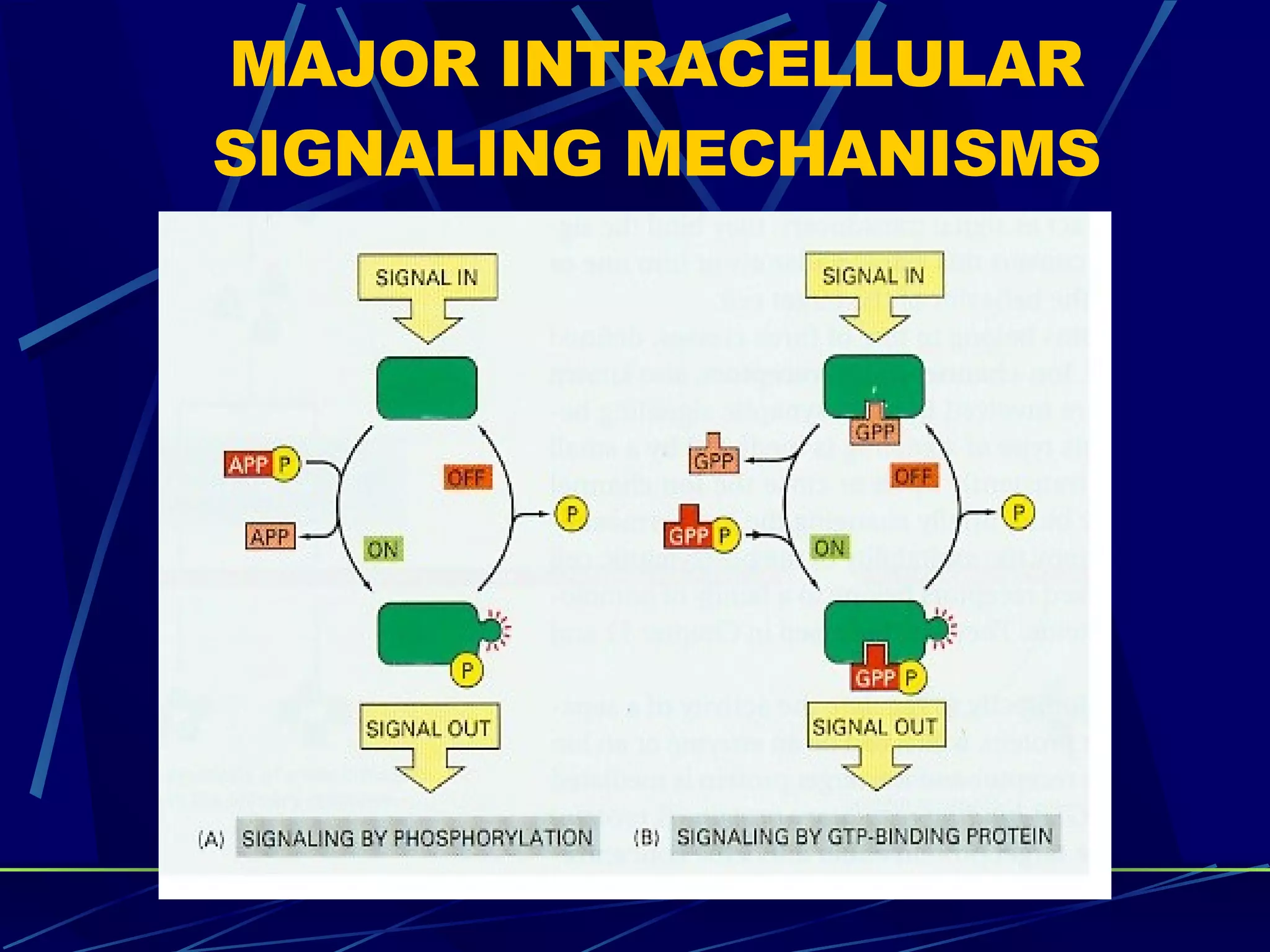
OTHER INTRACELLULAR SIGNALING PROTEINS IN SIGNAL TRANSDUCTION 1)   GTPase Switch Proteins  –  GTP-binding proteins that act as molecular switches in signal transduction pathways “ ON” when bound to GTP “ OFF” when bound to GDP. Two classes of GTPase switch proteins: a)       Trimeric G protein – coupled directly to activated receptors b)       Monomeric Ras and Ras-like proteins – linked indirectly via other proteins
INTRACELLULAR SIGNALING PROTEINS 2) PROTEIN KINASES – carry out the process of phosphorylation -opposed by the activity of protein phosphatases 3) ADAPTER PROTEINS – no catalytic activity - contain domains as docking sites for other proteins
MAJOR INTRACELLULAR SIGNALING MECHANISMS
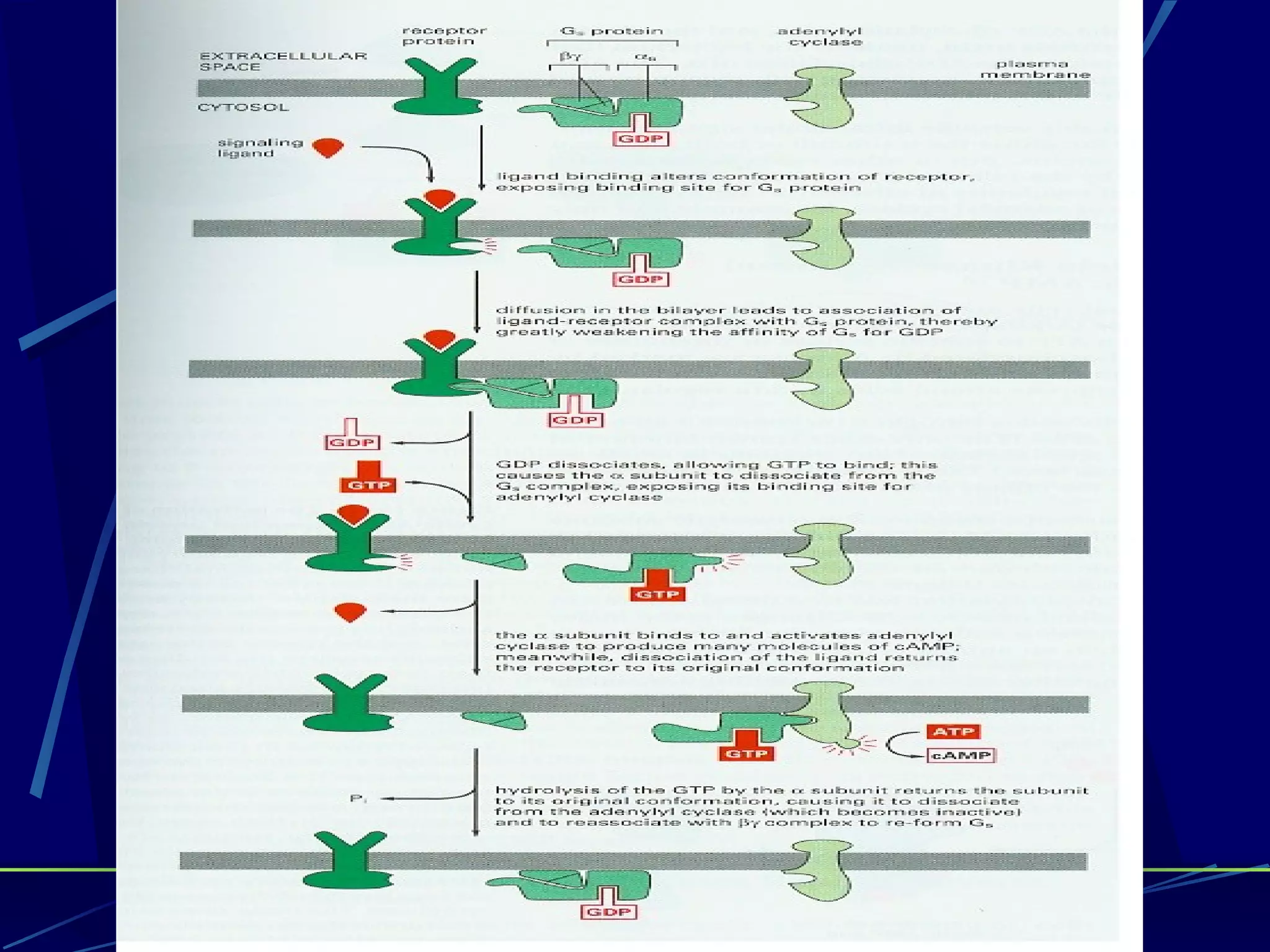
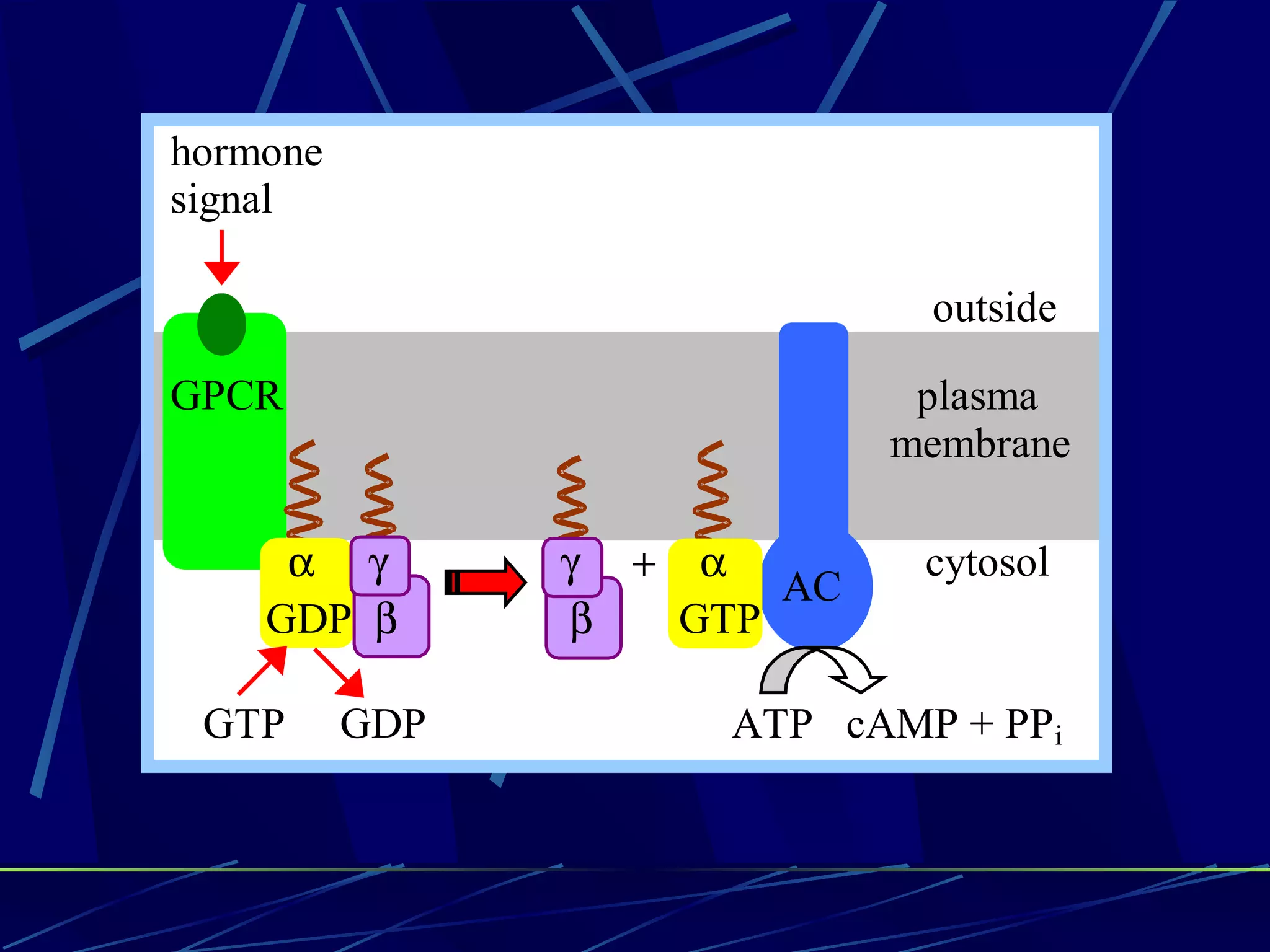
SIGNALING VIA G-PROTEIN-COUPLED RECEPTORS (GPCR) G-Proteins – GTP-binding proteins Trimeric proteins (  α β γ ) Coupled directly to activated receptors GTPases – convert GTP to GDP + Pi ACTIVE- when GTP is bound INACTIVE – when GDP is bound
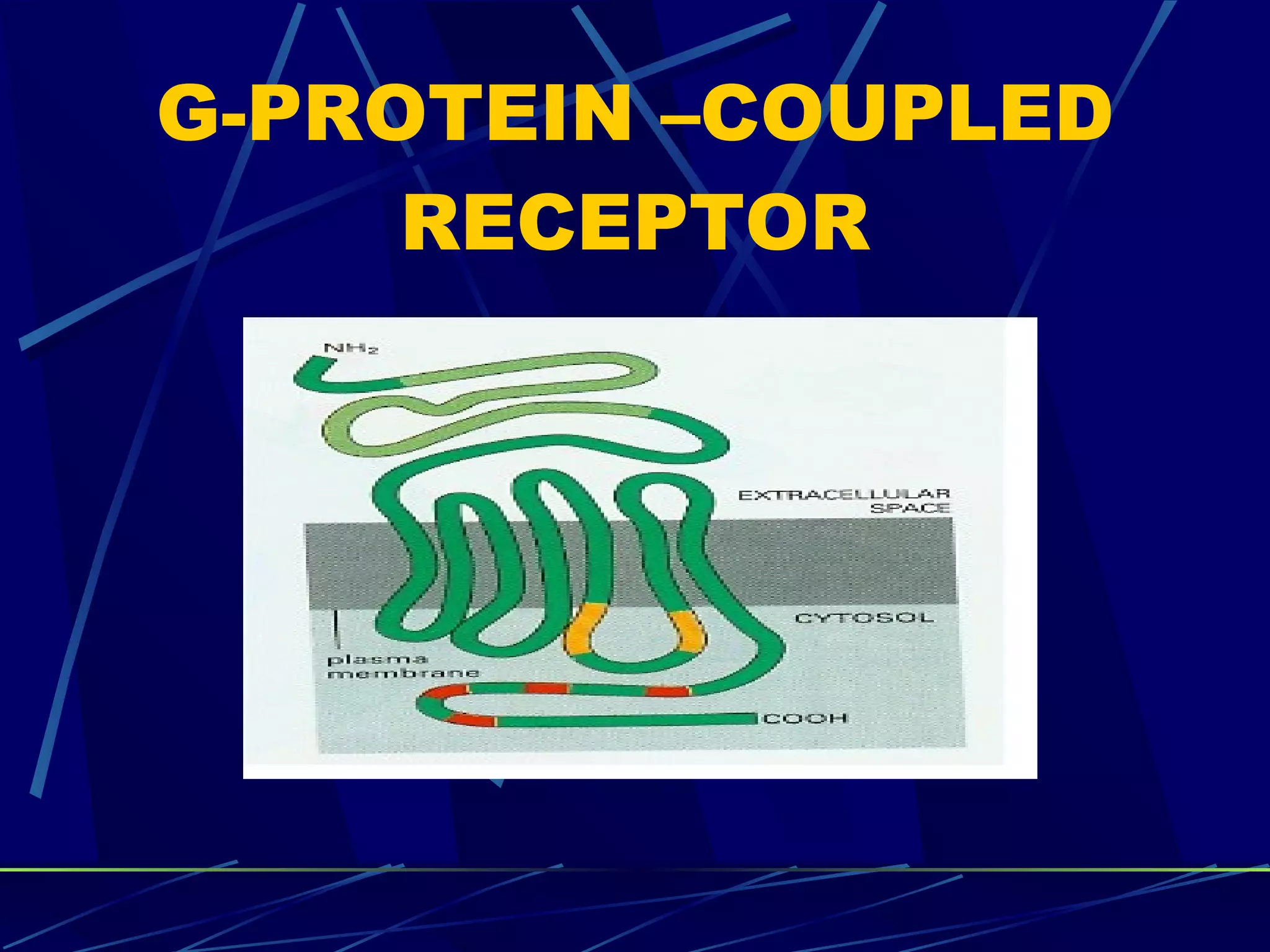
G-PROTEIN –COUPLED RECEPTOR
 
 
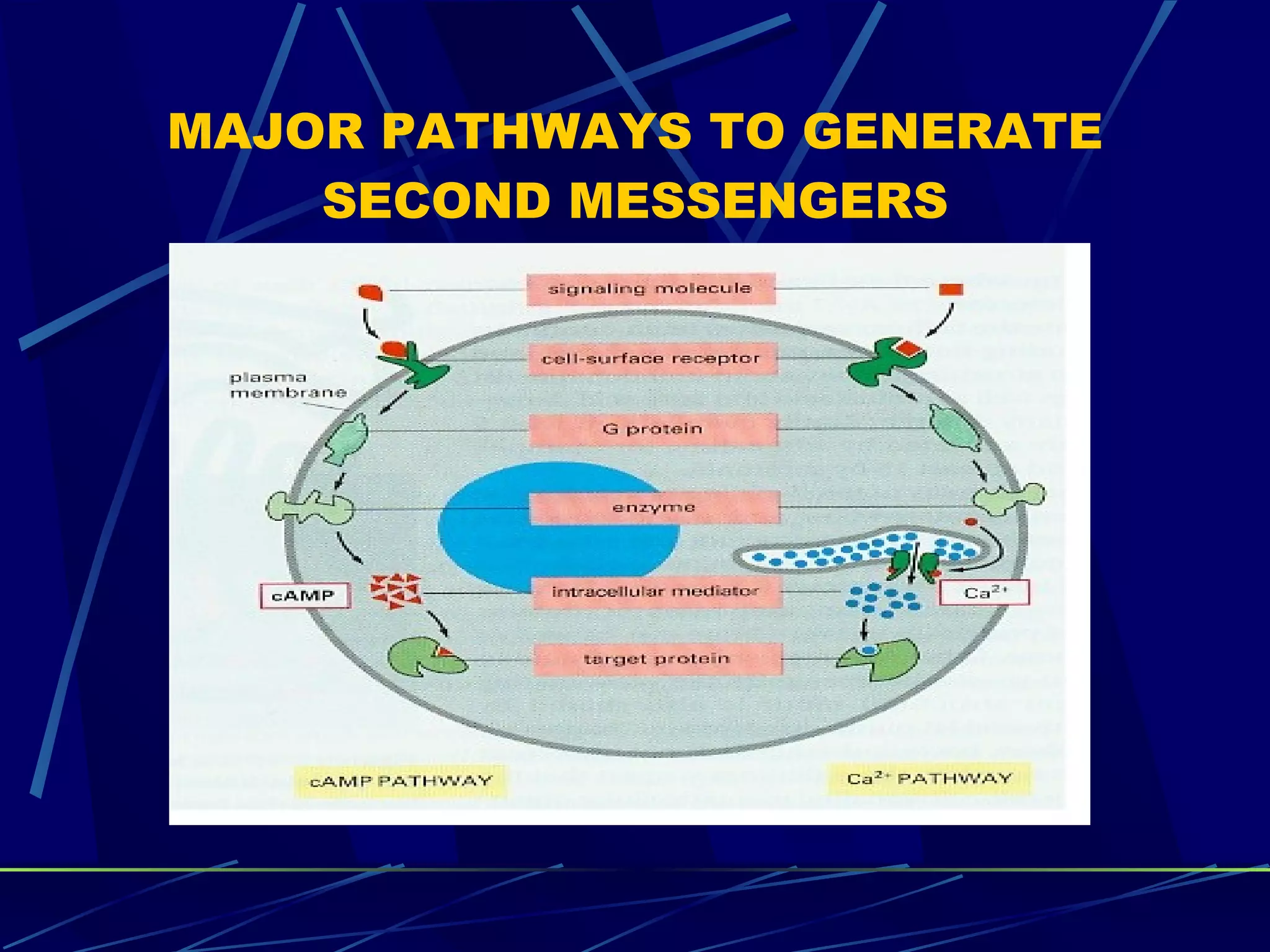
G-PROTEIN-COUPLED RECEPTORS Activate events altering concentrations of intracellular mediators (SECOND MESSENGERS) Common second messengers: cyclic AMP (cAMP) Ca++
MAJOR PATHWAYS TO GENERATE SECOND MESSENGERS
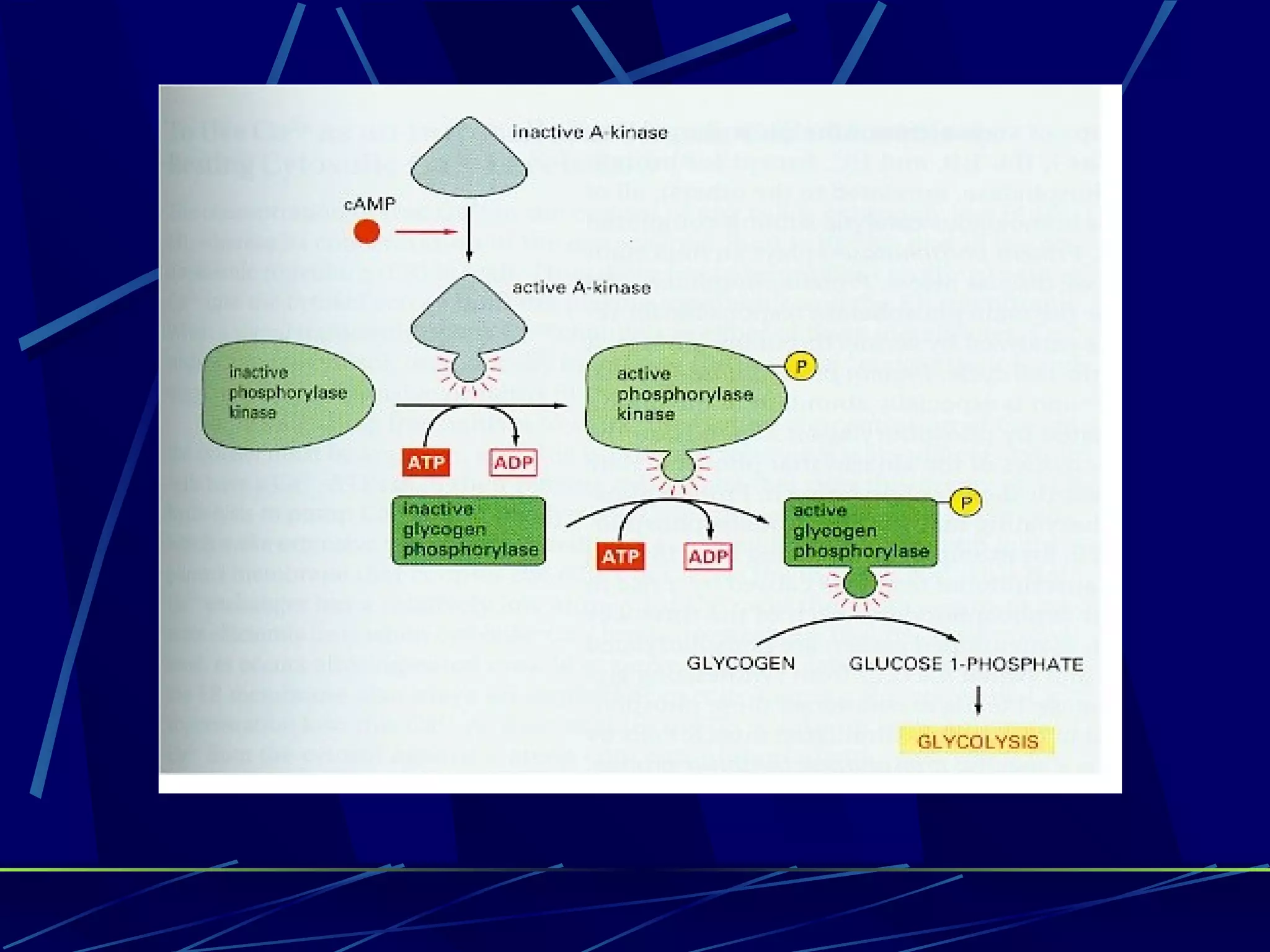
CYCLIC AMP (cAMP) Second messenger produced from hydrolysis of pyrophosphate from ATP Synthesized by Adenylyl Cyclase Degraded by cAMP phosphodiesterase to form 5’AMP.
 
CARBOHYDRATE METABOLSIM REGULATION BY cAMP cAMP activates  glycogen phosphorylase (glygenolysis) cAMP inhibits glycogen synthase (Glycogenesis) Insulin inhibits cAMP Glucagon and Epinephrine activates cAMP
PHOSPHOINOSITIDES Second messengers derived from phosphorylation of inositol by PI kinase Phosphatidyl inositol (PI)  PI 4-phosphate (PIP) PI 4,5-Biphosphate (PIP2) Inositol 1,4,5-triphosphate (PI3)
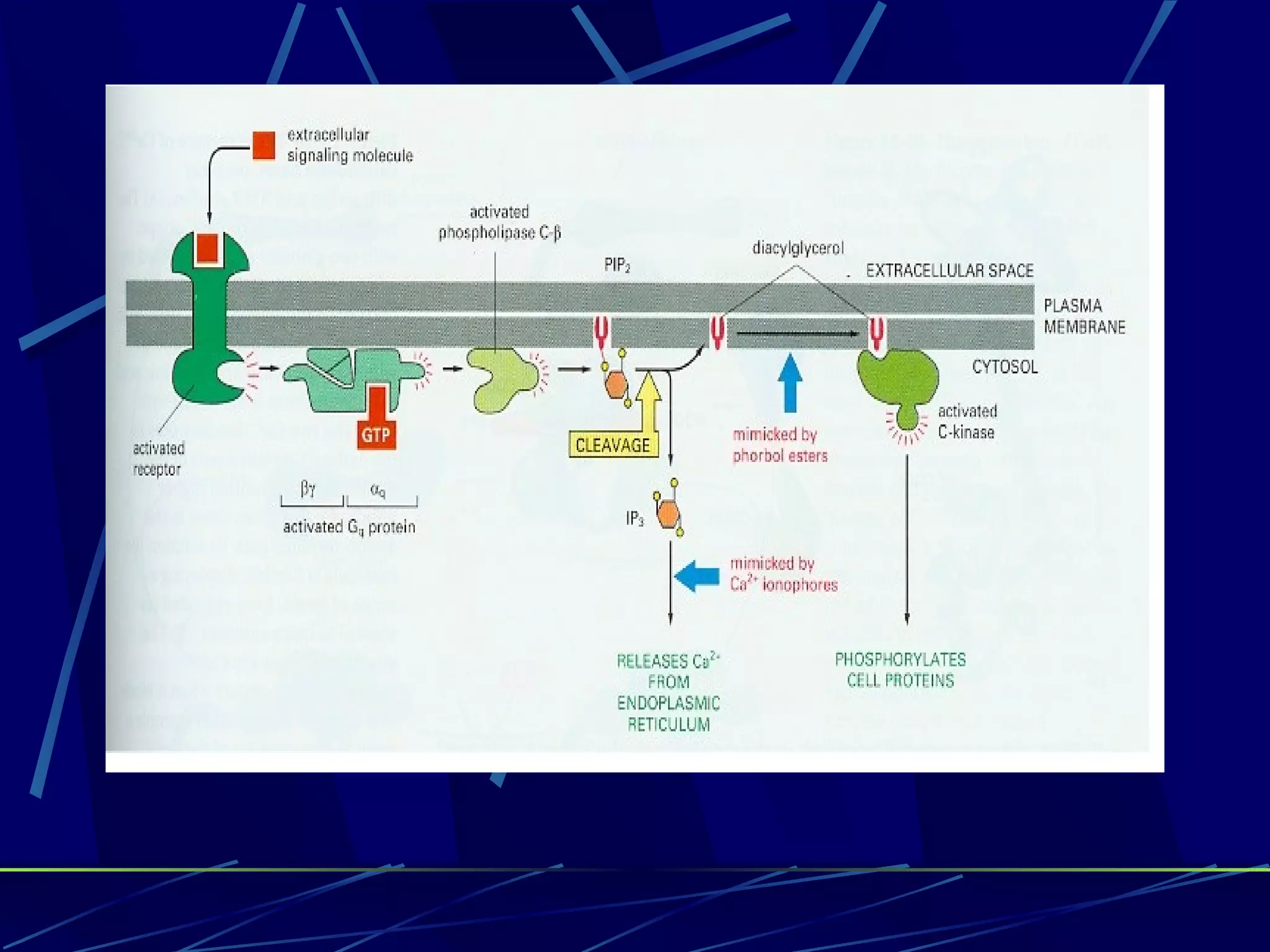
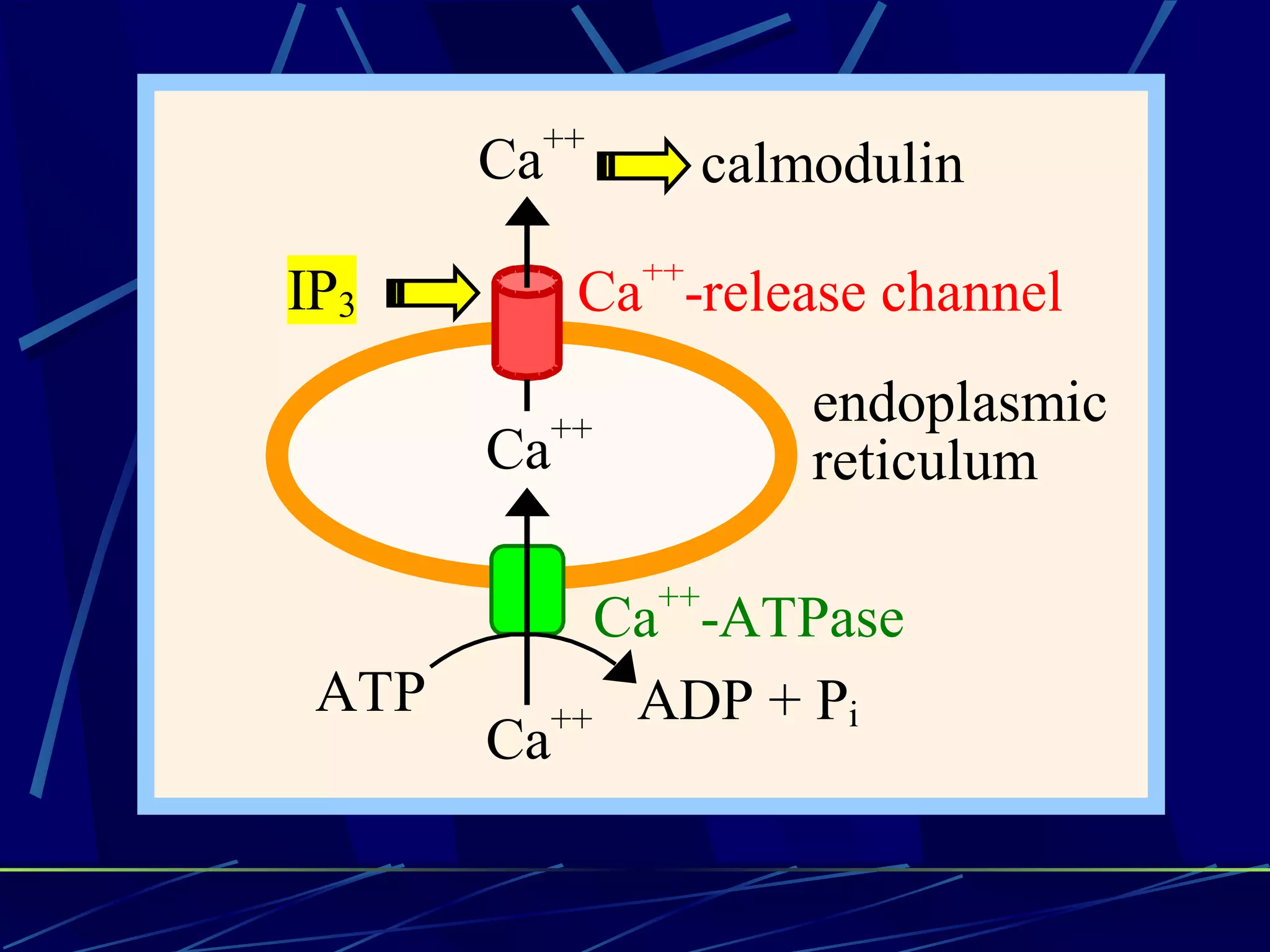
TWO BRANCHES OF INOSITOL PHOSPHOLIPID PATHWAY Activated Phospholipase C- ß cleaves PIP2 to generate IP3 and DAG(diacylglycerol) IP3 releases Ca++ from ER DAG together with bound Ca++ activates C-Kinase C-Kinase phosphorylates cell proteins
 
 
SIGNALING BY RECEPTOR TYROSINE KINASES AND RAS LIGANDS- soluble or membrane-bound protein hormones NGF, PDGF, FGF,EGF, insulin Binding stimulates the receptor’s intrinsic protein kinase activity Functions:cell proliferation,differentia- tion,cell survival and metabolism
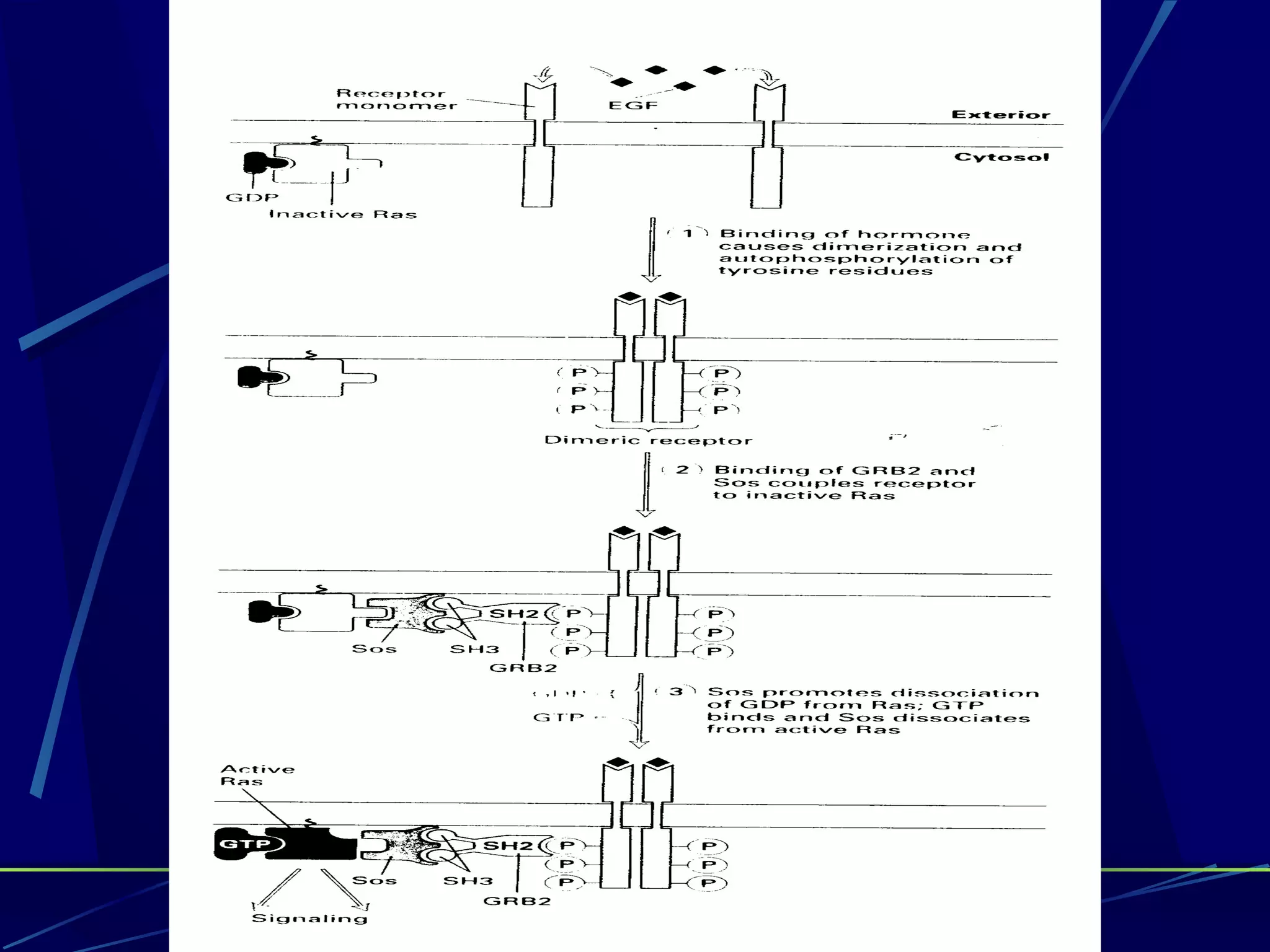
RECEPTOR TYROSINE KINASE (RTK) RAS – the GTPase monomeric protein that transduce signals from RTK ACTIVE – when bound to GTP INACTIVE – when bound to GDP Not directly linked to RTK
KEY LINKS OF RAS TO RTK GRB2 – adapter protein for receptor SH2 domain- binds to phosphotyrosine residue in activated receptor SH3 domains- bind to and activate Sos Sos – functions as GEF(guanine nucleotide exchange protein) - converts GDP-Ras to GTP-Ras
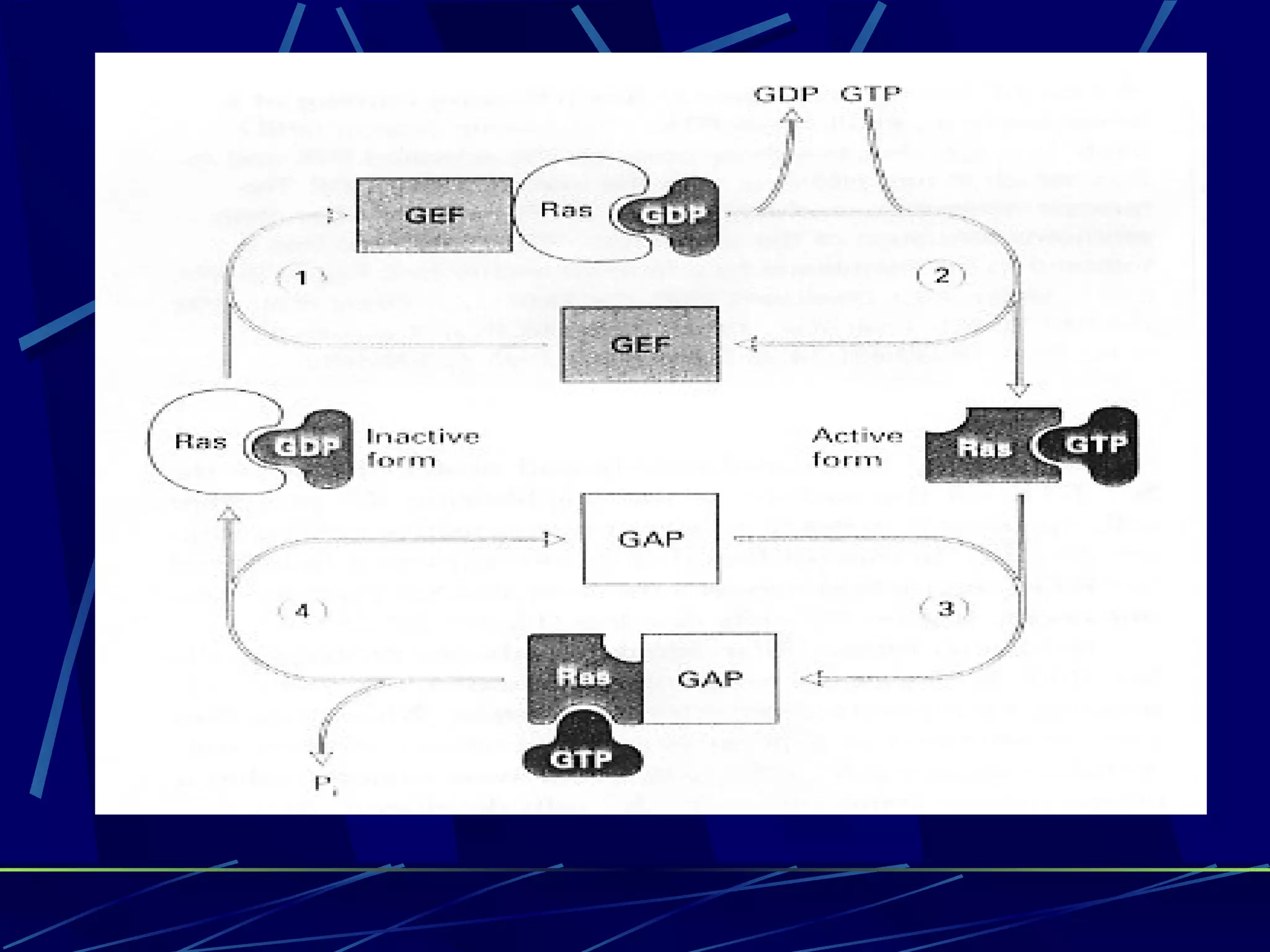
CYCLING OF RAS BETWEEN ACTIVE AND INACTIVE FORMS Guanine Nucleotide Exchange Factor (GEF) facilitates dissociation of Ras from GDP GTP binds while GEF dissociates yielding active Ras*GTP Hydrolysis of bound GTP to regenerate inactive Ras*GDP.
 
ACTIVATION OF RAS FOLLOWING BINDING OF LIGAND TO RTK Binding of ligand causes dimerization and autophosphorylation of tyrosine residues Binding GRB2 and Sos couples receptor to inactive Ras Sos promotes dissociation of GDP from Ras GTP binds and Sos dissociates from active Ras
 
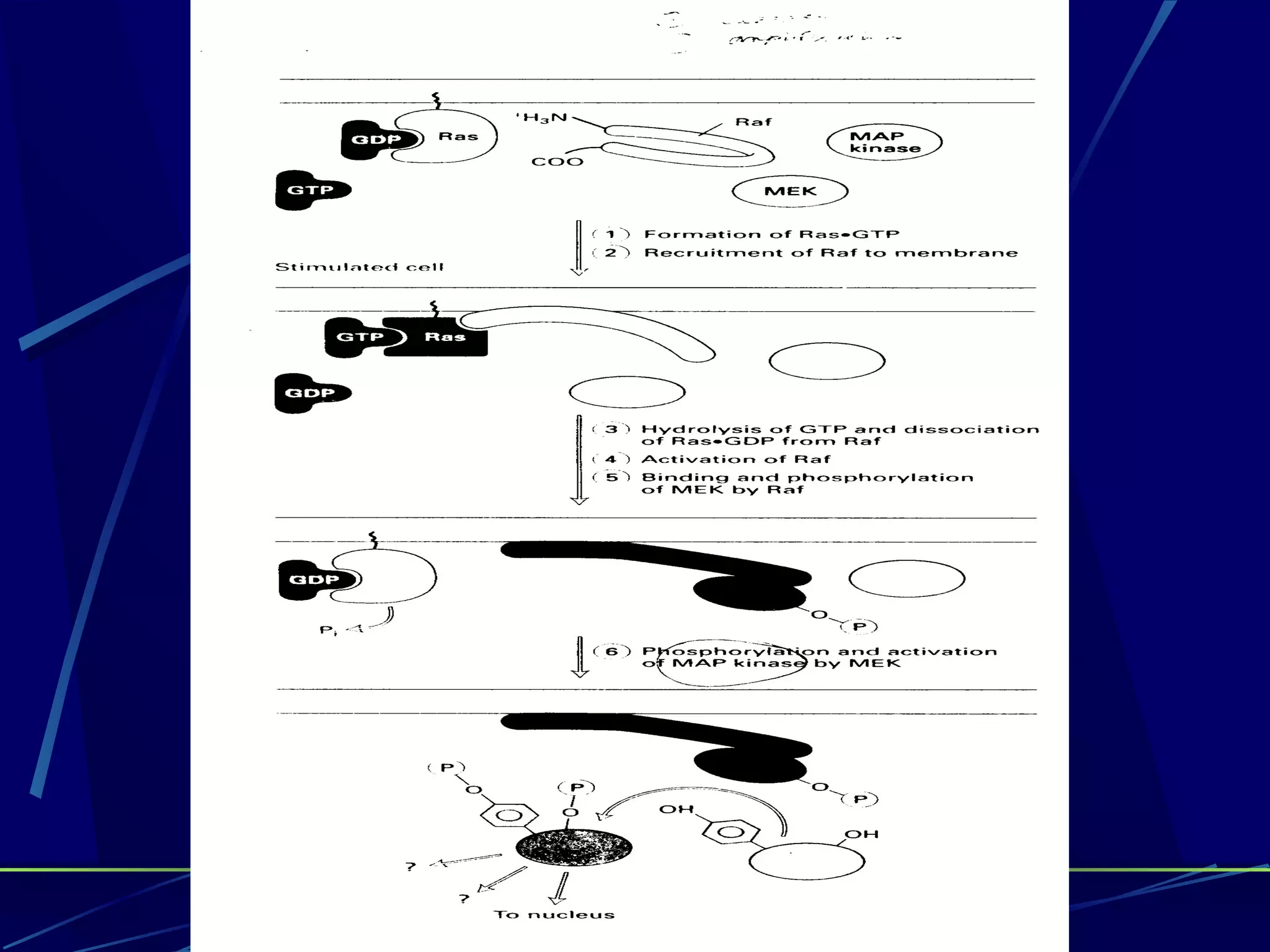
SIGNALING BY MAP KINASE PATHWAY MAP KINASE – serine/threonine kinase Translocates into nucleus to phosphorylate proteins involved in transcription Induced by activated Ras Other proteins involved: Raf – serine/threonine kinase MEK- a dual-specificity protein kinase
CASCADE OF PROTEIN KINASES Activated Ras binds to N-terminal of Raf Raf binds to and phosphorylates MEK MEK phosphorylates and activates MAP kinase MAP kinase phosphorylates nuclear transcription factors mediating cellular responses
 
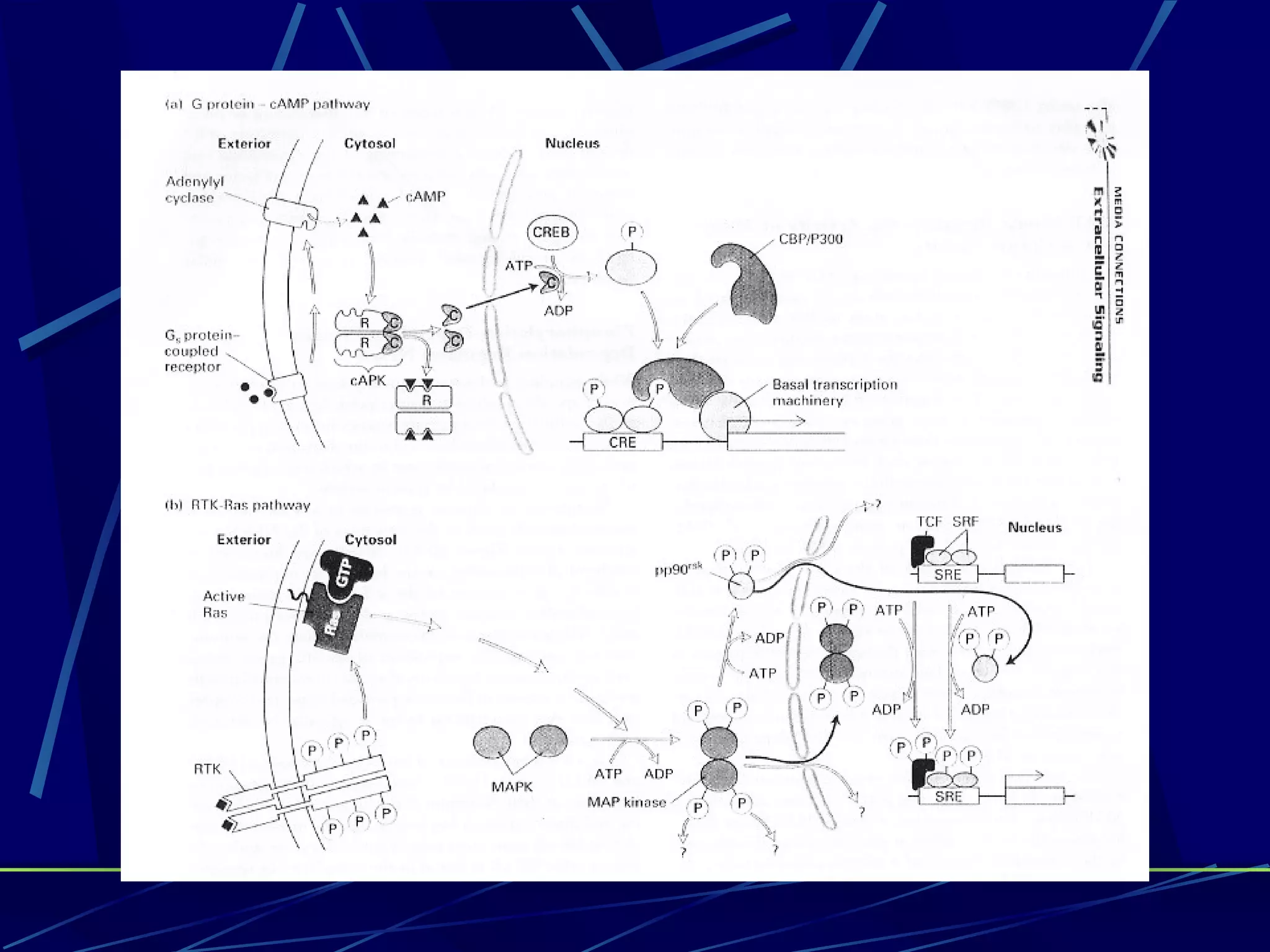
SIGNALING FROM PLASMA MEMBRANE TO NUCLEUS CRE ( cAmp-response element) – cis-acting DNA sequence in genes regulated by cAMP CREB (CRE-binding protein)- a transcription factor to which CRE binds CBP/300 – a co-activator allowing CREB to stimulate transcription
CREB links cAMP to Transcription cAMP activates cAmp-dependent protein kinase (cAPK) cAPK translocates to nucleus and phosphorylates CREB CREB interacts with CBP/300 CREB-CBP/300 complex binds to and activates transcription of target genes
 
MAP KINASES REGULATE TRANSCRIPTION MAP kinase is activated via RTK-Ras pathway translocates to the nucleus and phosphorylates activators and repressors of transcription
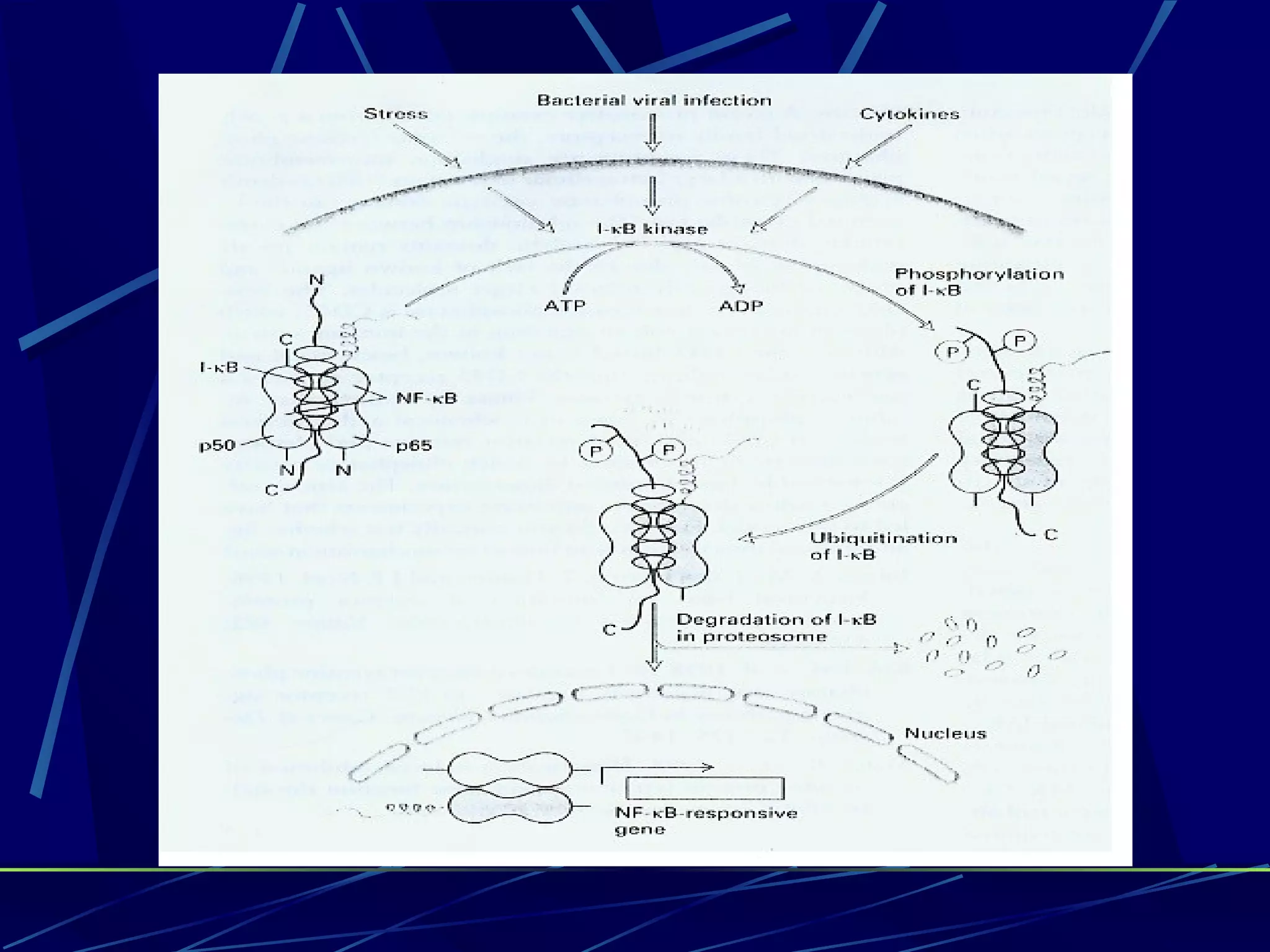
NF-kß TRANSCRIPTION FACTOR A heterodimer In resting cells, found in cytoplasm bound to an inhibitor I- kß In response to extracellular signal, I- kß is phosphorylated and degraded NF- kß  translocates to nucleus and binds to DNA and regulates transcription
 
THANK YOU!

Signal Transduction Revised

  • 1.
    SIGNAL TRANSDUCTIONMarigold D.R. Majarucon-Ferrolino, M.D.
  • 2.
    SIGNAL TRANSDUCTION Theprocess of converting extracellular signals into cellular responses. extracellular signaling molecules ( ligands ) - substances synthesized and released by signaling cells and produce a specific response only in target cells that have receptors for the signaling molecules.
  • 3.
  • 4.
    SIGNAL TRANSDUCTION Receptor – a specific protein that specifically binds a signaling molecule to initiate a response in a target cell Cell responses : changes in gene expression cell morphology cell movements
  • 5.
    SIGNAL TRANSDUCTION Communicationby extracellular signals usually involves six steps: synthesis and 2) release of the signaling molecule by the signaling cell 3) transport of the signal to the target cell 4) detection of the signal by a specific receptor protein 5) a change in cellular metabolism, function, or development triggered by the receptor-signal complex ;and 6) removal of the signal, which often terminates the cellular response.
  • 6.
    TWO GENERAL KINDSOF CELL RECEPTORS CELL SURFACE RECEPTORS LIGAND – hydrophilic signaling molecules INTRACELLULAR RECEPTORS LIGAND – hydrophobic signaling molecules
  • 7.
  • 8.
    CHARACTERISTICS OF RECEPTORPROTEINS LIGAND-BINDING SPECIFICITY -a ligand binds to a specific receptor EFFECTOR SPECIFICITY receptor-ligand complex mediates a specific cellular response
  • 9.
    TYPES OF SIGNALINGENDOCRINE SIGNALING - signaling molecules (hormones) act on target cells distant from their site of synthesis by cells of endocrine organs. PARACRINE SIGNALING - the signaling molecules (neurotransmitters) released by a cell only affect target cells in close proximity to it. AUTOCRINE SIGNALING - cells respond to substances (growth factors) which they themselves release.
  • 10.
  • 11.
    CLASSIFICATION OF HORMONESBASED ON SOLUBILITY AND RECEPTOR LOCATION SMALL LIPOPHILIC MOLECULES that diffuse across the plasma membrane and interact with intracellular receptors. Examples: steroids, thyroxine and retinoic acid WATER-SOLUBLE HORMONES with cell-surface receptors Examples: Peptide hormones (insulin, growth factors, glucagons)
  • 12.
    CLASSIFICATION OF HORMONES-SMALL CHARGED MOLECULES ( epinephrine, histamine) LIPOPHILIC HORMONES with cell surface receptors Examples: Prostaglandins ( prostacyclins, thromboxanes, leukotrienes )
  • 13.
    MAJOR CLASSES OFCELL SURFACE RECEPTORS 1)      G-protein coupled receptors Examples: epinephrine,serotonin, glucagon receptors 2)      Ion channel receptors Example : Acetylcholine receptor 3)      Tyrosine kinase-linked receptors Examples: receptors for cytokines, interferons, and growth factors 4)   Receptors with intrinsic enzymatic activity Examples: receptors for insulin and growth factors
  • 14.
  • 15.
    SECOND MESSENGERS -Intracellular signaling molecules 3’ ,5’ cyclic AMP (cAMP) 3’,5’ cyclic GMP (cGMP) 1,2 diacylglycerol (DAG) inositol 1,4,5 triphosphate (IP3) inositol phospholipids (phosphoinositides) Ca++.
  • 16.
    OTHER INTRACELLULAR SIGNALINGPROTEINS IN SIGNAL TRANSDUCTION 1) GTPase Switch Proteins – GTP-binding proteins that act as molecular switches in signal transduction pathways “ ON” when bound to GTP “ OFF” when bound to GDP. Two classes of GTPase switch proteins: a)      Trimeric G protein – coupled directly to activated receptors b)      Monomeric Ras and Ras-like proteins – linked indirectly via other proteins
  • 17.
    INTRACELLULAR SIGNALING PROTEINS2) PROTEIN KINASES – carry out the process of phosphorylation -opposed by the activity of protein phosphatases 3) ADAPTER PROTEINS – no catalytic activity - contain domains as docking sites for other proteins
  • 18.
  • 19.
    SIGNALING VIA G-PROTEIN-COUPLEDRECEPTORS (GPCR) G-Proteins – GTP-binding proteins Trimeric proteins ( α β γ ) Coupled directly to activated receptors GTPases – convert GTP to GDP + Pi ACTIVE- when GTP is bound INACTIVE – when GDP is bound
  • 20.
  • 21.
  • 22.
  • 23.
    G-PROTEIN-COUPLED RECEPTORS Activateevents altering concentrations of intracellular mediators (SECOND MESSENGERS) Common second messengers: cyclic AMP (cAMP) Ca++
  • 24.
    MAJOR PATHWAYS TOGENERATE SECOND MESSENGERS
  • 25.
    CYCLIC AMP (cAMP)Second messenger produced from hydrolysis of pyrophosphate from ATP Synthesized by Adenylyl Cyclase Degraded by cAMP phosphodiesterase to form 5’AMP.
  • 26.
  • 27.
    CARBOHYDRATE METABOLSIM REGULATIONBY cAMP cAMP activates glycogen phosphorylase (glygenolysis) cAMP inhibits glycogen synthase (Glycogenesis) Insulin inhibits cAMP Glucagon and Epinephrine activates cAMP
  • 28.
    PHOSPHOINOSITIDES Second messengersderived from phosphorylation of inositol by PI kinase Phosphatidyl inositol (PI) PI 4-phosphate (PIP) PI 4,5-Biphosphate (PIP2) Inositol 1,4,5-triphosphate (PI3)
  • 29.
    TWO BRANCHES OFINOSITOL PHOSPHOLIPID PATHWAY Activated Phospholipase C- ß cleaves PIP2 to generate IP3 and DAG(diacylglycerol) IP3 releases Ca++ from ER DAG together with bound Ca++ activates C-Kinase C-Kinase phosphorylates cell proteins
  • 30.
  • 31.
  • 32.
    SIGNALING BY RECEPTORTYROSINE KINASES AND RAS LIGANDS- soluble or membrane-bound protein hormones NGF, PDGF, FGF,EGF, insulin Binding stimulates the receptor’s intrinsic protein kinase activity Functions:cell proliferation,differentia- tion,cell survival and metabolism
  • 33.
    RECEPTOR TYROSINE KINASE(RTK) RAS – the GTPase monomeric protein that transduce signals from RTK ACTIVE – when bound to GTP INACTIVE – when bound to GDP Not directly linked to RTK
  • 34.
    KEY LINKS OFRAS TO RTK GRB2 – adapter protein for receptor SH2 domain- binds to phosphotyrosine residue in activated receptor SH3 domains- bind to and activate Sos Sos – functions as GEF(guanine nucleotide exchange protein) - converts GDP-Ras to GTP-Ras
  • 35.
    CYCLING OF RASBETWEEN ACTIVE AND INACTIVE FORMS Guanine Nucleotide Exchange Factor (GEF) facilitates dissociation of Ras from GDP GTP binds while GEF dissociates yielding active Ras*GTP Hydrolysis of bound GTP to regenerate inactive Ras*GDP.
  • 36.
  • 37.
    ACTIVATION OF RASFOLLOWING BINDING OF LIGAND TO RTK Binding of ligand causes dimerization and autophosphorylation of tyrosine residues Binding GRB2 and Sos couples receptor to inactive Ras Sos promotes dissociation of GDP from Ras GTP binds and Sos dissociates from active Ras
  • 38.
  • 39.
    SIGNALING BY MAPKINASE PATHWAY MAP KINASE – serine/threonine kinase Translocates into nucleus to phosphorylate proteins involved in transcription Induced by activated Ras Other proteins involved: Raf – serine/threonine kinase MEK- a dual-specificity protein kinase
  • 40.
    CASCADE OF PROTEINKINASES Activated Ras binds to N-terminal of Raf Raf binds to and phosphorylates MEK MEK phosphorylates and activates MAP kinase MAP kinase phosphorylates nuclear transcription factors mediating cellular responses
  • 41.
  • 42.
    SIGNALING FROM PLASMAMEMBRANE TO NUCLEUS CRE ( cAmp-response element) – cis-acting DNA sequence in genes regulated by cAMP CREB (CRE-binding protein)- a transcription factor to which CRE binds CBP/300 – a co-activator allowing CREB to stimulate transcription
  • 43.
    CREB links cAMPto Transcription cAMP activates cAmp-dependent protein kinase (cAPK) cAPK translocates to nucleus and phosphorylates CREB CREB interacts with CBP/300 CREB-CBP/300 complex binds to and activates transcription of target genes
  • 44.
  • 45.
    MAP KINASES REGULATETRANSCRIPTION MAP kinase is activated via RTK-Ras pathway translocates to the nucleus and phosphorylates activators and repressors of transcription
  • 46.
    NF-kß TRANSCRIPTION FACTORA heterodimer In resting cells, found in cytoplasm bound to an inhibitor I- kß In response to extracellular signal, I- kß is phosphorylated and degraded NF- kß translocates to nucleus and binds to DNA and regulates transcription
  • 47.
  • 48.