PLANT PHYSIOLOGY
“Signal Transduction”
By:
Dias Rindang Windari (4401411039)
Kinaseh (4401411041)
Lembayung Windi P (440141047)
Dewi Setiyana (4401411058)
Created by Kel. 4 Plant Physiology
Signal Transduction
• Signal Transduction in plants has long fascinated
researchers
• Charles Darwin performed pioneering studies on
phototropic growth responses in canary grass and oat
seedling tissues (Darwin 1881)
• Since these classis studies, researches have
demonstrated that plant perceive many environmental
and physiological signals in order to fine-tune their
growth and development
Signal  Receptor  Signal transduction  Respone
Created by Kel. 4 Plant Physiology
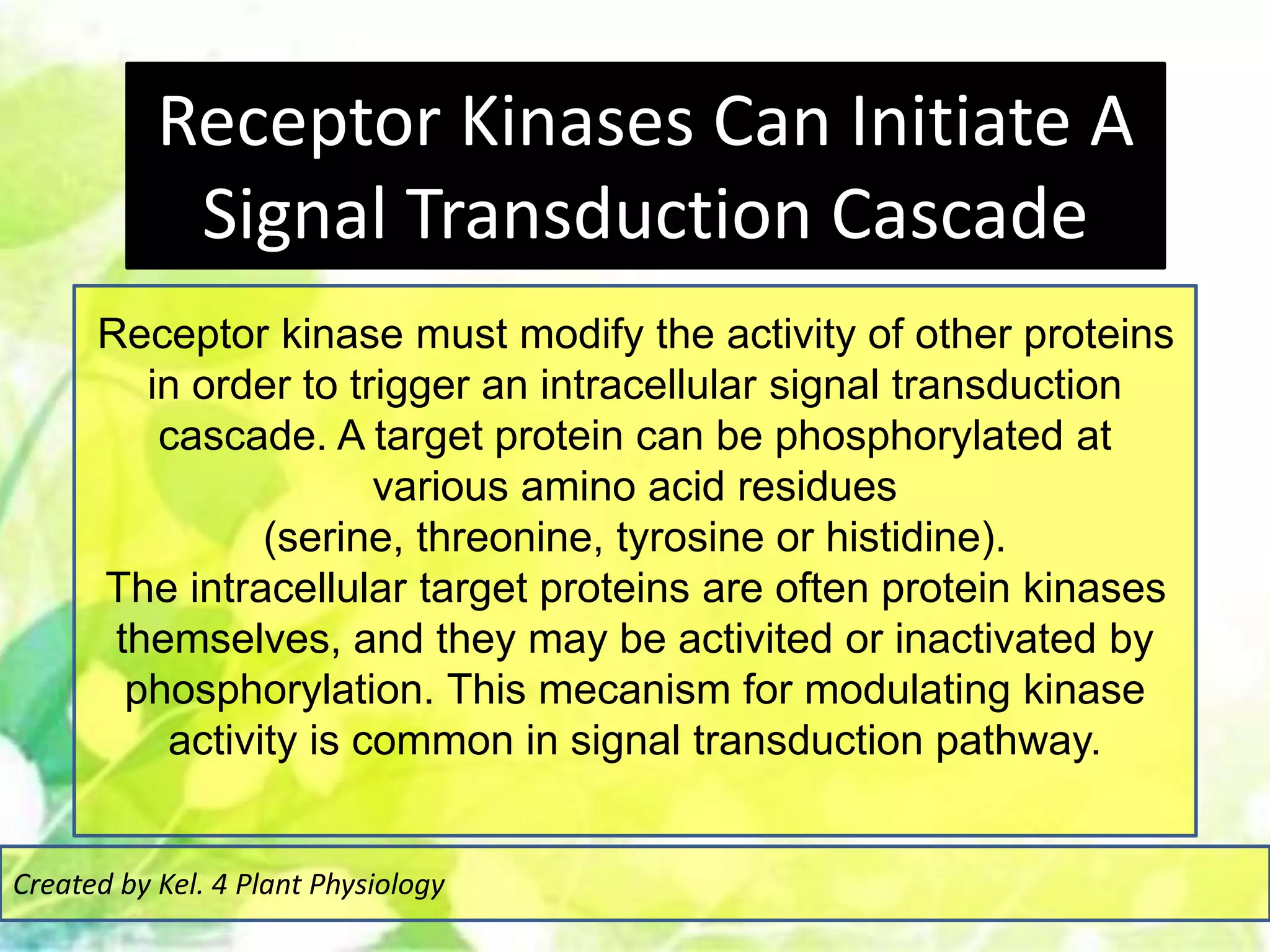
Signal Transduction in Plant and Animal Cell
Plants and animals have similar transduction components
Created by Kel. 4 Plant Physiology
Created by Kel. 4 Plant PhysiologyCreated by Kel. 4 Plant Physiology
Receptor Kinases Can Initiate A
Signal Transduction Cascade
Created by Kel. 4 Plant Physiology
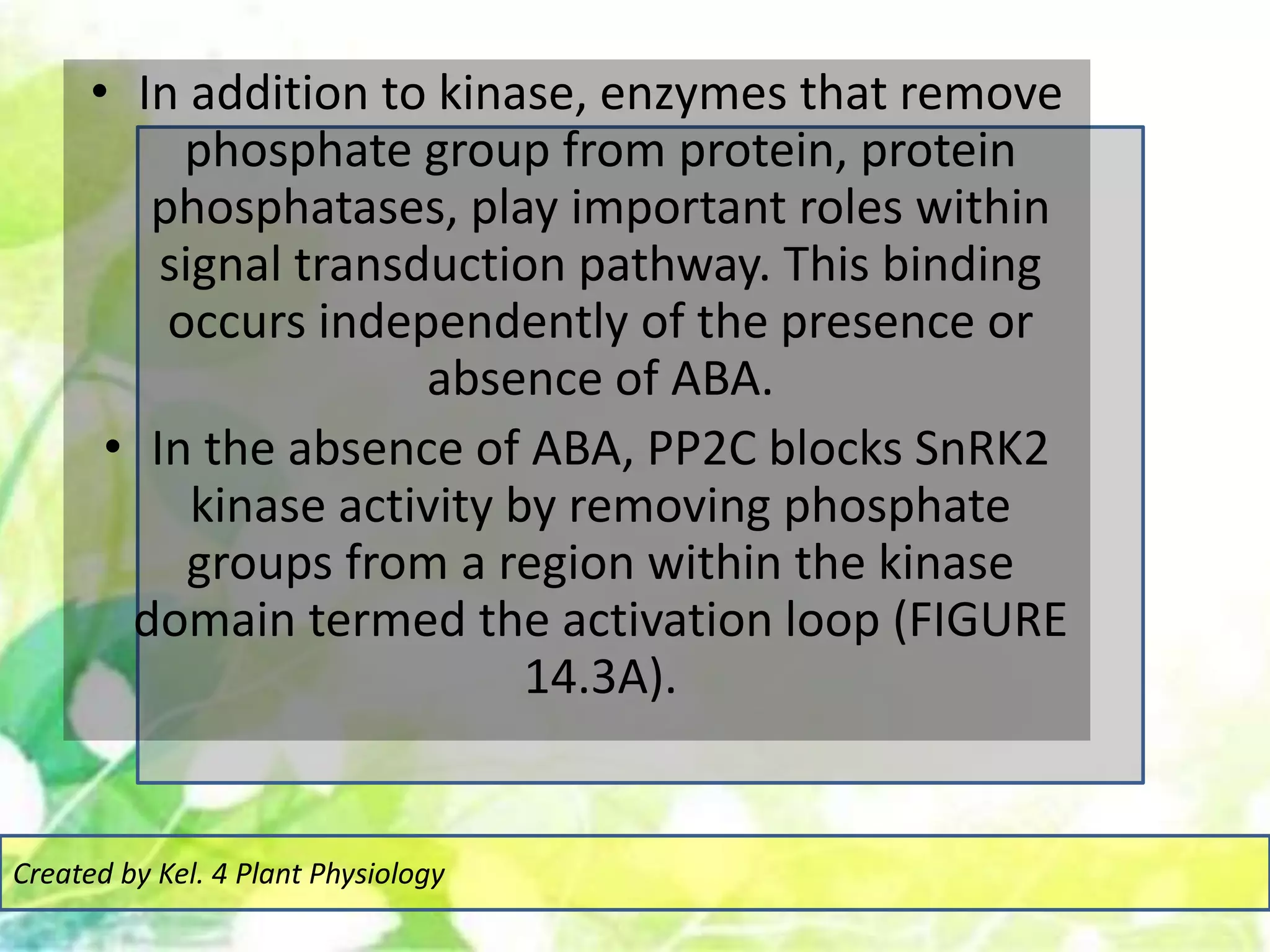
Receptor kinase must modify the activity of other proteins
in order to trigger an intracellular signal transduction
cascade. A target protein can be phosphorylated at
various amino acid residues
(serine, threonine, tyrosine or histidine).
The intracellular target proteins are often protein kinases
themselves, and they may be activited or inactivated by
phosphorylation. This mecanism for modulating kinase
activity is common in signal transduction pathway.
Created by Kel. 4 Plant Physiology
• In addition to kinase, enzymes that remove
phosphate group from protein, protein
phosphatases, play important roles within
signal transduction pathway. This binding
occurs independently of the presence or
absence of ABA.
• In the absence of ABA, PP2C blocks SnRK2
kinase activity by removing phosphate
groups from a region within the kinase
domain termed the activation loop (FIGURE
14.3A).
Created by Kel. 4 Plant Physiology
• When ABA is present, its receptor binds directly
to PP2C proteins (Park et al. 2009), which
prevents PP2C from dephosphorylating the
kinase domain of SnRK2. SnRK2 proteins are then
free to phosphorylate target proteins, including
specific transcription factors that activate ABA-
responsive gene expression (FIGURE 14.3B) .
• ABA signal transduction is therefore based on
reversing the balance between PP2C protein
phosphatase and SnRK2 kinase activities.
Created by Kel. 4 Plant Physiology
• In summary, plants and animals employ
reseptors in conjunction with kinase and
phosphatase transduction components in a
number of important signaling pathway.
Created by Kel. 4 Plant Physiology
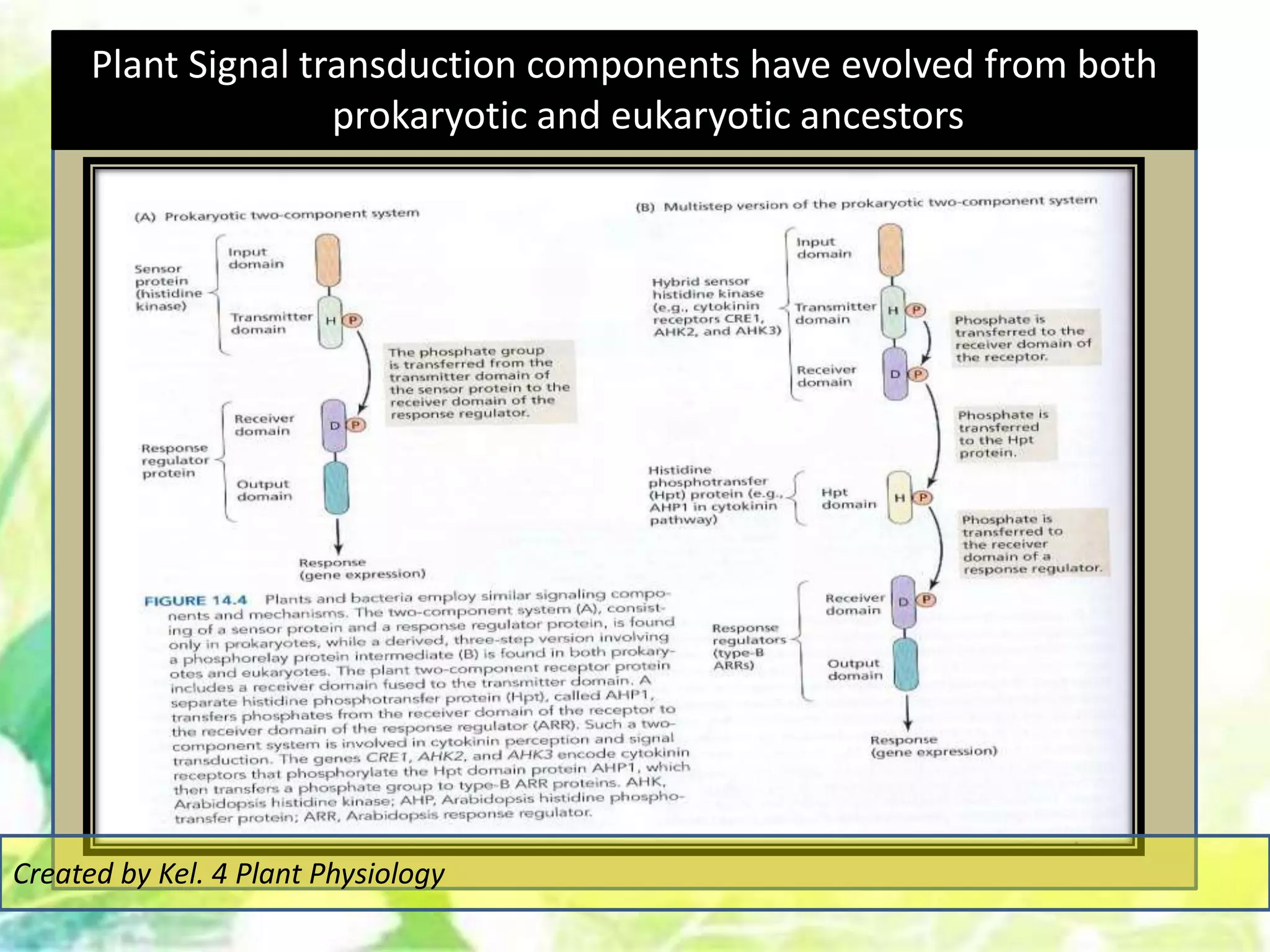
Plant Signal transduction components have evolved from both
prokaryotic and eukaryotic ancestors
Created by Kel. 4 Plant Physiology
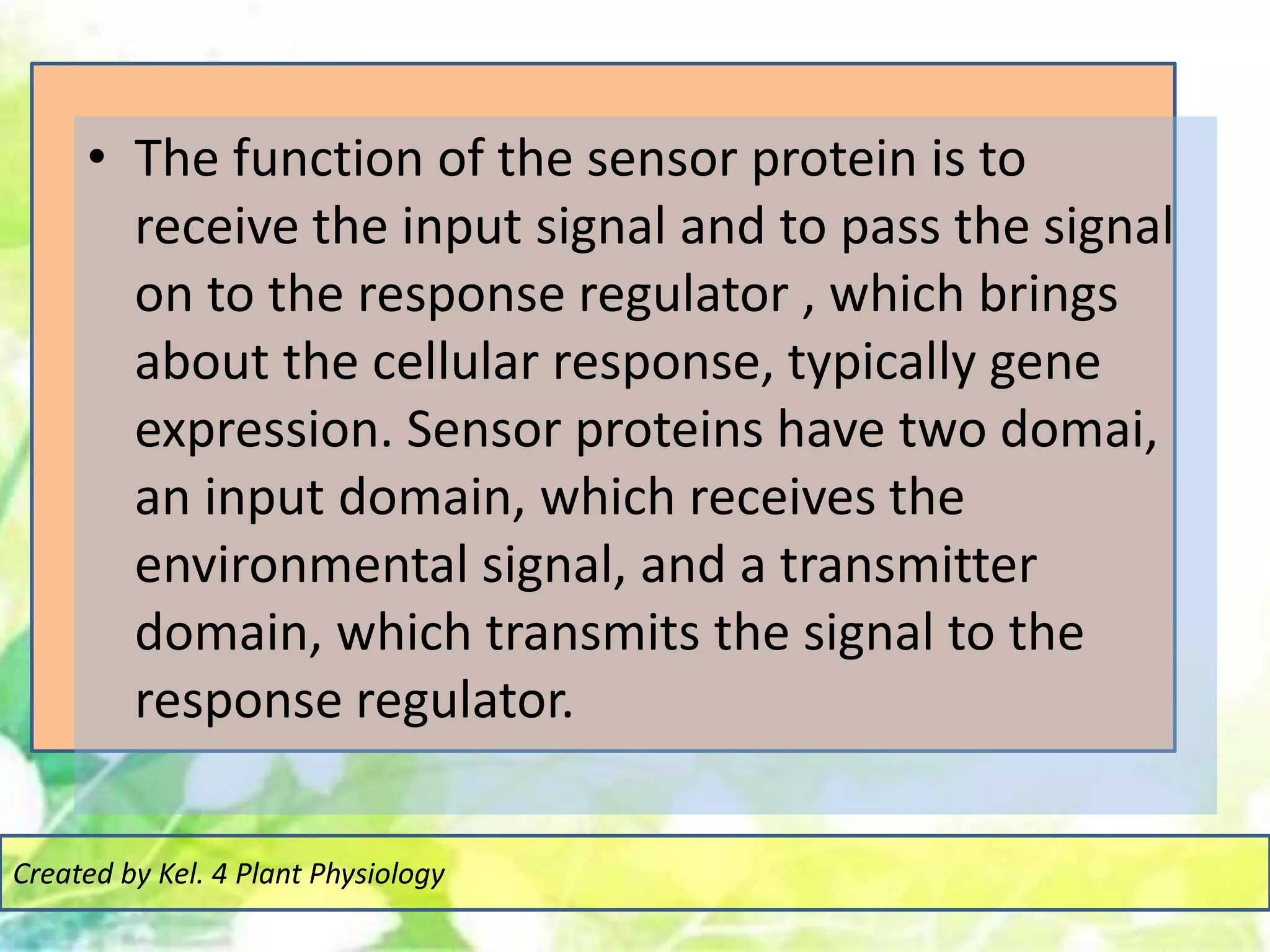
• The function of the sensor protein is to
receive the input signal and to pass the signal
on to the response regulator , which brings
about the cellular response, typically gene
expression. Sensor proteins have two domai,
an input domain, which receives the
environmental signal, and a transmitter
domain, which transmits the signal to the
response regulator.
Created by Kel. 4 Plant Physiology
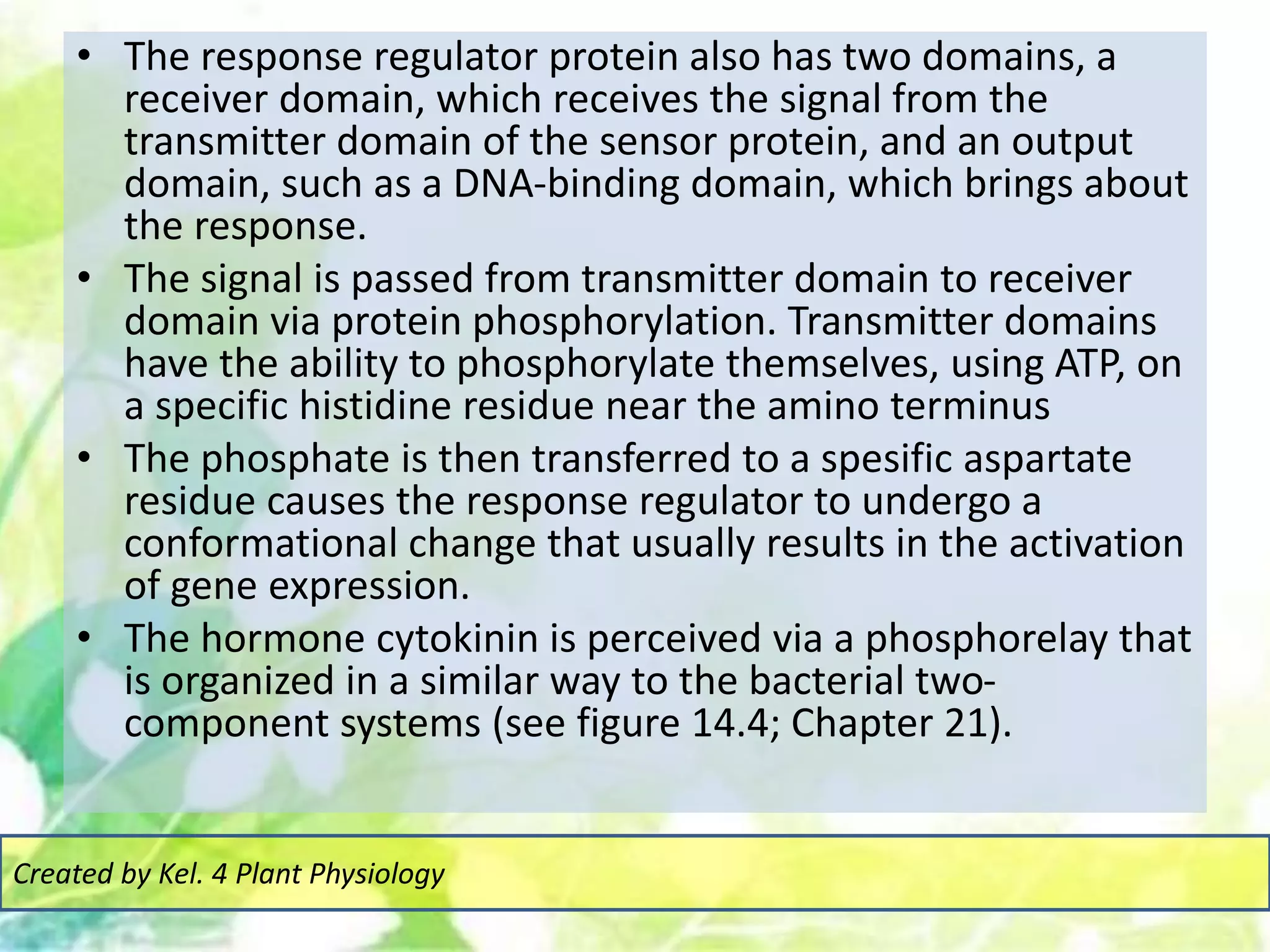
• The response regulator protein also has two domains, a
receiver domain, which receives the signal from the
transmitter domain of the sensor protein, and an output
domain, such as a DNA-binding domain, which brings about
the response.
• The signal is passed from transmitter domain to receiver
domain via protein phosphorylation. Transmitter domains
have the ability to phosphorylate themselves, using ATP, on
a specific histidine residue near the amino terminus
• The phosphate is then transferred to a spesific aspartate
residue causes the response regulator to undergo a
conformational change that usually results in the activation
of gene expression.
• The hormone cytokinin is perceived via a phosphorelay that
is organized in a similar way to the bacterial two-
component systems (see figure 14.4; Chapter 21).
Created by Kel. 4 Plant Physiology
Signals are perceived at many
locations with plant cells
Created by Kel. 4 Plant Physiology
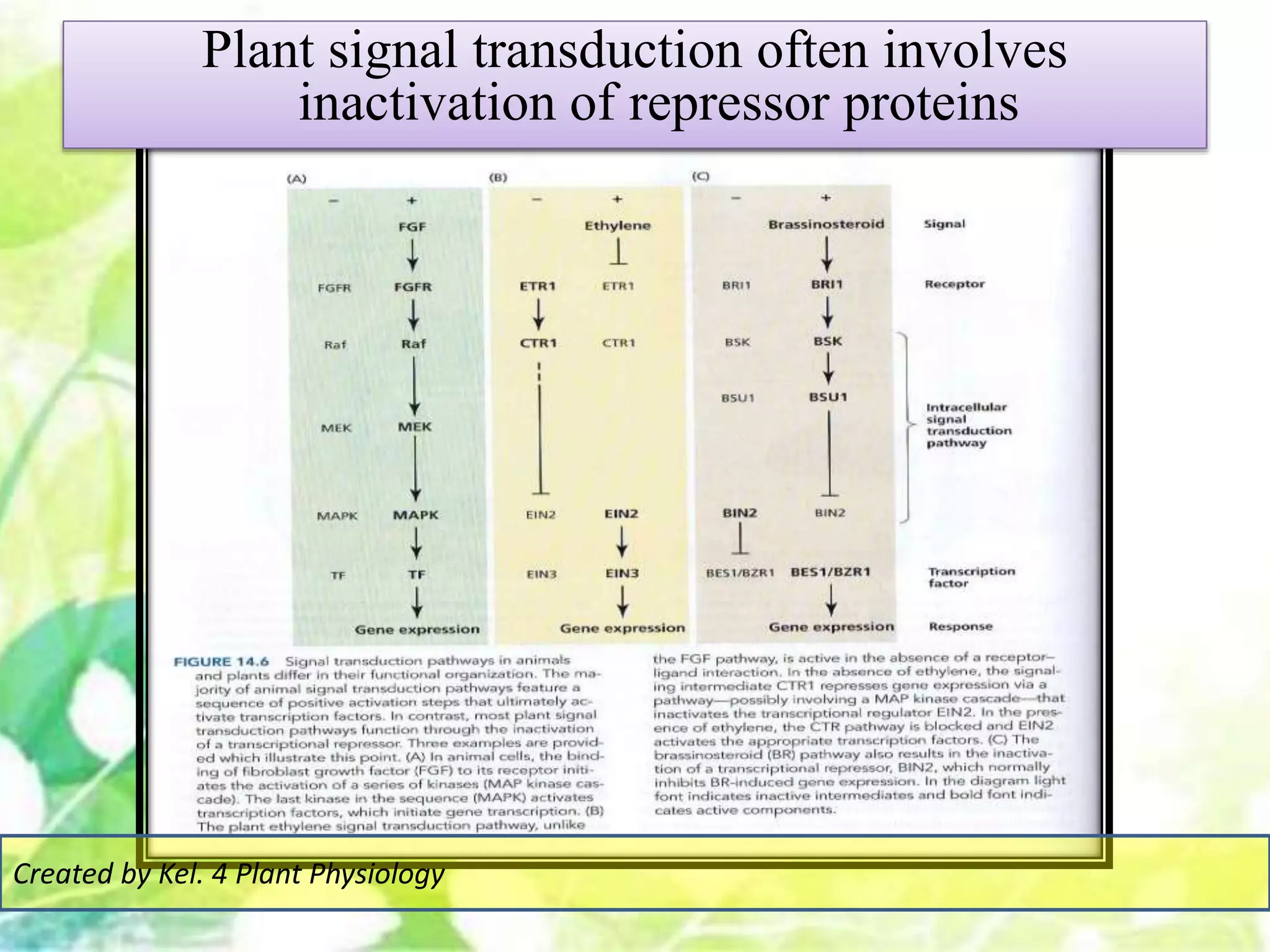
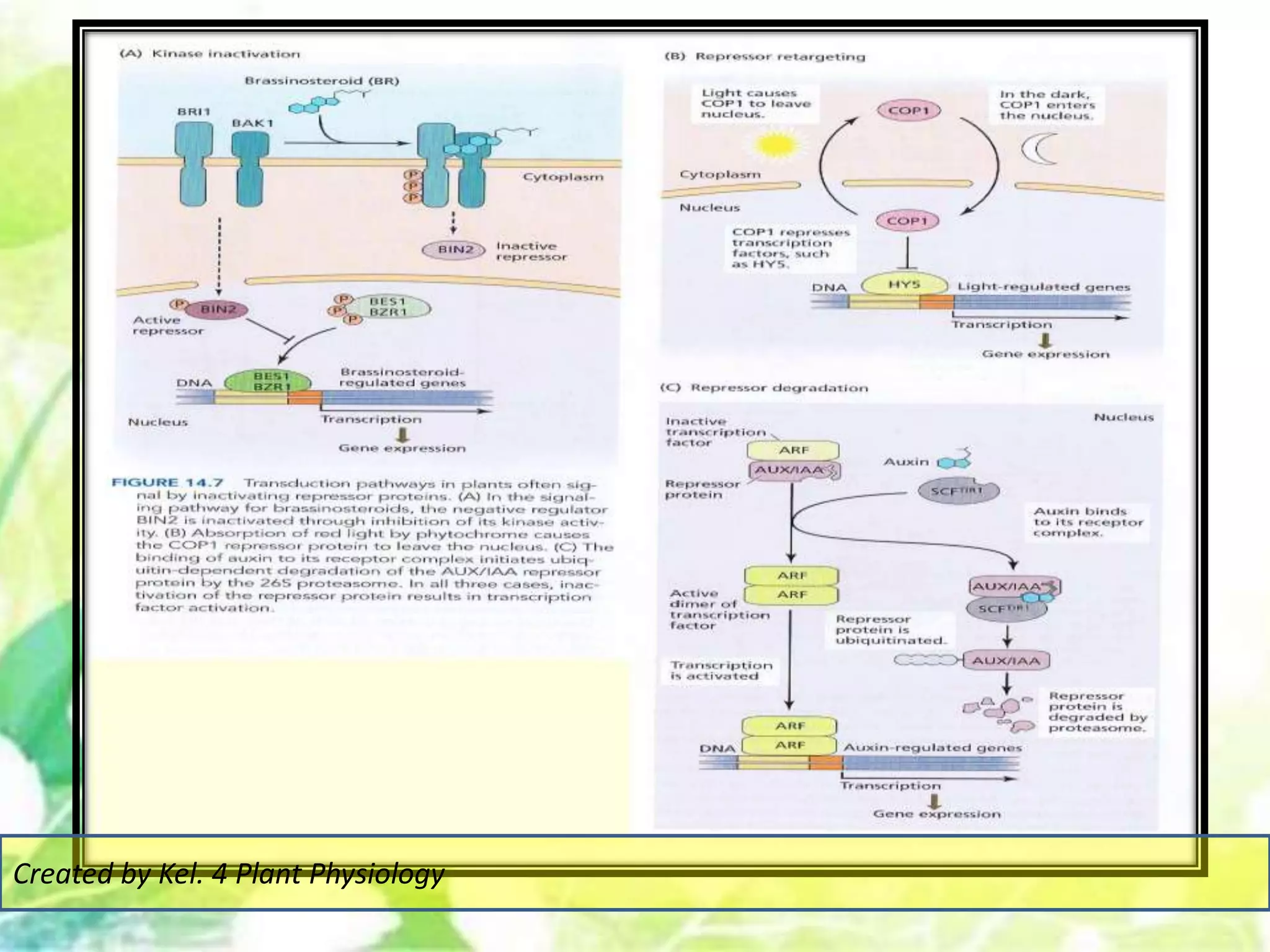
Plant signal transduction often involves
inactivation of repressor proteins
Created by Kel. 4 Plant Physiology
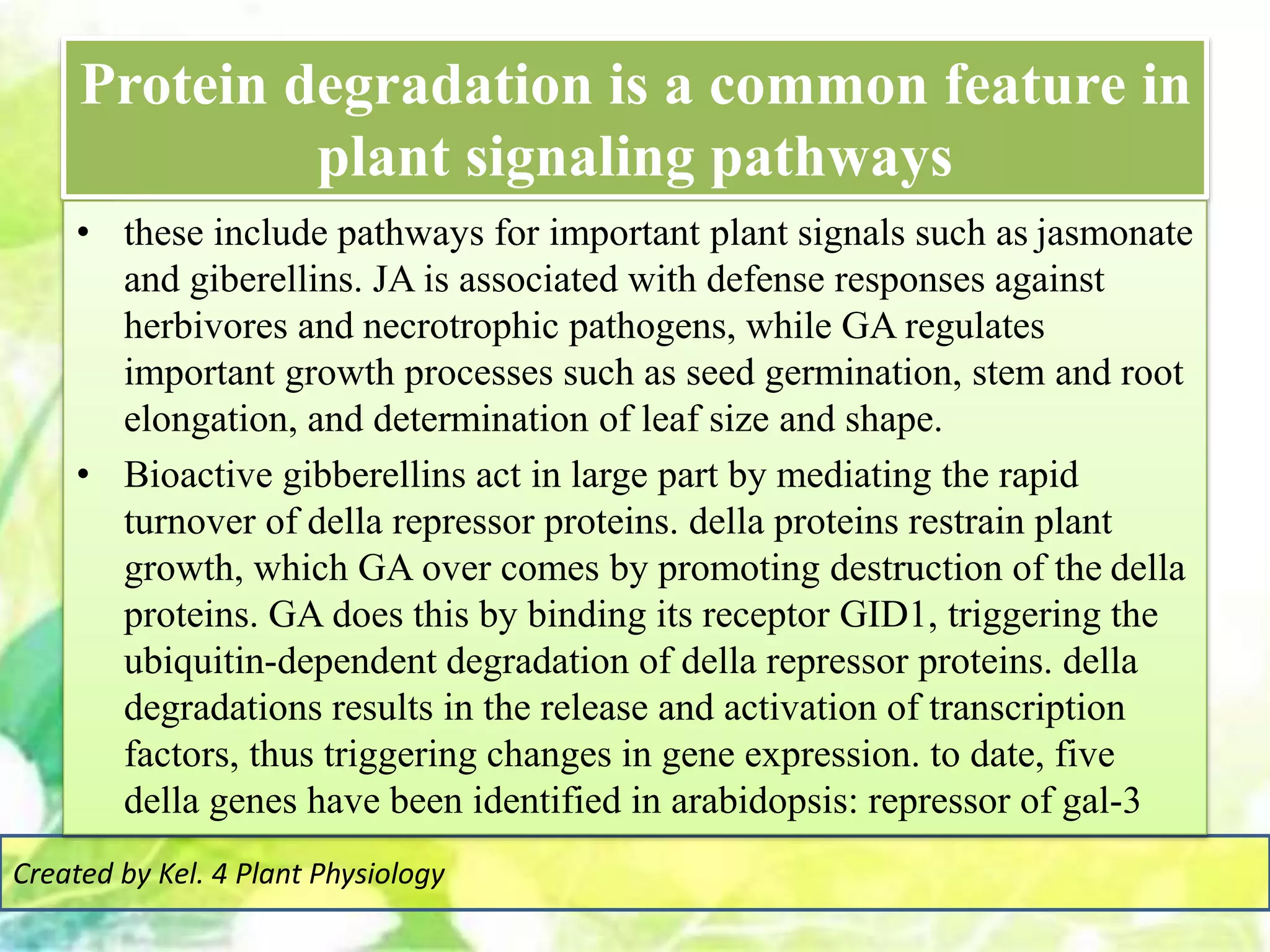
Protein degradation is a common feature in
plant signaling pathways
Created by Kel. 4 Plant Physiology
• these include pathways for important plant signals such as jasmonate
and giberellins. JA is associated with defense responses against
herbivores and necrotrophic pathogens, while GA regulates
important growth processes such as seed germination, stem and root
elongation, and determination of leaf size and shape.
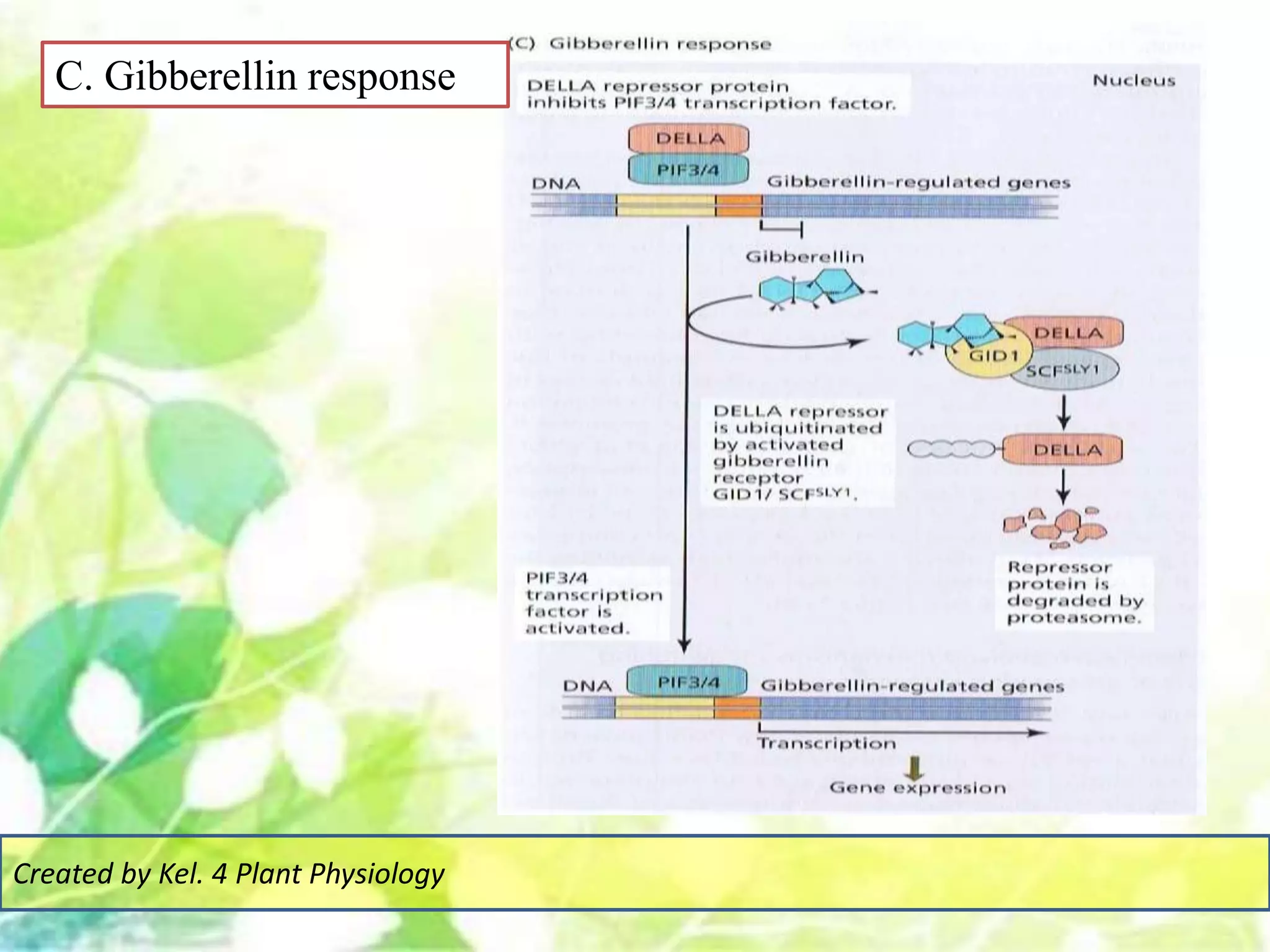
• Bioactive gibberellins act in large part by mediating the rapid
turnover of della repressor proteins. della proteins restrain plant
growth, which GA over comes by promoting destruction of the della
proteins. GA does this by binding its receptor GID1, triggering the
ubiquitin-dependent degradation of della repressor proteins. della
degradations results in the release and activation of transcription
factors, thus triggering changes in gene expression. to date, five
della genes have been identified in arabidopsis: repressor of gal-3
A. Auxin response
Created by Kel. 4 Plant Physiology
B. Jasmonate response
Created by Kel. 4 Plant Physiology
C. Gibberellin response
Created by Kel. 4 Plant Physiology
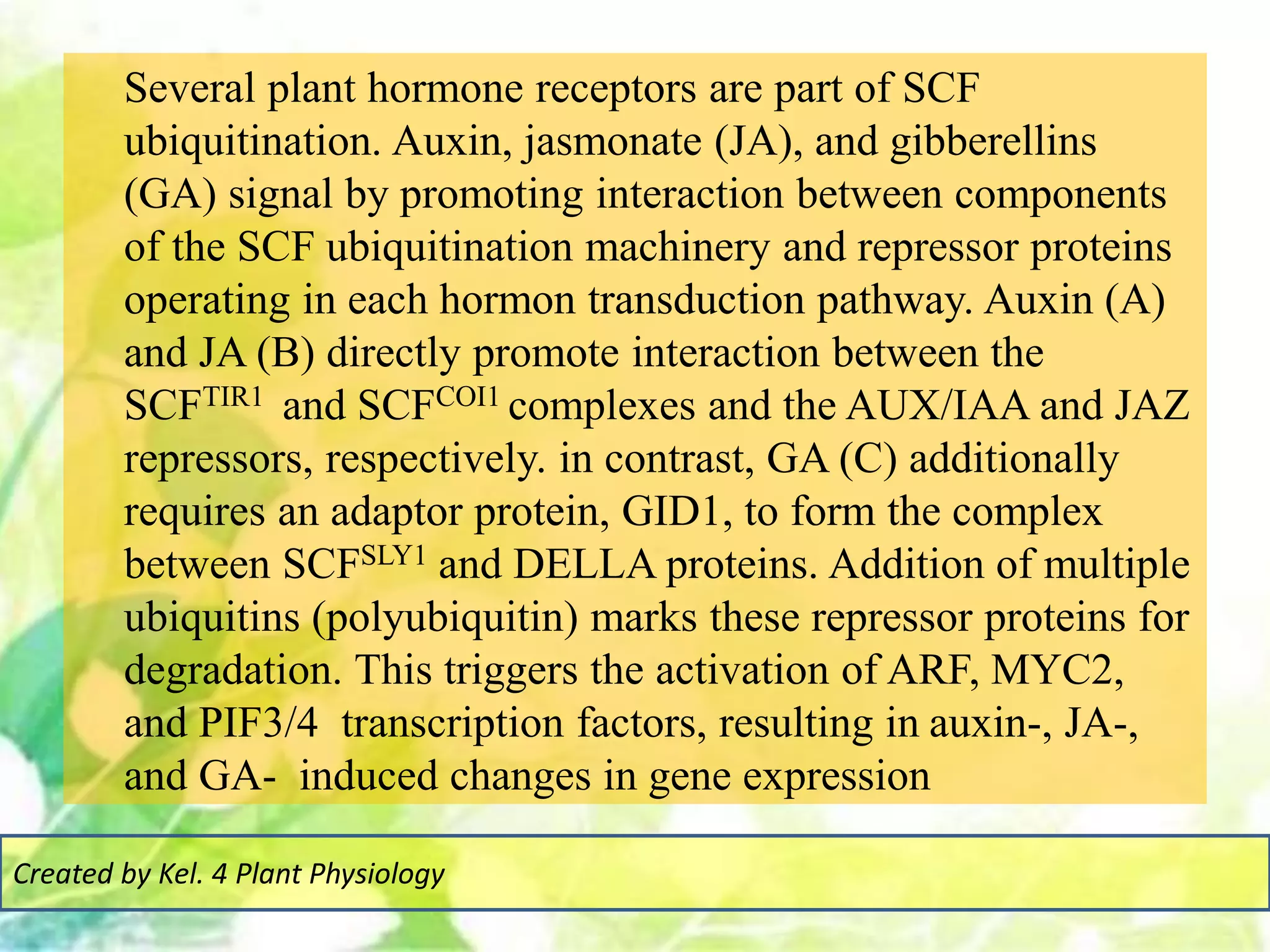
Several plant hormone receptors are part of SCF
ubiquitination. Auxin, jasmonate (JA), and gibberellins
(GA) signal by promoting interaction between components
of the SCF ubiquitination machinery and repressor proteins
operating in each hormon transduction pathway. Auxin (A)
and JA (B) directly promote interaction between the
SCFTIR1 and SCFCOI1 complexes and the AUX/IAA and JAZ
repressors, respectively. in contrast, GA (C) additionally
requires an adaptor protein, GID1, to form the complex
between SCFSLY1 and DELLA proteins. Addition of multiple
ubiquitins (polyubiquitin) marks these repressor proteins for
degradation. This triggers the activation of ARF, MYC2,
and PIF3/4 transcription factors, resulting in auxin-, JA-,
and GA- induced changes in gene expression
Created by Kel. 4 Plant Physiology
Several plant hormone receptors encode components of the
ubiquitination machinery
The auxin receptor is composed of
two proteins: the SCF complex
component TIR1 and the repressor
protein AUX/IAA. Ubiquitin moieties
are first activated by E1 ligase and
added to target proteins by E2 ligase.
TIR1 recruits AUX/IAA proteins to
the SCFTIR1 complex in an auxin-
dependent manner. once recruited by
auxin, AUX/IAA proteins are
ubiquitinated by the E3 ligase activity
of the SCFTIR1 complex, which marks
the protein for destruction by the 26s
proteasome
Created by Kel. 4 Plant Physiology
Inactivation of repressor proteins results in
a gene expression response
• In the case of auxin, AUX/IAA repressor
proteins are targeted for degradation, thereby
activating auxin response factor (ARF)-
dependent gene expression.
Created by Kel. 4 Plant Physiology
• Feedback regulation represent another key mechanism employed to
attenuate a response. For example, the AUX/IAA genes, which
encode the AUX/IAA auxin represor proteins, have auxin response
element binding sites located in their promoter regions(Hagen and
Guilfoyle 2002). Thus, AUX/IAA proteins can bind to the promoters
of their own genes and repress their own expression.
• Hormone signaling pathways are often subject to several loops of
negative feedback regulation. This is nicely illustrated by the GA
pathway(figure 14.10). Bioactive GA (GA4 in this example) is
synthesized through complex biosynthetic pathway that involves
multiple enzyme-catalyzed reaction (hedden and phillips 2000). The
last two enzymes in this pathway are encoded by members of the
GA20ox and GA3ox gene families, whose expression is inhibited by
GA.Thus GA acts to slow down its own synthesis.
plants have evolved mechanisms for switching off or
attenuating signaling responses
Created by Kel. 4 Plant Physiology
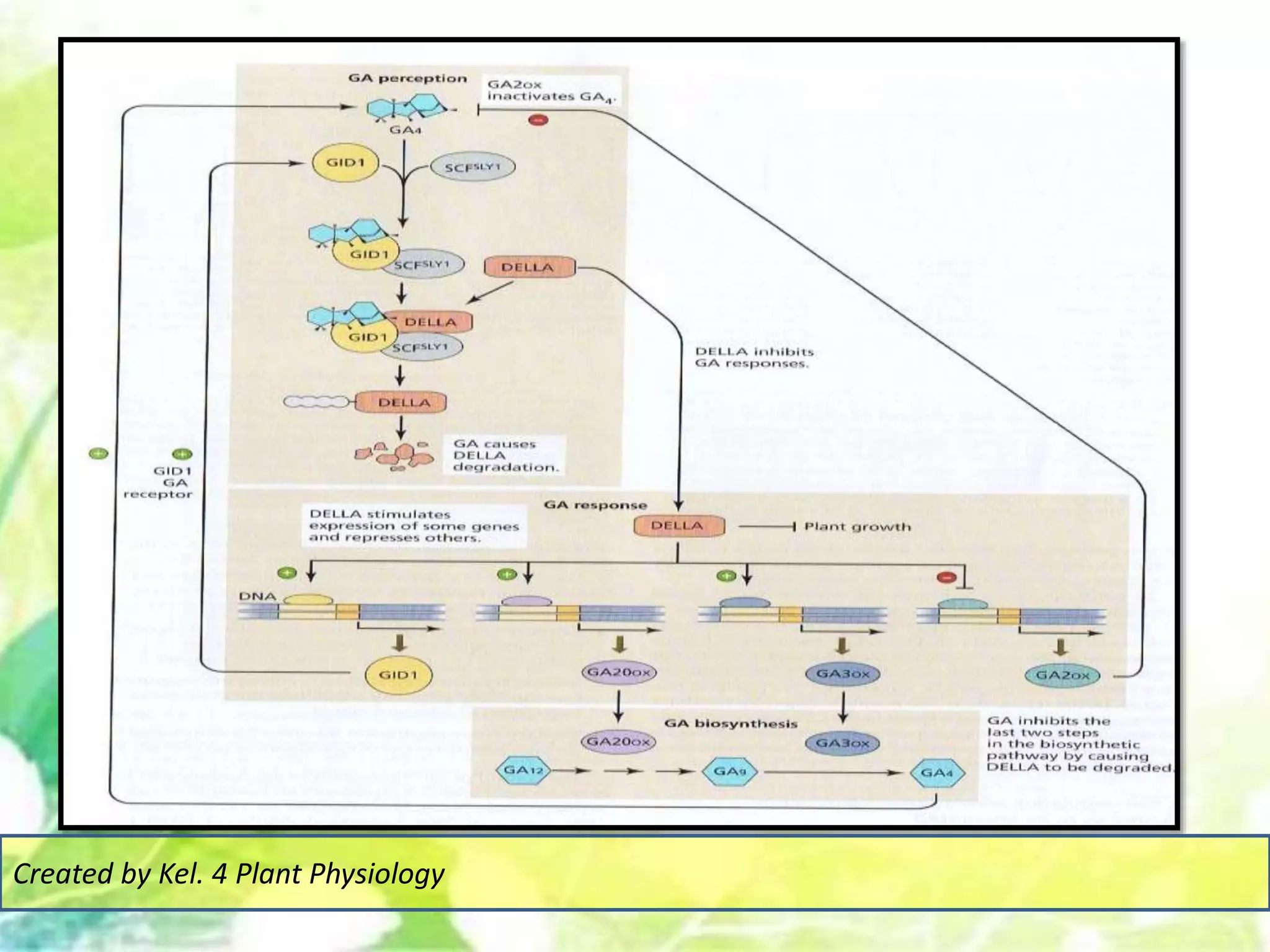
The GA response is regulated by a series of feedback
mechanisms involving components of both GA signal
transduction and GA biosynthesis. GA20 ox and GA3ox genes
encode enzymes that catalyze the last steps of the GA
biosynthetic pathway, while GA2ox catalyzes the breakdown
of the bioactive GA ,GA4. GID1 encodes the GA receptor that,
following ligand binding, recruits DELLA repressor proteins
to the SCF SLY1 complex for ubiquitination, triggering their
degradation. in the absence of GA, the DELLA proteins
positively regulate GID1, GA20ox,and GA3ox (plus signs)
and negatively regulate GA2ox (minus signs). Conversely,
both bioactive GA and the GID1 receptor enhance DELLA
repressor degradation (plus signs), while GA2ox blocks
DELLA repressor degradation (minus signs).
Created by Kel. 4 Plant Physiology
Cross- regulation allows signal
tranduction pathways to be integrated
Created by Kel. 4 Plant Physiology
Within plant cells, Signal
transduction pathways never
function in isolation, but operate
as part of complex web of
signaling interactions. This
realization helps us understand
why plant hormones often exhibit
agonistic (addtive or positive) or
antagonistic (inhibitory or
negative) interactions with other
signals.
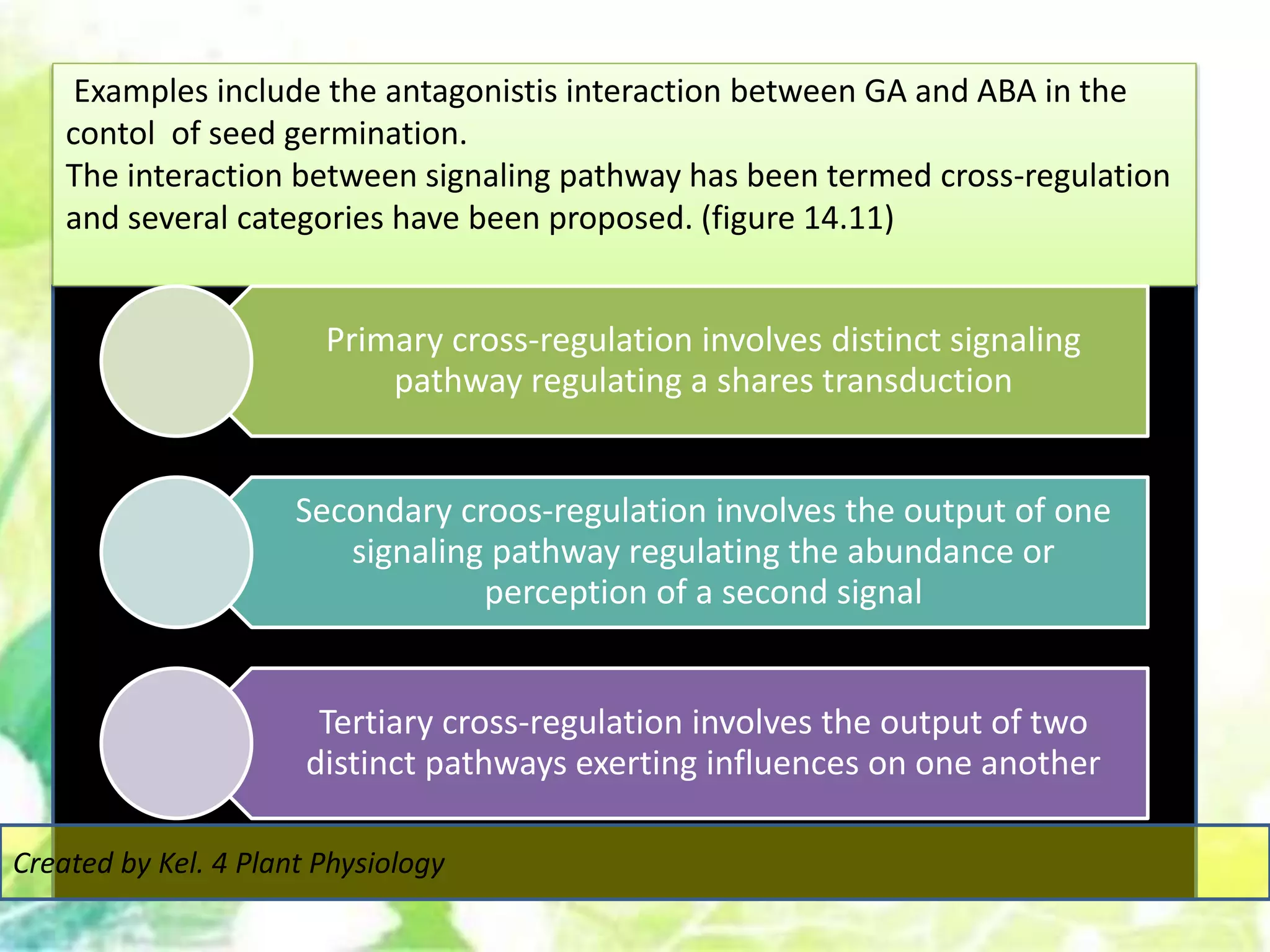
Examples include the antagonistis interaction between GA and ABA in the
contol of seed germination.
The interaction between signaling pathway has been termed cross-regulation
and several categories have been proposed. (figure 14.11)
Primary cross-regulation involves distinct signaling
pathway regulating a shares transduction
Secondary croos-regulation involves the output of one
signaling pathway regulating the abundance or
perception of a second signal
Tertiary cross-regulation involves the output of two
distinct pathways exerting influences on one another
Created by Kel. 4 Plant Physiology
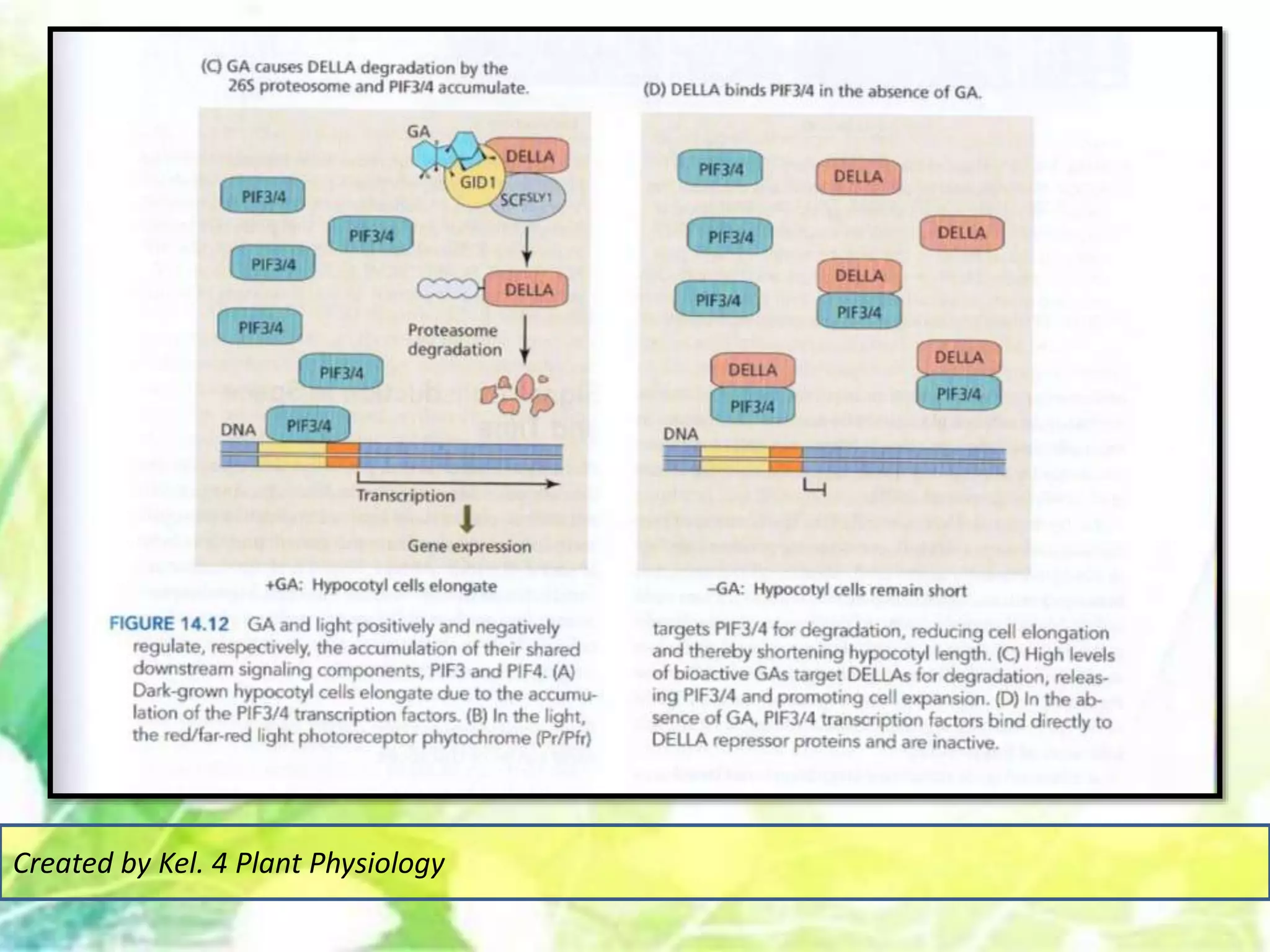
• The control of cell elongation in the Arabidopsis hypocotyl by light and
GA represent an example of negative primary cross-regulation.
• In this case, the light and GA pathways share common down-stream
signaling components- the closely related transcription factors PIF3
and PIF4- that act to stimulate cell elongation. The accumulation of
PIF3/4 is regulated in opposite ways by the two signals : positively by
GA and Negatively by light.
Created by Kel. 4 Plant Physiology
Signal Transduction in Space and Time
• Plant signal transduction occurs over a wide
range of distances.
• Example : Radial pattering in the Arabidopsis
primary root is regulated by the transcription
regulator SHORT-ROOT .( FIGURE 14.13)
• The genes SHR is transcribed and translated in
cells of the stele, at the center of the root(
Figure 14.13 A and C)
Created by Kel. 4 Plant Physiology
The SHR protein then move via plasmadesmata to cells in the
endodermis, where it activates the expression of cell fate
regulator such as SCARECROW (SCR)
Created by Kel. 4 Plant Physiology
• THANKS YOU VERY MUCH

Signal Tansduction Kel 4

  • 1.
    PLANT PHYSIOLOGY “Signal Transduction” By: DiasRindang Windari (4401411039) Kinaseh (4401411041) Lembayung Windi P (440141047) Dewi Setiyana (4401411058) Created by Kel. 4 Plant Physiology
  • 2.
    Signal Transduction • SignalTransduction in plants has long fascinated researchers • Charles Darwin performed pioneering studies on phototropic growth responses in canary grass and oat seedling tissues (Darwin 1881) • Since these classis studies, researches have demonstrated that plant perceive many environmental and physiological signals in order to fine-tune their growth and development Signal  Receptor  Signal transduction  Respone Created by Kel. 4 Plant Physiology
  • 3.
    Signal Transduction inPlant and Animal Cell Plants and animals have similar transduction components Created by Kel. 4 Plant Physiology
  • 4.
    Created by Kel.4 Plant Physiology
  • 5.
    Created by Kel.4 Plant PhysiologyCreated by Kel. 4 Plant Physiology
  • 6.
    Receptor Kinases CanInitiate A Signal Transduction Cascade Created by Kel. 4 Plant Physiology Receptor kinase must modify the activity of other proteins in order to trigger an intracellular signal transduction cascade. A target protein can be phosphorylated at various amino acid residues (serine, threonine, tyrosine or histidine). The intracellular target proteins are often protein kinases themselves, and they may be activited or inactivated by phosphorylation. This mecanism for modulating kinase activity is common in signal transduction pathway.
  • 7.
    Created by Kel.4 Plant Physiology
  • 8.
    • In additionto kinase, enzymes that remove phosphate group from protein, protein phosphatases, play important roles within signal transduction pathway. This binding occurs independently of the presence or absence of ABA. • In the absence of ABA, PP2C blocks SnRK2 kinase activity by removing phosphate groups from a region within the kinase domain termed the activation loop (FIGURE 14.3A). Created by Kel. 4 Plant Physiology
  • 9.
    • When ABAis present, its receptor binds directly to PP2C proteins (Park et al. 2009), which prevents PP2C from dephosphorylating the kinase domain of SnRK2. SnRK2 proteins are then free to phosphorylate target proteins, including specific transcription factors that activate ABA- responsive gene expression (FIGURE 14.3B) . • ABA signal transduction is therefore based on reversing the balance between PP2C protein phosphatase and SnRK2 kinase activities. Created by Kel. 4 Plant Physiology
  • 10.
    • In summary,plants and animals employ reseptors in conjunction with kinase and phosphatase transduction components in a number of important signaling pathway. Created by Kel. 4 Plant Physiology
  • 11.
    Plant Signal transductioncomponents have evolved from both prokaryotic and eukaryotic ancestors Created by Kel. 4 Plant Physiology
  • 12.
    • The functionof the sensor protein is to receive the input signal and to pass the signal on to the response regulator , which brings about the cellular response, typically gene expression. Sensor proteins have two domai, an input domain, which receives the environmental signal, and a transmitter domain, which transmits the signal to the response regulator. Created by Kel. 4 Plant Physiology
  • 13.
    • The responseregulator protein also has two domains, a receiver domain, which receives the signal from the transmitter domain of the sensor protein, and an output domain, such as a DNA-binding domain, which brings about the response. • The signal is passed from transmitter domain to receiver domain via protein phosphorylation. Transmitter domains have the ability to phosphorylate themselves, using ATP, on a specific histidine residue near the amino terminus • The phosphate is then transferred to a spesific aspartate residue causes the response regulator to undergo a conformational change that usually results in the activation of gene expression. • The hormone cytokinin is perceived via a phosphorelay that is organized in a similar way to the bacterial two- component systems (see figure 14.4; Chapter 21). Created by Kel. 4 Plant Physiology
  • 14.
    Signals are perceivedat many locations with plant cells Created by Kel. 4 Plant Physiology
  • 15.
    Plant signal transductionoften involves inactivation of repressor proteins Created by Kel. 4 Plant Physiology
  • 16.
    Created by Kel.4 Plant Physiology
  • 17.
    Protein degradation isa common feature in plant signaling pathways Created by Kel. 4 Plant Physiology • these include pathways for important plant signals such as jasmonate and giberellins. JA is associated with defense responses against herbivores and necrotrophic pathogens, while GA regulates important growth processes such as seed germination, stem and root elongation, and determination of leaf size and shape. • Bioactive gibberellins act in large part by mediating the rapid turnover of della repressor proteins. della proteins restrain plant growth, which GA over comes by promoting destruction of the della proteins. GA does this by binding its receptor GID1, triggering the ubiquitin-dependent degradation of della repressor proteins. della degradations results in the release and activation of transcription factors, thus triggering changes in gene expression. to date, five della genes have been identified in arabidopsis: repressor of gal-3
  • 18.
    A. Auxin response Createdby Kel. 4 Plant Physiology
  • 19.
    B. Jasmonate response Createdby Kel. 4 Plant Physiology
  • 20.
    C. Gibberellin response Createdby Kel. 4 Plant Physiology
  • 21.
    Several plant hormonereceptors are part of SCF ubiquitination. Auxin, jasmonate (JA), and gibberellins (GA) signal by promoting interaction between components of the SCF ubiquitination machinery and repressor proteins operating in each hormon transduction pathway. Auxin (A) and JA (B) directly promote interaction between the SCFTIR1 and SCFCOI1 complexes and the AUX/IAA and JAZ repressors, respectively. in contrast, GA (C) additionally requires an adaptor protein, GID1, to form the complex between SCFSLY1 and DELLA proteins. Addition of multiple ubiquitins (polyubiquitin) marks these repressor proteins for degradation. This triggers the activation of ARF, MYC2, and PIF3/4 transcription factors, resulting in auxin-, JA-, and GA- induced changes in gene expression Created by Kel. 4 Plant Physiology
  • 22.
    Several plant hormonereceptors encode components of the ubiquitination machinery The auxin receptor is composed of two proteins: the SCF complex component TIR1 and the repressor protein AUX/IAA. Ubiquitin moieties are first activated by E1 ligase and added to target proteins by E2 ligase. TIR1 recruits AUX/IAA proteins to the SCFTIR1 complex in an auxin- dependent manner. once recruited by auxin, AUX/IAA proteins are ubiquitinated by the E3 ligase activity of the SCFTIR1 complex, which marks the protein for destruction by the 26s proteasome Created by Kel. 4 Plant Physiology
  • 23.
    Inactivation of repressorproteins results in a gene expression response • In the case of auxin, AUX/IAA repressor proteins are targeted for degradation, thereby activating auxin response factor (ARF)- dependent gene expression. Created by Kel. 4 Plant Physiology
  • 24.
    • Feedback regulationrepresent another key mechanism employed to attenuate a response. For example, the AUX/IAA genes, which encode the AUX/IAA auxin represor proteins, have auxin response element binding sites located in their promoter regions(Hagen and Guilfoyle 2002). Thus, AUX/IAA proteins can bind to the promoters of their own genes and repress their own expression. • Hormone signaling pathways are often subject to several loops of negative feedback regulation. This is nicely illustrated by the GA pathway(figure 14.10). Bioactive GA (GA4 in this example) is synthesized through complex biosynthetic pathway that involves multiple enzyme-catalyzed reaction (hedden and phillips 2000). The last two enzymes in this pathway are encoded by members of the GA20ox and GA3ox gene families, whose expression is inhibited by GA.Thus GA acts to slow down its own synthesis. plants have evolved mechanisms for switching off or attenuating signaling responses Created by Kel. 4 Plant Physiology
  • 25.
    Created by Kel.4 Plant Physiology
  • 26.
    The GA responseis regulated by a series of feedback mechanisms involving components of both GA signal transduction and GA biosynthesis. GA20 ox and GA3ox genes encode enzymes that catalyze the last steps of the GA biosynthetic pathway, while GA2ox catalyzes the breakdown of the bioactive GA ,GA4. GID1 encodes the GA receptor that, following ligand binding, recruits DELLA repressor proteins to the SCF SLY1 complex for ubiquitination, triggering their degradation. in the absence of GA, the DELLA proteins positively regulate GID1, GA20ox,and GA3ox (plus signs) and negatively regulate GA2ox (minus signs). Conversely, both bioactive GA and the GID1 receptor enhance DELLA repressor degradation (plus signs), while GA2ox blocks DELLA repressor degradation (minus signs). Created by Kel. 4 Plant Physiology
  • 27.
    Cross- regulation allowssignal tranduction pathways to be integrated Created by Kel. 4 Plant Physiology Within plant cells, Signal transduction pathways never function in isolation, but operate as part of complex web of signaling interactions. This realization helps us understand why plant hormones often exhibit agonistic (addtive or positive) or antagonistic (inhibitory or negative) interactions with other signals.
  • 28.
    Examples include theantagonistis interaction between GA and ABA in the contol of seed germination. The interaction between signaling pathway has been termed cross-regulation and several categories have been proposed. (figure 14.11) Primary cross-regulation involves distinct signaling pathway regulating a shares transduction Secondary croos-regulation involves the output of one signaling pathway regulating the abundance or perception of a second signal Tertiary cross-regulation involves the output of two distinct pathways exerting influences on one another Created by Kel. 4 Plant Physiology
  • 29.
    Created by Kel.4 Plant Physiology
  • 30.
    • The controlof cell elongation in the Arabidopsis hypocotyl by light and GA represent an example of negative primary cross-regulation. • In this case, the light and GA pathways share common down-stream signaling components- the closely related transcription factors PIF3 and PIF4- that act to stimulate cell elongation. The accumulation of PIF3/4 is regulated in opposite ways by the two signals : positively by GA and Negatively by light. Created by Kel. 4 Plant Physiology
  • 31.
    Created by Kel.4 Plant Physiology
  • 32.
    Signal Transduction inSpace and Time • Plant signal transduction occurs over a wide range of distances. • Example : Radial pattering in the Arabidopsis primary root is regulated by the transcription regulator SHORT-ROOT .( FIGURE 14.13) • The genes SHR is transcribed and translated in cells of the stele, at the center of the root( Figure 14.13 A and C) Created by Kel. 4 Plant Physiology
  • 33.
    Created by Kel.4 Plant Physiology
  • 34.
    The SHR proteinthen move via plasmadesmata to cells in the endodermis, where it activates the expression of cell fate regulator such as SCARECROW (SCR) Created by Kel. 4 Plant Physiology
  • 35.
    Created by Kel.4 Plant Physiology • THANKS YOU VERY MUCH

Editor's Notes

  • #7 Reseptor kinase dapat menginisiasi sebuah transduksi sinyal menurun secara drastis.