Inhalation, Ingestion, parenteral administration Industrial toxins (CCl4, yellow phosphorus) Mushroom poisoning (Amenita, Galerina) Pharmacologic agents
Direct toxic Carbon tetrachloride Acetaminophen Halothane Idiosyncratic
Hepatitis occurs with predictable regularity Dose-dependent Latent period short (several hours) Clinical manifestations may be delayed  (24-  48 hours) CCl4, phosphorus, Amanita mushroom, Tetracycline Liver injury may go unrecognized until the onset of jaundice
Hepatitis is infrequent (1 in 1000-10000 px) Unpredictable Response is not dose-dependent Liver injury may occur during or shortly after exposure to the drug Isoniazid, phenytoin, statins, oral contraceptives Extrahepatic manifestations: rash, fever, arthralgia, leukocytosis, eosinophilia
Cholestasis Fatty liver Hepatitis Mixed hepatitis/cholestasis Toxic (necrosis) Grnulomas
Methyl testosterone Erythromycin Rifampin Amoxicillin-clavulanic  Oxacillin Clopidogrel Irbersartan Nifedipine Verapamil Methimazole Sulindac Ezetimibe Tamoxifen Mestranol Chlorpropamide Chlorpromazine
Amiodarone Tertracycline (high dose IV) Valproic acid Antiviral protease inhibitors (indinavir, ritonavir) Methorexate
Halothane Isoniazid (INH) Rifampin Pyrazinamide (PZA) Phenytoin Carbamazine Ketoconazole Fluconazole Itraconazole Methyldopa Captopril Losartan Ibuprofen Diclofenac Indomethacin Sulindac Nifedipine Verapamil Diltiazem Chlorothiazide Troglitazone Acarbose Antiviral Protease inhibitors (ritnavir, idinavir)
Amoxicillin/Clavulanic acid Trimethoprim/Sulfamethoxazole Azathioprine Nicotinic acid Lovastatin Ezetimibe
Acetaminophen Carbon tetrachloride Yellow phosphorus Amanita phalloides Dimethylformamide
Quinidine Sulfonamides Carbamazine Allopurinol
Direct toxin Common in US and UK Single dose of 10-15 grams    liver injury >25 grams    fatal Pain, nausea, vomiting, diarrhea in 4-12 hrs Liver failure in 24-48 hrs Aminotranferase levels app 10,000 units In alcoholics, toxic dose may be 2 grams
Supportive measures Gastric lavage Activated charcoal or cholestyramine (prevent absorption); should be given within 30 mins N-acetylcysteine given within 8 hrs; loading dose-140/kg, ff by 70mg/kg q 4 hrs x 15-20 doses Survivors have no evidence of hepatic sequelae
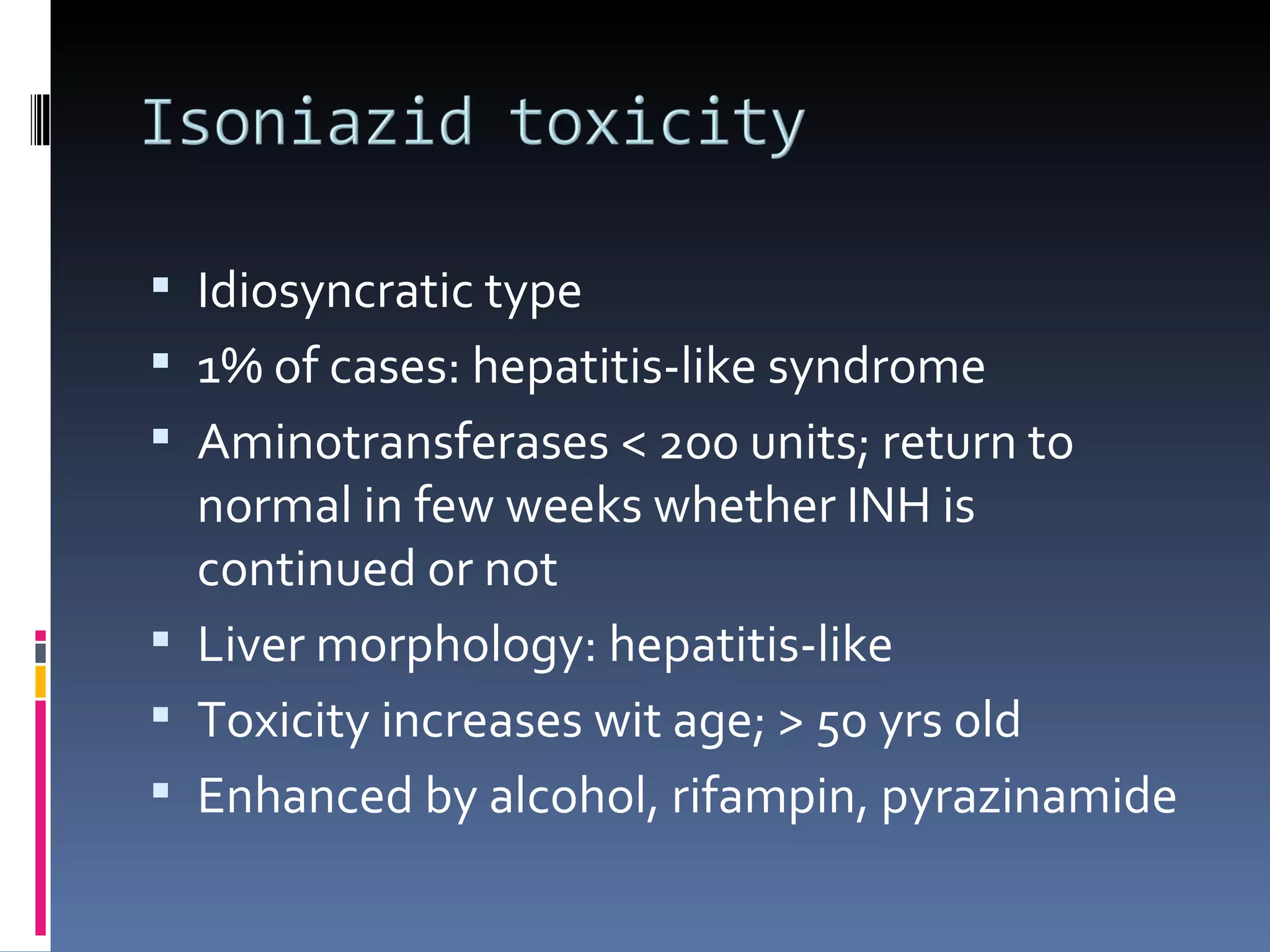
Idiosyncratic type 1% of cases: hepatitis-like syndrome Aminotransferases < 200 units; return to normal in few weeks whether INH is continued or not Liver morphology: hepatitis-like Toxicity increases wit age; > 50 yrs old Enhanced by alcohol, rifampin, pyrazinamide
Idiosyncratic type Steven Johnson’s syndrome: exfoliative dermatitis, fever, lymphadenopathy; leukocytosis, eosinopilia    immune mediated hypersensitivity mechanism Liver morphology: hepatitis-like picture (majority); cholestasis (rare)
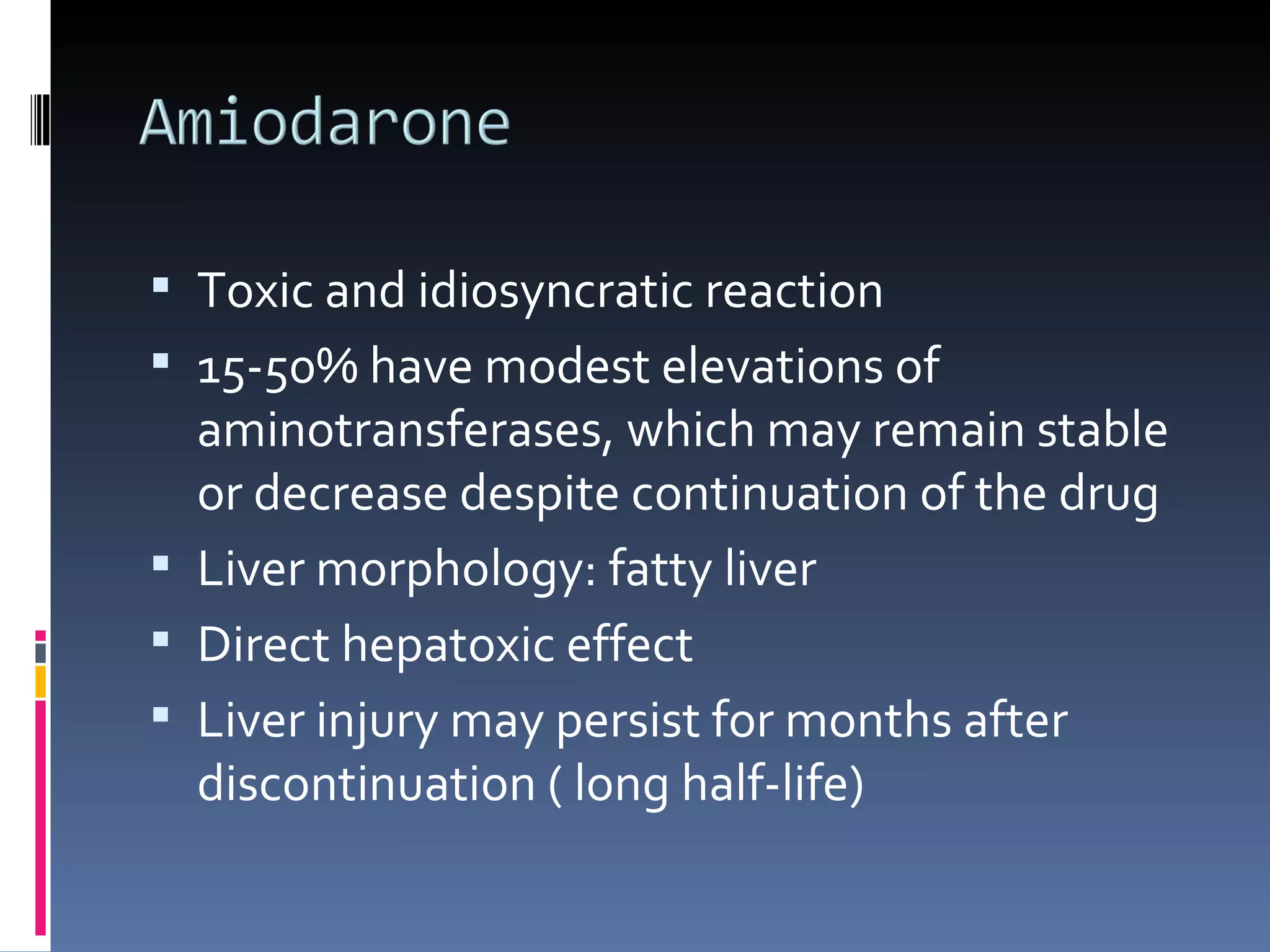
Toxic and idiosyncratic reaction 15-50% have modest elevations of aminotransferases, which may remain stable or decrease despite continuation of the drug Liver morphology: fatty liver Direct hepatoxic effect Liver injury may persist for months after discontinuation ( long half-life)
More common in children Cholestatic type  Idiosyncratic reaction Nausea, vomiting, fever, RUQ pain, jaundice, leukocytosis, elevated aminotransferases Clinical improvement upon drug withdrawal No evidence of CLD on follow up
Combination of estrogenic and progestational steroids; estrogen is primarily responsible Intrahepatic cholestasis Pruritus and jaundice Susceptible patients: idiopathic jaundice of pregnancy, family history Focal nodular hyperplasia, adenomas
Jin Bu Huan Xiao chai hu tang Senna Mistletoe Skull cap Ma huang Bee pollen Valerian root Kava Caelandine Impila Herbal tea
Pyrrolizidine alkaloids may contaminate Chinese herbal meds    venoocclusive disease    sinusoidal hepatic vein obstruction Active metabolites, which maybe potentiated by alcohol and drugs that stimulate cytochrome P450 Alternative meds may also stimulate cytochrome P450    amplify the hepatotoxicity of drug hepatotoxins
 

Toxic and drug induced hepatitis

  • 1.
  • 2.
    Inhalation, Ingestion, parenteraladministration Industrial toxins (CCl4, yellow phosphorus) Mushroom poisoning (Amenita, Galerina) Pharmacologic agents
  • 3.
    Direct toxic Carbontetrachloride Acetaminophen Halothane Idiosyncratic
  • 4.
    Hepatitis occurs withpredictable regularity Dose-dependent Latent period short (several hours) Clinical manifestations may be delayed (24- 48 hours) CCl4, phosphorus, Amanita mushroom, Tetracycline Liver injury may go unrecognized until the onset of jaundice
  • 5.
    Hepatitis is infrequent(1 in 1000-10000 px) Unpredictable Response is not dose-dependent Liver injury may occur during or shortly after exposure to the drug Isoniazid, phenytoin, statins, oral contraceptives Extrahepatic manifestations: rash, fever, arthralgia, leukocytosis, eosinophilia
  • 6.
    Cholestasis Fatty liverHepatitis Mixed hepatitis/cholestasis Toxic (necrosis) Grnulomas
  • 7.
    Methyl testosterone ErythromycinRifampin Amoxicillin-clavulanic Oxacillin Clopidogrel Irbersartan Nifedipine Verapamil Methimazole Sulindac Ezetimibe Tamoxifen Mestranol Chlorpropamide Chlorpromazine
  • 8.
    Amiodarone Tertracycline (highdose IV) Valproic acid Antiviral protease inhibitors (indinavir, ritonavir) Methorexate
  • 9.
    Halothane Isoniazid (INH)Rifampin Pyrazinamide (PZA) Phenytoin Carbamazine Ketoconazole Fluconazole Itraconazole Methyldopa Captopril Losartan Ibuprofen Diclofenac Indomethacin Sulindac Nifedipine Verapamil Diltiazem Chlorothiazide Troglitazone Acarbose Antiviral Protease inhibitors (ritnavir, idinavir)
  • 10.
    Amoxicillin/Clavulanic acid Trimethoprim/SulfamethoxazoleAzathioprine Nicotinic acid Lovastatin Ezetimibe
  • 11.
    Acetaminophen Carbon tetrachlorideYellow phosphorus Amanita phalloides Dimethylformamide
  • 12.
  • 13.
    Direct toxin Commonin US and UK Single dose of 10-15 grams  liver injury >25 grams  fatal Pain, nausea, vomiting, diarrhea in 4-12 hrs Liver failure in 24-48 hrs Aminotranferase levels app 10,000 units In alcoholics, toxic dose may be 2 grams
  • 14.
    Supportive measures Gastriclavage Activated charcoal or cholestyramine (prevent absorption); should be given within 30 mins N-acetylcysteine given within 8 hrs; loading dose-140/kg, ff by 70mg/kg q 4 hrs x 15-20 doses Survivors have no evidence of hepatic sequelae
  • 15.
    Idiosyncratic type 1%of cases: hepatitis-like syndrome Aminotransferases < 200 units; return to normal in few weeks whether INH is continued or not Liver morphology: hepatitis-like Toxicity increases wit age; > 50 yrs old Enhanced by alcohol, rifampin, pyrazinamide
  • 16.
    Idiosyncratic type StevenJohnson’s syndrome: exfoliative dermatitis, fever, lymphadenopathy; leukocytosis, eosinopilia  immune mediated hypersensitivity mechanism Liver morphology: hepatitis-like picture (majority); cholestasis (rare)
  • 17.
    Toxic and idiosyncraticreaction 15-50% have modest elevations of aminotransferases, which may remain stable or decrease despite continuation of the drug Liver morphology: fatty liver Direct hepatoxic effect Liver injury may persist for months after discontinuation ( long half-life)
  • 18.
    More common inchildren Cholestatic type Idiosyncratic reaction Nausea, vomiting, fever, RUQ pain, jaundice, leukocytosis, elevated aminotransferases Clinical improvement upon drug withdrawal No evidence of CLD on follow up
  • 19.
    Combination of estrogenicand progestational steroids; estrogen is primarily responsible Intrahepatic cholestasis Pruritus and jaundice Susceptible patients: idiopathic jaundice of pregnancy, family history Focal nodular hyperplasia, adenomas
  • 20.
    Jin Bu HuanXiao chai hu tang Senna Mistletoe Skull cap Ma huang Bee pollen Valerian root Kava Caelandine Impila Herbal tea
  • 21.
    Pyrrolizidine alkaloids maycontaminate Chinese herbal meds  venoocclusive disease  sinusoidal hepatic vein obstruction Active metabolites, which maybe potentiated by alcohol and drugs that stimulate cytochrome P450 Alternative meds may also stimulate cytochrome P450  amplify the hepatotoxicity of drug hepatotoxins
  • 22.