Photo by W. W. Little
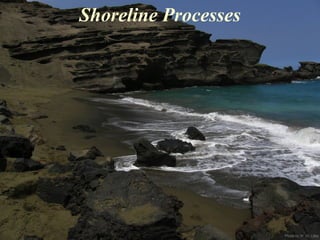
Shoreline Processes
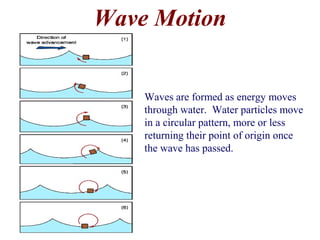
Wave Motion
Waves are formed as energy moves
through water. Water particles move
in a circular pattern, more or less
returning their point of origin once
the wave has passed.
Photo by W. W. Little
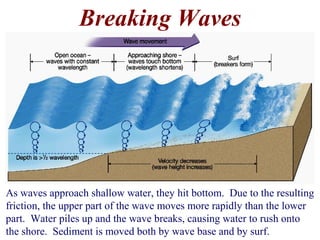
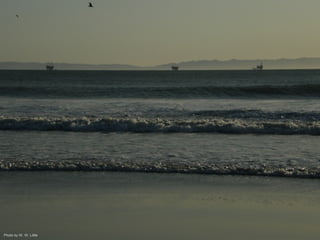
Breaking Waves
As waves approach shallow water, they hit bottom. Due to the resulting
friction, the upper part of the wave moves more rapidly than the lower
part. Water piles up and the wave breaks, causing water to rush onto
the shore. Sediment is moved both by wave base and by surf.
Photo by W. W. Little
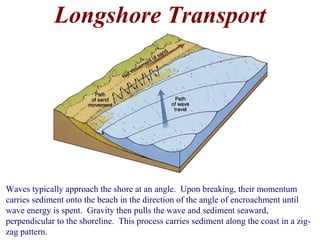
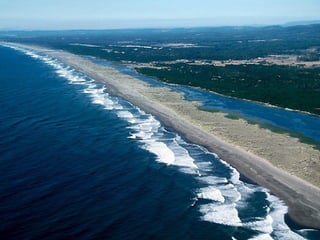
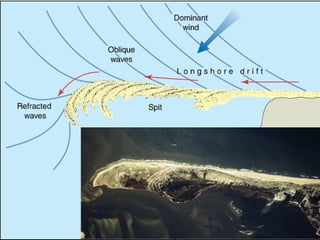
Longshore Transport
Waves typically approach the shore at an angle. Upon breaking, their momentum
carries sediment onto the beach in the direction of the angle of encroachment until
wave energy is spent. Gravity then pulls the wave and sediment seaward,
perpendicular to the shoreline. This process carries sediment along the coast in a zig-
zag pattern.
Photo by W. W. Little
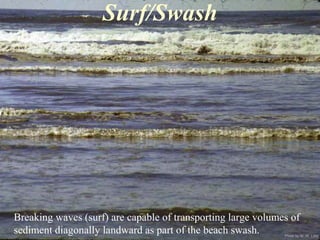
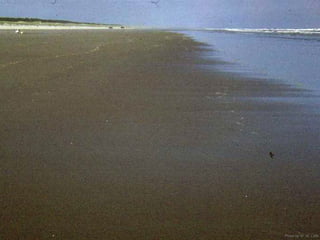
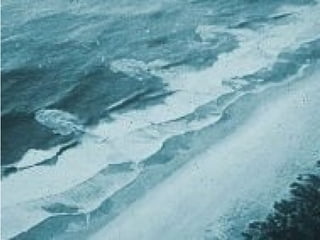
Surf/Swash
Breaking waves (surf) are capable of transporting large volumes of
sediment diagonally landward as part of the beach swash.
Photo by W. W. Little
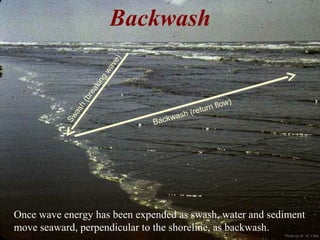
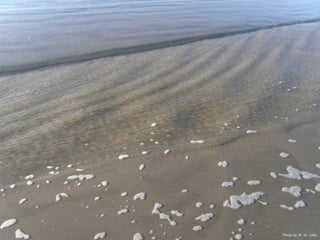
Swash
(breaking
wave)
Backwash (return flow)
Backwash
Once wave energy has been expended as swash, water and sediment
move seaward, perpendicular to the shoreline, as backwash.
Photo by W. W. Little
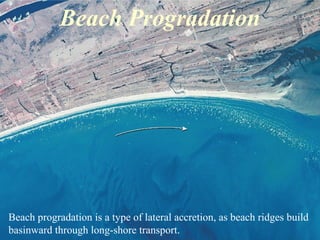
Beach Progradation
Beach progradation is a type of lateral accretion, as beach ridges build
basinward through long-shore transport.
Channels
Numerous small fluvial
channels flow to the swash
zone.
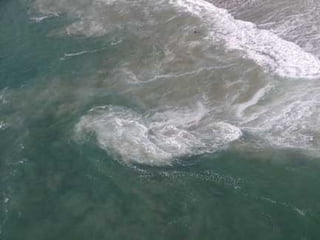
Rip Currents
Water piled against a shoreline by ocean
currents must return to sea. It does so by
flowing as a stream through breaking waves.
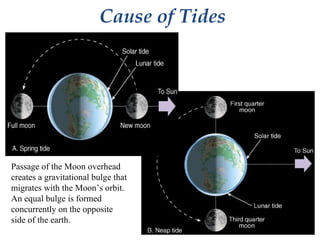
Cause of Tides
Passage of the Moon overhead
creates a gravitational bulge that
migrates with the Moon’s orbit.
An equal bulge is formed
concurrently on the opposite
side of the earth.
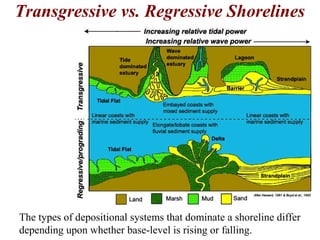
Transgressive vs. Regressive Shorelines
The types of depositional systems that dominate a shoreline differ
depending upon whether base-level is rising or falling.

Shoreline Processes

  • 1.
    Photo by W.W. Little Shoreline Processes
  • 2.
    Wave Motion Waves areformed as energy moves through water. Water particles move in a circular pattern, more or less returning their point of origin once the wave has passed.
  • 3.
    Photo by W.W. Little
  • 4.
    Breaking Waves As wavesapproach shallow water, they hit bottom. Due to the resulting friction, the upper part of the wave moves more rapidly than the lower part. Water piles up and the wave breaks, causing water to rush onto the shore. Sediment is moved both by wave base and by surf.
  • 5.
    Photo by W.W. Little
  • 6.
    Longshore Transport Waves typicallyapproach the shore at an angle. Upon breaking, their momentum carries sediment onto the beach in the direction of the angle of encroachment until wave energy is spent. Gravity then pulls the wave and sediment seaward, perpendicular to the shoreline. This process carries sediment along the coast in a zig- zag pattern.
  • 7.
    Photo by W.W. Little Surf/Swash Breaking waves (surf) are capable of transporting large volumes of sediment diagonally landward as part of the beach swash.
  • 8.
    Photo by W.W. Little Swash (breaking wave) Backwash (return flow) Backwash Once wave energy has been expended as swash, water and sediment move seaward, perpendicular to the shoreline, as backwash.
  • 9.
    Photo by W.W. Little
  • 10.
    Photo by W.W. Little
  • 12.
    Beach Progradation Beach progradationis a type of lateral accretion, as beach ridges build basinward through long-shore transport.
  • 14.
  • 15.
    Rip Currents Water piledagainst a shoreline by ocean currents must return to sea. It does so by flowing as a stream through breaking waves.
  • 18.
    Cause of Tides Passageof the Moon overhead creates a gravitational bulge that migrates with the Moon’s orbit. An equal bulge is formed concurrently on the opposite side of the earth.
  • 22.
    Transgressive vs. RegressiveShorelines The types of depositional systems that dominate a shoreline differ depending upon whether base-level is rising or falling.