Glacial Systems
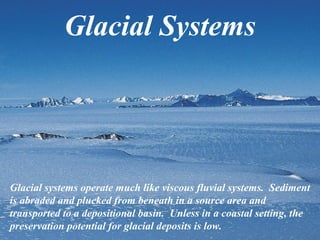
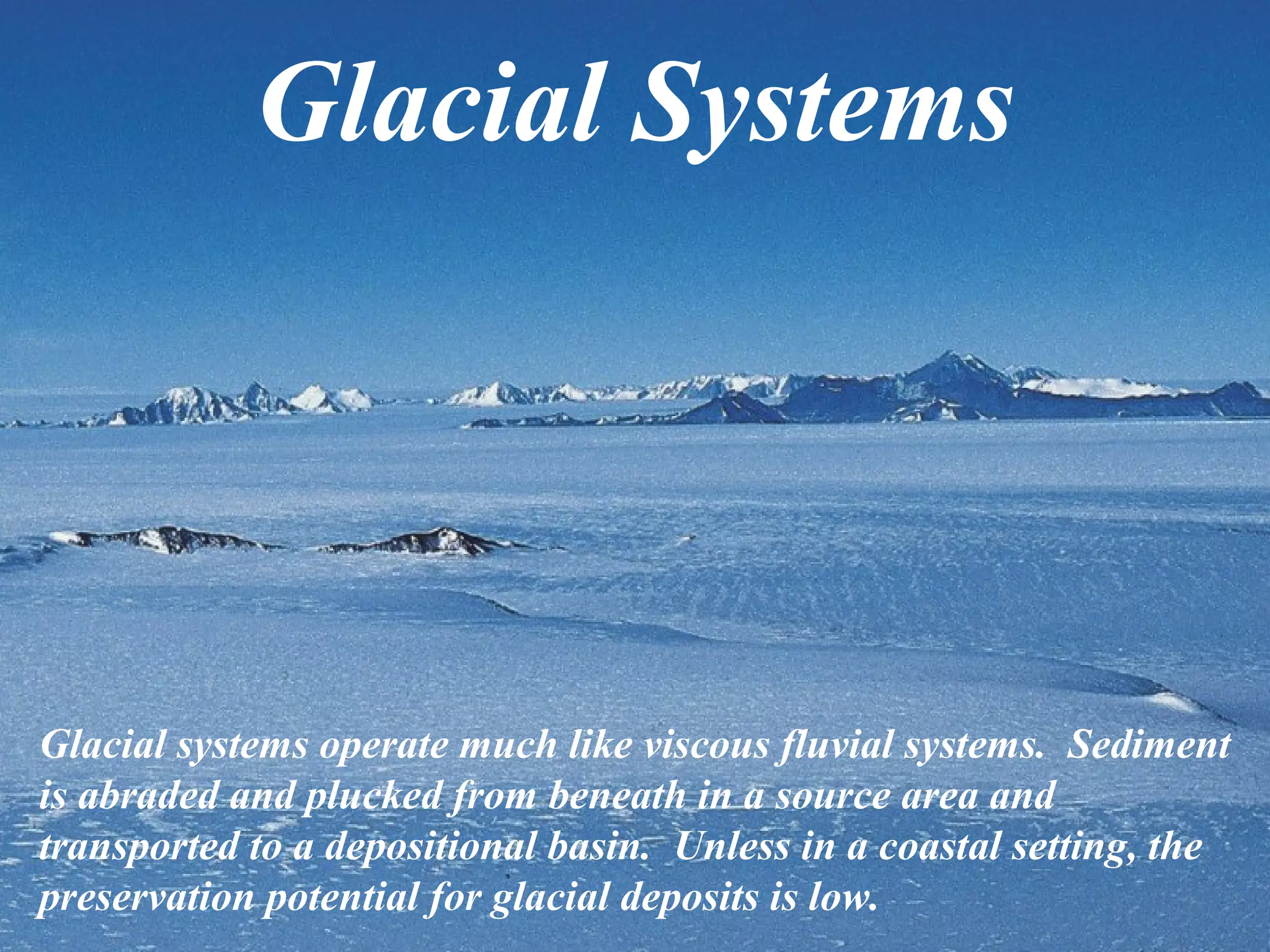
Glacial systems operate much like viscous fluvial systems. Sediment
is abraded and plucked from beneath in a source area and
transported to a depositional basin. Unless in a coastal setting, the
preservation potential for glacial deposits is low.
Conversion of Snow to Ice
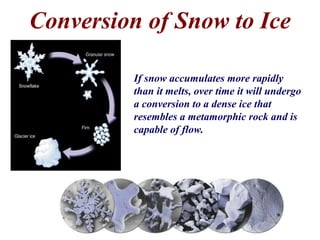
If snow accumulates more rapidly
than it melts, over time it will undergo
a conversion to a dense ice that
resembles a metamorphic rock and is
capable of flow.
Plastic Deformation
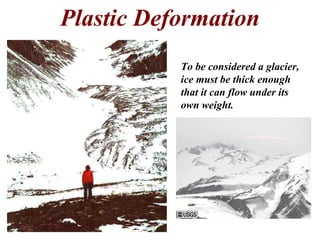
To be considered a glacier,
ice must be thick enough
that it can flow under its
own weight.
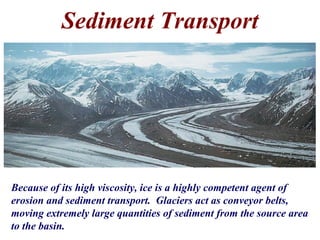
Sediment Transport
Because of its high viscosity, ice is a highly competent agent of
erosion and sediment transport. Glaciers act as conveyor belts,
moving extremely large quantities of sediment from the source area
to the basin.
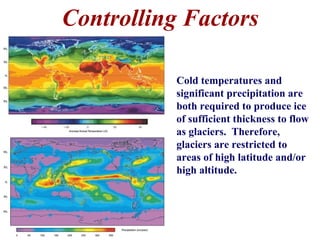
Controlling Factors
Cold temperatures and
significant precipitation are
both required to produce ice
of sufficient thickness to flow
as glaciers. Therefore,
glaciers are restricted to
areas of high latitude and/or
high altitude.
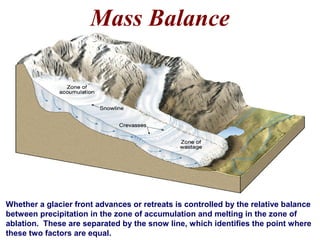
Mass Balance
Whether a glacier front advances or retreats is controlled by the relative balance
between precipitation in the zone of accumulation and melting in the zone of
ablation. These are separated by the snow line, which identifies the point where
these two factors are equal.
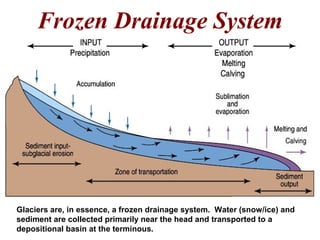
Frozen Drainage System
Glaciers are, in essence, a frozen drainage system. Water (snow/ice) and
sediment are collected primarily near the head and transported to a
depositional basin at the terminous.
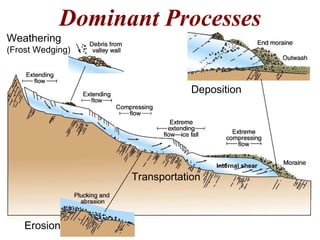
Erosion
Weathering
(Frost Wedging)
Deposition
Transportation
Dominant Processes
Internal shear
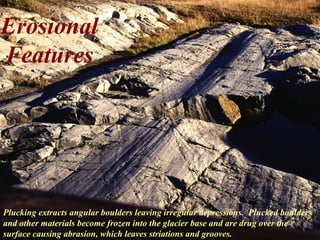
Erosional
Features
Plucking extracts angular boulders leaving irregular depressions. Plucked boulders
and other materials become frozen into the glacier base and are drug over the
surface causing abrasion, which leaves striations and grooves.
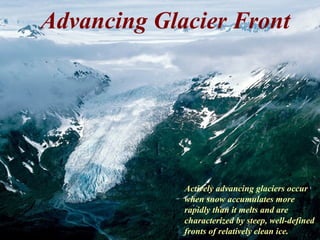
Advancing Glacier Front
Actively advancing glaciers occur
when snow accumulates more
rapidly than it melts and are
characterized by steep, well-defined
fronts of relatively clean ice.
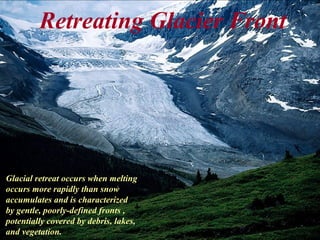
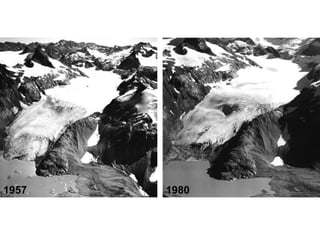
Retreating Glacier Front
Glacial retreat occurs when melting
occurs more rapidly than snow
accumulates and is characterized
by gentle, poorly-defined fronts ,
potentially covered by debris, lakes,
and vegetation.
1957 1980
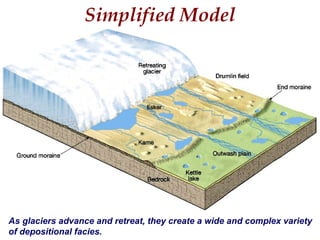
Simplified Model
As glaciers advance and retreat, they create a wide and complex variety
of depositional facies.
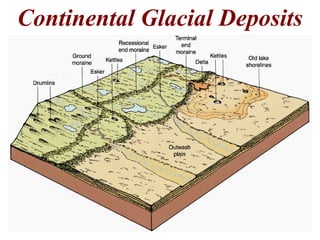
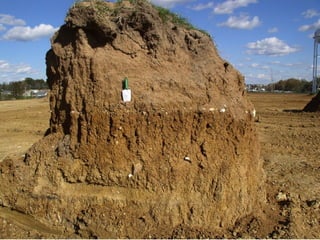
Continental Glacial Deposits
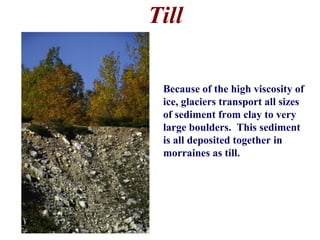
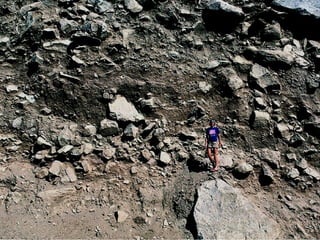
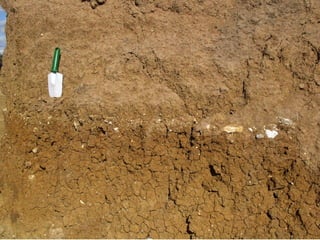
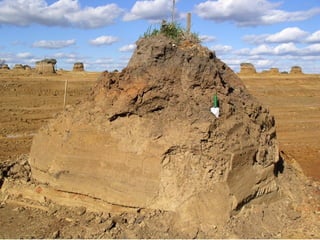
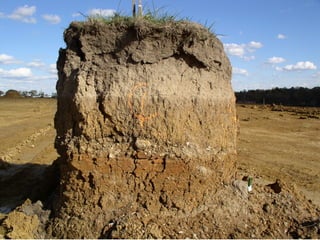
Till
Because of the high viscosity of
ice, glaciers transport all sizes
of sediment from clay to very
large boulders. This sediment
is all deposited together in
morraines as till.
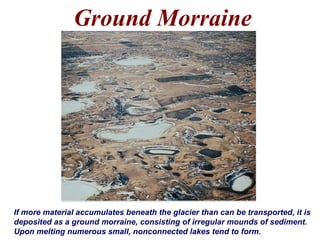
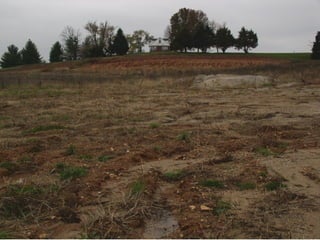
Ground Morraine
If more material accumulates beneath the glacier than can be transported, it is
deposited as a ground morraine, consisting of irregular mounds of sediment.
Upon melting numerous small, nonconnected lakes tend to form.
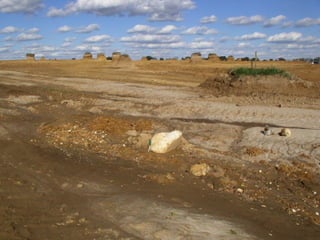
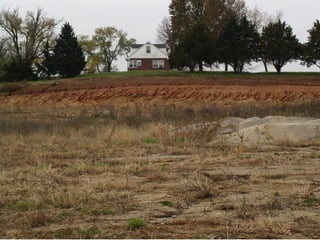
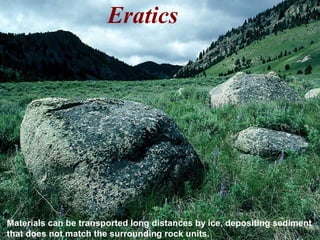
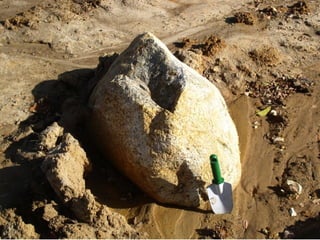
Eratics
Materials can be transported long distances by ice, depositing sediment
that does not match the surrounding rock units.
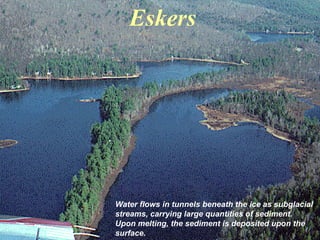
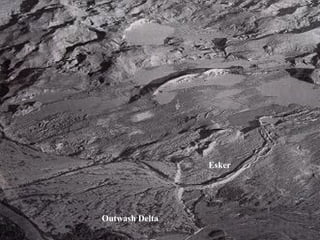
Eskers
Water flows in tunnels beneath the ice as subglacial
streams, carrying large quantities of sediment.
Upon melting, the sediment is deposited upon the
surface.
Outwash Delta
Esker
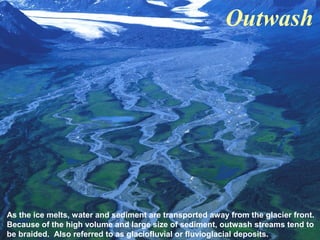
Outwash
As the ice melts, water and sediment are transported away from the glacier front.
Because of the high volume and large size of sediment, outwash streams tend to
be braided. Also referred to as glaciofluvial or fluvioglacial deposits.
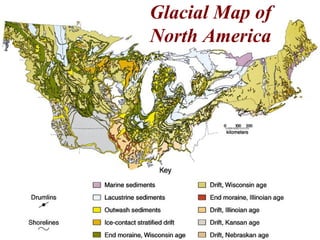
Glacial Map of
North America

Glacial Systems

  • 1.
    Glacial Systems Glacial systemsoperate much like viscous fluvial systems. Sediment is abraded and plucked from beneath in a source area and transported to a depositional basin. Unless in a coastal setting, the preservation potential for glacial deposits is low.
  • 2.
    Conversion of Snowto Ice If snow accumulates more rapidly than it melts, over time it will undergo a conversion to a dense ice that resembles a metamorphic rock and is capable of flow.
  • 3.
    Plastic Deformation To beconsidered a glacier, ice must be thick enough that it can flow under its own weight.
  • 4.
    Sediment Transport Because ofits high viscosity, ice is a highly competent agent of erosion and sediment transport. Glaciers act as conveyor belts, moving extremely large quantities of sediment from the source area to the basin.
  • 5.
    Controlling Factors Cold temperaturesand significant precipitation are both required to produce ice of sufficient thickness to flow as glaciers. Therefore, glaciers are restricted to areas of high latitude and/or high altitude.
  • 6.
    Mass Balance Whether aglacier front advances or retreats is controlled by the relative balance between precipitation in the zone of accumulation and melting in the zone of ablation. These are separated by the snow line, which identifies the point where these two factors are equal.
  • 8.
    Frozen Drainage System Glaciersare, in essence, a frozen drainage system. Water (snow/ice) and sediment are collected primarily near the head and transported to a depositional basin at the terminous.
  • 9.
  • 10.
    Erosional Features Plucking extracts angularboulders leaving irregular depressions. Plucked boulders and other materials become frozen into the glacier base and are drug over the surface causing abrasion, which leaves striations and grooves.
  • 11.
    Advancing Glacier Front Activelyadvancing glaciers occur when snow accumulates more rapidly than it melts and are characterized by steep, well-defined fronts of relatively clean ice.
  • 12.
    Retreating Glacier Front Glacialretreat occurs when melting occurs more rapidly than snow accumulates and is characterized by gentle, poorly-defined fronts , potentially covered by debris, lakes, and vegetation.
  • 13.
  • 14.
    Simplified Model As glaciersadvance and retreat, they create a wide and complex variety of depositional facies.
  • 15.
  • 16.
    Till Because of thehigh viscosity of ice, glaciers transport all sizes of sediment from clay to very large boulders. This sediment is all deposited together in morraines as till.
  • 18.
    Ground Morraine If morematerial accumulates beneath the glacier than can be transported, it is deposited as a ground morraine, consisting of irregular mounds of sediment. Upon melting numerous small, nonconnected lakes tend to form.
  • 25.
    Eratics Materials can betransported long distances by ice, depositing sediment that does not match the surrounding rock units.
  • 27.
    Eskers Water flows intunnels beneath the ice as subglacial streams, carrying large quantities of sediment. Upon melting, the sediment is deposited upon the surface.
  • 28.
  • 30.
    Outwash As the icemelts, water and sediment are transported away from the glacier front. Because of the high volume and large size of sediment, outwash streams tend to be braided. Also referred to as glaciofluvial or fluvioglacial deposits.
  • 31.