YEAR 10 GEOGRAPHY
COASTS
9. COASTAL PROCESSES
The power of waves is a significant factor in coastal
processes.
There are constructive and destructive waves.
The power of waves is one of the most significant forces of
coastal change.
Waves are created by wind blowing over the surface of the
sea.
As the wind blows over the sea, friction is created -
producing a swell in the water.
The energy of the wind causes water particles to rotate inside
the swell and this moves the wave forward.
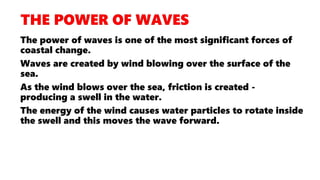
POWER OF WAVES AT PIHA BEACH, NEW ZEALAND
The size and energy of a wave is influenced by:
• how long the wind has been blowing
• the strength of the wind
• how far the wave has travelled (the fetch)
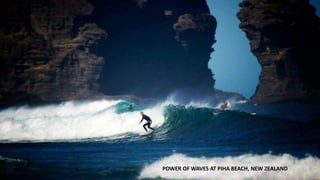
ENERGY OF WAVES AT MURIWAI BEACH, NEW ZEALAND
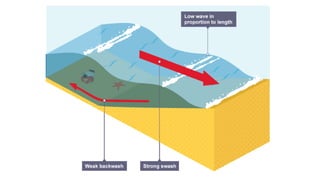
Waves can be destructive or constructive.
When a wave breaks, water is washed up the beach - this is
called the swash.
Then the water runs back down the beach - this is called the
backwash.
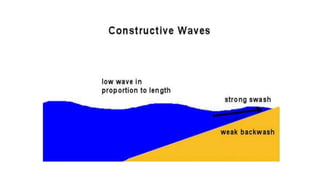
With a constructive wave, the swash is stronger than the
backwash.
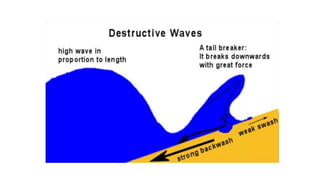
With a destructive wave, the backwash is stronger than the
swash.
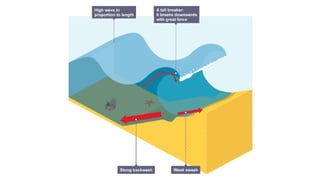
Destructive waves are created in storm conditions.
• They are created from big, strong waves when the wind is
powerful and has been blowing for a long time.
• They occur when wave energy is high and the wave has
travelled over a long fetch.
• They tend to erode the coast.
• They have a stronger backwash than swash.
• They have a short wave length and are high and steep.
• They are created in calm weather and are less powerful than
destructive waves.
• They break on the shore and deposit material, building up
beaches.
• They have a swash that is stronger than the backwash.
• They have a long wavelength, and are low in height.
The sea shapes the coastal landscape. Coastal erosion is the
wearing away and breaking up of rock along the coast.
Destructive waves erode the coastline in a number of ways:
Hydraulic action. Air may become trapped in joints and cracks on
a cliff face. When a wave breaks, the trapped air is compressed
which weakens the cliff and causes erosion.
Abrasion. Bits of rock and sand in waves grind down cliff
surfaces like sandpaper.
Attrition. Waves smash rocks and pebbles on the shore into
each other, and they break and become smoother.
Solution. Acids contained in sea water will dissolve some
types of rock such as chalk or limestone.
There are various sources of the material in the sea. The
material has been:
• eroded from cliffs
• transported by longshore drift along the coastline
• brought inland from offshore by constructive waves
• carried to the coastline by rivers
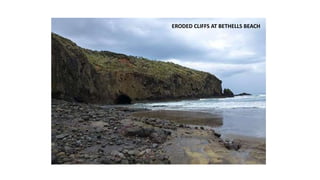
ERODED CLIFFS AT BETHELLS BEACH
Waves can approach the coast at an angle because of the
direction of the prevailing wind.
The swash of the waves carries material up the beach at an
angle.
The backwash then flows back to the sea in a straight line at
90°. This movement of material is called transportation.
Continual swash and backwash transports material sideways
along the coast.
This movement of material is called longshore drift and
occurs in a zigzag.
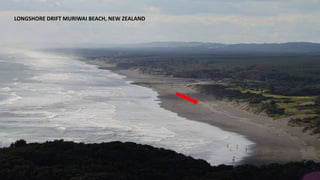
LONGSHORE DRIFT MURIWAI BEACH, NEW ZEALAND
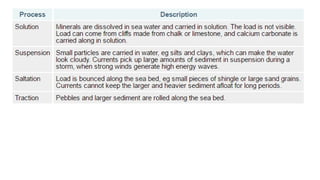
There are four ways that waves and tidal currents transport
sediment.
These can then contribute to the movement of sediment by
longshore drift.
When the sea loses energy, it drops the sand, rock particles
and pebbles it has been carrying.
This is called deposition.
Deposition happens when the swash is stronger than the
backwash and is associated with constructive waves.
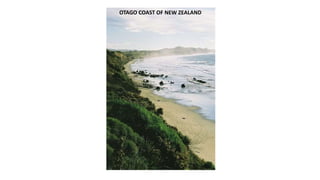
OTAGO COAST OF NEW ZEALAND
Deposition is likely to occur when:
• waves enter an area of shallow water
• waves enter a sheltered area, eg a cove or bay
• there is little wind
• there is a good supply of material

GEOGRAPHY YEAR 10: COASTAL PROCESSES

  • 1.
    YEAR 10 GEOGRAPHY COASTS 9.COASTAL PROCESSES
  • 2.
    The power ofwaves is a significant factor in coastal processes. There are constructive and destructive waves.
  • 5.
    The power ofwaves is one of the most significant forces of coastal change. Waves are created by wind blowing over the surface of the sea. As the wind blows over the sea, friction is created - producing a swell in the water. The energy of the wind causes water particles to rotate inside the swell and this moves the wave forward.
  • 6.
    POWER OF WAVESAT PIHA BEACH, NEW ZEALAND
  • 7.
    The size andenergy of a wave is influenced by: • how long the wind has been blowing • the strength of the wind • how far the wave has travelled (the fetch)
  • 8.
    ENERGY OF WAVESAT MURIWAI BEACH, NEW ZEALAND
  • 9.
    Waves can bedestructive or constructive. When a wave breaks, water is washed up the beach - this is called the swash. Then the water runs back down the beach - this is called the backwash. With a constructive wave, the swash is stronger than the backwash. With a destructive wave, the backwash is stronger than the swash.
  • 10.
    Destructive waves arecreated in storm conditions. • They are created from big, strong waves when the wind is powerful and has been blowing for a long time. • They occur when wave energy is high and the wave has travelled over a long fetch. • They tend to erode the coast. • They have a stronger backwash than swash. • They have a short wave length and are high and steep.
  • 12.
    • They arecreated in calm weather and are less powerful than destructive waves. • They break on the shore and deposit material, building up beaches. • They have a swash that is stronger than the backwash. • They have a long wavelength, and are low in height.
  • 14.
    The sea shapesthe coastal landscape. Coastal erosion is the wearing away and breaking up of rock along the coast. Destructive waves erode the coastline in a number of ways: Hydraulic action. Air may become trapped in joints and cracks on a cliff face. When a wave breaks, the trapped air is compressed which weakens the cliff and causes erosion. Abrasion. Bits of rock and sand in waves grind down cliff surfaces like sandpaper.
  • 15.
    Attrition. Waves smashrocks and pebbles on the shore into each other, and they break and become smoother. Solution. Acids contained in sea water will dissolve some types of rock such as chalk or limestone.
  • 16.
    There are varioussources of the material in the sea. The material has been: • eroded from cliffs • transported by longshore drift along the coastline • brought inland from offshore by constructive waves • carried to the coastline by rivers
  • 17.
    ERODED CLIFFS ATBETHELLS BEACH
  • 18.
    Waves can approachthe coast at an angle because of the direction of the prevailing wind. The swash of the waves carries material up the beach at an angle. The backwash then flows back to the sea in a straight line at 90°. This movement of material is called transportation. Continual swash and backwash transports material sideways along the coast. This movement of material is called longshore drift and occurs in a zigzag.
  • 19.
    LONGSHORE DRIFT MURIWAIBEACH, NEW ZEALAND
  • 20.
    There are fourways that waves and tidal currents transport sediment. These can then contribute to the movement of sediment by longshore drift.
  • 22.
    When the sealoses energy, it drops the sand, rock particles and pebbles it has been carrying. This is called deposition. Deposition happens when the swash is stronger than the backwash and is associated with constructive waves.
  • 23.
    OTAGO COAST OFNEW ZEALAND
  • 24.
    Deposition is likelyto occur when: • waves enter an area of shallow water • waves enter a sheltered area, eg a cove or bay • there is little wind • there is a good supply of material