Cyclones
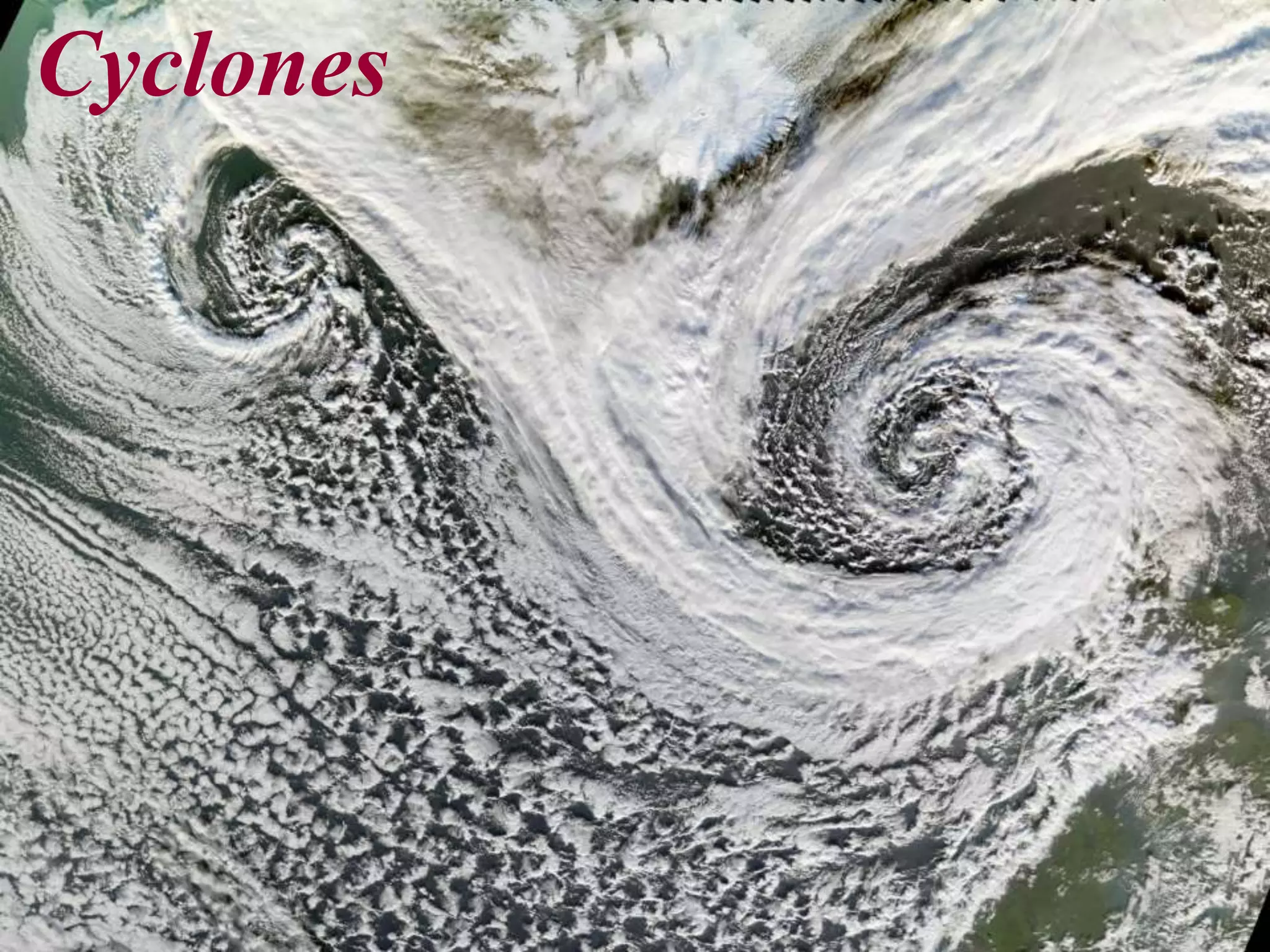
Cyclones 
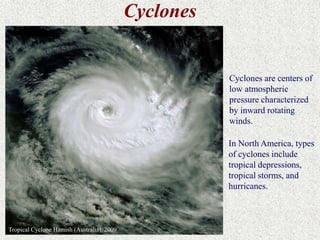
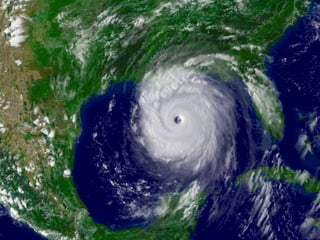
Cyclones are centers of 
low atmospheric 
pressure characterized 
by inward rotating 
winds. 
Tropical Cyclone Hamish (Australia), 2009 
In North America, types 
of cyclones include 
tropical depressions, 
tropical storms, and 
hurricanes.
Cyclones & the Coriolis Effect 
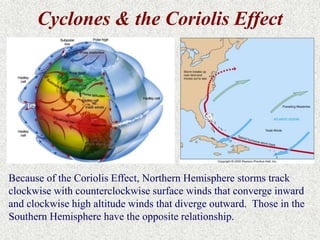
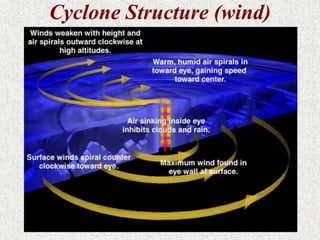
Because of the Coriolis Effect, Northern Hemisphere storms track 
clockwise with counterclockwise surface winds that converge inward 
and clockwise high altitude winds that diverge outward. Those in the 
Southern Hemisphere have the opposite relationship.
Cyclone Structure (wind)
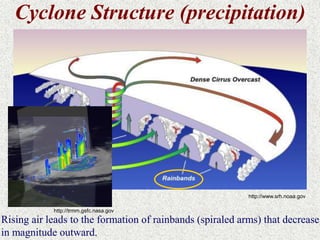
Cyclone Structure (precipitation) 
http://www.srh.noaa.gov 
http://trmm.gsfc.nasa.gov 
Rising air leads to the formation of rainbands (spiraled arms) that decrease 
in magnitude outward.
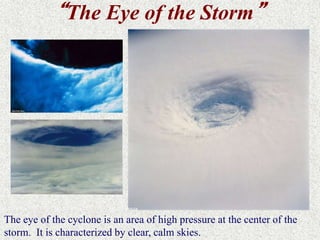
“The Eye of the Storm” 
The eye of the cyclone is an area of high pressure at the center of the 
storm. It is characterized by clear, calm skies.
Tropical Cyclone Formation 
1. A low-pressure system develops as air rises over 
warm ocean water (at least 800 F to depths of 150 ft 
with no vertical wind shear). 
2. Because of the Coriolis Effect, air begins to spiral 
toward the center of the low-pressure cell, increasing 
in velocity as it approaches the eye-wall. 
3. The incoming air rises and condenses as it loses heat, 
creating an area of high pressure at the center, which 
becomes the “eye” of the storm. 
4. The storm continues to grow as it moves across warm 
ocean surface water. 
5. Upon landfall or passing over cold water, the cycle 
breaks, and the storm begins to wane.
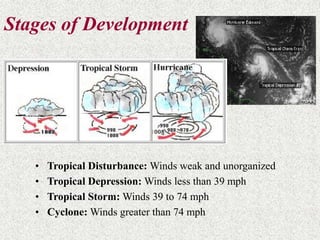
Stages of Development 
• Tropical Disturbance:Winds weak and unorganized 
• Tropical Depression:Winds less than 39 mph 
• Tropical Storm:Winds 39 to 74 mph 
• Cyclone:Winds greater than 74 mph
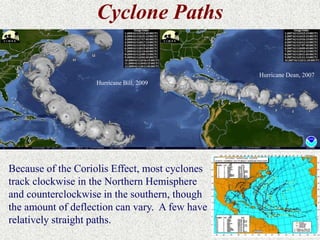
Hurricane Bill, 2009 
Hurricane Dean, 2007 
Cyclone Paths 
Because of the Coriolis Effect, most cyclones 
track clockwise in the Northern Hemisphere 
and counterclockwise in the southern, though 
the amount of deflection can vary. A few have 
relatively straight paths.
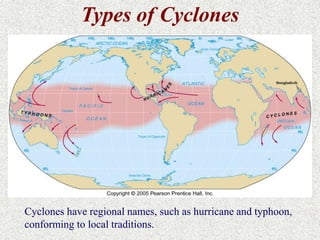
Types of Cyclones 
Cyclones have regional names, such as hurricane and typhoon, 
conforming to local traditions.
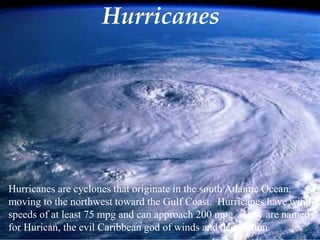
Hurricanes 
Hurricanes are cyclones that originate in the south Atlantic Ocean, 
moving to the northwest toward the Gulf Coast. Hurricanes have wind 
speeds of at least 75 mpg and can approach 200 mpg. They are named 
for Hurican, the evil Caribbean god of winds and destruction.
Typhoons 
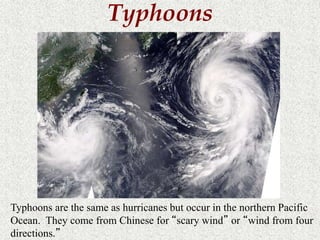
Typhoons are the same as hurricanes but occur in the northern Pacific 
Ocean. They come from Chinese for “scary wind” or “wind from four 
directions.”
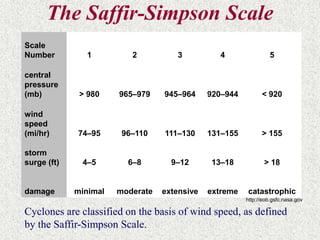
The Saffir-Simpson Scale 
Scale 
Number 1 2 3 4 5 
central 
pressure 
(mb) > 980 965–979 945–964 920–944 < 920 
wind 
speed 
(mi/hr) 74–95 96–110 111–130 131–155 > 155 
storm 
surge (ft) 4–5 6–8 9–12 13–18 > 18 
damage minimal moderate extensive extreme catastrophic 
http://eob.gsfc.nasa.gov 
Cyclones are classified on the basis of wind speed, as defined 
by the Saffir-Simpson Scale.
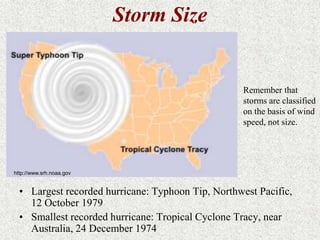
• Largest recorded hurricane: Typhoon Tip, Northwest Pacific, 
12 October 1979 
• Smallest recorded hurricane: Tropical Cyclone Tracy, near 
Australia, 24 December 1974 
Remember that 
storms are classified 
on the basis of wind 
speed, not size. 
http://www.srh.noaa.gov 
Storm Size
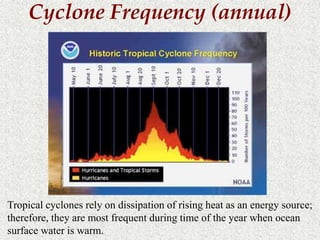
Cyclone Frequency (annual) 
Tropical cyclones rely on dissipation of rising heat as an energy source; 
therefore, they are most frequent during time of the year when ocean 
surface water is warm.
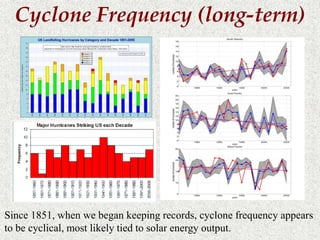
Cyclone Frequency (long-term) 
Since 1851, when we began keeping records, cyclone frequency appears 
to be cyclical, most likely tied to solar energy output.
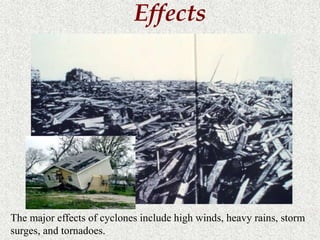
Effects 
The major effects of cyclones include high winds, heavy rains, storm 
surges, and tornadoes.
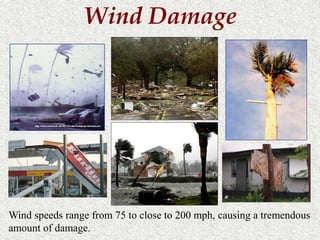
Wind Damage 
Wind speeds range from 75 to close to 200 mph, causing a tremendous 
amount of damage.
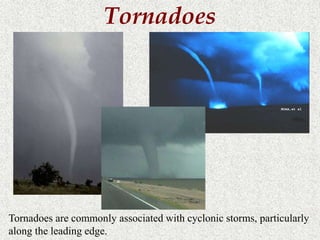
Tornadoes 
Tornadoes are commonly associated with cyclonic storms, particularly 
along the leading edge.
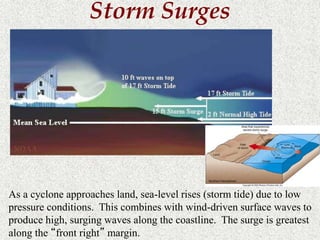
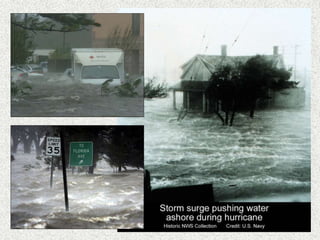
Storm Surges 
(Graphic by Robert Simmon, NASA GSFC) 
As a cyclone approaches land, sea-level rises (storm tide) due to low 
pressure conditions. This combines with wind-driven surface waves to 
produce high, surging waves along the coastline. The surge is greatest 
along the “front right” margin.
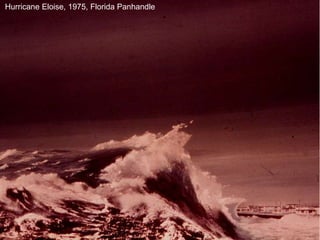
Hurricane Eloise, 1975, Florida Panhandle
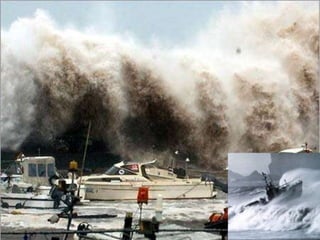
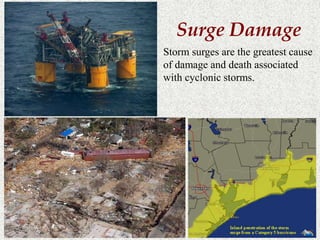
Surge Damage 
Storm surges are the greatest cause 
of damage and death associated 
with cyclonic storms.
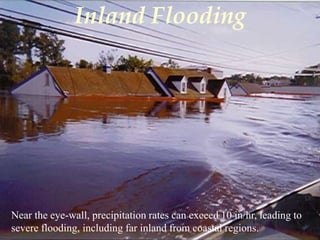
Inland Flooding 
Near the eye-wall, precipitation rates can exceed 10 in/hr, leading to 
severe flooding, including far inland from coastal regions.
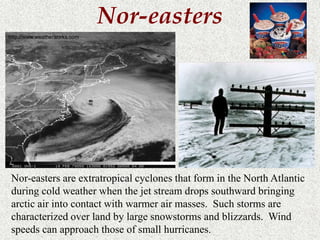
Nor-easters 
http://www.weatherworks.com 
Nor-easters are extratropical cyclones that form in the North Atlantic 
during cold weather when the jet stream drops southward bringing 
arctic air into contact with warmer air masses. Such storms are 
characterized over land by large snowstorms and blizzards. Wind 
speeds can approach those of small hurricanes.

Natural Disasters Topic 10 (Cyclones)

  • 1.
  • 2.
    Cyclones Cyclones arecenters of low atmospheric pressure characterized by inward rotating winds. Tropical Cyclone Hamish (Australia), 2009 In North America, types of cyclones include tropical depressions, tropical storms, and hurricanes.
  • 3.
    Cyclones & theCoriolis Effect Because of the Coriolis Effect, Northern Hemisphere storms track clockwise with counterclockwise surface winds that converge inward and clockwise high altitude winds that diverge outward. Those in the Southern Hemisphere have the opposite relationship.
  • 4.
  • 5.
    Cyclone Structure (precipitation) http://www.srh.noaa.gov http://trmm.gsfc.nasa.gov Rising air leads to the formation of rainbands (spiraled arms) that decrease in magnitude outward.
  • 6.
    “The Eye ofthe Storm” The eye of the cyclone is an area of high pressure at the center of the storm. It is characterized by clear, calm skies.
  • 7.
    Tropical Cyclone Formation 1. A low-pressure system develops as air rises over warm ocean water (at least 800 F to depths of 150 ft with no vertical wind shear). 2. Because of the Coriolis Effect, air begins to spiral toward the center of the low-pressure cell, increasing in velocity as it approaches the eye-wall. 3. The incoming air rises and condenses as it loses heat, creating an area of high pressure at the center, which becomes the “eye” of the storm. 4. The storm continues to grow as it moves across warm ocean surface water. 5. Upon landfall or passing over cold water, the cycle breaks, and the storm begins to wane.
  • 8.
    Stages of Development • Tropical Disturbance:Winds weak and unorganized • Tropical Depression:Winds less than 39 mph • Tropical Storm:Winds 39 to 74 mph • Cyclone:Winds greater than 74 mph
  • 9.
    Hurricane Bill, 2009 Hurricane Dean, 2007 Cyclone Paths Because of the Coriolis Effect, most cyclones track clockwise in the Northern Hemisphere and counterclockwise in the southern, though the amount of deflection can vary. A few have relatively straight paths.
  • 10.
    Types of Cyclones Cyclones have regional names, such as hurricane and typhoon, conforming to local traditions.
  • 11.
    Hurricanes Hurricanes arecyclones that originate in the south Atlantic Ocean, moving to the northwest toward the Gulf Coast. Hurricanes have wind speeds of at least 75 mpg and can approach 200 mpg. They are named for Hurican, the evil Caribbean god of winds and destruction.
  • 13.
    Typhoons Typhoons arethe same as hurricanes but occur in the northern Pacific Ocean. They come from Chinese for “scary wind” or “wind from four directions.”
  • 14.
    The Saffir-Simpson Scale Scale Number 1 2 3 4 5 central pressure (mb) > 980 965–979 945–964 920–944 < 920 wind speed (mi/hr) 74–95 96–110 111–130 131–155 > 155 storm surge (ft) 4–5 6–8 9–12 13–18 > 18 damage minimal moderate extensive extreme catastrophic http://eob.gsfc.nasa.gov Cyclones are classified on the basis of wind speed, as defined by the Saffir-Simpson Scale.
  • 15.
    • Largest recordedhurricane: Typhoon Tip, Northwest Pacific, 12 October 1979 • Smallest recorded hurricane: Tropical Cyclone Tracy, near Australia, 24 December 1974 Remember that storms are classified on the basis of wind speed, not size. http://www.srh.noaa.gov Storm Size
  • 16.
    Cyclone Frequency (annual) Tropical cyclones rely on dissipation of rising heat as an energy source; therefore, they are most frequent during time of the year when ocean surface water is warm.
  • 17.
    Cyclone Frequency (long-term) Since 1851, when we began keeping records, cyclone frequency appears to be cyclical, most likely tied to solar energy output.
  • 18.
    Effects The majoreffects of cyclones include high winds, heavy rains, storm surges, and tornadoes.
  • 19.
    Wind Damage Windspeeds range from 75 to close to 200 mph, causing a tremendous amount of damage.
  • 20.
    Tornadoes Tornadoes arecommonly associated with cyclonic storms, particularly along the leading edge.
  • 21.
    Storm Surges (Graphicby Robert Simmon, NASA GSFC) As a cyclone approaches land, sea-level rises (storm tide) due to low pressure conditions. This combines with wind-driven surface waves to produce high, surging waves along the coastline. The surge is greatest along the “front right” margin.
  • 22.
    Hurricane Eloise, 1975,Florida Panhandle
  • 25.
    Surge Damage Stormsurges are the greatest cause of damage and death associated with cyclonic storms.
  • 26.
    Inland Flooding Nearthe eye-wall, precipitation rates can exceed 10 in/hr, leading to severe flooding, including far inland from coastal regions.
  • 27.
    Nor-easters http://www.weatherworks.com Nor-eastersare extratropical cyclones that form in the North Atlantic during cold weather when the jet stream drops southward bringing arctic air into contact with warmer air masses. Such storms are characterized over land by large snowstorms and blizzards. Wind speeds can approach those of small hurricanes.