Tidal Systems
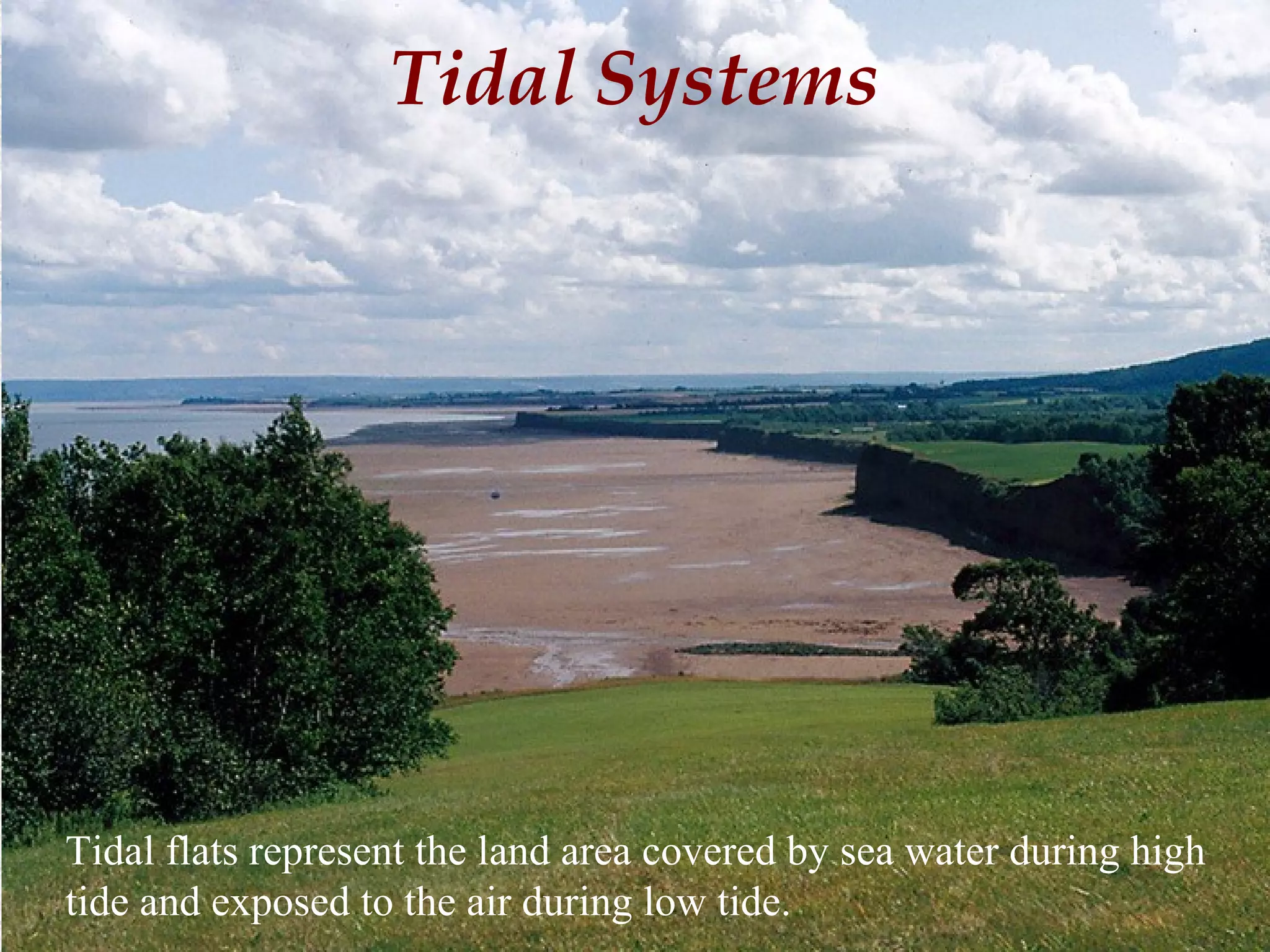
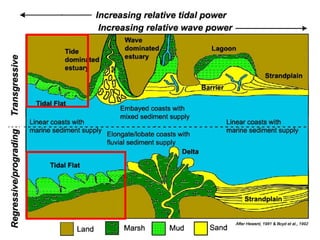
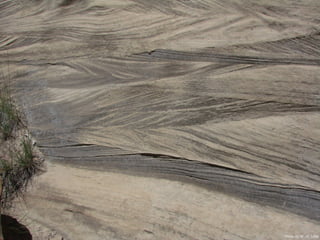
Tidal flats represent the land area covered by sea water during high
tide and exposed to the air during low tide.
Photo by W. W. Little
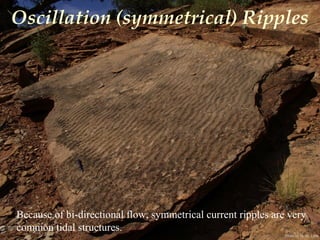
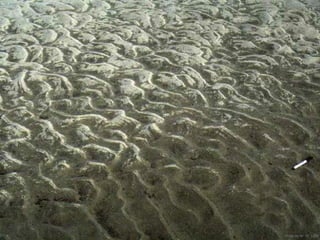
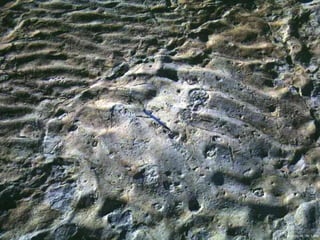
Oscillation (symmetrical) Ripples
Because of bi-directional flow, symmetrical current ripples are very
common tidal structures.
Photo by W. W. Little
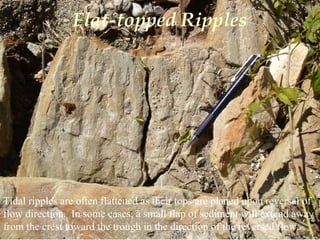
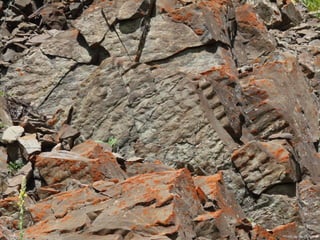
Flat-topped Ripples
Tidal ripples are often flattened as their tops are planed upon reversal of
flow direction. In some cases, a small flap of sediment will extend away
from the crest toward the trough in the direction of the reversed flow.
Photo by W. W. Little
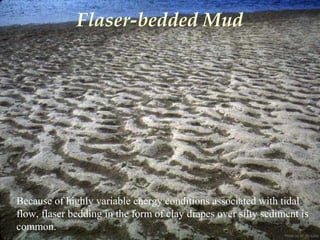
Flaser-bedded Mud
Because of highly variable energy conditions associated with tidal
flow, flaser bedding in the form of clay drapes over silty sediment is
common.
Photo by W. W. Little
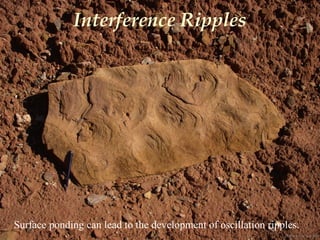
Interference Ripples
Surface ponding can lead to the development of oscillation ripples.
Photo by W. W. Little
Herring Bone Cross-bedding
Photo by W. W. Little
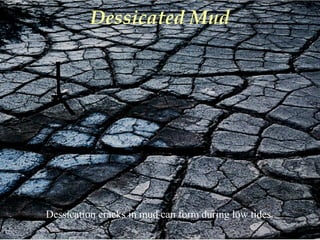
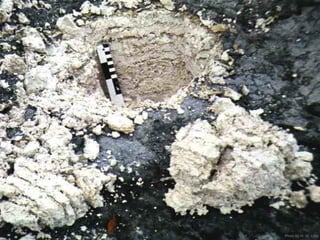
Dessicated Mud
Dessication cracks in mud can form during low tides.
Photo by W. W. Little
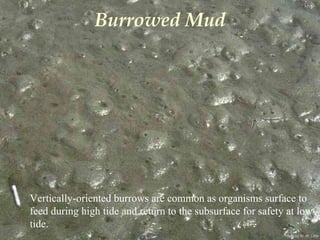
Burrowed Mud
Vertically-oriented burrows are common as organisms surface to
feed during high tide and return to the subsurface for safety at low
tide.
Photo by W. W. Little
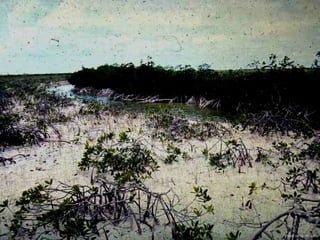
Root Casts
Salt tolerant vegetation, such as mangrove, commonly grow on tidal
flats, causing bioturbation through root growth.
Photo by W. W. Little
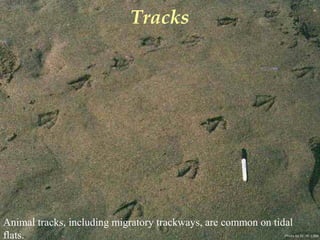
Tracks
Animal tracks, including migratory trackways, are common on tidal
flats.
Photo by W. W. Little
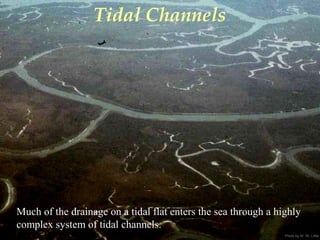
Tidal Channels
Much of the drainage on a tidal flat enters the sea through a highly
complex system of tidal channels.
Photo by W. W. Little
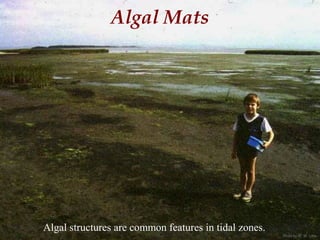
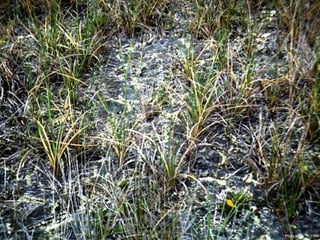
Algal Mats
Algal structures are common features in tidal zones.
Photo by W. W. Little
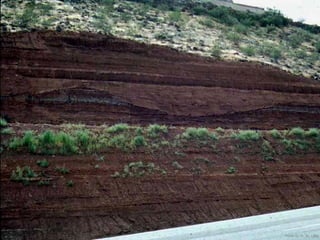
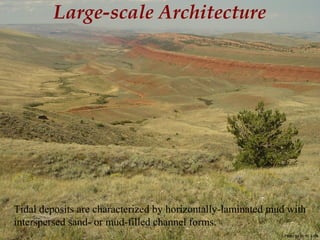
Large-scale Architecture
Tidal deposits are characterized by horizontally-laminated mud with
interspersed sand- or mud-filled channel forms.
Photo by W. W. Little
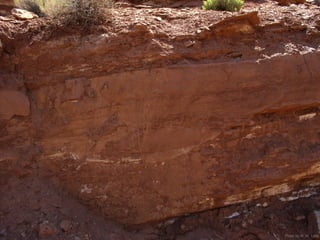
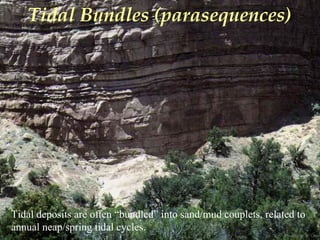
Tidal deposits are often “bundled” into sand/mud couplets, related to
annual neap/spring tidal cycles.
Tidal Bundles (parasequences)

Tidal Systems

  • 1.
    Tidal Systems Tidal flatsrepresent the land area covered by sea water during high tide and exposed to the air during low tide.
  • 3.
    Photo by W.W. Little Oscillation (symmetrical) Ripples Because of bi-directional flow, symmetrical current ripples are very common tidal structures.
  • 4.
    Photo by W.W. Little Flat-topped Ripples Tidal ripples are often flattened as their tops are planed upon reversal of flow direction. In some cases, a small flap of sediment will extend away from the crest toward the trough in the direction of the reversed flow.
  • 5.
    Photo by W.W. Little
  • 6.
    Photo by W.W. Little Flaser-bedded Mud Because of highly variable energy conditions associated with tidal flow, flaser bedding in the form of clay drapes over silty sediment is common.
  • 7.
    Photo by W.W. Little
  • 8.
    Photo by W.W. Little Interference Ripples Surface ponding can lead to the development of oscillation ripples.
  • 9.
    Photo by W.W. Little Herring Bone Cross-bedding
  • 10.
    Photo by W.W. Little
  • 11.
    Dessicated Mud Dessication cracksin mud can form during low tides.
  • 12.
    Photo by W.W. Little Burrowed Mud Vertically-oriented burrows are common as organisms surface to feed during high tide and return to the subsurface for safety at low tide.
  • 13.
    Photo by W.W. Little
  • 14.
    Photo by W.W. Little Root Casts Salt tolerant vegetation, such as mangrove, commonly grow on tidal flats, causing bioturbation through root growth.
  • 15.
    Photo by W.W. Little Tracks Animal tracks, including migratory trackways, are common on tidal flats.
  • 16.
    Photo by W.W. Little
  • 17.
    Photo by W.W. Little Tidal Channels Much of the drainage on a tidal flat enters the sea through a highly complex system of tidal channels.
  • 18.
    Photo by W.W. Little
  • 19.
    Photo by W.W. Little
  • 20.
    Photo by W.W. Little
  • 21.
    Photo by W.W. Little Algal Mats Algal structures are common features in tidal zones.
  • 22.
    Photo by W.W. Little
  • 23.
    Photo by W.W. Little
  • 24.
    Photo by W.W. Little Large-scale Architecture Tidal deposits are characterized by horizontally-laminated mud with interspersed sand- or mud-filled channel forms.
  • 25.
    Photo by W.W. Little
  • 26.
    Photo by W.W. Little Tidal deposits are often “bundled” into sand/mud couplets, related to annual neap/spring tidal cycles. Tidal Bundles (parasequences)