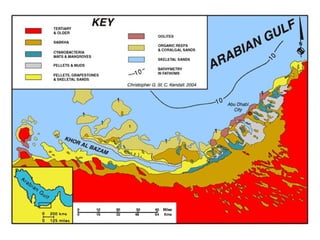
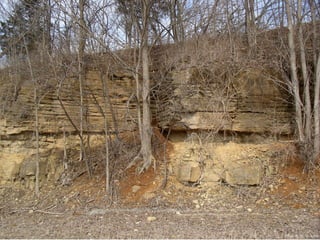
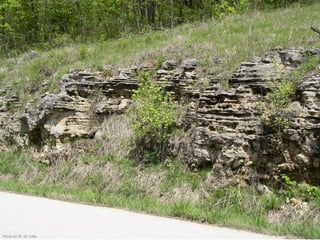
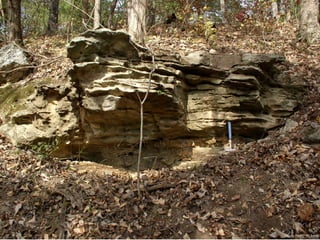
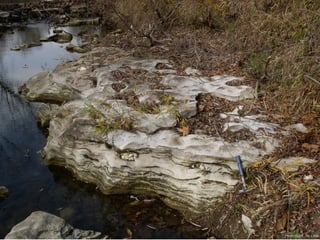
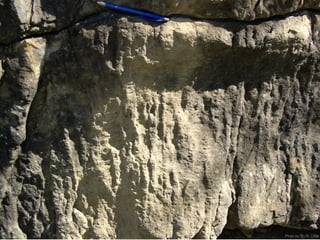
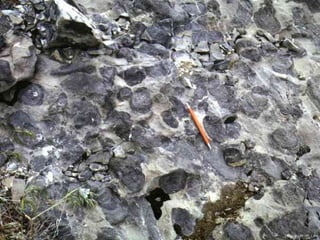
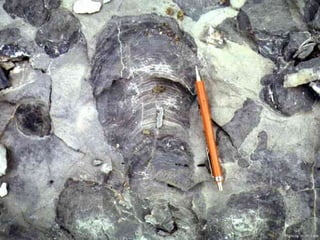
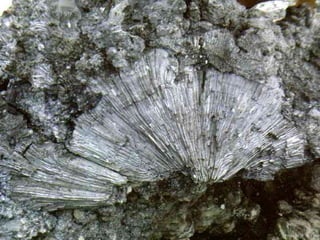
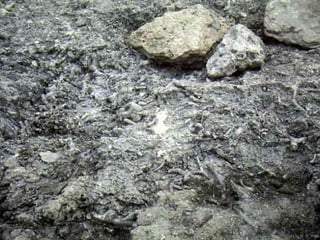
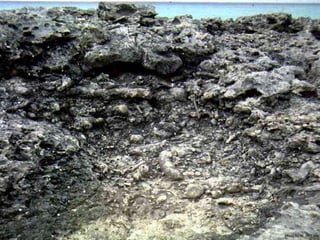
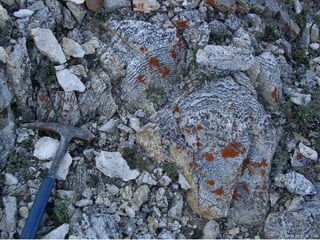
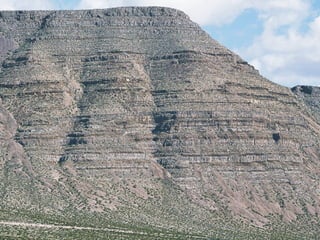
Photo by W. W. Little
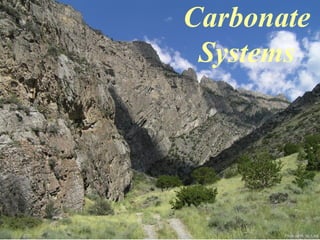
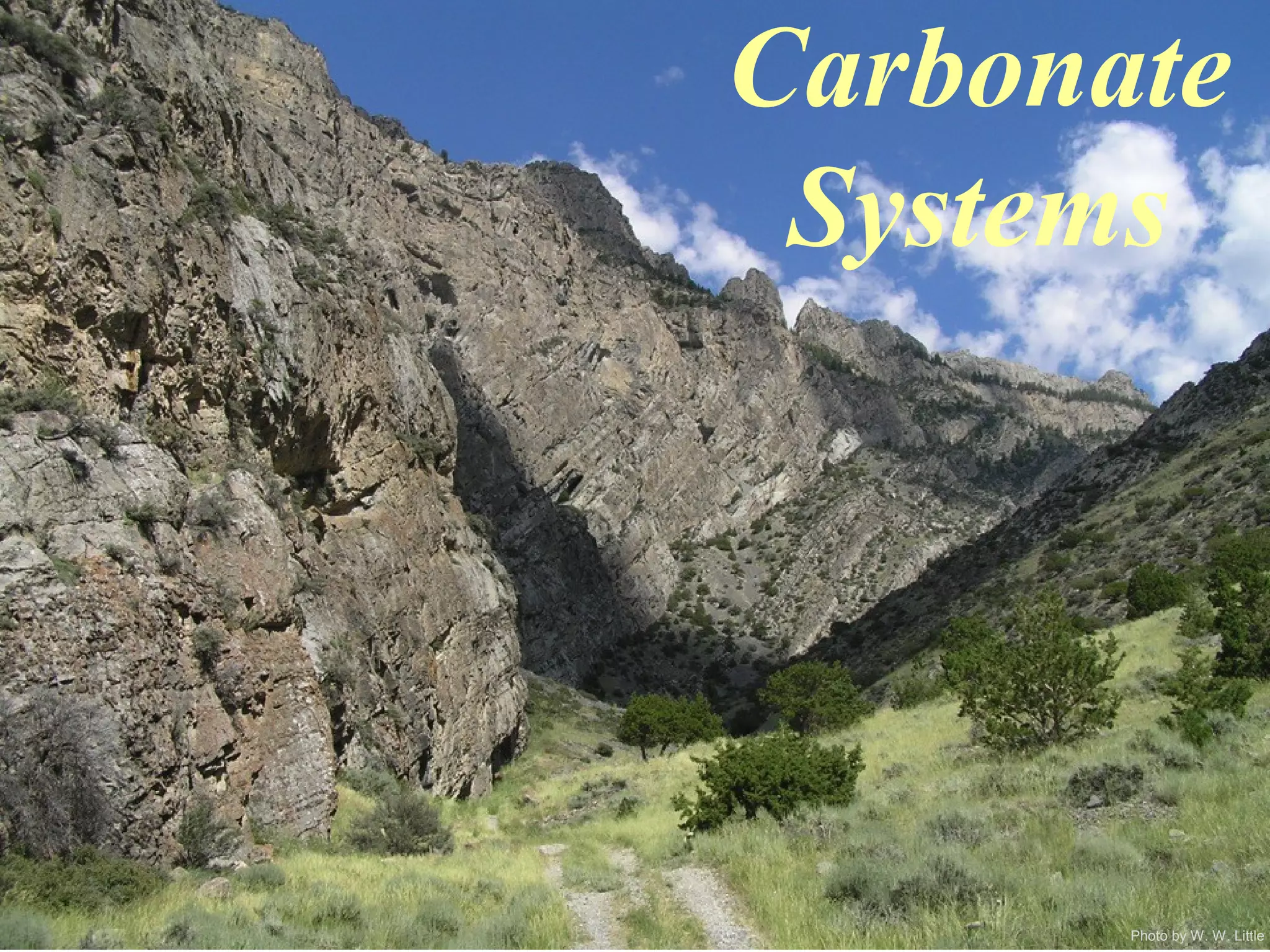
Carbonate
Systems
Any questions?
Photo by W. W. Little
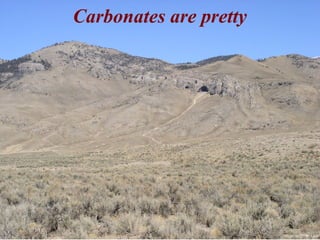
Carbonates are pretty
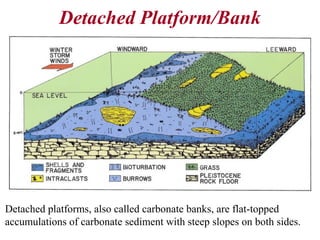
Photo by W. W. Little
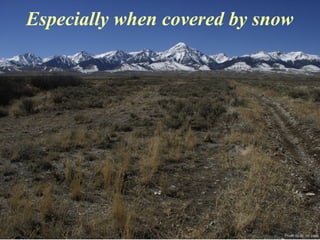
Especially when covered by snow
Photo by W. W. Little
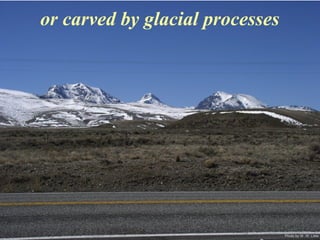
or carved by glacial processes
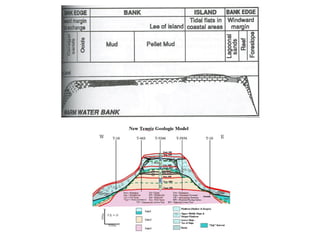
Photo by W. W. Little
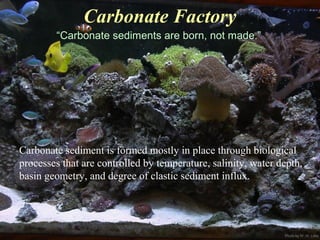
Carbonate Factory
Carbonate sediment is formed mostly in place through biological
processes that are controlled by temperature, salinity, water depth,
basin geometry, and degree of clastic sediment influx.
“Carbonate sediments are born, not made.”
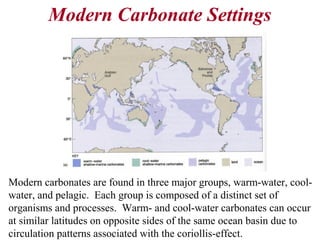
Modern Carbonate Settings
Modern carbonates are found in three major groups, warm-water, cool-
water, and pelagic. Each group is composed of a distinct set of
organisms and processes. Warm- and cool-water carbonates can occur
at similar latitudes on opposite sides of the same ocean basin due to
circulation patterns associated with the coriollis-effect.
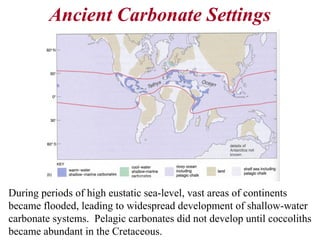
Ancient Carbonate Settings
During periods of high eustatic sea-level, vast areas of continents
became flooded, leading to widespread development of shallow-water
carbonate systems. Pelagic carbonates did not develop until coccoliths
became abundant in the Cretaceous.
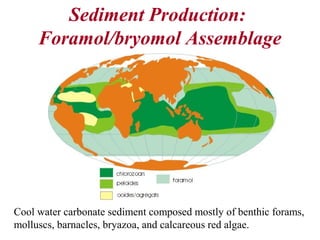
Sediment Production:
Foramol/bryomol Assemblage
Cool water carbonate sediment composed mostly of benthic forams,
molluscs, barnacles, bryazoa, and calcareous red algae.
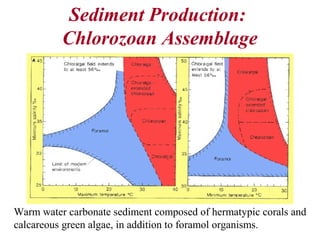
Sediment Production:
Chlorozoan Assemblage
Warm water carbonate sediment composed of hermatypic corals and
calcareous green algae, in addition to foramol organisms.
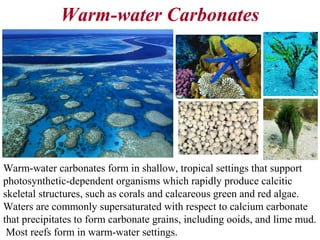
Warm-water Carbonates
Warm-water carbonates form in shallow, tropical settings that support
photosynthetic-dependent organisms which rapidly produce calcitic
skeletal structures, such as corals and calcareous green and red algae.
Waters are commonly supersaturated with respect to calcium carbonate
that precipitates to form carbonate grains, including ooids, and lime mud.
Most reefs form in warm-water settings.
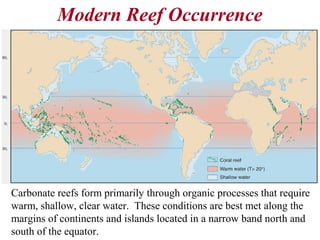
Modern Reef Occurrence
Carbonate reefs form primarily through organic processes that require
warm, shallow, clear water. These conditions are best met along the
margins of continents and islands located in a narrow band north and
south of the equator.
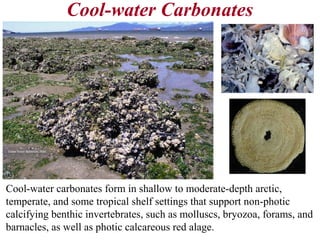
Cool-water Carbonates
Cool-water carbonates form in shallow to moderate-depth arctic,
temperate, and some tropical shelf settings that support non-photic
calcifying benthic invertebrates, such as molluscs, bryozoa, forams, and
barnacles, as well as photic calcareous red alage.
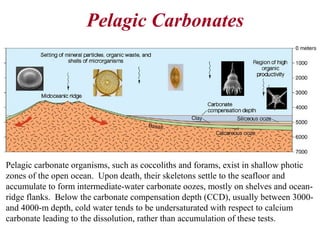
Pelagic Carbonates
Pelagic carbonate organisms, such as coccoliths and forams, exist in shallow photic
zones of the open ocean. Upon death, their skeletons settle to the seafloor and
accumulate to form intermediate-water carbonate oozes, mostly on shelves and ocean-
ridge flanks. Below the carbonate compensation depth (CCD), usually between 3000-
and 4000-m depth, cold water tends to be undersaturated with respect to calcium
carbonate leading to the dissolution, rather than accumulation of these tests.
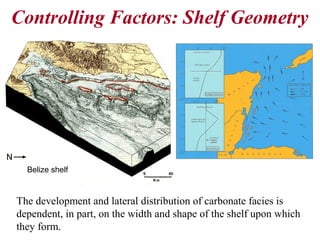
Controlling Factors: Shelf Geometry
The development and lateral distribution of carbonate facies is
dependent, in part, on the width and shape of the shelf upon which
they form.
Belize shelf
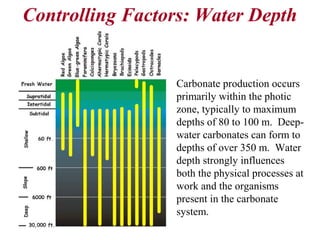
Controlling Factors: Water Depth
Carbonate production occurs
primarily within the photic
zone, typically to maximum
depths of 80 to 100 m. Deep-
water carbonates can form to
depths of over 350 m. Water
depth strongly influences
both the physical processes at
work and the organisms
present in the carbonate
system.
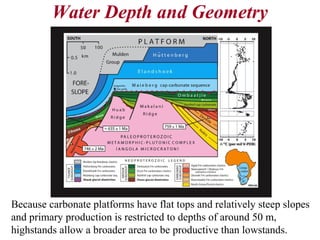
Because carbonate platforms have flat tops and relatively steep slopes
and primary production is restricted to depths of around 50 m,
highstands allow a broader area to be productive than lowstands.
Water Depth and Geometry
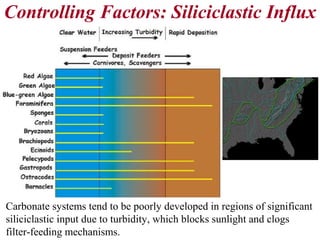
Controlling Factors: Siliciclastic Influx
Carbonate systems tend to be poorly developed in regions of significant
siliciclastic input due to turbidity, which blocks sunlight and clogs
filter-feeding mechanisms.
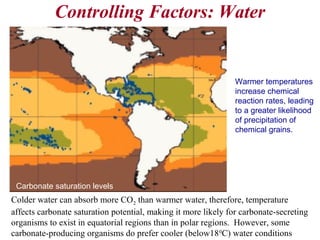
Controlling Factors: Water
Temperature
Colder water can absorb more CO2 than warmer water, therefore, temperature
affects carbonate saturation potential, making it more likely for carbonate-secreting
organisms to exist in equatorial regions than in polar regions. However, some
carbonate-producing organisms do prefer cooler (below180
C) water conditions
Carbonate saturation levels
Warmer temperatures
increase chemical
reaction rates, leading
to a greater likelihood
of precipitation of
chemical grains.
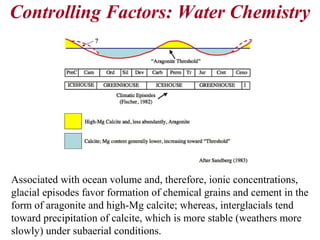
Associated with ocean volume and, therefore, ionic concentrations,
glacial episodes favor formation of chemical grains and cement in the
form of aragonite and high-Mg calcite; whereas, interglacials tend
toward precipitation of calcite, which is more stable (weathers more
slowly) under subaerial conditions.
Controlling Factors: Water Chemistry
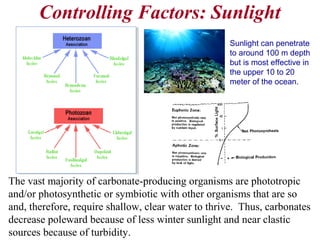
Controlling Factors: Sunlight
The vast majority of carbonate-producing organisms are phototropic
and/or photosynthetic or symbiotic with other organisms that are so
and, therefore, require shallow, clear water to thrive. Thus, carbonates
decrease poleward because of less winter sunlight and near clastic
sources because of turbidity.
Sunlight can penetrate
to around 100 m depth
but is most effective in
the upper 10 to 20
meter of the ocean.
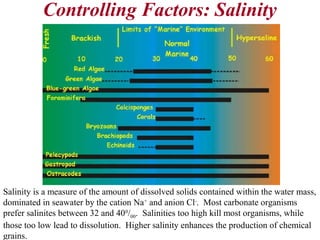
Controlling Factors: Salinity
Salinity is a measure of the amount of dissolved solids contained within the water mass,
dominated in seawater by the cation Na+
and anion Cl-
. Most carbonate organisms
prefer salinites between 32 and 400
/00. Salinities too high kill most organisms, while
those too low lead to dissolution. Higher salinity enhances the production of chemical
grains.
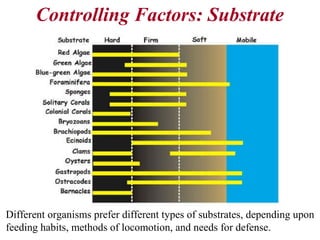
Controlling Factors: Substrate
Different organisms prefer different types of substrates, depending upon
feeding habits, methods of locomotion, and needs for defense.
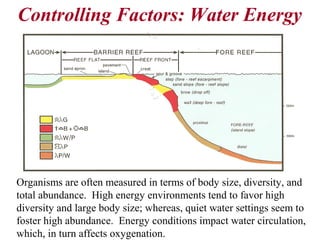
Organisms are often measured in terms of body size, diversity, and
total abundance. High energy environments tend to favor high
diversity and large body size; whereas, quiet water settings seem to
foster high abundance. Energy conditions impact water circulation,
which, in turn affects oxygenation.
Controlling Factors: Water Energy
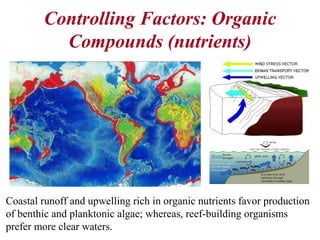
Controlling Factors: Organic
Compounds (nutrients)
Coastal runoff and upwelling rich in organic nutrients favor production
of benthic and planktonic algae; whereas, reef-building organisms
prefer more clear waters.
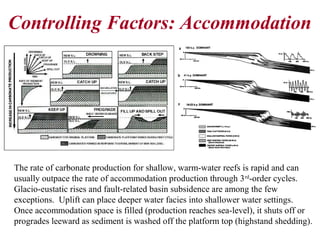
The rate of carbonate production for shallow, warm-water reefs is rapid and can
usually outpace the rate of accommodation production through 3rd
-order cycles.
Glacio-eustatic rises and fault-related basin subsidence are among the few
exceptions. Uplift can place deeper water facies into shallower water settings.
Once accommodation space is filled (production reaches sea-level), it shuts off or
progrades leeward as sediment is washed off the platform top (highstand shedding).
Controlling Factors: Accommodation
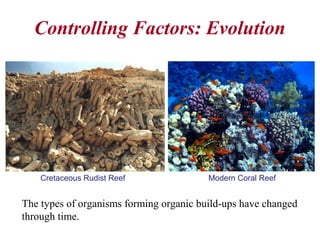
The types of organisms forming organic build-ups have changed
through time.
Controlling Factors: Evolution
Cretaceous Rudist Reef Modern Coral Reef
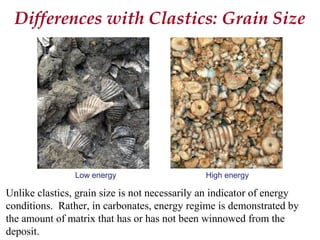
Unlike clastics, grain size is not necessarily an indicator of energy
conditions. Rather, in carbonates, energy regime is demonstrated by
the amount of matrix that has or has not been winnowed from the
deposit.
Differences with Clastics: Grain Size
Low energy High energy
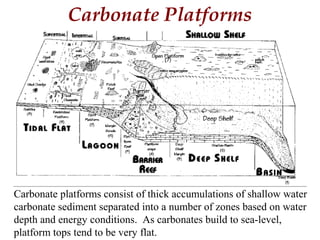
Carbonate Platforms
Carbonate platforms consist of thick accumulations of shallow water
carbonate sediment separated into a number of zones based on water
depth and energy conditions. As carbonates build to sea-level,
platform tops tend to be very flat.
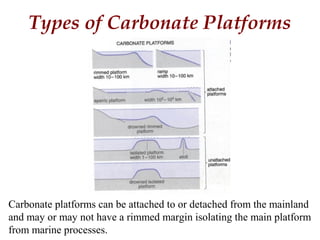
Types of Carbonate Platforms
Carbonate platforms can be attached to or detached from the mainland
and may or may not have a rimmed margin isolating the main platform
from marine processes.
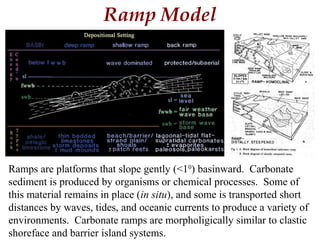
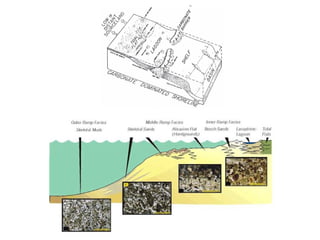
Ramp Model
Ramps are platforms that slope gently (<10
) basinward. Carbonate
sediment is produced by organisms or chemical processes. Some of
this material remains in place (in situ), and some is transported short
distances by waves, tides, and oceanic currents to produce a variety of
environments. Carbonate ramps are morpholigically similar to clastic
shoreface and barrier island systems.
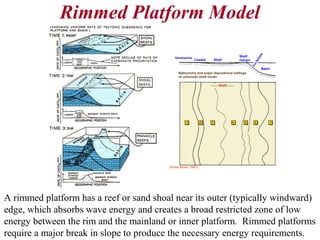
Rimmed Platform Model
A rimmed platform has a reef or sand shoal near its outer (typically windward)
edge, which absorbs wave energy and creates a broad restricted zone of low
energy between the rim and the mainland or inner platform. Rimmed platforms
require a major break in slope to produce the necessary energy requirements.
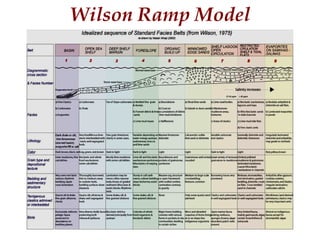
Wilson Ramp Model
Detached Platform/Bank
Detached platforms, also called carbonate banks, are flat-topped
accumulations of carbonate sediment with steep slopes on both sides.
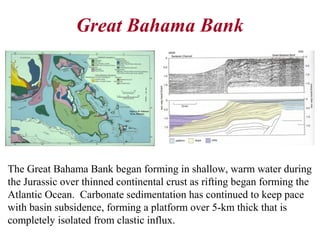
Great Bahama Bank
The Great Bahama Bank began forming in shallow, warm water during
the Jurassic over thinned continental crust as rifting began forming the
Atlantic Ocean. Carbonate sedimentation has continued to keep pace
with basin subsidence, forming a platform over 5-km thick that is
completely isolated from clastic influx.
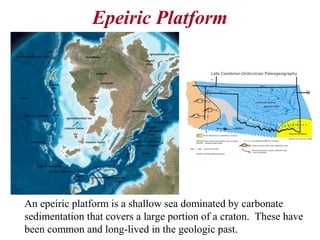
Epeiric Platform
An epeiric platform is a shallow sea dominated by carbonate
sedimentation that covers a large portion of a craton. These have
been common and long-lived in the geologic past.
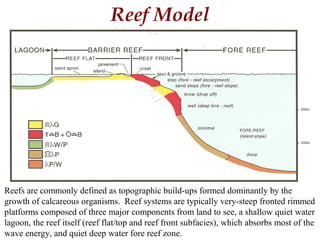
Reef Model
Reefs are commonly defined as topographic build-ups formed dominantly by the
growth of calcareous organisms. Reef systems are typically very-steep fronted rimmed
platforms composed of three major components from land to see, a shallow quiet water
lagoon, the reef itself (reef flat/top and reef front subfacies), which absorbs most of the
wave energy, and quiet deep water fore reef zone.
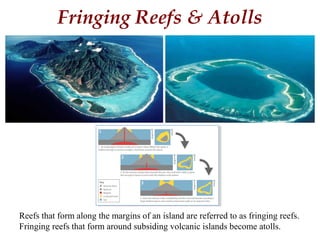
Fringing Reefs & Atolls
Reefs that form along the margins of an island are referred to as fringing reefs.
Fringing reefs that form around subsiding volcanic islands become atolls.
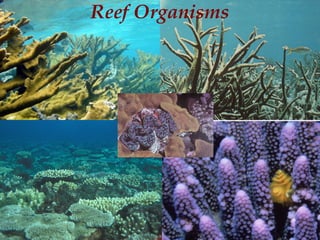
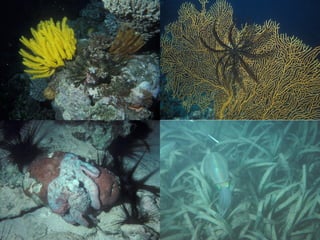
Reef Organisms
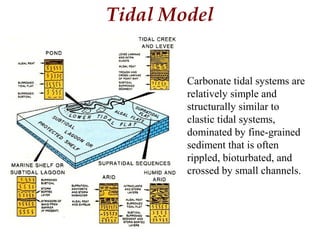
Tidal Model
Carbonate tidal systems are
relatively simple and
structurally similar to
clastic tidal systems,
dominated by fine-grained
sediment that is often
rippled, bioturbated, and
crossed by small channels.
Photo by W. W. Little
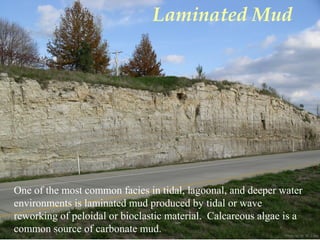
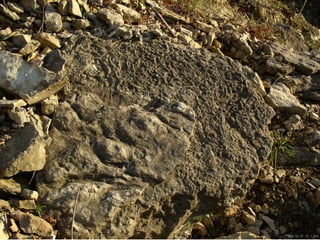
Laminated Mud
One of the most common facies in tidal, lagoonal, and deeper water
environments is laminated mud produced by tidal or wave
reworking of peloidal or bioclastic material. Calcareous algae is a
common source of carbonate mud.
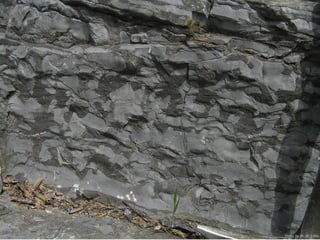
Photo by W. W. Little
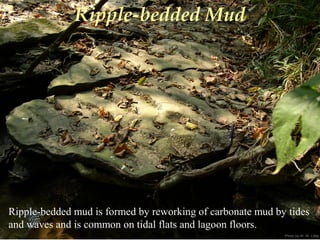
Ripple-bedded Mud
Ripple-bedded mud is formed by reworking of carbonate mud by tides
and waves and is common on tidal flats and lagoon floors.
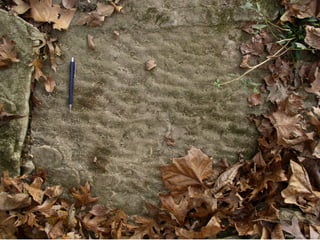
Photo by W. W. Little
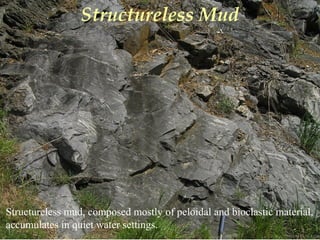
Structureless Mud
Structureless mud, composed mostly of peloidal and bioclastic material,
accumulates in quiet water settings.
Photo by W. W. Little
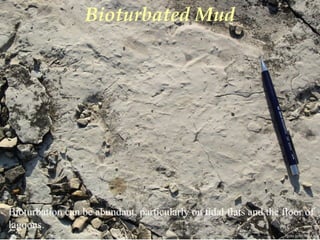
Bioturbated Mud
Bioturbation can be abundant, particularly on tidal flats and the floor of
lagoons.
Photo by W. W. Little
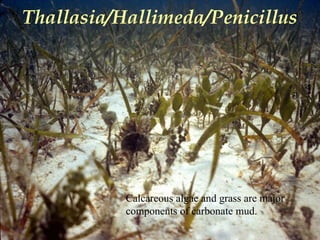
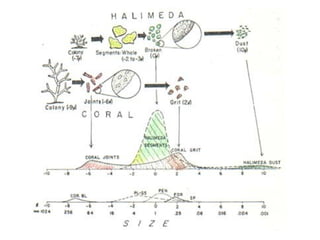
Thallasia/Hallimeda/Penicillus
Calcareous algae and grass are major
components of carbonate mud.
Photo by W. W. Little
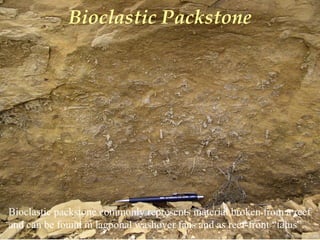
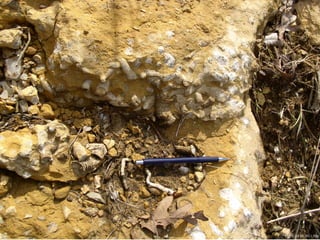
Bioclastic Packstone
Bioclastic packstone commonly represents material broken from a reef
and can be found in lagoonal washover fans and as reef-front “talus”.
Photo by W. W. Little
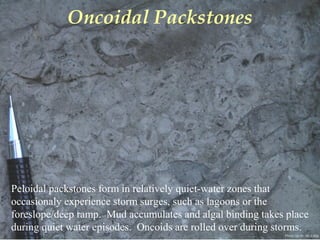
Oncoidal Packstones
Peloidal packstones form in relatively quiet-water zones that
occasionaly experience storm surges, such as lagoons or the
foreslope/deep ramp. Mud accumulates and algal binding takes place
during quiet water episodes. Oncoids are rolled over during storms.
Photo by W. W. Little
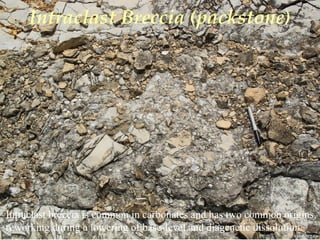
Intraclast Breccia (packstone)
Intraclast breccia is common in carbonates and has two common origins,
reworking during a lowering of base-level and diagenetic dissolution.
Photo by W. W. Little
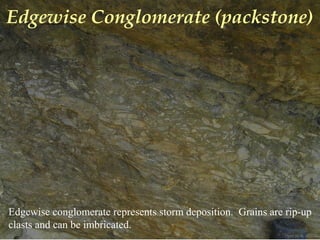
Edgewise Conglomerate (packstone)
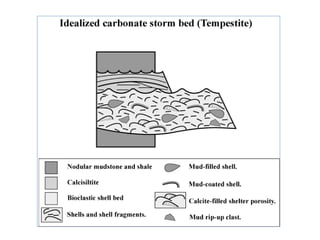
Edgewise conglomerate represents storm deposition. Grains are rip-up
clasts and can be imbricated.
Photo by W. W. Little
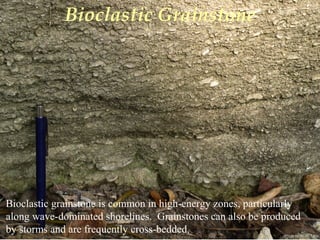
Bioclastic Grainstone
Bioclastic grainstone is common in high-energy zones, particularly
along wave-dominated shorelines. Grainstones can also be produced
by storms and are frequently cross-bedded.
Photo by W. W. Little
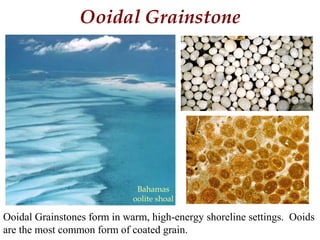
Ooidal Grainstone
Ooidal Grainstones form in warm, high-energy shoreline settings. Ooids
are the most common form of coated grain.
Bahamas
oolite shoal
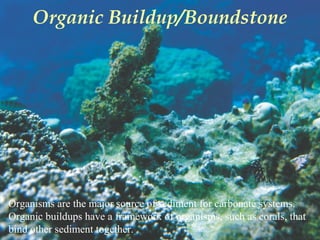
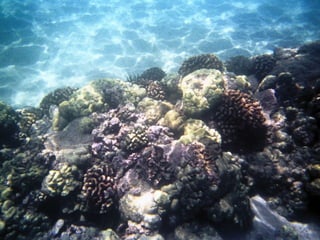
Organic Buildup/Boundstone
Organisms are the major source of sediment for carbonate systems.
Organic buildups have a framework of organisms, such as corals, that
bind other sediment together.
Photo by W. W. Little
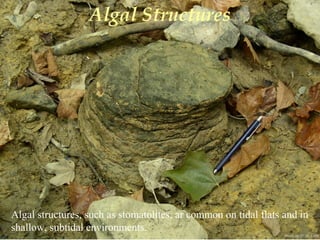
Algal Structures
Algal structures, such as stomatolites, ar common on tidal flats and in
shallow, subtidal environments.
Photo by W. W. Little
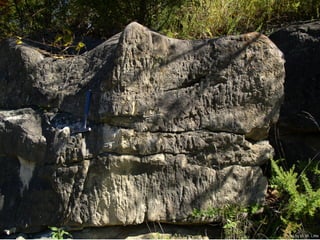
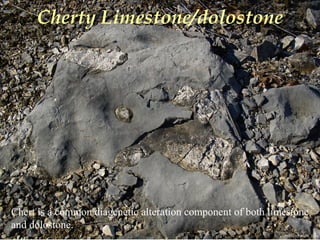
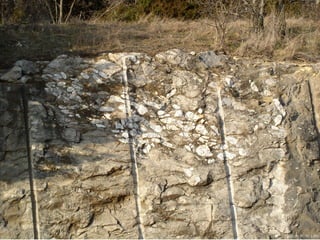
Cherty Limestone/dolostone
Chert is a common diagenetic alteration component of both limestone
and dolostone.
Photo by W. W. Little
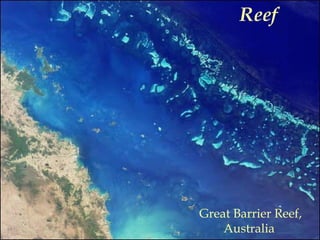
Great Barrier Reef,
Australia
Reef
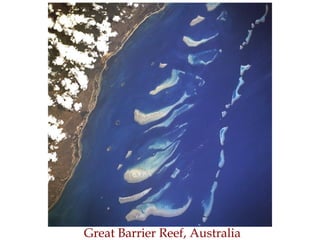
Great Barrier Reef, Australia
Photo by W. W. Little
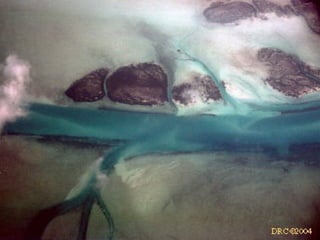
Barrier Reef, Lagoon, and Tidal Flat
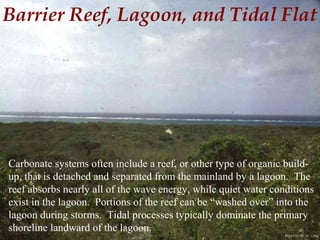
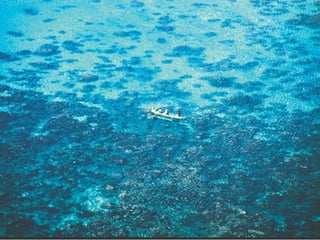
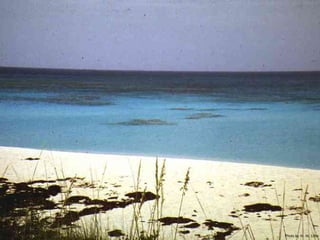
Carbonate systems often include a reef, or other type of organic build-
up, that is detached and separated from the mainland by a lagoon. The
reef absorbs nearly all of the wave energy, while quiet water conditions
exist in the lagoon. Portions of the reef can be “washed over” into the
lagoon during storms. Tidal processes typically dominate the primary
shoreline landward of the lagoon.
Photo by W. W. Little
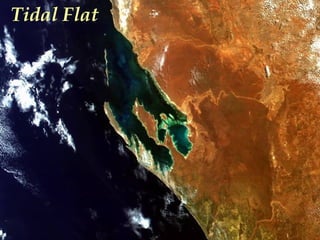
Shark Bay,
Australia
Tidal Flat
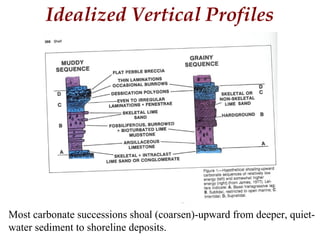
Idealized Vertical Profiles
Most carbonate successions shoal (coarsen)-upward from deeper, quiet-
water sediment to shoreline deposits.
Photo by W. W. Little
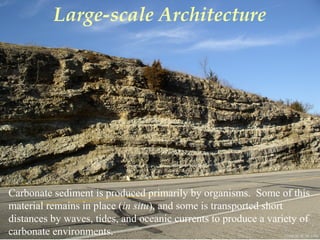
Large-scale Architecture
Carbonate sediment is produced primarily by organisms. Some of this
material remains in place (in situ), and some is transported short
distances by waves, tides, and oceanic currents to produce a variety of
carbonate environments.
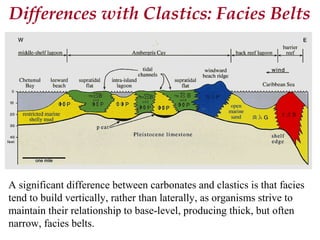
A significant difference between carbonates and clastics is that facies
tend to build vertically, rather than laterally, as organisms strive to
maintain their relationship to base-level, producing thick, but often
narrow, facies belts.
Differences with Clastics: Facies Belts
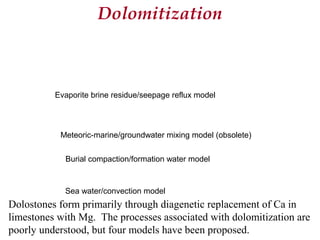
Dolostones form primarily through diagenetic replacement of Ca in
limestones with Mg. The processes associated with dolomitization are
poorly understood, but four models have been proposed.
Dolomitization
Evaporite brine residue/seepage reflux model
Meteoric-marine/groundwater mixing model (obsolete)
Burial compaction/formation water model
Sea water/convection model

Carbonate Depositional Systems

  • 1.
    Photo by W.W. Little Carbonate Systems
  • 2.
  • 3.
    Photo by W.W. Little Carbonates are pretty
  • 4.
    Photo by W.W. Little Especially when covered by snow
  • 5.
    Photo by W.W. Little or carved by glacial processes
  • 6.
    Photo by W.W. Little Carbonate Factory Carbonate sediment is formed mostly in place through biological processes that are controlled by temperature, salinity, water depth, basin geometry, and degree of clastic sediment influx. “Carbonate sediments are born, not made.”
  • 7.
    Modern Carbonate Settings Moderncarbonates are found in three major groups, warm-water, cool- water, and pelagic. Each group is composed of a distinct set of organisms and processes. Warm- and cool-water carbonates can occur at similar latitudes on opposite sides of the same ocean basin due to circulation patterns associated with the coriollis-effect.
  • 8.
    Ancient Carbonate Settings Duringperiods of high eustatic sea-level, vast areas of continents became flooded, leading to widespread development of shallow-water carbonate systems. Pelagic carbonates did not develop until coccoliths became abundant in the Cretaceous.
  • 9.
    Sediment Production: Foramol/bryomol Assemblage Coolwater carbonate sediment composed mostly of benthic forams, molluscs, barnacles, bryazoa, and calcareous red algae.
  • 10.
    Sediment Production: Chlorozoan Assemblage Warmwater carbonate sediment composed of hermatypic corals and calcareous green algae, in addition to foramol organisms.
  • 11.
    Warm-water Carbonates Warm-water carbonatesform in shallow, tropical settings that support photosynthetic-dependent organisms which rapidly produce calcitic skeletal structures, such as corals and calcareous green and red algae. Waters are commonly supersaturated with respect to calcium carbonate that precipitates to form carbonate grains, including ooids, and lime mud. Most reefs form in warm-water settings.
  • 12.
    Modern Reef Occurrence Carbonatereefs form primarily through organic processes that require warm, shallow, clear water. These conditions are best met along the margins of continents and islands located in a narrow band north and south of the equator.
  • 13.
    Cool-water Carbonates Cool-water carbonatesform in shallow to moderate-depth arctic, temperate, and some tropical shelf settings that support non-photic calcifying benthic invertebrates, such as molluscs, bryozoa, forams, and barnacles, as well as photic calcareous red alage.
  • 14.
    Pelagic Carbonates Pelagic carbonateorganisms, such as coccoliths and forams, exist in shallow photic zones of the open ocean. Upon death, their skeletons settle to the seafloor and accumulate to form intermediate-water carbonate oozes, mostly on shelves and ocean- ridge flanks. Below the carbonate compensation depth (CCD), usually between 3000- and 4000-m depth, cold water tends to be undersaturated with respect to calcium carbonate leading to the dissolution, rather than accumulation of these tests.
  • 15.
    Controlling Factors: ShelfGeometry The development and lateral distribution of carbonate facies is dependent, in part, on the width and shape of the shelf upon which they form. Belize shelf
  • 16.
    Controlling Factors: WaterDepth Carbonate production occurs primarily within the photic zone, typically to maximum depths of 80 to 100 m. Deep- water carbonates can form to depths of over 350 m. Water depth strongly influences both the physical processes at work and the organisms present in the carbonate system.
  • 17.
    Because carbonate platformshave flat tops and relatively steep slopes and primary production is restricted to depths of around 50 m, highstands allow a broader area to be productive than lowstands. Water Depth and Geometry
  • 18.
    Controlling Factors: SiliciclasticInflux Carbonate systems tend to be poorly developed in regions of significant siliciclastic input due to turbidity, which blocks sunlight and clogs filter-feeding mechanisms.
  • 19.
    Controlling Factors: Water Temperature Colderwater can absorb more CO2 than warmer water, therefore, temperature affects carbonate saturation potential, making it more likely for carbonate-secreting organisms to exist in equatorial regions than in polar regions. However, some carbonate-producing organisms do prefer cooler (below180 C) water conditions Carbonate saturation levels Warmer temperatures increase chemical reaction rates, leading to a greater likelihood of precipitation of chemical grains.
  • 20.
    Associated with oceanvolume and, therefore, ionic concentrations, glacial episodes favor formation of chemical grains and cement in the form of aragonite and high-Mg calcite; whereas, interglacials tend toward precipitation of calcite, which is more stable (weathers more slowly) under subaerial conditions. Controlling Factors: Water Chemistry
  • 21.
    Controlling Factors: Sunlight Thevast majority of carbonate-producing organisms are phototropic and/or photosynthetic or symbiotic with other organisms that are so and, therefore, require shallow, clear water to thrive. Thus, carbonates decrease poleward because of less winter sunlight and near clastic sources because of turbidity. Sunlight can penetrate to around 100 m depth but is most effective in the upper 10 to 20 meter of the ocean.
  • 22.
    Controlling Factors: Salinity Salinityis a measure of the amount of dissolved solids contained within the water mass, dominated in seawater by the cation Na+ and anion Cl- . Most carbonate organisms prefer salinites between 32 and 400 /00. Salinities too high kill most organisms, while those too low lead to dissolution. Higher salinity enhances the production of chemical grains.
  • 23.
    Controlling Factors: Substrate Differentorganisms prefer different types of substrates, depending upon feeding habits, methods of locomotion, and needs for defense.
  • 24.
    Organisms are oftenmeasured in terms of body size, diversity, and total abundance. High energy environments tend to favor high diversity and large body size; whereas, quiet water settings seem to foster high abundance. Energy conditions impact water circulation, which, in turn affects oxygenation. Controlling Factors: Water Energy
  • 25.
    Controlling Factors: Organic Compounds(nutrients) Coastal runoff and upwelling rich in organic nutrients favor production of benthic and planktonic algae; whereas, reef-building organisms prefer more clear waters.
  • 26.
    The rate ofcarbonate production for shallow, warm-water reefs is rapid and can usually outpace the rate of accommodation production through 3rd -order cycles. Glacio-eustatic rises and fault-related basin subsidence are among the few exceptions. Uplift can place deeper water facies into shallower water settings. Once accommodation space is filled (production reaches sea-level), it shuts off or progrades leeward as sediment is washed off the platform top (highstand shedding). Controlling Factors: Accommodation
  • 27.
    The types oforganisms forming organic build-ups have changed through time. Controlling Factors: Evolution Cretaceous Rudist Reef Modern Coral Reef
  • 28.
    Unlike clastics, grainsize is not necessarily an indicator of energy conditions. Rather, in carbonates, energy regime is demonstrated by the amount of matrix that has or has not been winnowed from the deposit. Differences with Clastics: Grain Size Low energy High energy
  • 29.
    Carbonate Platforms Carbonate platformsconsist of thick accumulations of shallow water carbonate sediment separated into a number of zones based on water depth and energy conditions. As carbonates build to sea-level, platform tops tend to be very flat.
  • 30.
    Types of CarbonatePlatforms Carbonate platforms can be attached to or detached from the mainland and may or may not have a rimmed margin isolating the main platform from marine processes.
  • 31.
    Ramp Model Ramps areplatforms that slope gently (<10 ) basinward. Carbonate sediment is produced by organisms or chemical processes. Some of this material remains in place (in situ), and some is transported short distances by waves, tides, and oceanic currents to produce a variety of environments. Carbonate ramps are morpholigically similar to clastic shoreface and barrier island systems.
  • 35.
    Rimmed Platform Model Arimmed platform has a reef or sand shoal near its outer (typically windward) edge, which absorbs wave energy and creates a broad restricted zone of low energy between the rim and the mainland or inner platform. Rimmed platforms require a major break in slope to produce the necessary energy requirements.
  • 36.
  • 37.
    Detached Platform/Bank Detached platforms,also called carbonate banks, are flat-topped accumulations of carbonate sediment with steep slopes on both sides.
  • 39.
    Great Bahama Bank TheGreat Bahama Bank began forming in shallow, warm water during the Jurassic over thinned continental crust as rifting began forming the Atlantic Ocean. Carbonate sedimentation has continued to keep pace with basin subsidence, forming a platform over 5-km thick that is completely isolated from clastic influx.
  • 40.
    Epeiric Platform An epeiricplatform is a shallow sea dominated by carbonate sedimentation that covers a large portion of a craton. These have been common and long-lived in the geologic past.
  • 41.
    Reef Model Reefs arecommonly defined as topographic build-ups formed dominantly by the growth of calcareous organisms. Reef systems are typically very-steep fronted rimmed platforms composed of three major components from land to see, a shallow quiet water lagoon, the reef itself (reef flat/top and reef front subfacies), which absorbs most of the wave energy, and quiet deep water fore reef zone.
  • 43.
    Fringing Reefs &Atolls Reefs that form along the margins of an island are referred to as fringing reefs. Fringing reefs that form around subsiding volcanic islands become atolls.
  • 44.
  • 46.
    Tidal Model Carbonate tidalsystems are relatively simple and structurally similar to clastic tidal systems, dominated by fine-grained sediment that is often rippled, bioturbated, and crossed by small channels.
  • 47.
    Photo by W.W. Little Laminated Mud One of the most common facies in tidal, lagoonal, and deeper water environments is laminated mud produced by tidal or wave reworking of peloidal or bioclastic material. Calcareous algae is a common source of carbonate mud.
  • 48.
    Photo by W.W. Little Ripple-bedded Mud Ripple-bedded mud is formed by reworking of carbonate mud by tides and waves and is common on tidal flats and lagoon floors.
  • 49.
    Photo by W.W. Little Structureless Mud Structureless mud, composed mostly of peloidal and bioclastic material, accumulates in quiet water settings.
  • 50.
    Photo by W.W. Little Bioturbated Mud Bioturbation can be abundant, particularly on tidal flats and the floor of lagoons.
  • 51.
    Photo by W.W. Little
  • 52.
    Photo by W.W. Little
  • 53.
    Photo by W.W. Little
  • 54.
    Thallasia/Hallimeda/Penicillus Calcareous algae andgrass are major components of carbonate mud.
  • 56.
    Photo by W.W. Little Bioclastic Packstone Bioclastic packstone commonly represents material broken from a reef and can be found in lagoonal washover fans and as reef-front “talus”.
  • 57.
    Photo by W.W. Little
  • 58.
    Photo by W.W. Little Oncoidal Packstones Peloidal packstones form in relatively quiet-water zones that occasionaly experience storm surges, such as lagoons or the foreslope/deep ramp. Mud accumulates and algal binding takes place during quiet water episodes. Oncoids are rolled over during storms.
  • 59.
    Photo by W.W. Little Intraclast Breccia (packstone) Intraclast breccia is common in carbonates and has two common origins, reworking during a lowering of base-level and diagenetic dissolution.
  • 60.
    Photo by W.W. Little Edgewise Conglomerate (packstone) Edgewise conglomerate represents storm deposition. Grains are rip-up clasts and can be imbricated.
  • 61.
    Photo by W.W. Little Bioclastic Grainstone Bioclastic grainstone is common in high-energy zones, particularly along wave-dominated shorelines. Grainstones can also be produced by storms and are frequently cross-bedded.
  • 63.
    Photo by W.W. Little
  • 64.
    Photo by W.W. Little
  • 65.
    Photo by W.W. Little
  • 66.
    Photo by W.W. Little
  • 67.
    Ooidal Grainstone Ooidal Grainstonesform in warm, high-energy shoreline settings. Ooids are the most common form of coated grain. Bahamas oolite shoal
  • 68.
    Organic Buildup/Boundstone Organisms arethe major source of sediment for carbonate systems. Organic buildups have a framework of organisms, such as corals, that bind other sediment together.
  • 70.
    Photo by W.W. Little
  • 71.
    Photo by W.W. Little
  • 72.
    Photo by W.W. Little
  • 73.
    Photo by W.W. Little
  • 74.
    Photo by W.W. Little
  • 75.
    Photo by W.W. Little
  • 76.
    Photo by W.W. Little
  • 77.
    Photo by W.W. Little Algal Structures Algal structures, such as stomatolites, ar common on tidal flats and in shallow, subtidal environments.
  • 78.
    Photo by W.W. Little
  • 79.
    Photo by W.W. Little Cherty Limestone/dolostone Chert is a common diagenetic alteration component of both limestone and dolostone.
  • 80.
    Photo by W.W. Little
  • 81.
  • 82.
  • 83.
    Photo by W.W. Little Barrier Reef, Lagoon, and Tidal Flat Carbonate systems often include a reef, or other type of organic build- up, that is detached and separated from the mainland by a lagoon. The reef absorbs nearly all of the wave energy, while quiet water conditions exist in the lagoon. Portions of the reef can be “washed over” into the lagoon during storms. Tidal processes typically dominate the primary shoreline landward of the lagoon.
  • 85.
    Photo by W.W. Little
  • 86.
  • 88.
    Idealized Vertical Profiles Mostcarbonate successions shoal (coarsen)-upward from deeper, quiet- water sediment to shoreline deposits.
  • 89.
    Photo by W.W. Little Large-scale Architecture Carbonate sediment is produced primarily by organisms. Some of this material remains in place (in situ), and some is transported short distances by waves, tides, and oceanic currents to produce a variety of carbonate environments.
  • 90.
    A significant differencebetween carbonates and clastics is that facies tend to build vertically, rather than laterally, as organisms strive to maintain their relationship to base-level, producing thick, but often narrow, facies belts. Differences with Clastics: Facies Belts
  • 92.
    Dolostones form primarilythrough diagenetic replacement of Ca in limestones with Mg. The processes associated with dolomitization are poorly understood, but four models have been proposed. Dolomitization Evaporite brine residue/seepage reflux model Meteoric-marine/groundwater mixing model (obsolete) Burial compaction/formation water model Sea water/convection model

Editor's Notes