Beach & Barrier Systems
Photo by W. W. Little
Simplified Models
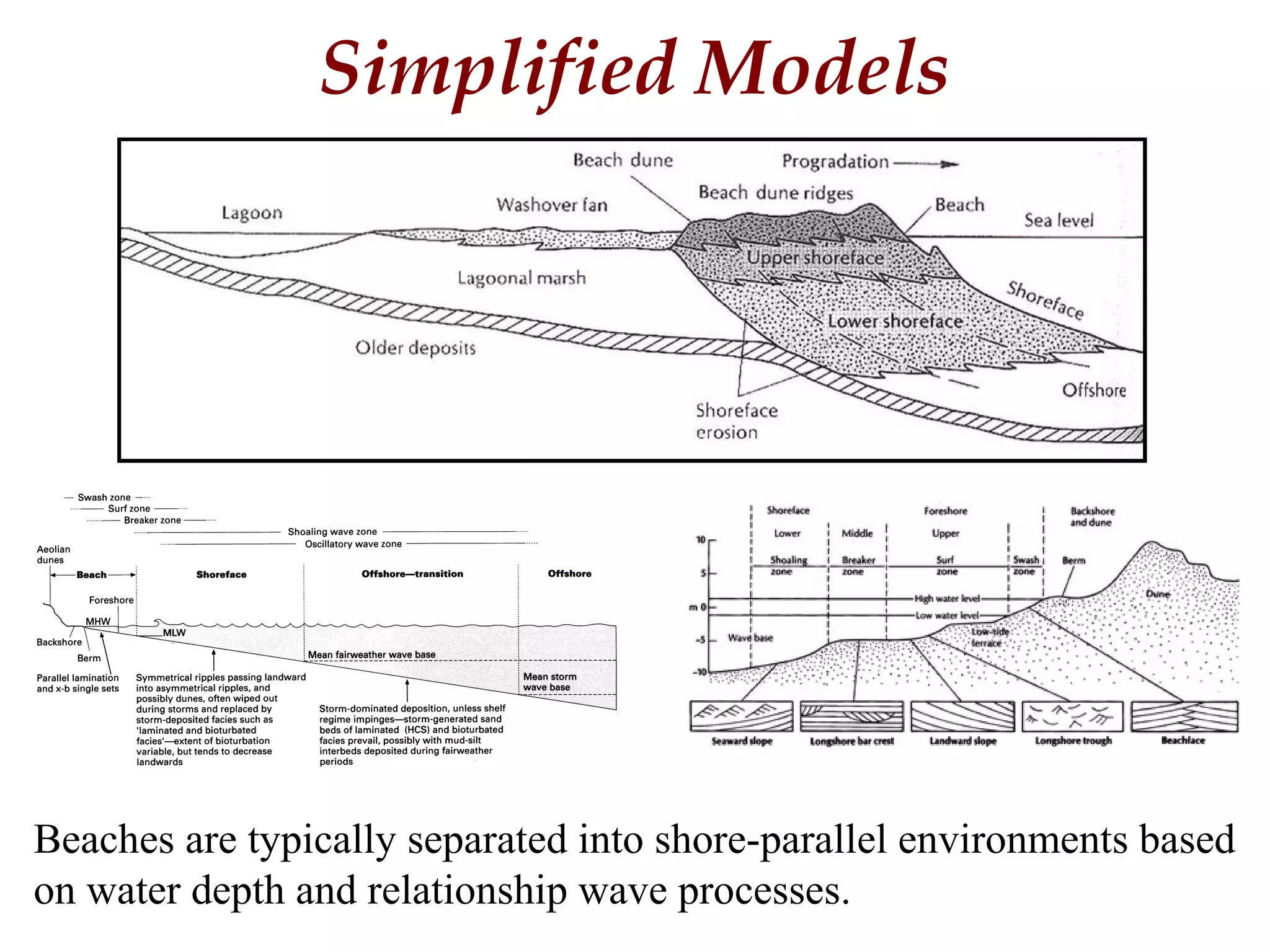
Beaches are typically separated into shore-parallel environments based
on water depth and relationship wave processes.
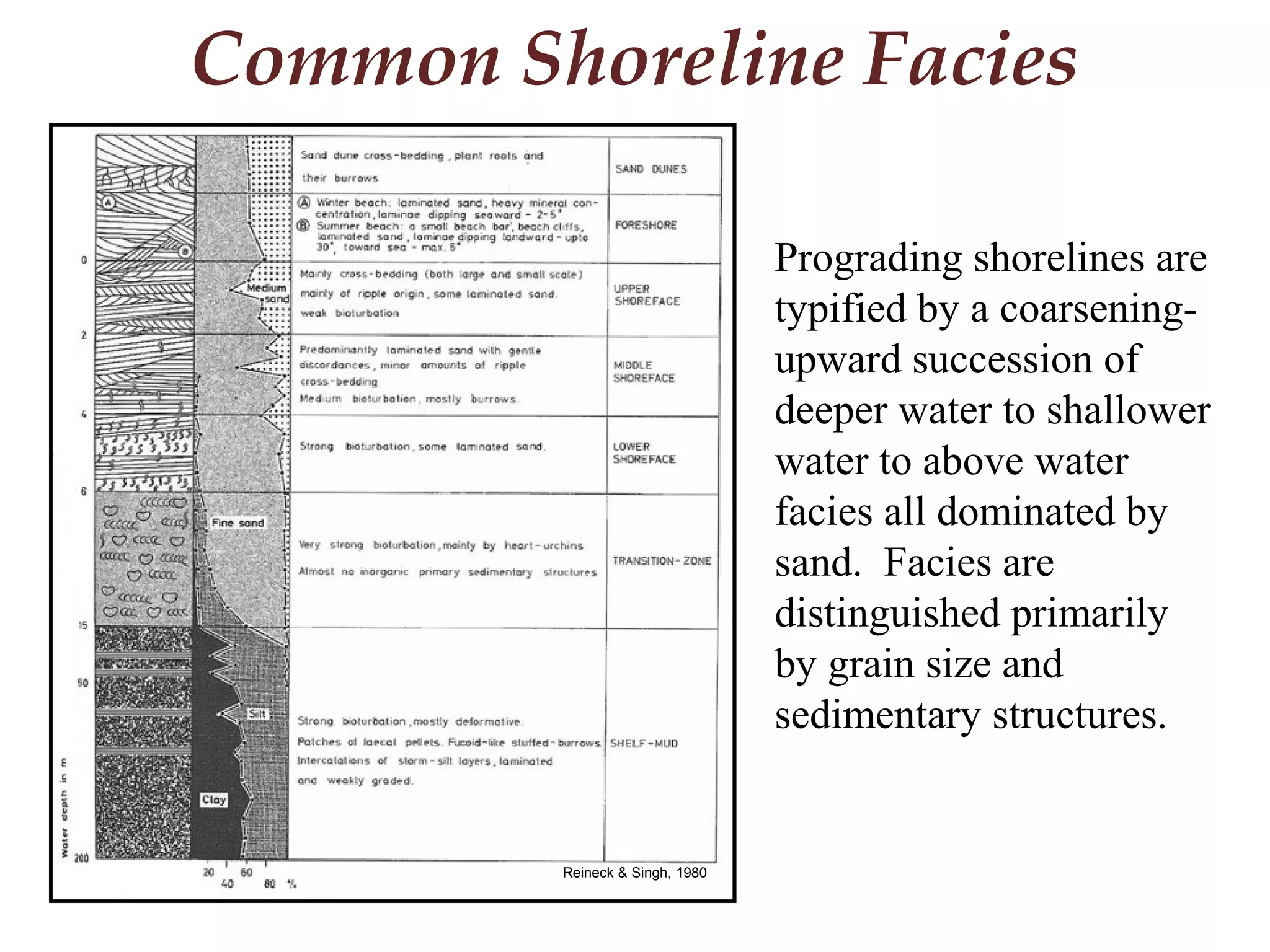
Reineck & Singh, 1980
Common Shoreline Facies
Prograding shorelines are
typified by a coarsening-
upward succession of
deeper water to shallower
water to above water
facies all dominated by
sand. Facies are
distinguished primarily
by grain size and
sedimentary structures.
Photo by W. W. Little
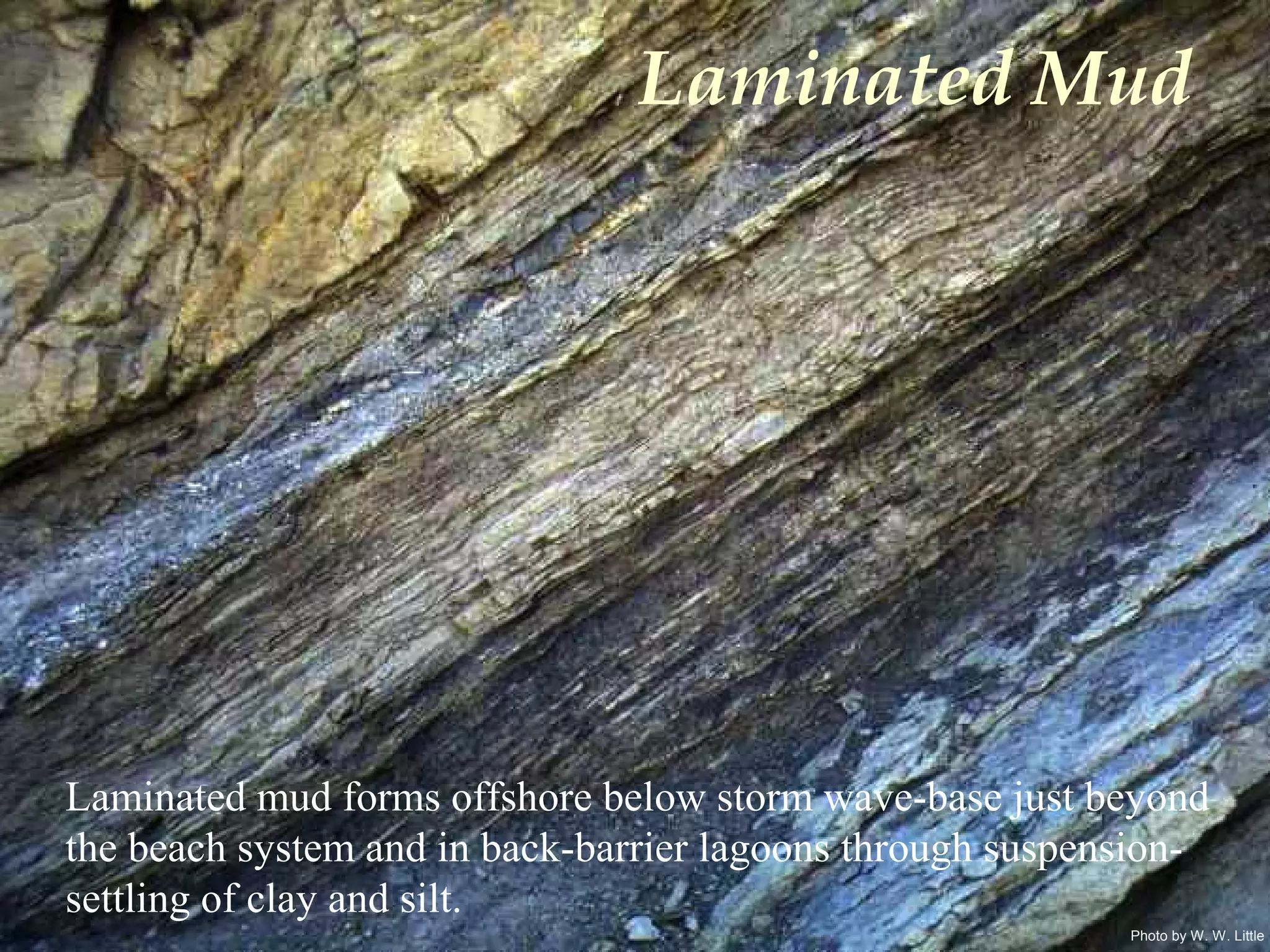
Laminated Mud
Laminated mud forms offshore below storm wave-base just beyond
the beach system and in back-barrier lagoons through suspension-
settling of clay and silt.
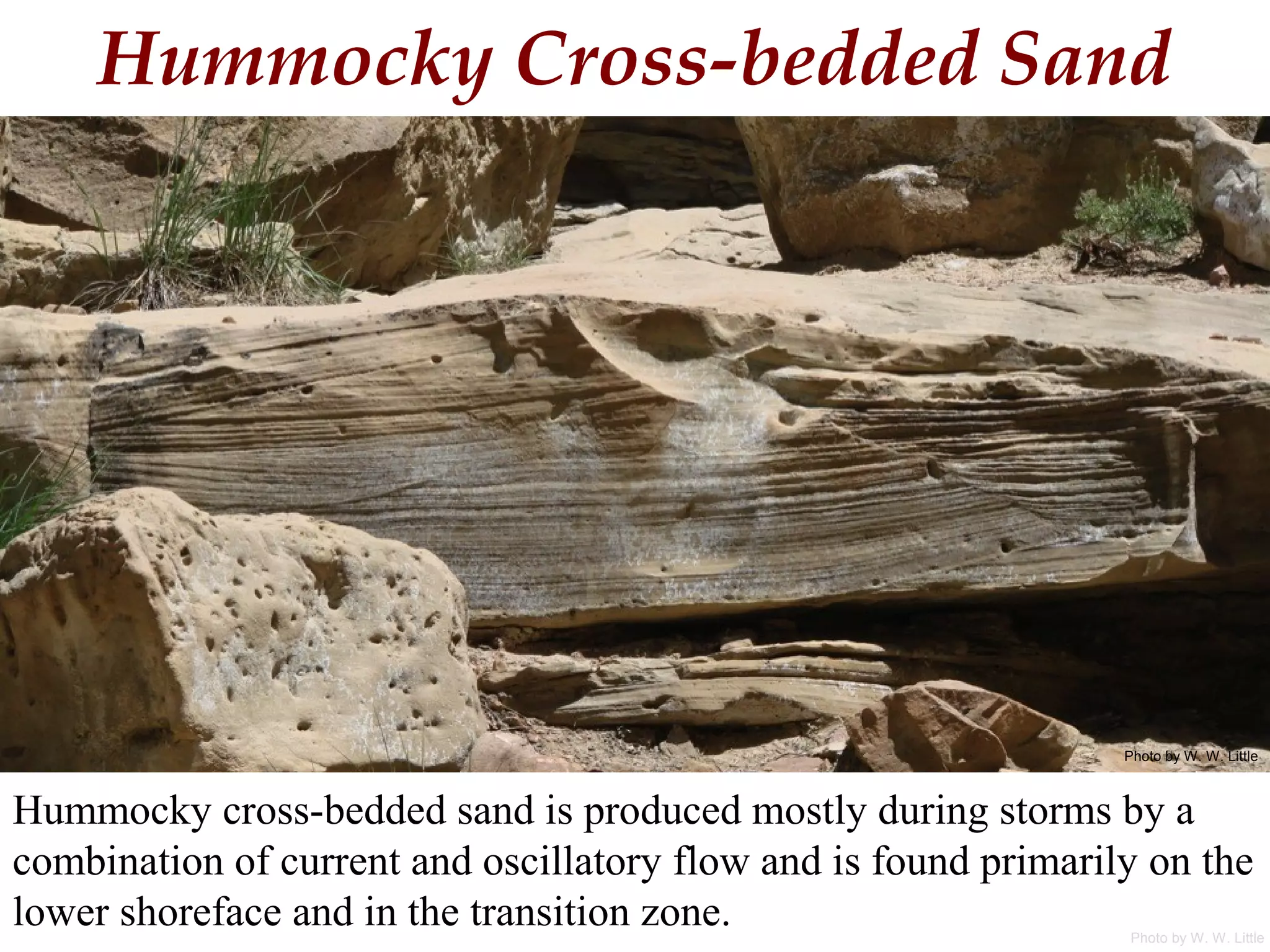
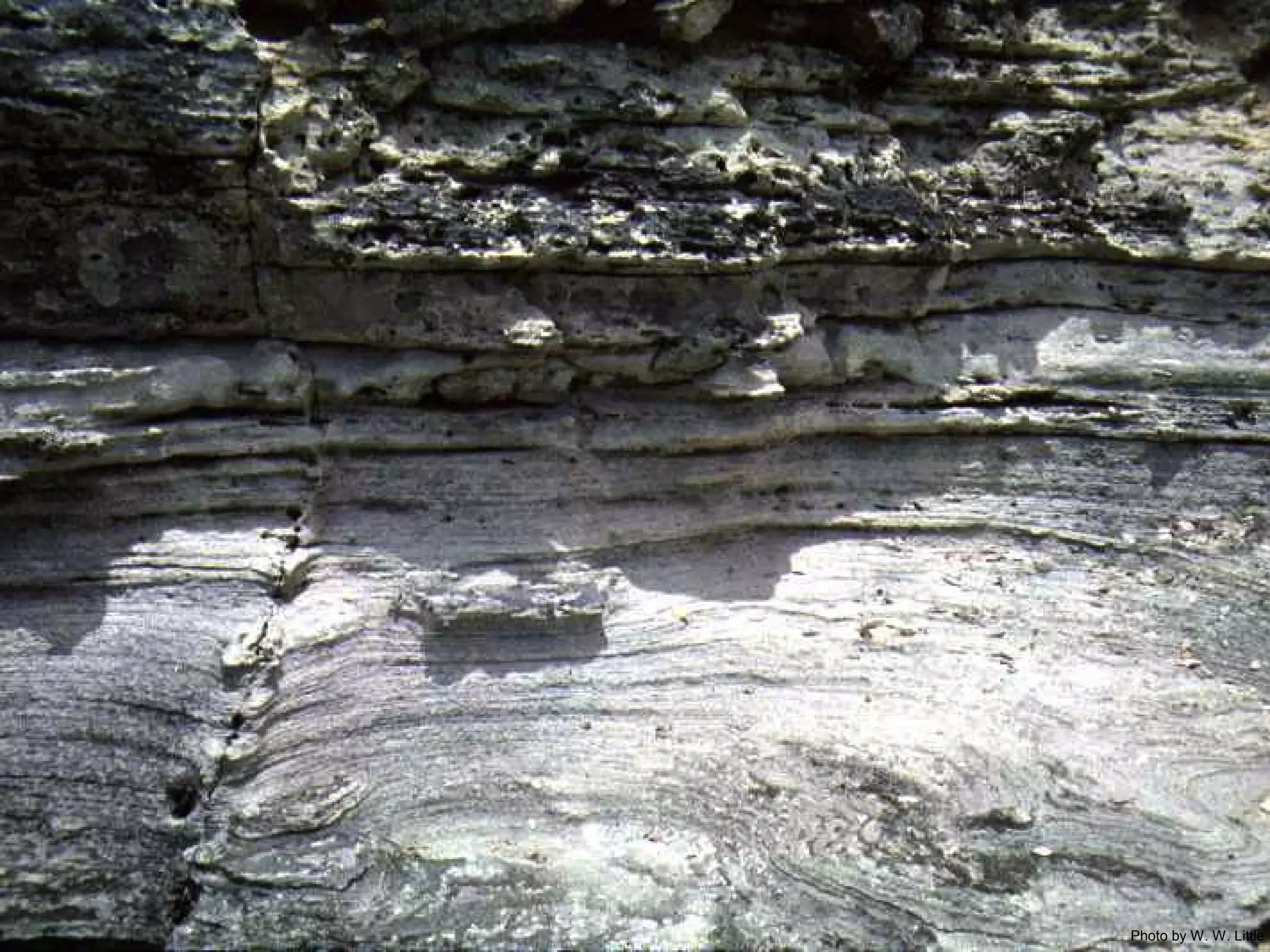
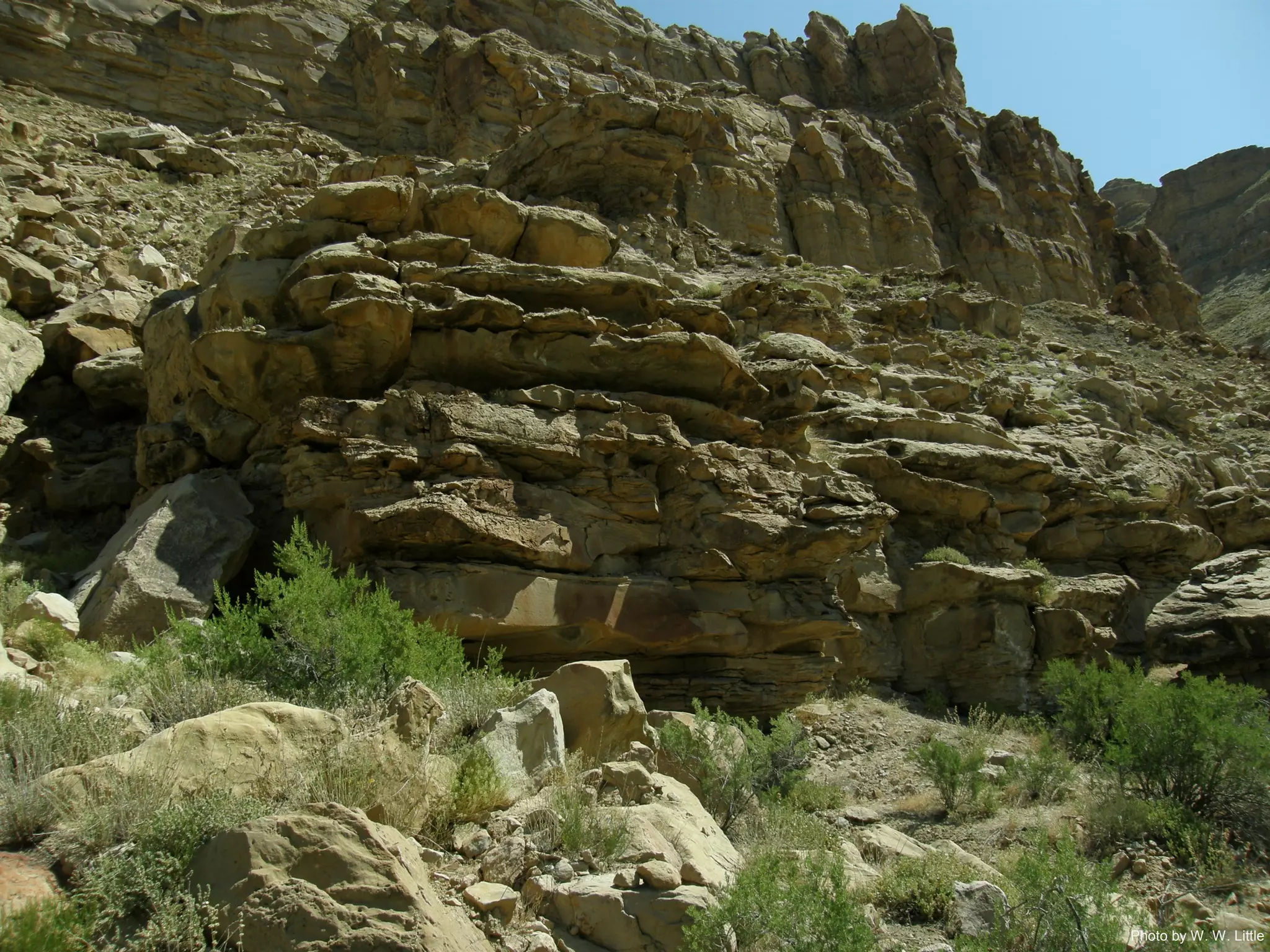
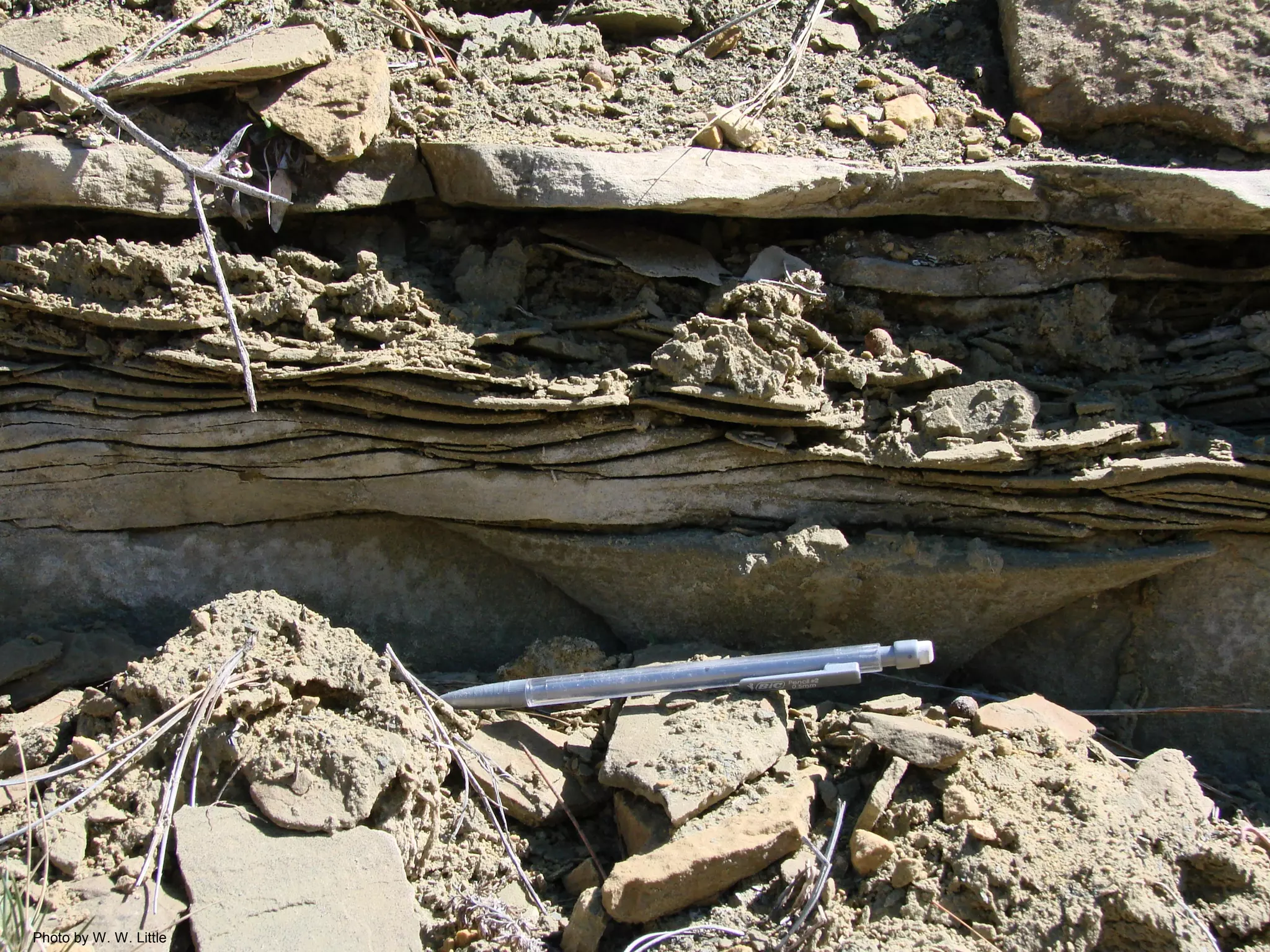
Hummocky Cross-bedded Sand
Hummocky cross-bedded sand is produced mostly during storms by a
combination of current and oscillatory flow and is found primarily on the
lower shoreface and in the transition zone. Photo by W. W. Little
Photo by W. W. Little
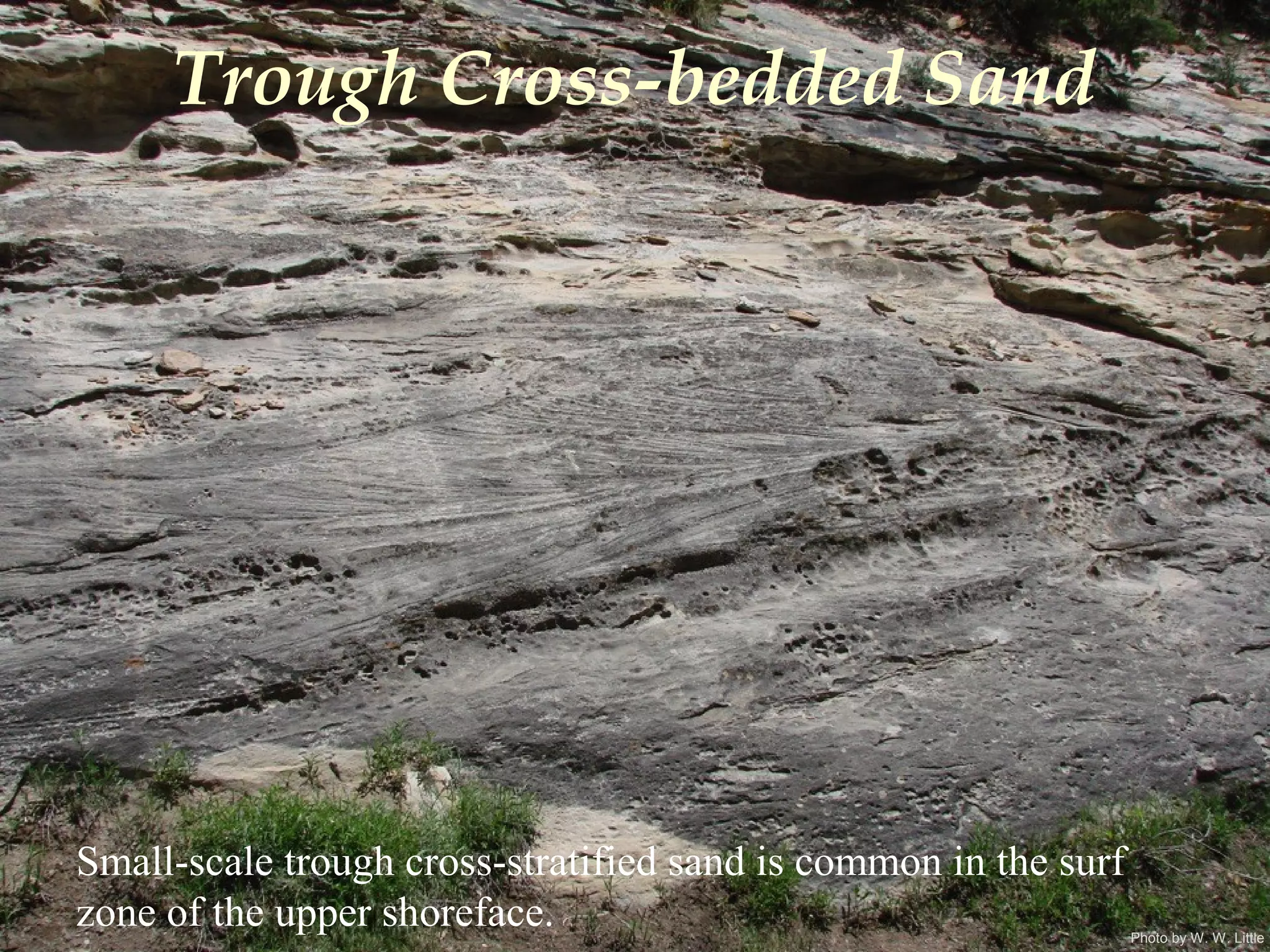
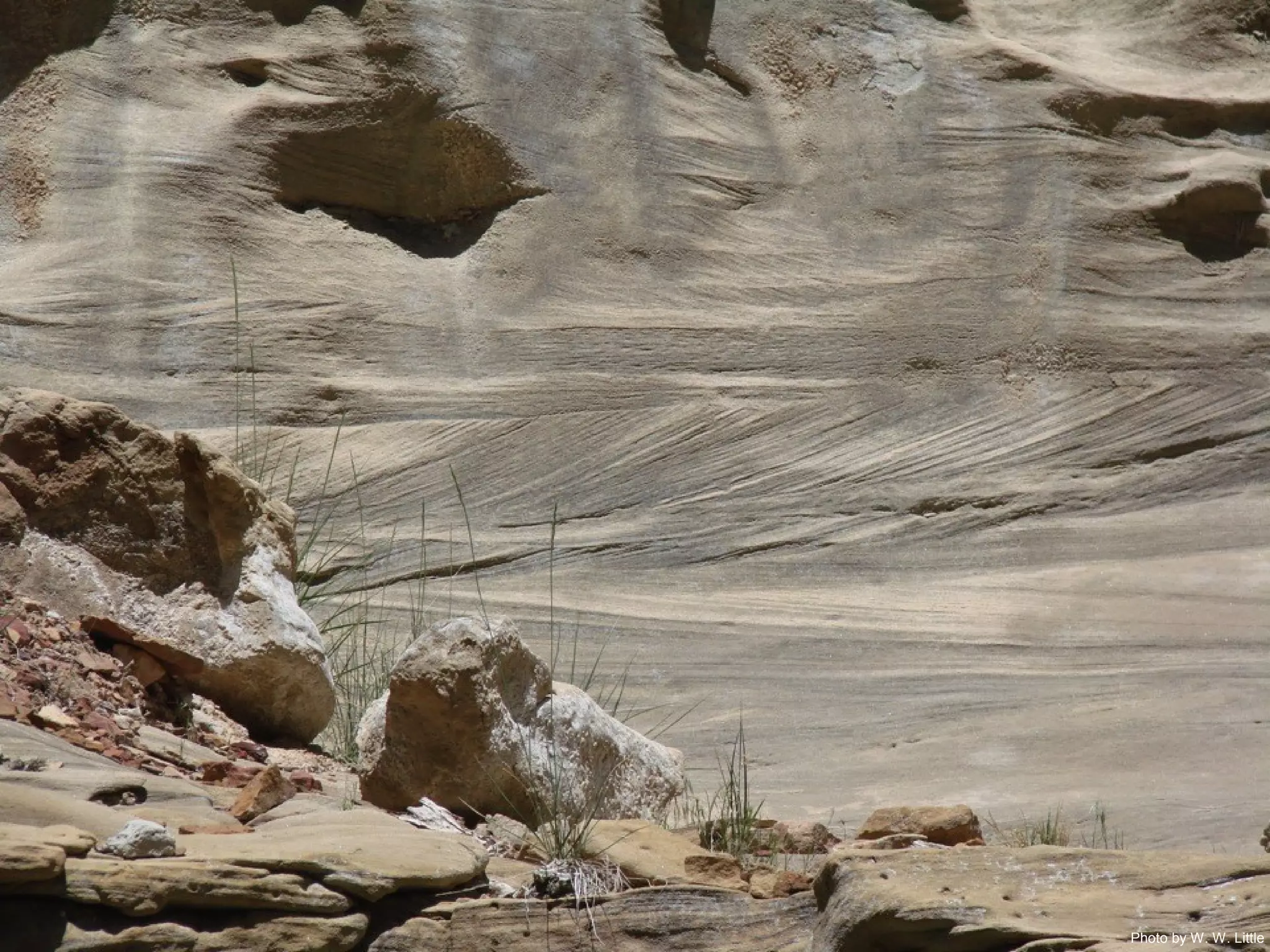
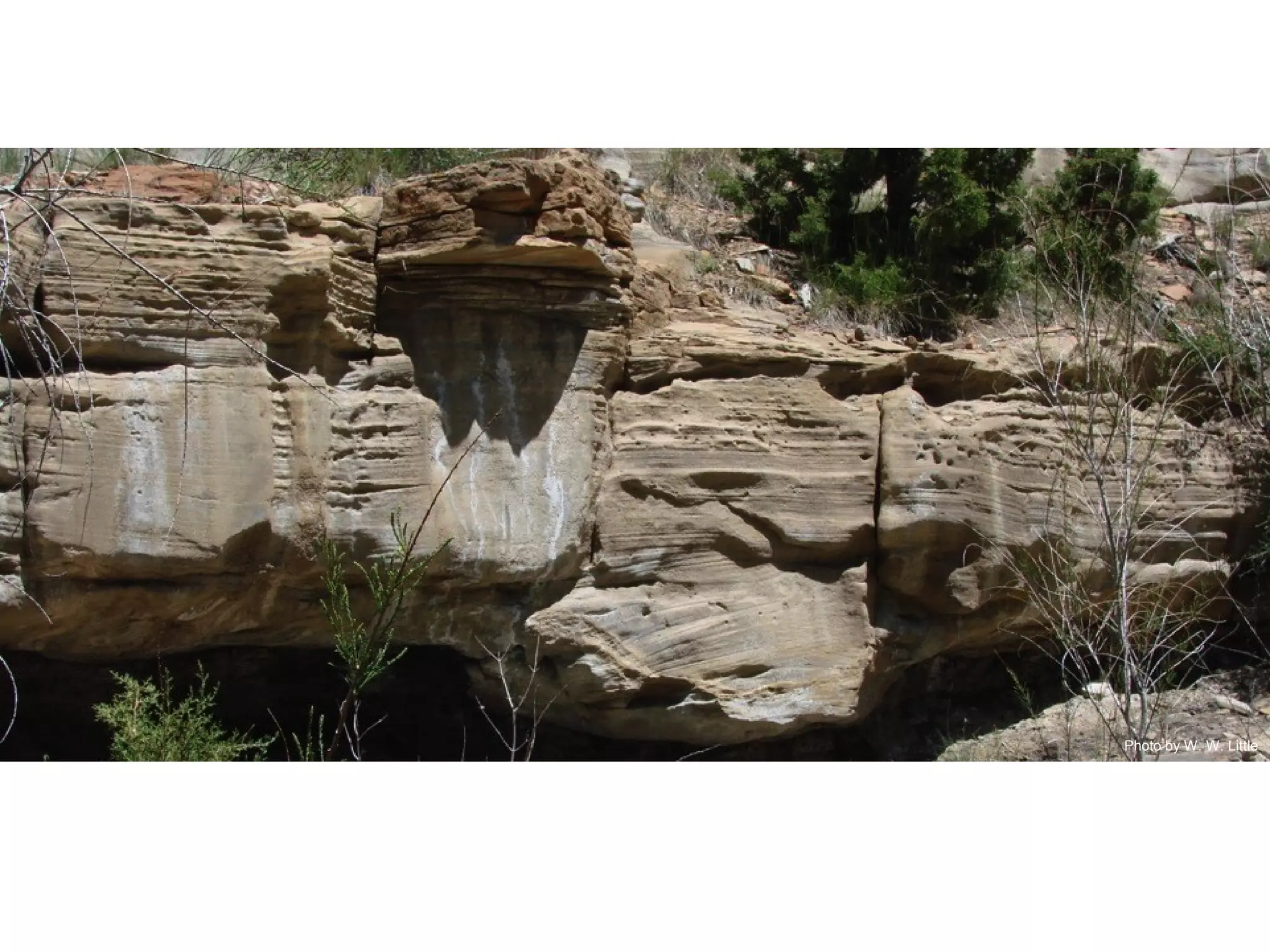
Trough Cross-bedded Sand
Small-scale trough cross-stratified sand is common in the surf
zone of the upper shoreface.
Photo by W. W. Little
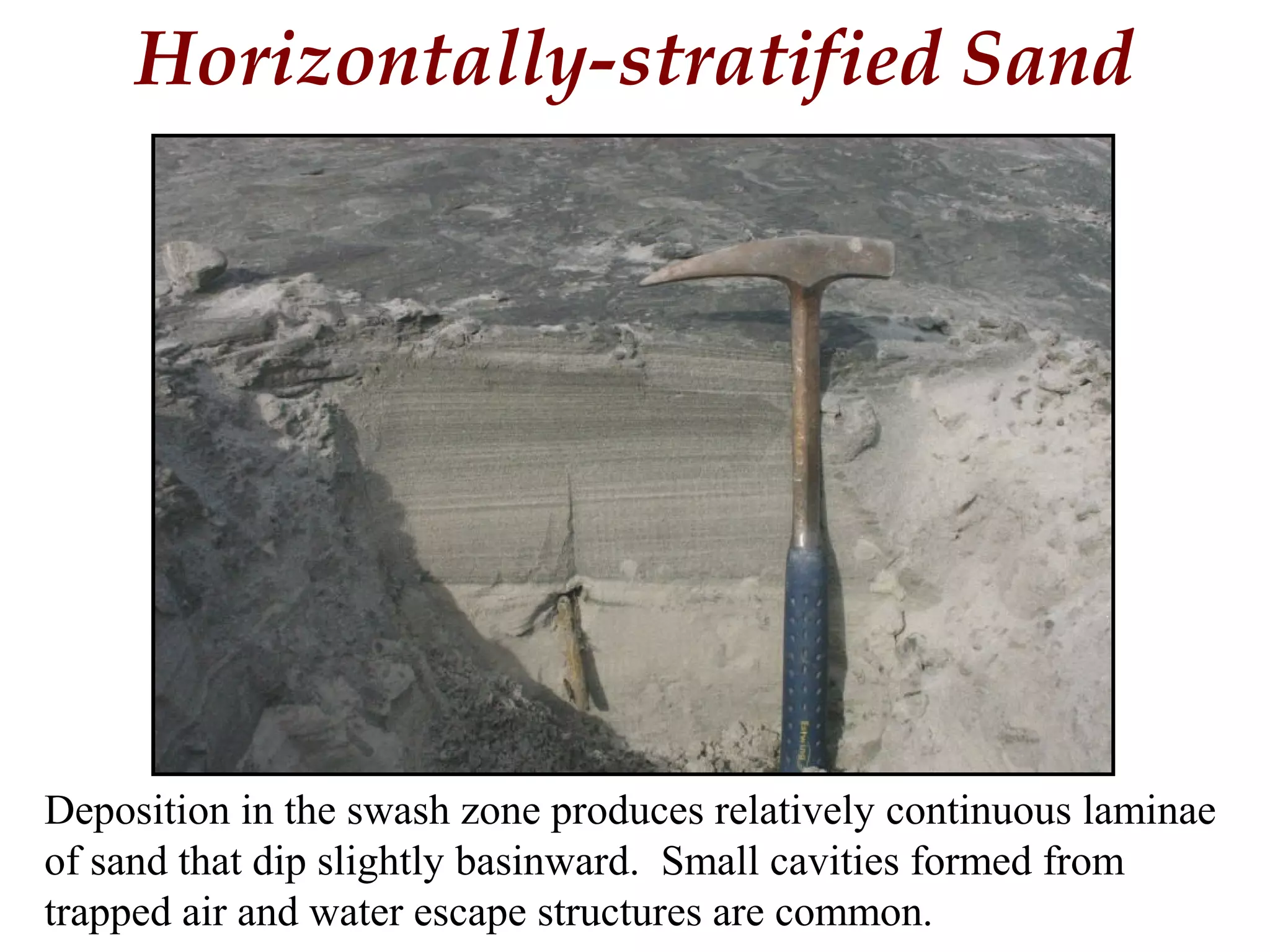
Horizontally-stratified Sand
Deposition in the swash zone produces relatively continuous laminae
of sand that dip slightly basinward. Small cavities formed from
trapped air and water escape structures are common.
Photo by W. W. Little
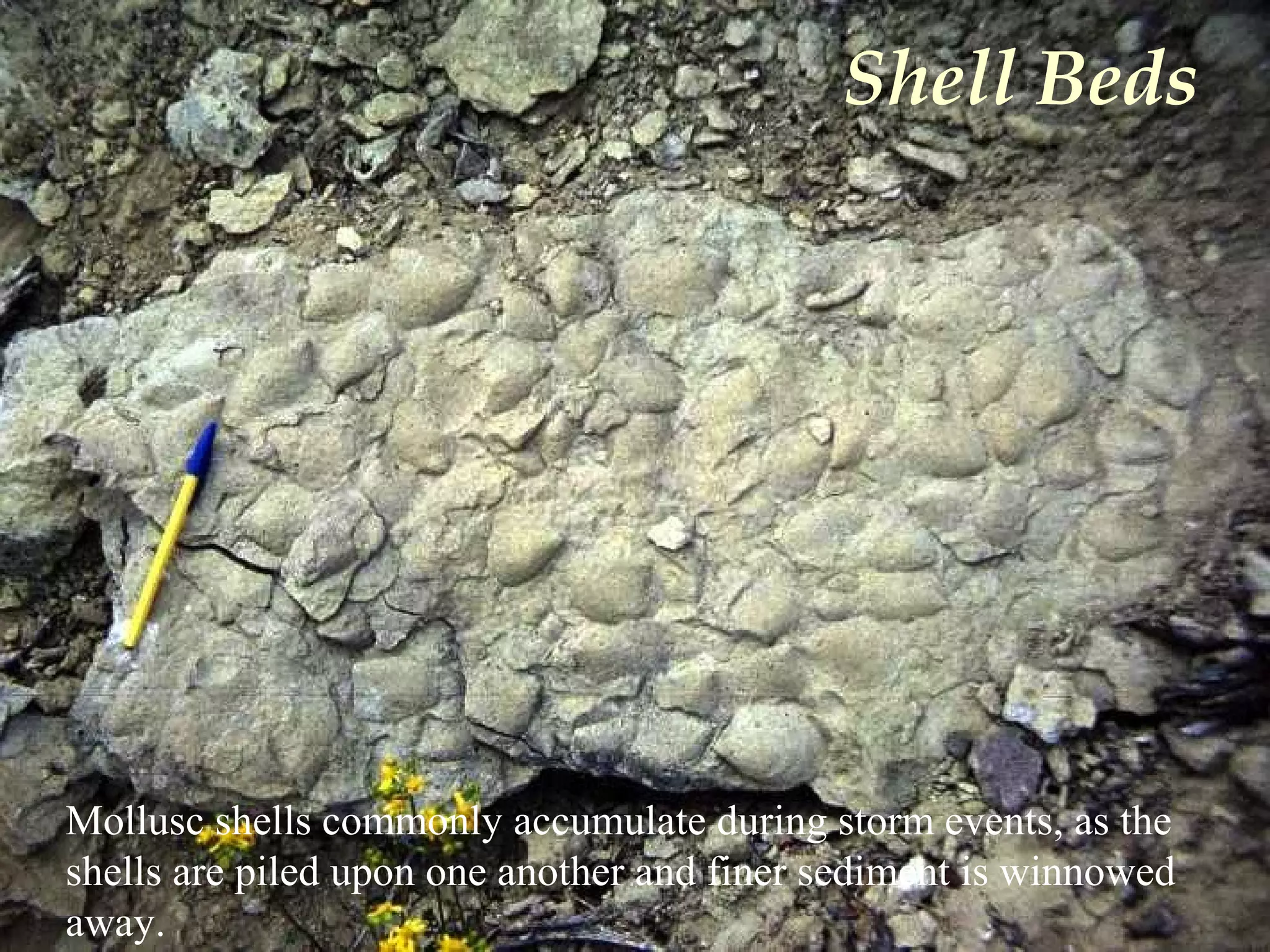
Shell Beds
Mollusc shells commonly accumulate during storm events, as the
shells are piled upon one another and finer sediment is winnowed
away.
Photo by W. W. Little
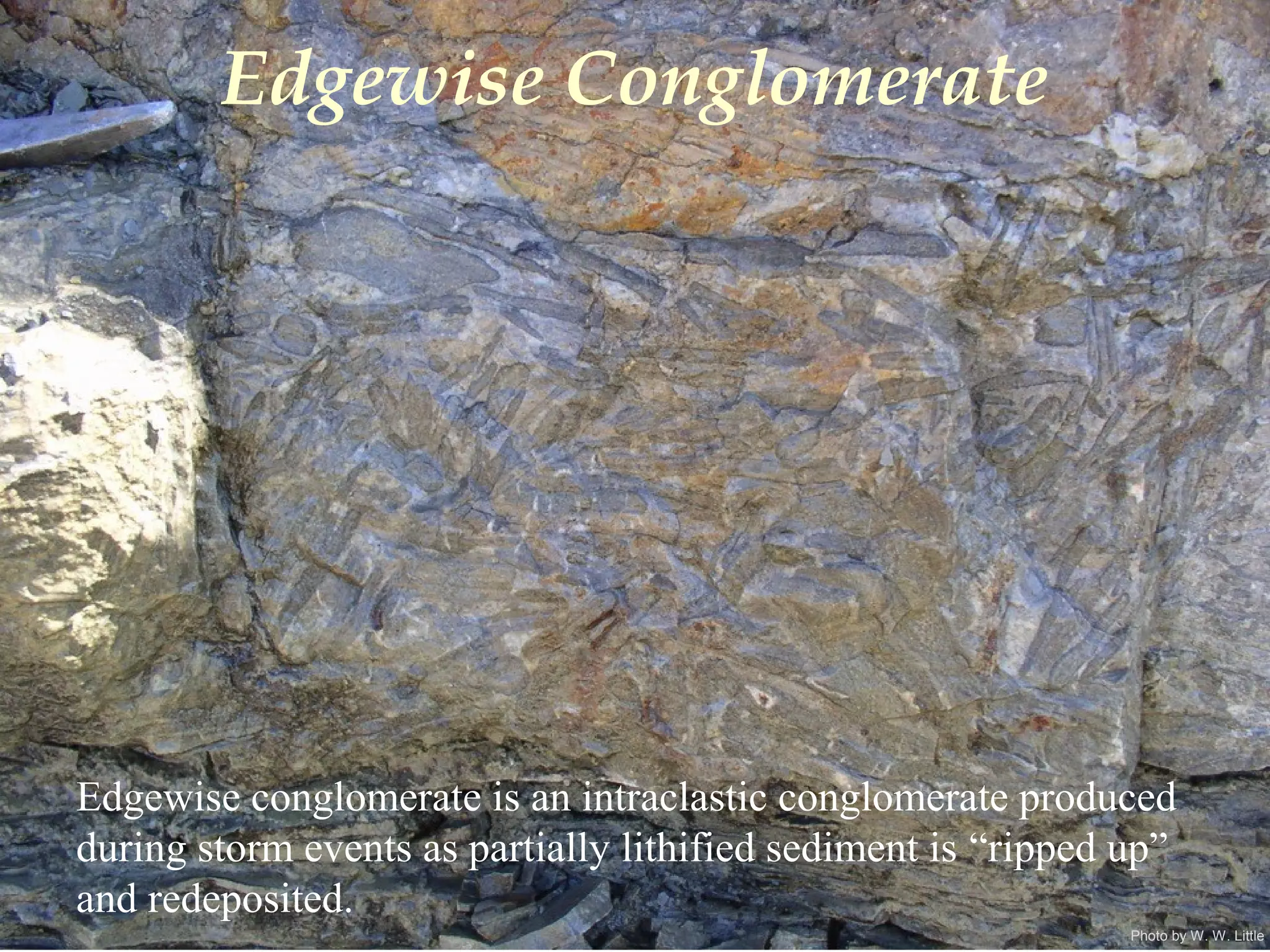
Edgewise Conglomerate
Edgewise conglomerate is an intraclastic conglomerate produced
during storm events as partially lithified sediment is “ripped up”
and redeposited.
Photo by W. W. Little
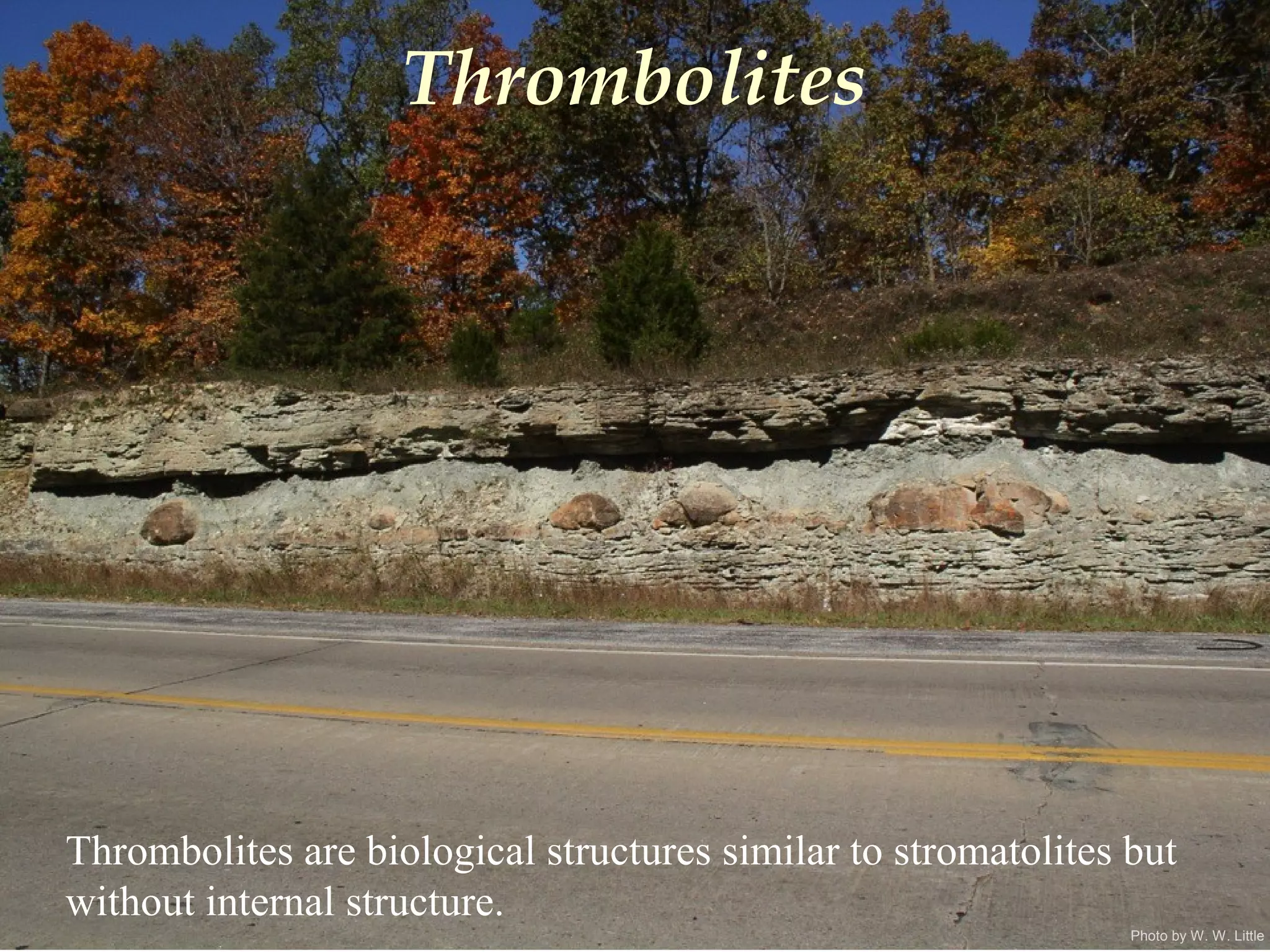
Thrombolites
Thrombolites are biological structures similar to stromatolites but
without internal structure.
Photo by W. W. Little
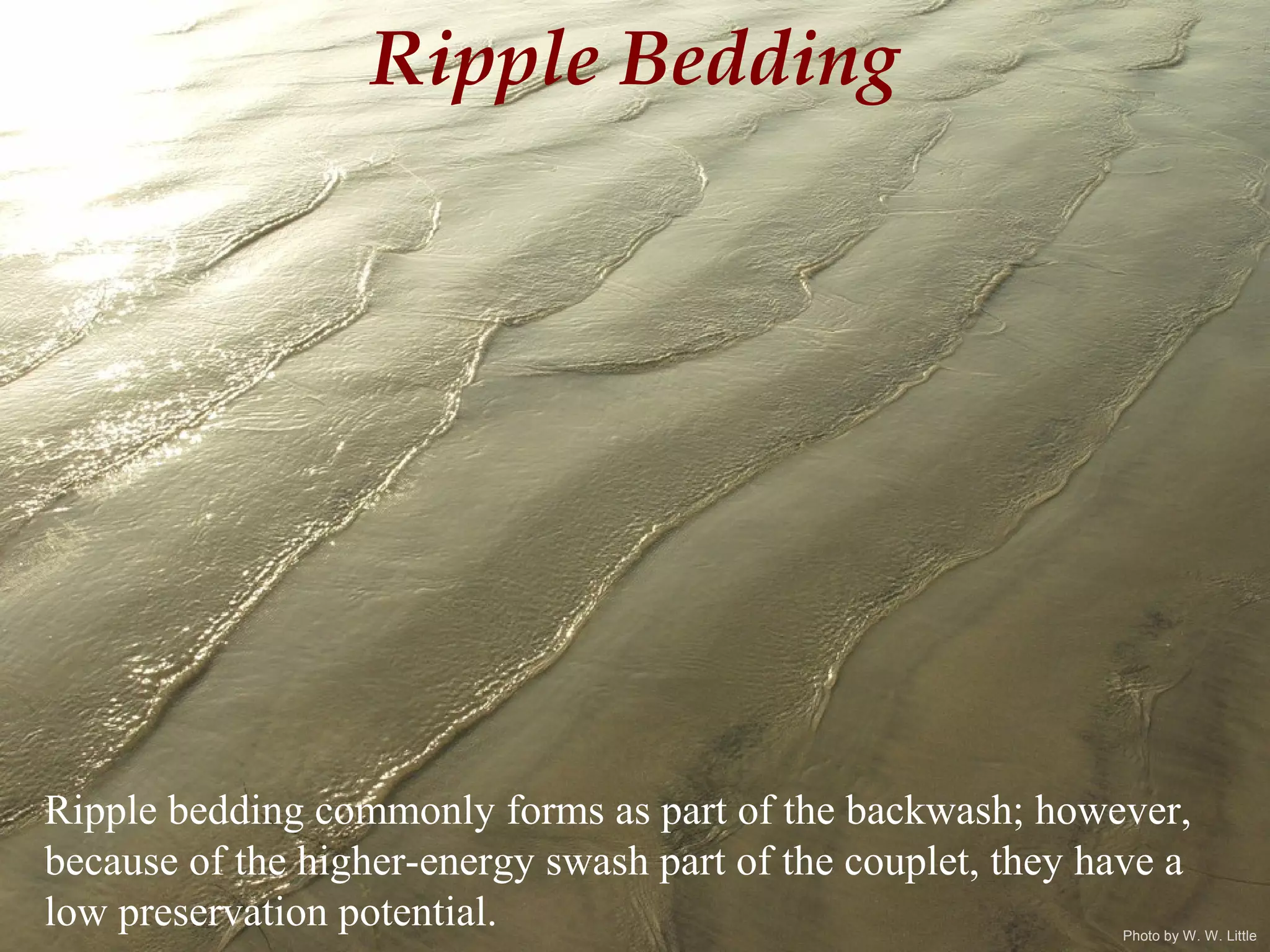
Ripple Bedding
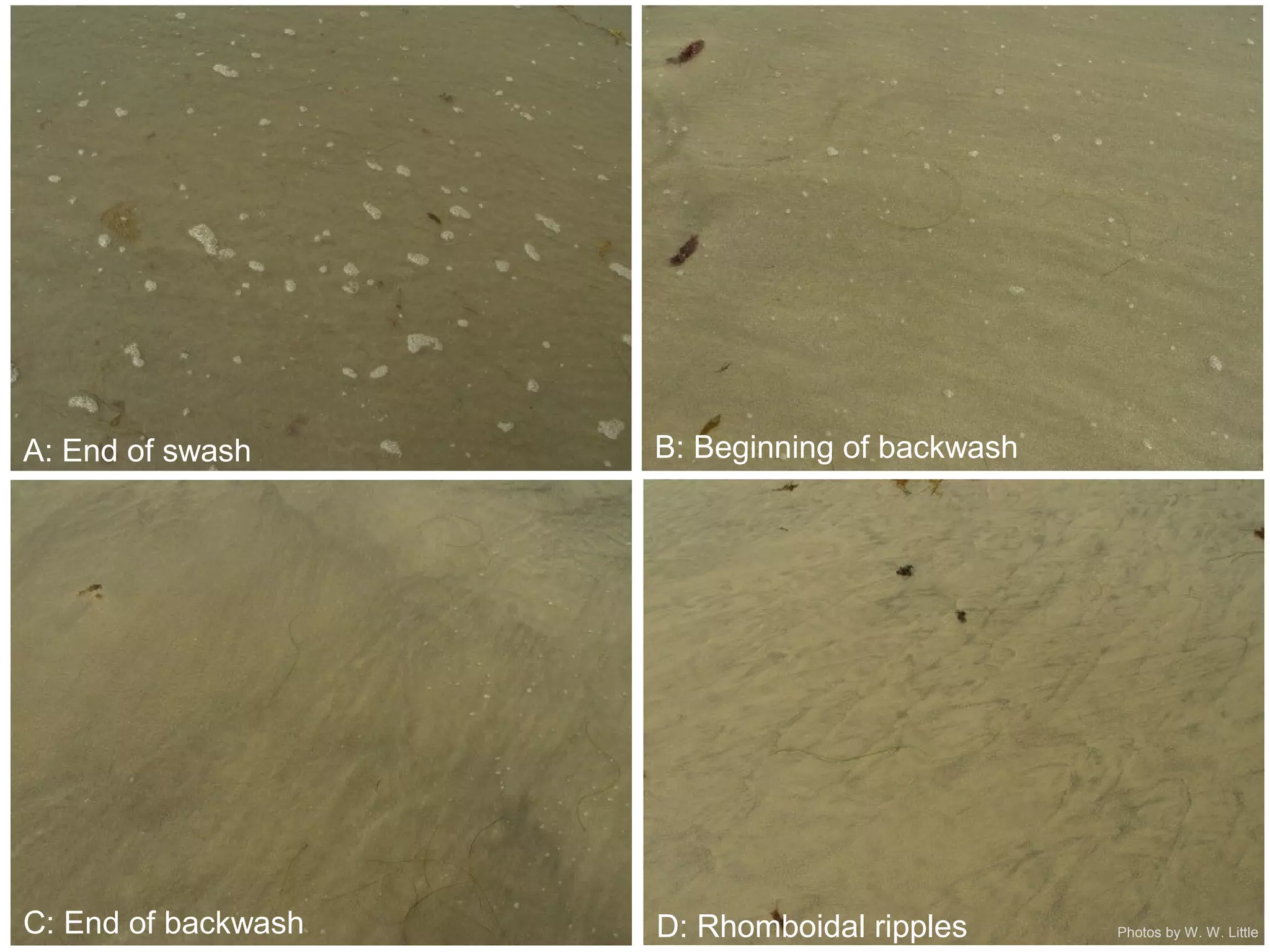
Ripple bedding commonly forms as part of the backwash; however,
because of the higher-energy swash part of the couplet, they have a
low preservation potential. Photo by W. W. Little
A: End of swash B: Beginning of backwash
C: End of backwash D: Rhomboidal ripples Photos by W. W. Little
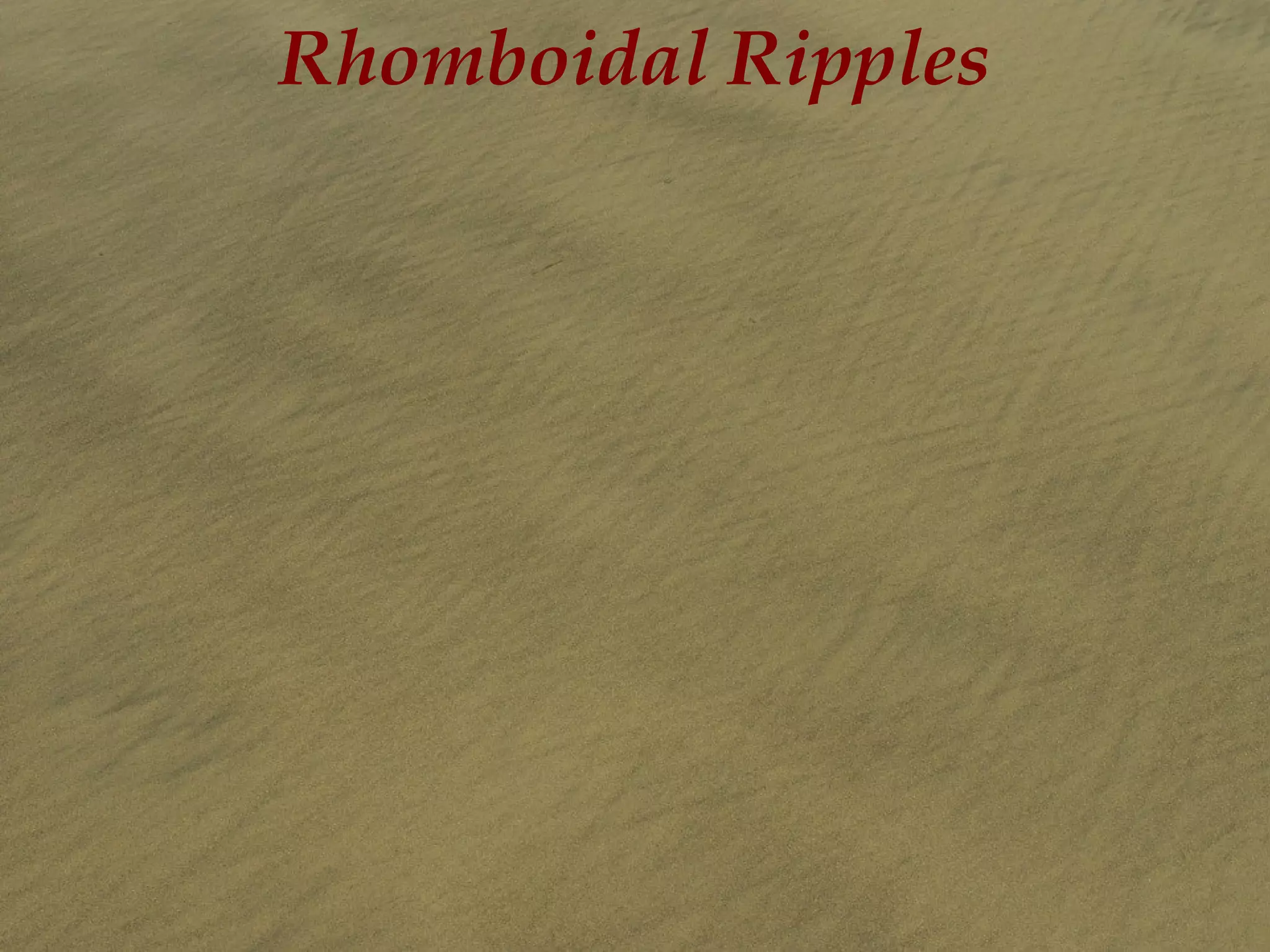
Rhomboidal Ripples
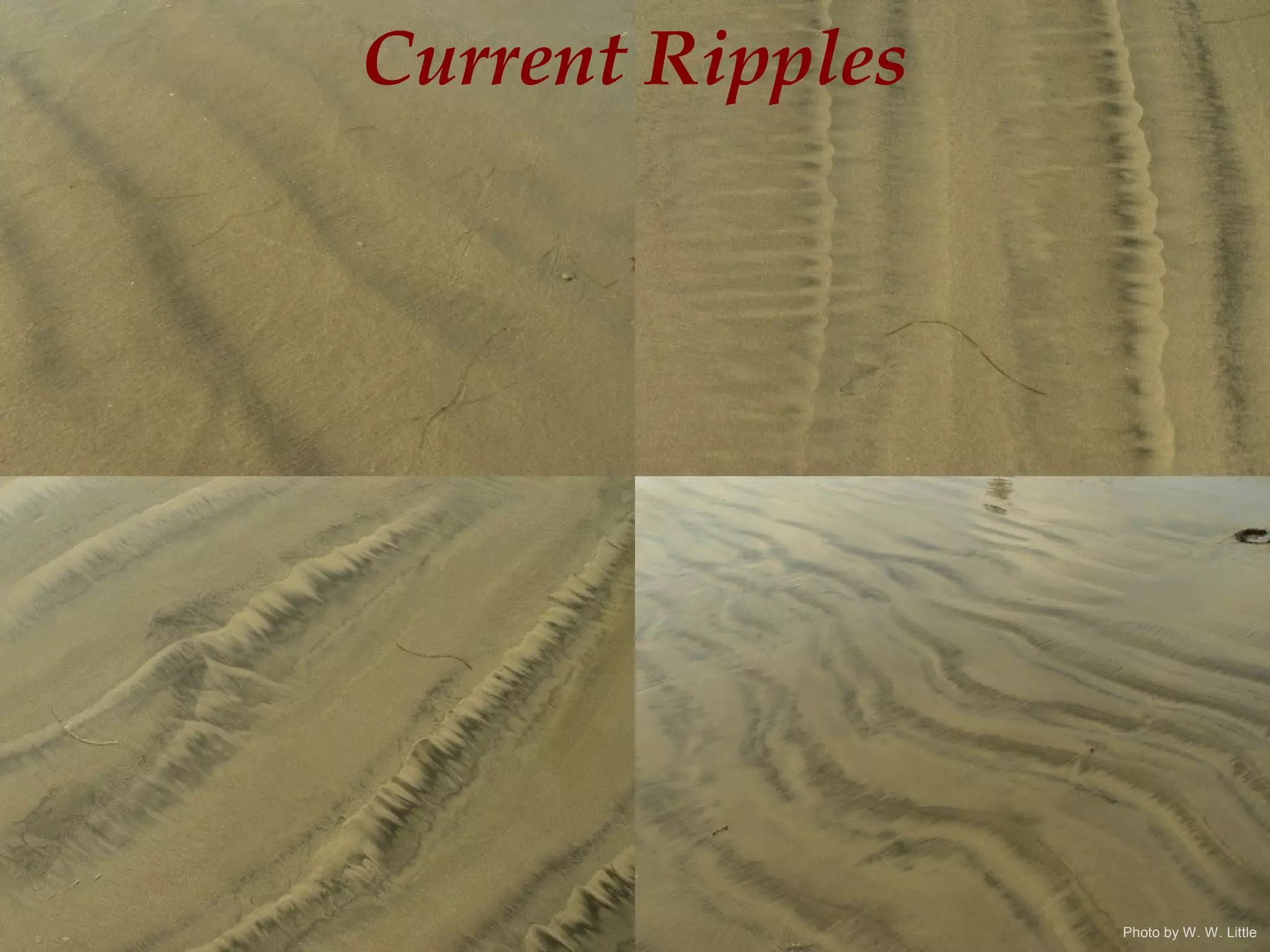
Current Ripples
Photo by W. W. Little
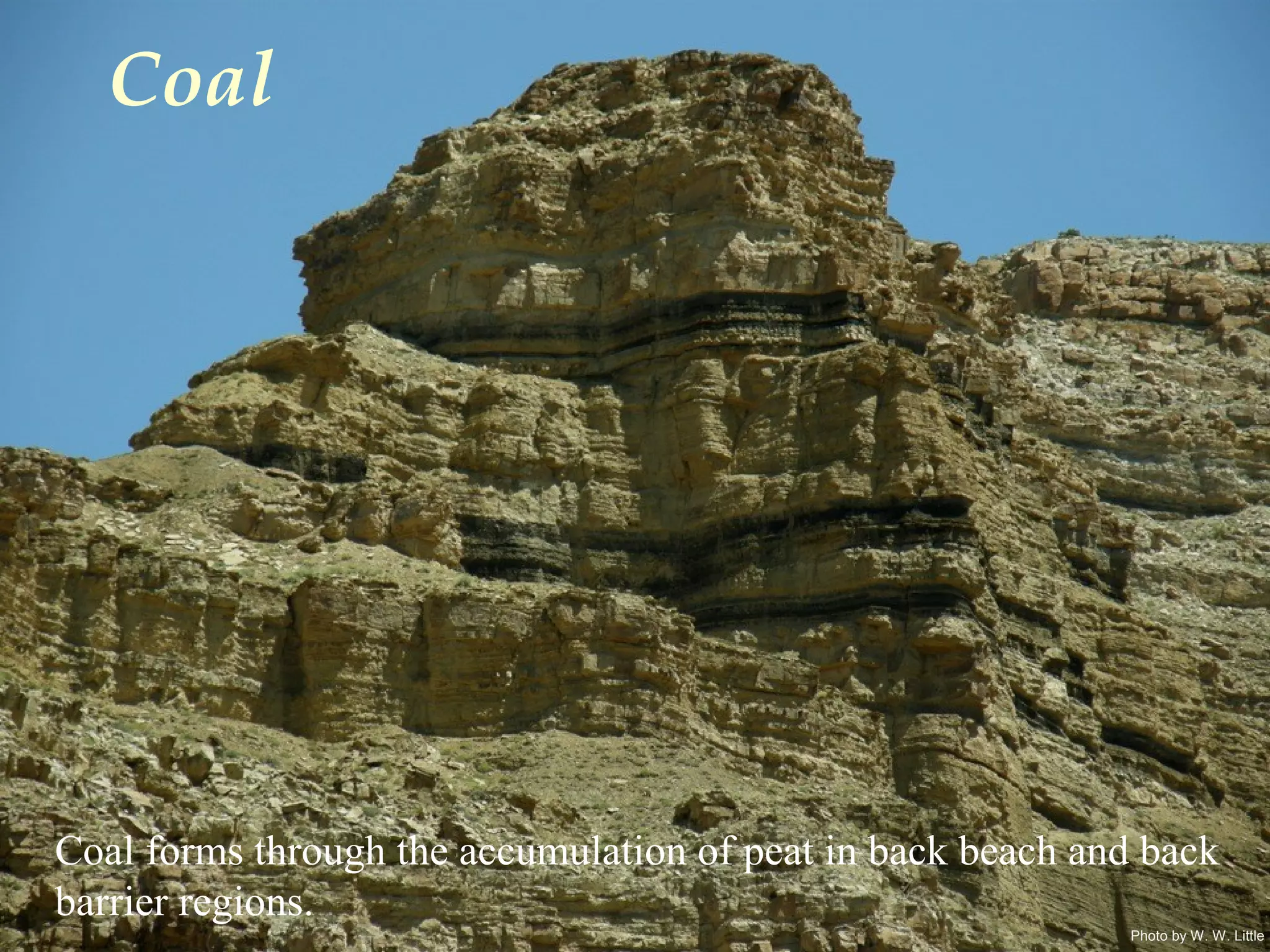
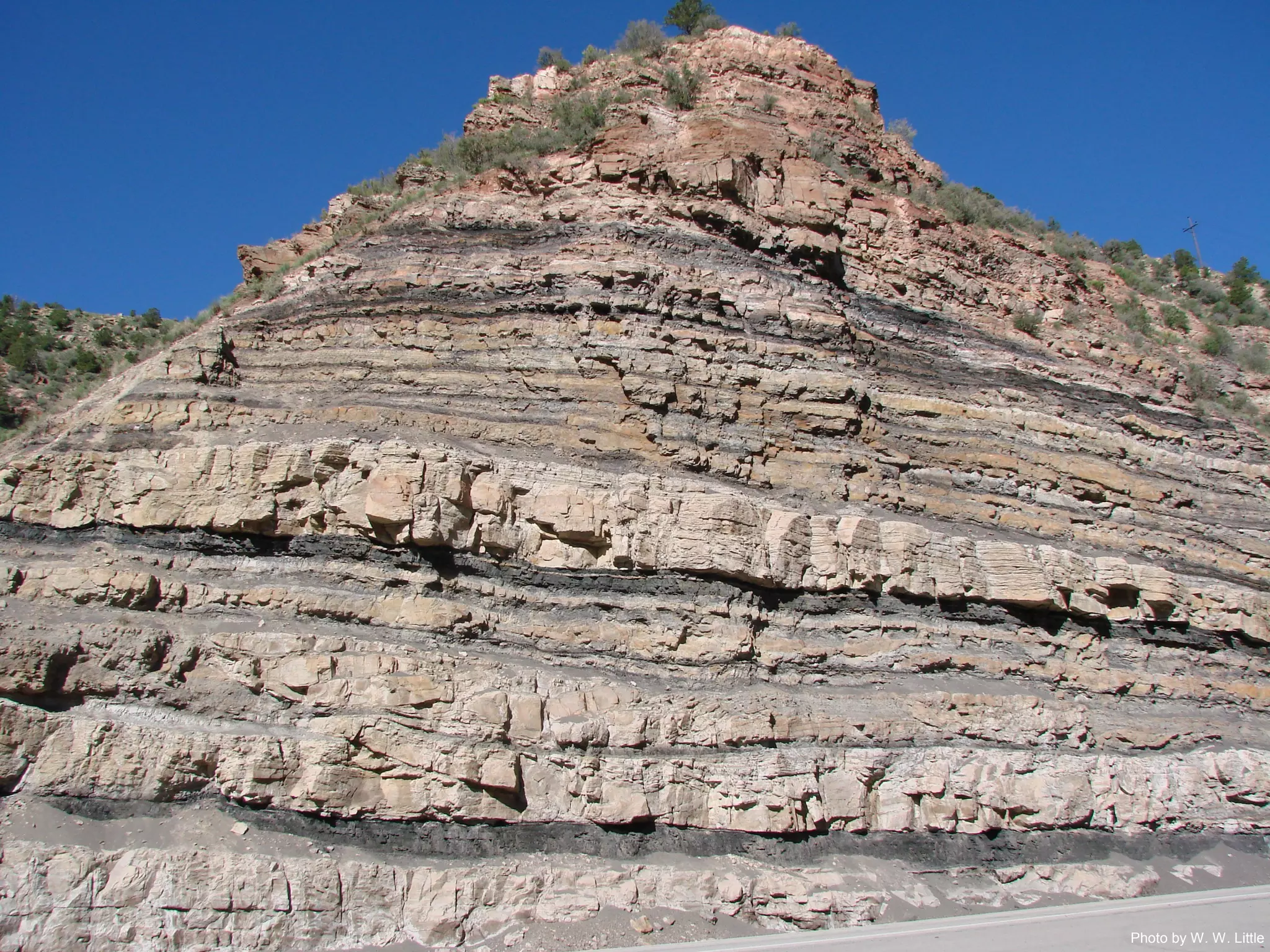
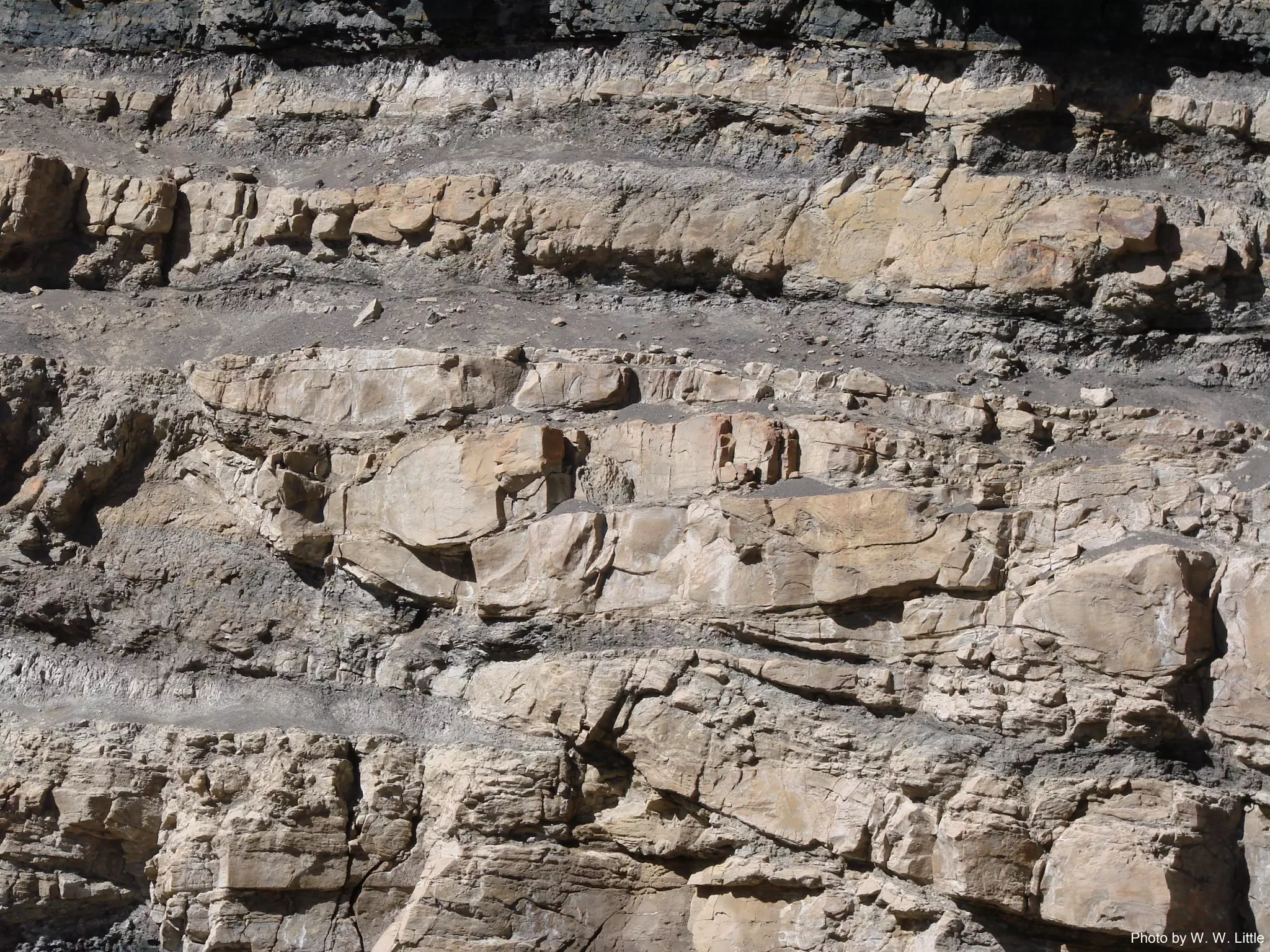
Coal
Coal forms through the accumulation of peat in back beach and back
barrier regions.
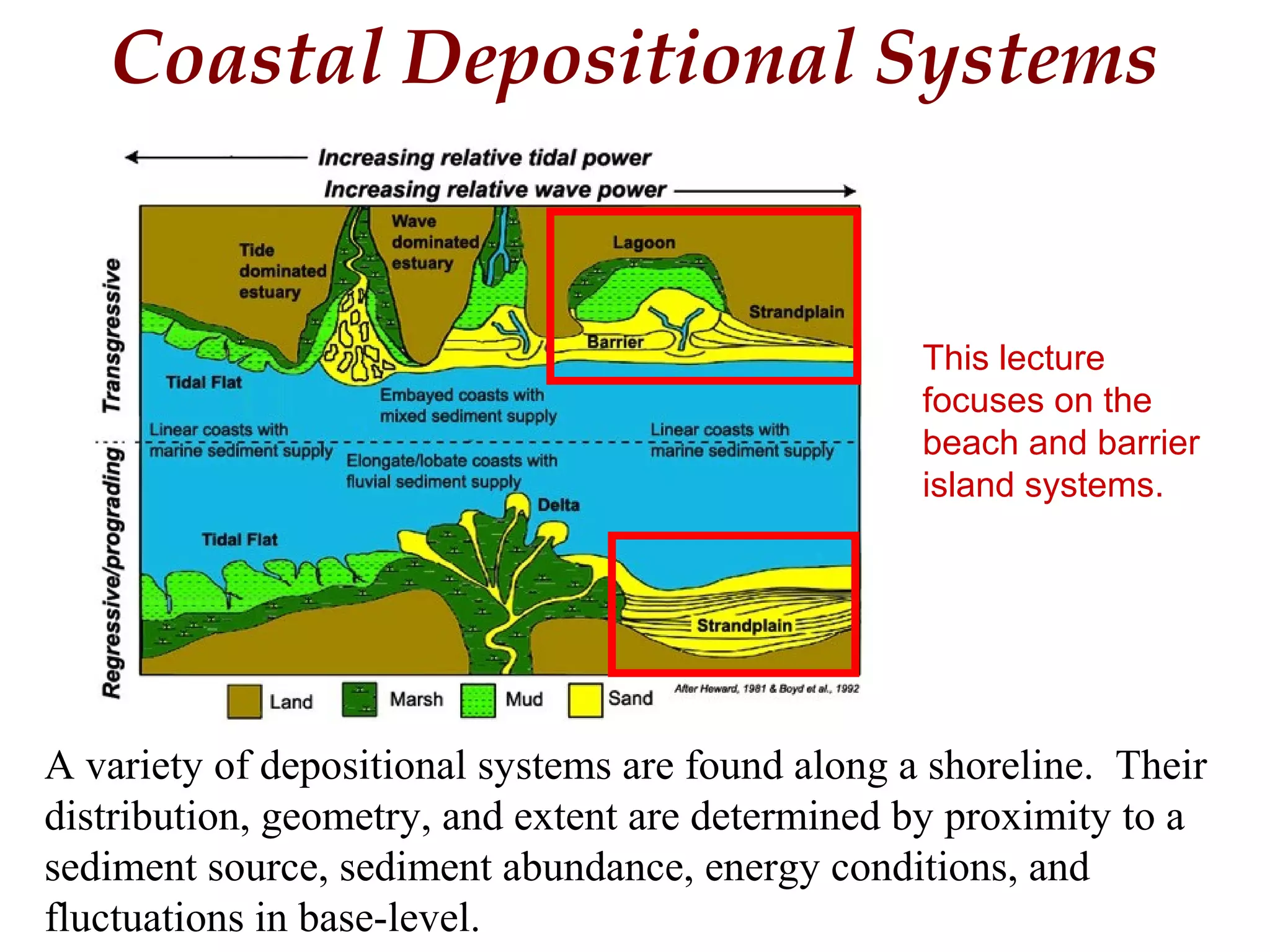
Coastal Depositional Systems
A variety of depositional systems are found along a shoreline. Their
distribution, geometry, and extent are determined by proximity to a
sediment source, sediment abundance, energy conditions, and
fluctuations in base-level.
This lecture
focuses on the
beach and barrier
island systems.
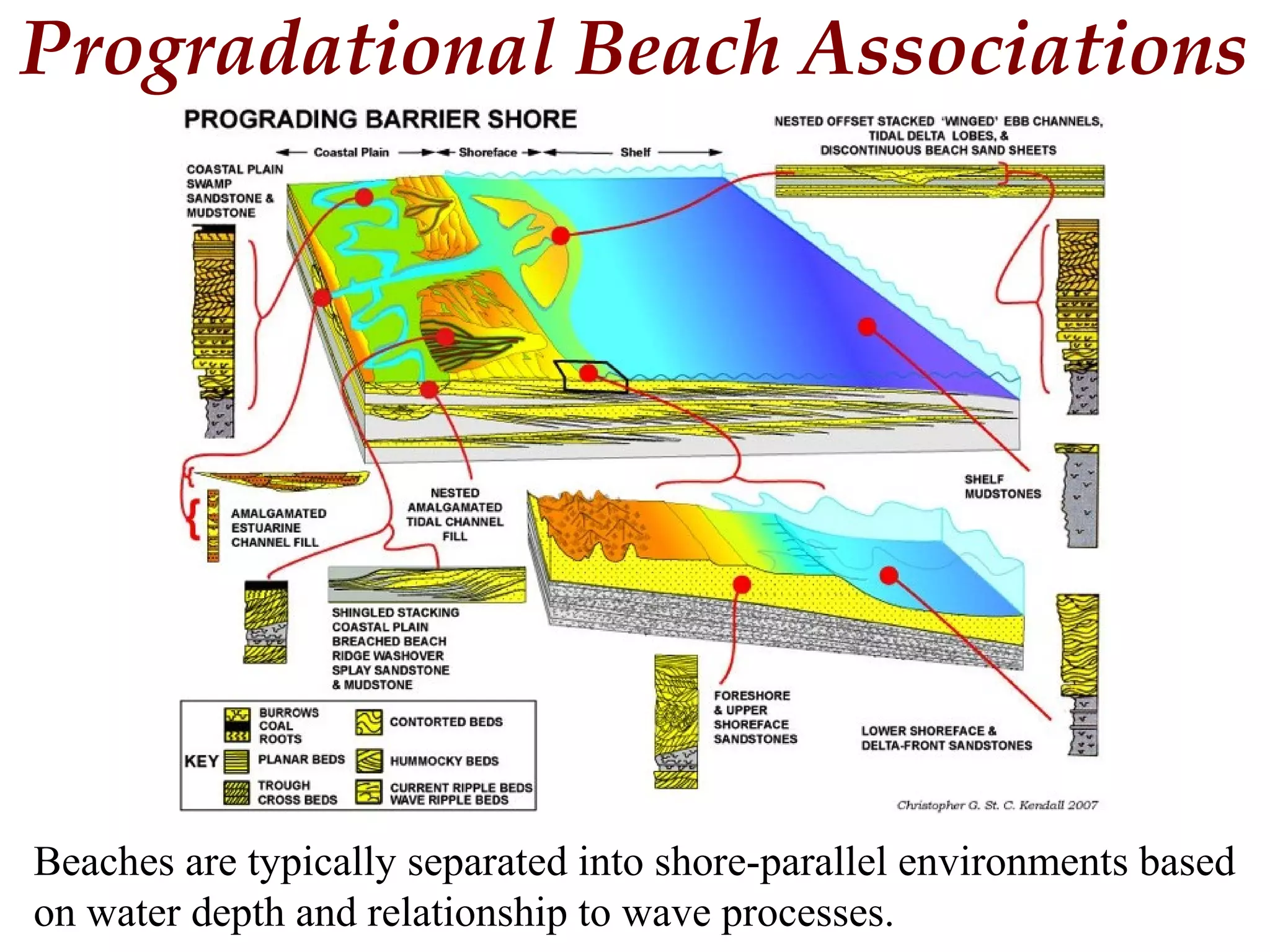
Progradational Beach Associations
Beaches are typically separated into shore-parallel environments based
on water depth and relationship to wave processes.
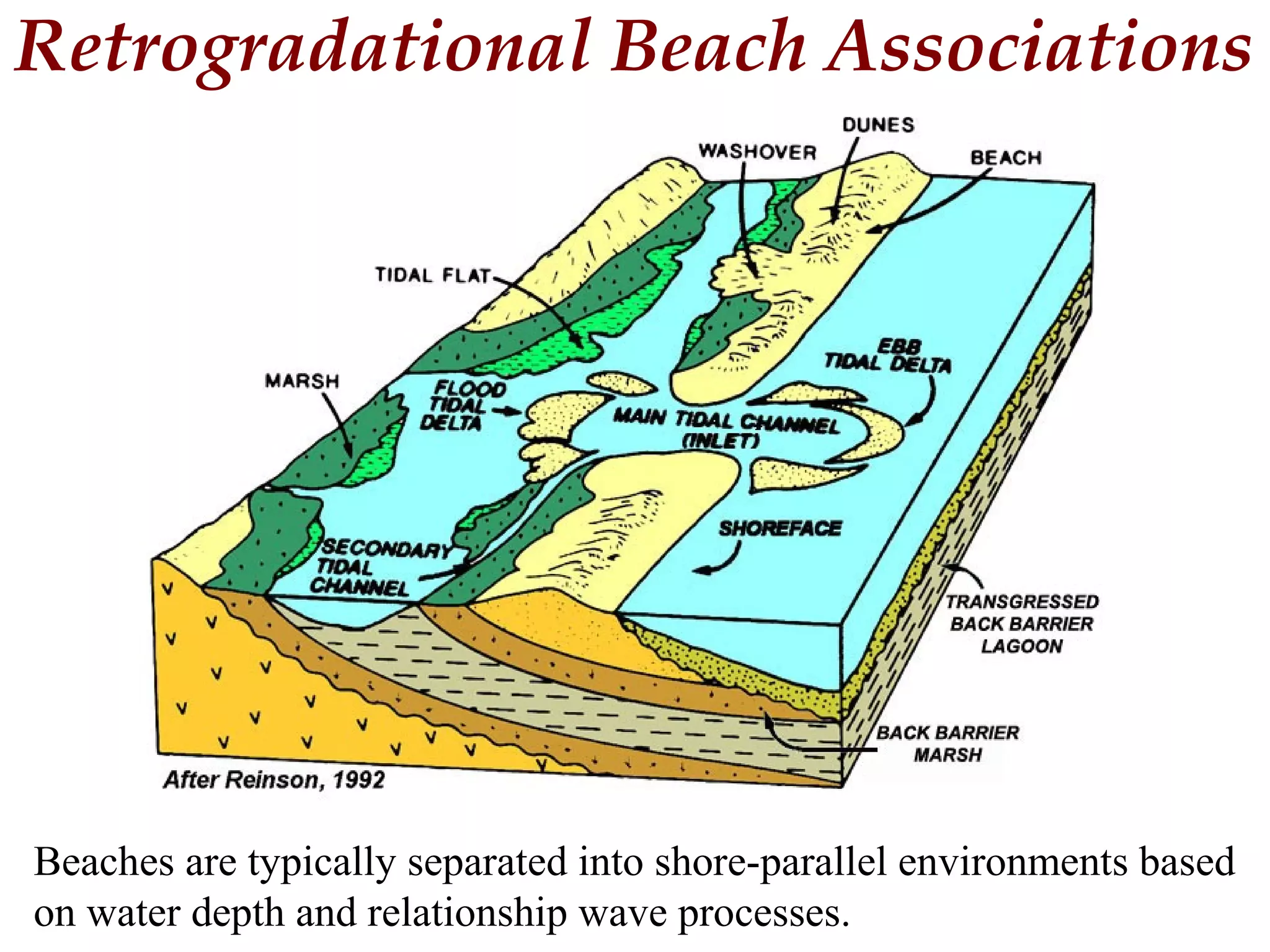
Beaches are typically separated into shore-parallel environments based
on water depth and relationship wave processes.
Retrogradational Beach Associations
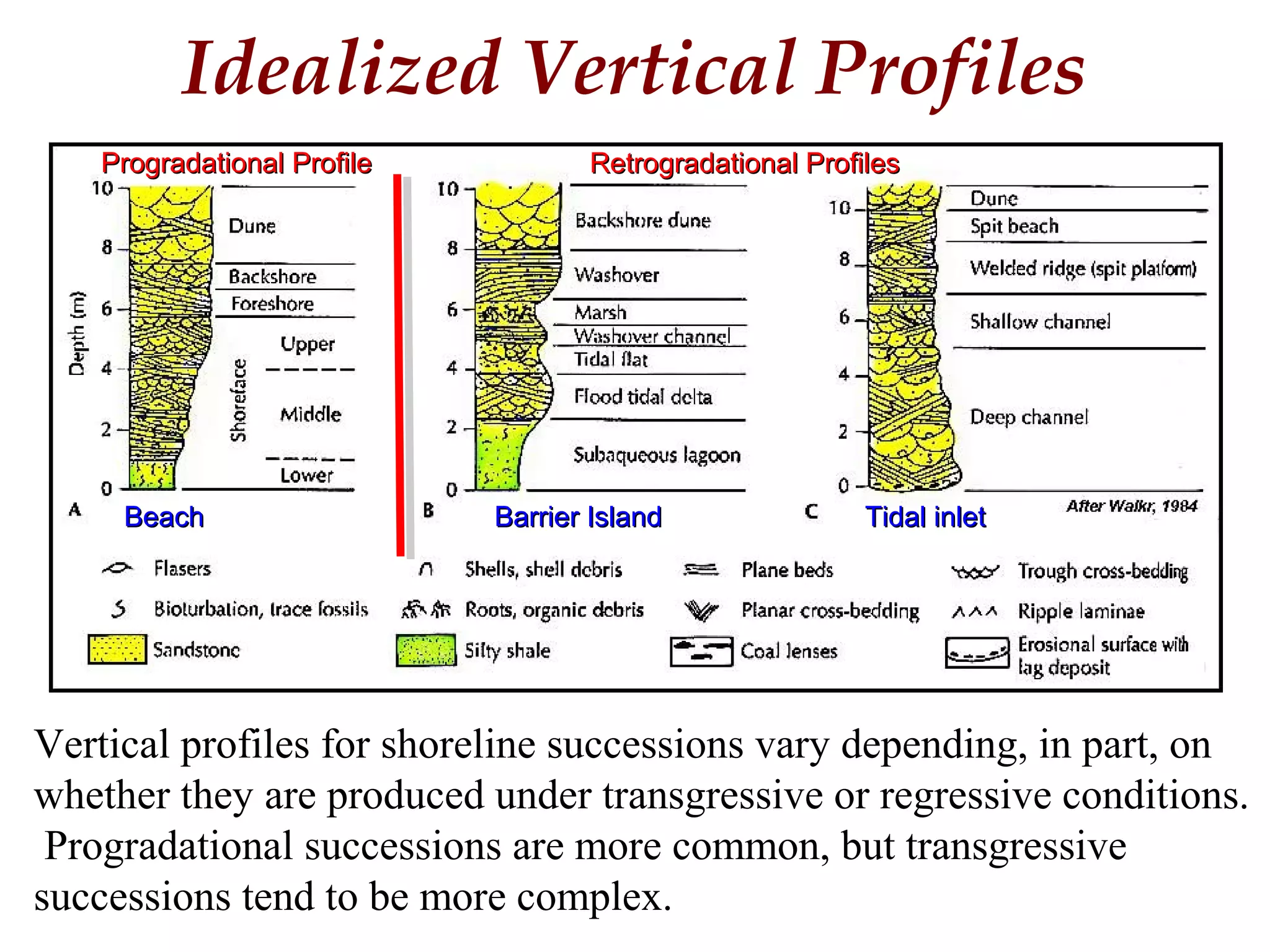
Idealized Vertical Profiles
Vertical profiles for shoreline successions vary depending, in part, on
whether they are produced under transgressive or regressive conditions.
Progradational successions are more common, but transgressive
successions tend to be more complex.
BeachBeach Barrier IslandBarrier Island Tidal inletTidal inlet
Progradational ProfileProgradational Profile Retrogradational ProfilesRetrogradational Profiles
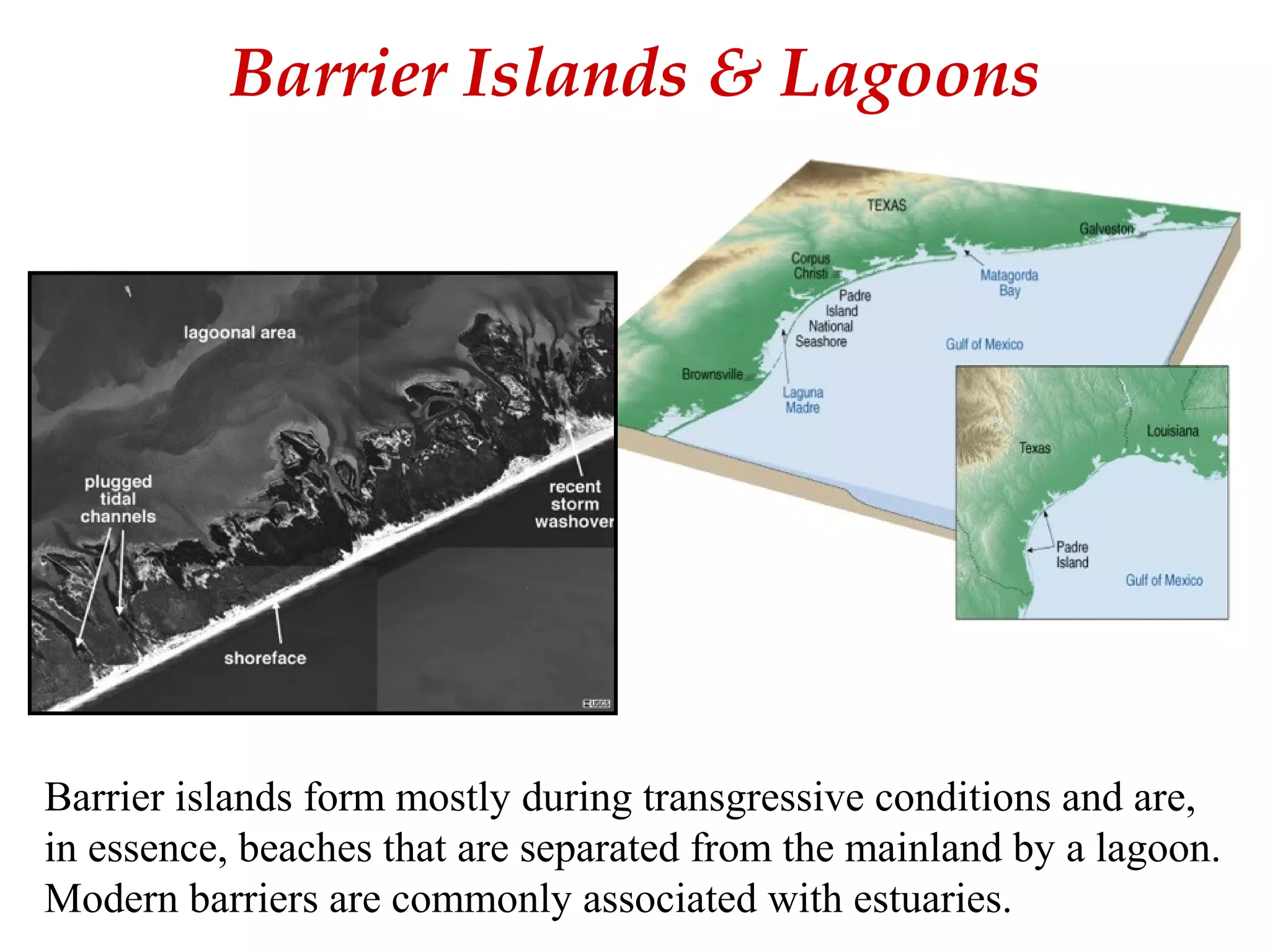
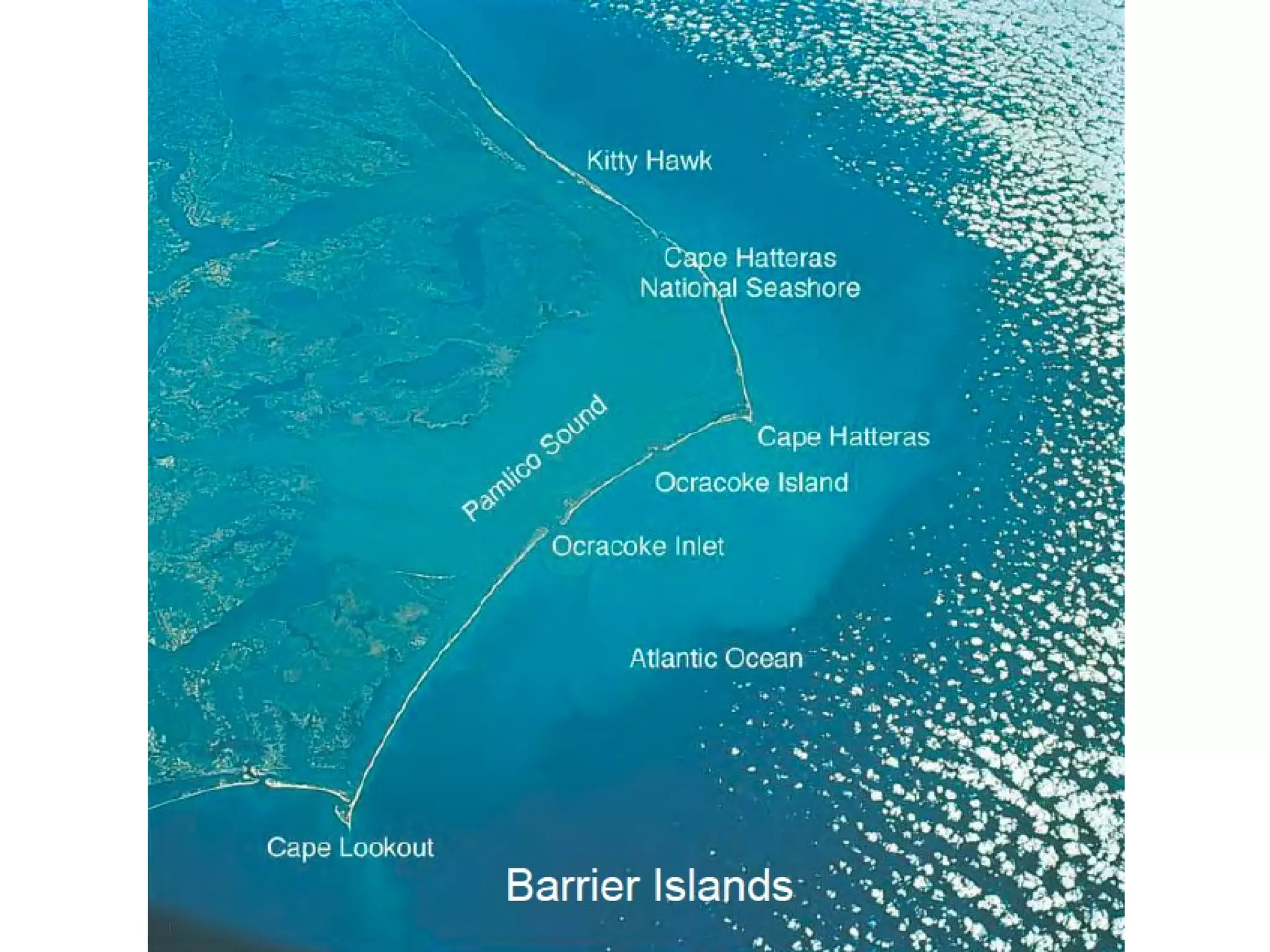
Barrier Islands & Lagoons
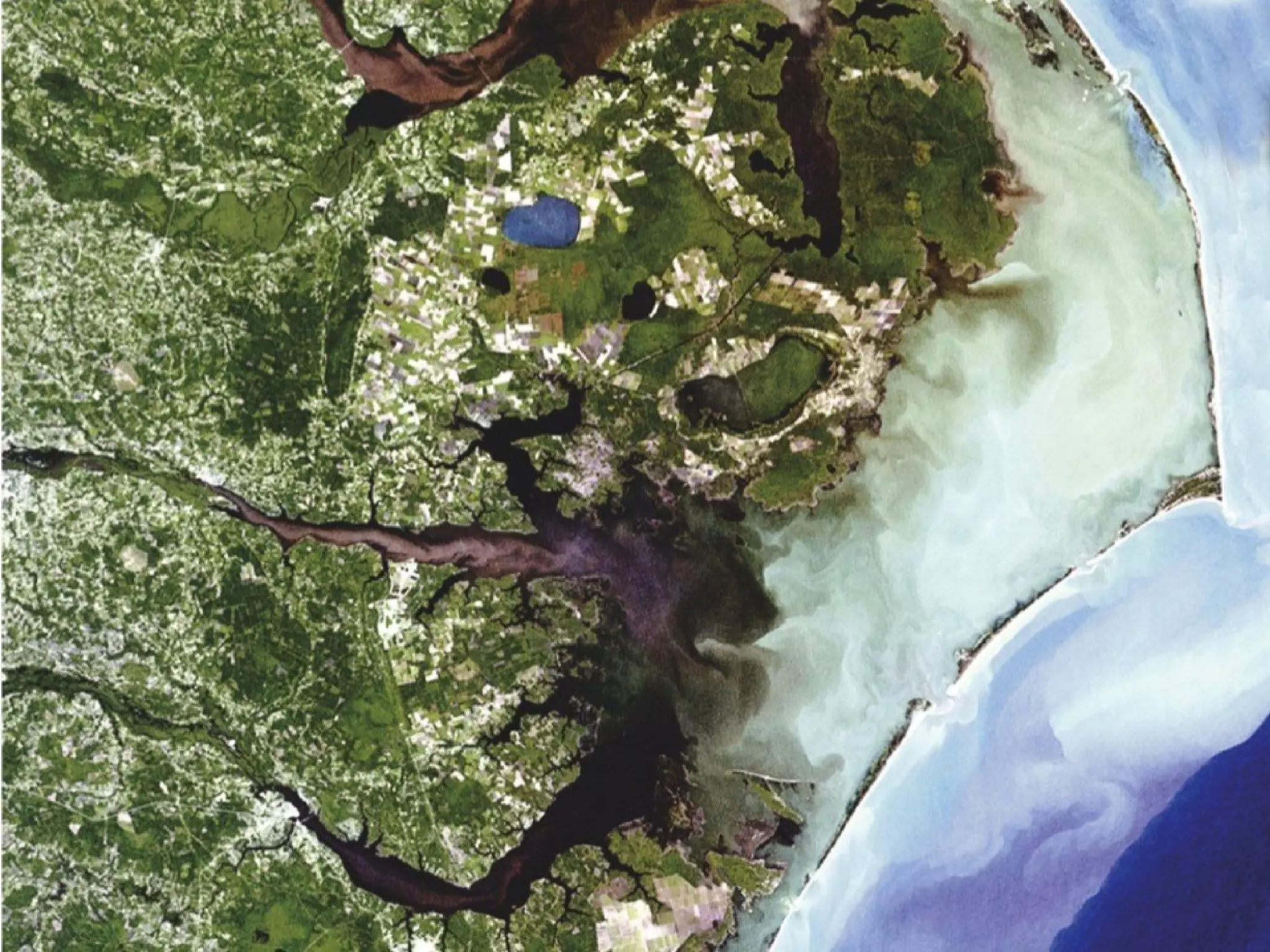
Barrier islands form mostly during transgressive conditions and are,
in essence, beaches that are separated from the mainland by a lagoon.
Modern barriers are commonly associated with estuaries.
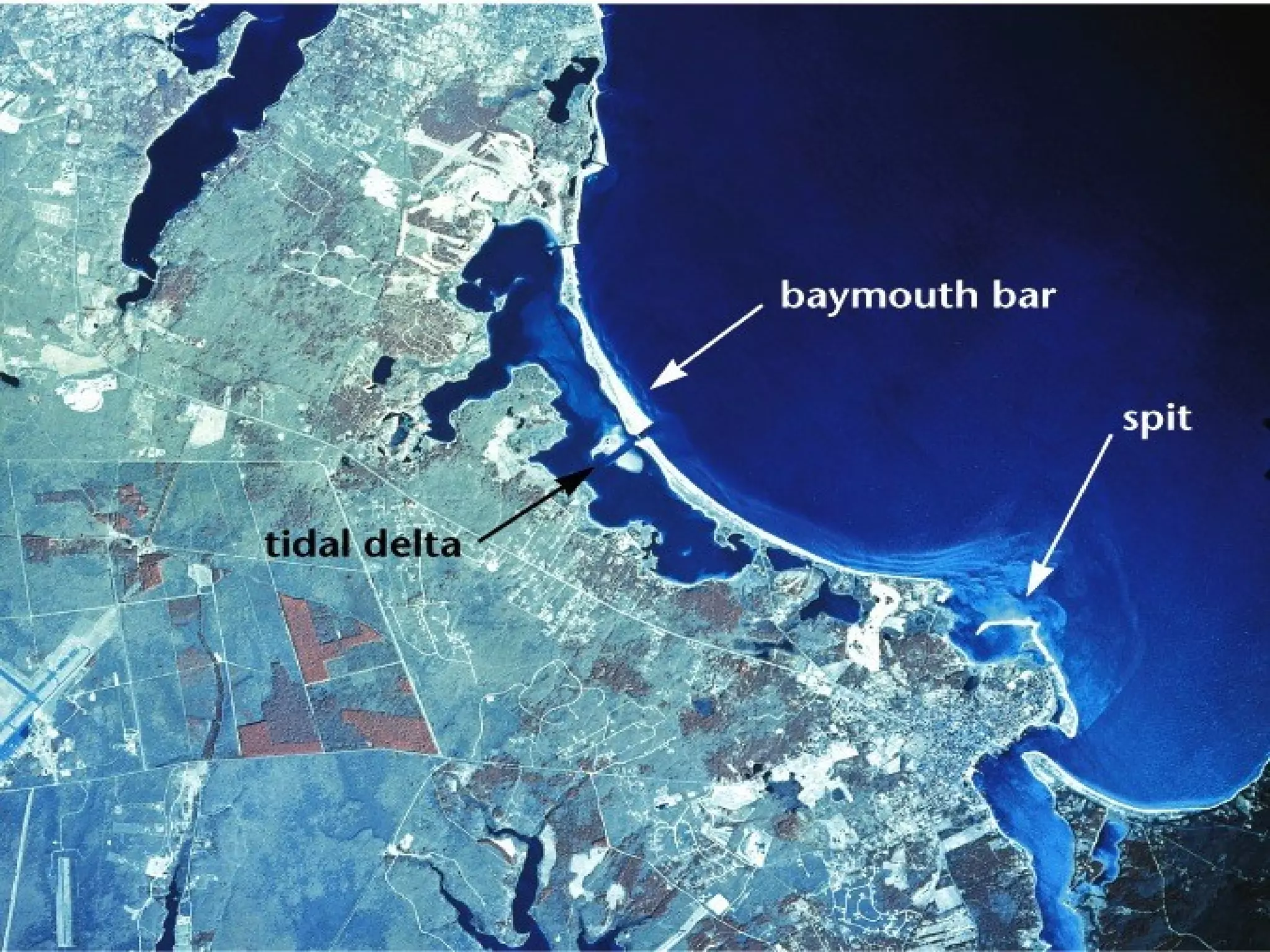
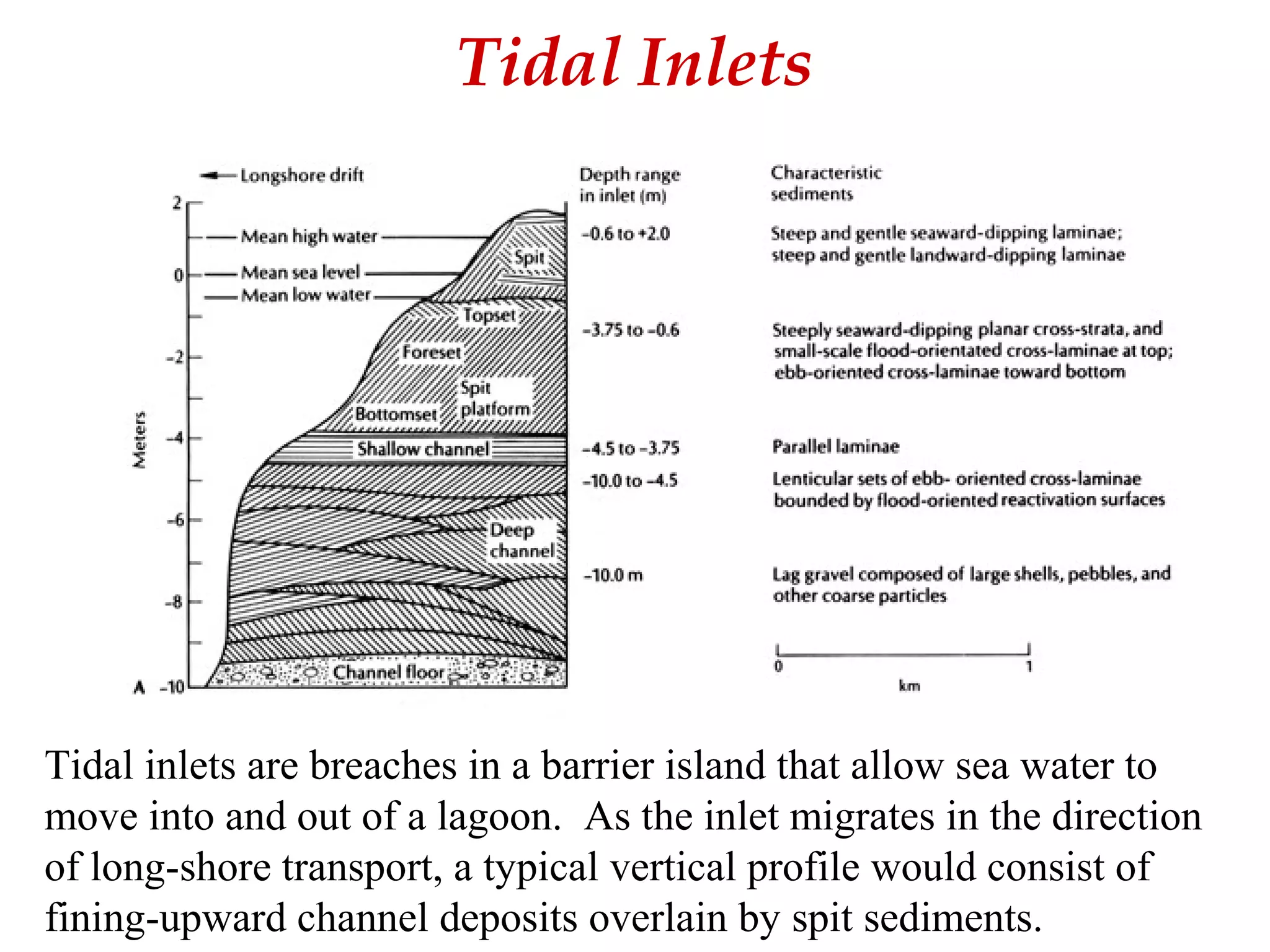
Tidal Inlets
Tidal inlets are breaches in a barrier island that allow sea water to
move into and out of a lagoon. As the inlet migrates in the direction
of long-shore transport, a typical vertical profile would consist of
fining-upward channel deposits overlain by spit sediments.
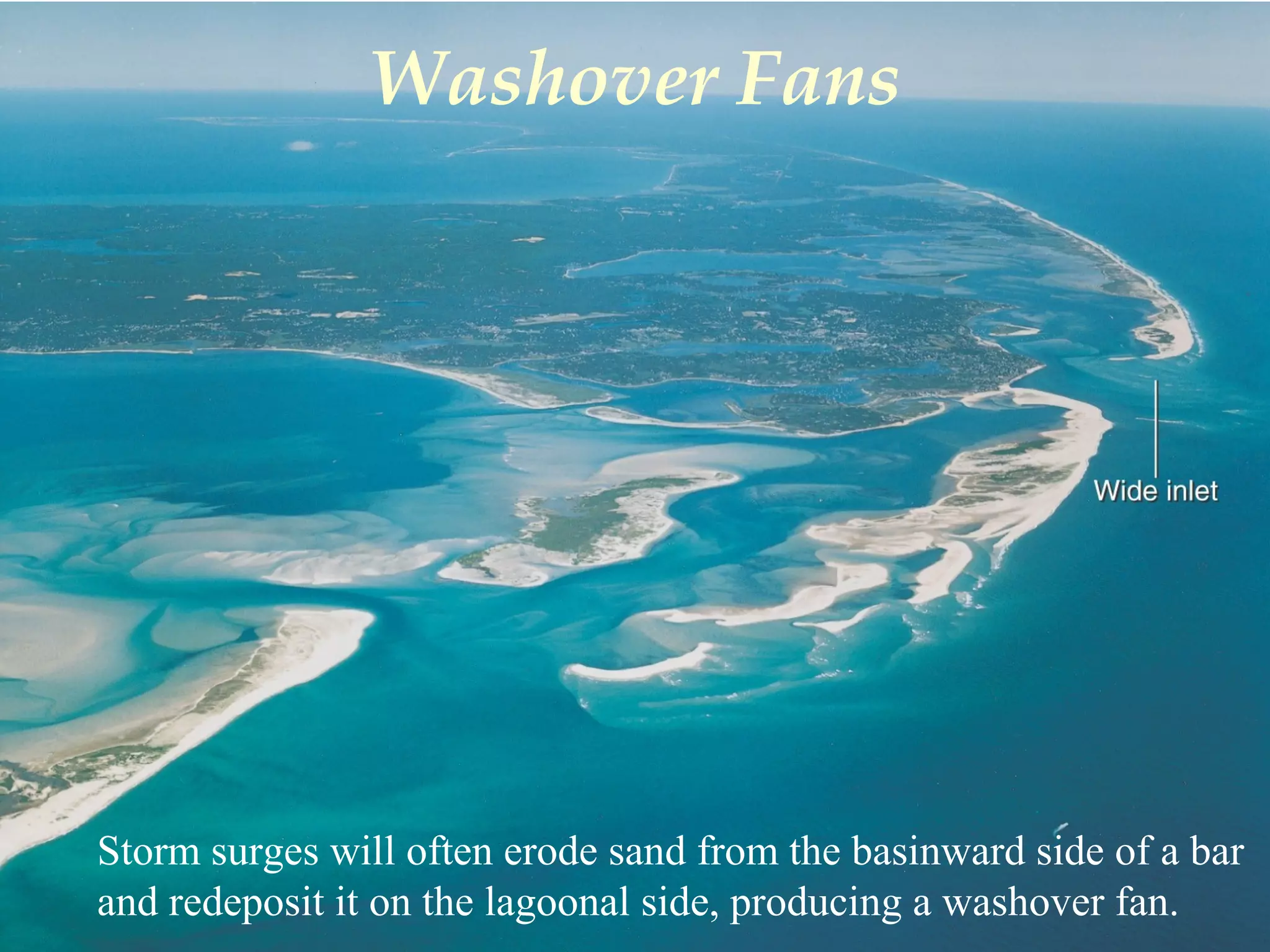
Washover Fans
Storm surges will often erode sand from the basinward side of a bar
and redeposit it on the lagoonal side, producing a washover fan.
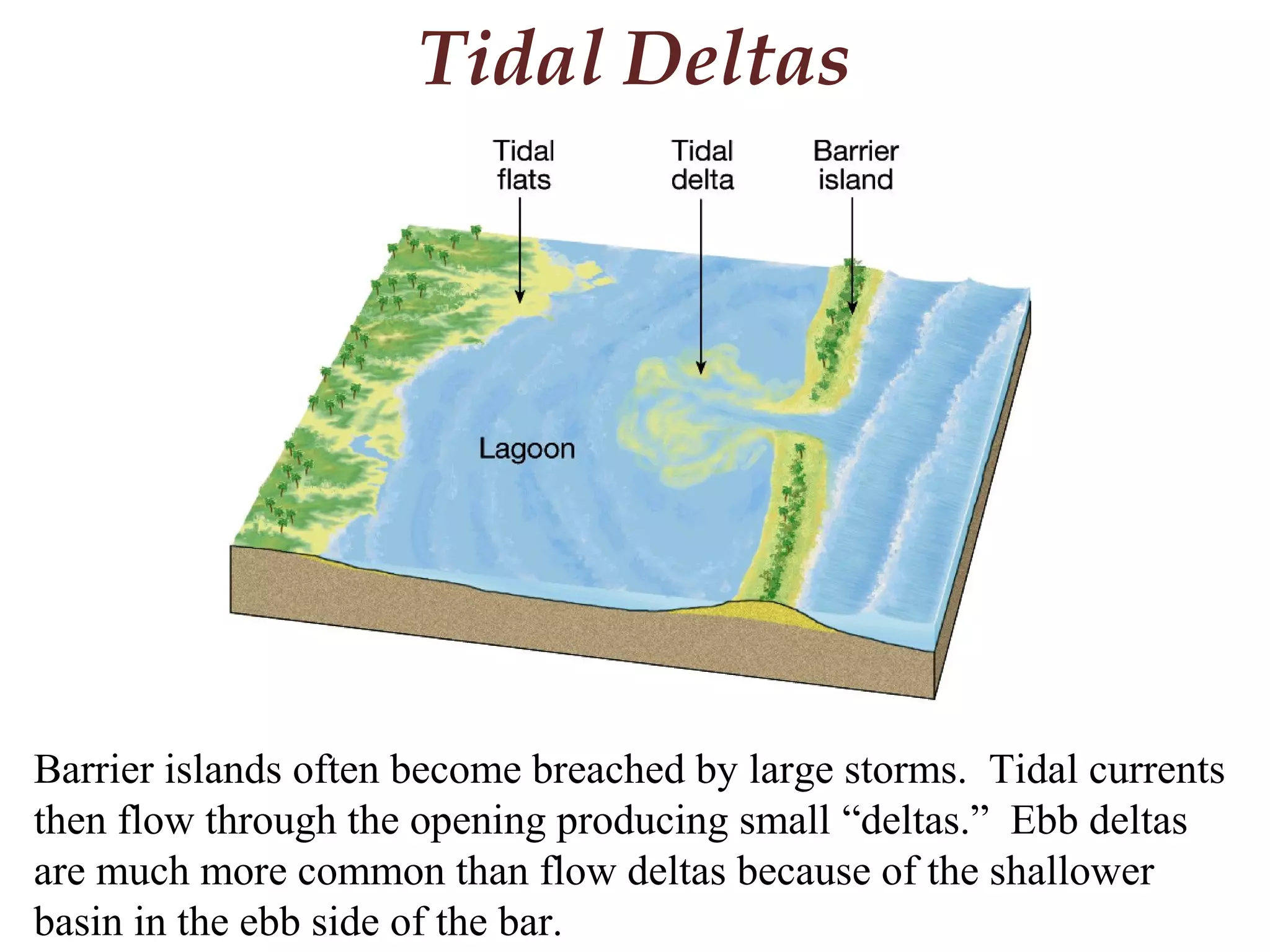
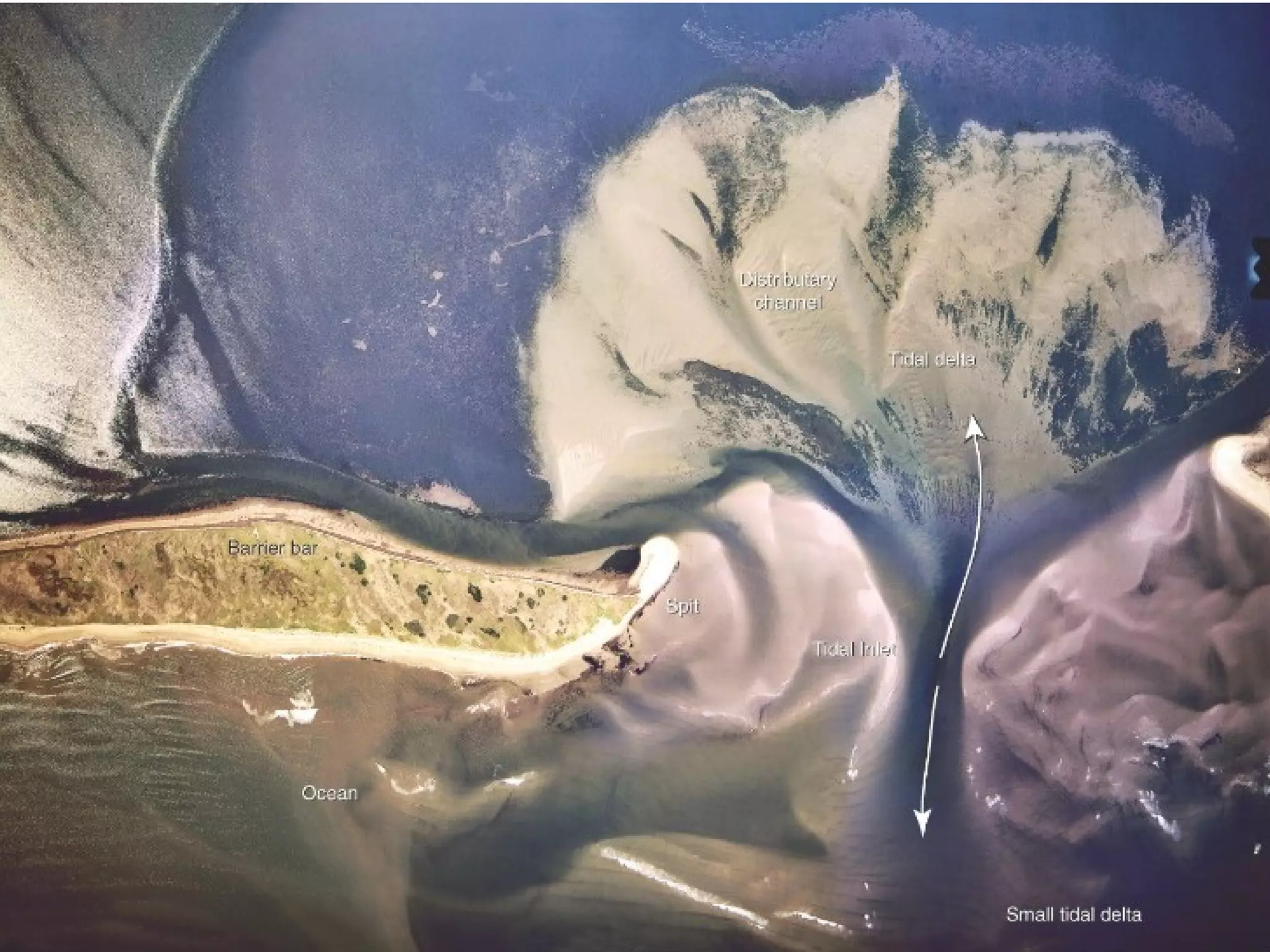
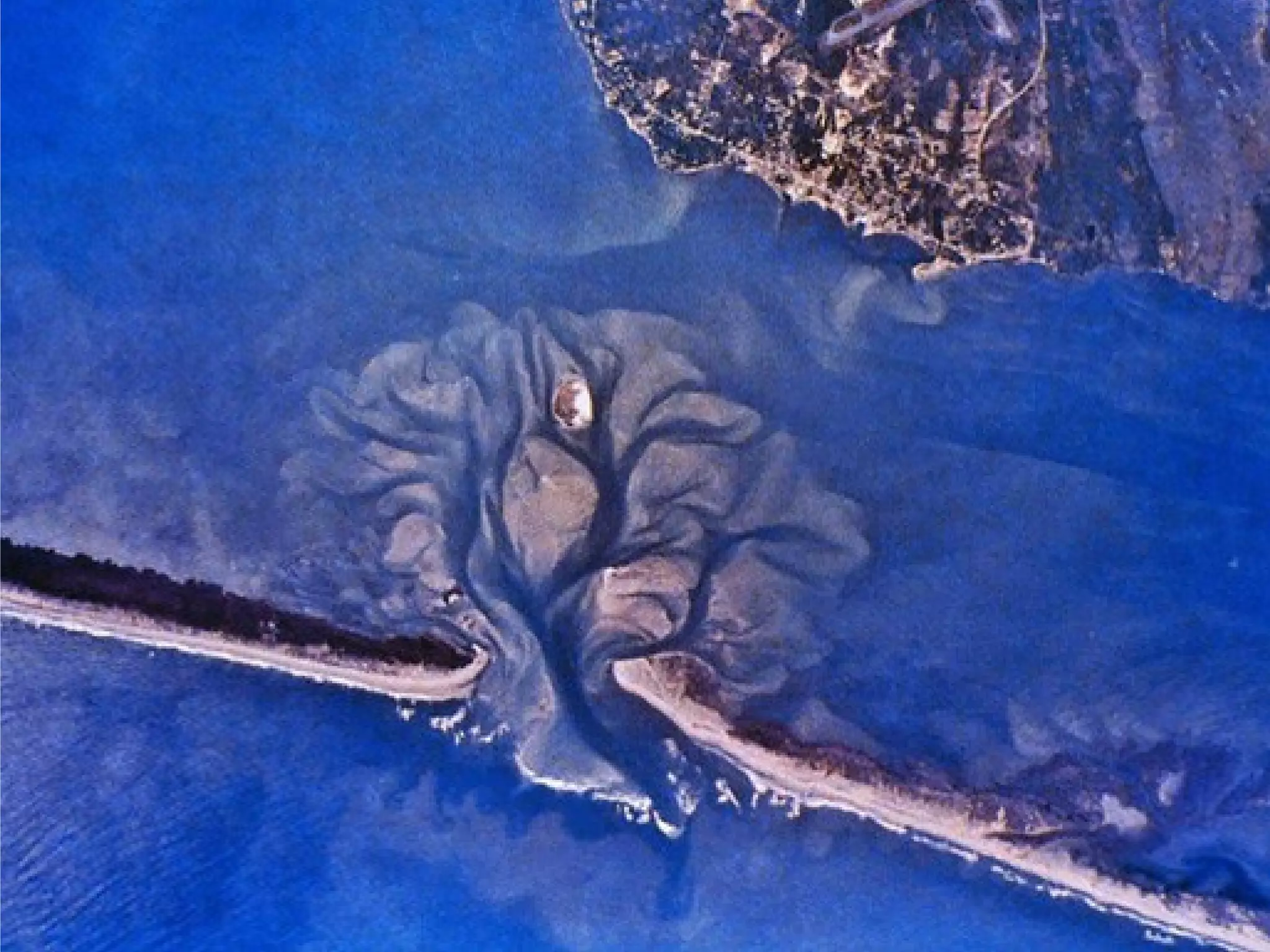
Tidal Deltas
Barrier islands often become breached by large storms. Tidal currents
then flow through the opening producing small “deltas.” Ebb deltas
are much more common than flow deltas because of the shallower
basin in the ebb side of the bar.
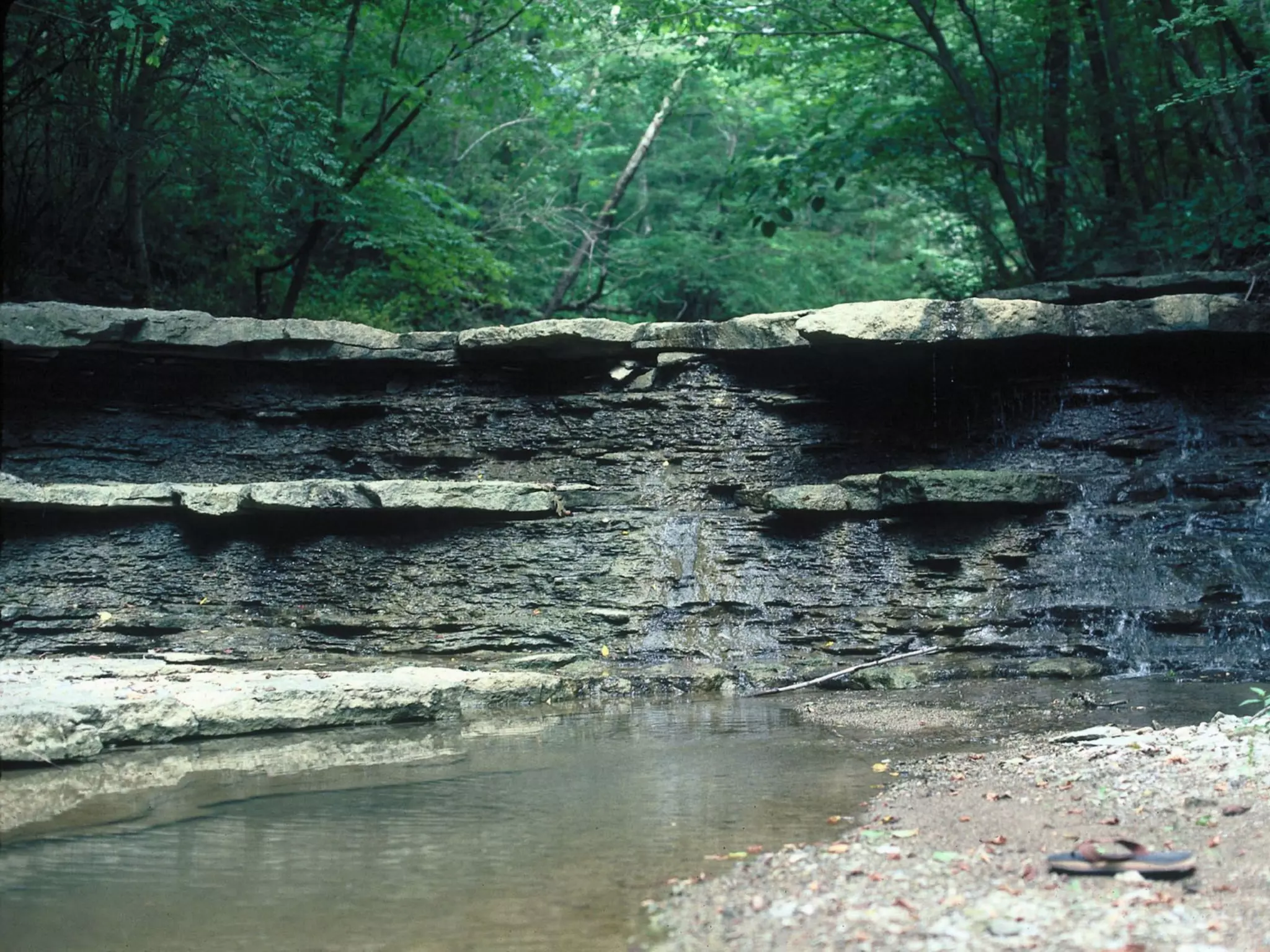
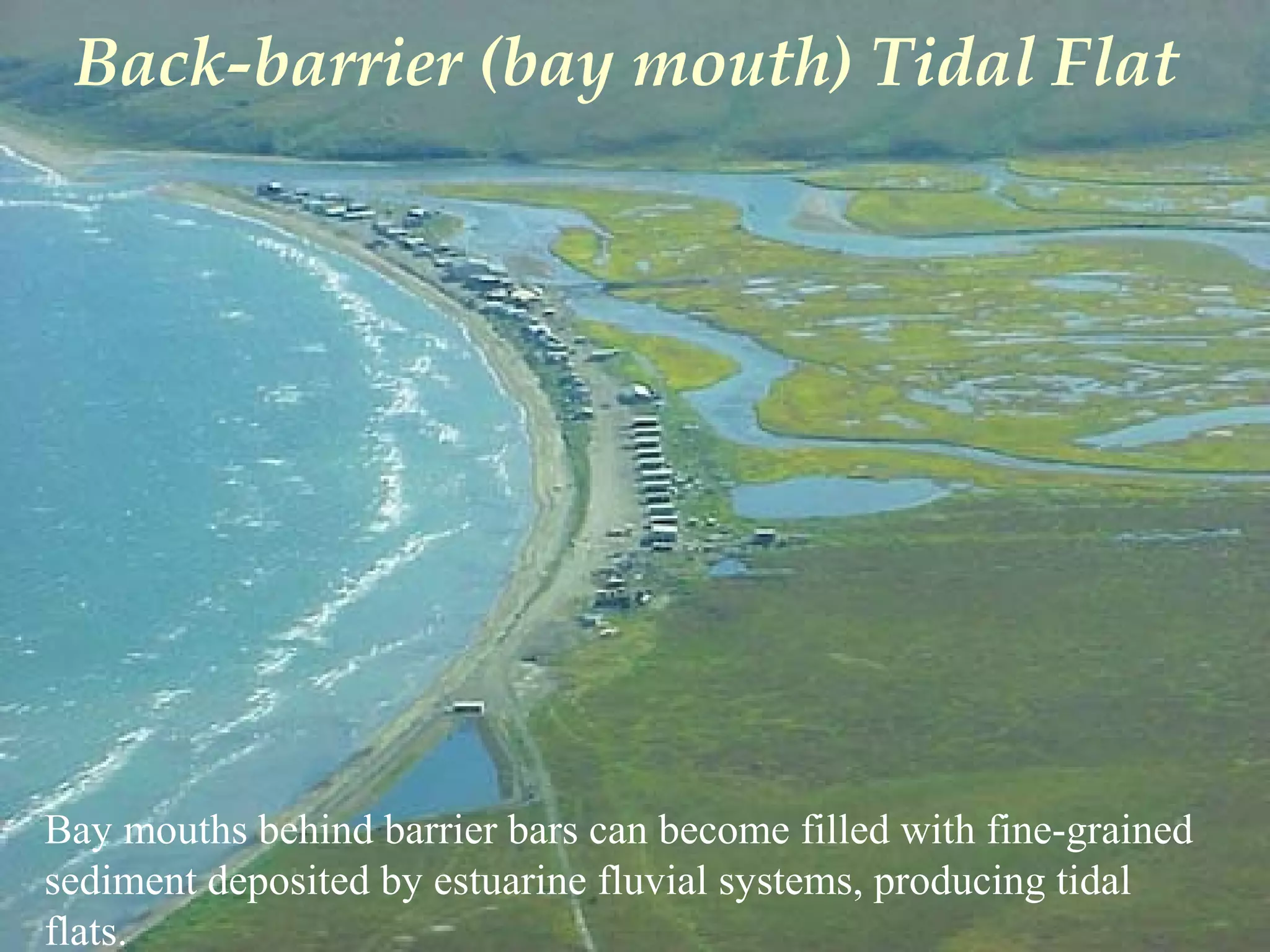
Back-barrier (bay mouth) Tidal Flat
Bay mouths behind barrier bars can become filled with fine-grained
sediment deposited by estuarine fluvial systems, producing tidal
flats.
Photo by W. W. Little
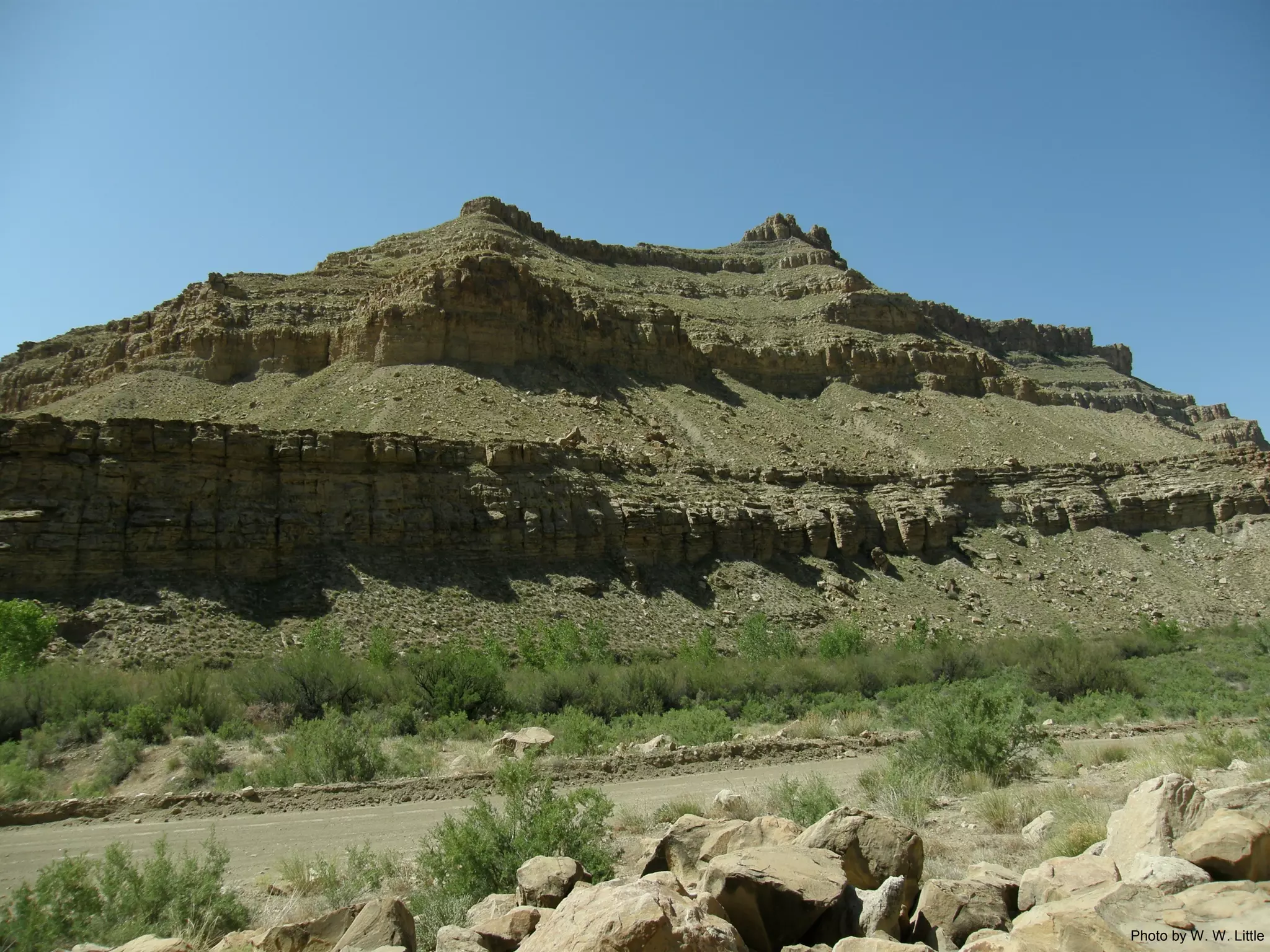
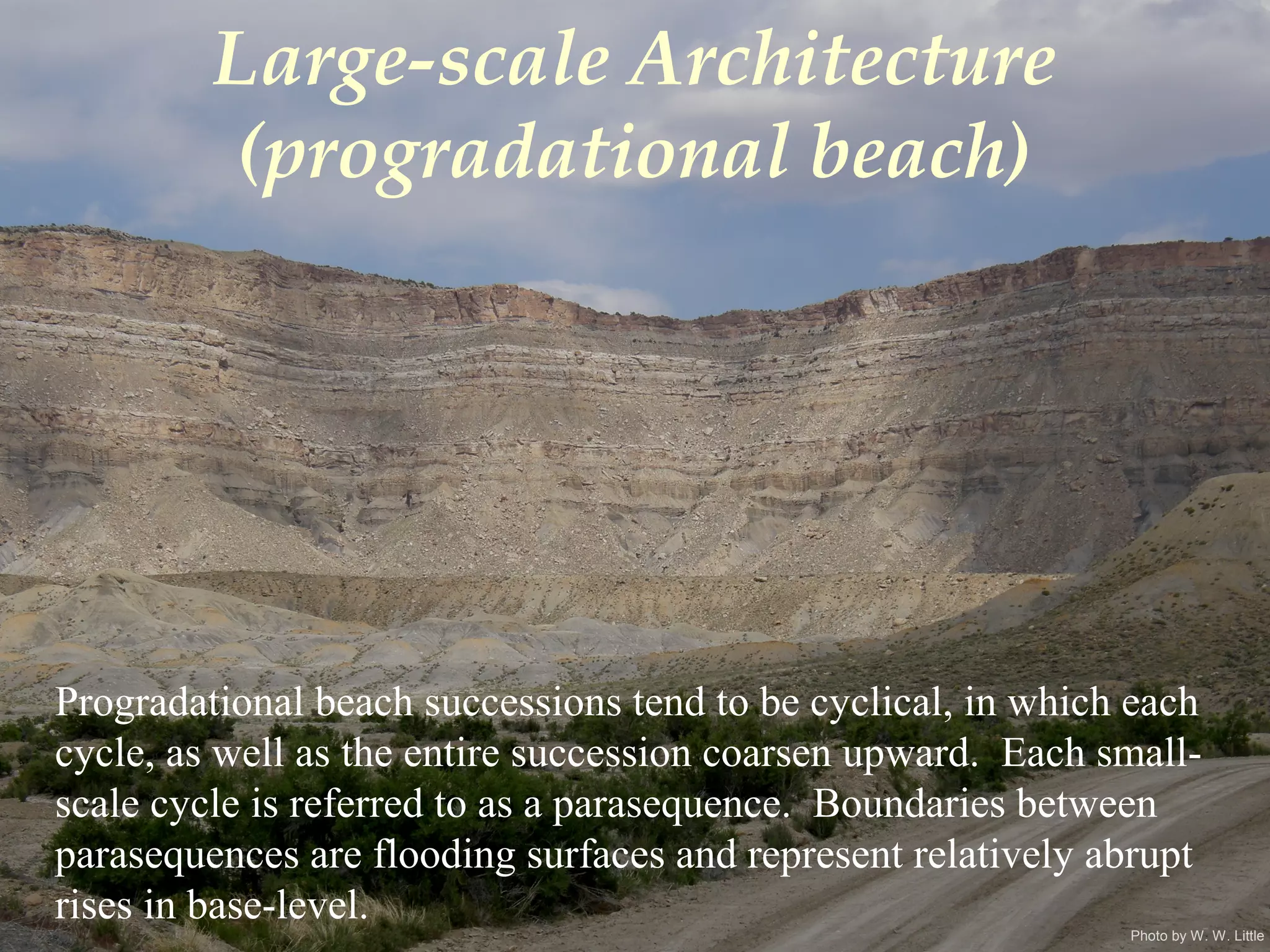
Large-scale Architecture
(progradational beach)
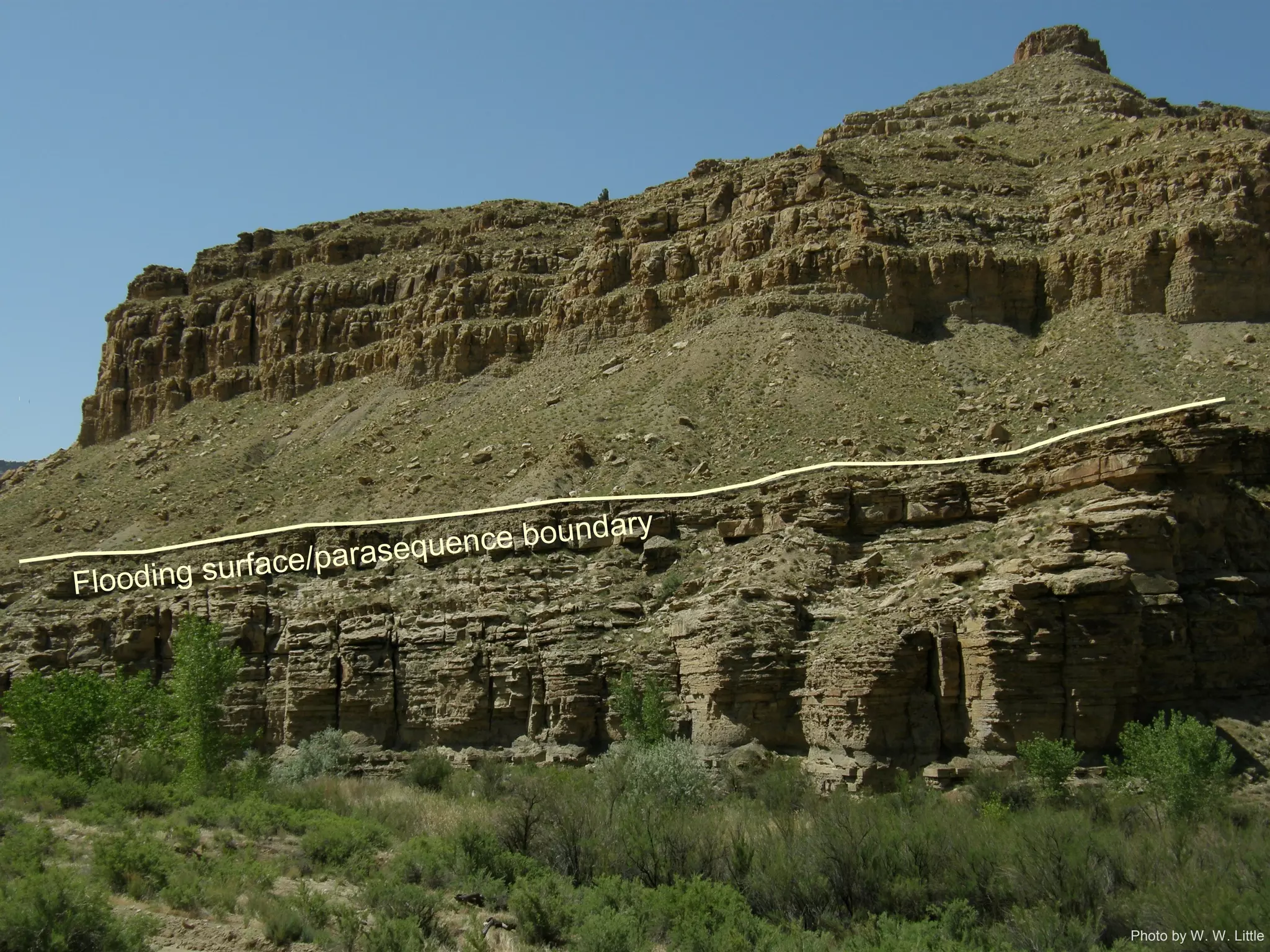
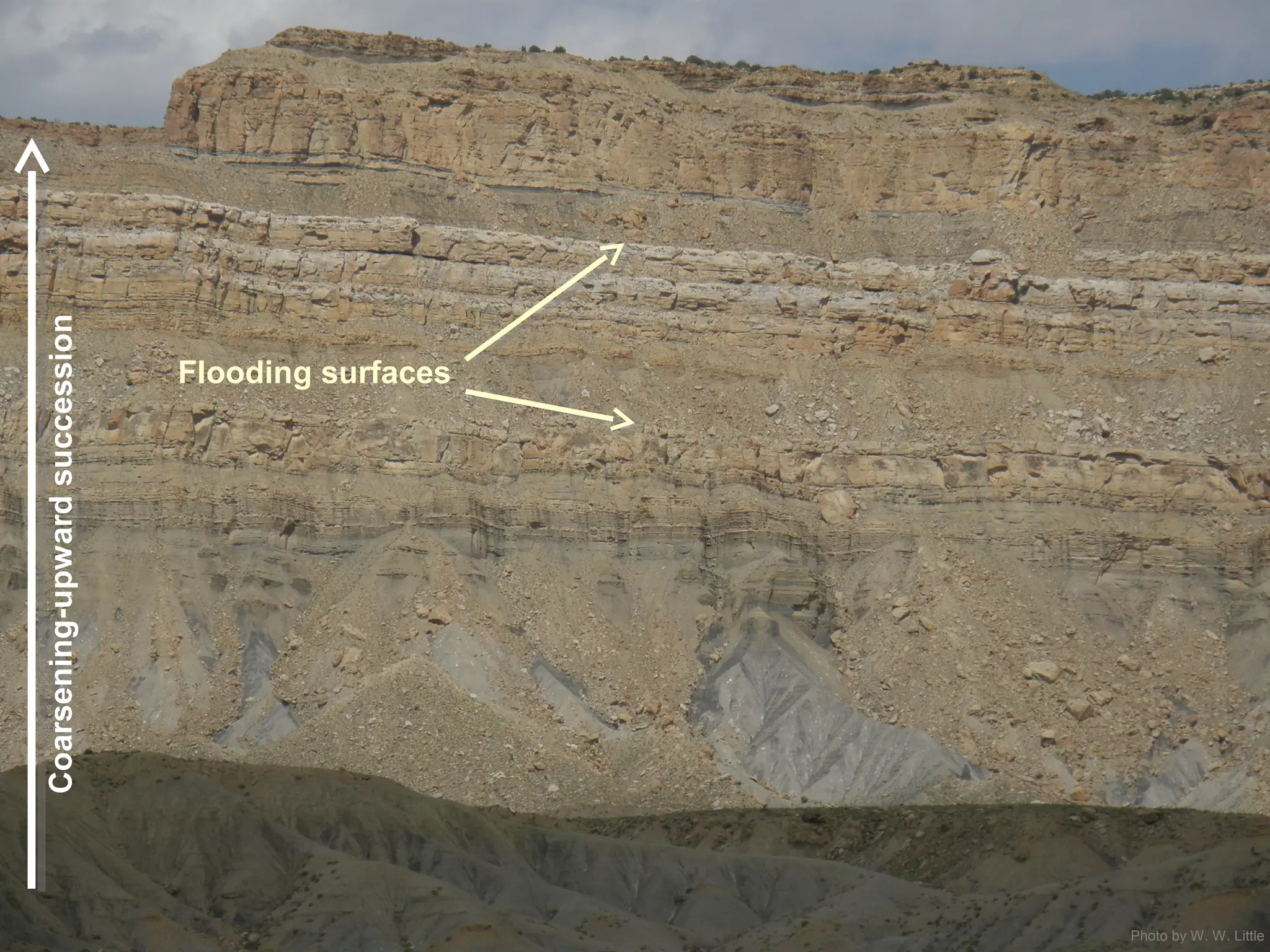
Progradational beach successions tend to be cyclical, in which each
cycle, as well as the entire succession coarsen upward. Each small-
scale cycle is referred to as a parasequence. Boundaries between
parasequences are flooding surfaces and represent relatively abrupt
rises in base-level.
Photo by W. W. Little
Flooding surface/parasequence boundary
Photo by W. W. Little
Coarsening-upwardsuccession
Flooding surfaces
Photo by W. W. Little
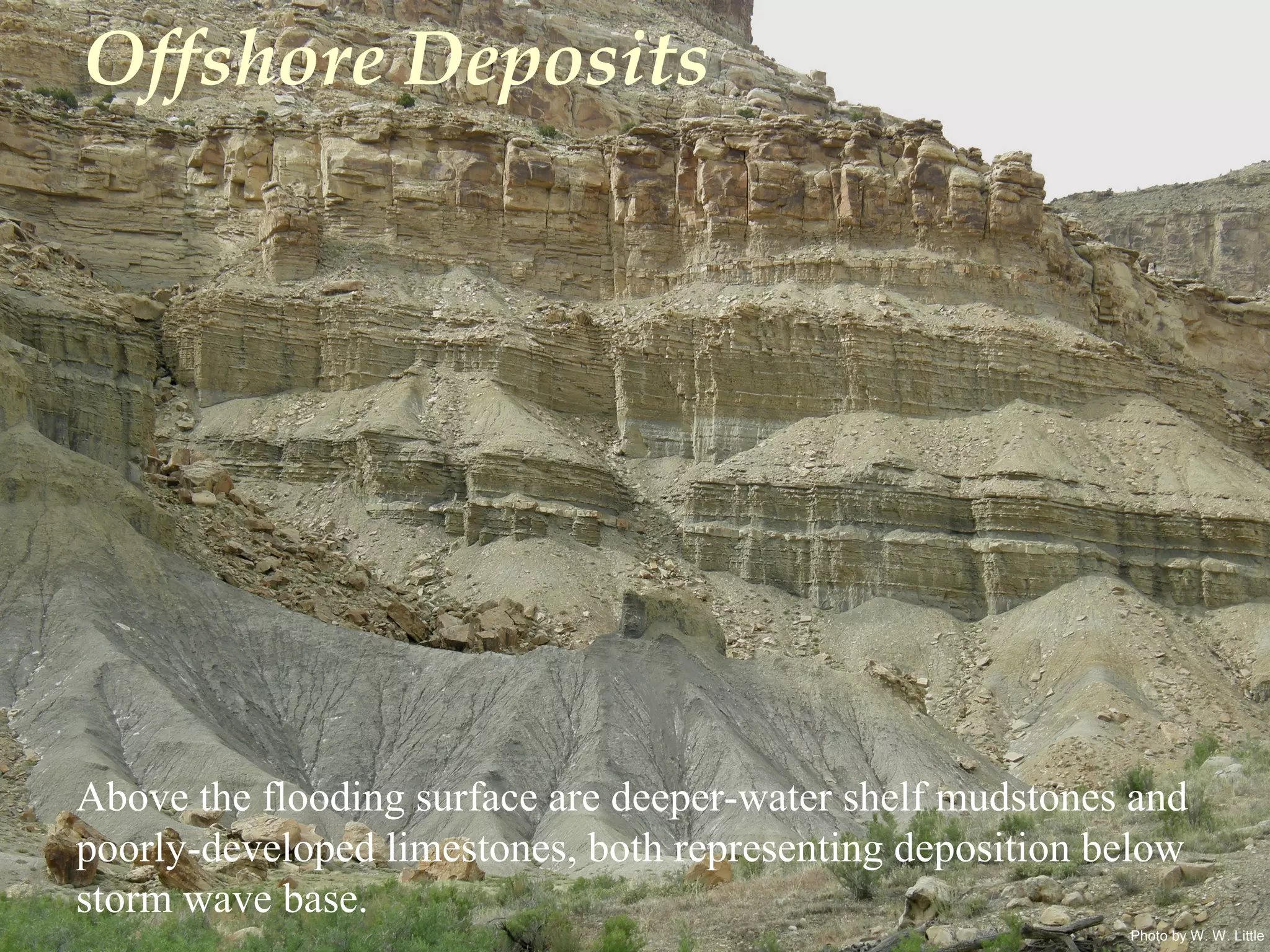
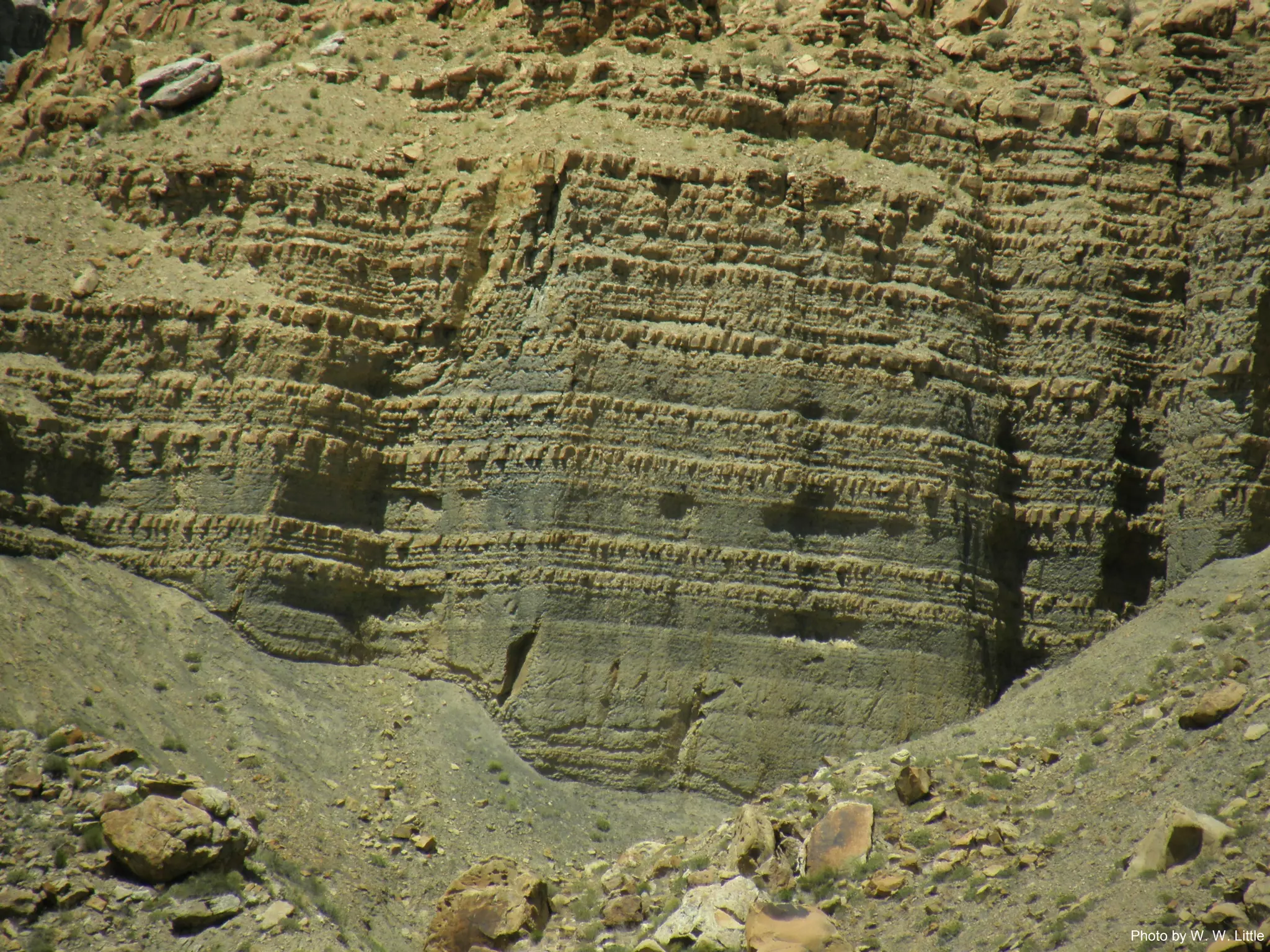
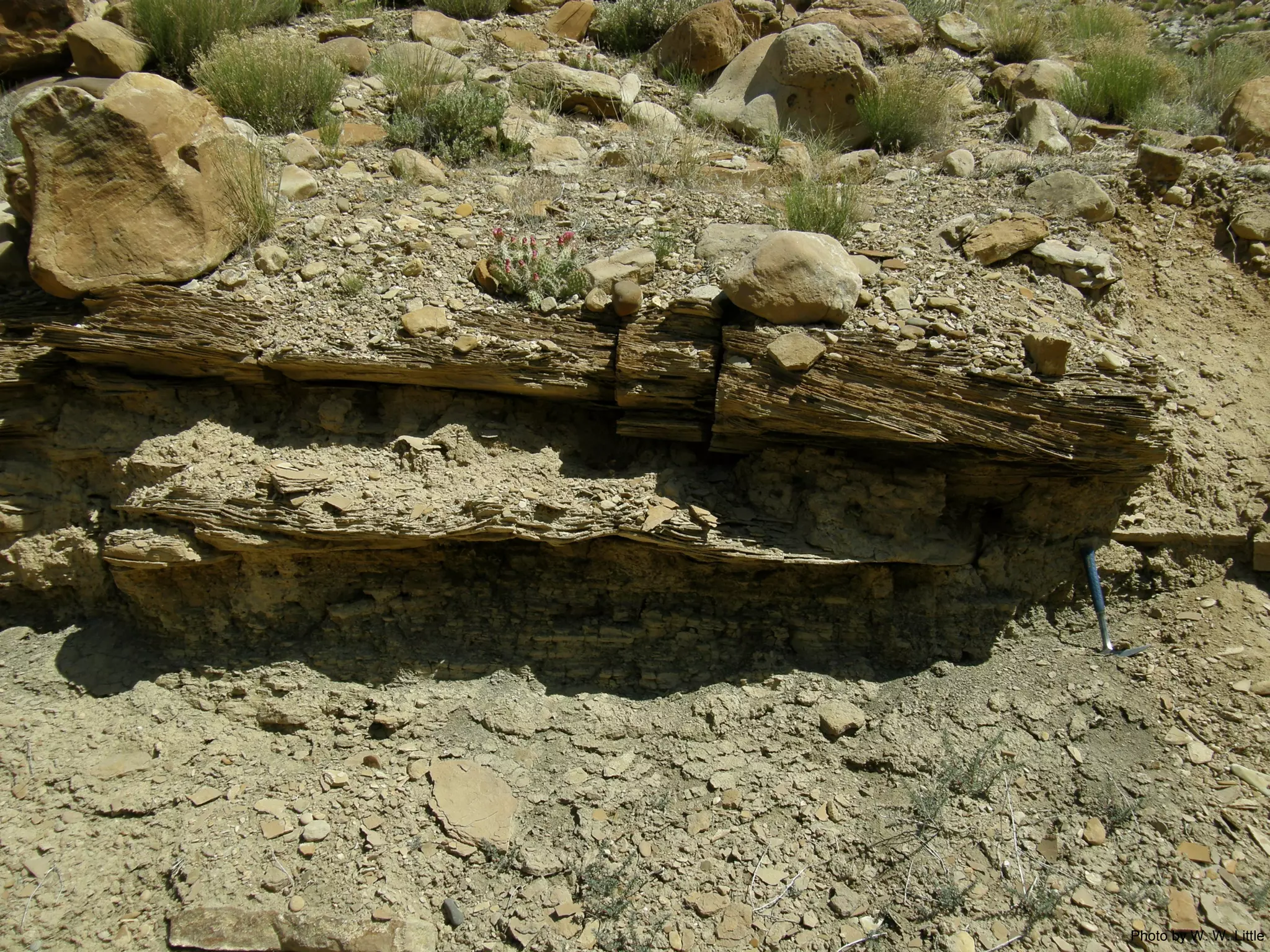
Offshore Deposits
Above the flooding surface are deeper-water shelf mudstones and
poorly-developed limestones, both representing deposition below
storm wave base.
Photo by W. W. Little
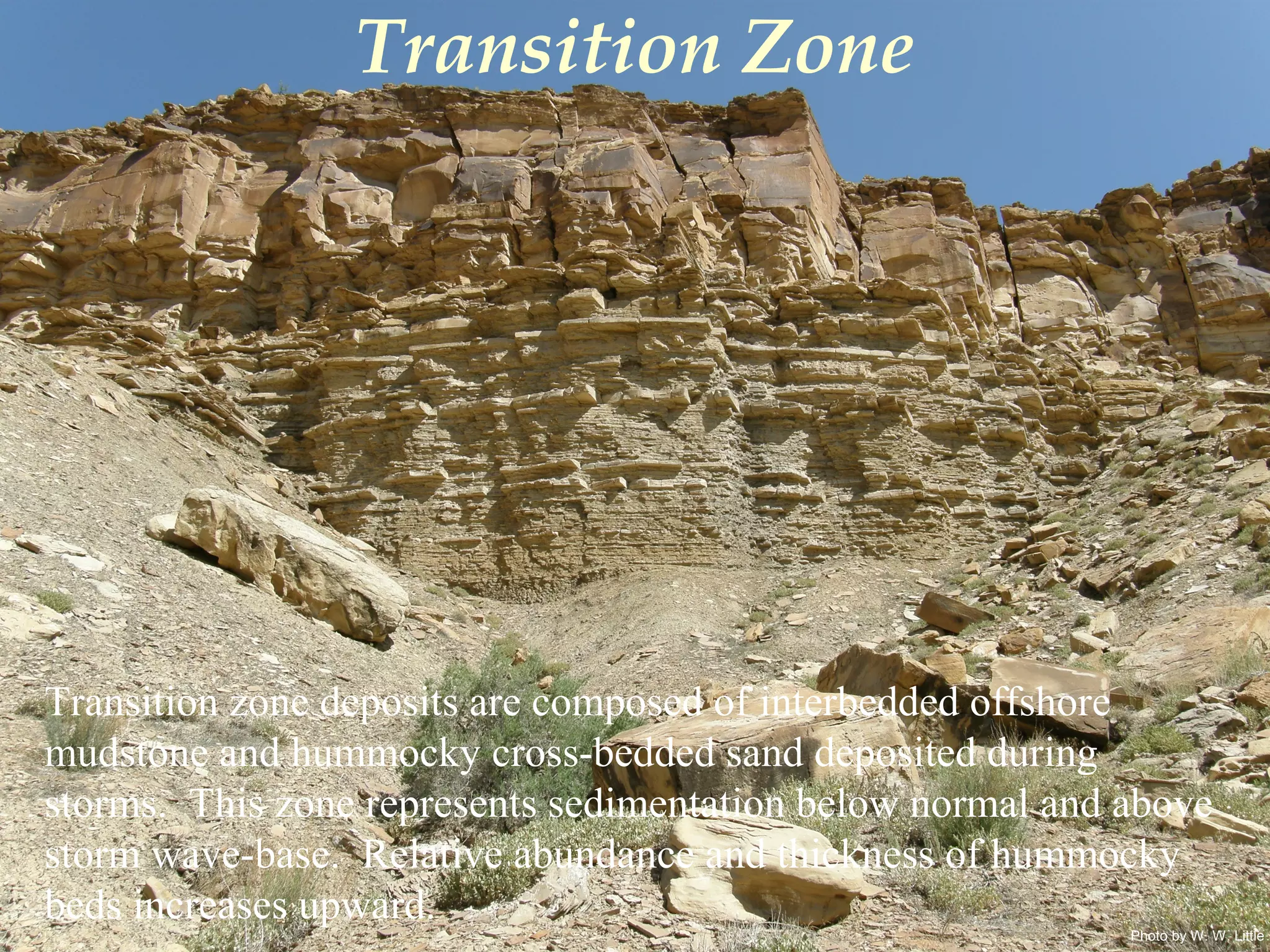
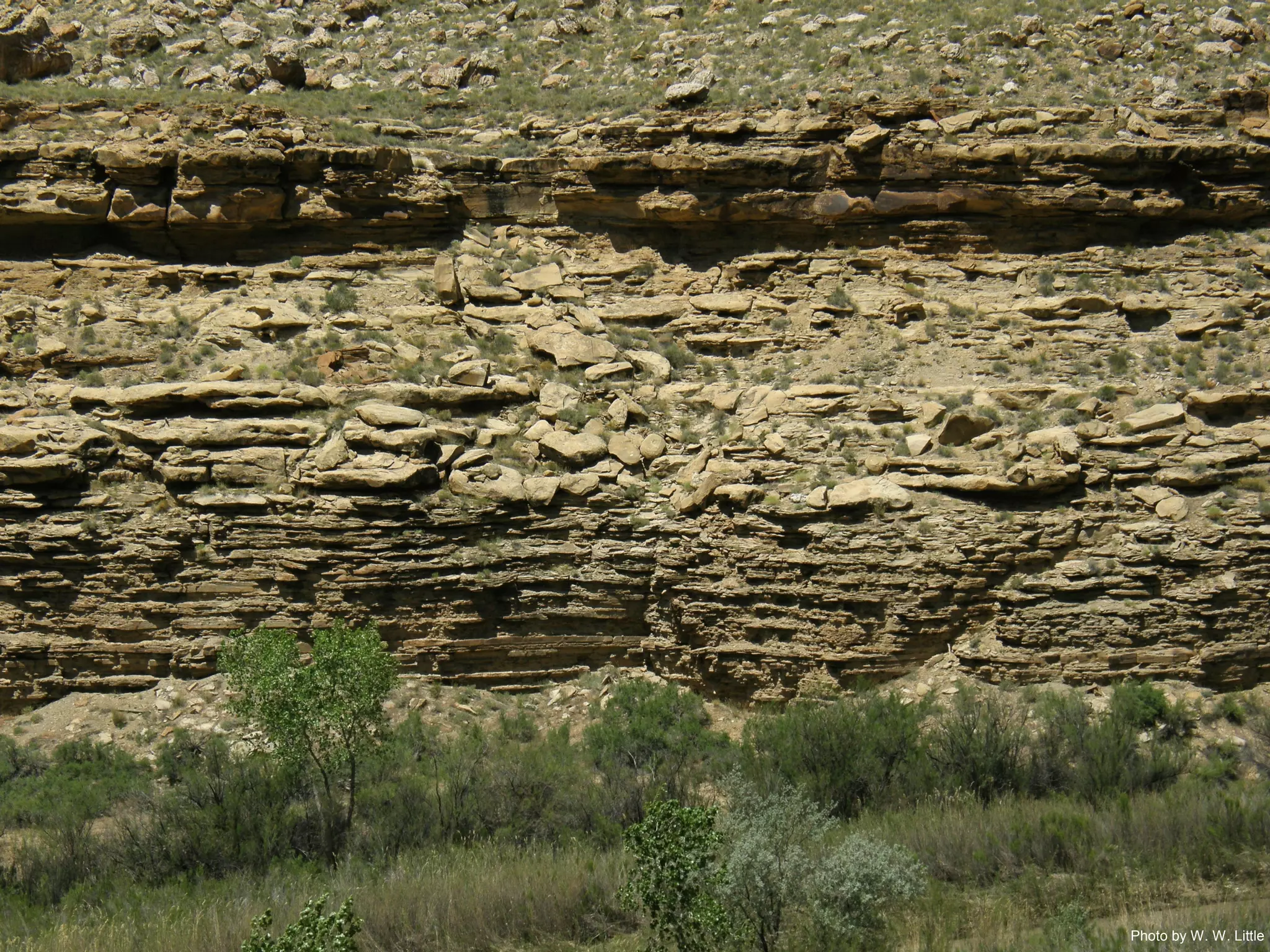
Transition Zone
Transition zone deposits are composed of interbedded offshore
mudstone and hummocky cross-bedded sand deposited during
storms. This zone represents sedimentation below normal and above
storm wave-base. Relative abundance and thickness of hummocky
beds increases upward.
Photo by W. W. Little
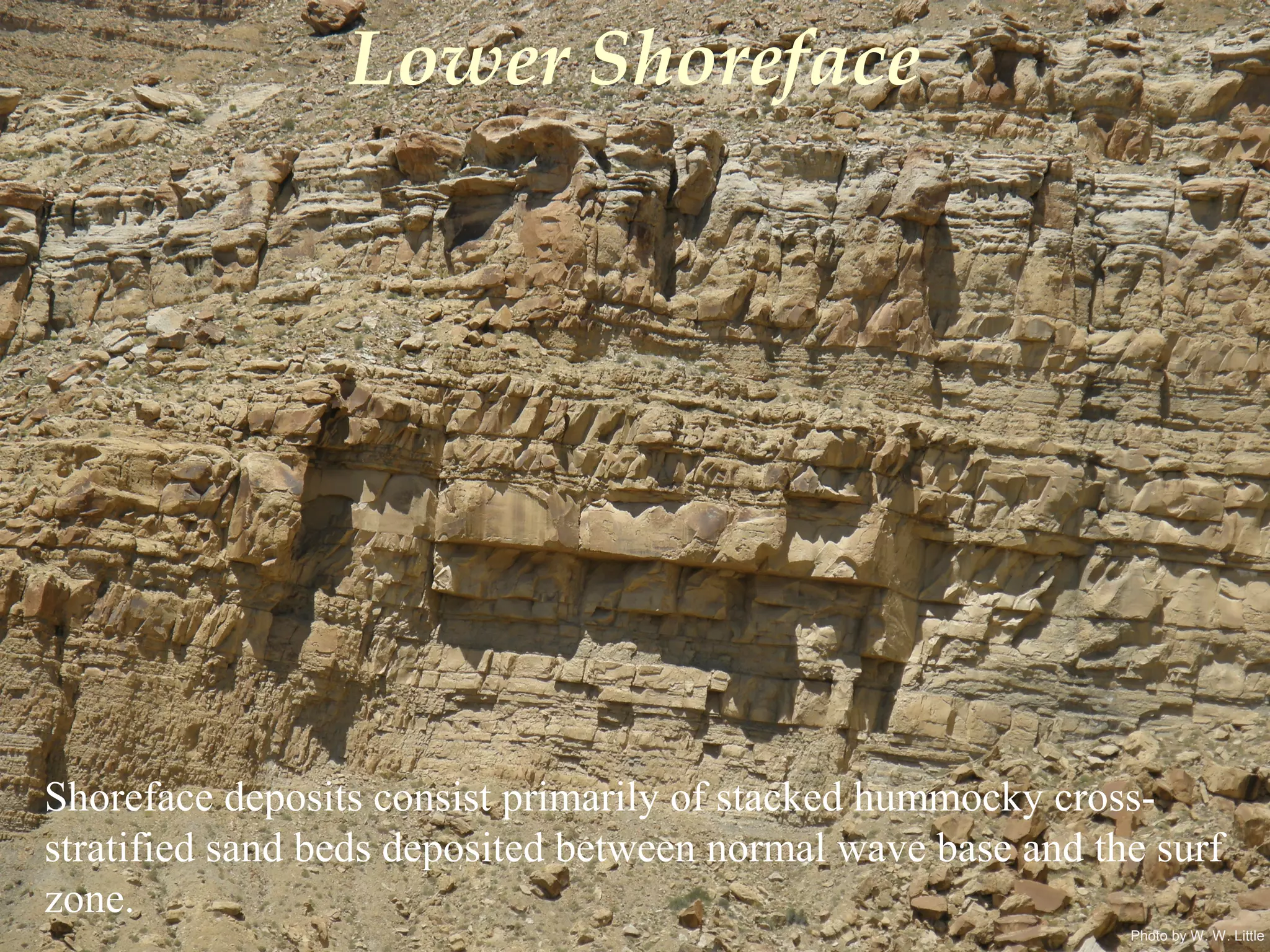
Lower Shoreface
Shoreface deposits consist primarily of stacked hummocky cross-
stratified sand beds deposited between normal wave base and the surf
zone.
Photo by W. W. Little
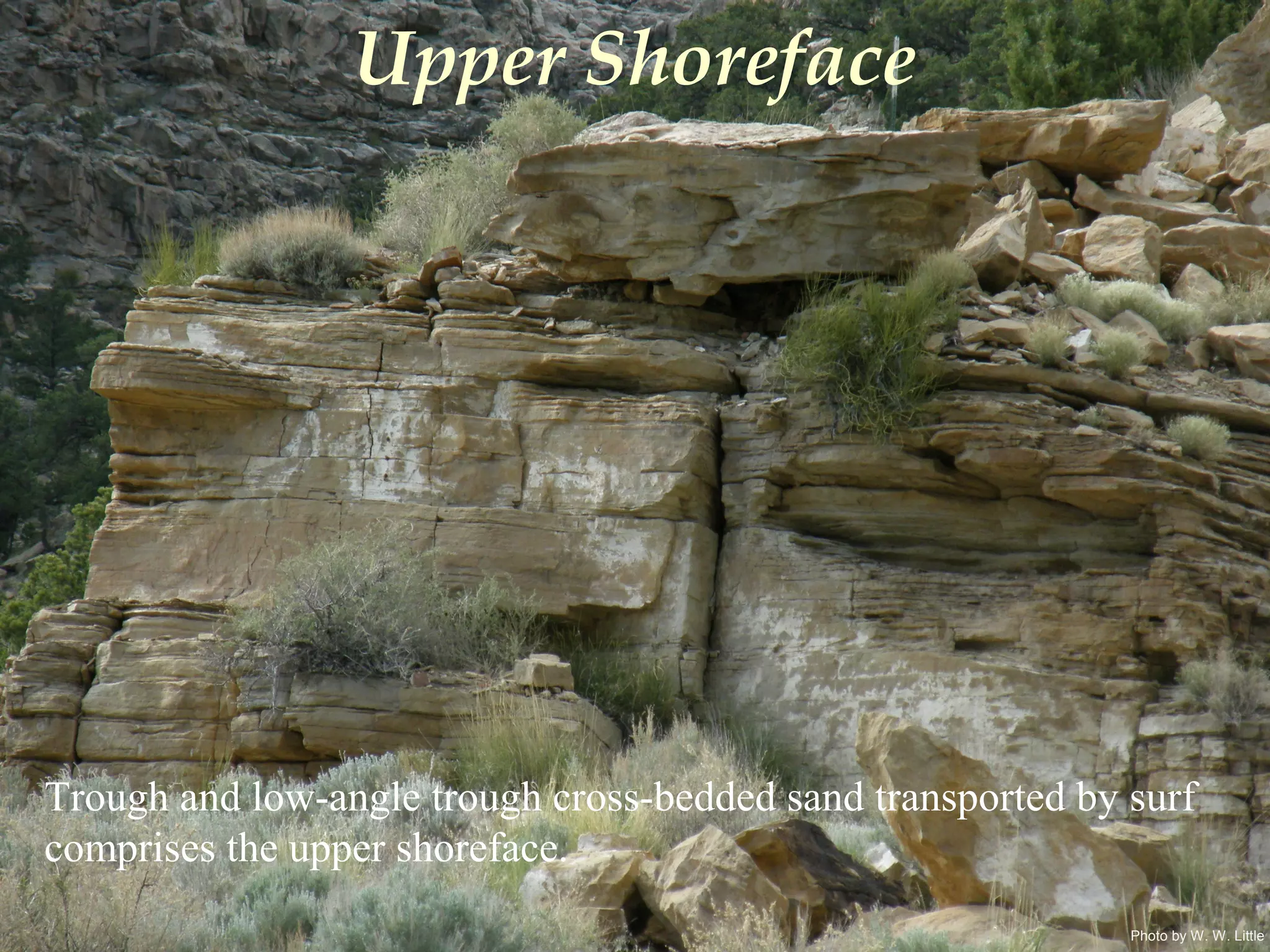
Upper Shoreface
Trough and low-angle trough cross-bedded sand transported by surf
comprises the upper shoreface.
Photo by W. W. Little
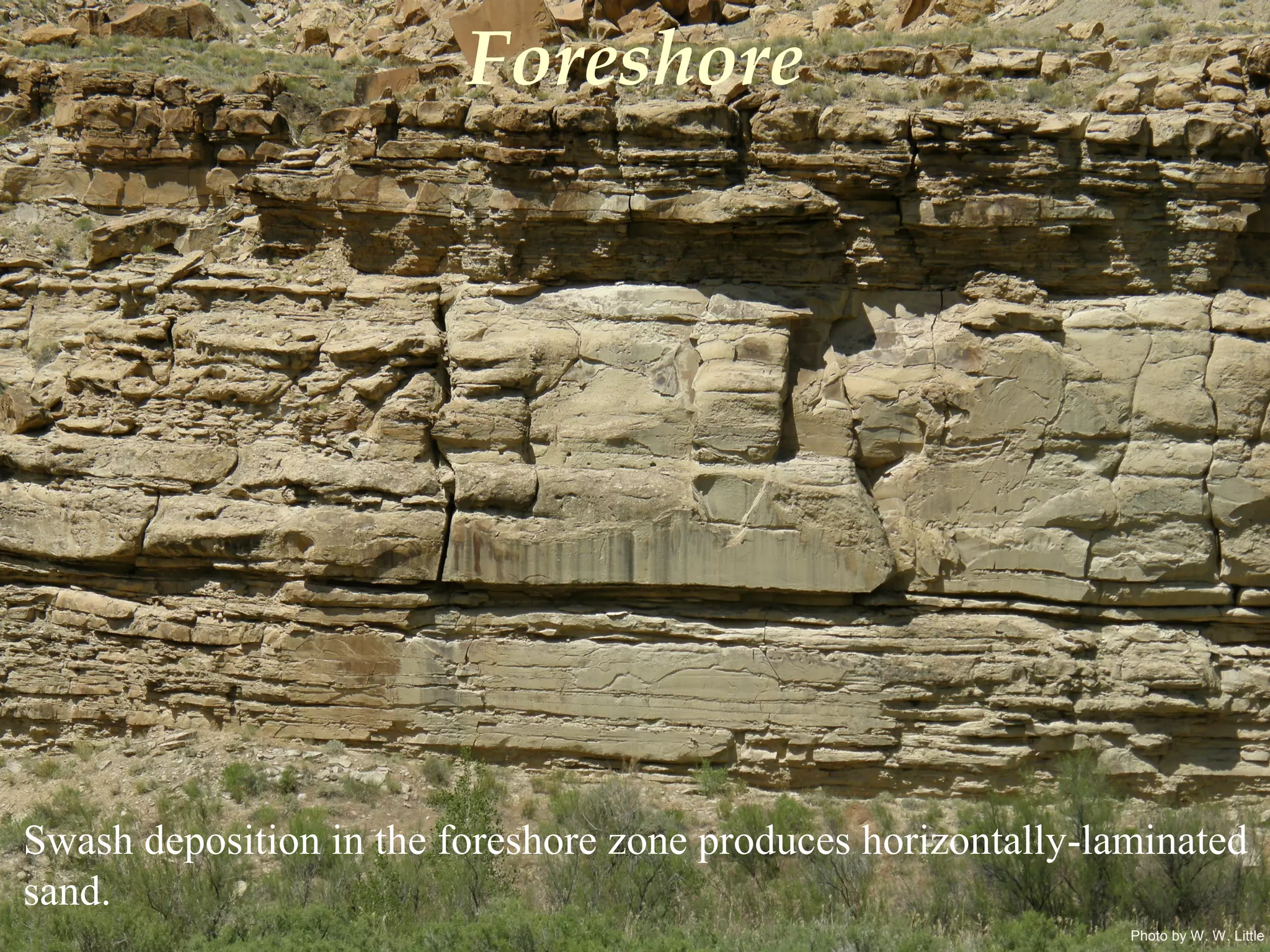
Foreshore
Swash deposition in the foreshore zone produces horizontally-laminated
sand.
Photo by W. W. Little
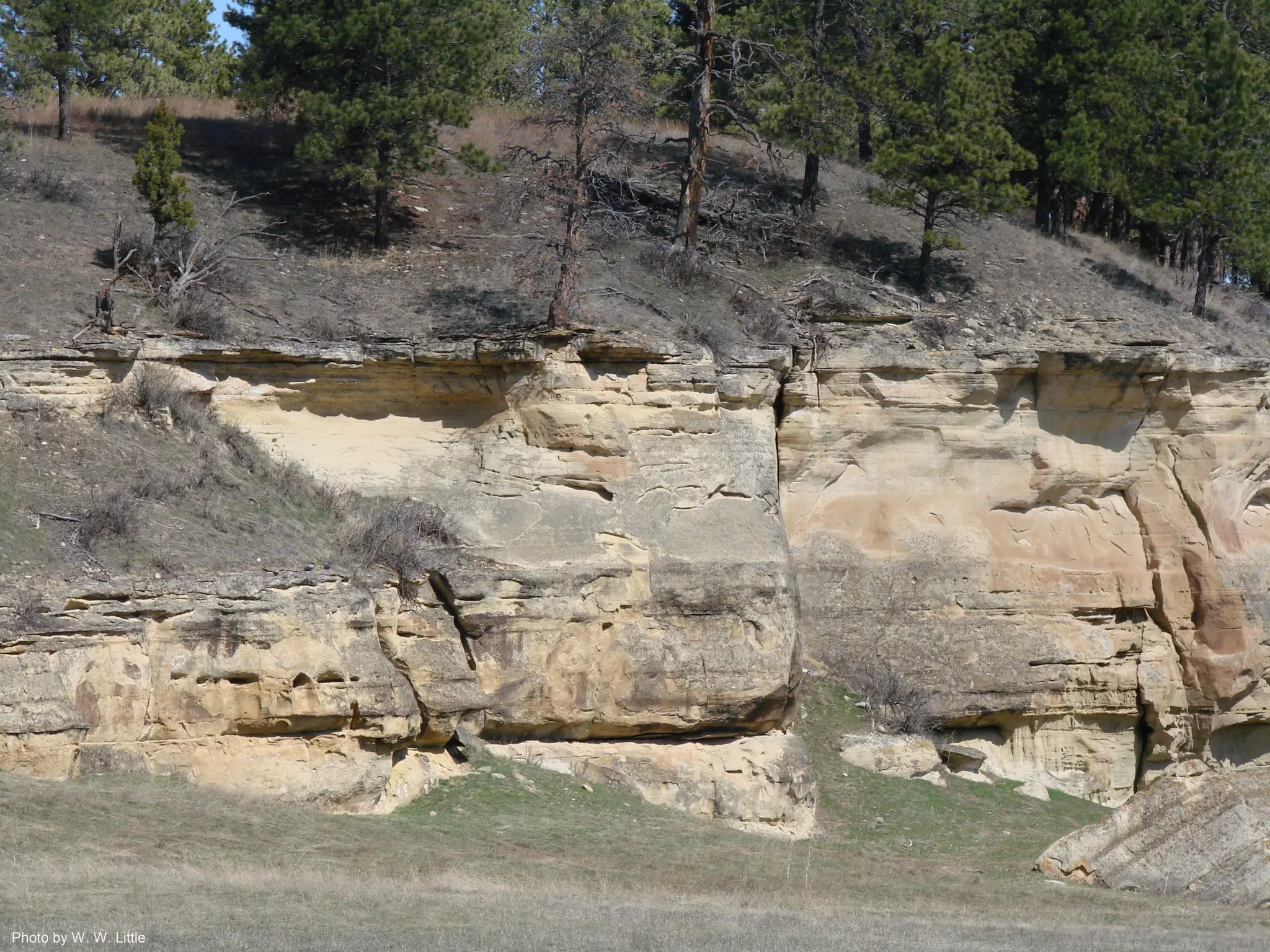
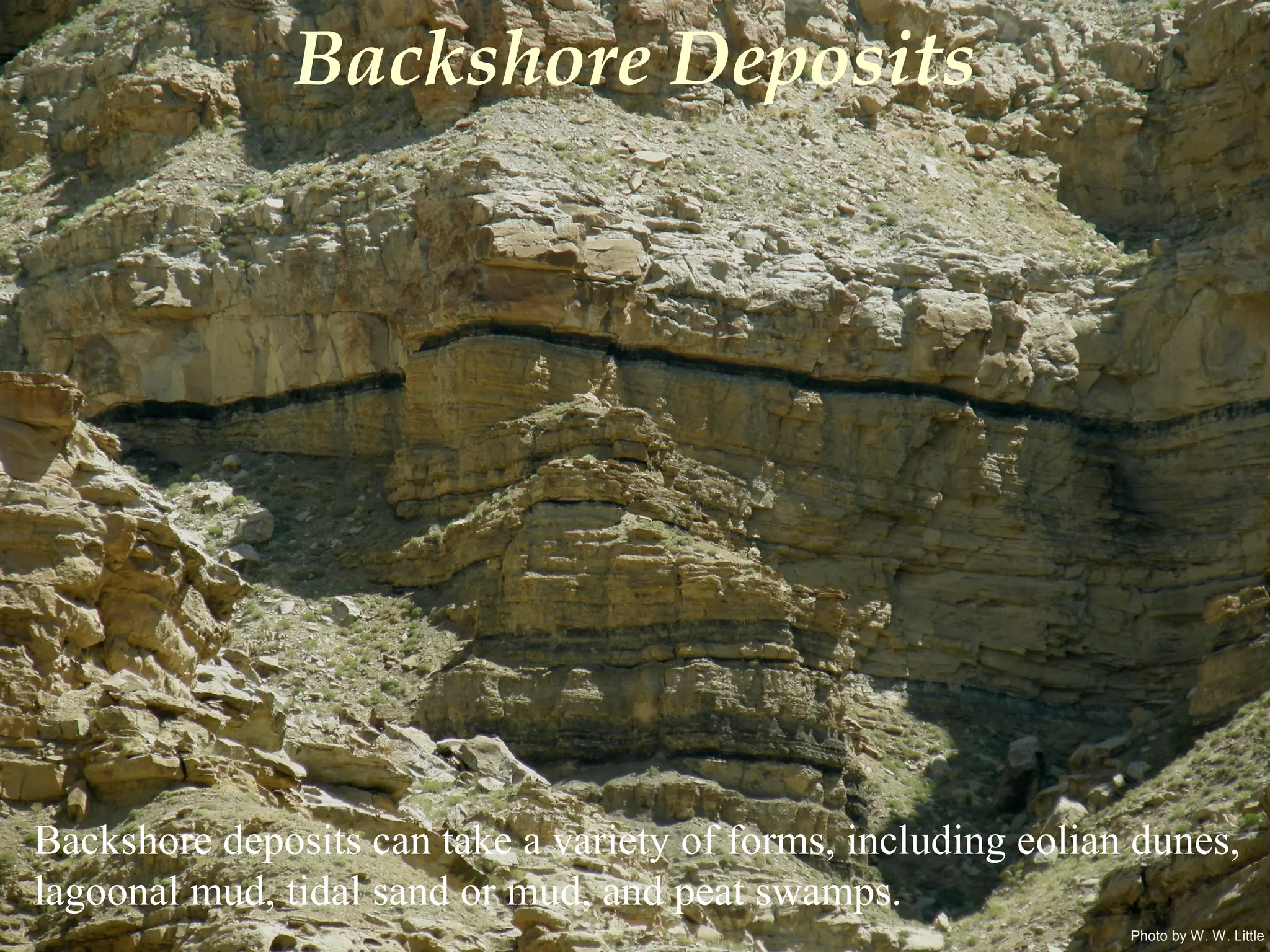
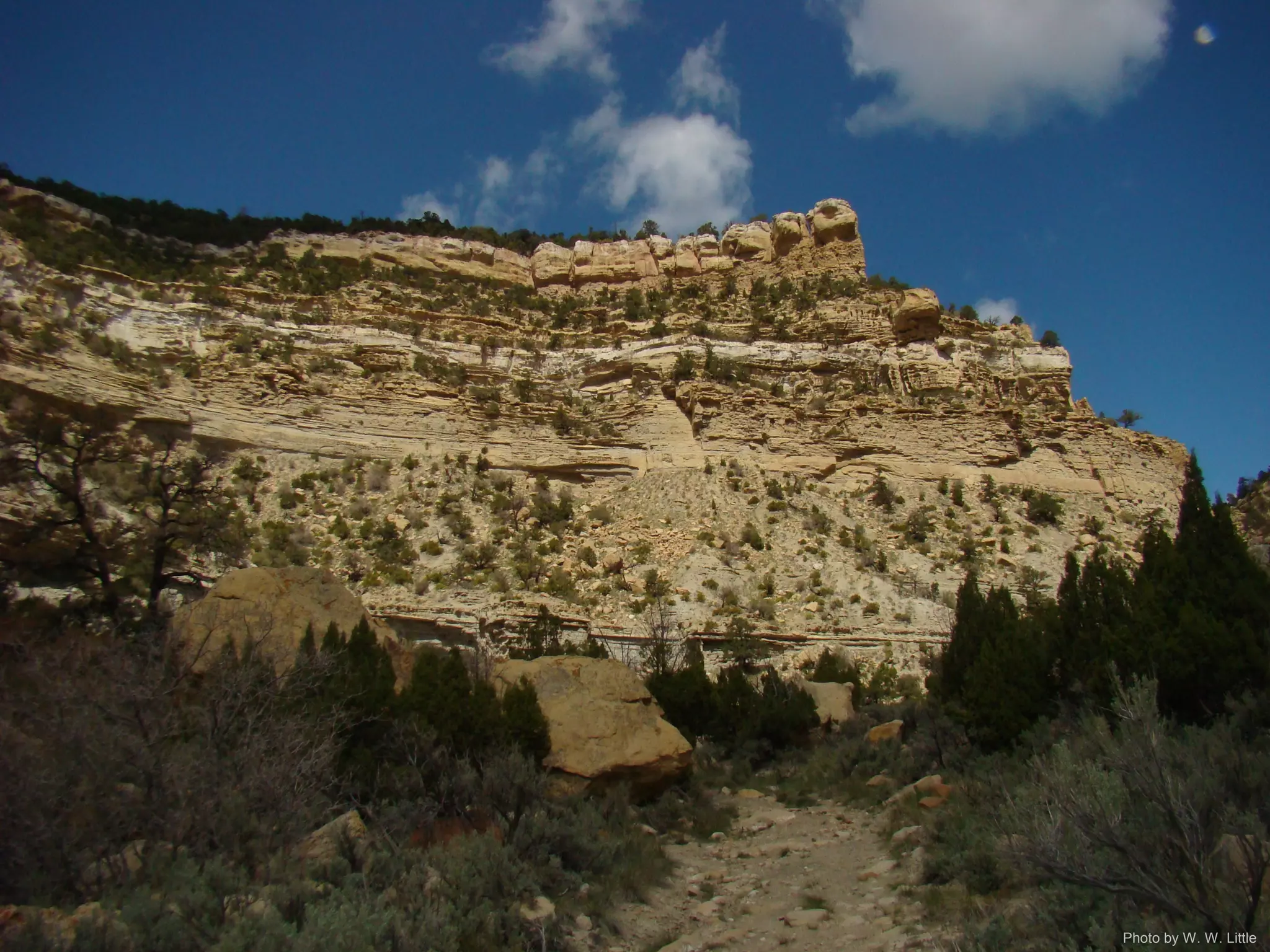
Backshore Deposits
Backshore deposits can take a variety of forms, including eolian dunes,
lagoonal mud, tidal sand or mud, and peat swamps.
Photo by W. W. Little

Beach and Barrier Systems

  • 1.
    Beach & BarrierSystems Photo by W. W. Little
  • 2.
    Simplified Models Beaches aretypically separated into shore-parallel environments based on water depth and relationship wave processes.
  • 3.
    Reineck & Singh,1980 Common Shoreline Facies Prograding shorelines are typified by a coarsening- upward succession of deeper water to shallower water to above water facies all dominated by sand. Facies are distinguished primarily by grain size and sedimentary structures.
  • 5.
    Photo by W.W. Little Laminated Mud Laminated mud forms offshore below storm wave-base just beyond the beach system and in back-barrier lagoons through suspension- settling of clay and silt.
  • 6.
    Hummocky Cross-bedded Sand Hummockycross-bedded sand is produced mostly during storms by a combination of current and oscillatory flow and is found primarily on the lower shoreface and in the transition zone. Photo by W. W. Little Photo by W. W. Little
  • 7.
    Photo by W.W. Little Trough Cross-bedded Sand Small-scale trough cross-stratified sand is common in the surf zone of the upper shoreface.
  • 8.
    Photo by W.W. Little
  • 9.
    Horizontally-stratified Sand Deposition inthe swash zone produces relatively continuous laminae of sand that dip slightly basinward. Small cavities formed from trapped air and water escape structures are common.
  • 10.
    Photo by W.W. Little
  • 11.
    Photo by W.W. Little
  • 12.
    Shell Beds Mollusc shellscommonly accumulate during storm events, as the shells are piled upon one another and finer sediment is winnowed away.
  • 13.
    Photo by W.W. Little Edgewise Conglomerate Edgewise conglomerate is an intraclastic conglomerate produced during storm events as partially lithified sediment is “ripped up” and redeposited.
  • 14.
    Photo by W.W. Little Thrombolites Thrombolites are biological structures similar to stromatolites but without internal structure.
  • 15.
    Photo by W.W. Little
  • 16.
    Photo by W.W. Little
  • 17.
    Ripple Bedding Ripple beddingcommonly forms as part of the backwash; however, because of the higher-energy swash part of the couplet, they have a low preservation potential. Photo by W. W. Little
  • 18.
    A: End ofswash B: Beginning of backwash C: End of backwash D: Rhomboidal ripples Photos by W. W. Little
  • 19.
  • 20.
  • 21.
    Photo by W.W. Little Coal Coal forms through the accumulation of peat in back beach and back barrier regions.
  • 22.
    Coastal Depositional Systems Avariety of depositional systems are found along a shoreline. Their distribution, geometry, and extent are determined by proximity to a sediment source, sediment abundance, energy conditions, and fluctuations in base-level. This lecture focuses on the beach and barrier island systems.
  • 23.
    Progradational Beach Associations Beachesare typically separated into shore-parallel environments based on water depth and relationship to wave processes.
  • 24.
    Beaches are typicallyseparated into shore-parallel environments based on water depth and relationship wave processes. Retrogradational Beach Associations
  • 25.
    Idealized Vertical Profiles Verticalprofiles for shoreline successions vary depending, in part, on whether they are produced under transgressive or regressive conditions. Progradational successions are more common, but transgressive successions tend to be more complex. BeachBeach Barrier IslandBarrier Island Tidal inletTidal inlet Progradational ProfileProgradational Profile Retrogradational ProfilesRetrogradational Profiles
  • 26.
    Barrier Islands &Lagoons Barrier islands form mostly during transgressive conditions and are, in essence, beaches that are separated from the mainland by a lagoon. Modern barriers are commonly associated with estuaries.
  • 30.
    Tidal Inlets Tidal inletsare breaches in a barrier island that allow sea water to move into and out of a lagoon. As the inlet migrates in the direction of long-shore transport, a typical vertical profile would consist of fining-upward channel deposits overlain by spit sediments.
  • 31.
    Washover Fans Storm surgeswill often erode sand from the basinward side of a bar and redeposit it on the lagoonal side, producing a washover fan.
  • 34.
    Tidal Deltas Barrier islandsoften become breached by large storms. Tidal currents then flow through the opening producing small “deltas.” Ebb deltas are much more common than flow deltas because of the shallower basin in the ebb side of the bar.
  • 37.
    Back-barrier (bay mouth)Tidal Flat Bay mouths behind barrier bars can become filled with fine-grained sediment deposited by estuarine fluvial systems, producing tidal flats.
  • 39.
    Photo by W.W. Little Large-scale Architecture (progradational beach) Progradational beach successions tend to be cyclical, in which each cycle, as well as the entire succession coarsen upward. Each small- scale cycle is referred to as a parasequence. Boundaries between parasequences are flooding surfaces and represent relatively abrupt rises in base-level.
  • 40.
    Photo by W.W. Little
  • 41.
    Photo by W.W. Little Flooding surface/parasequence boundary
  • 42.
    Photo by W.W. Little Coarsening-upwardsuccession Flooding surfaces
  • 43.
    Photo by W.W. Little Offshore Deposits Above the flooding surface are deeper-water shelf mudstones and poorly-developed limestones, both representing deposition below storm wave base.
  • 44.
    Photo by W.W. Little
  • 45.
    Photo by W.W. Little Transition Zone Transition zone deposits are composed of interbedded offshore mudstone and hummocky cross-bedded sand deposited during storms. This zone represents sedimentation below normal and above storm wave-base. Relative abundance and thickness of hummocky beds increases upward.
  • 46.
    Photo by W.W. Little
  • 47.
    Photo by W.W. Little
  • 48.
    Photo by W.W. Little Lower Shoreface Shoreface deposits consist primarily of stacked hummocky cross- stratified sand beds deposited between normal wave base and the surf zone.
  • 49.
    Photo by W.W. Little
  • 50.
    Photo by W.W. Little
  • 51.
    Photo by W.W. Little Upper Shoreface Trough and low-angle trough cross-bedded sand transported by surf comprises the upper shoreface.
  • 52.
    Photo by W.W. Little Foreshore Swash deposition in the foreshore zone produces horizontally-laminated sand.
  • 53.
    Photo by W.W. Little
  • 54.
    Photo by W.W. Little
  • 55.
    Photo by W.W. Little Backshore Deposits Backshore deposits can take a variety of forms, including eolian dunes, lagoonal mud, tidal sand or mud, and peat swamps.
  • 56.
    Photo by W.W. Little
  • 57.
    Photo by W.W. Little
  • 58.
    Photo by W.W. Little