Facies 
Concept 
Lecture 3#
Definition 
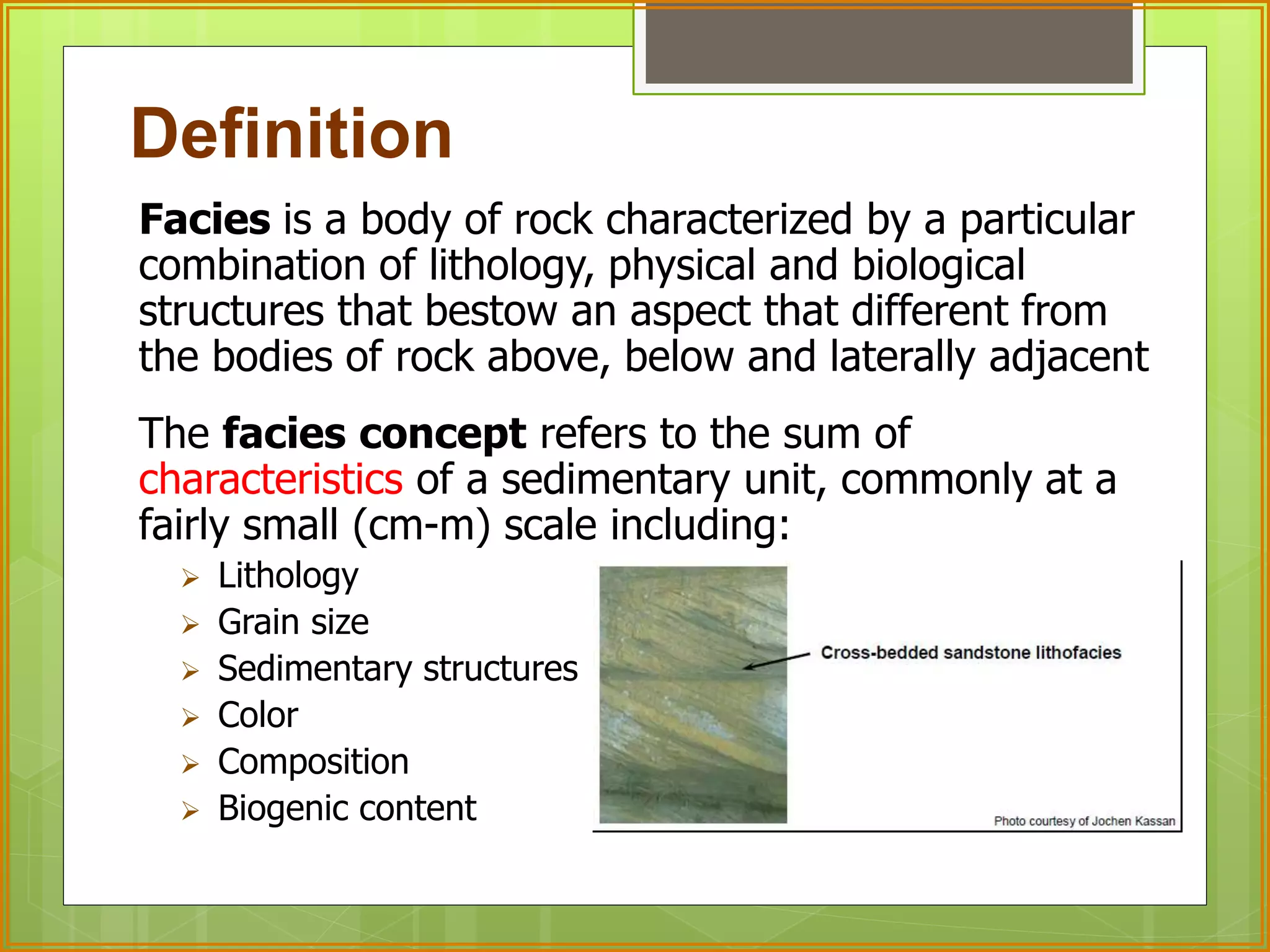
Facies is a body of rock characterized by a particular 
combination of lithology, physical and biological 
structures that bestow an aspect that different from 
the bodies of rock above, below and laterally adjacent 
The facies concept refers to the sum of 
characteristics of a sedimentary unit, commonly at a 
fairly small (cm-m) scale including: 
 Lithology 
 Grain size 
 Sedimentary structures 
 Color 
 Composition 
 Biogenic content
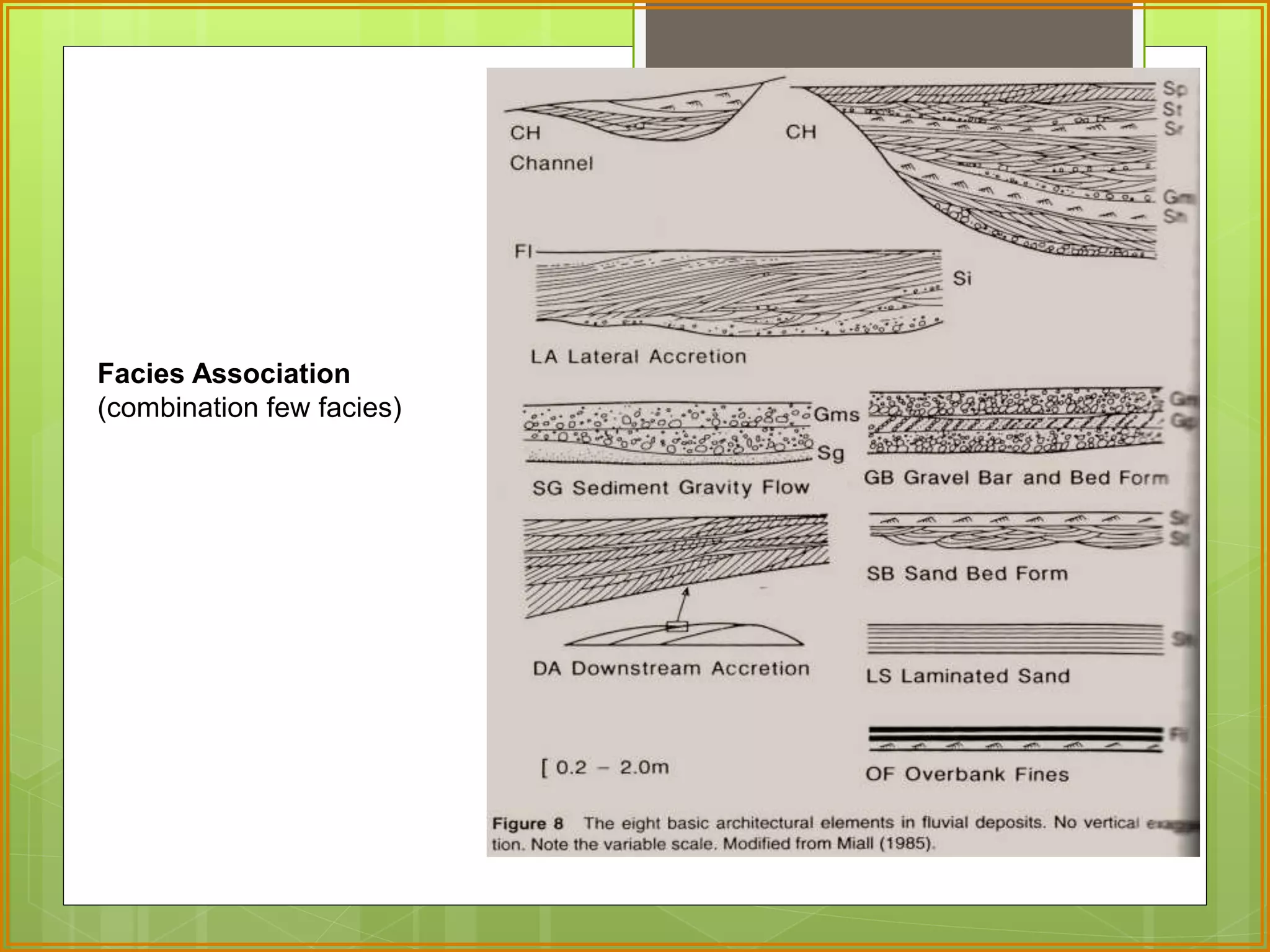
Facies associations/assemblage : 
o constitute several facies that occur in combination, and 
typically represent one depositional environment (note 
that very few individual facies are diagnostic for one 
specific setting) 
o groups of facies genetically related to one another and 
which have some environmental significance (Collinson, 
1969) 
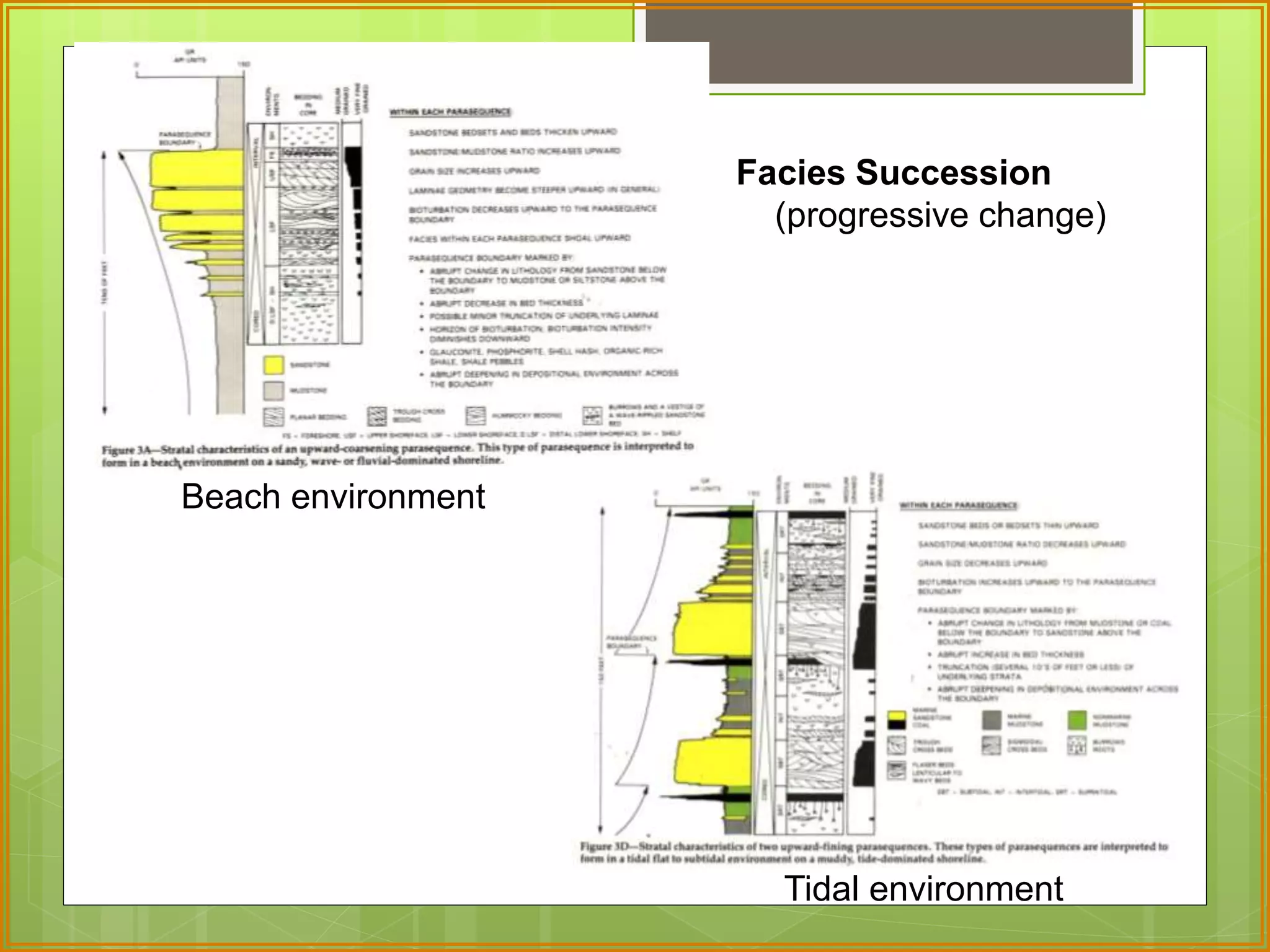
Facies successions: 
 a progressive change in certain facies properties in a 
specific direction (vertically or laterally).
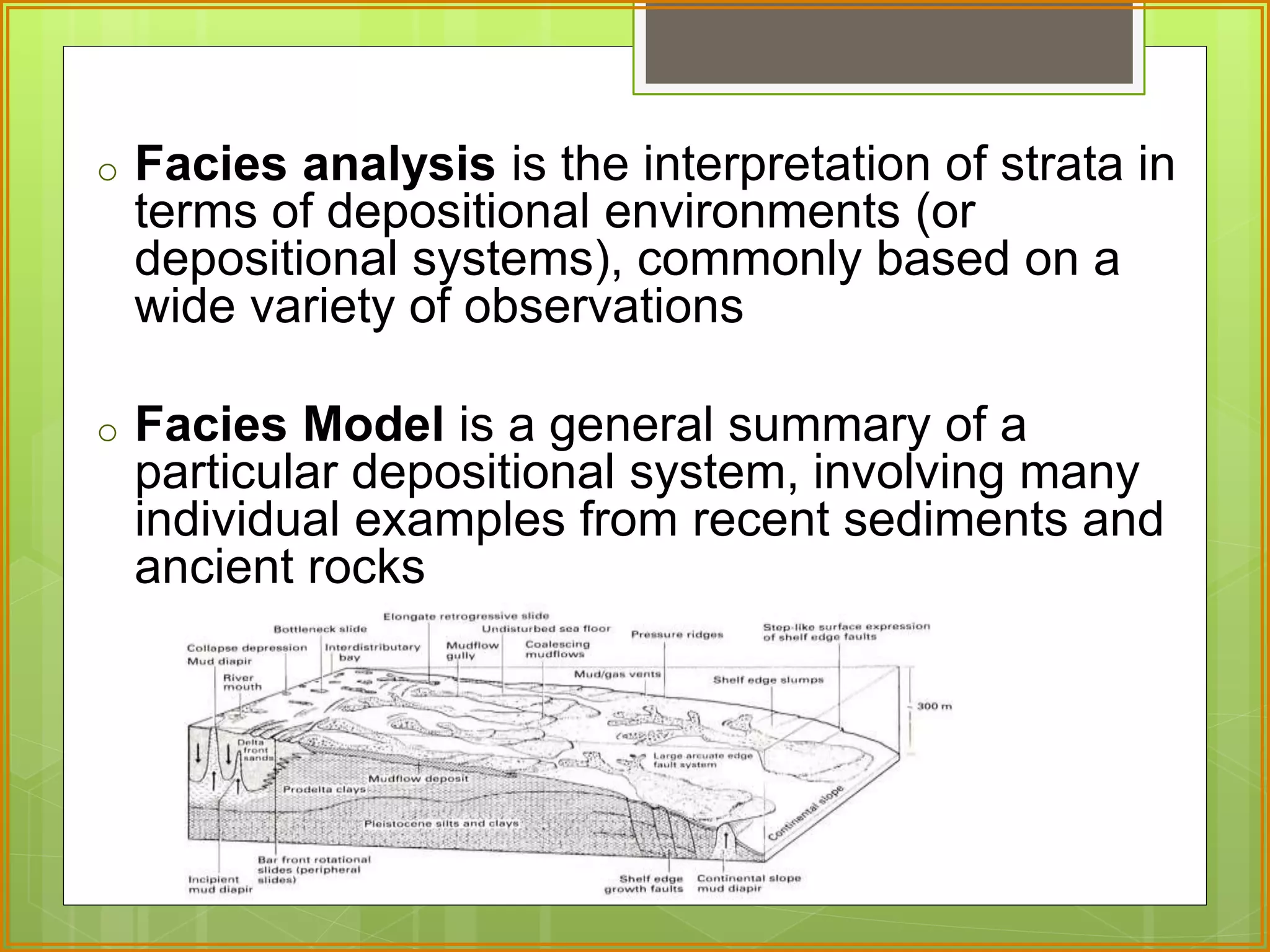
o Facies analysis is the interpretation of strata in 
terms of depositional environments (or 
depositional systems), commonly based on a 
wide variety of observations 
o Facies Model is a general summary of a 
particular depositional system, involving many 
individual examples from recent sediments and 
ancient rocks
Why do we need to understand the 
deposits of differing environments? 
 Sedimentary & geological history (small-large scale) 
 Economic importance -e.g. hydrocarbons, water 
 Economic importance -minerals and metals (e.g. gold-diamonds- 
gypsum-aggregates) 
 Prediction/management of contemporary 
environments
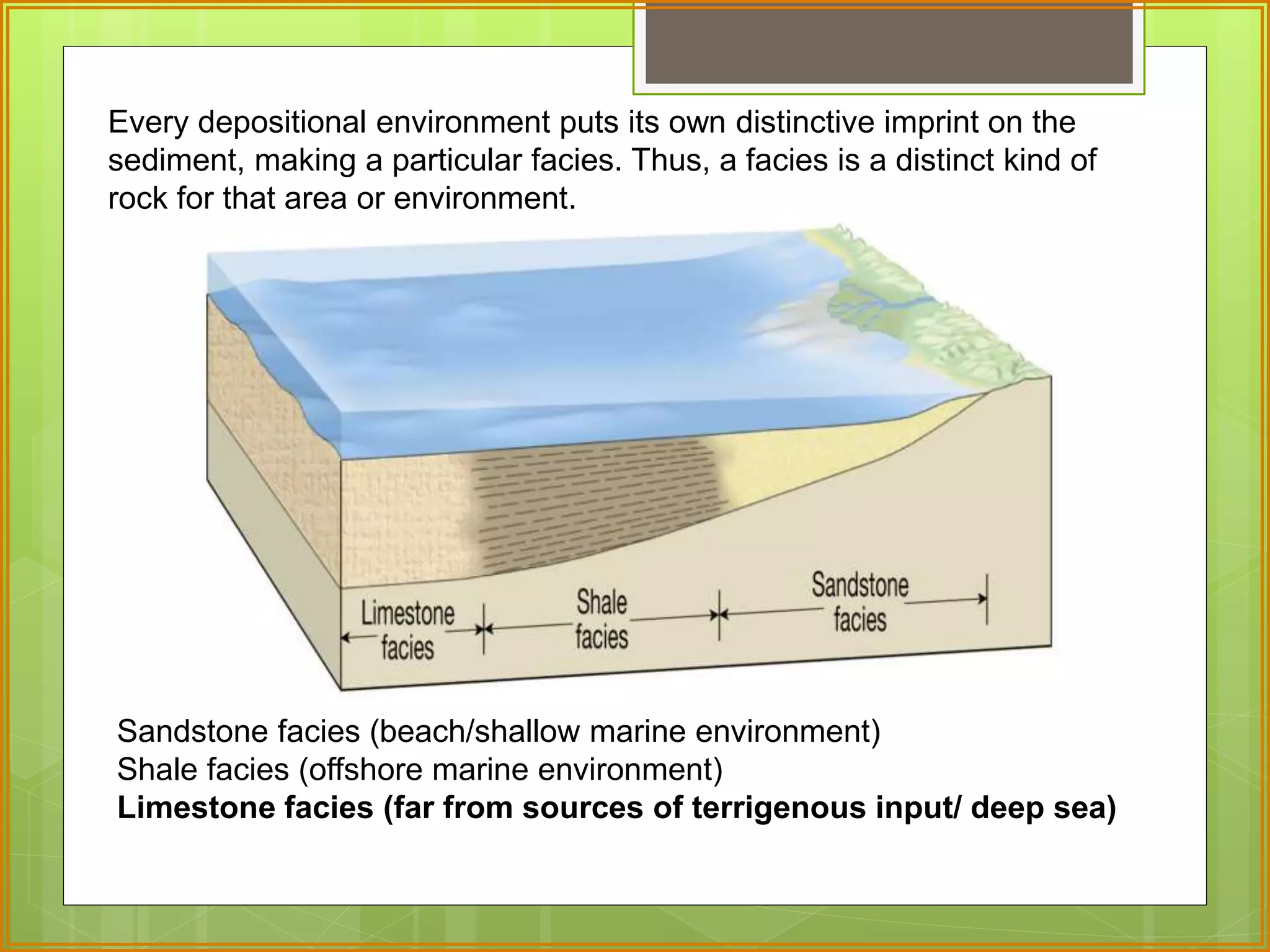
Every depositional environment puts its own distinctive imprint on the 
sediment, making a particular facies. Thus, a facies is a distinct kind of 
rock for that area or environment. 
Sandstone facies (beach/shallow marine environment) 
Shale facies (offshore marine environment) 
Limestone facies (far from sources of terrigenous input/ deep sea)
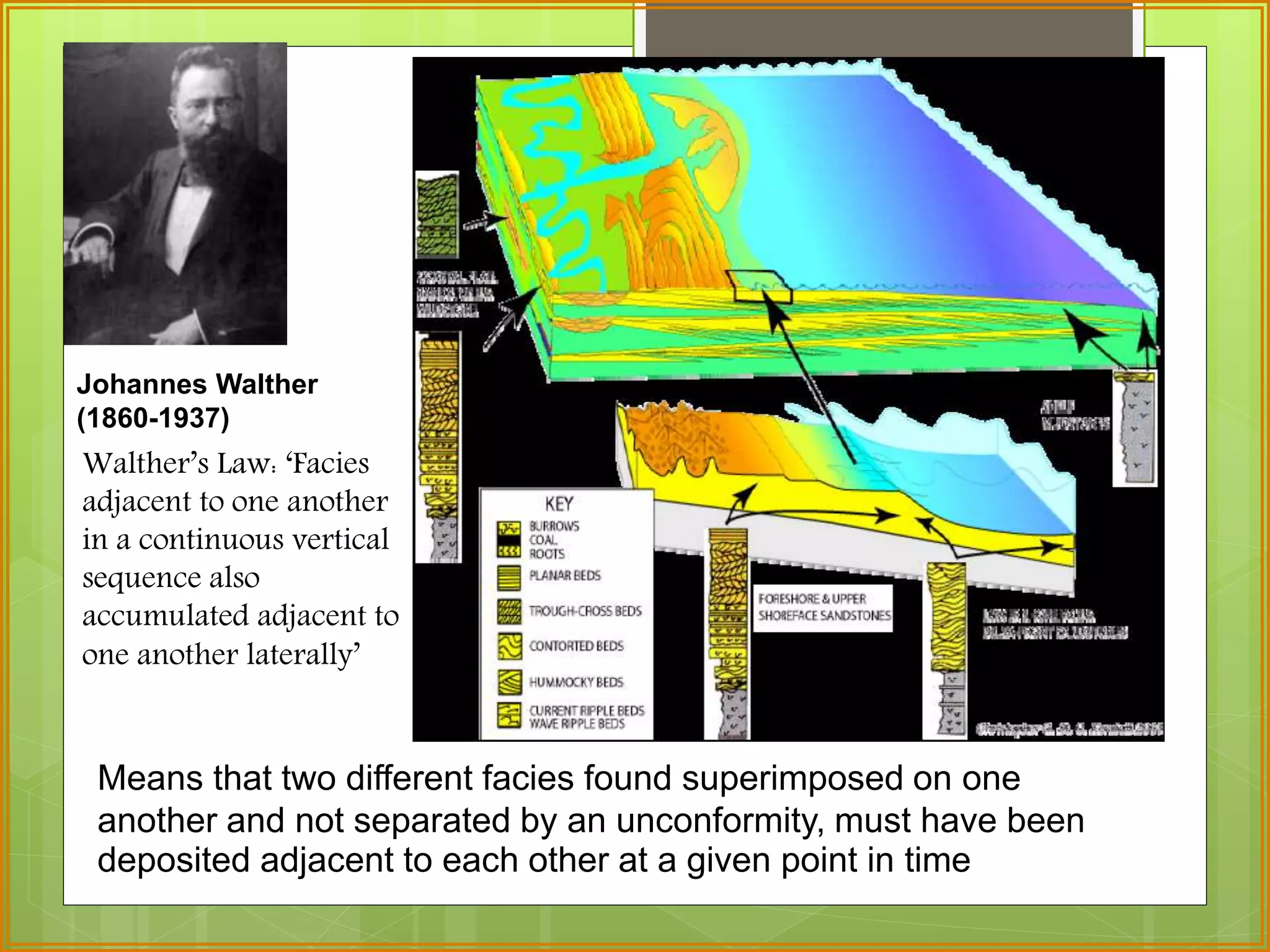
Johannes Walther 
(1860-1937) 
Walther’s Law: ‘Facies 
adjacent to one another 
in a continuous vertical 
sequence also 
accumulated adjacent to 
one another laterally’ 
Means that two different facies found superimposed on one 
another and not separated by an unconformity, must have been 
deposited adjacent to each other at a given point in time
 Generally, facies are distinguished by what aspect of the 
rock or sediment is being studied. 
Lithofacies 
• Facies based on petrological characters such as 
grain size and mineralogy 
Biofacies 
• Facies based on fossil content (flora & fauna) 
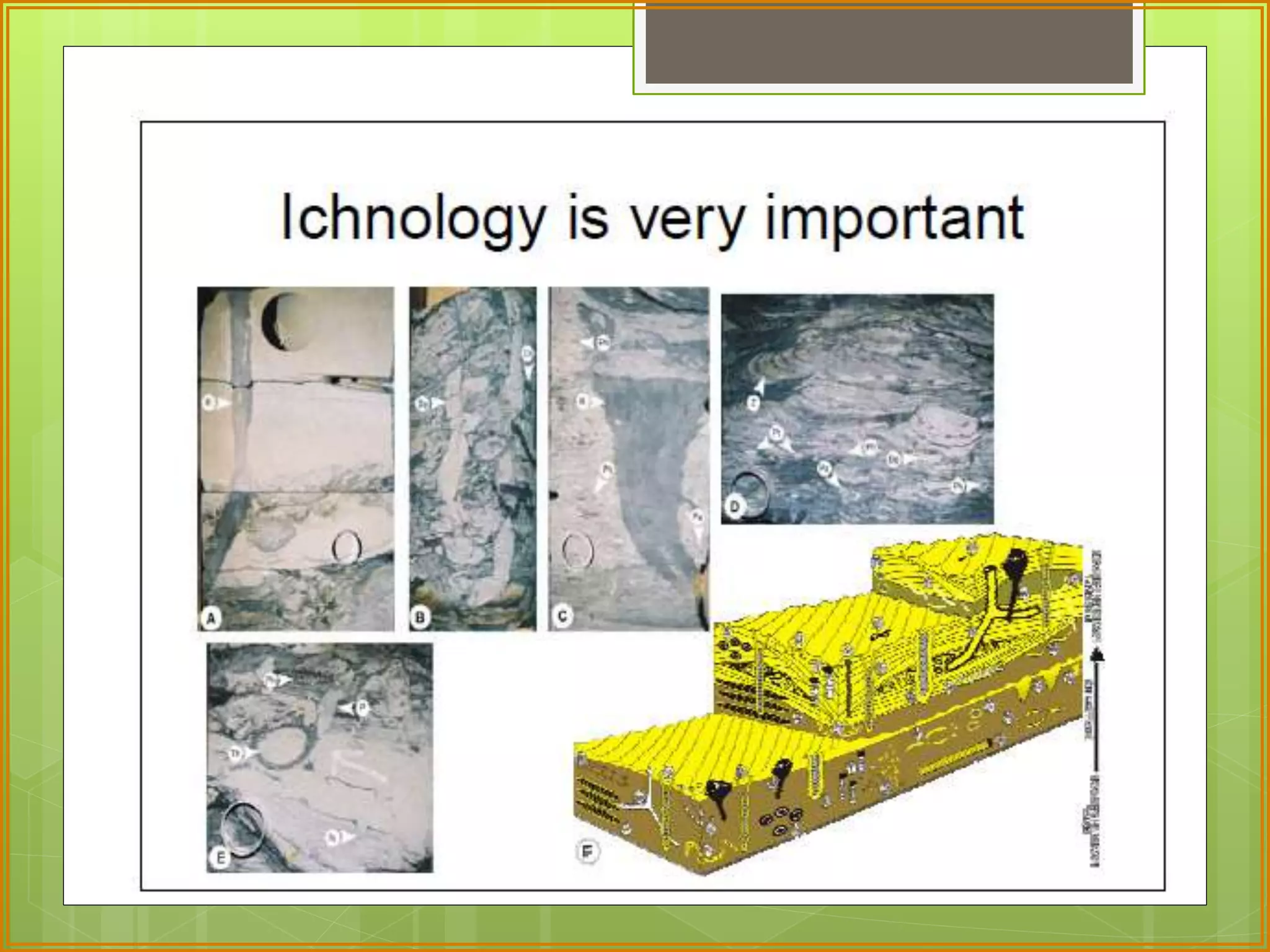
Ichnology 
• Facies based on trace fossil
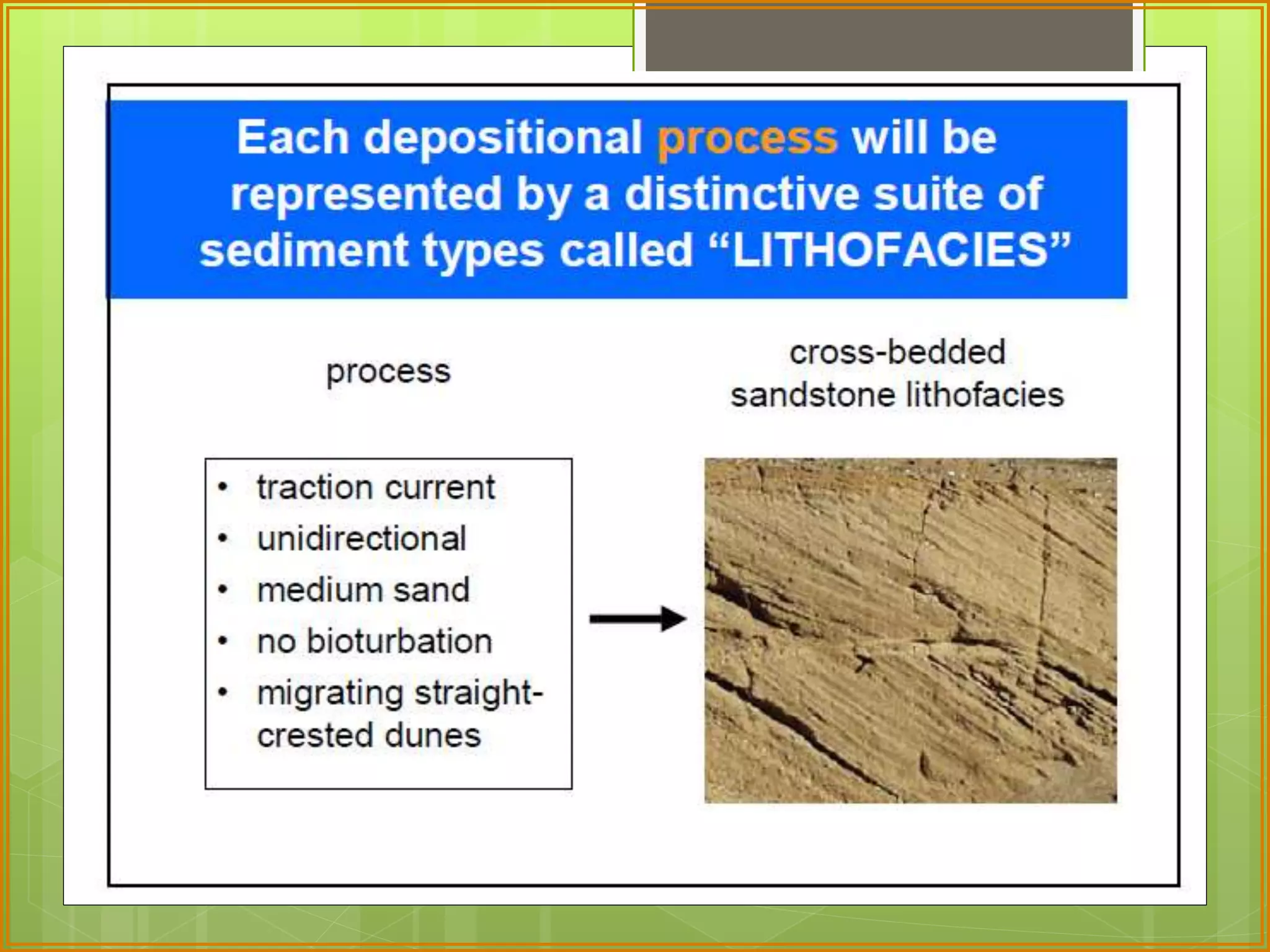
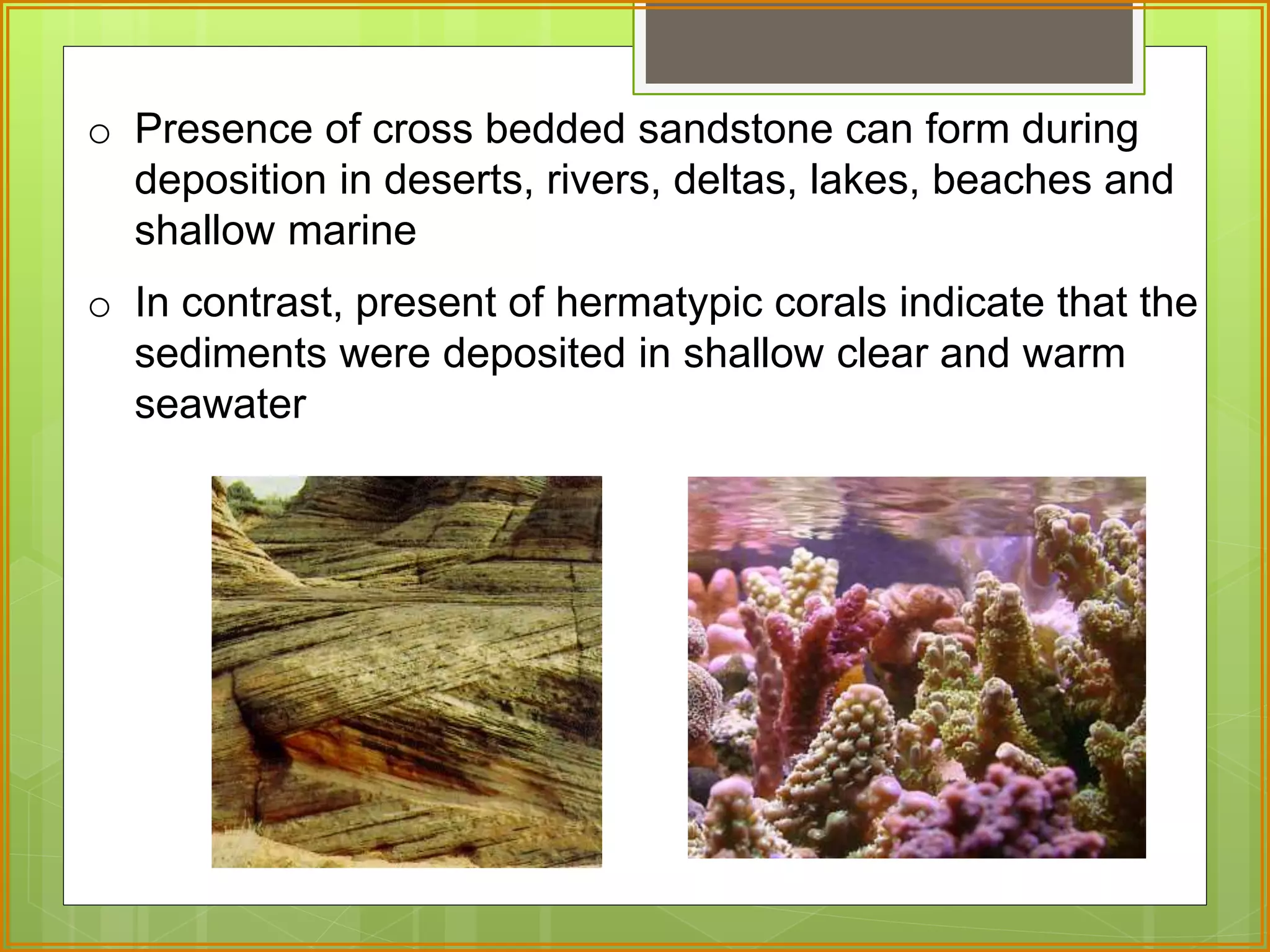
o Presence of cross bedded sandstone can form during 
deposition in deserts, rivers, deltas, lakes, beaches and 
shallow marine 
o In contrast, present of hermatypic corals indicate that the 
sediments were deposited in shallow clear and warm 
seawater
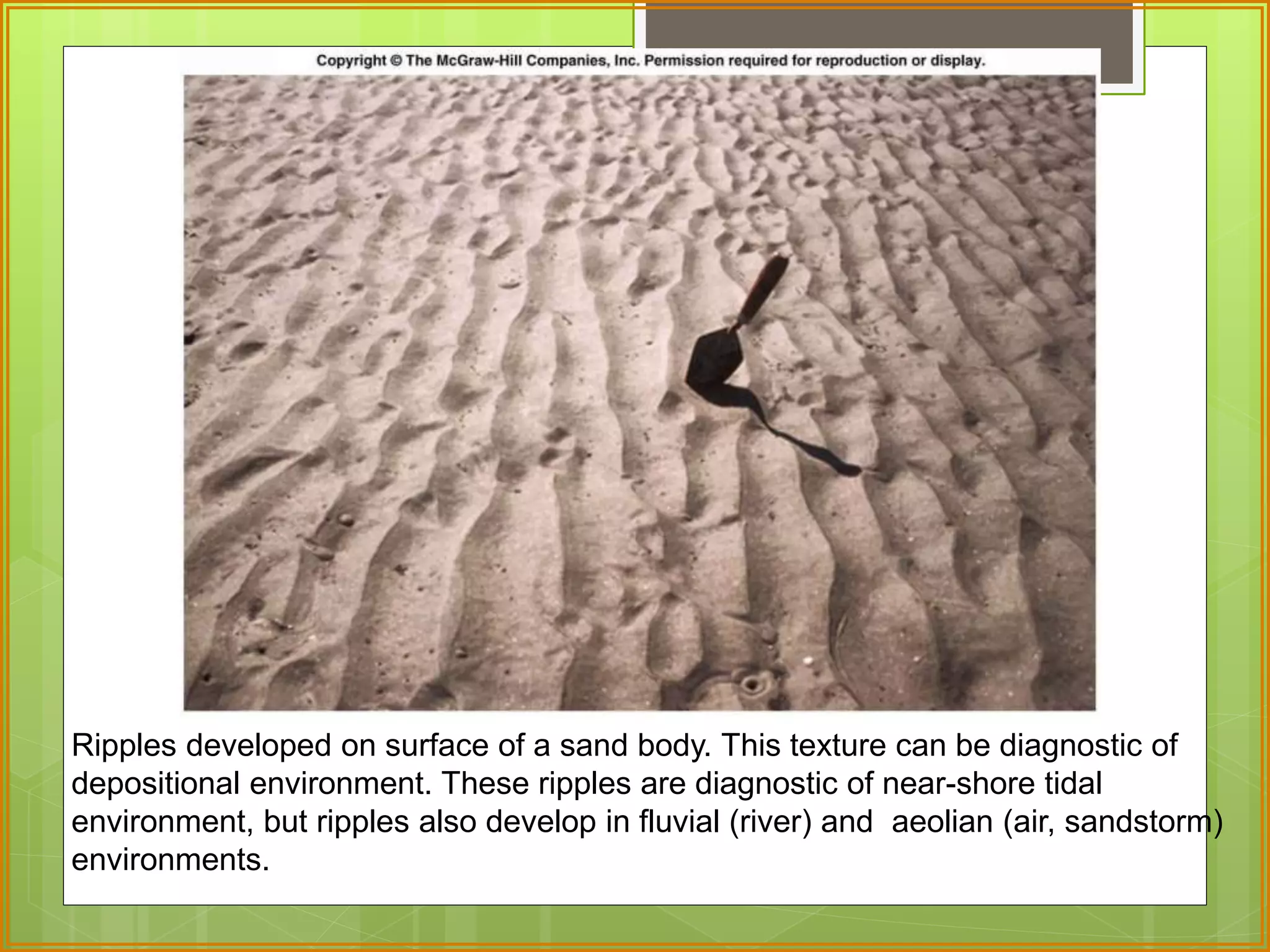
Ripples developed on surface of a sand body. This texture can be diagnostic of 
depositional environment. These ripples are diagnostic of near-shore tidal 
environment, but ripples also develop in fluvial (river) and aeolian (air, sandstorm) 
environments.
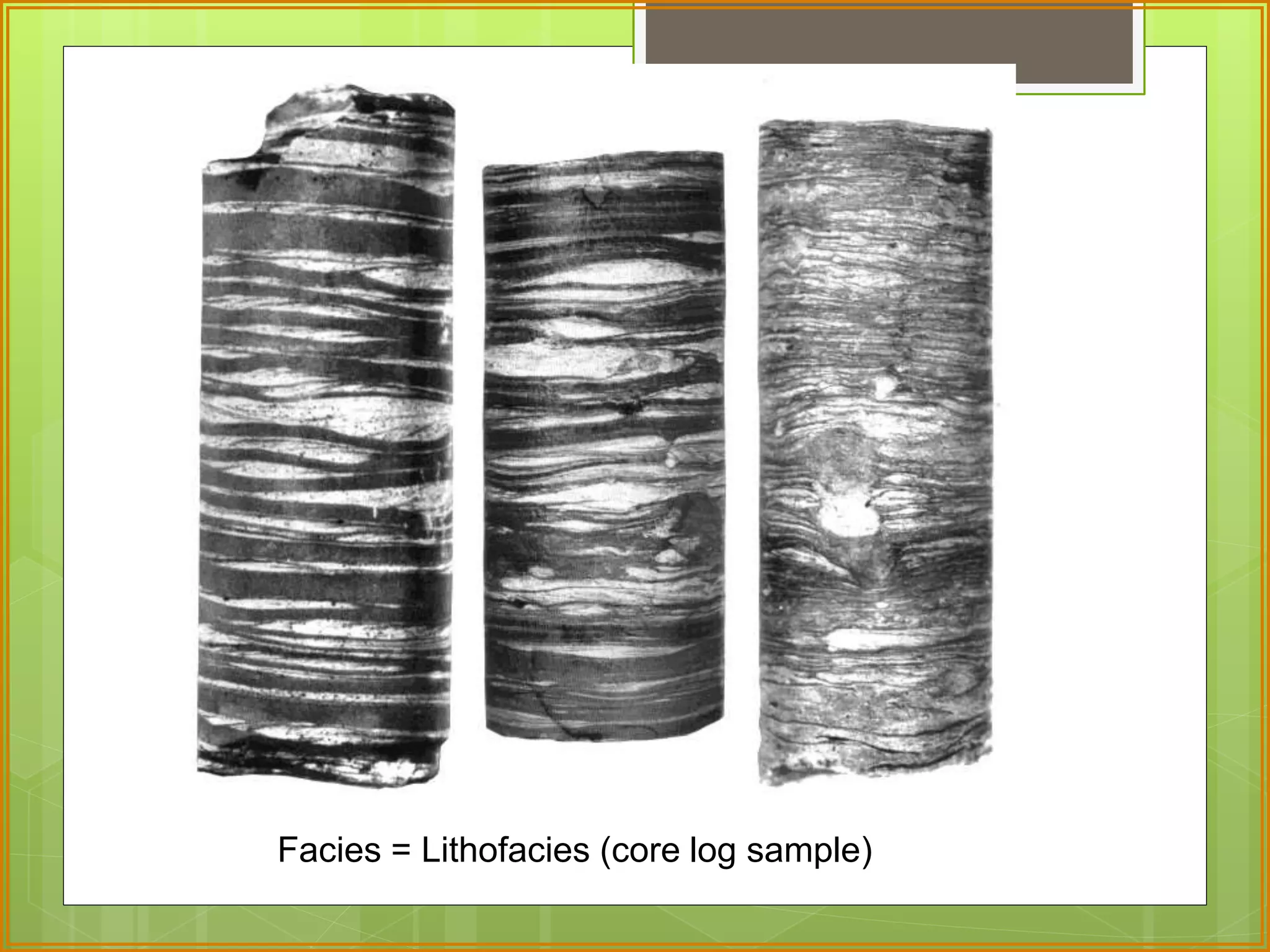
Facies = Lithofacies (core log sample)
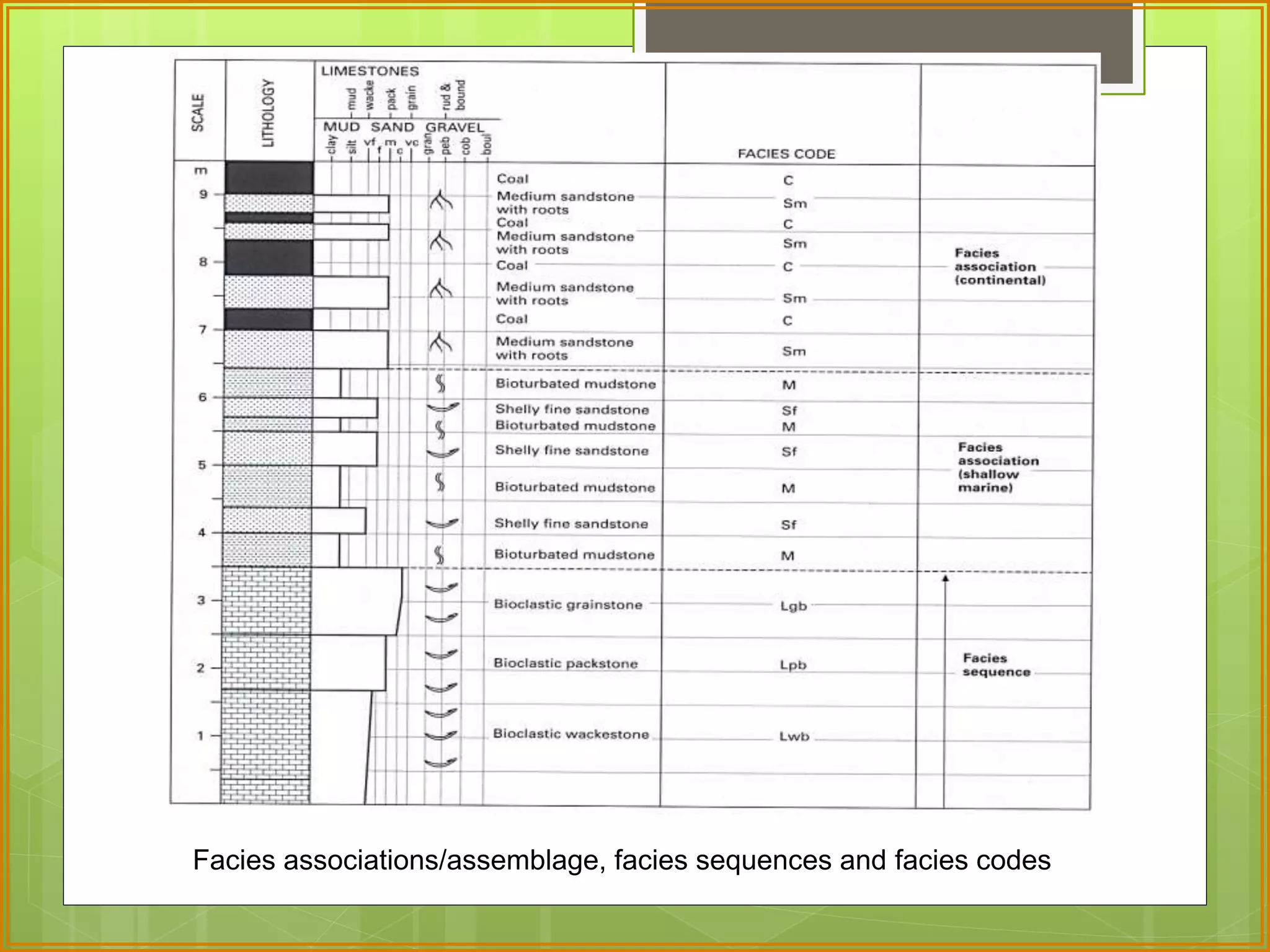
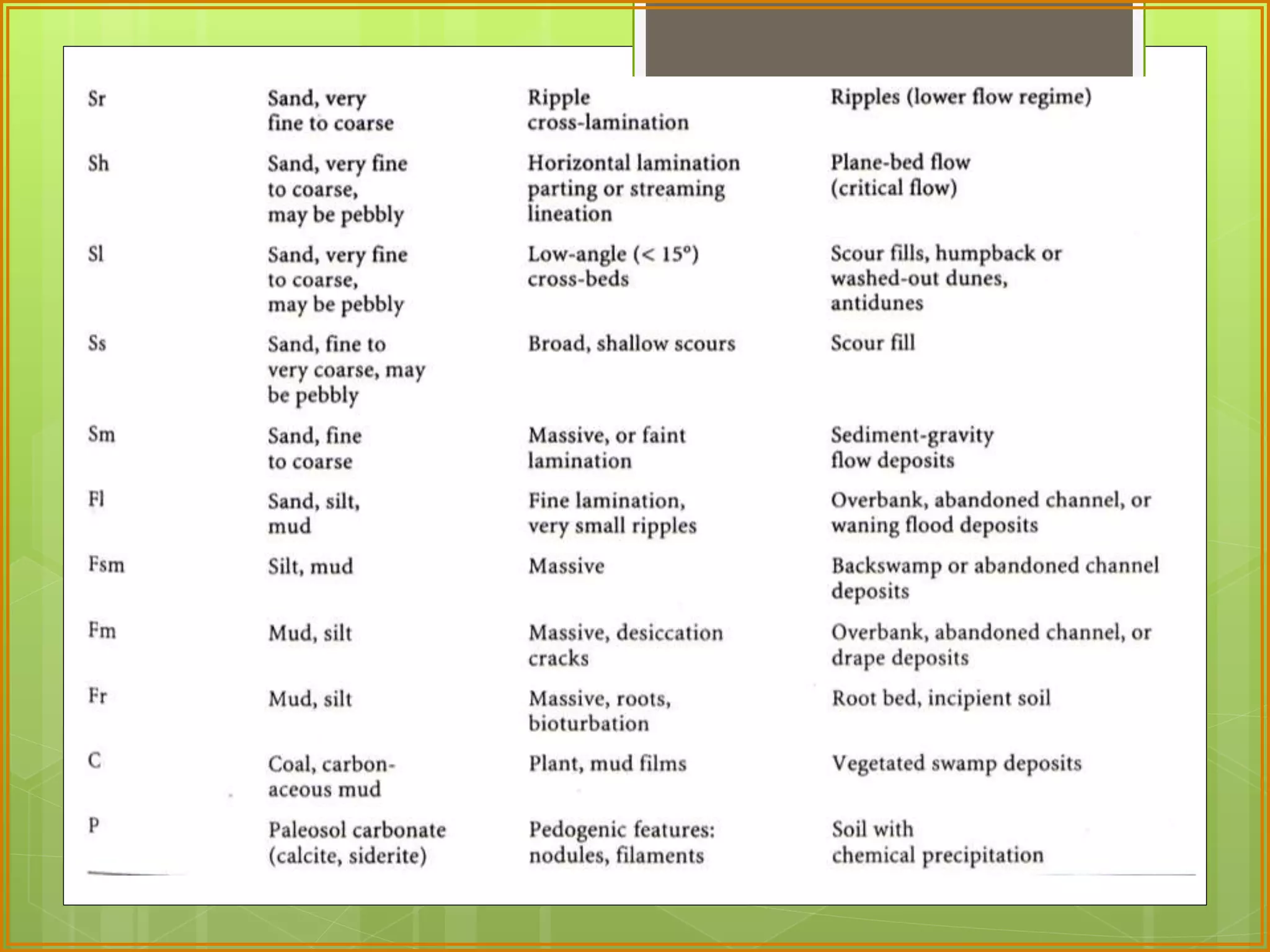
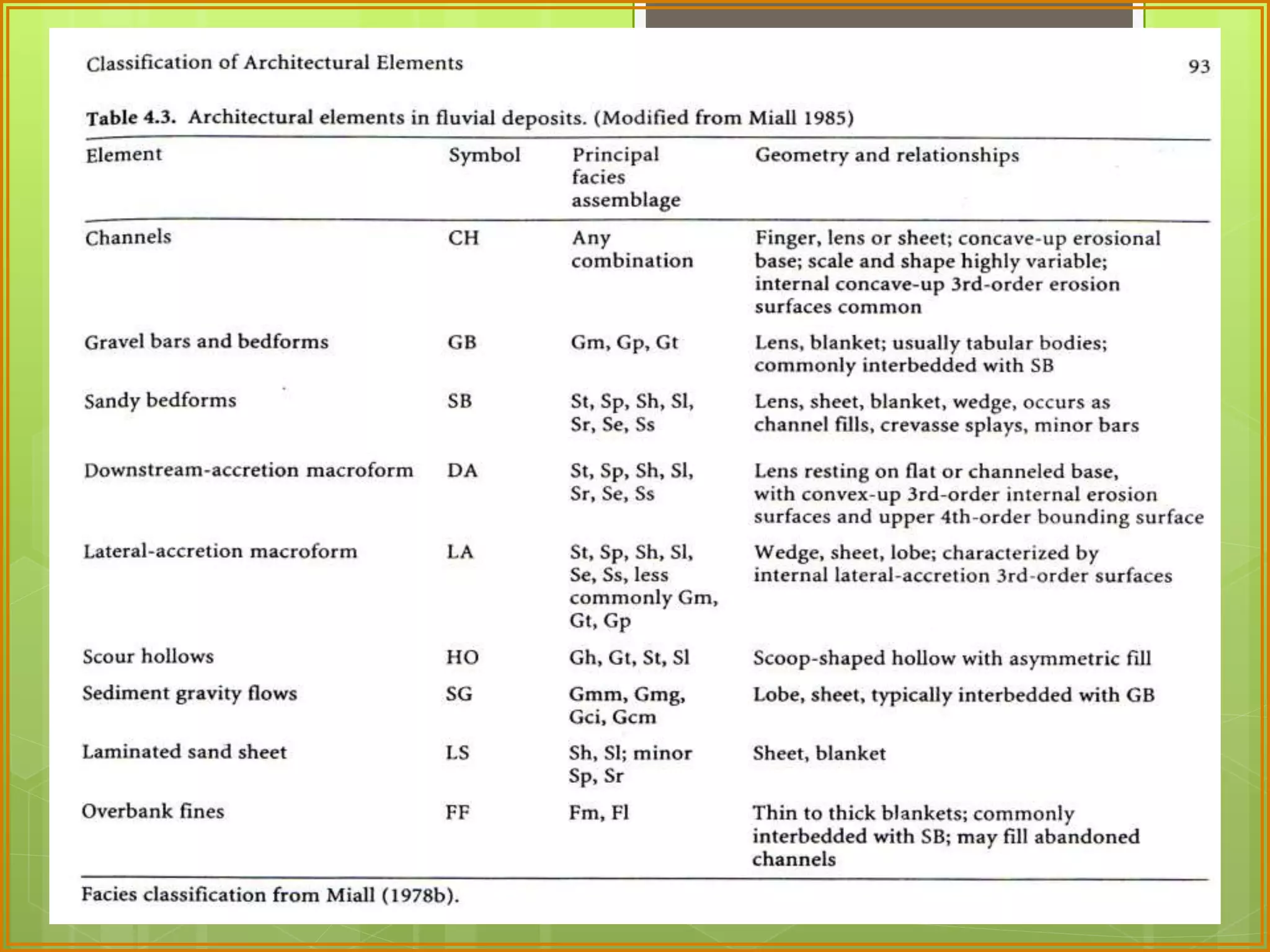
Facies associations/assemblage, facies sequences and facies codes
Facies Association 
(combination few facies)
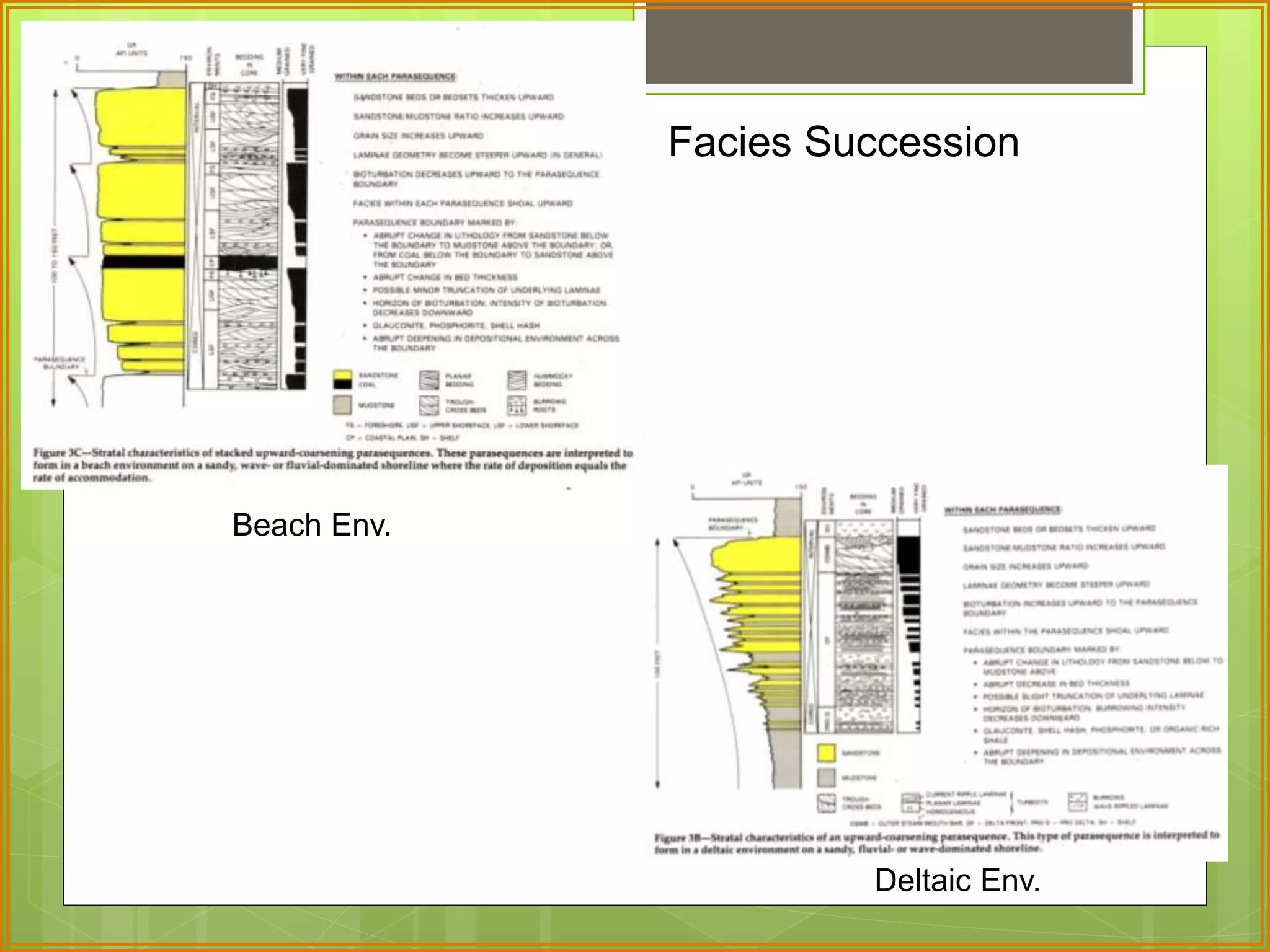
Facies Succession 
(progressive change) 
Beach environment 
Tidal environment
Facies Succession 
Beach Env. 
Deltaic Env.
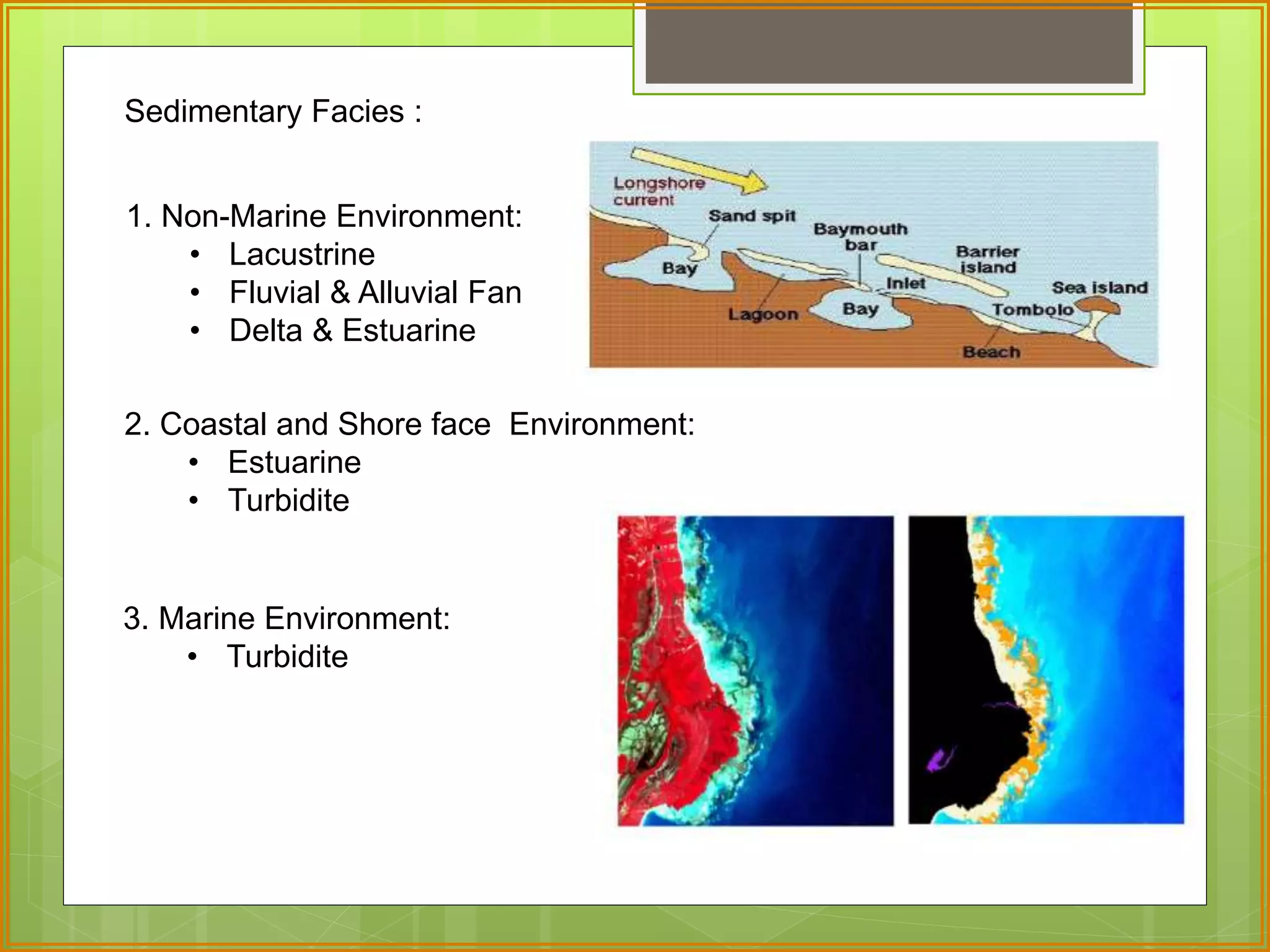
Sedimentary Facies : 
1. Non-Marine Environment: 
• Lacustrine 
• Fluvial & Alluvial Fan 
• Delta & Estuarine 
2. Coastal and Shore face Environment: 
• Estuarine 
• Turbidite 
3. Marine Environment: 
• Turbidite
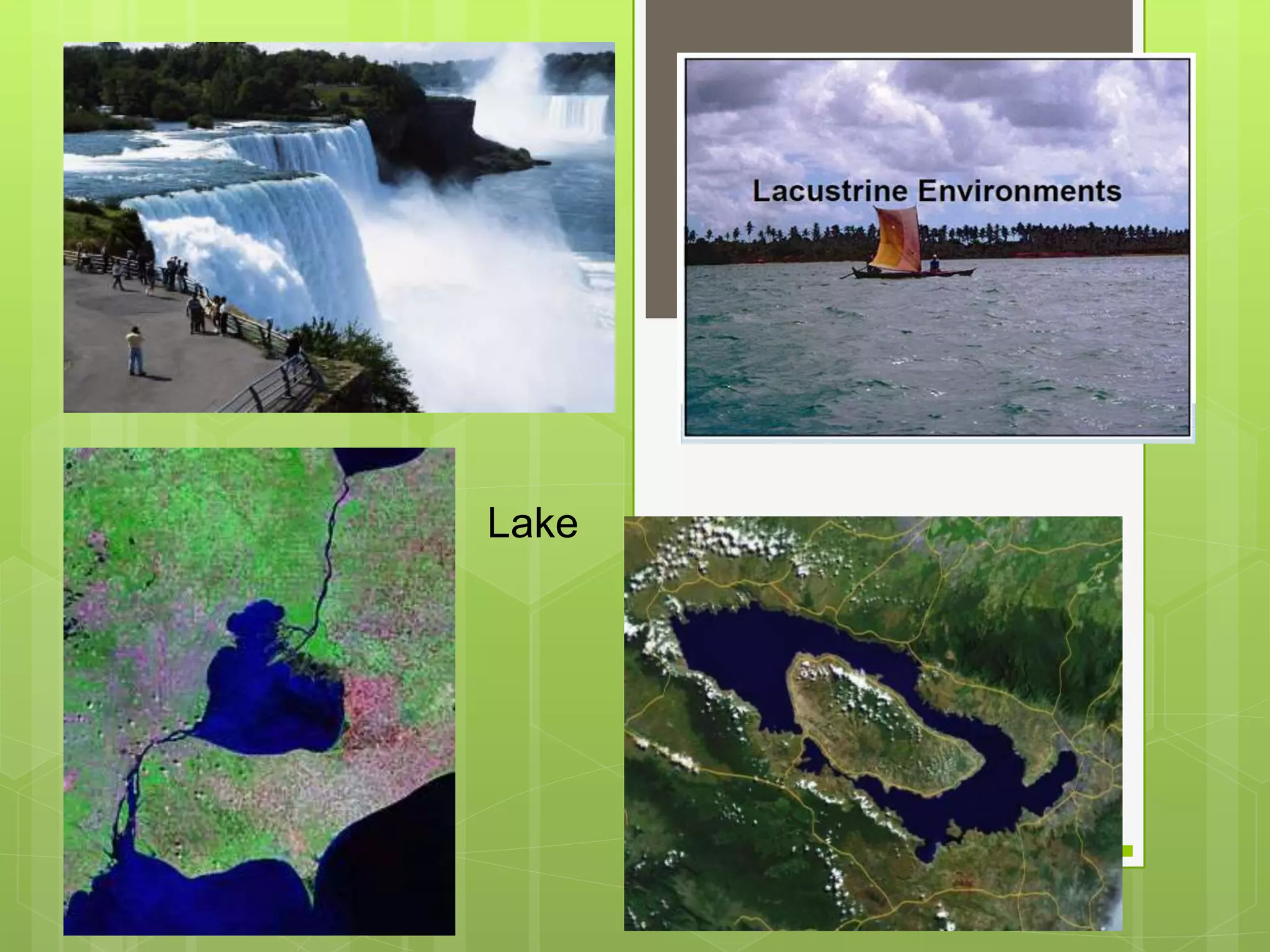
Lake
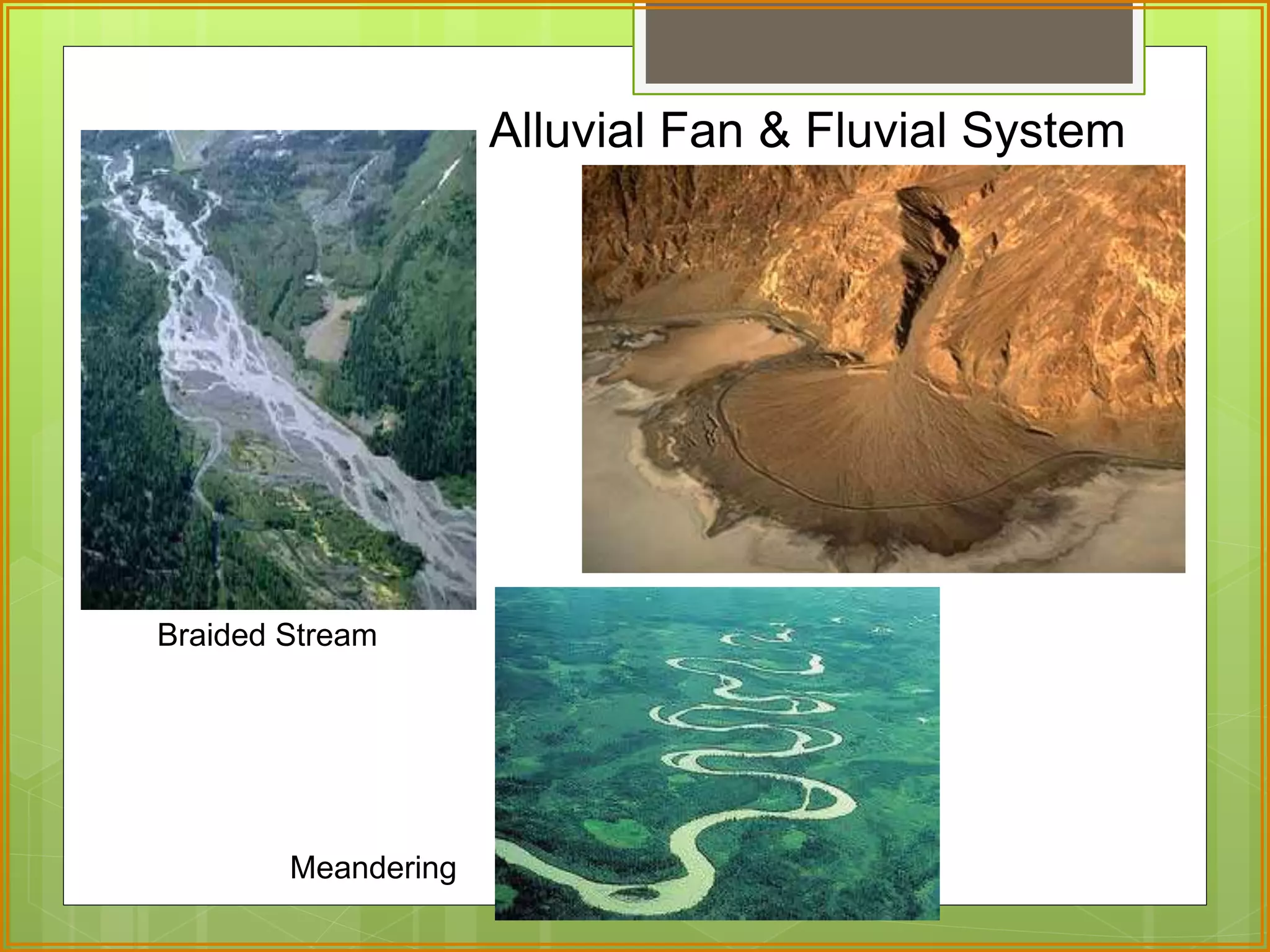
Braided Stream 
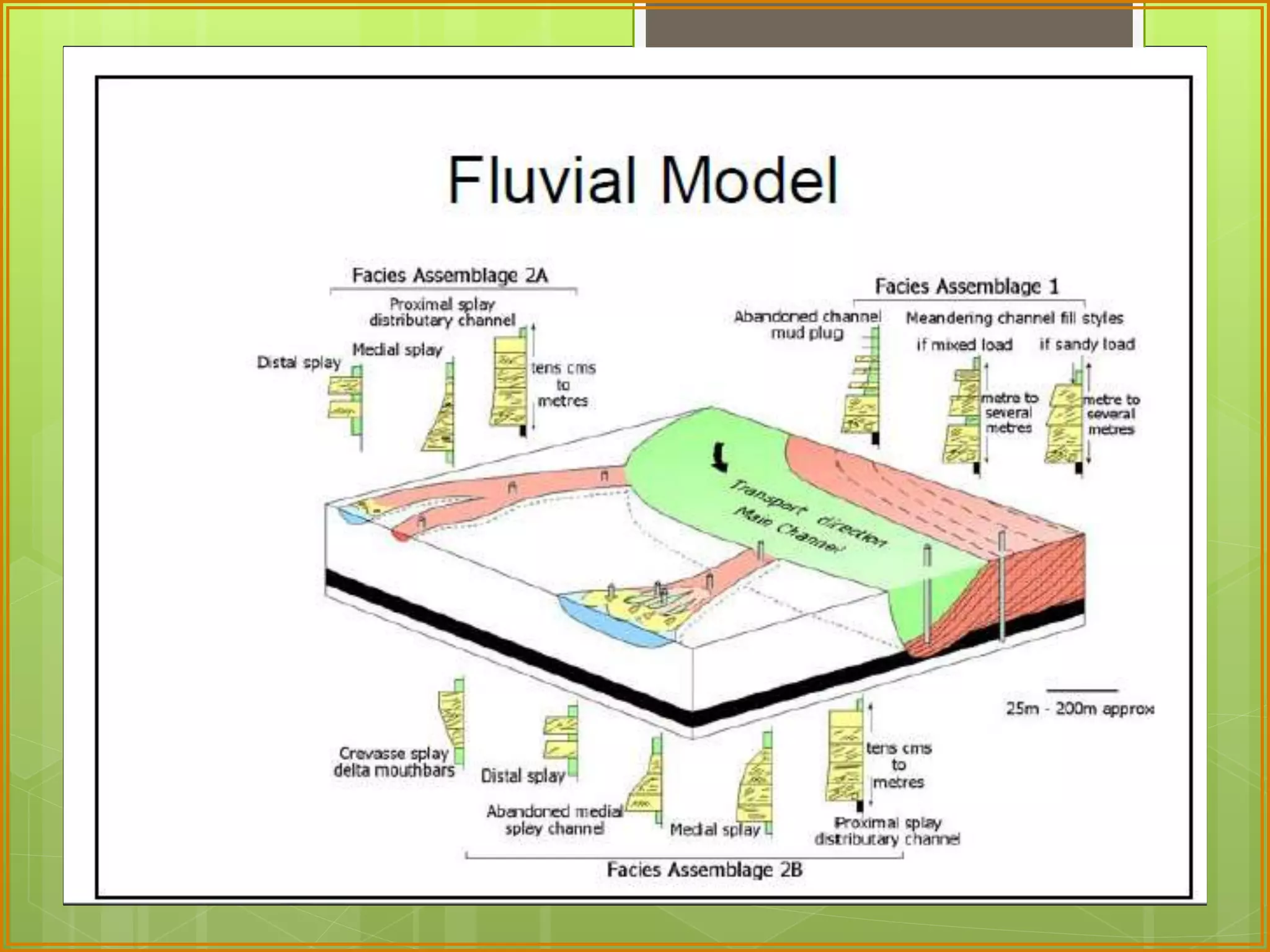
Alluvial Fan & Fluvial System 
Meandering
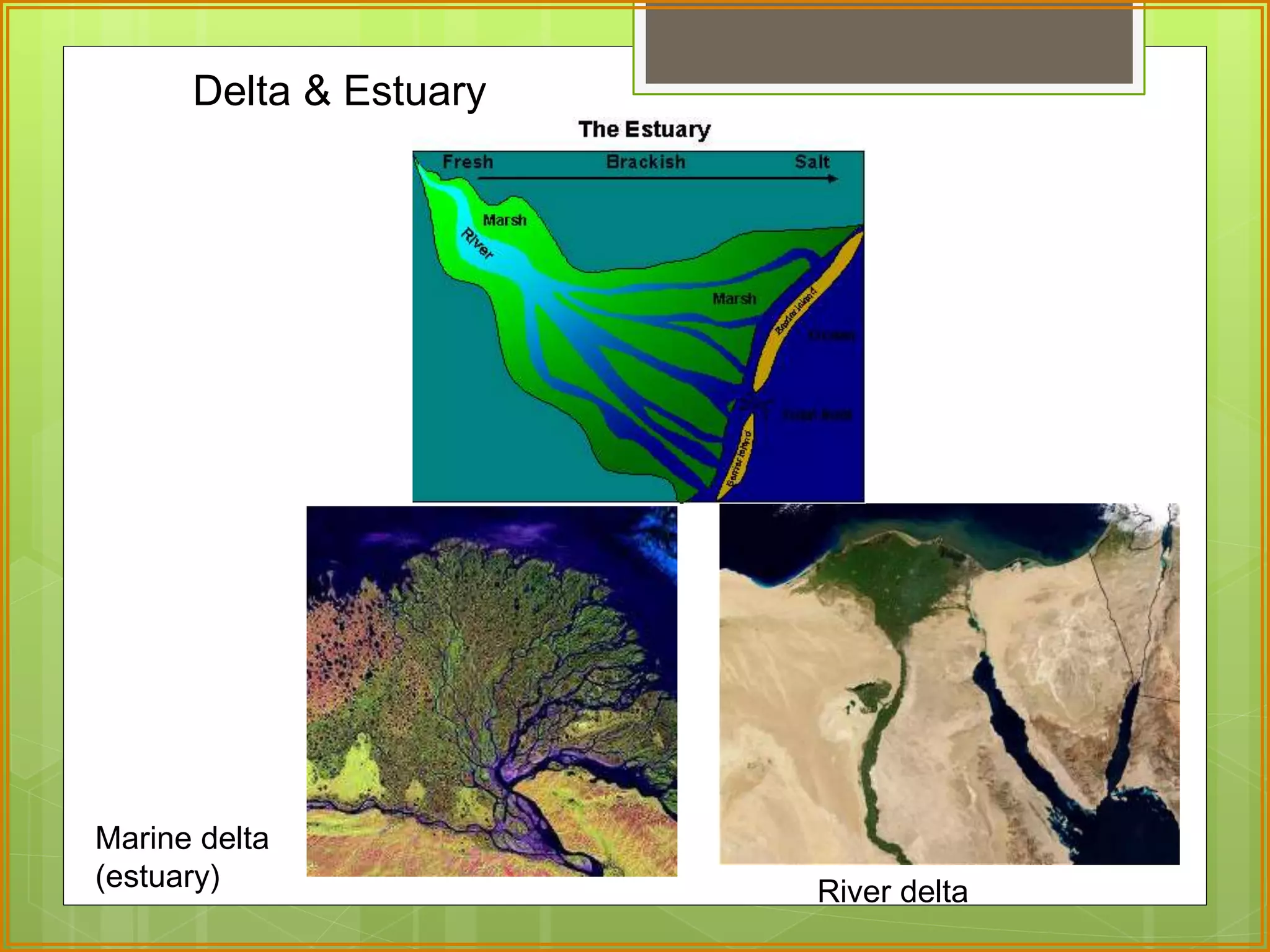
Delta & Estuary 
Marine delta 
(estuary) 
River delta
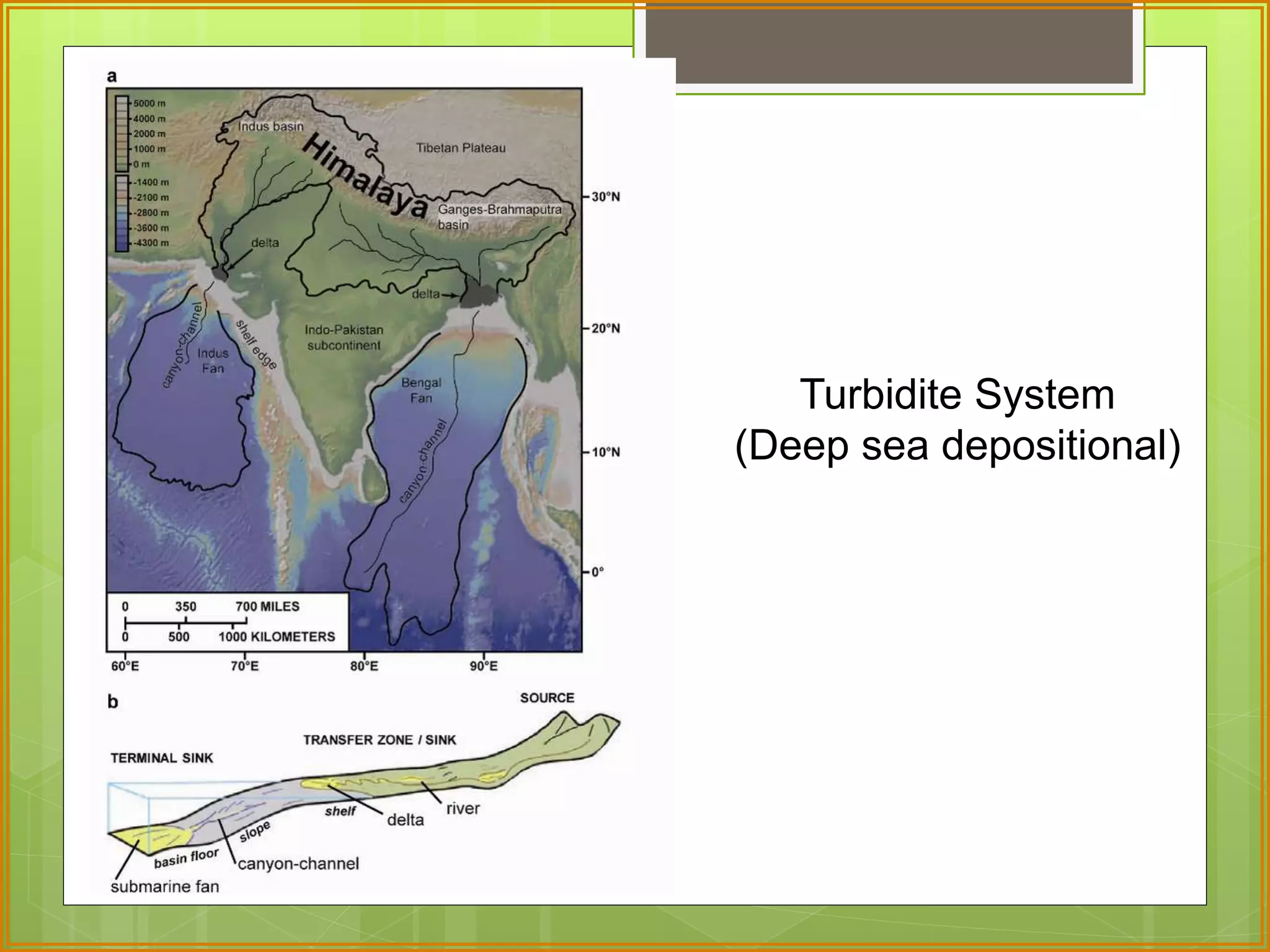
Turbidite System 
(Deep sea depositional)
Facies Concept

Facies Concept

  • 1.
  • 2.
    Definition Facies isa body of rock characterized by a particular combination of lithology, physical and biological structures that bestow an aspect that different from the bodies of rock above, below and laterally adjacent The facies concept refers to the sum of characteristics of a sedimentary unit, commonly at a fairly small (cm-m) scale including:  Lithology  Grain size  Sedimentary structures  Color  Composition  Biogenic content
  • 4.
    Facies associations/assemblage : o constitute several facies that occur in combination, and typically represent one depositional environment (note that very few individual facies are diagnostic for one specific setting) o groups of facies genetically related to one another and which have some environmental significance (Collinson, 1969) Facies successions:  a progressive change in certain facies properties in a specific direction (vertically or laterally).
  • 5.
    o Facies analysisis the interpretation of strata in terms of depositional environments (or depositional systems), commonly based on a wide variety of observations o Facies Model is a general summary of a particular depositional system, involving many individual examples from recent sediments and ancient rocks
  • 6.
    Why do weneed to understand the deposits of differing environments?  Sedimentary & geological history (small-large scale)  Economic importance -e.g. hydrocarbons, water  Economic importance -minerals and metals (e.g. gold-diamonds- gypsum-aggregates)  Prediction/management of contemporary environments
  • 8.
    Every depositional environmentputs its own distinctive imprint on the sediment, making a particular facies. Thus, a facies is a distinct kind of rock for that area or environment. Sandstone facies (beach/shallow marine environment) Shale facies (offshore marine environment) Limestone facies (far from sources of terrigenous input/ deep sea)
  • 9.
    Johannes Walther (1860-1937) Walther’s Law: ‘Facies adjacent to one another in a continuous vertical sequence also accumulated adjacent to one another laterally’ Means that two different facies found superimposed on one another and not separated by an unconformity, must have been deposited adjacent to each other at a given point in time
  • 10.
     Generally, faciesare distinguished by what aspect of the rock or sediment is being studied. Lithofacies • Facies based on petrological characters such as grain size and mineralogy Biofacies • Facies based on fossil content (flora & fauna) Ichnology • Facies based on trace fossil
  • 11.
    o Presence ofcross bedded sandstone can form during deposition in deserts, rivers, deltas, lakes, beaches and shallow marine o In contrast, present of hermatypic corals indicate that the sediments were deposited in shallow clear and warm seawater
  • 12.
    Ripples developed onsurface of a sand body. This texture can be diagnostic of depositional environment. These ripples are diagnostic of near-shore tidal environment, but ripples also develop in fluvial (river) and aeolian (air, sandstorm) environments.
  • 13.
    Facies = Lithofacies(core log sample)
  • 15.
    Facies associations/assemblage, faciessequences and facies codes
  • 19.
  • 20.
    Facies Succession (progressivechange) Beach environment Tidal environment
  • 21.
    Facies Succession BeachEnv. Deltaic Env.
  • 23.
    Sedimentary Facies : 1. Non-Marine Environment: • Lacustrine • Fluvial & Alluvial Fan • Delta & Estuarine 2. Coastal and Shore face Environment: • Estuarine • Turbidite 3. Marine Environment: • Turbidite
  • 24.
  • 25.
    Braided Stream AlluvialFan & Fluvial System Meandering
  • 26.
    Delta & Estuary Marine delta (estuary) River delta
  • 27.
    Turbidite System (Deepsea depositional)