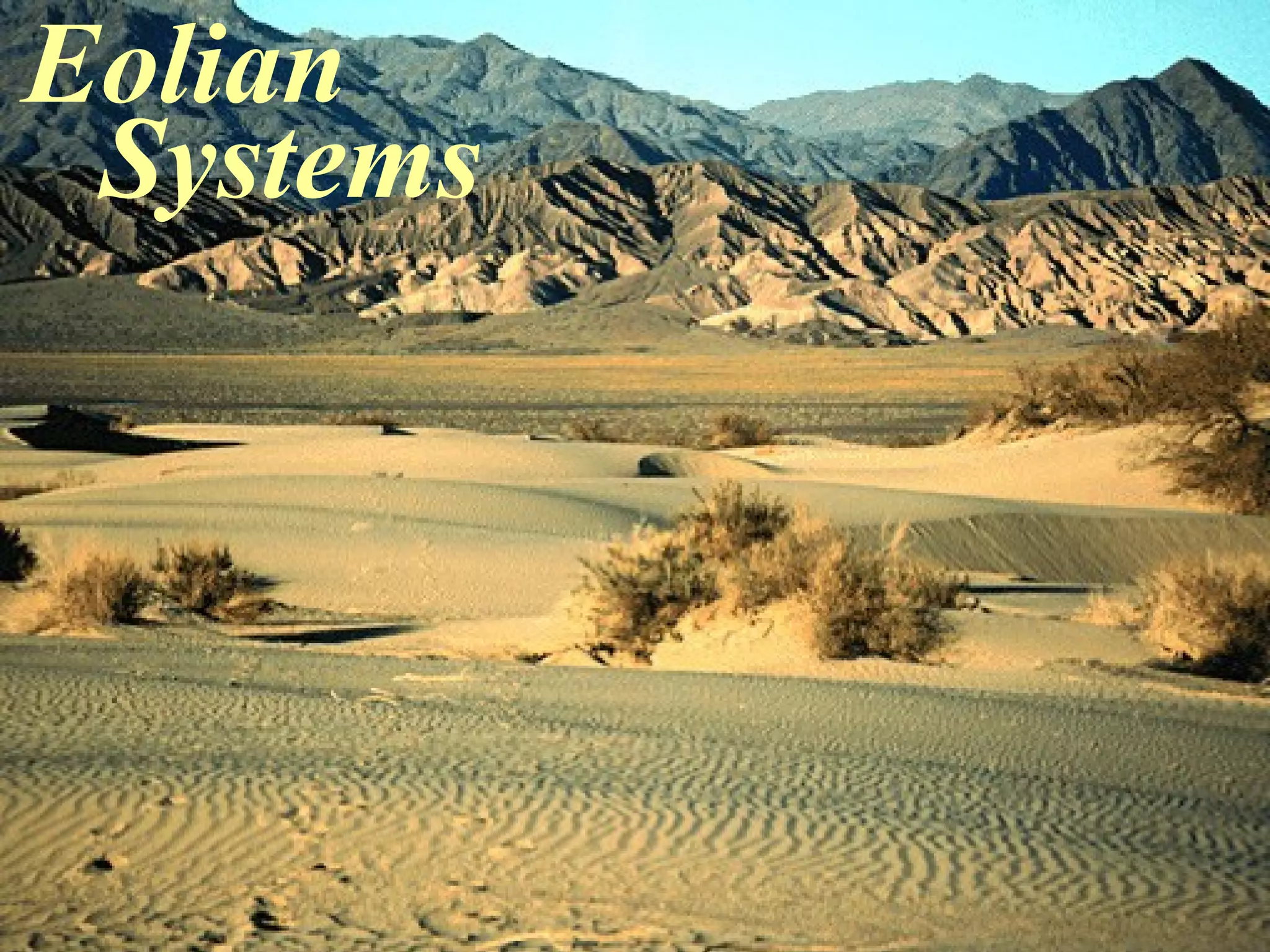
Eolian
Systems
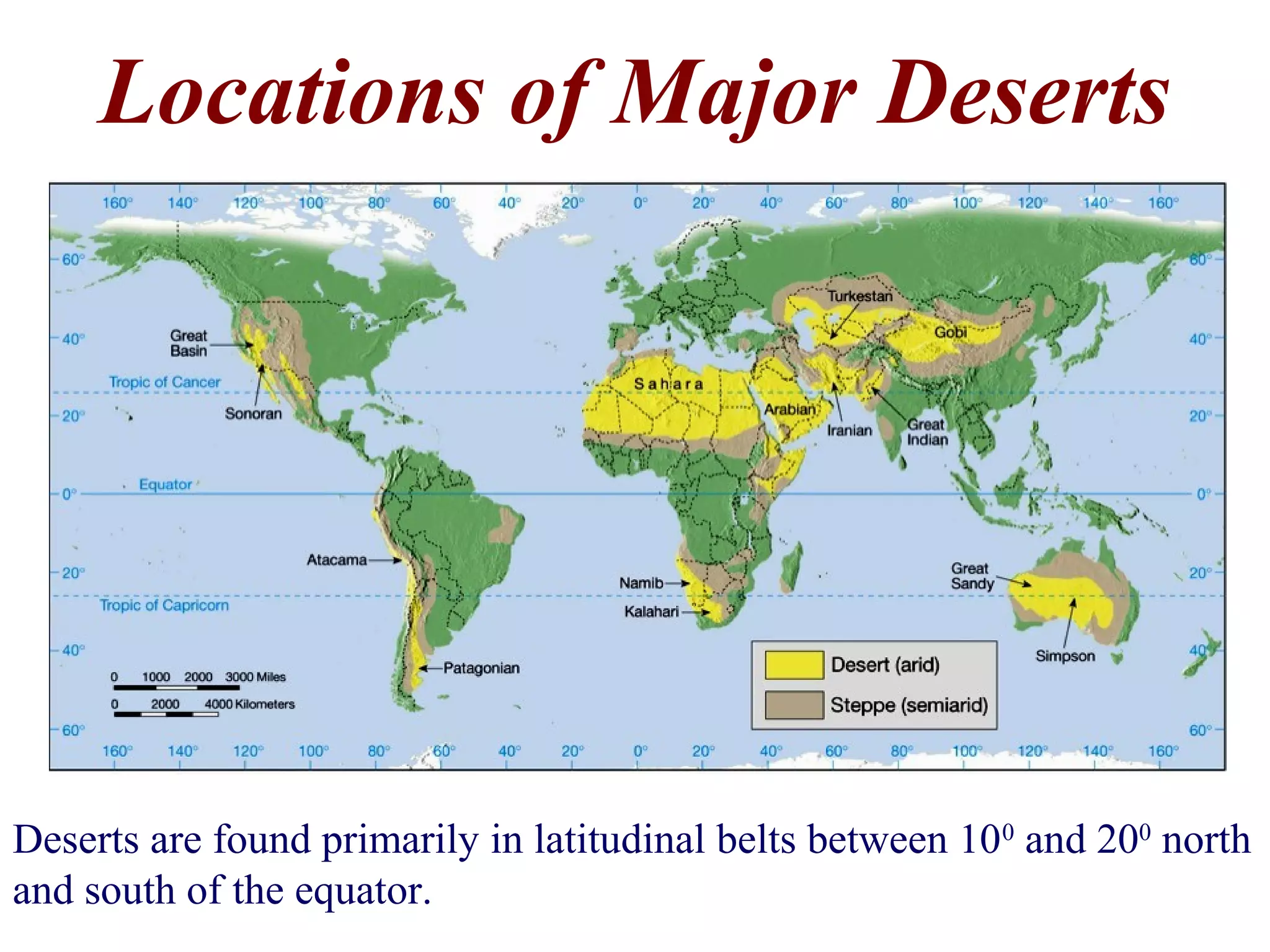
Locations of Major Deserts
Deserts are found primarily in latitudinal belts between 100
and 200
north
and south of the equator.
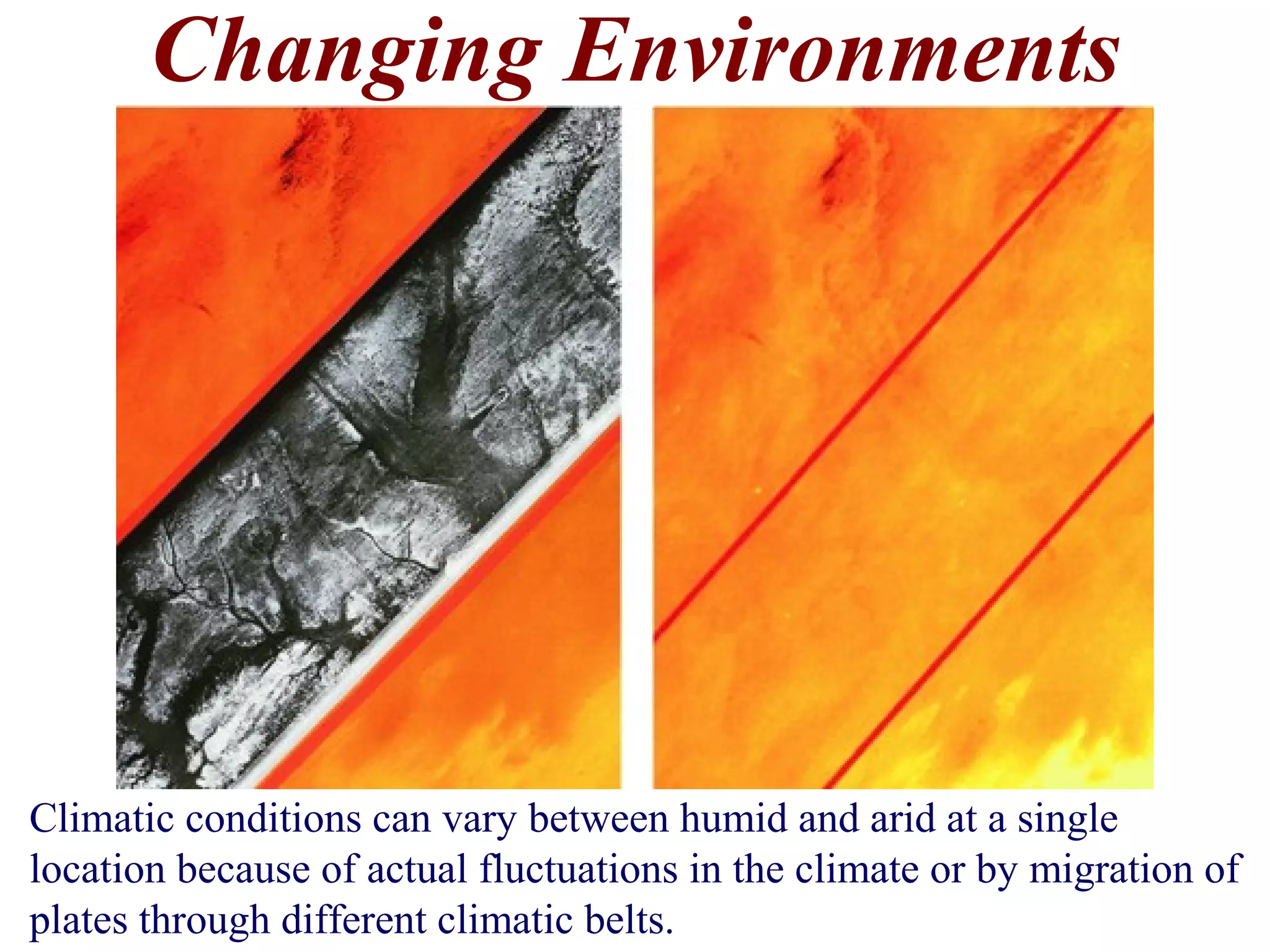
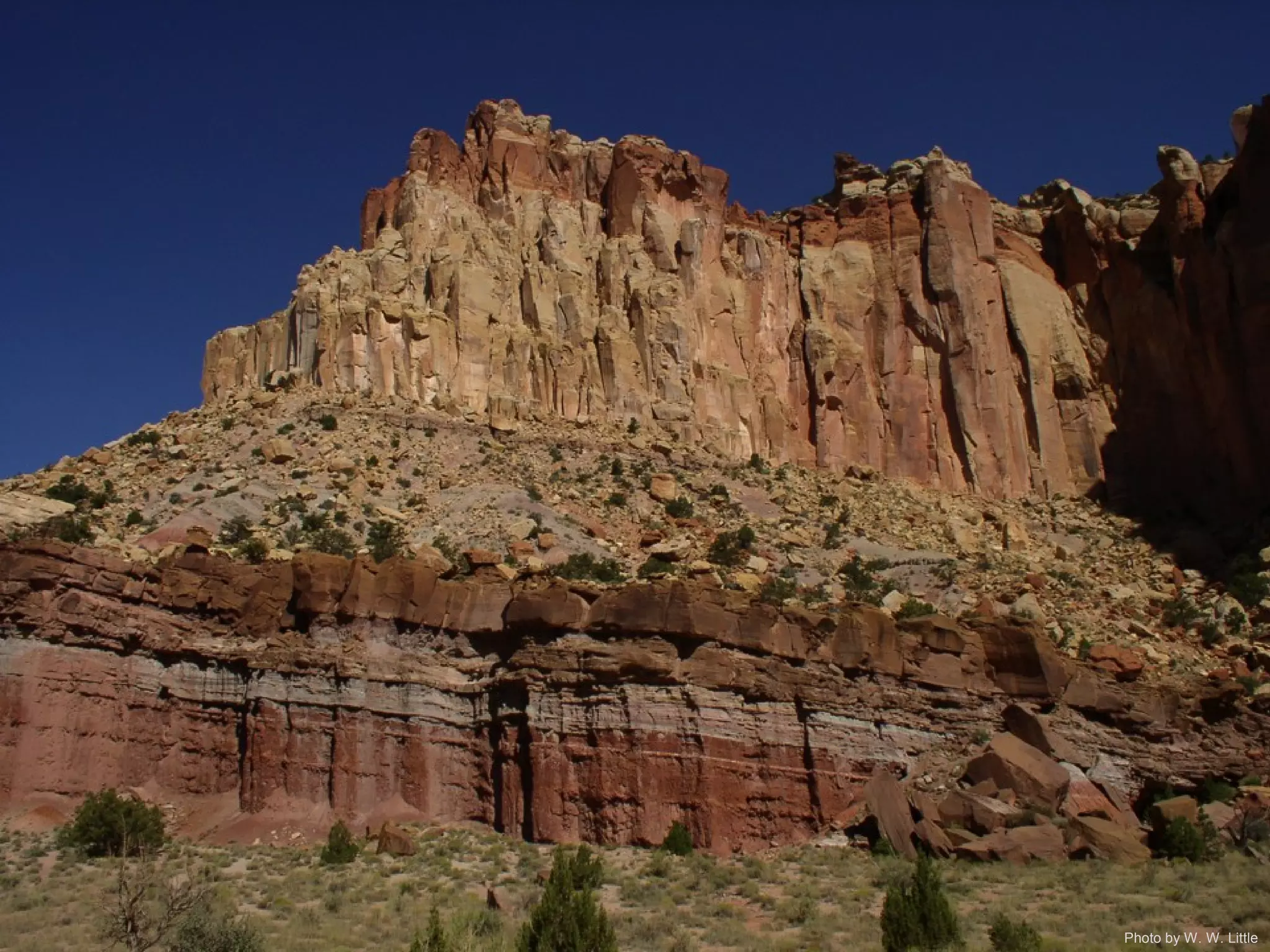
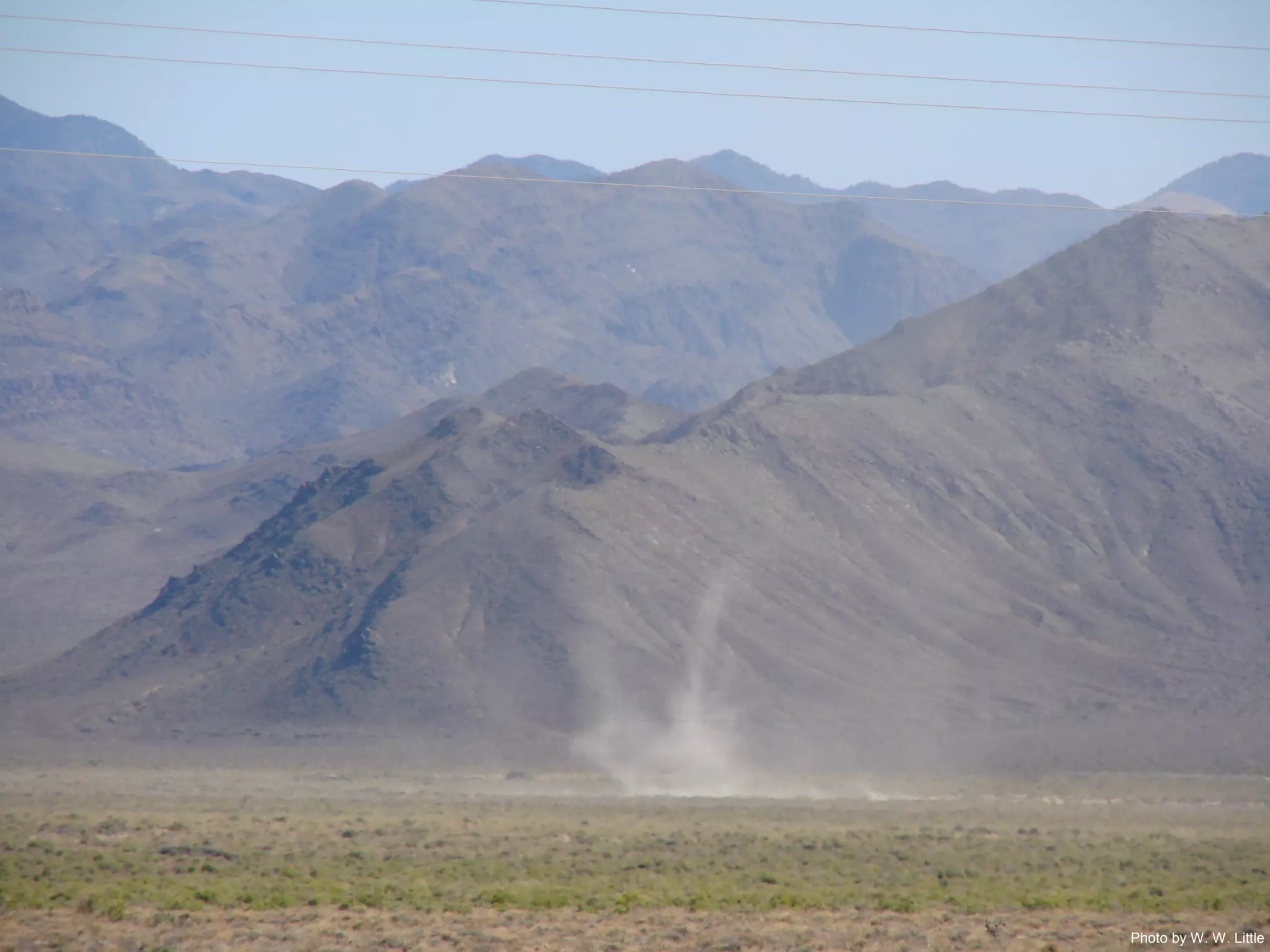
Changing Environments
Climatic conditions can vary between humid and arid at a single
location because of actual fluctuations in the climate or by migration of
plates through different climatic belts.
Photo by W. W. Little
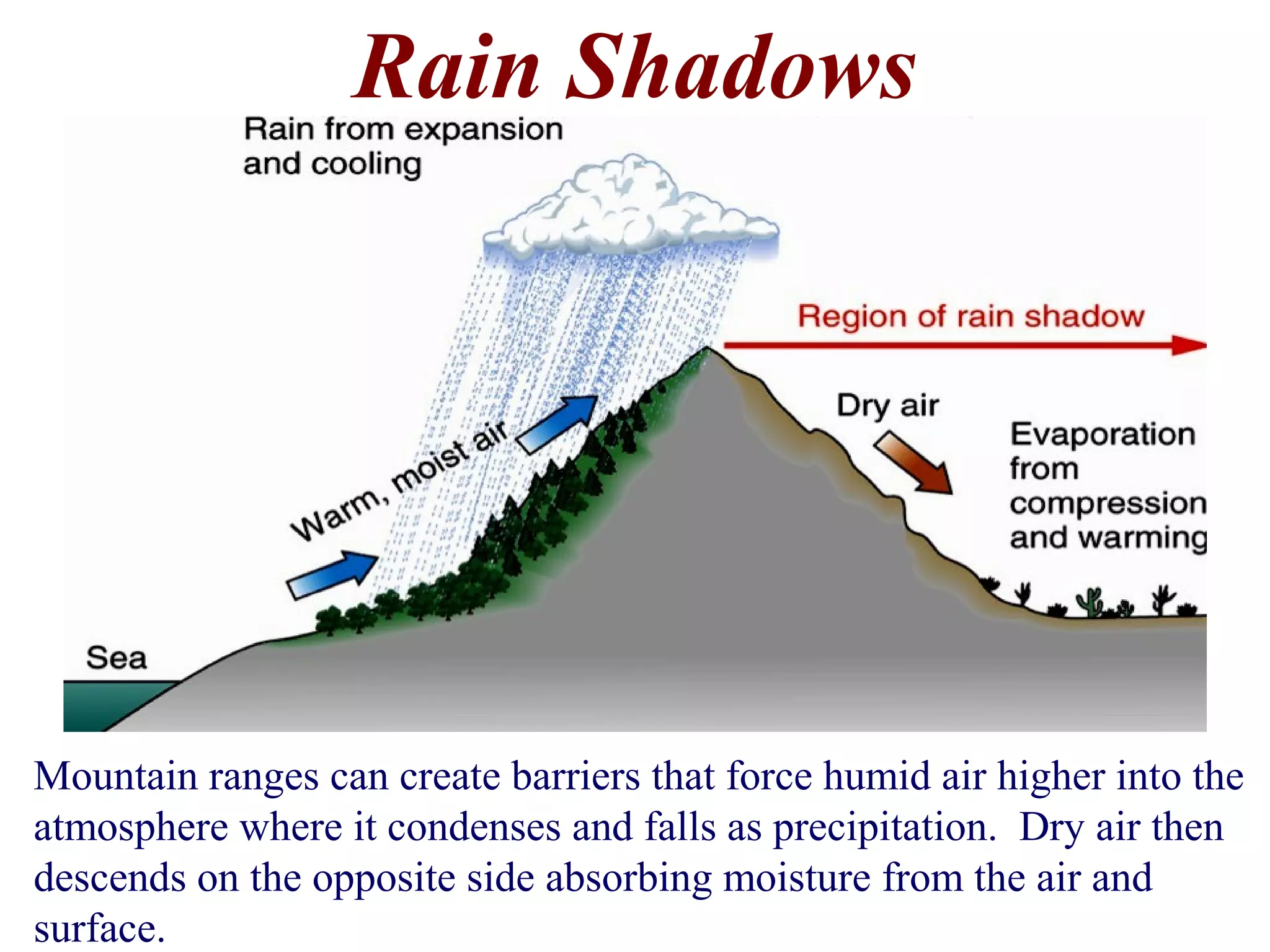
Rain Shadows
Mountain ranges can create barriers that force humid air higher into the
atmosphere where it condenses and falls as precipitation. Dry air then
descends on the opposite side absorbing moisture from the air and
surface.
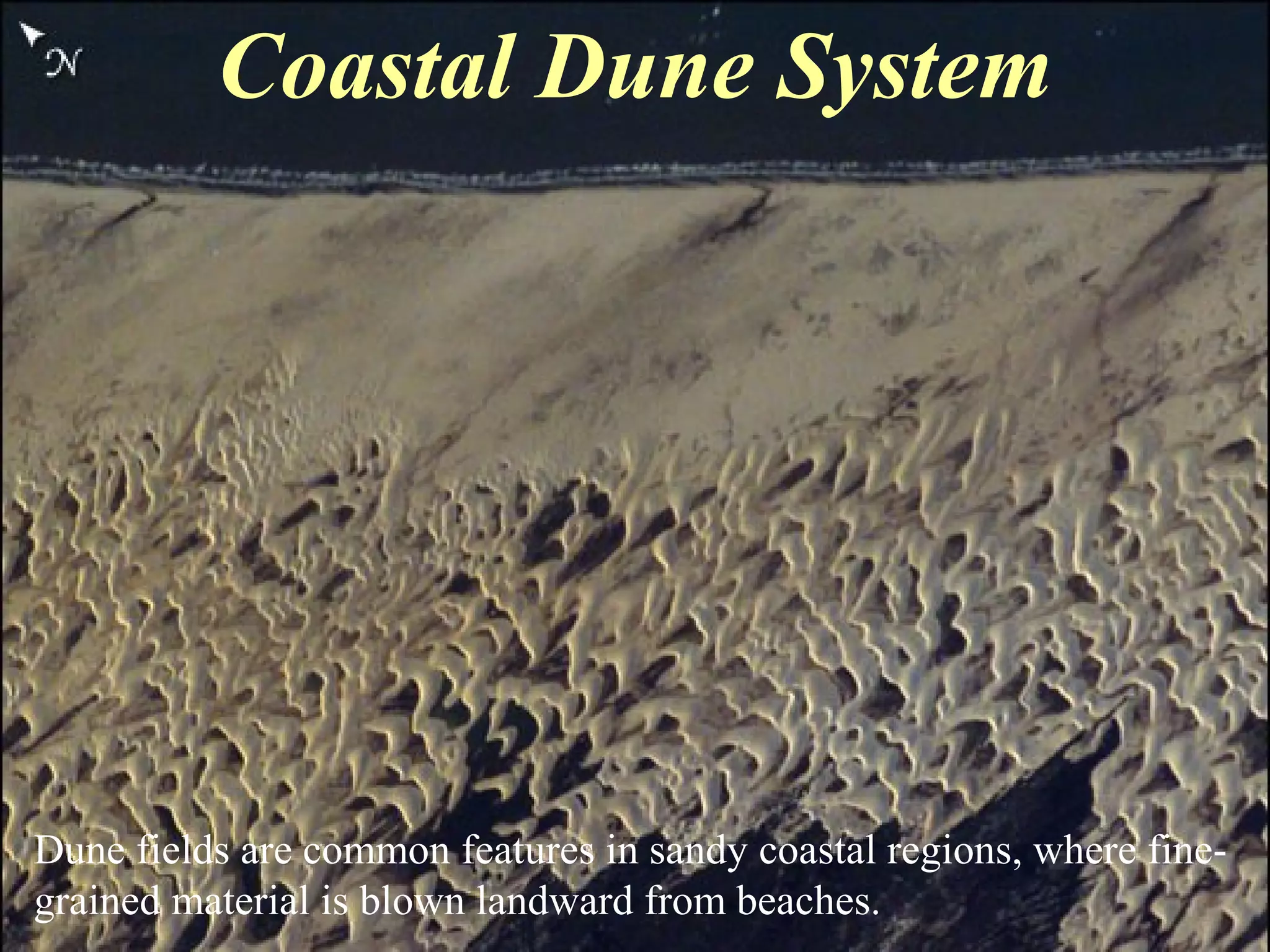
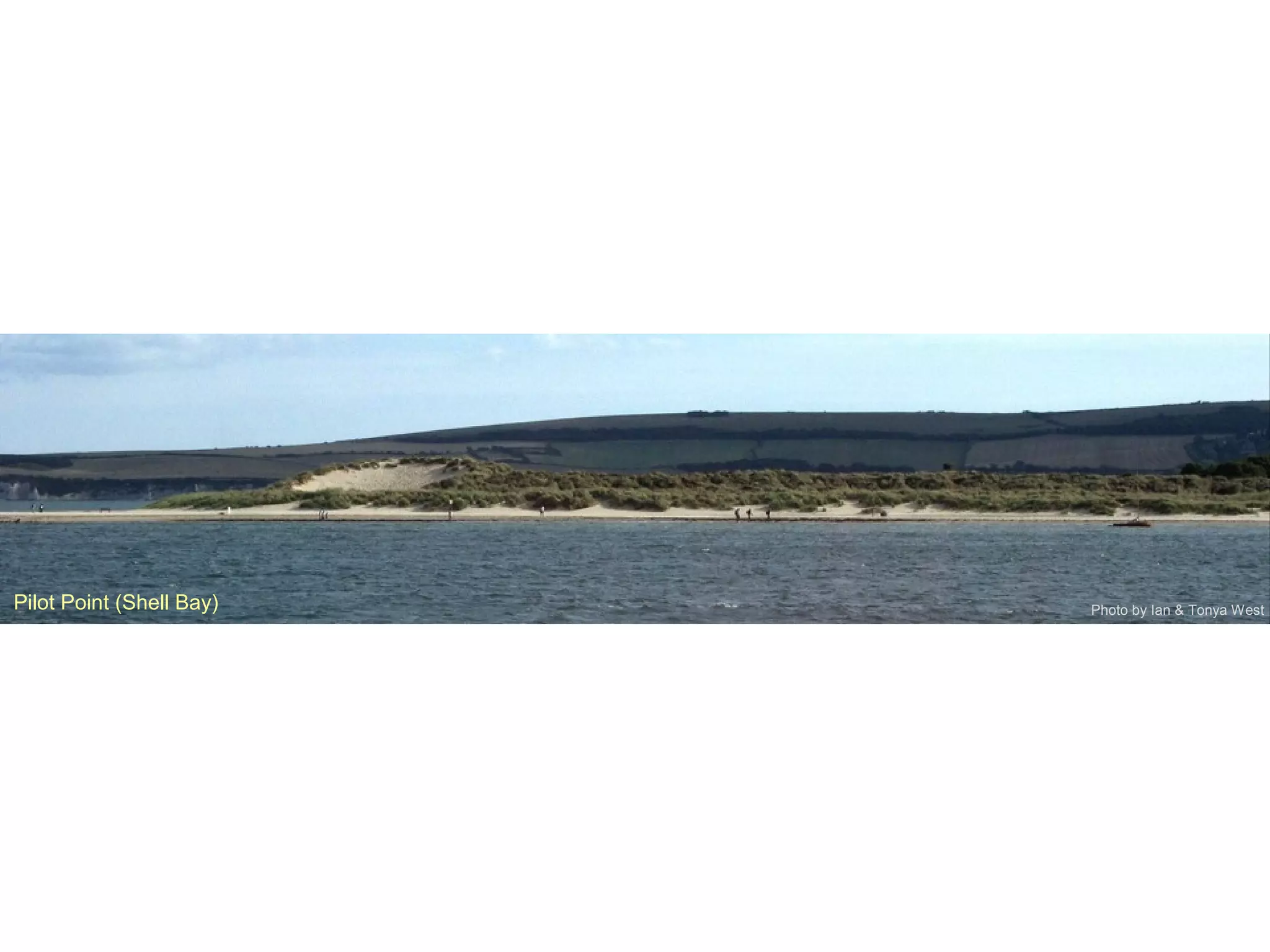
Coastal Dune System
Dune fields are common features in sandy coastal regions, where fine-
grained material is blown landward from beaches.
Photo by Ian & Tonya WestPilot Point (Shell Bay)
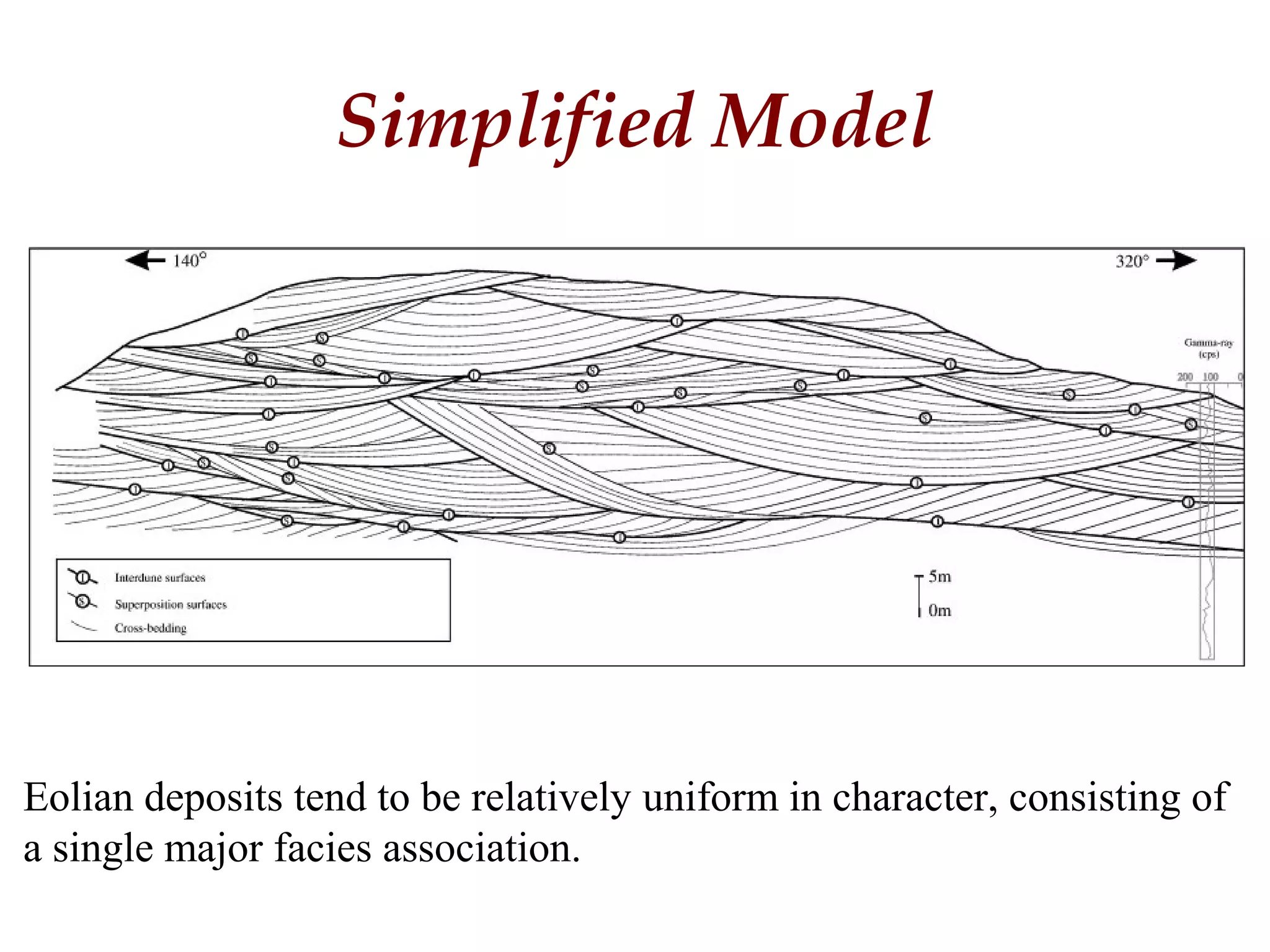
Simplified Model
Eolian deposits tend to be relatively uniform in character, consisting of
a single major facies association.
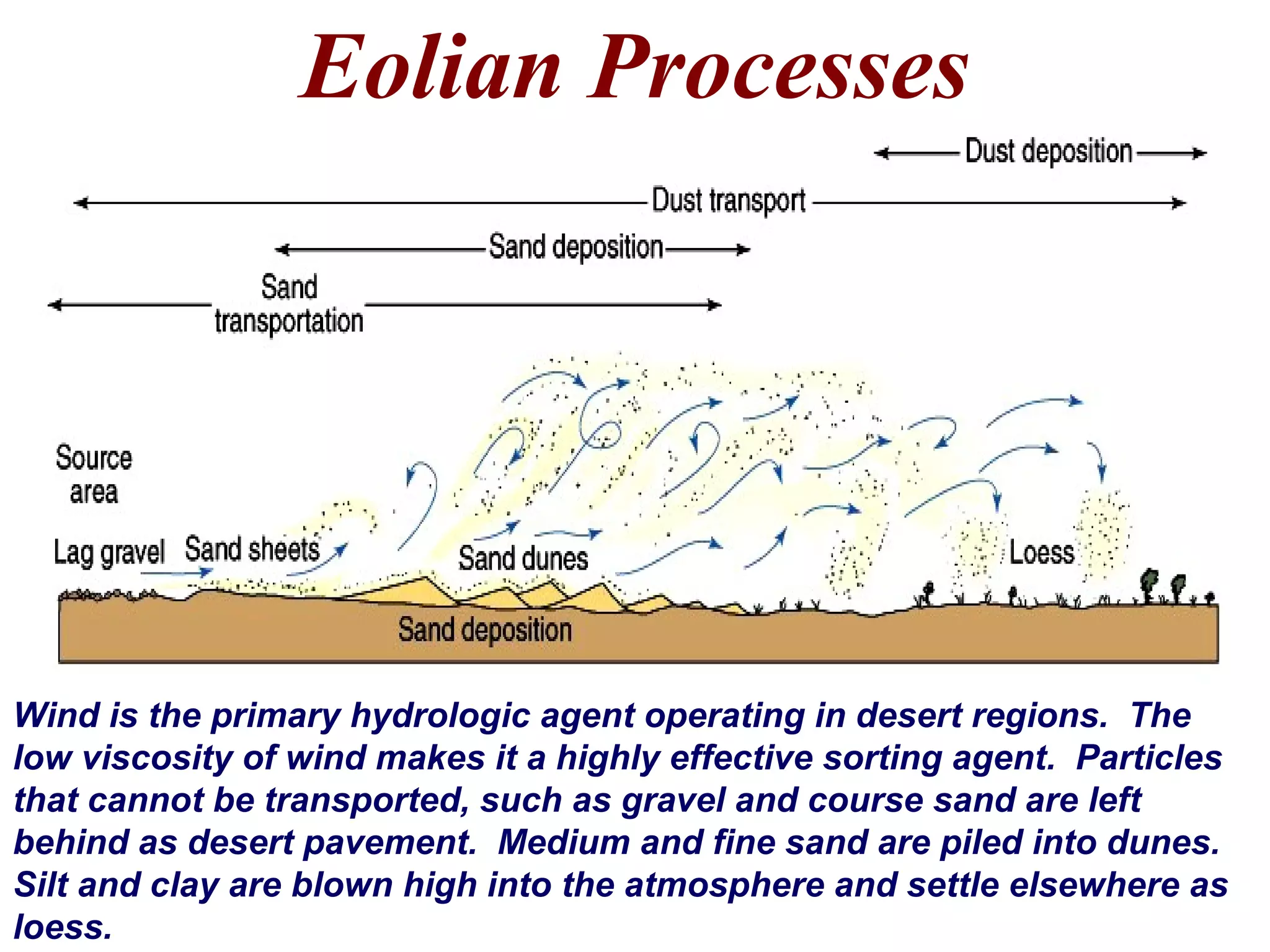
Eolian Processes
Wind is the primary hydrologic agent operating in desert regions. The
low viscosity of wind makes it a highly effective sorting agent. Particles
that cannot be transported, such as gravel and course sand are left
behind as desert pavement. Medium and fine sand are piled into dunes.
Silt and clay are blown high into the atmosphere and settle elsewhere as
loess.
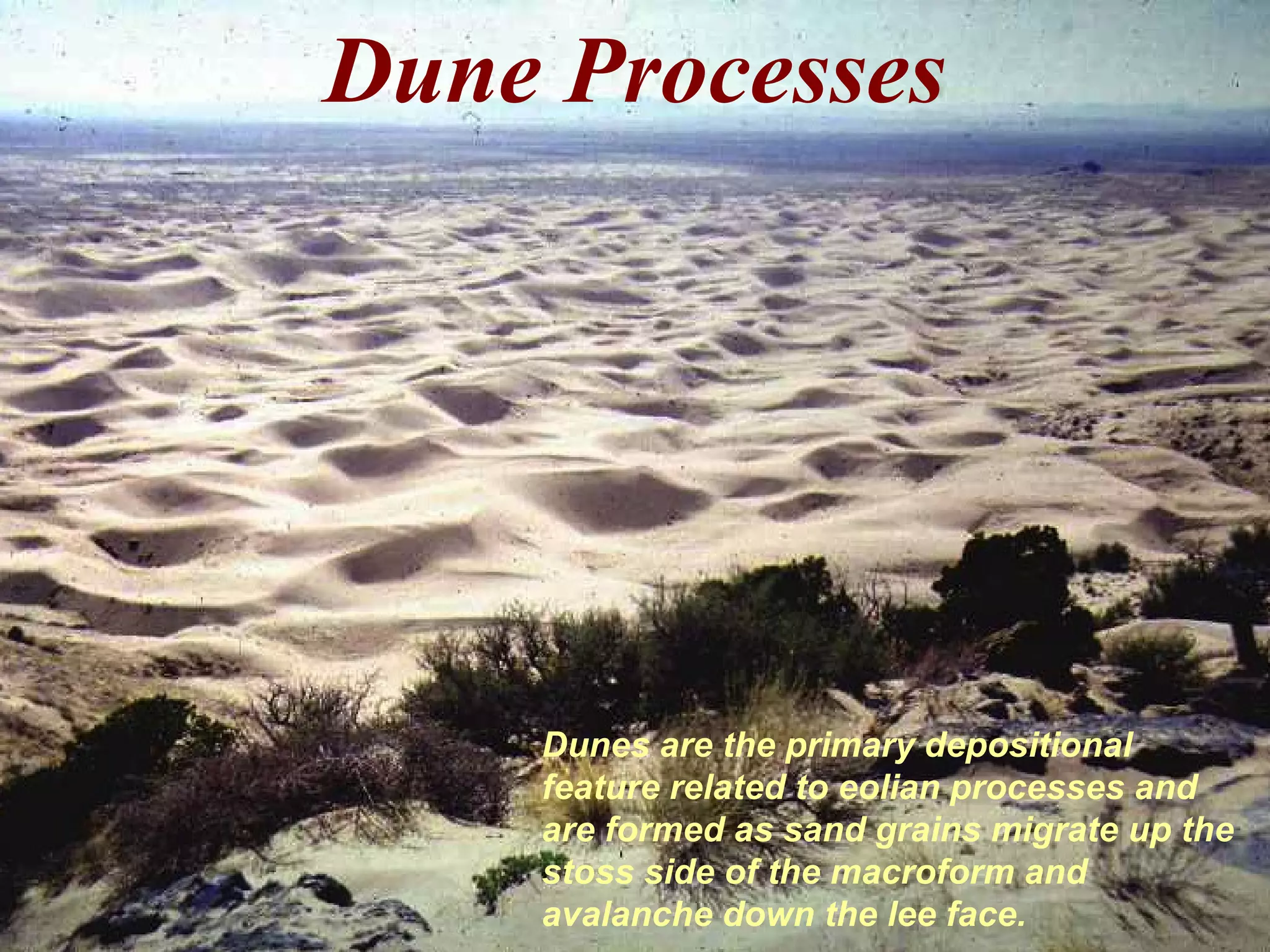
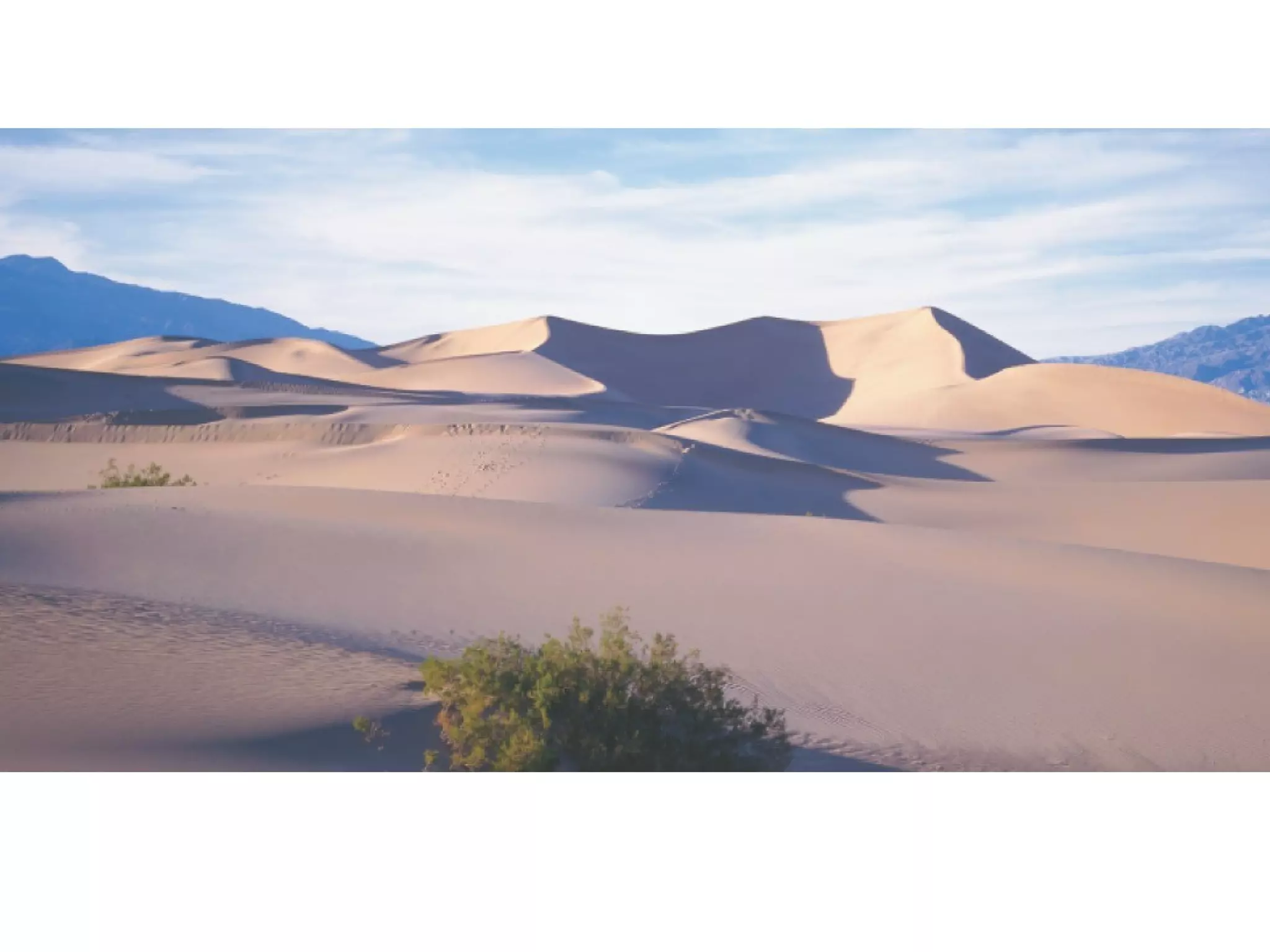
Dune Processes
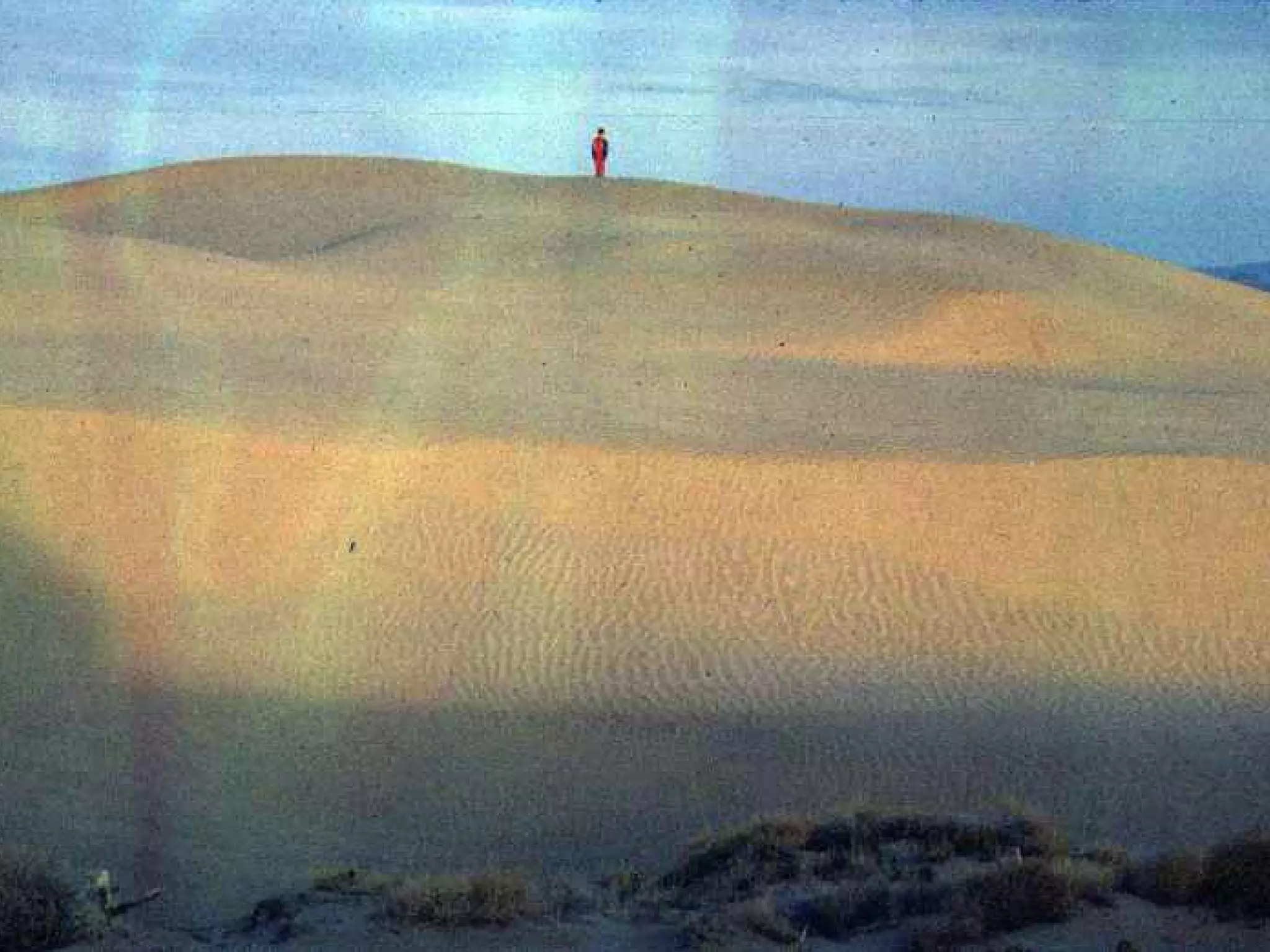
Dunes are the primary depositional
feature related to eolian processes and
are formed as sand grains migrate up the
stoss side of the macroform and
avalanche down the lee face.
Saint Anthony Sand Dunes at Egin Lakes
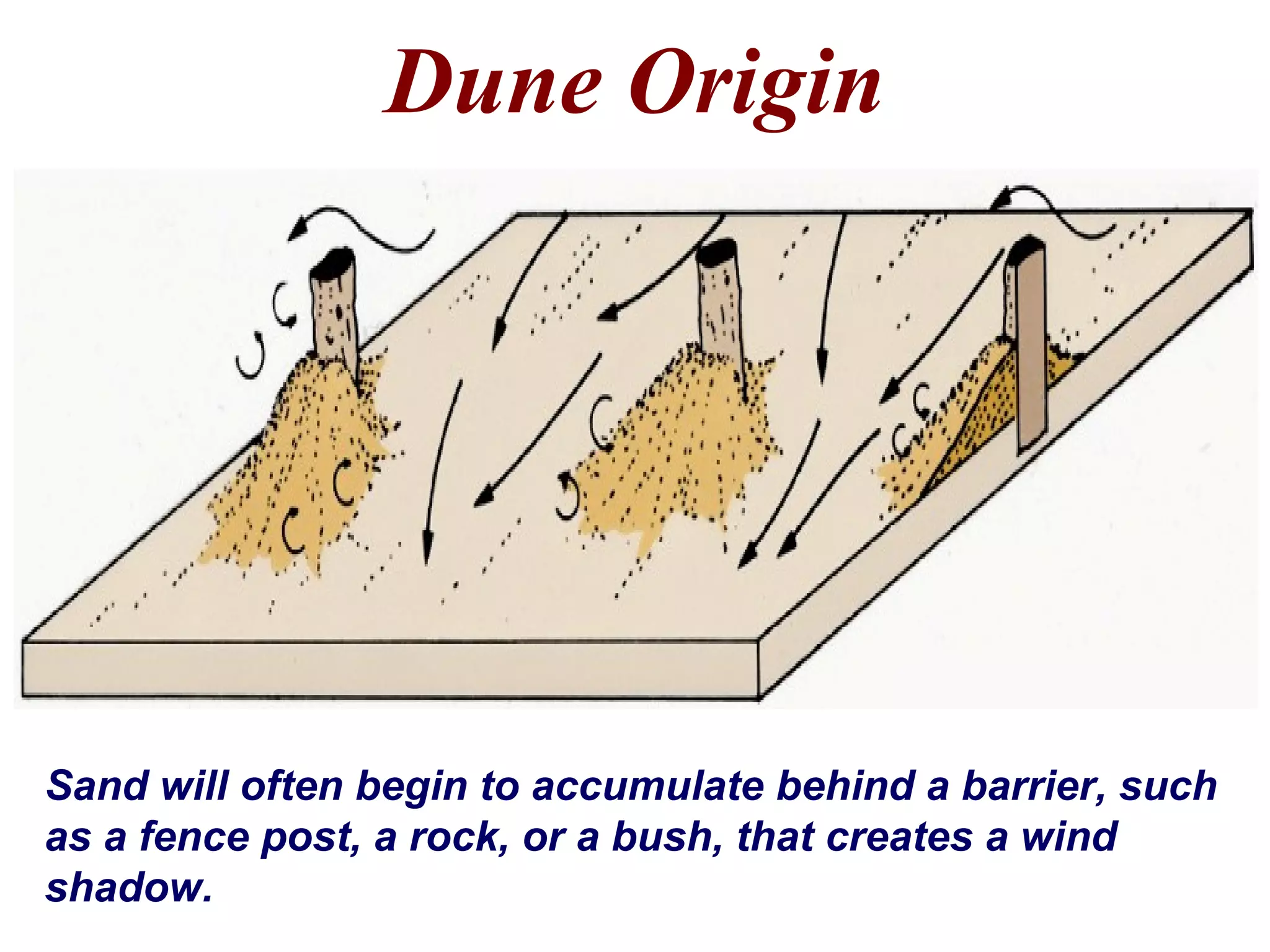
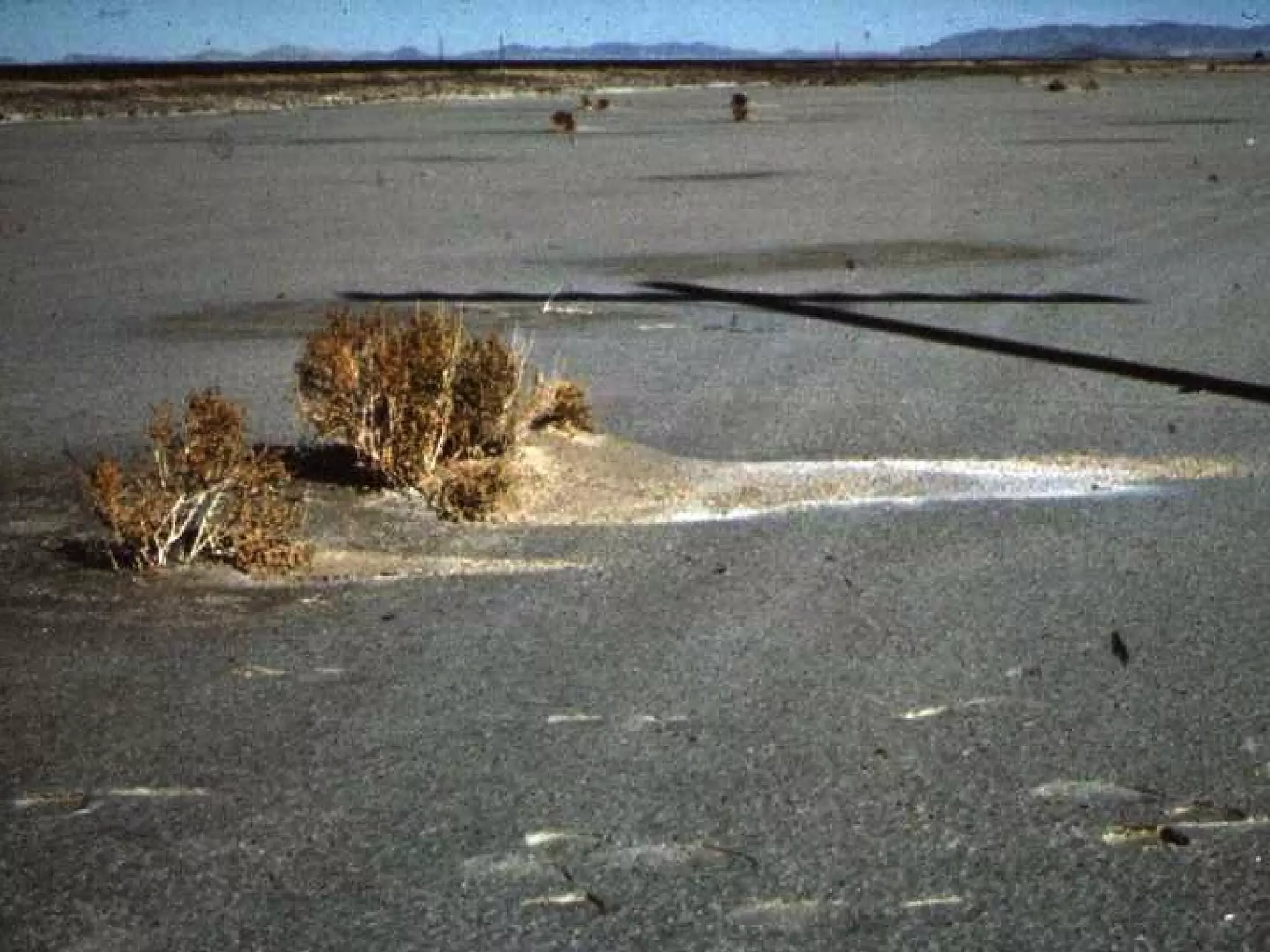
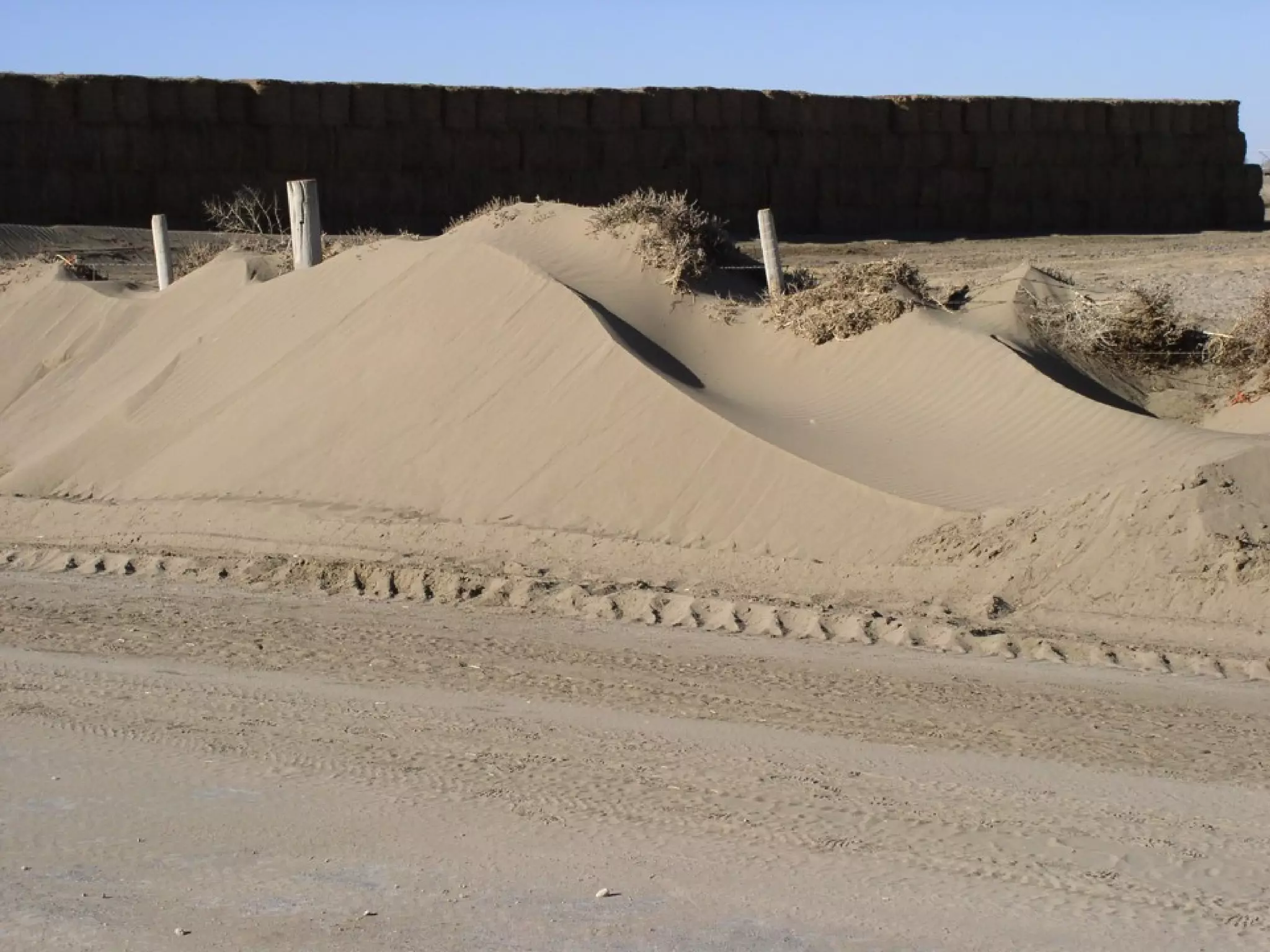
Dune Origin
Sand will often begin to accumulate behind a barrier, such
as a fence post, a rock, or a bush, that creates a wind
shadow.
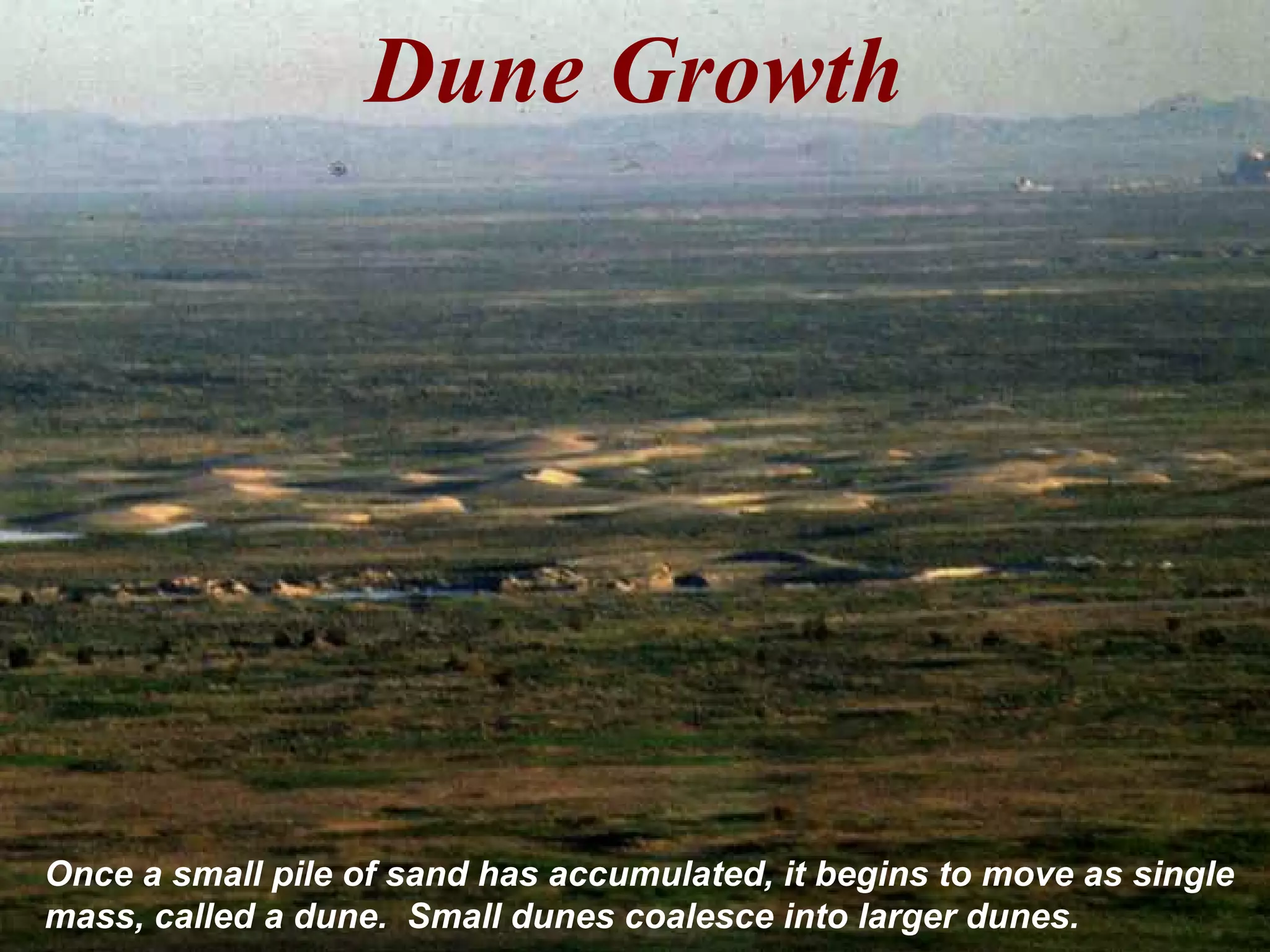
Dune Growth
Once a small pile of sand has accumulated, it begins to move as single
mass, called a dune. Small dunes coalesce into larger dunes.
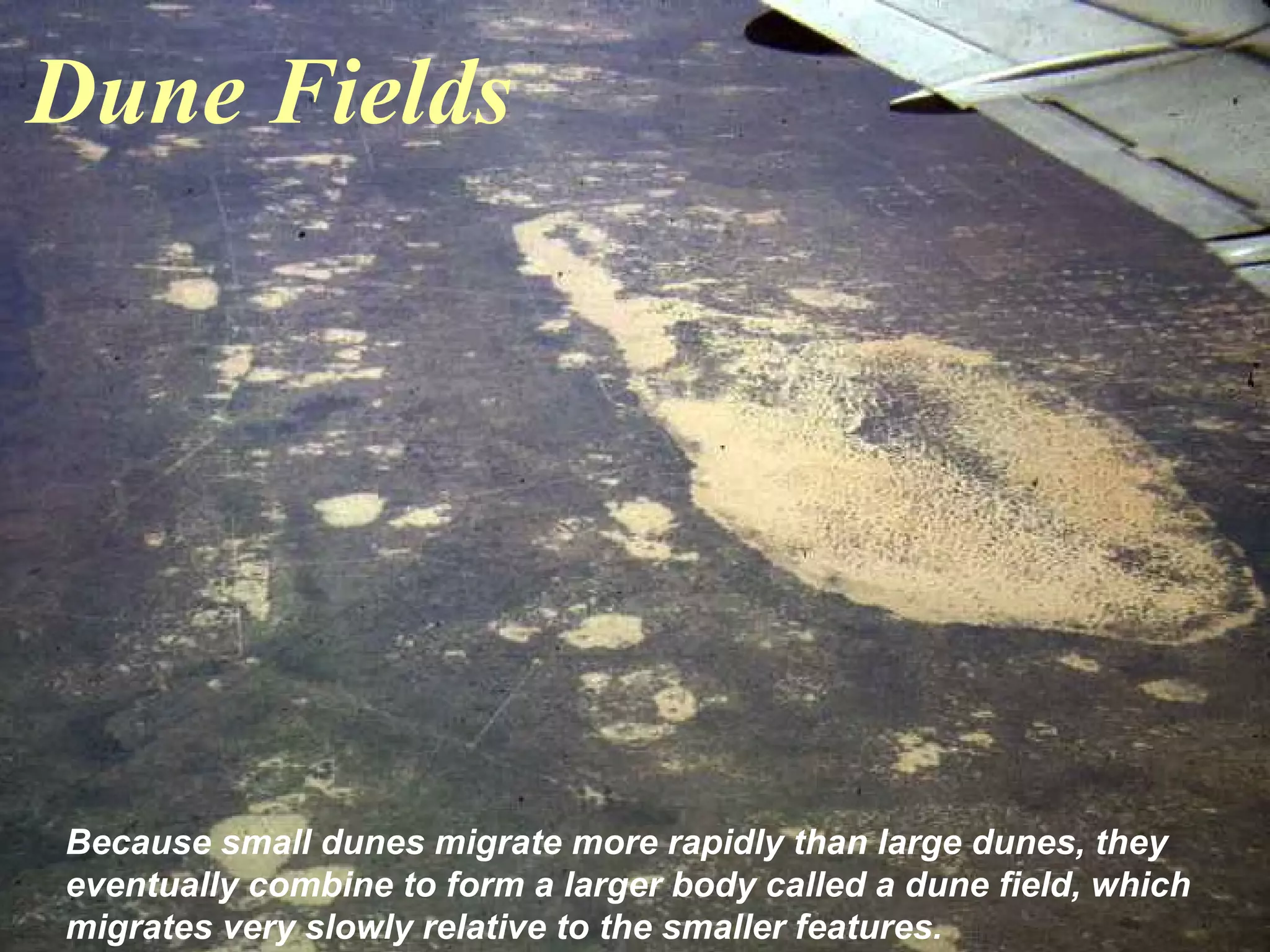
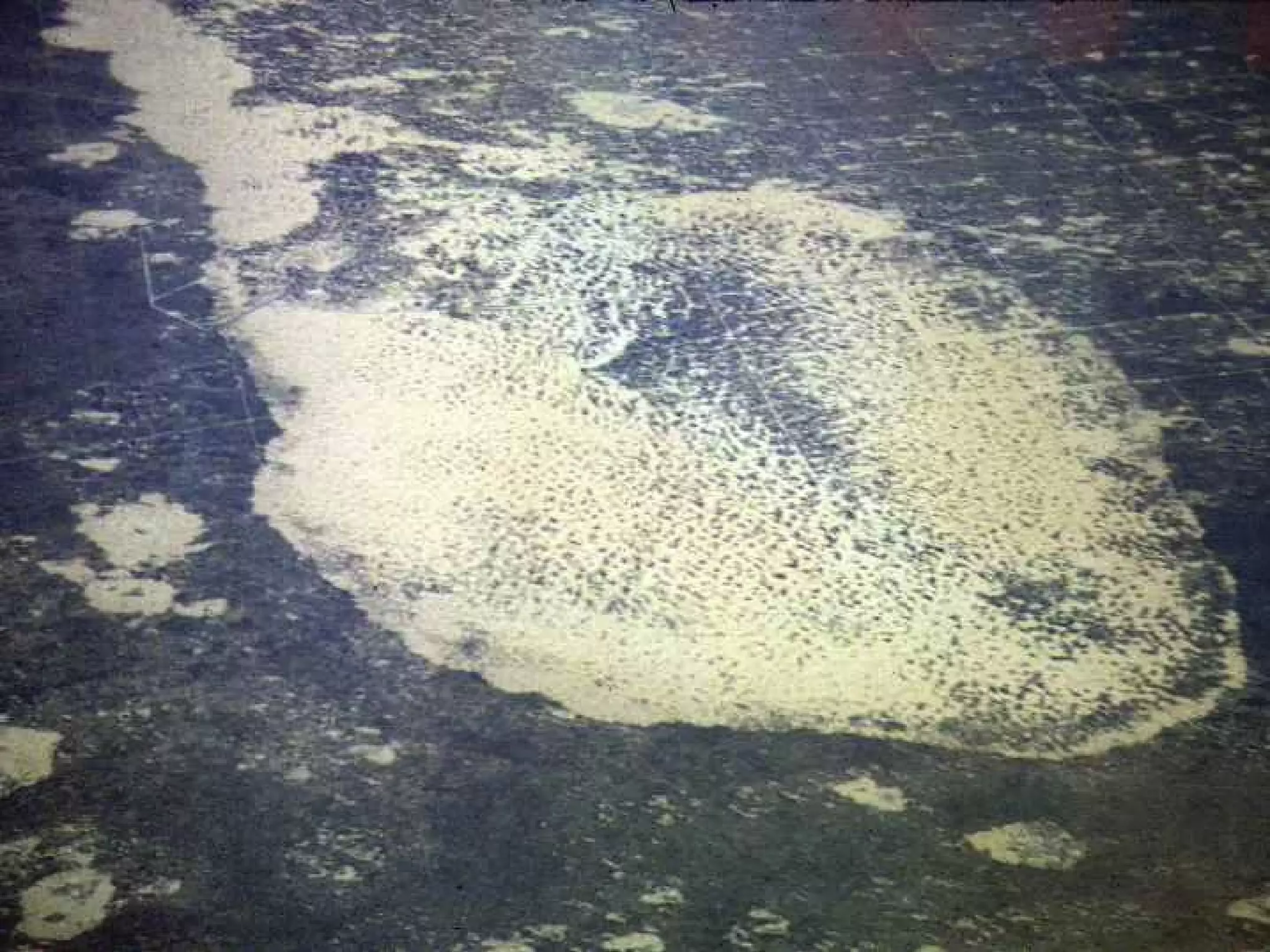
Dune Fields
Because small dunes migrate more rapidly than large dunes, they
eventually combine to form a larger body called a dune field, which
migrates very slowly relative to the smaller features.
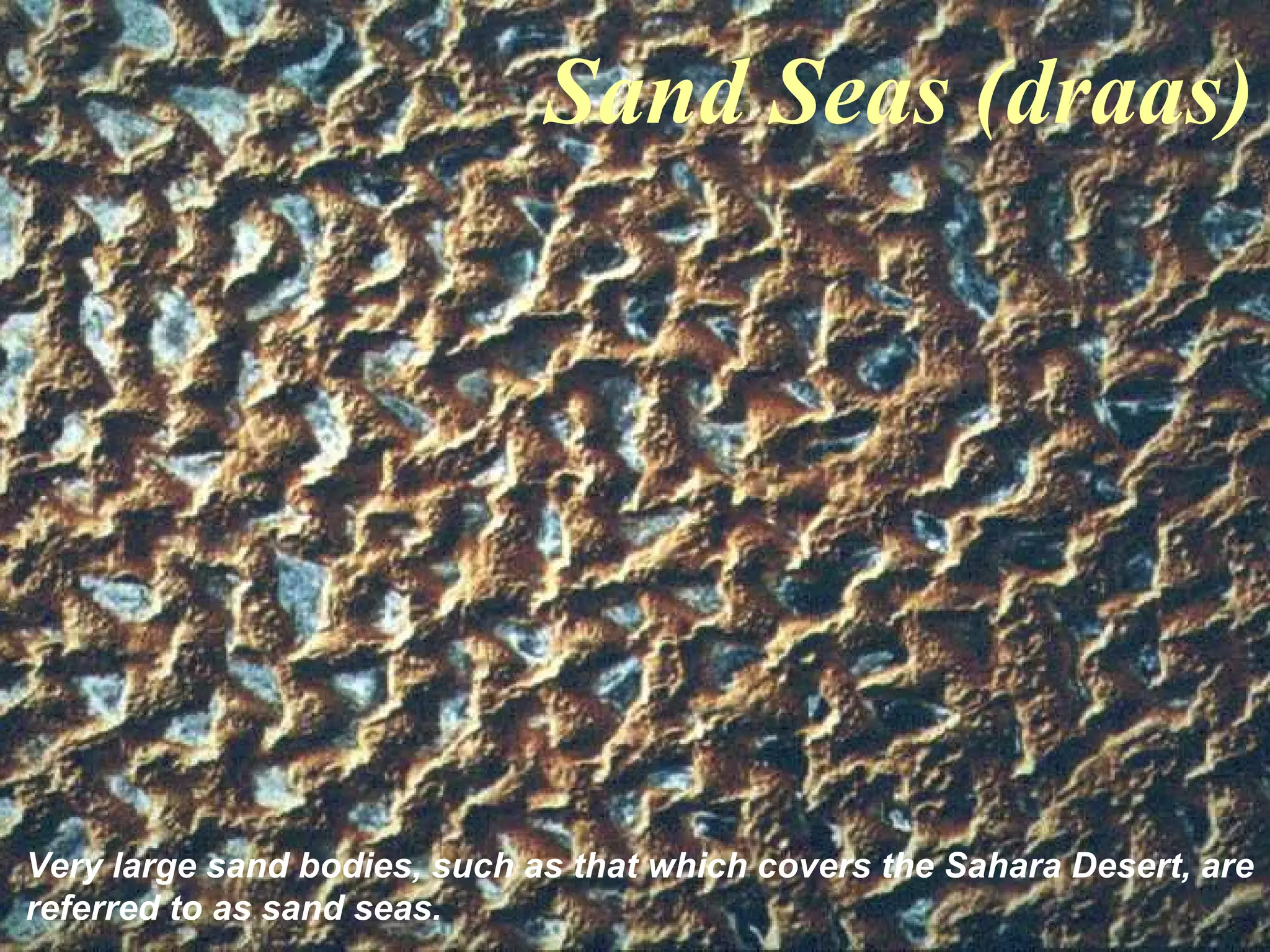
Sand Seas (draas)
Very large sand bodies, such as that which covers the Sahara Desert, are
referred to as sand seas.
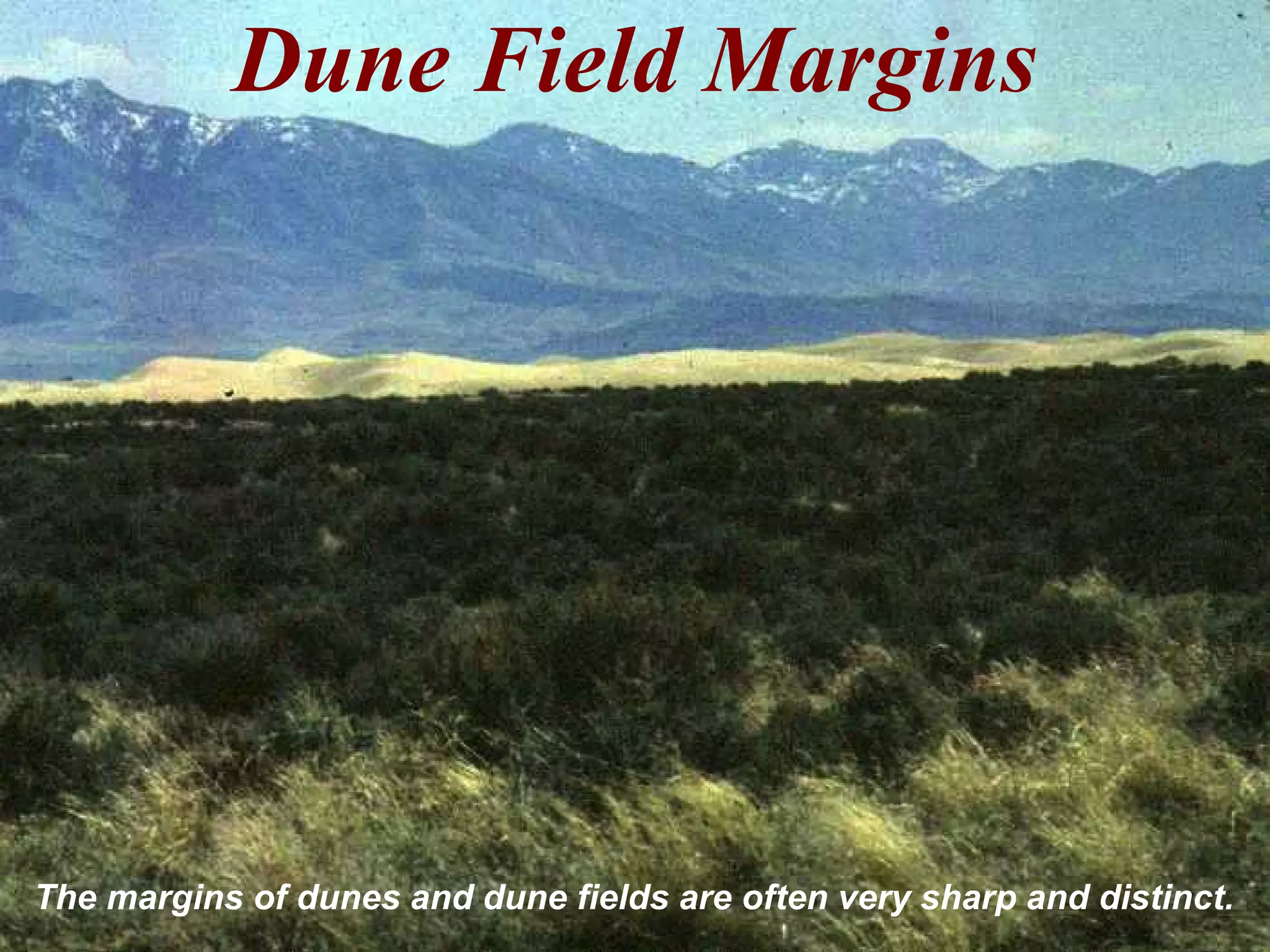
Dune Field Margins
The margins of dunes and dune fields are often very sharp and distinct.
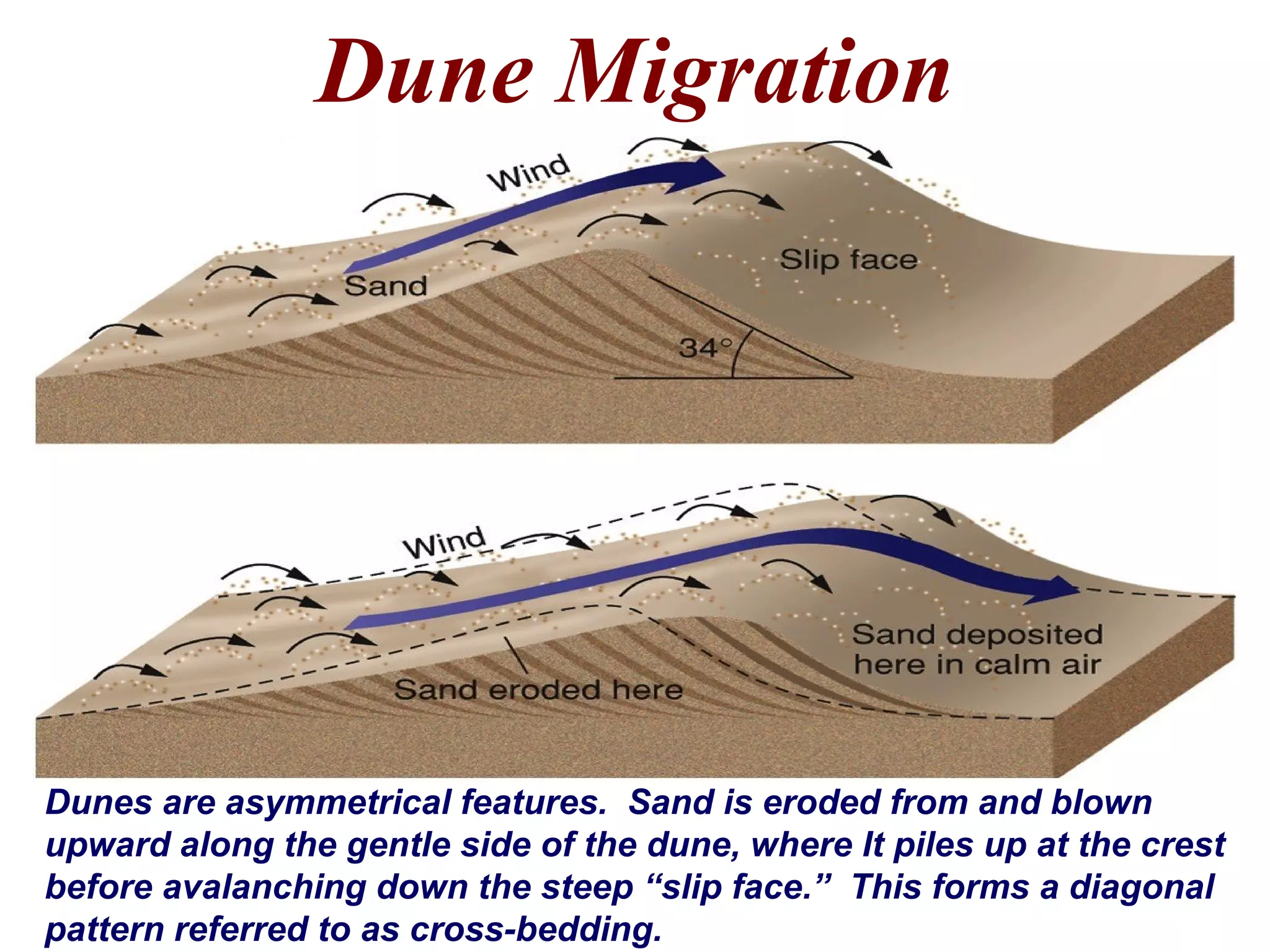
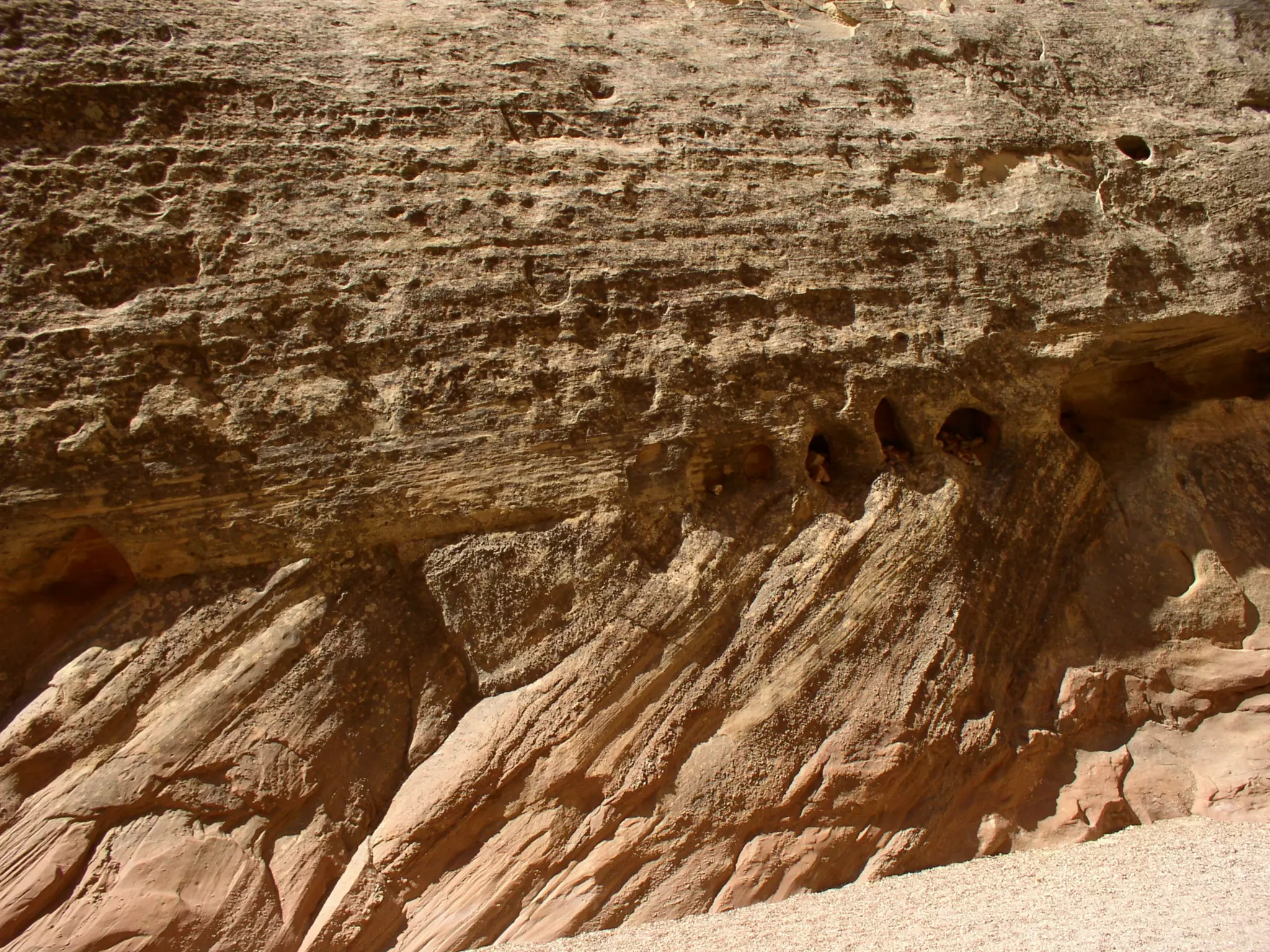
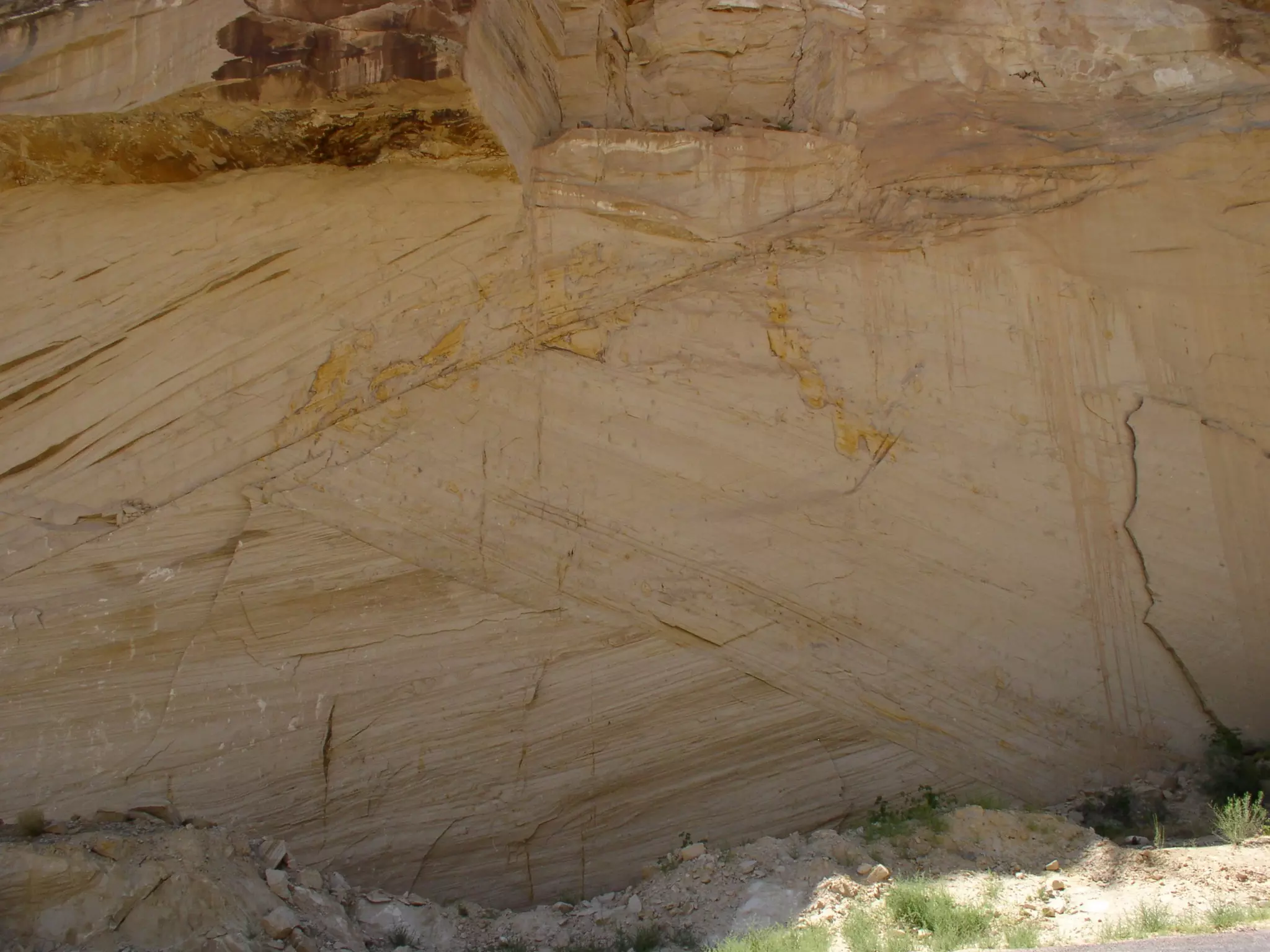
Dune Migration
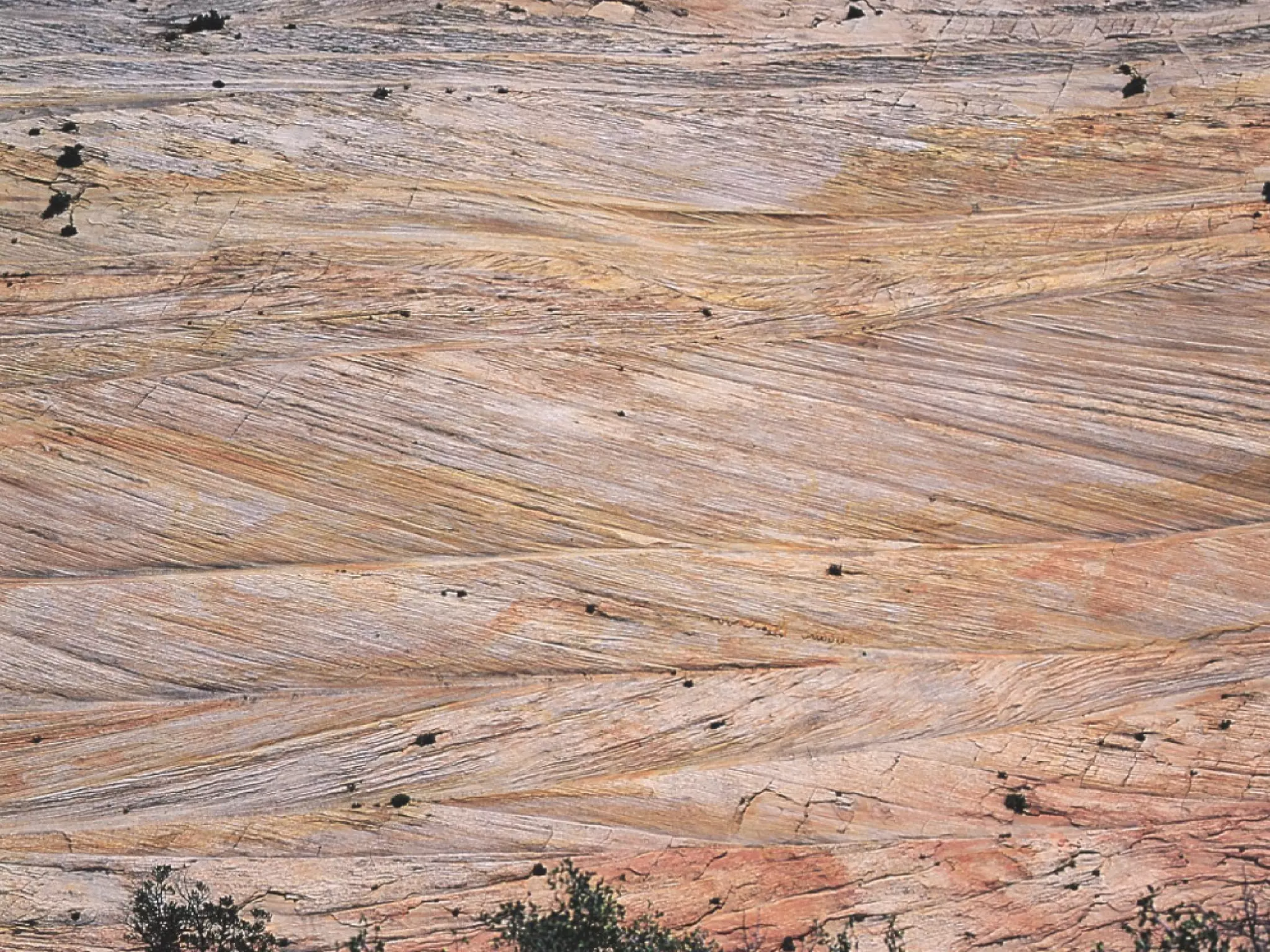
Dunes are asymmetrical features. Sand is eroded from and blown
upward along the gentle side of the dune, where It piles up at the crest
before avalanching down the steep “slip face.” This forms a diagonal
pattern referred to as cross-bedding.
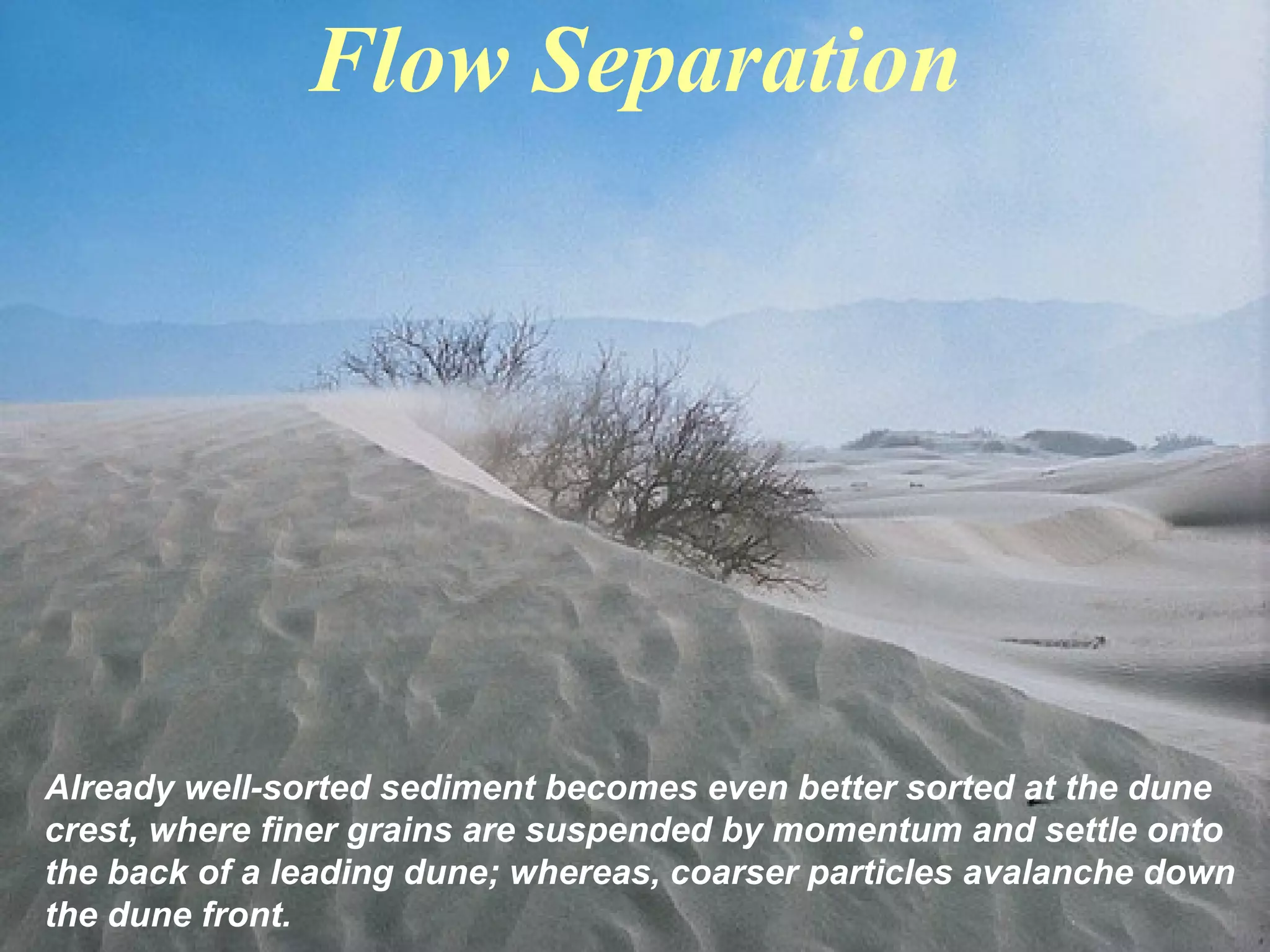
Flow Separation
Already well-sorted sediment becomes even better sorted at the dune
crest, where finer grains are suspended by momentum and settle onto
the back of a leading dune; whereas, coarser particles avalanche down
the dune front.
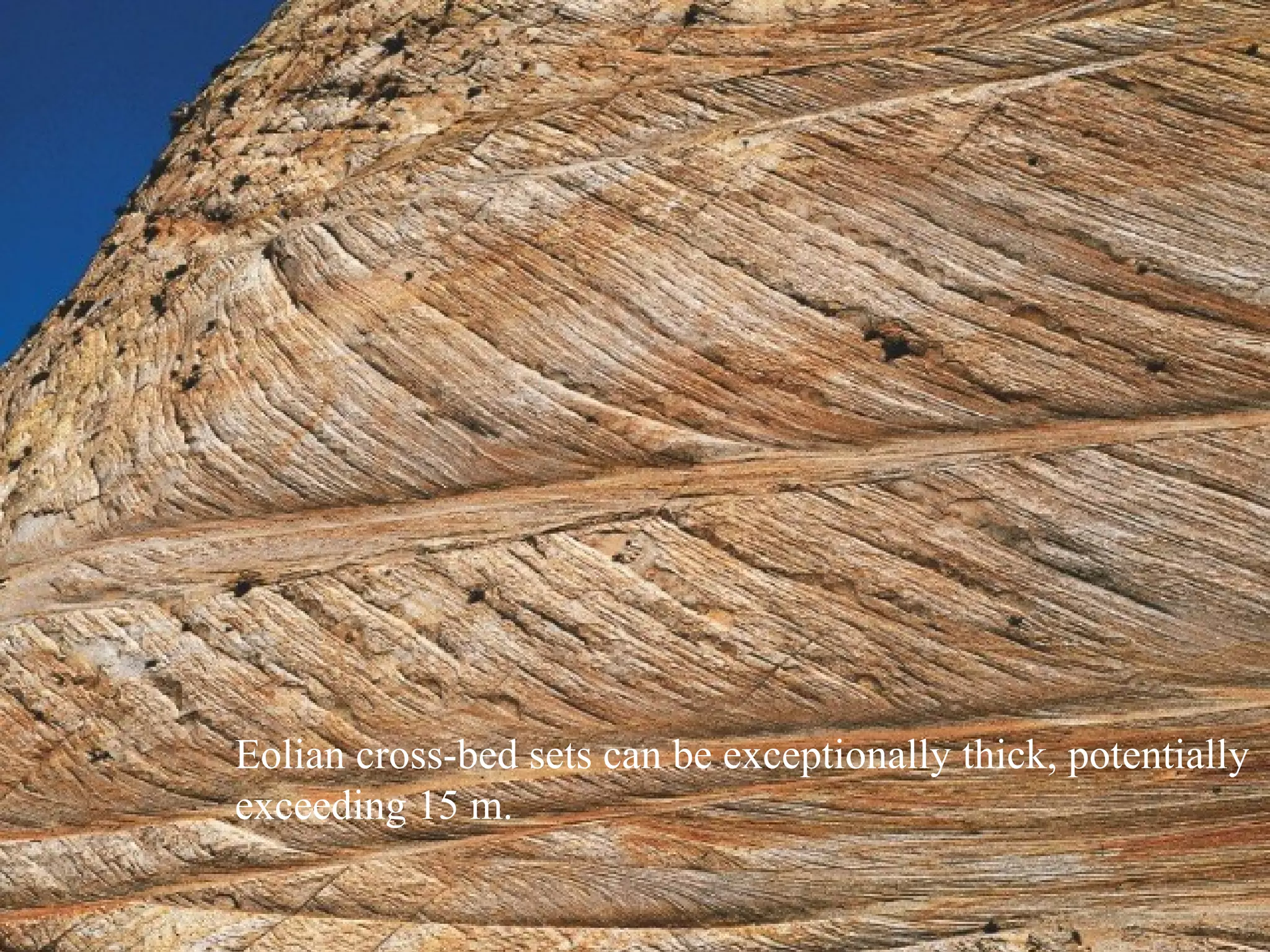
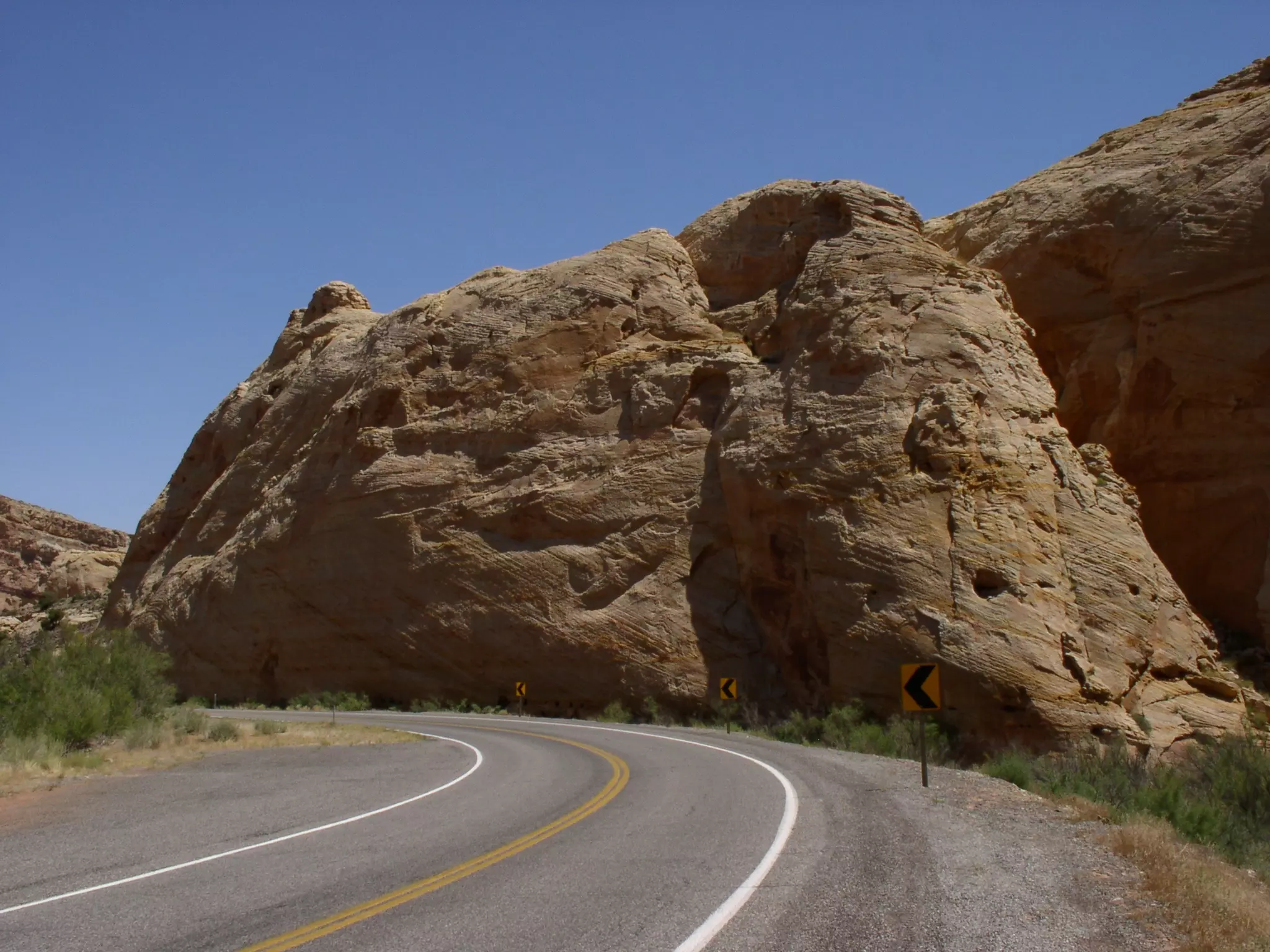
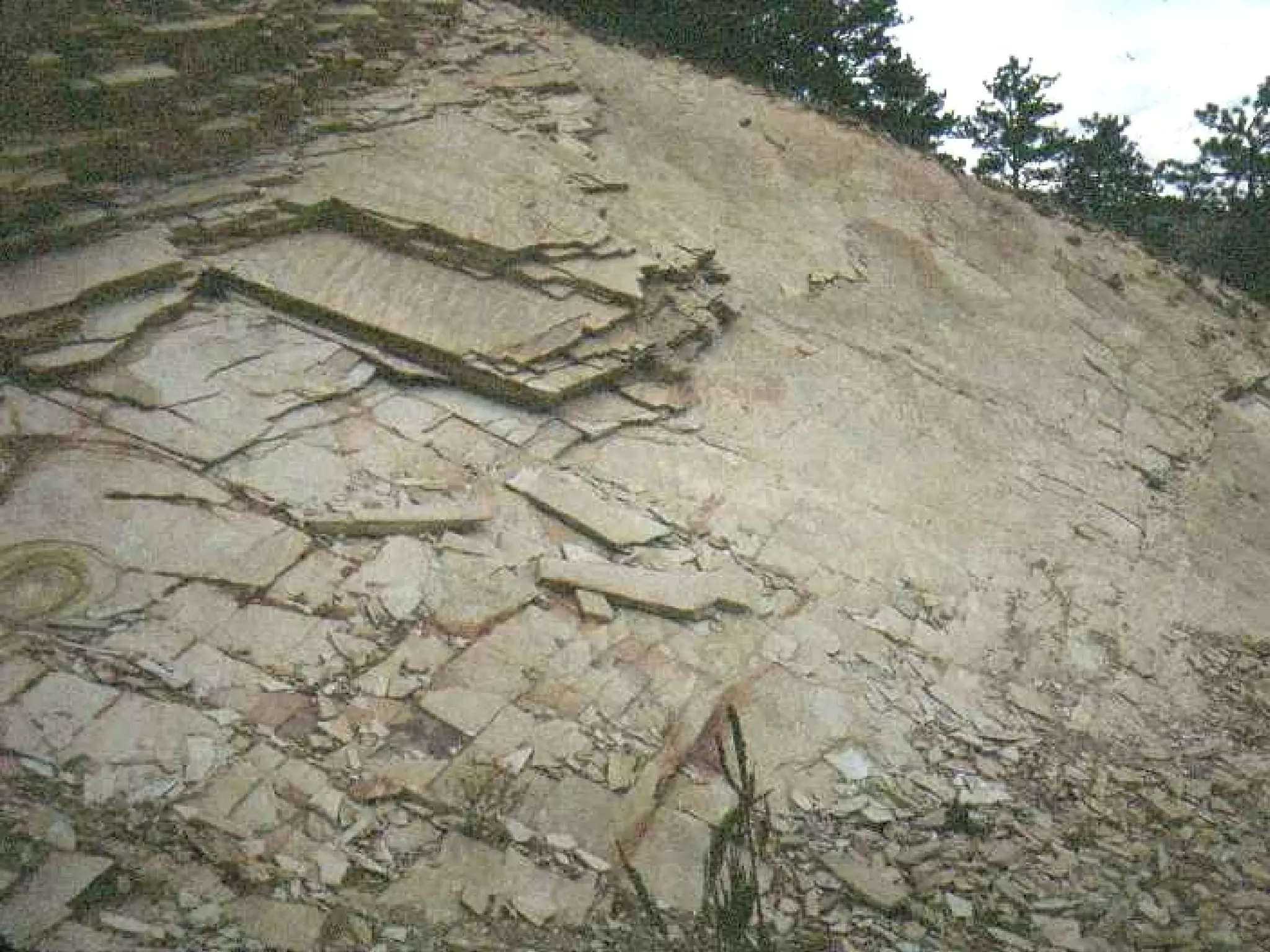
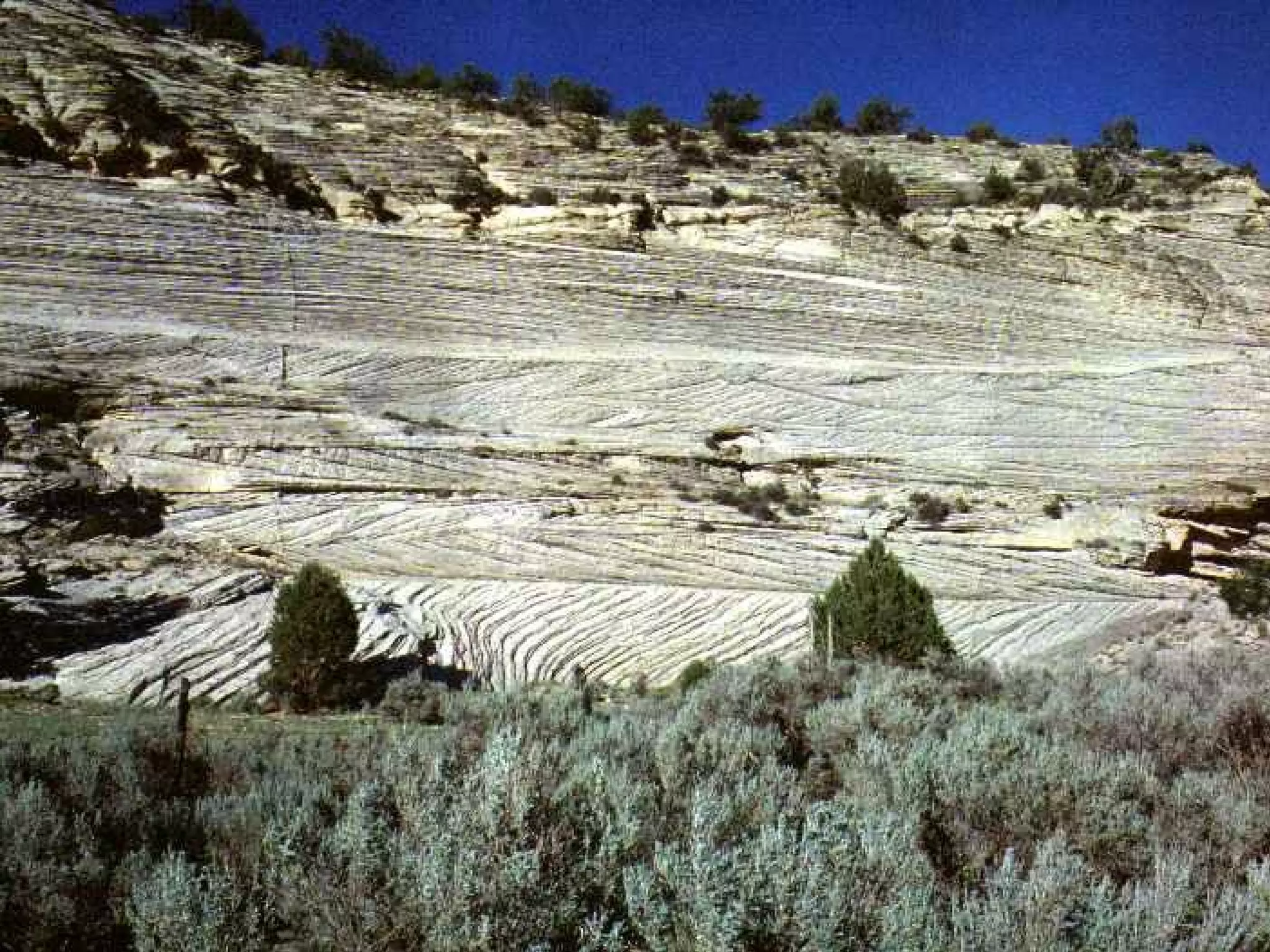
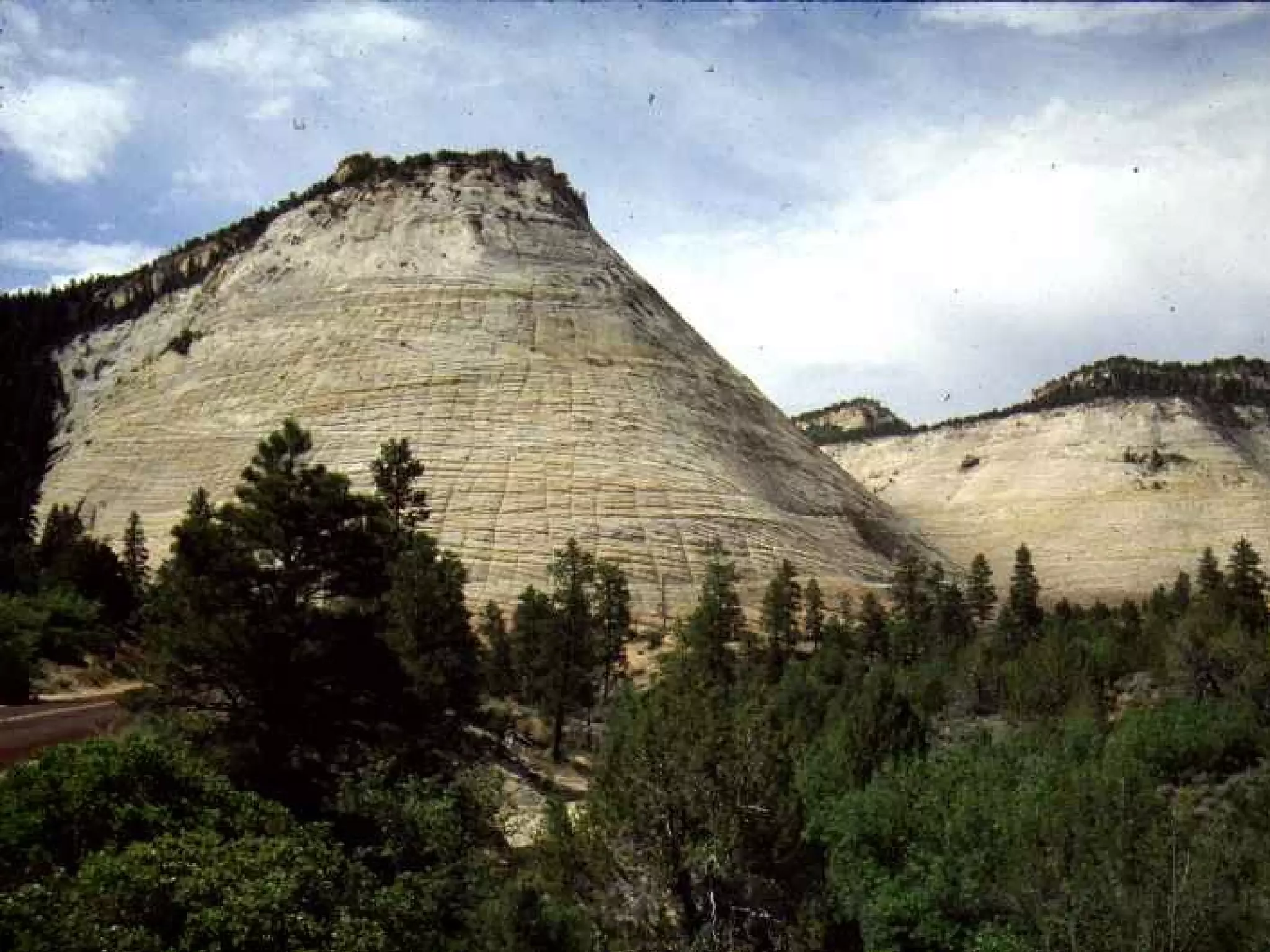
Eolian cross-bed sets can be exceptionally thick, potentially
exceeding 15 m.
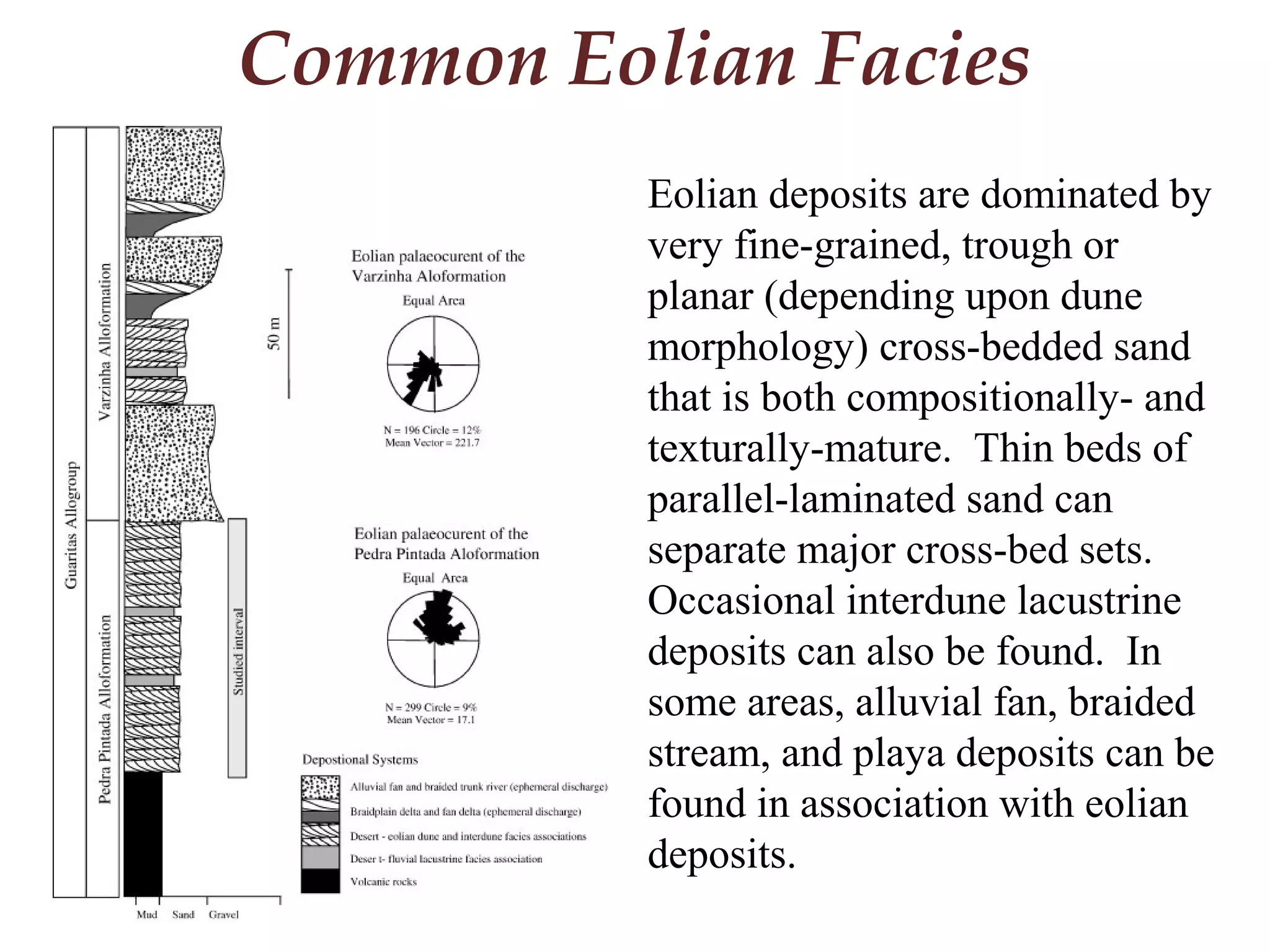
Common Eolian Facies
Eolian deposits are dominated by
very fine-grained, trough or
planar (depending upon dune
morphology) cross-bedded sand
that is both compositionally- and
texturally-mature. Thin beds of
parallel-laminated sand can
separate major cross-bed sets.
Occasional interdune lacustrine
deposits can also be found. In
some areas, alluvial fan, braided
stream, and playa deposits can be
found in association with eolian
deposits.
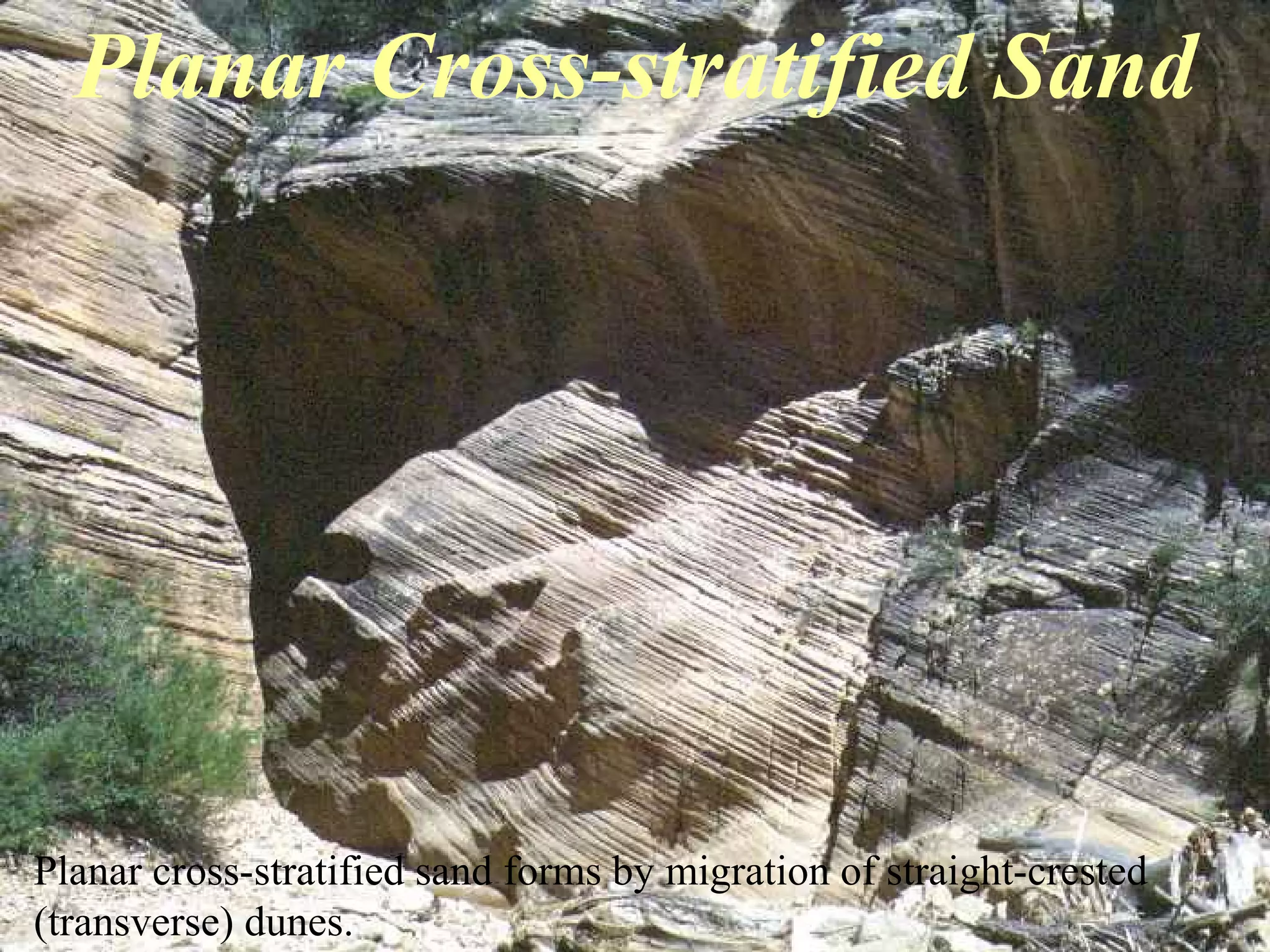
Planar Cross-stratified Sand
Planar cross-stratified sand forms by migration of straight-crested
(transverse) dunes.
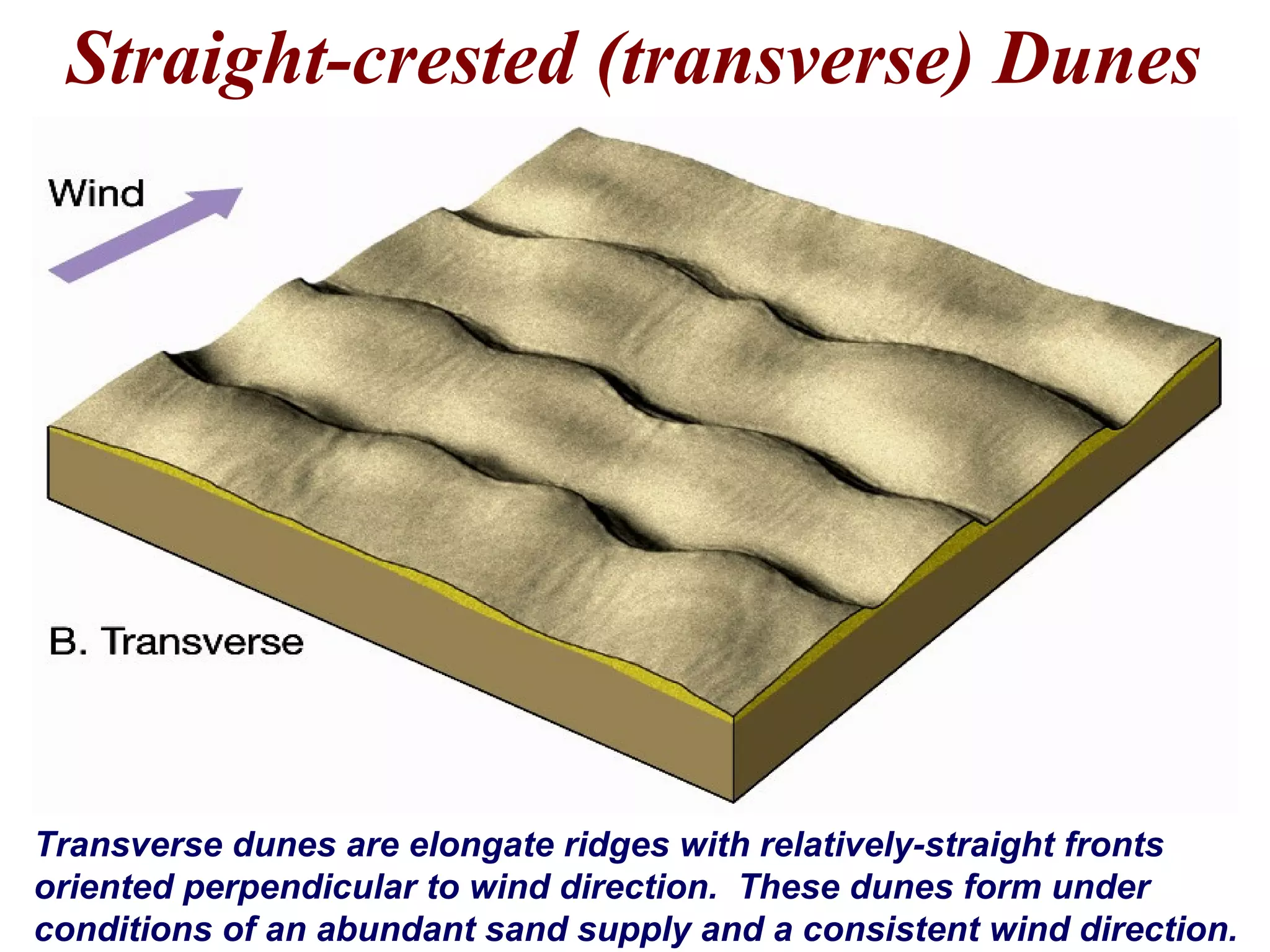
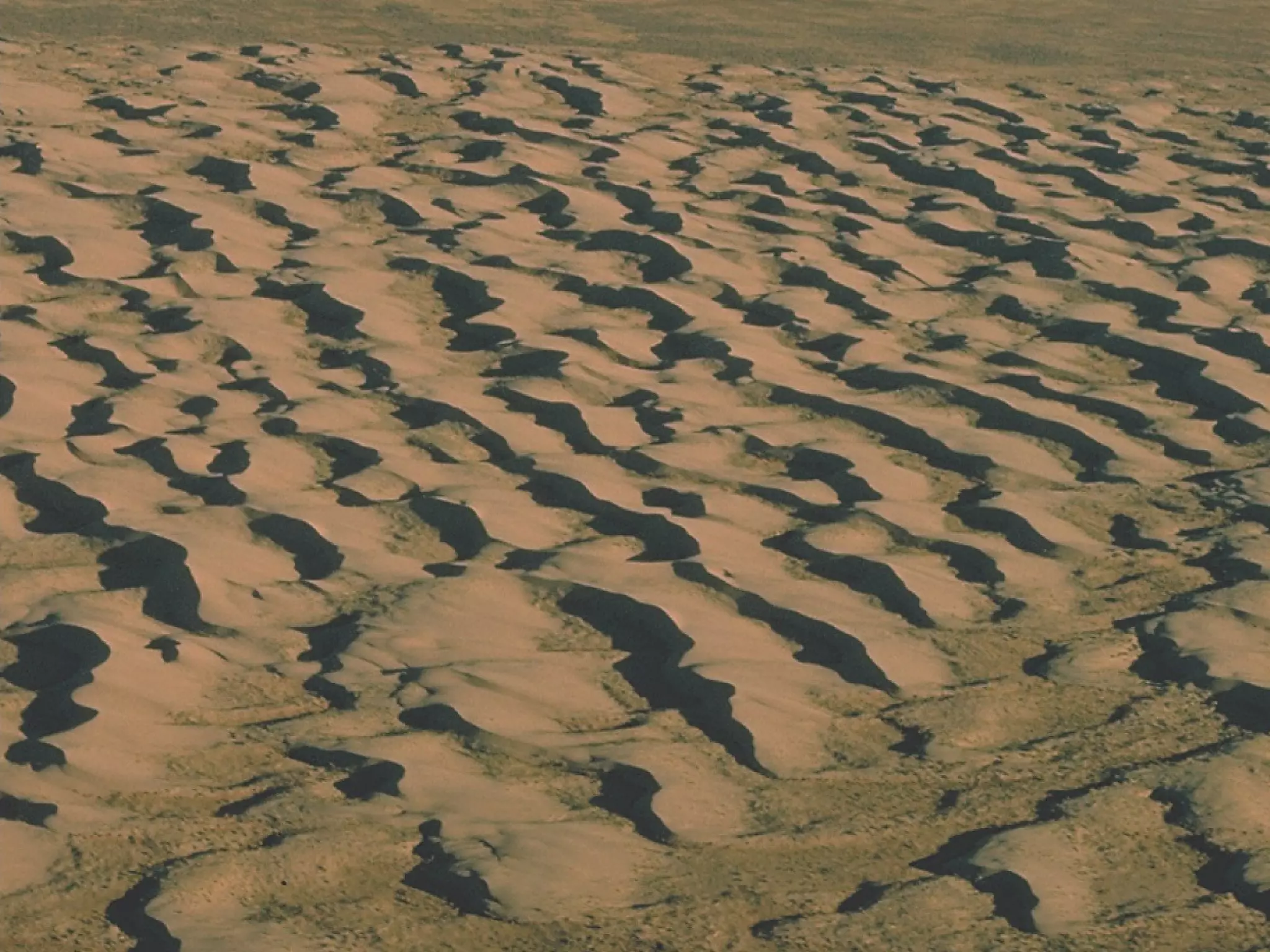
Straight-crested (transverse) Dunes
Transverse dunes are elongate ridges with relatively-straight fronts
oriented perpendicular to wind direction. These dunes form under
conditions of an abundant sand supply and a consistent wind direction.
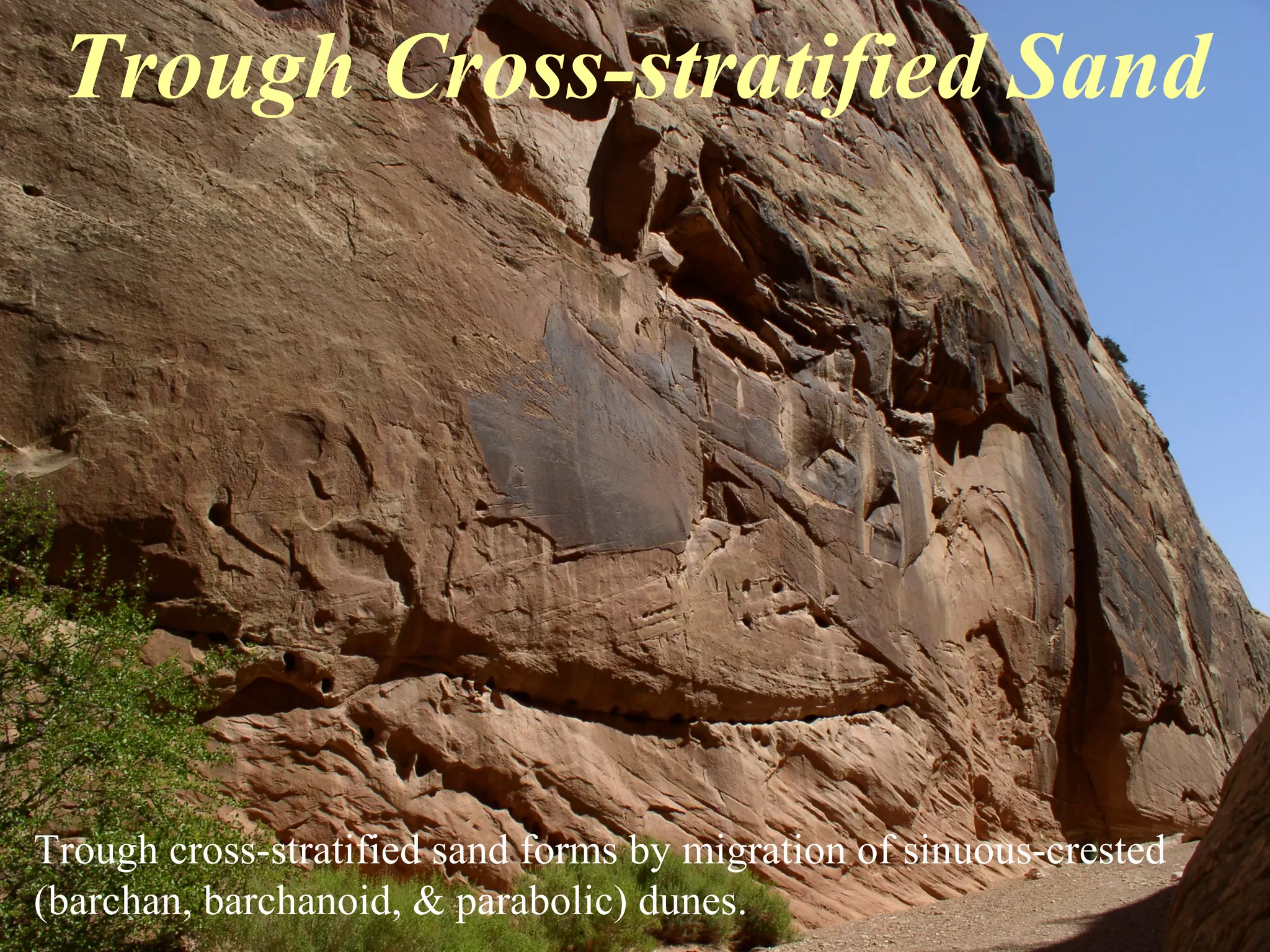
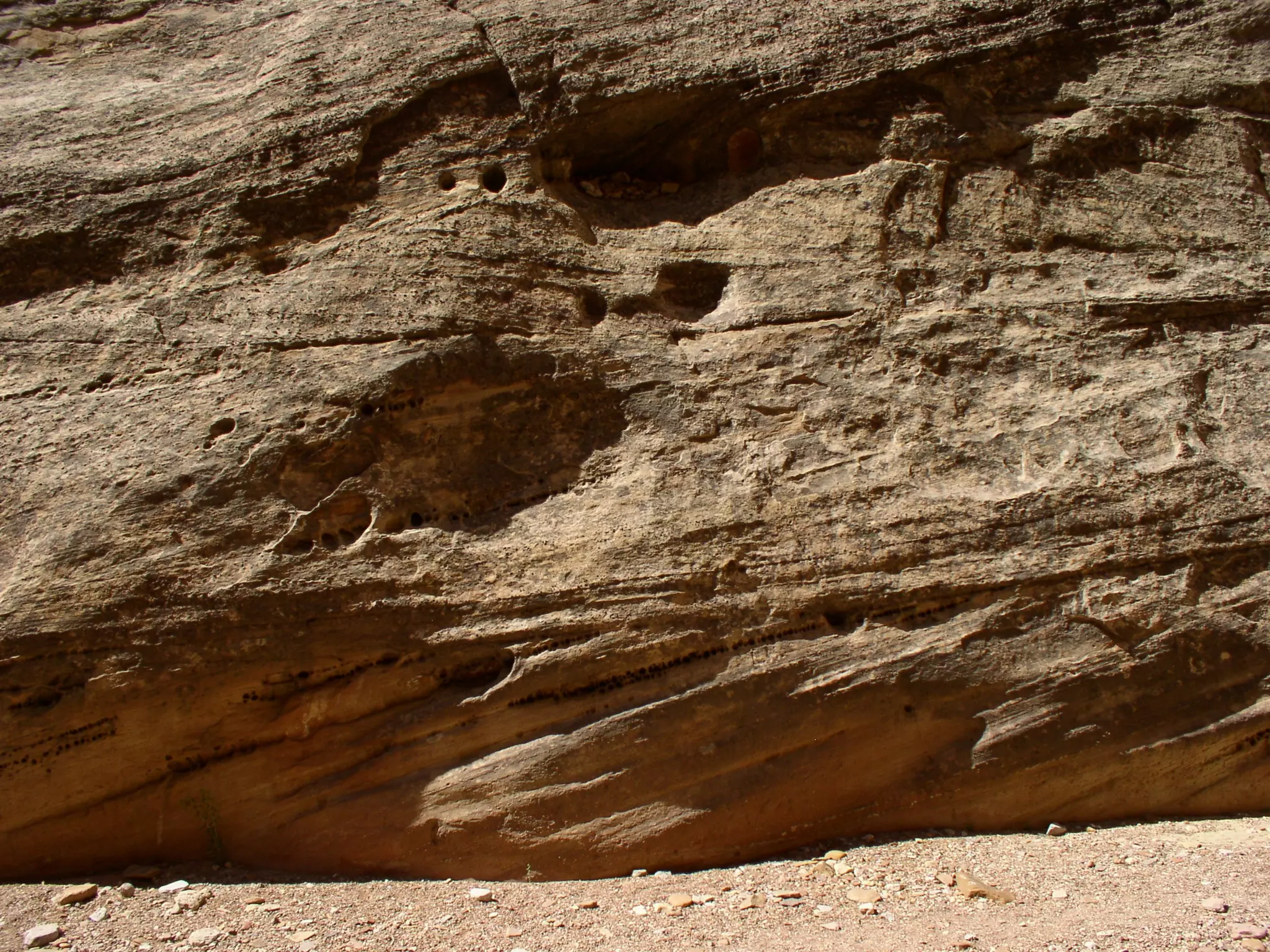
Trough Cross-stratified Sand
Trough cross-stratified sand forms by migration of sinuous-crested
(barchan, barchanoid, & parabolic) dunes.
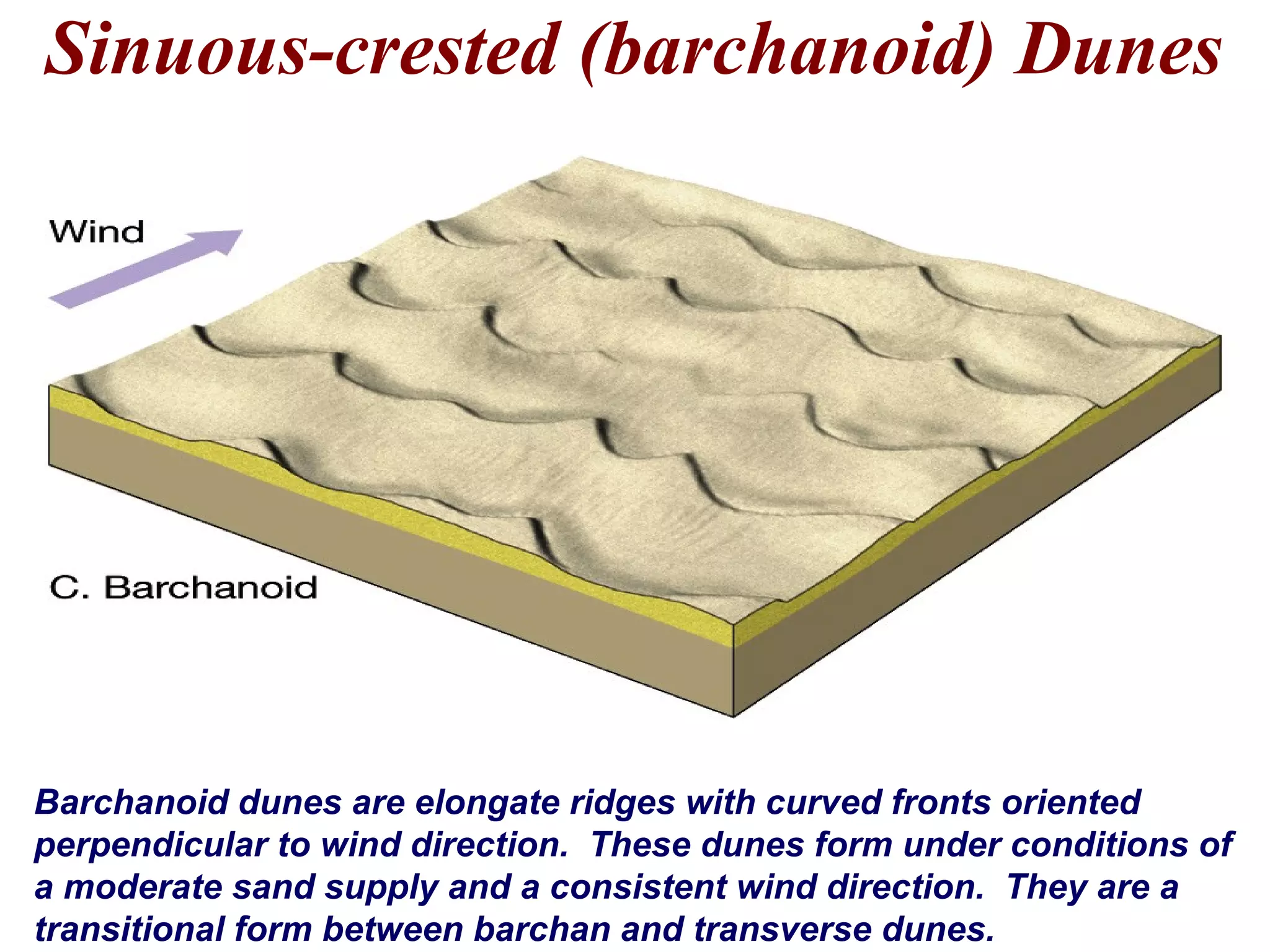
Sinuous-crested (barchanoid) Dunes
Barchanoid dunes are elongate ridges with curved fronts oriented
perpendicular to wind direction. These dunes form under conditions of
a moderate sand supply and a consistent wind direction. They are a
transitional form between barchan and transverse dunes.
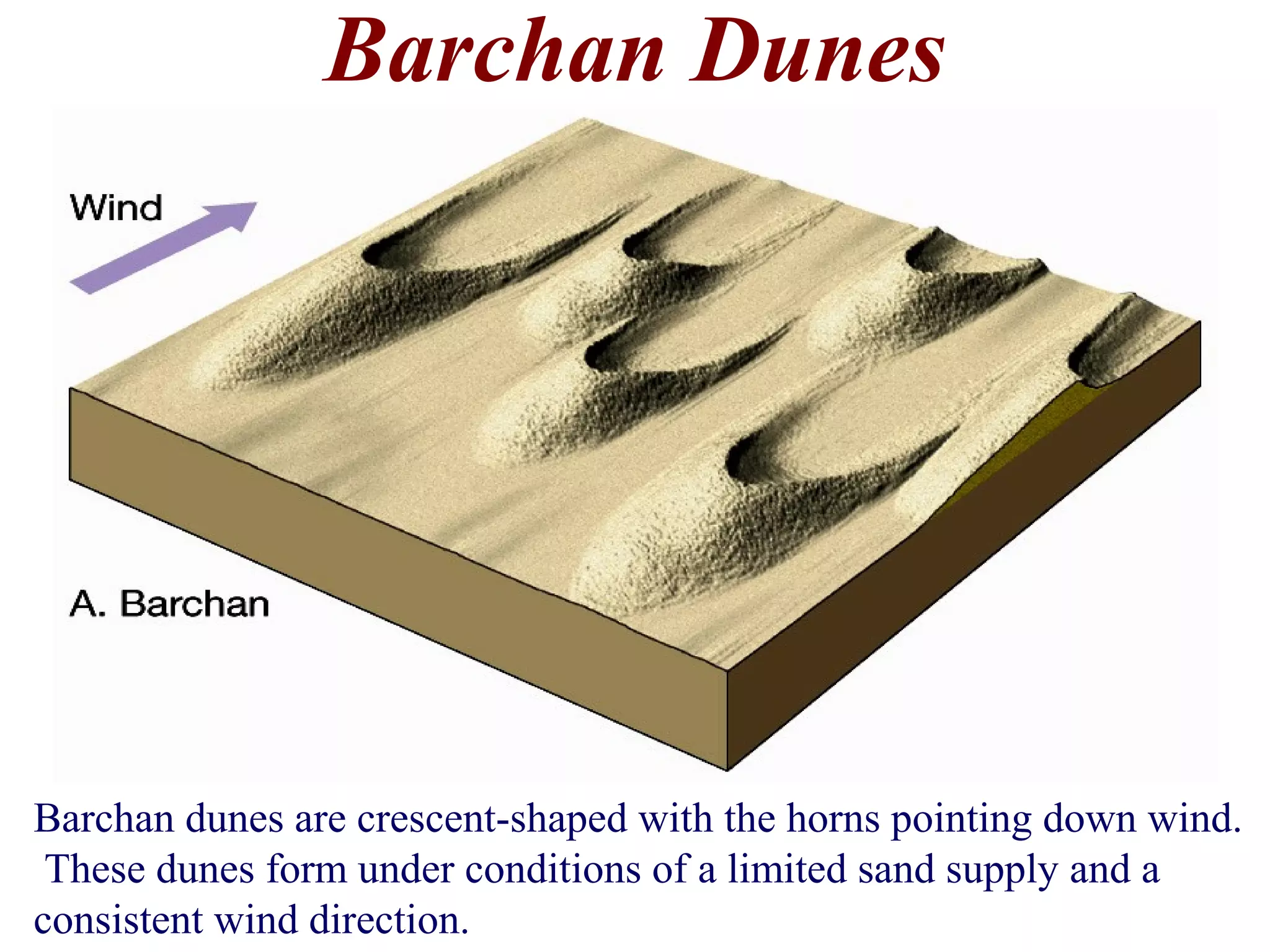
Barchan Dunes
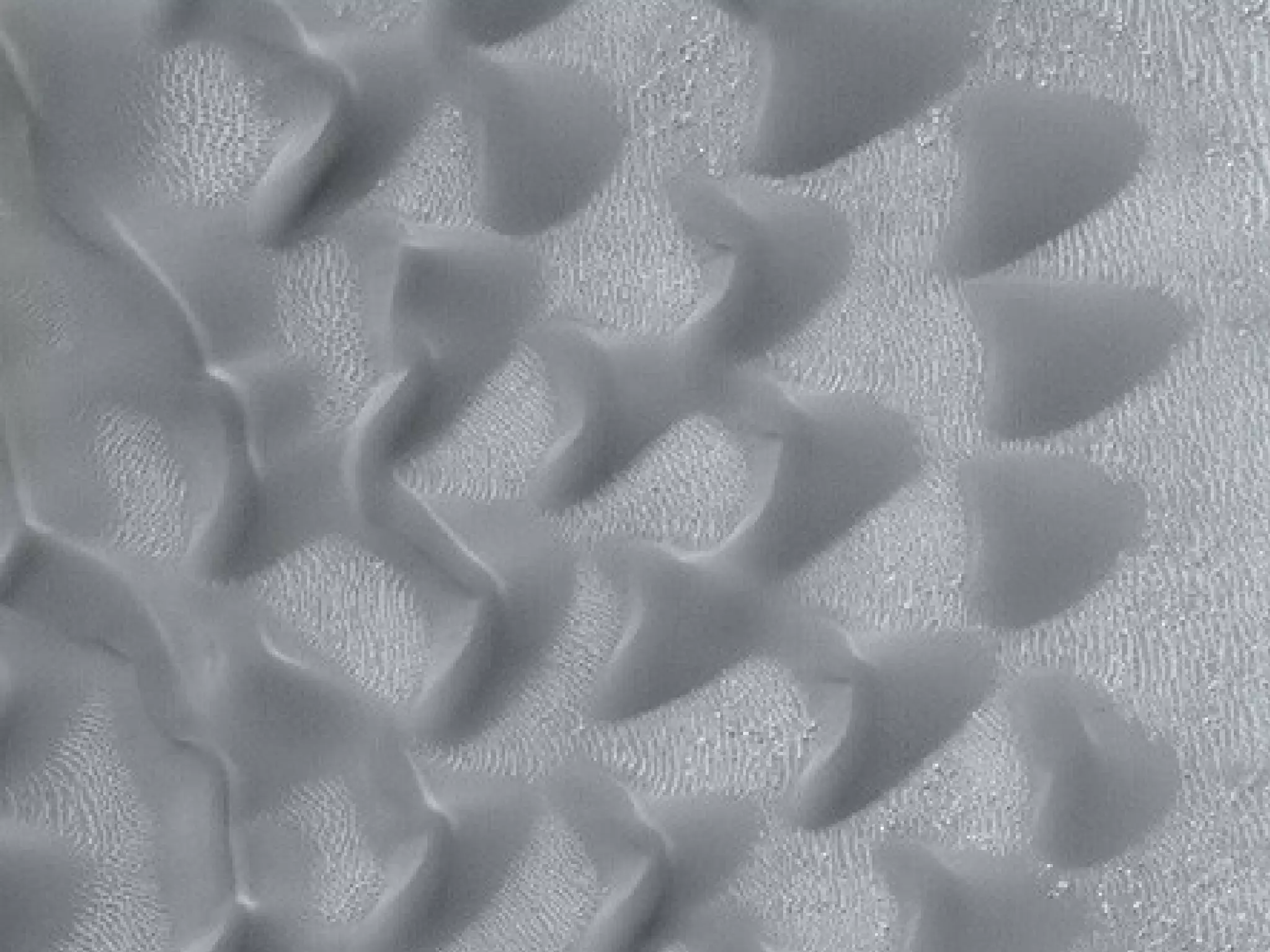
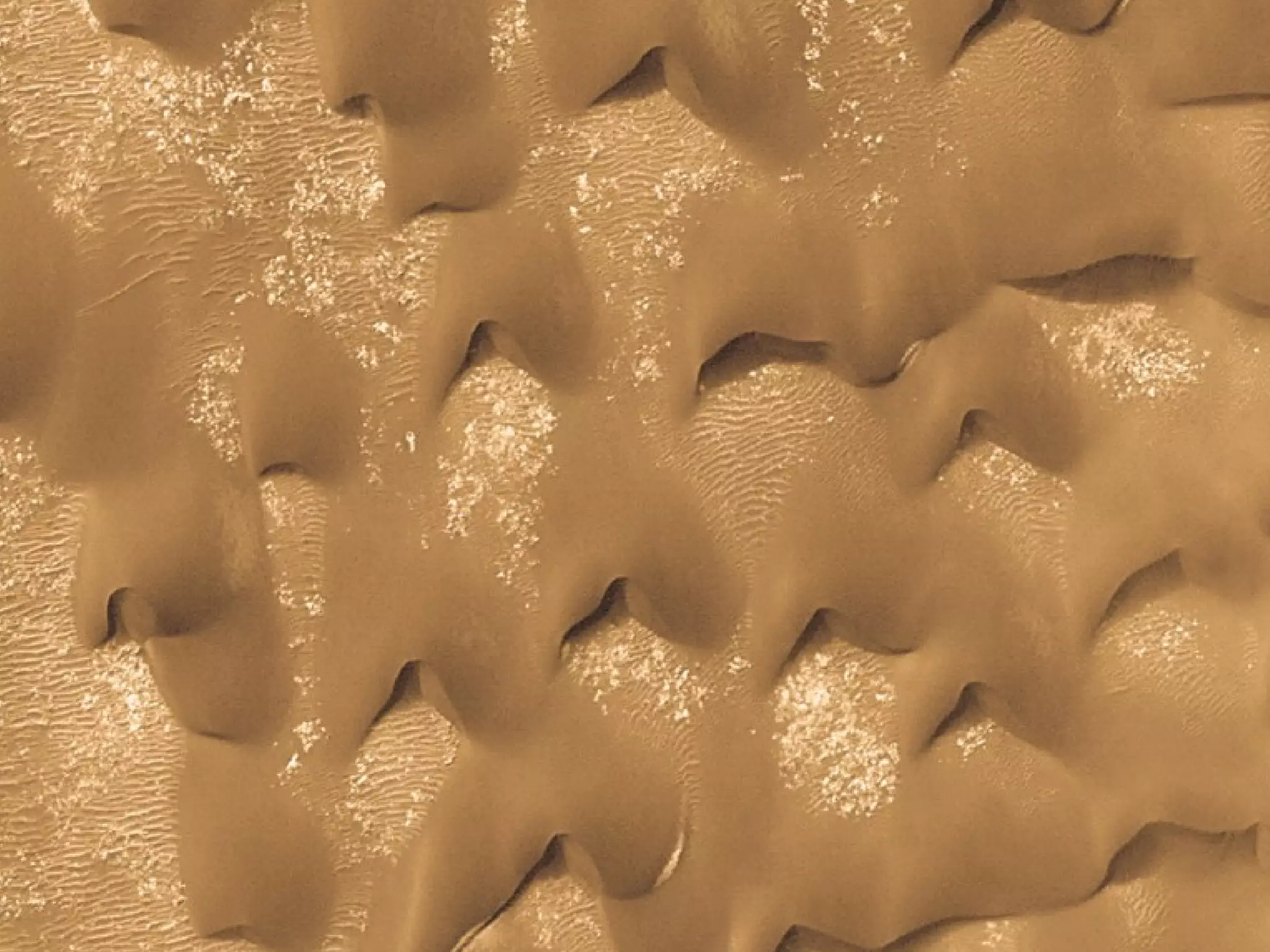
Barchan dunes are crescent-shaped with the horns pointing down wind.
These dunes form under conditions of a limited sand supply and a
consistent wind direction.
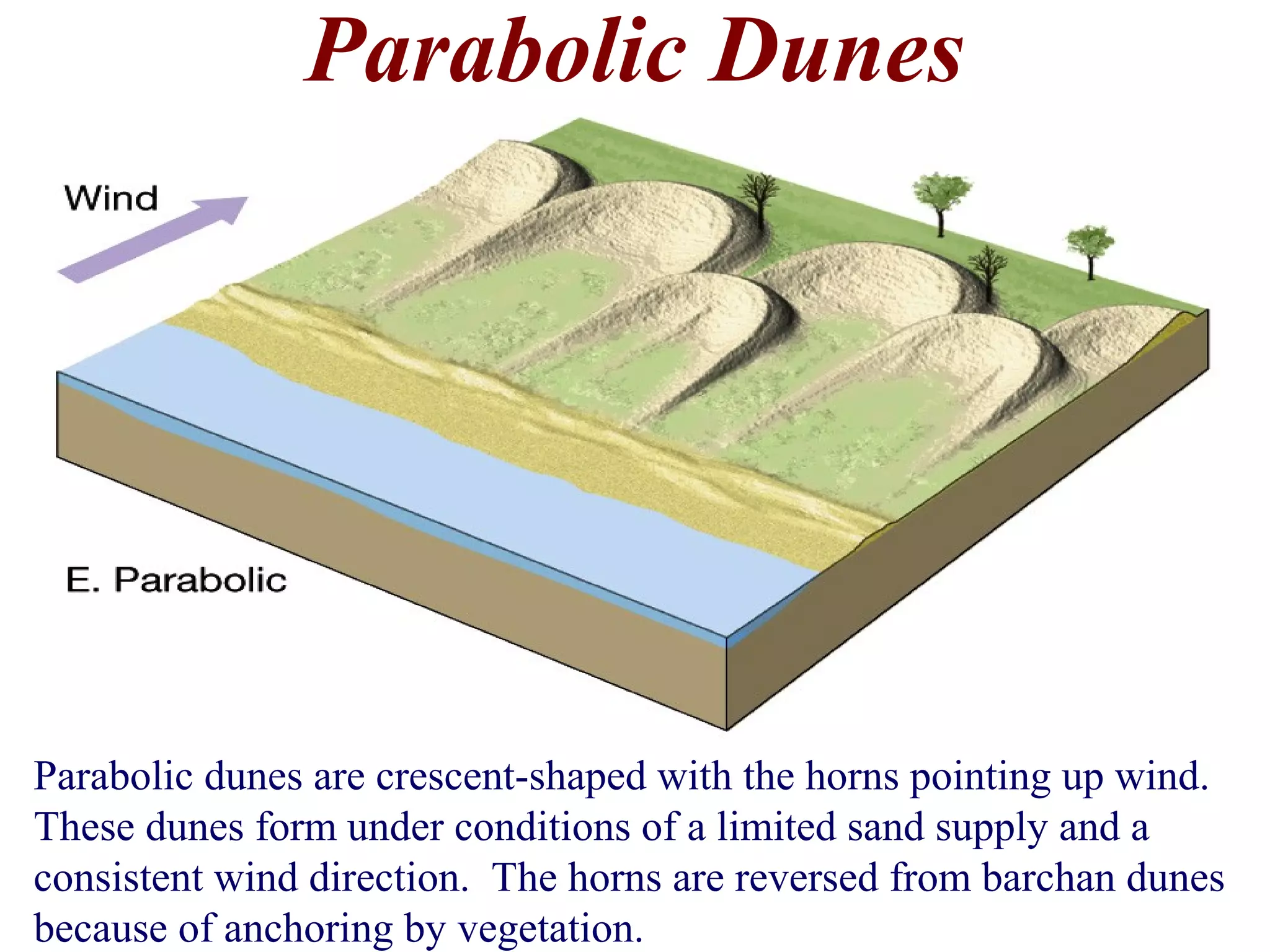
Parabolic Dunes
Parabolic dunes are crescent-shaped with the horns pointing up wind.
These dunes form under conditions of a limited sand supply and a
consistent wind direction. The horns are reversed from barchan dunes
because of anchoring by vegetation.
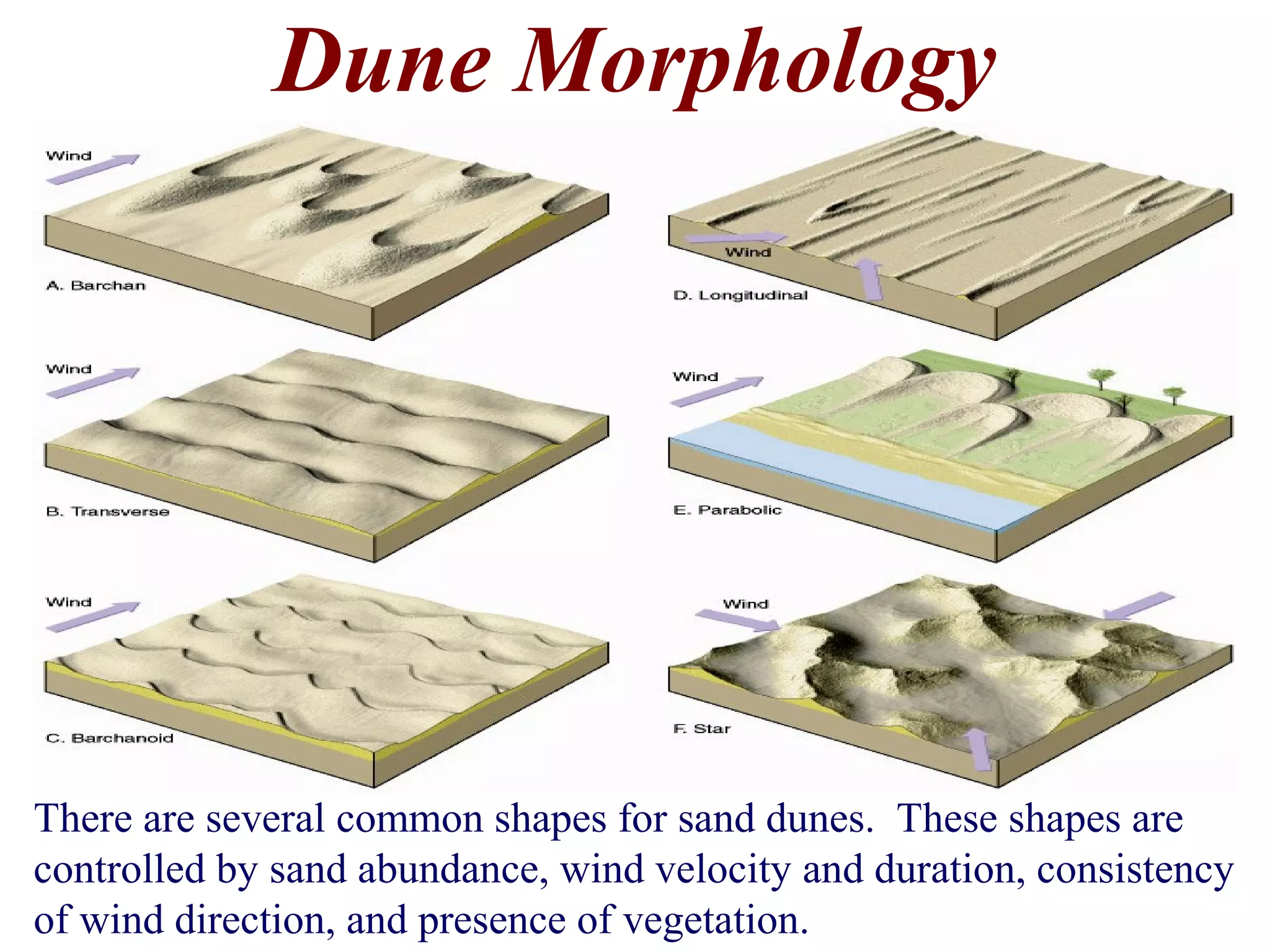
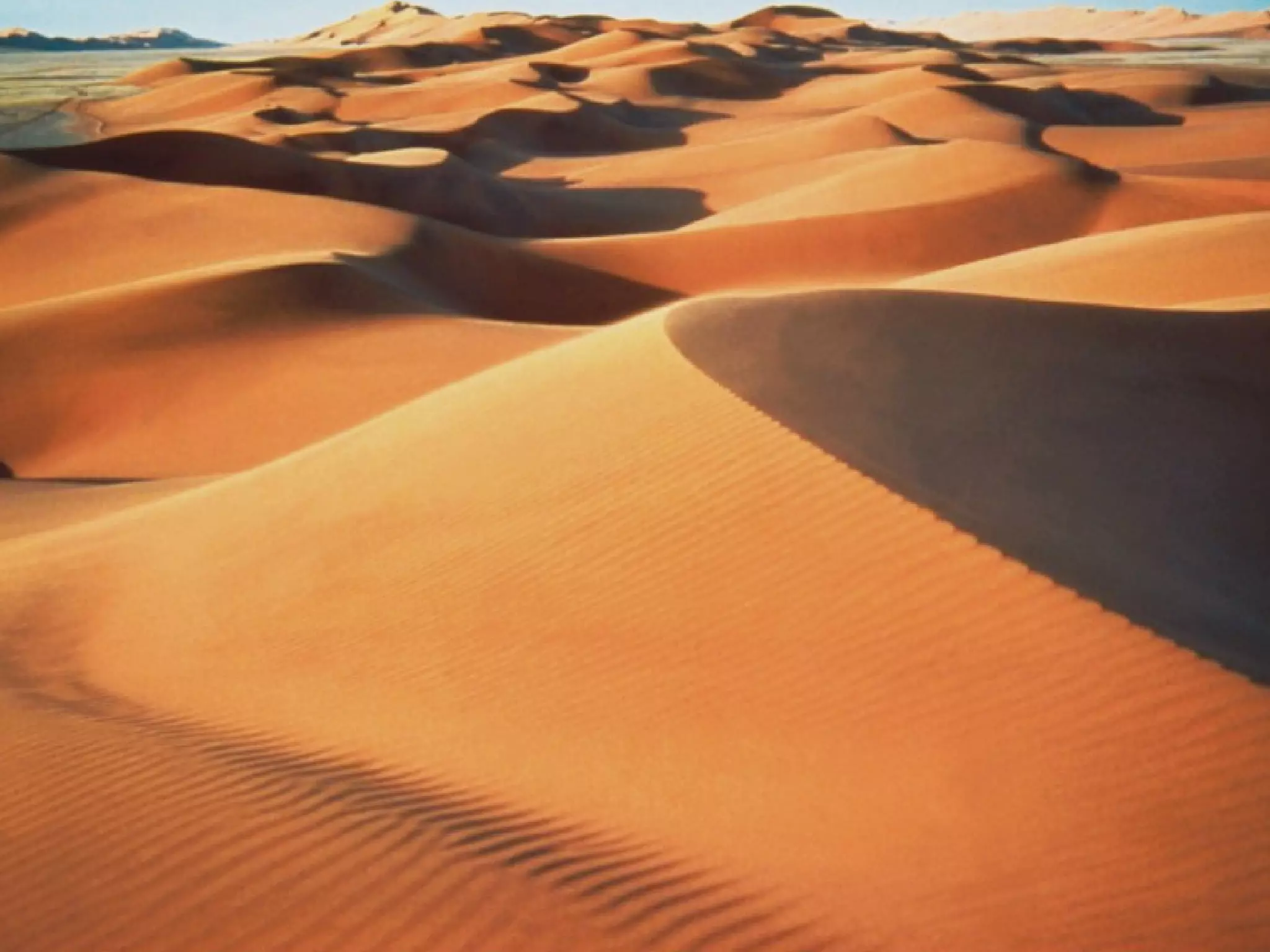
Dune Morphology
There are several common shapes for sand dunes. These shapes are
controlled by sand abundance, wind velocity and duration, consistency
of wind direction, and presence of vegetation.
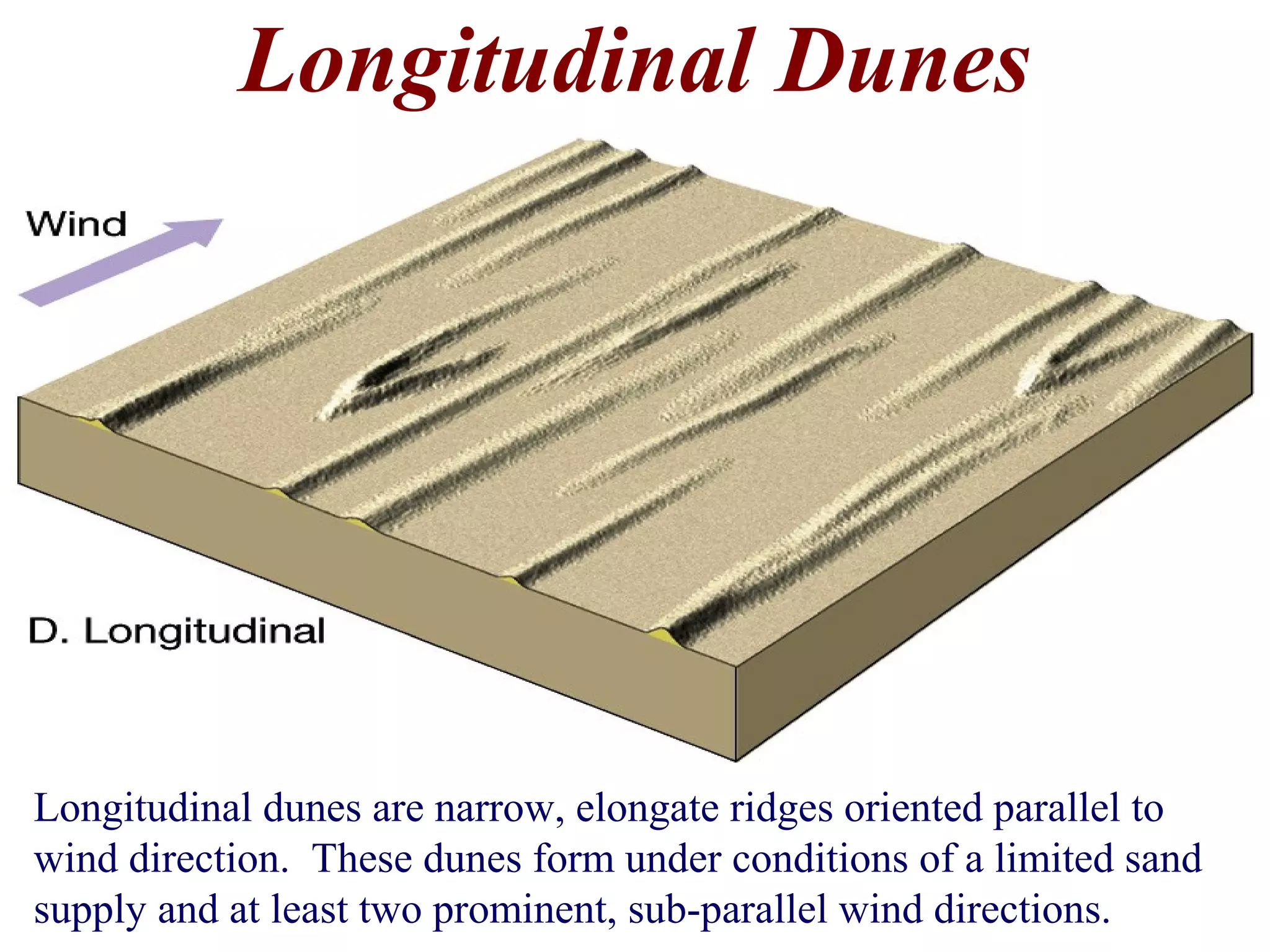
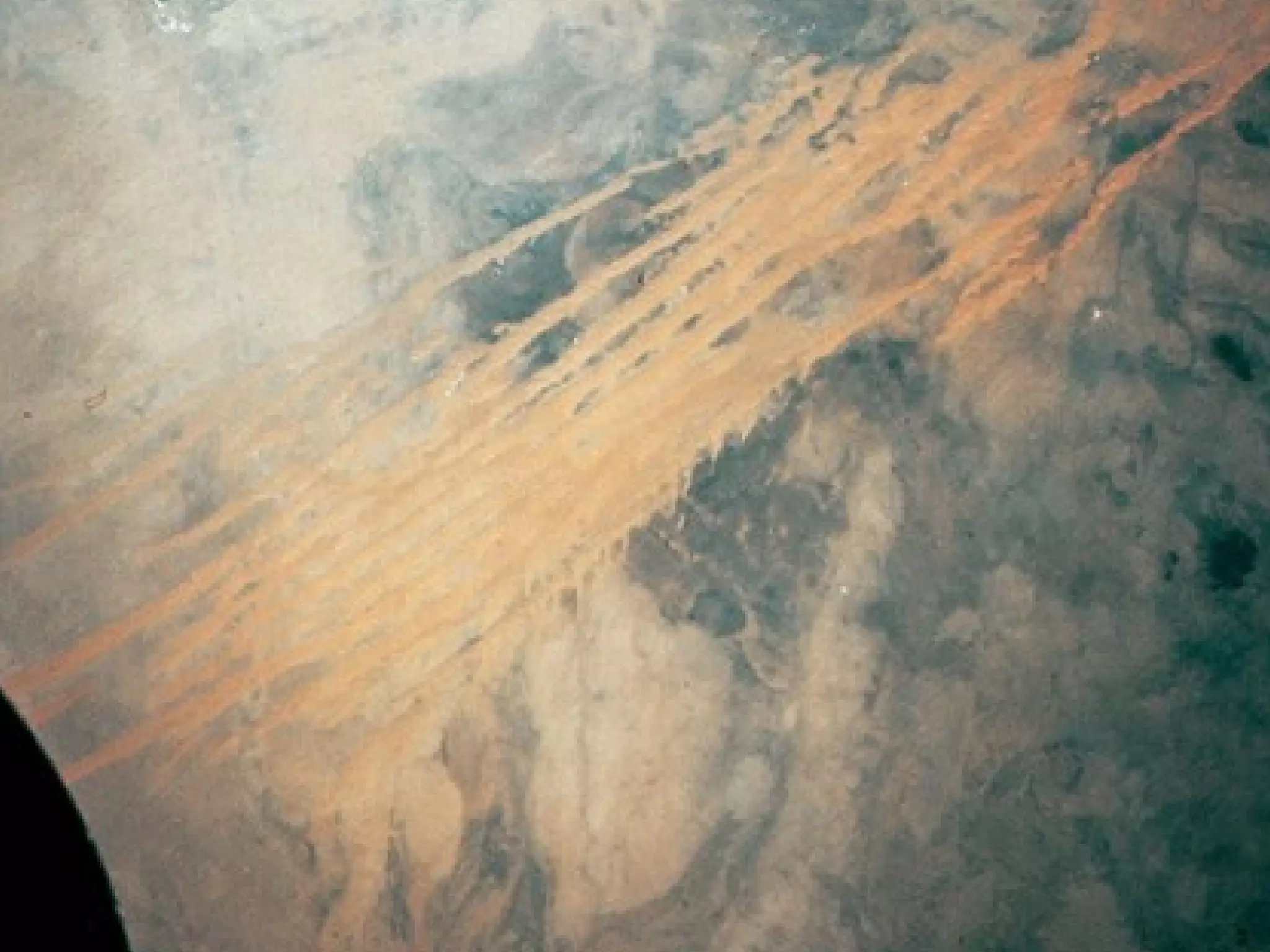
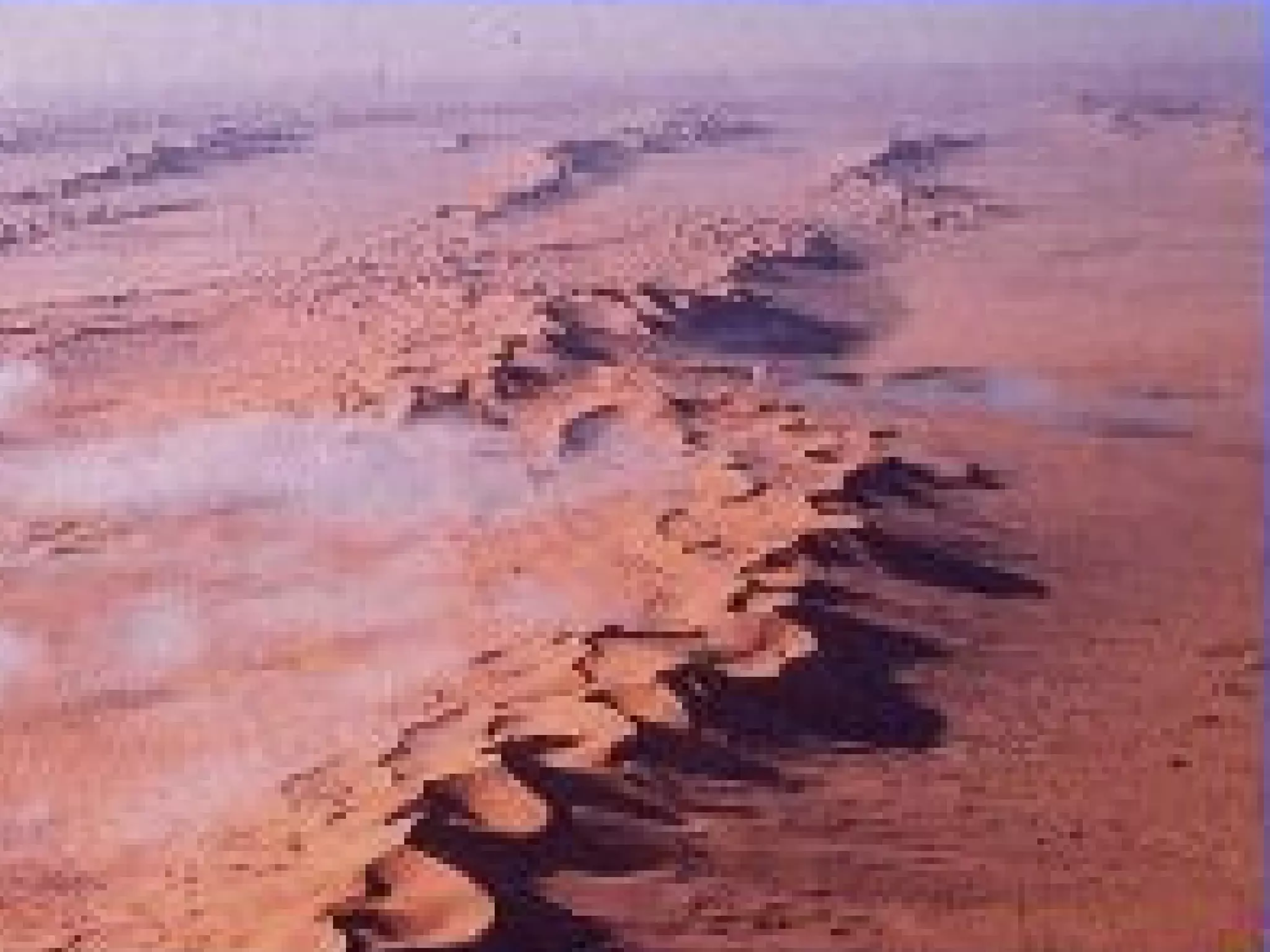
Longitudinal Dunes
Longitudinal dunes are narrow, elongate ridges oriented parallel to
wind direction. These dunes form under conditions of a limited sand
supply and at least two prominent, sub-parallel wind directions.
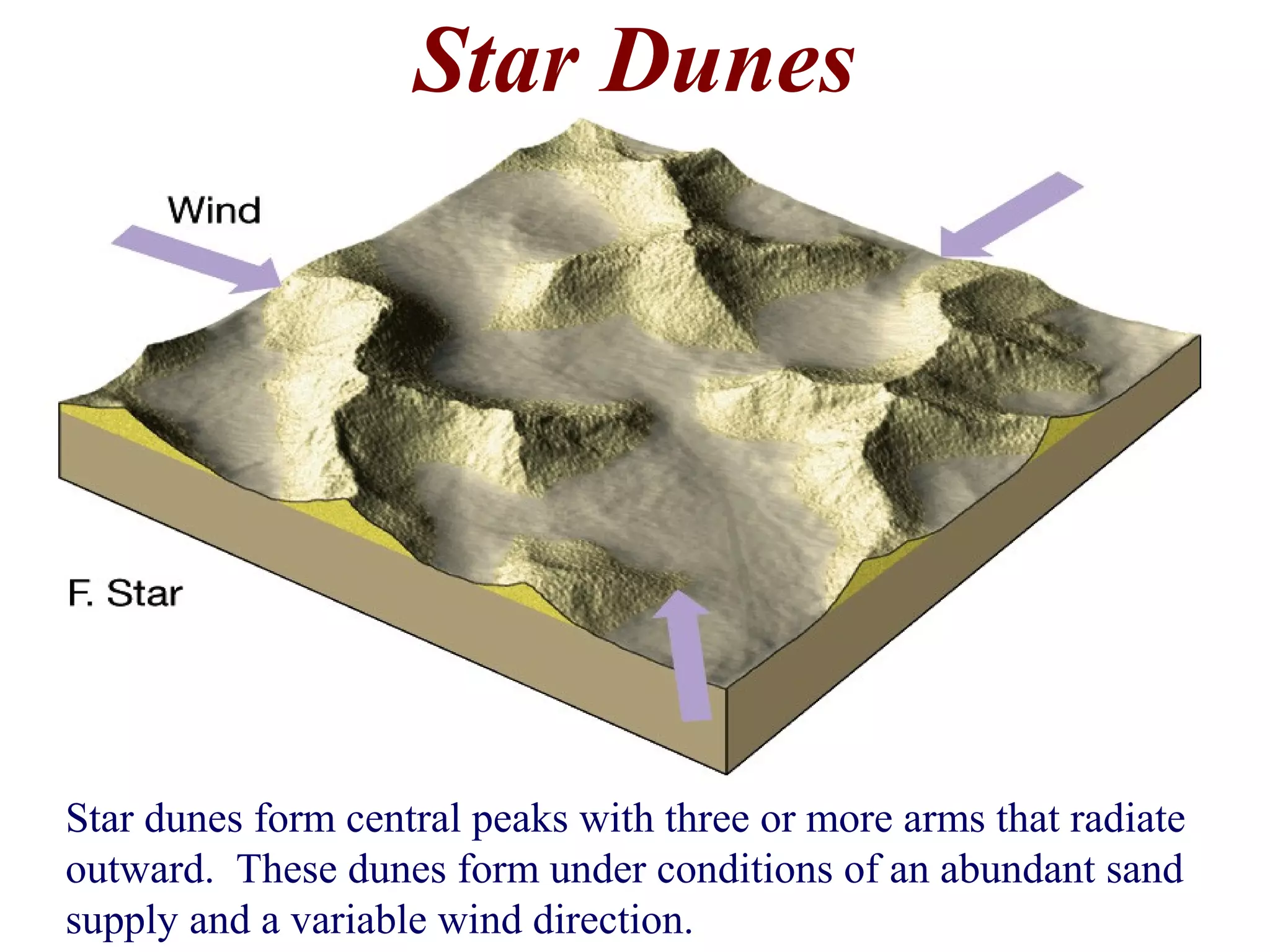
Star Dunes
Star dunes form central peaks with three or more arms that radiate
outward. These dunes form under conditions of an abundant sand
supply and a variable wind direction.
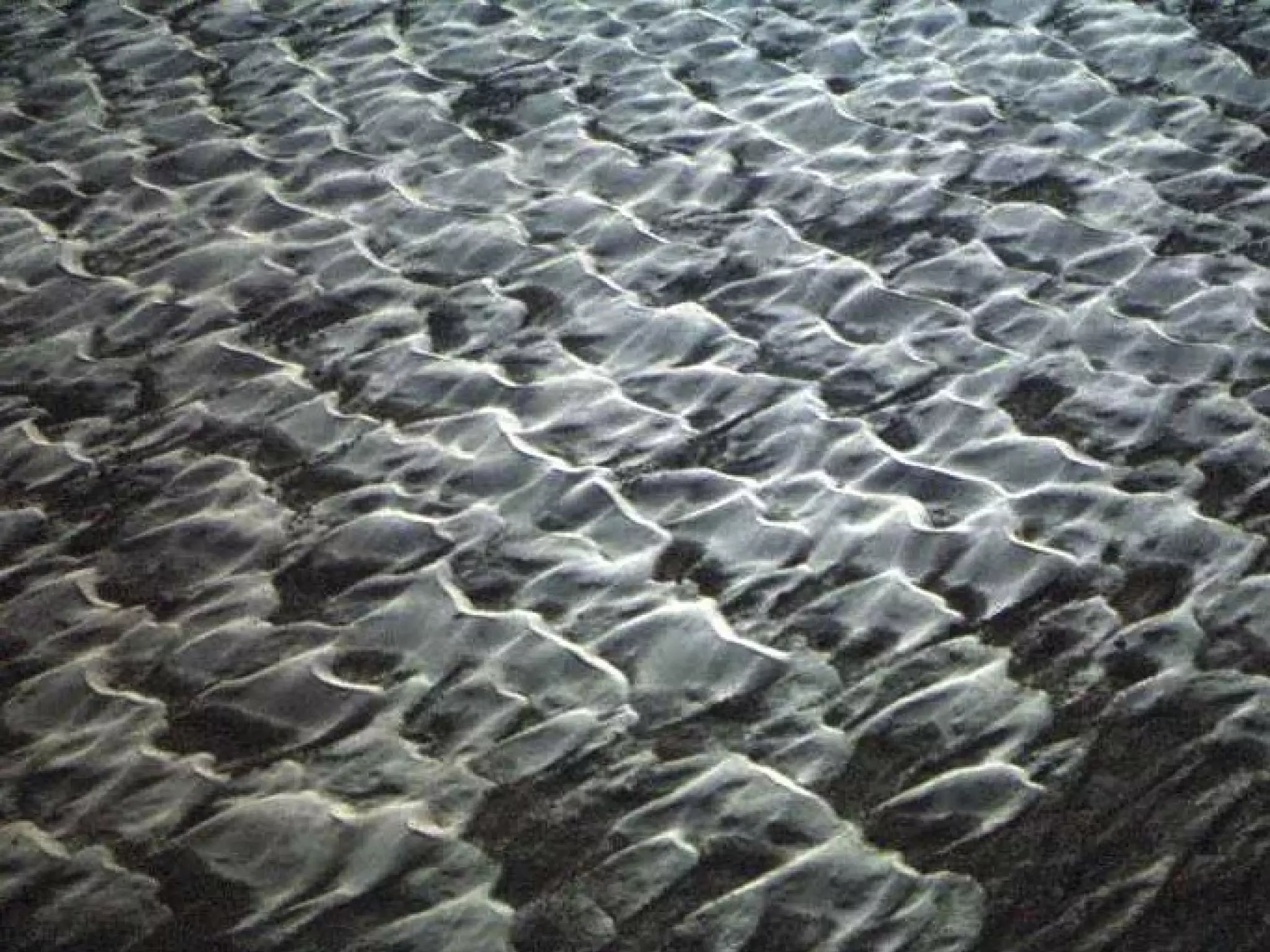
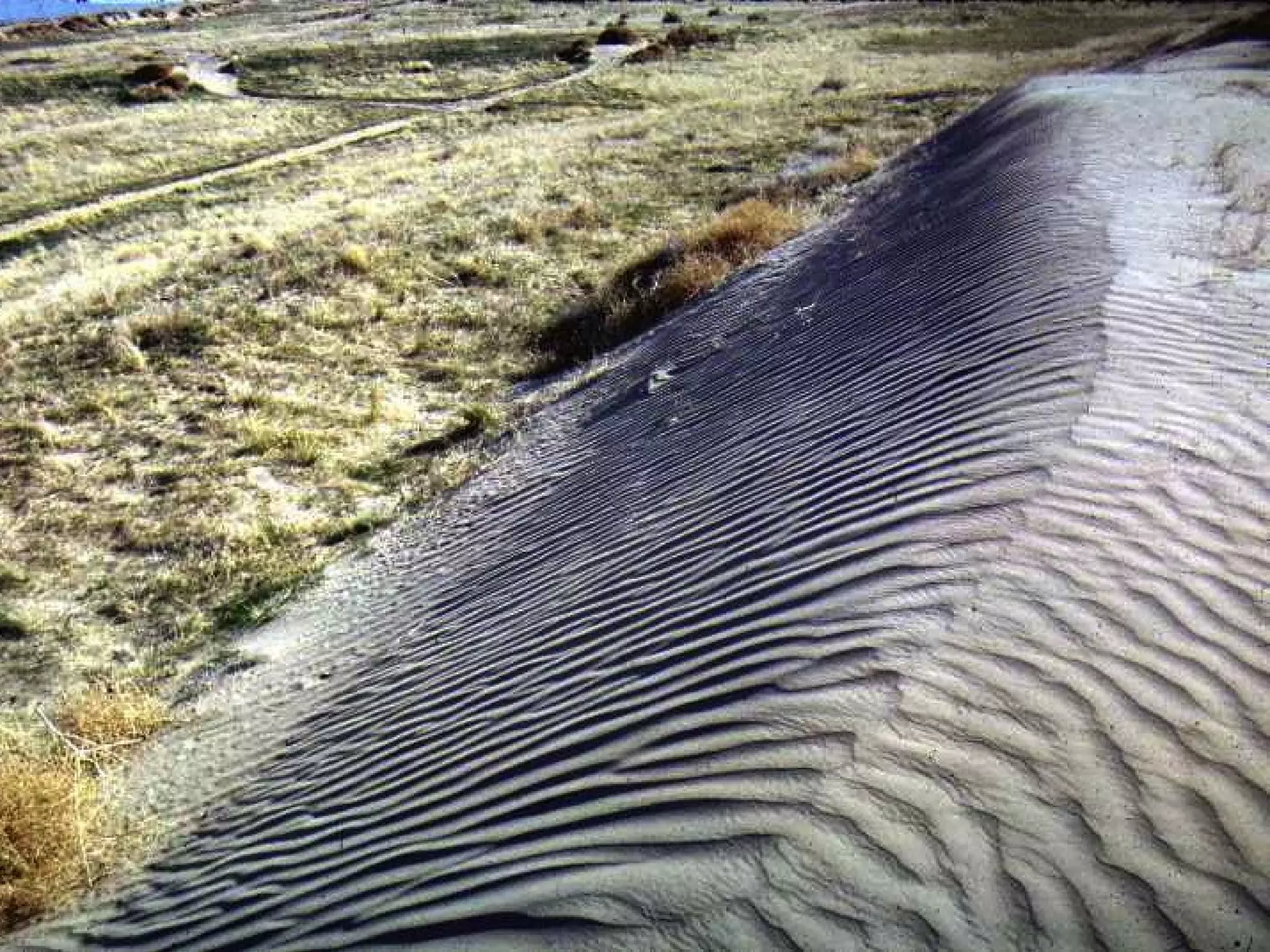
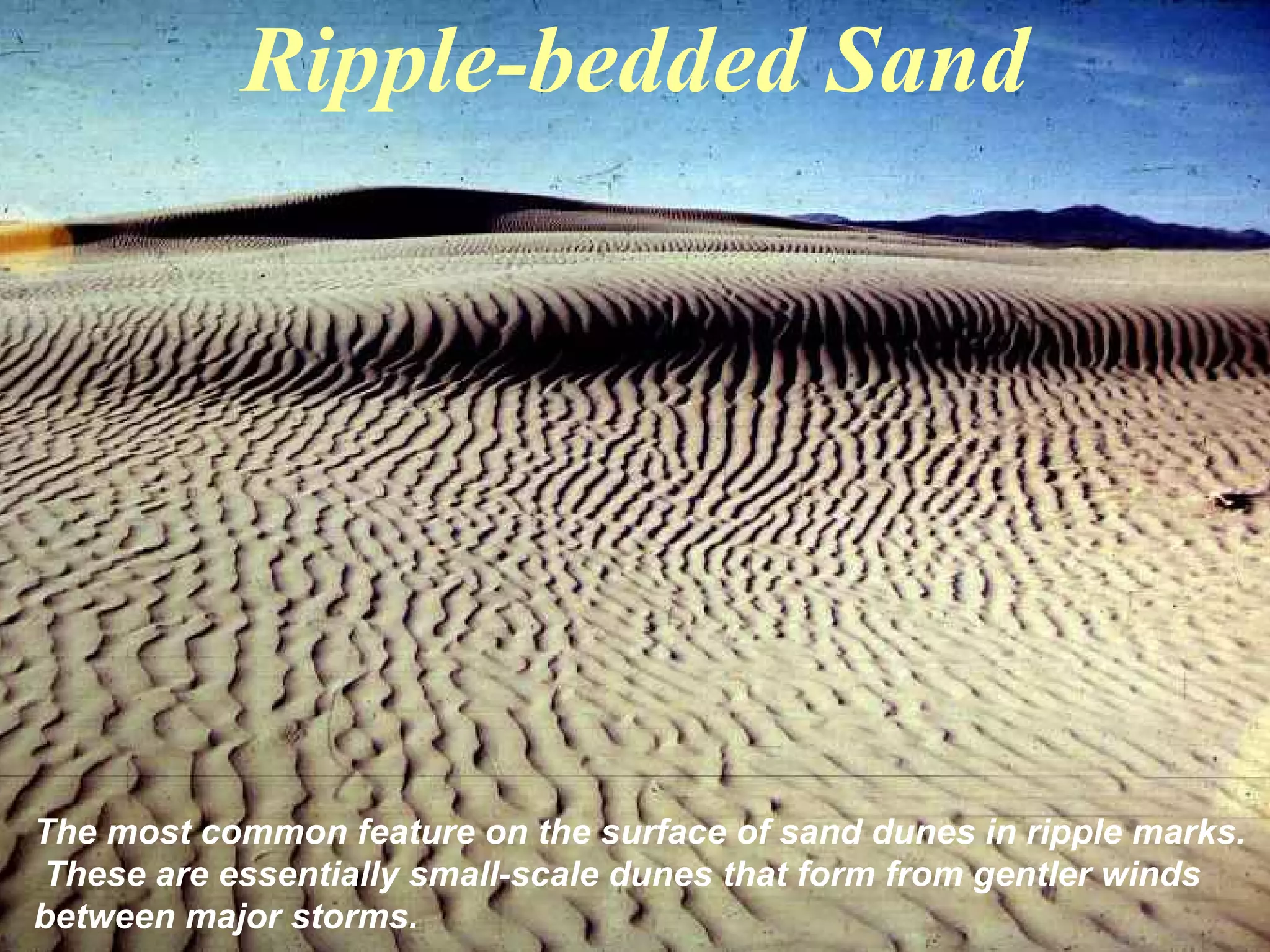
Ripple-bedded Sand
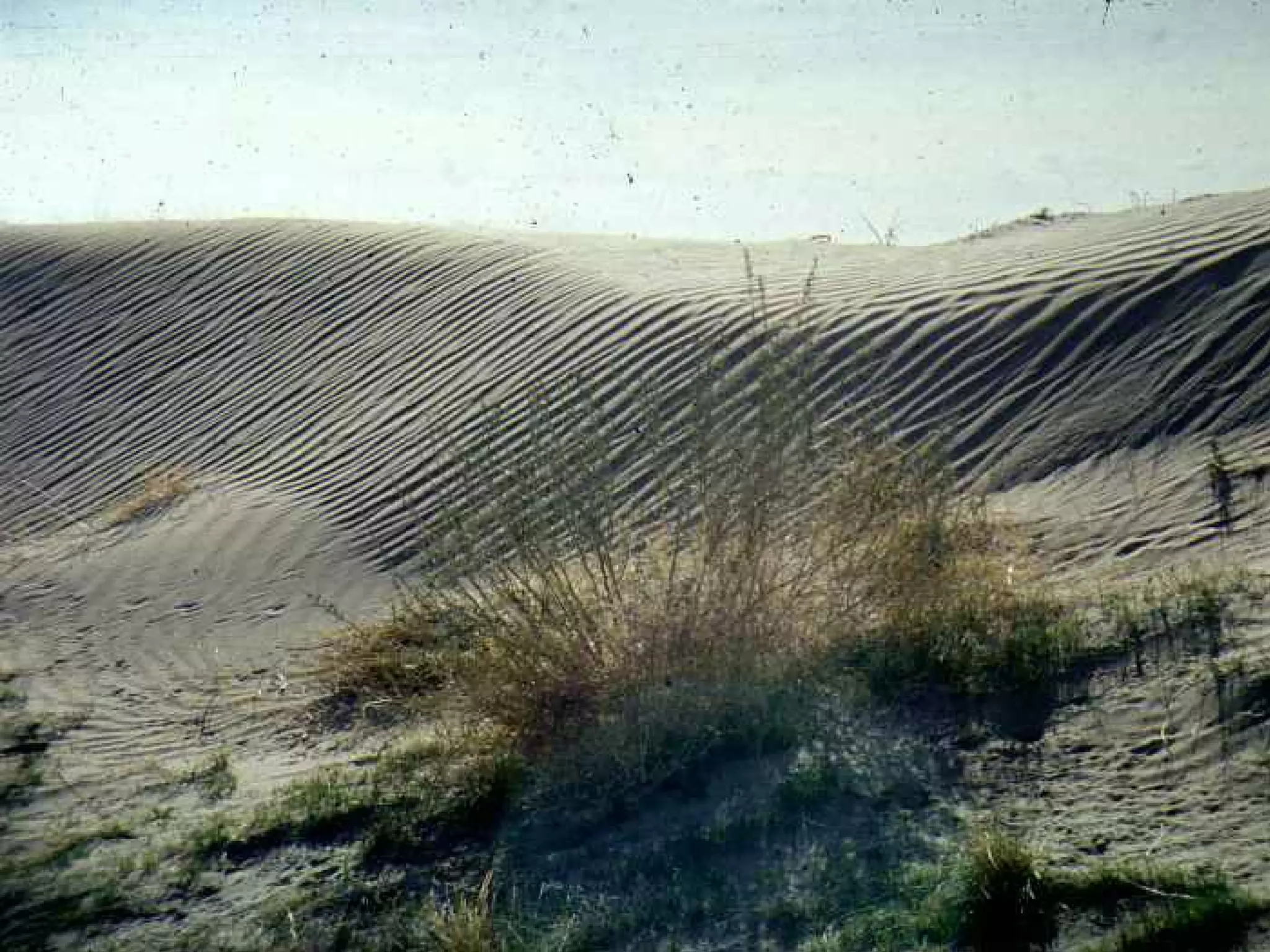
The most common feature on the surface of sand dunes in ripple marks.
These are essentially small-scale dunes that form from gentler winds
between major storms.
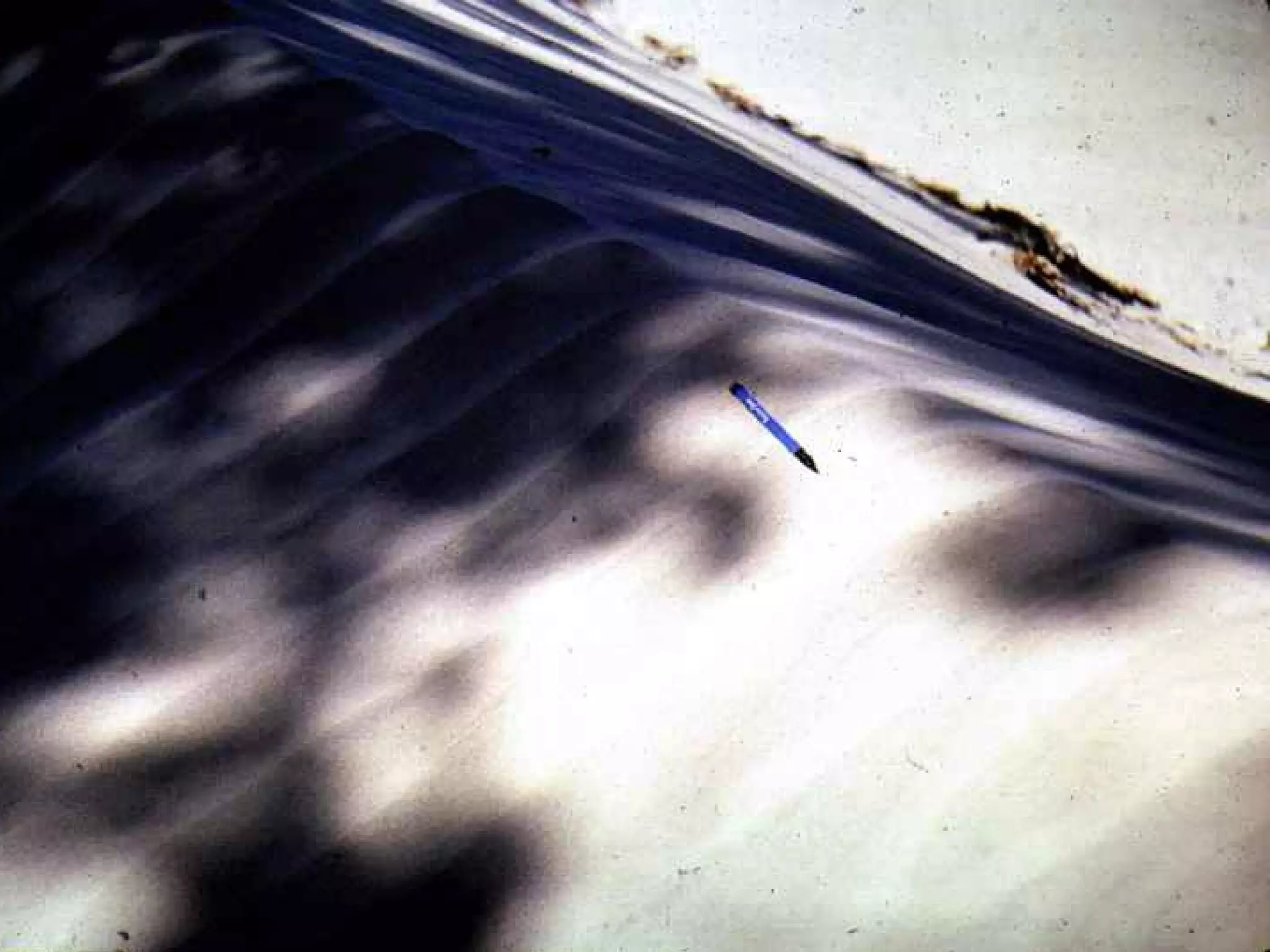
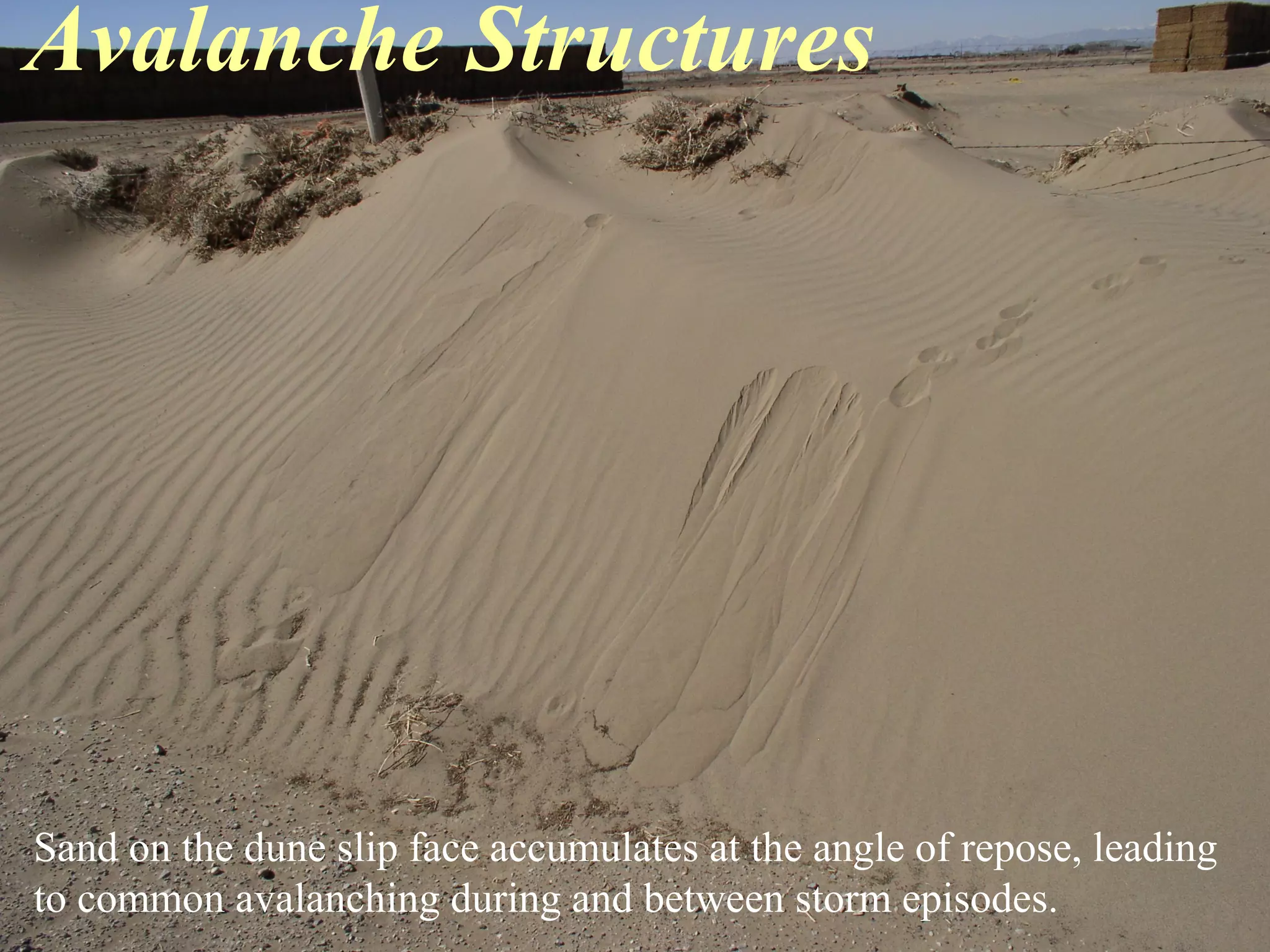
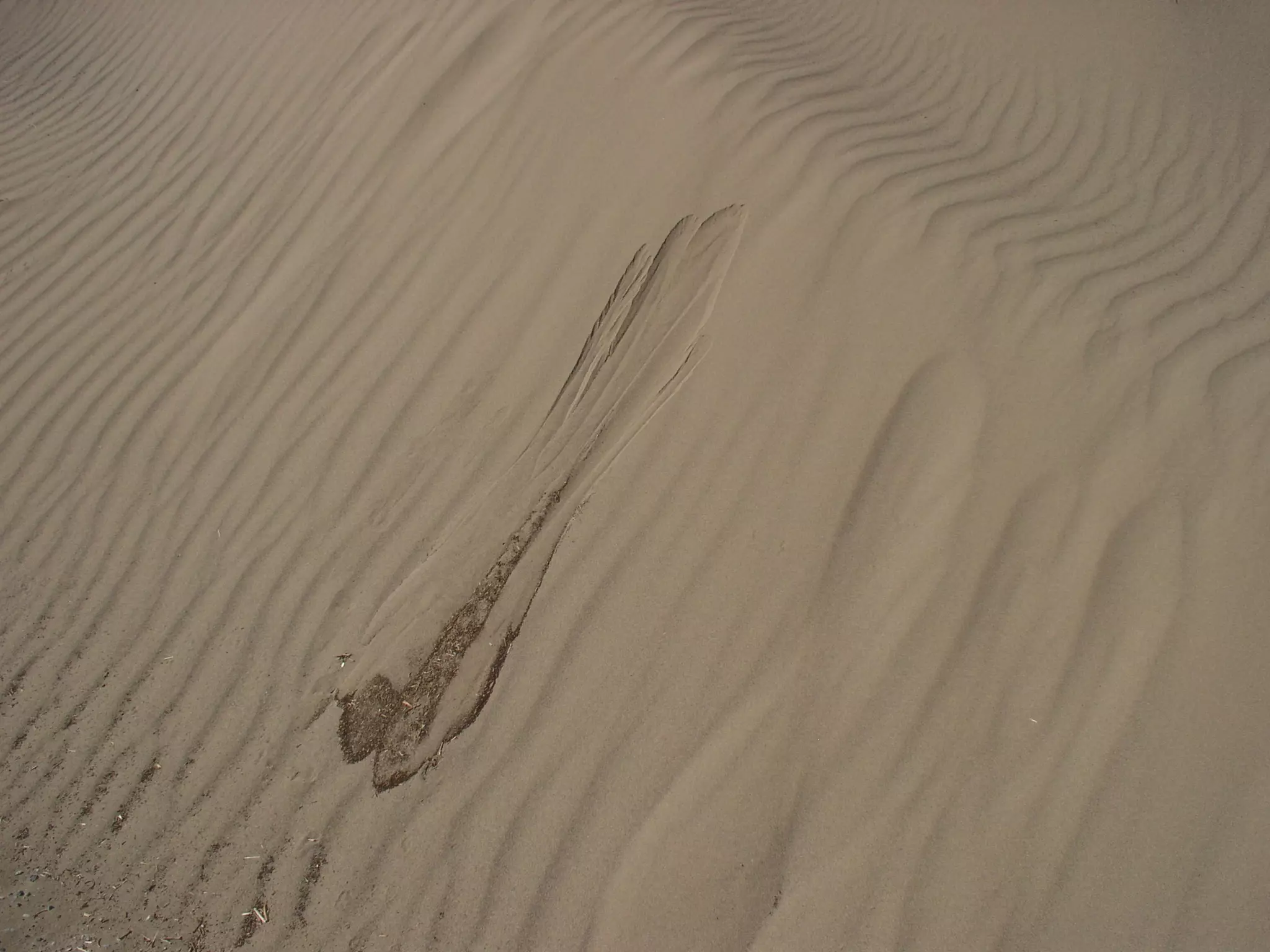
Avalanche Structures
Sand on the dune slip face accumulates at the angle of repose, leading
to common avalanching during and between storm episodes.
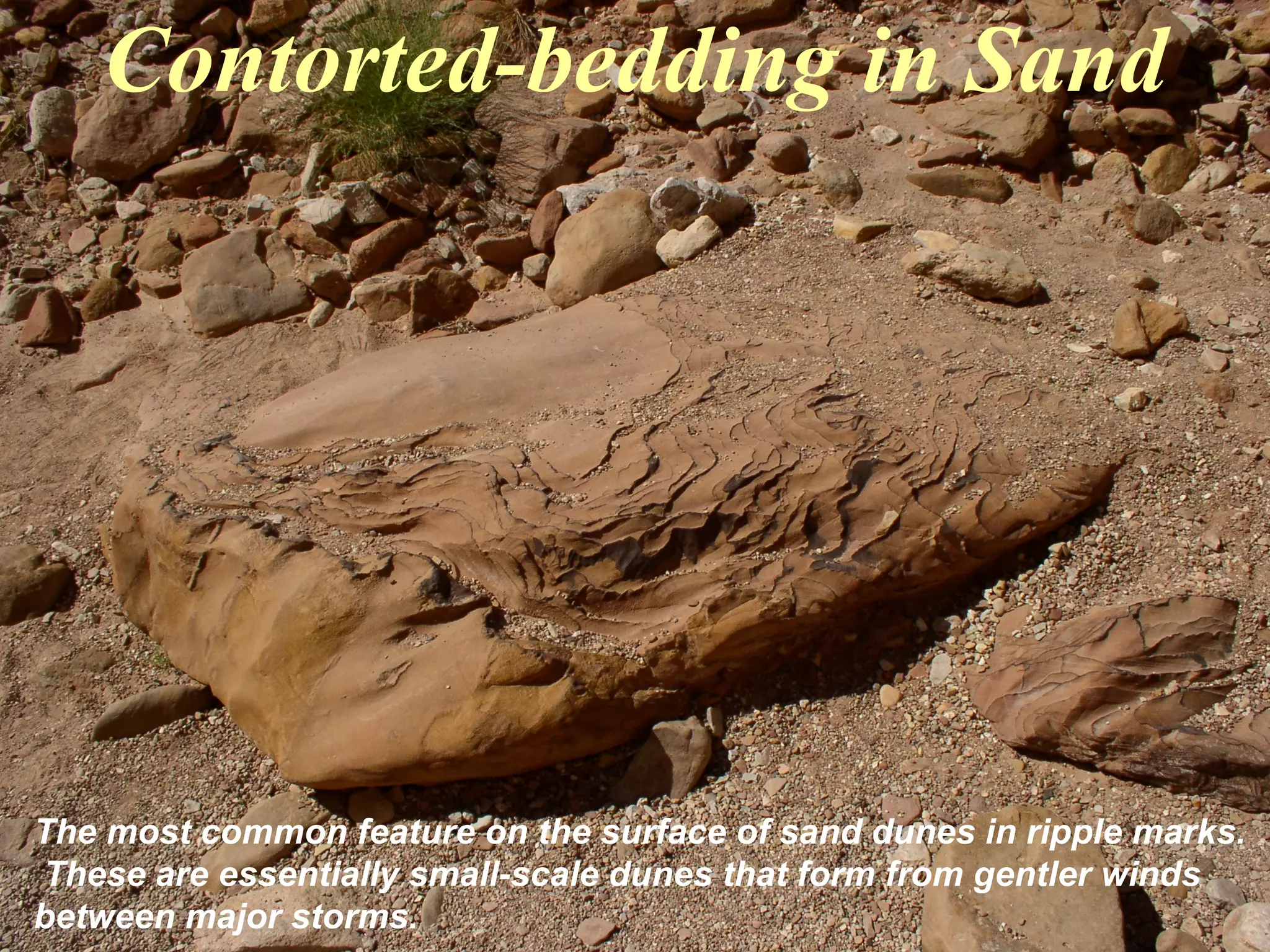
Contorted-bedding in Sand
The most common feature on the surface of sand dunes in ripple marks.
These are essentially small-scale dunes that form from gentler winds
between major storms.
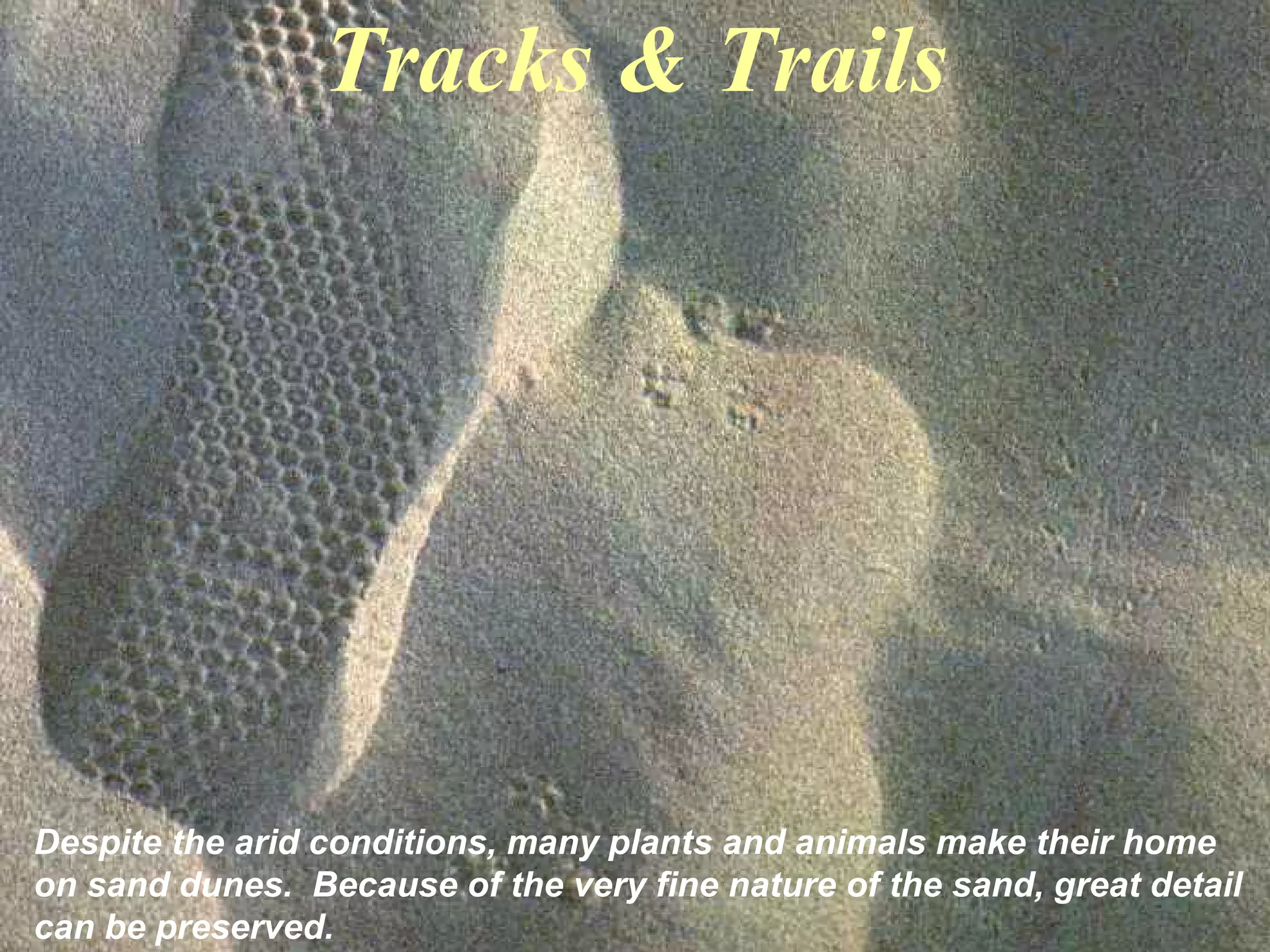
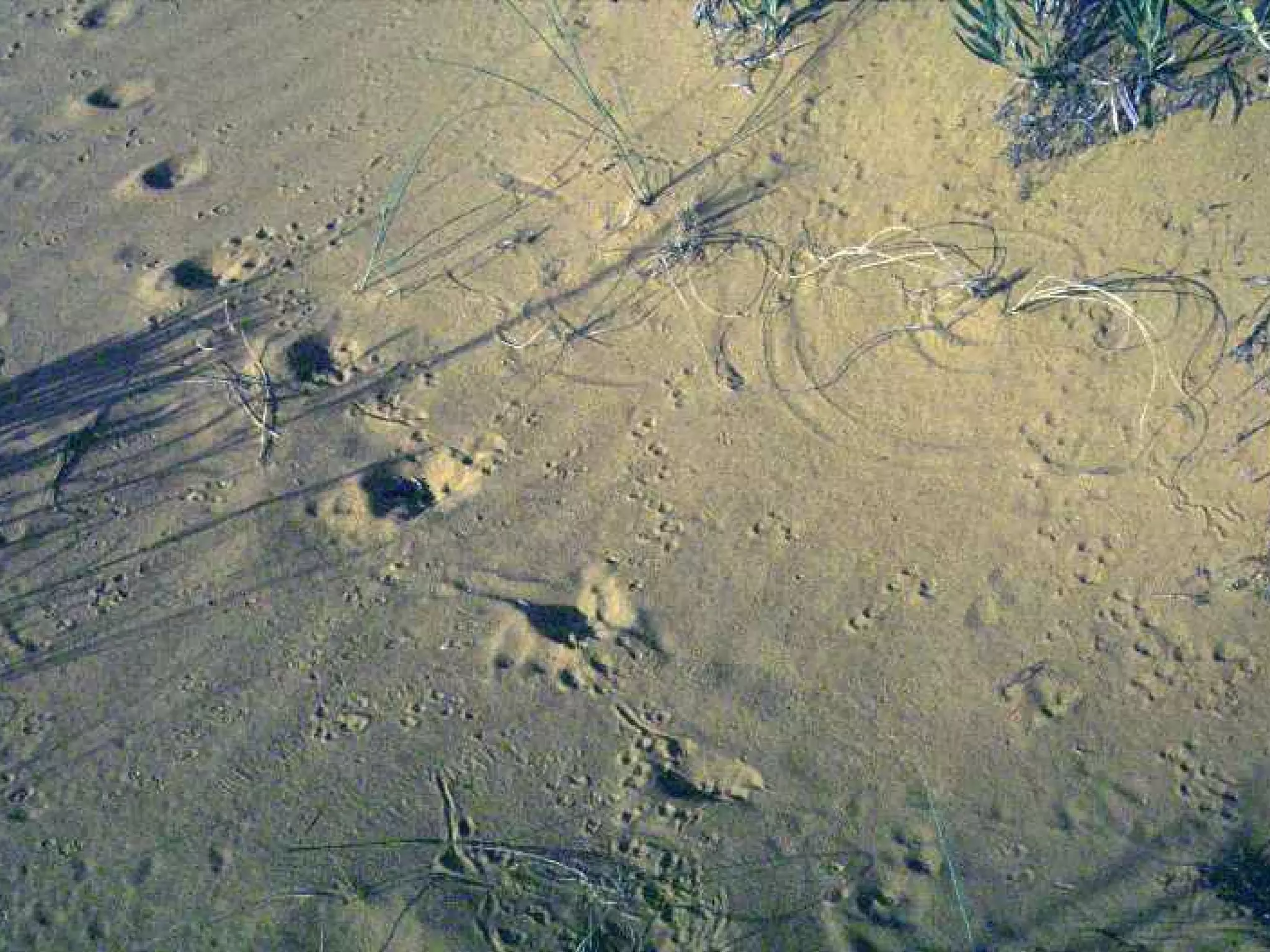
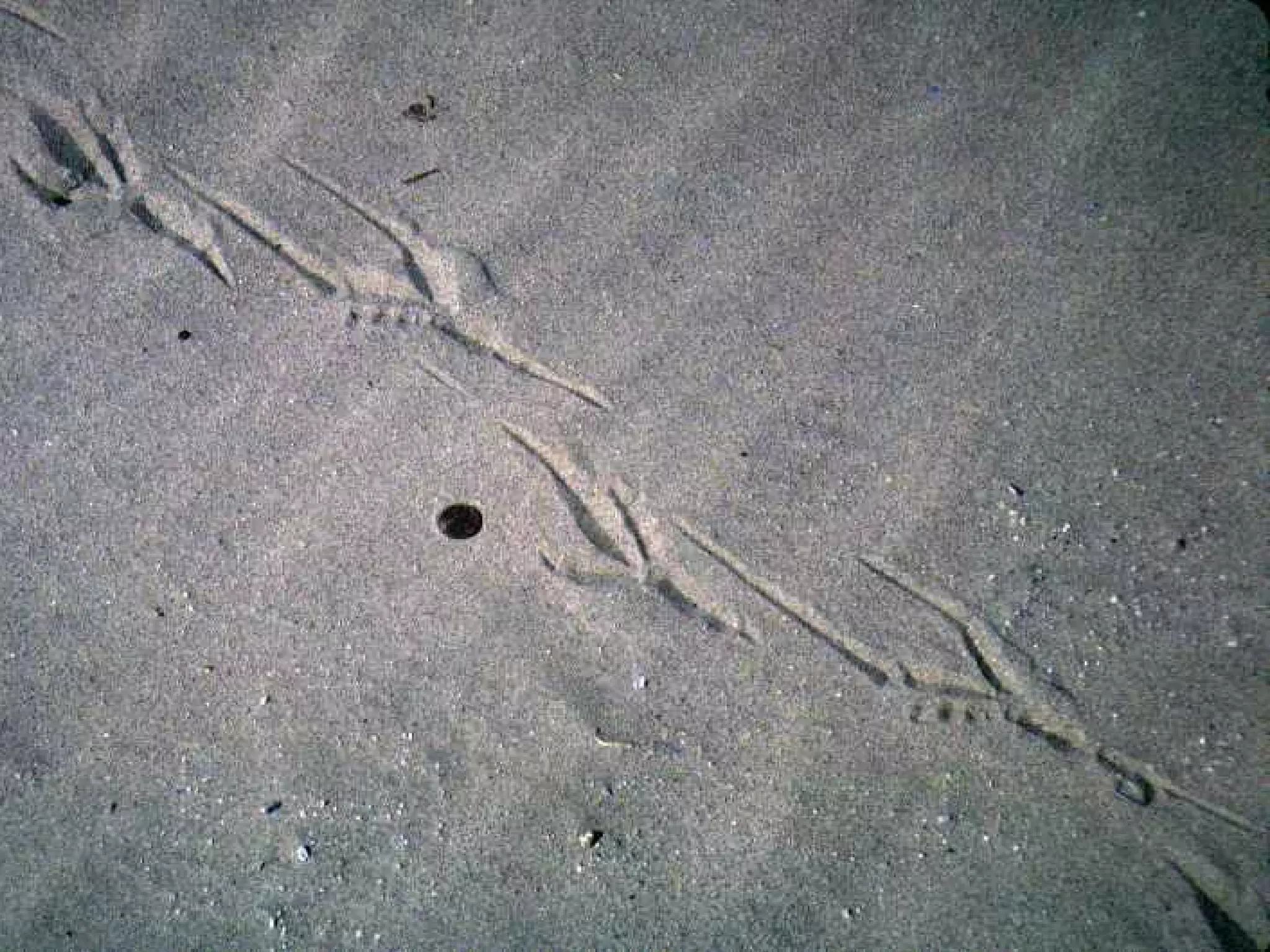
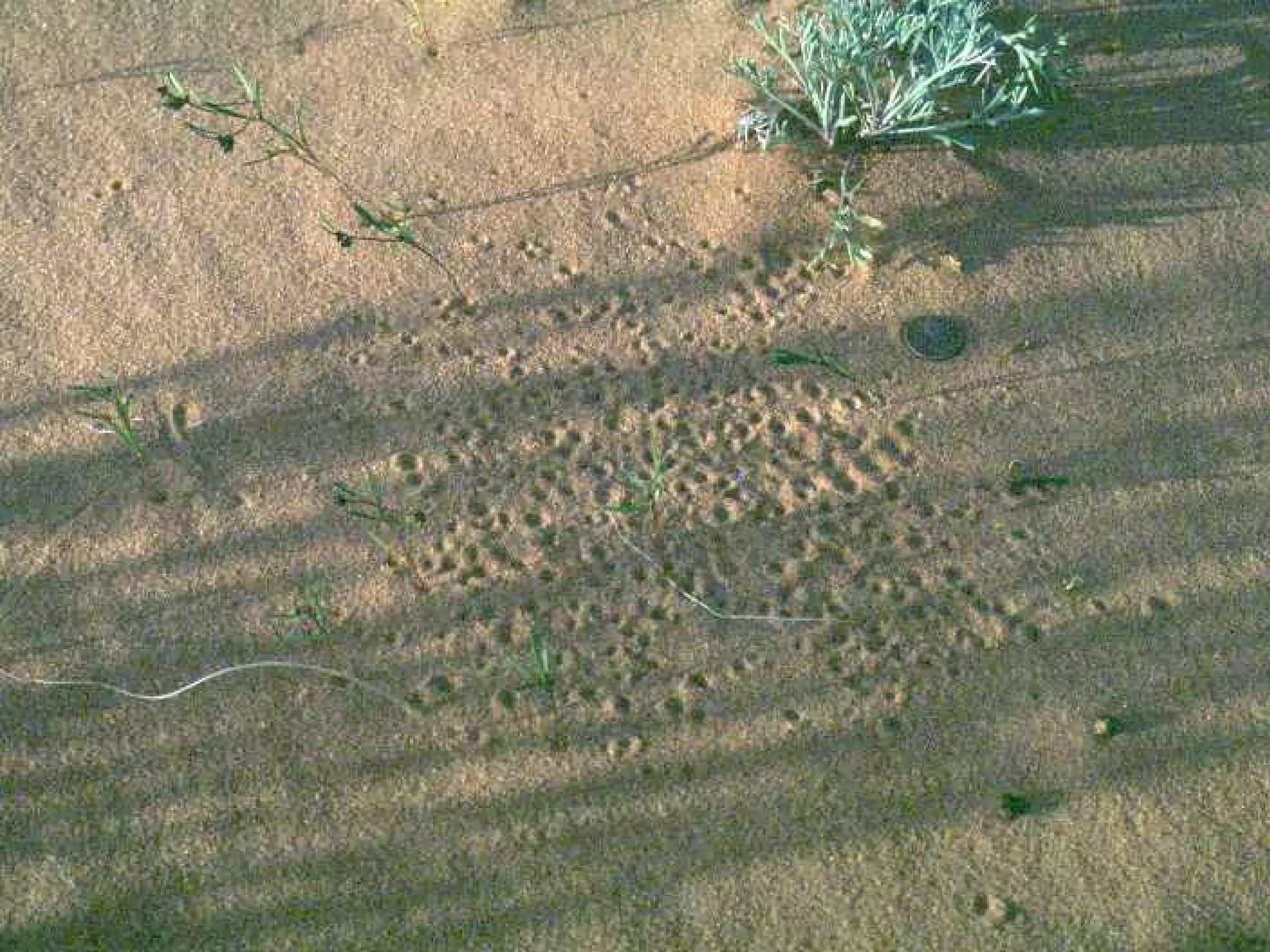
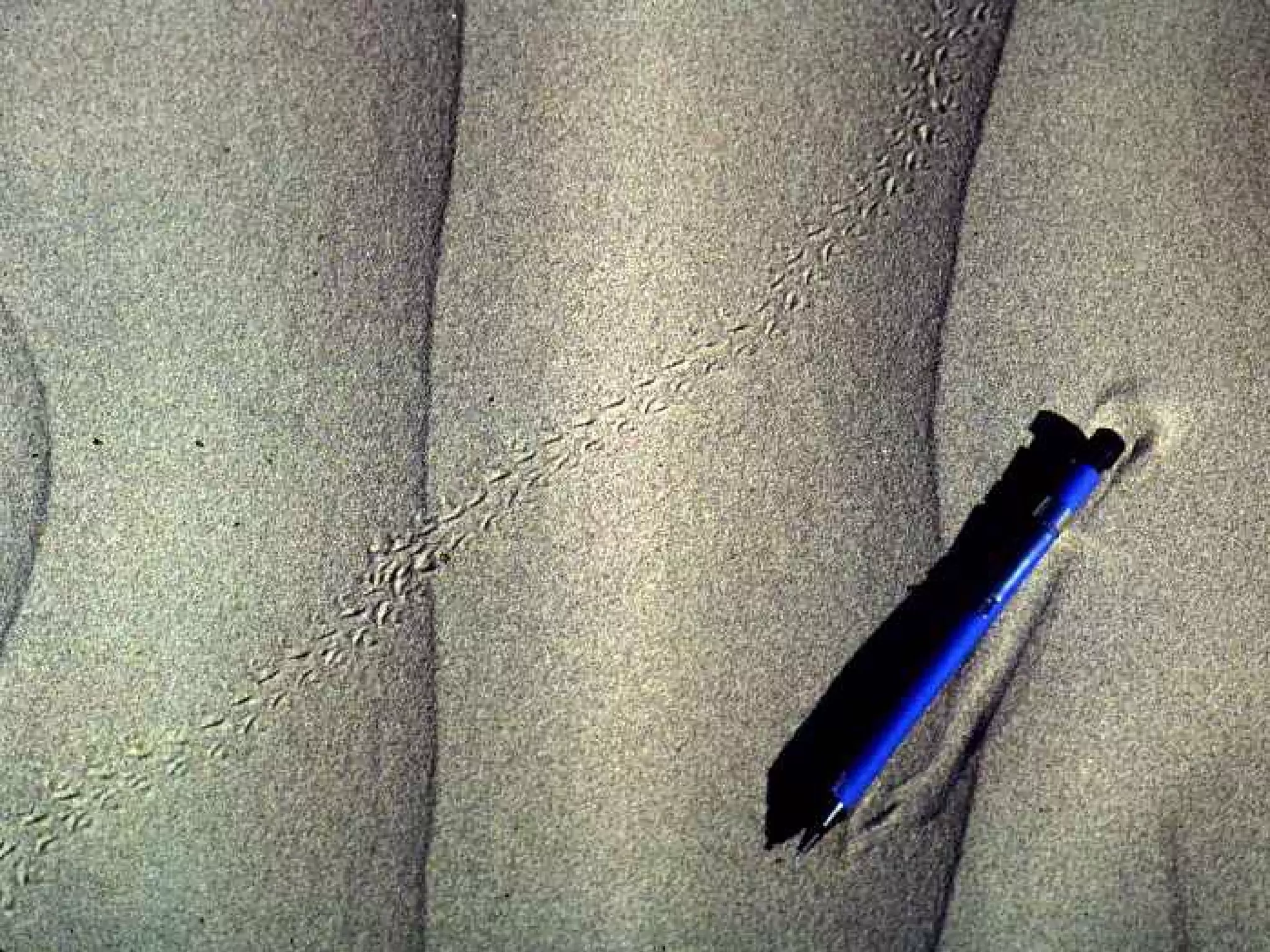
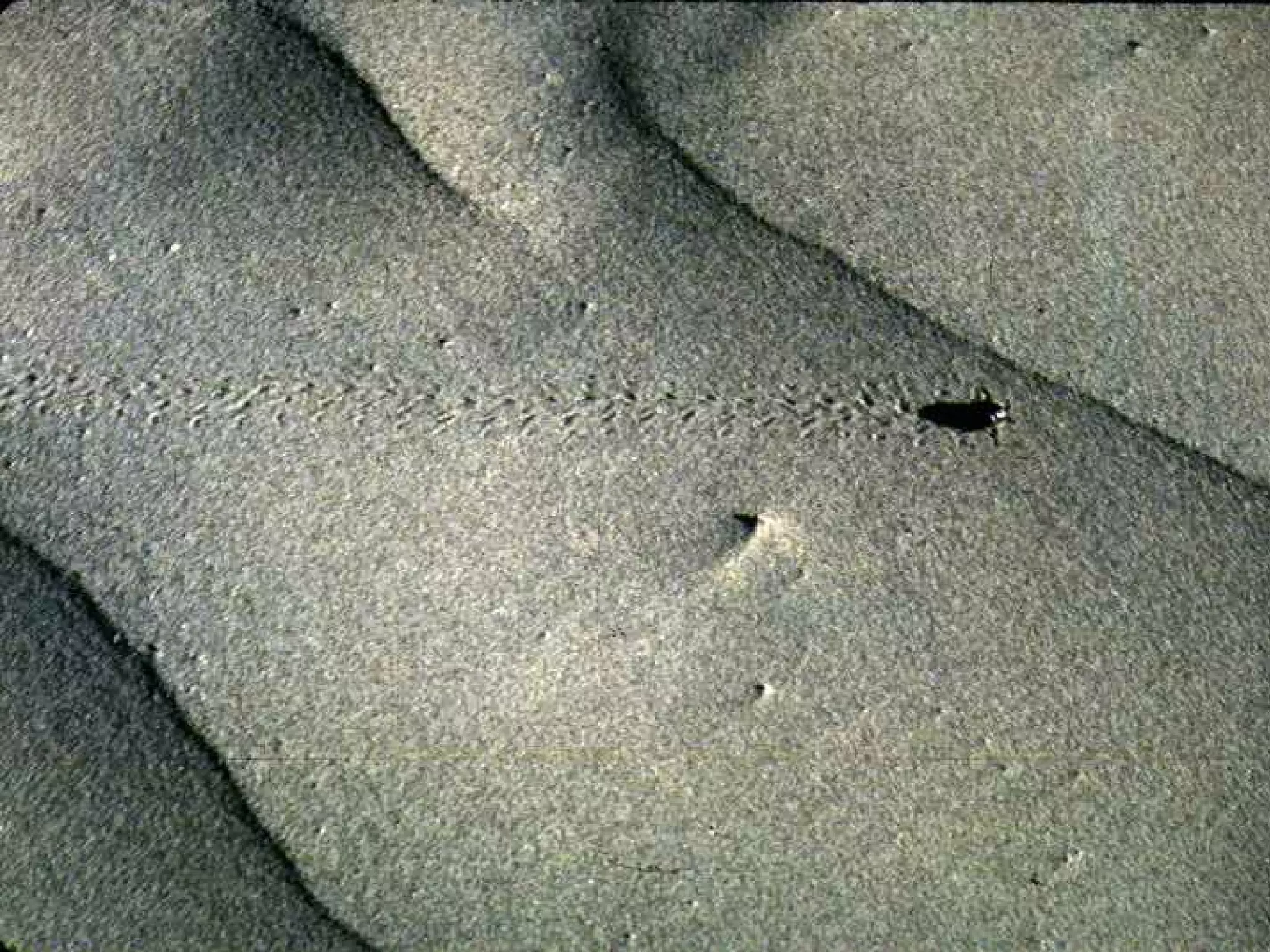
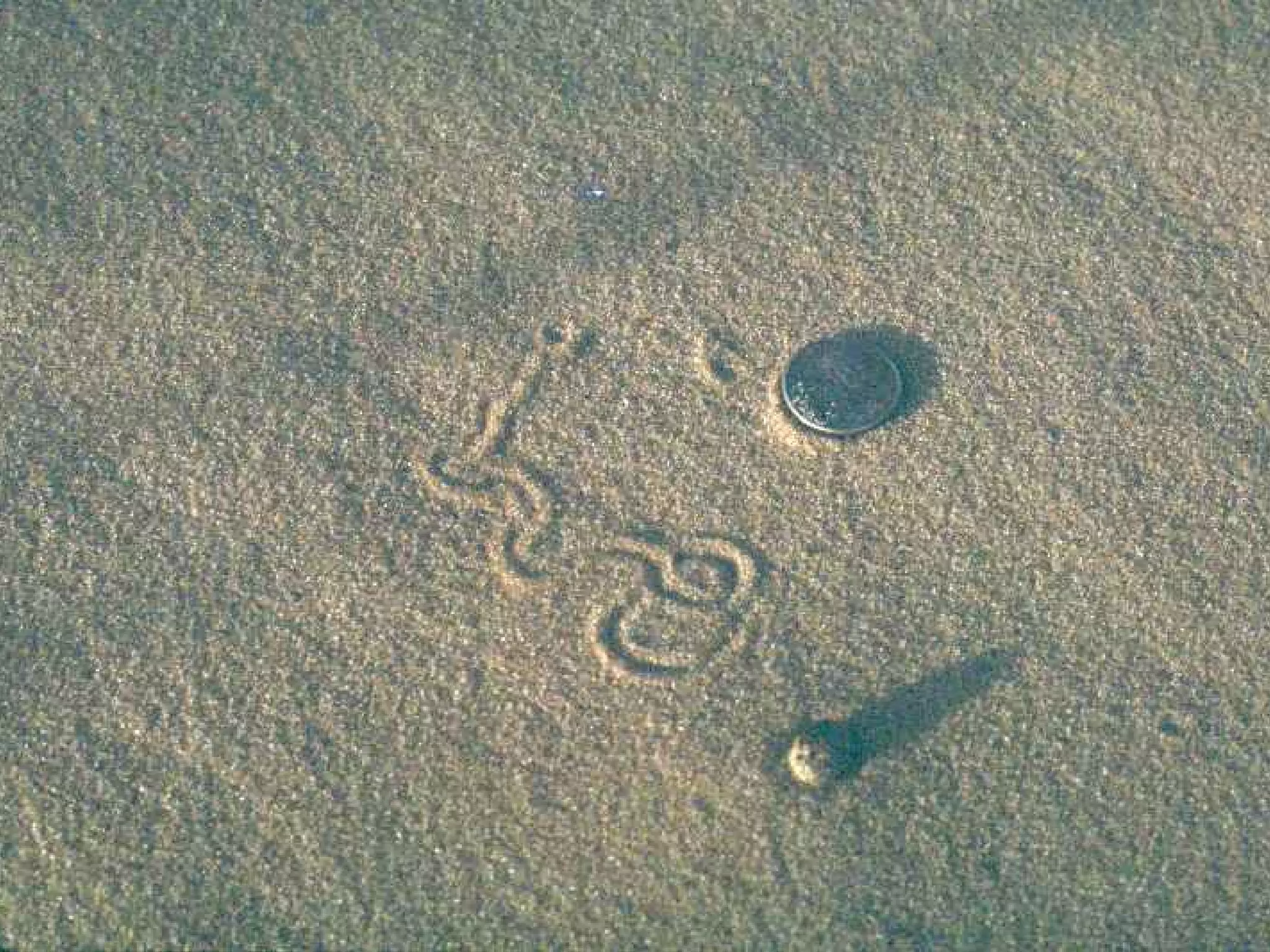
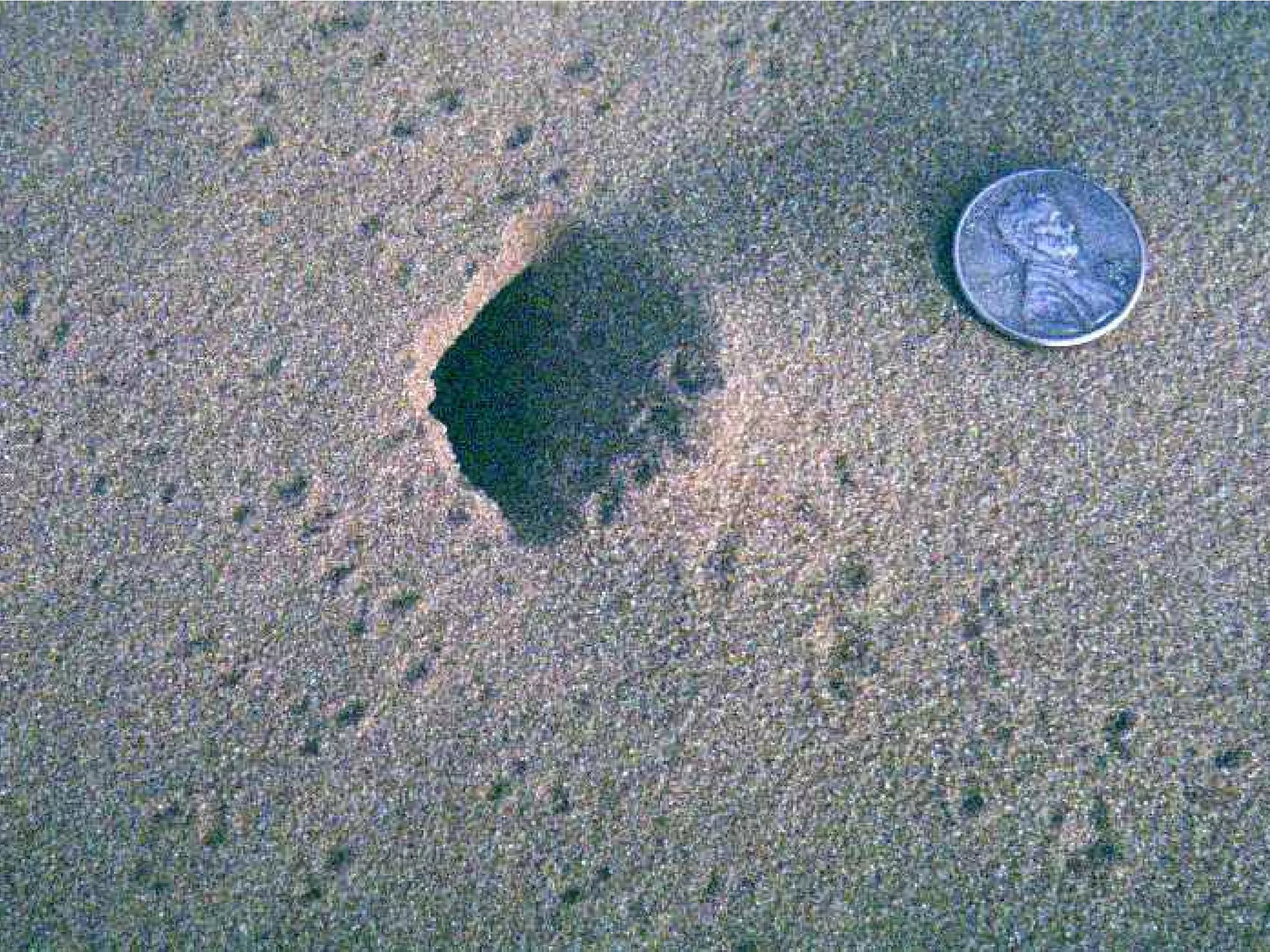
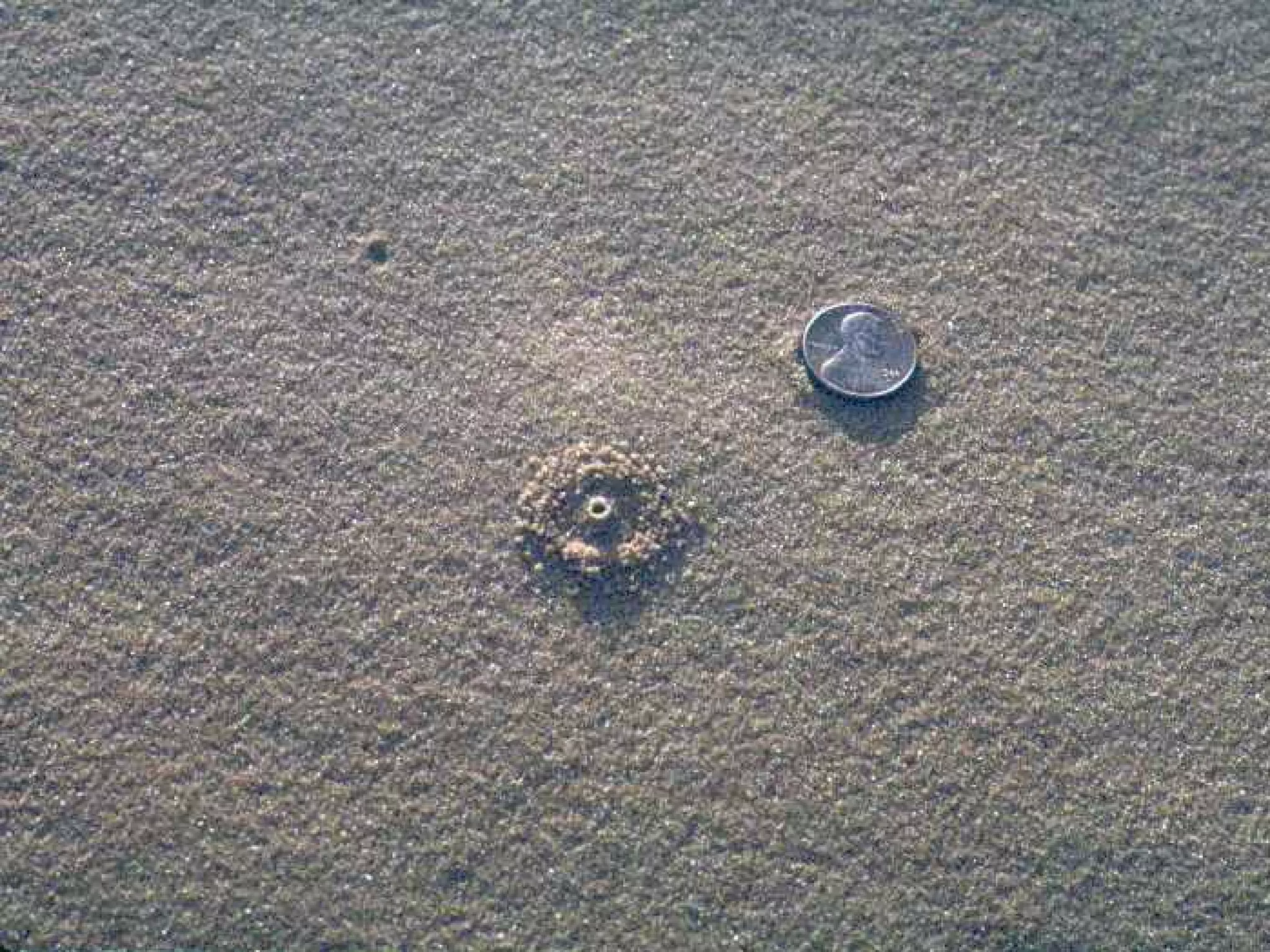
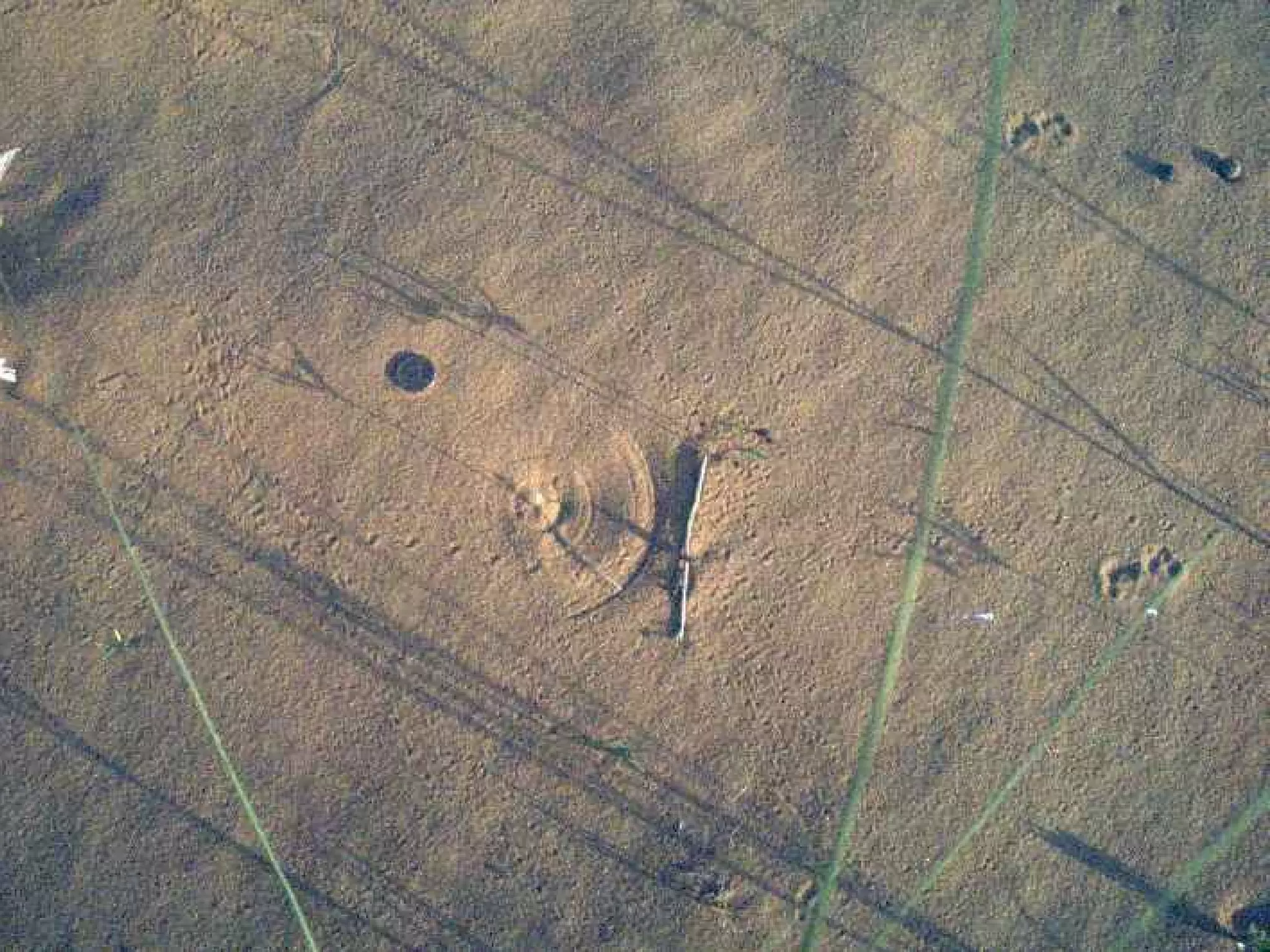
Tracks & Trails
Despite the arid conditions, many plants and animals make their home
on sand dunes. Because of the very fine nature of the sand, great detail
can be preserved.
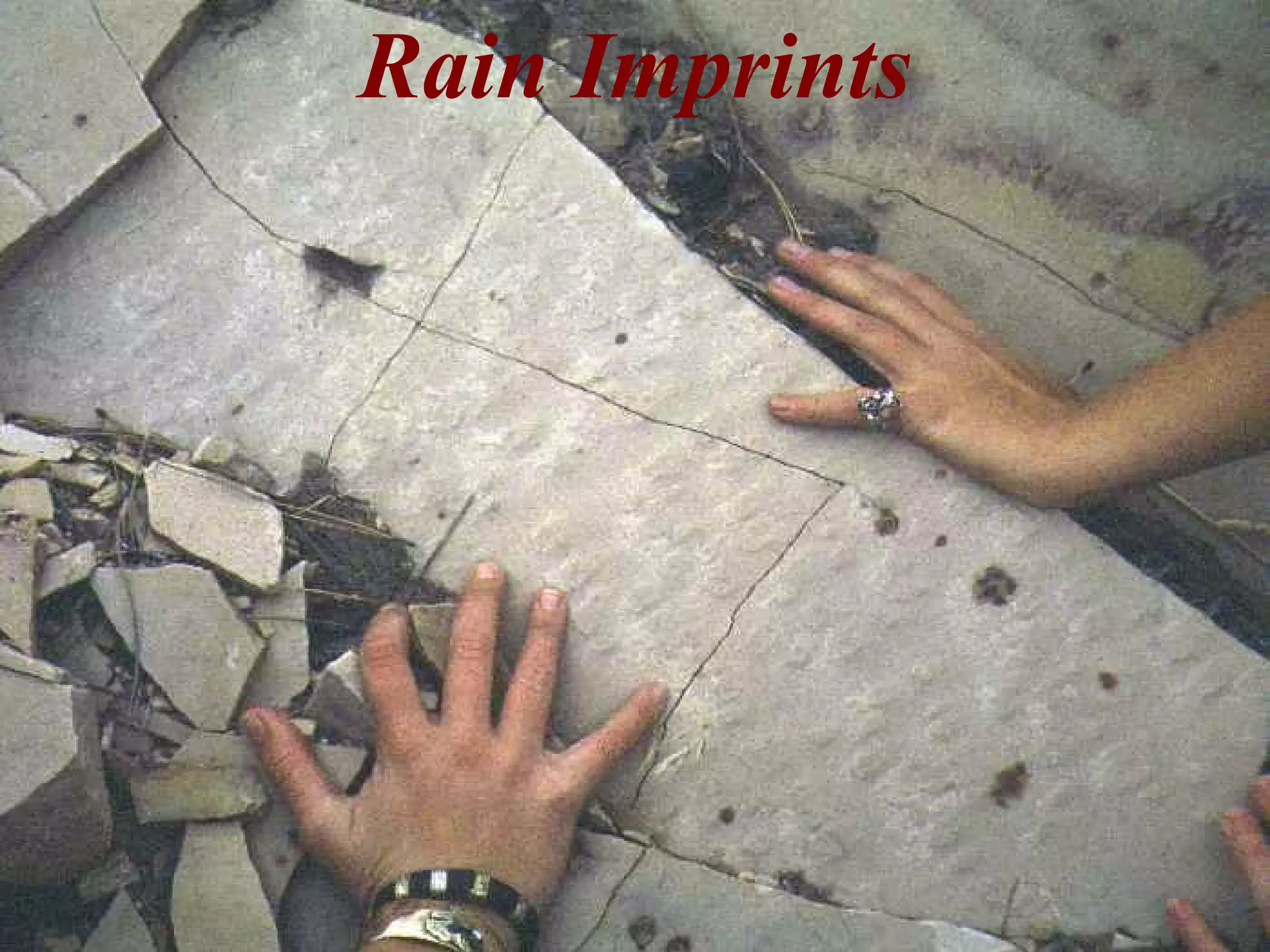
Rain Imprints
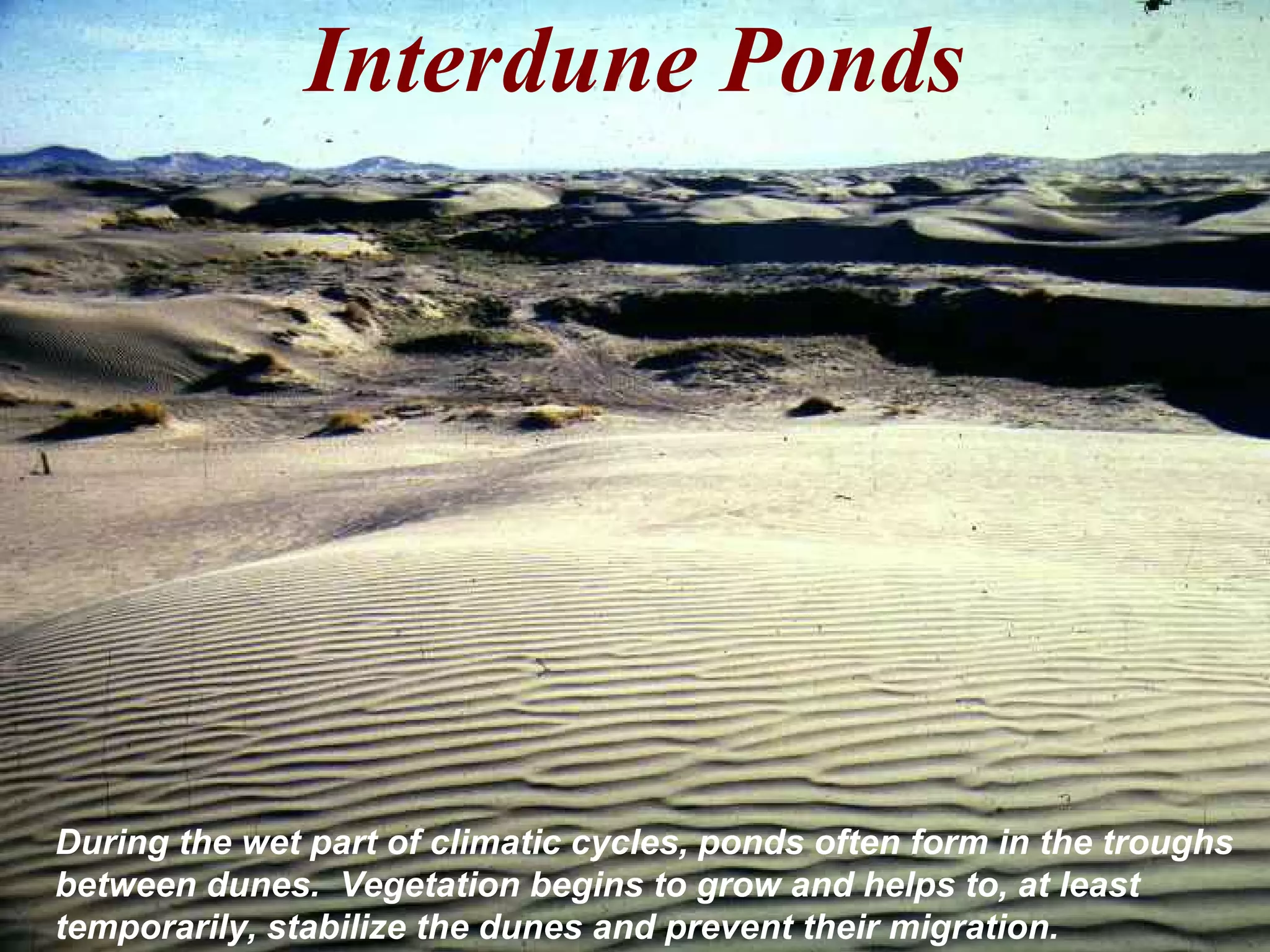
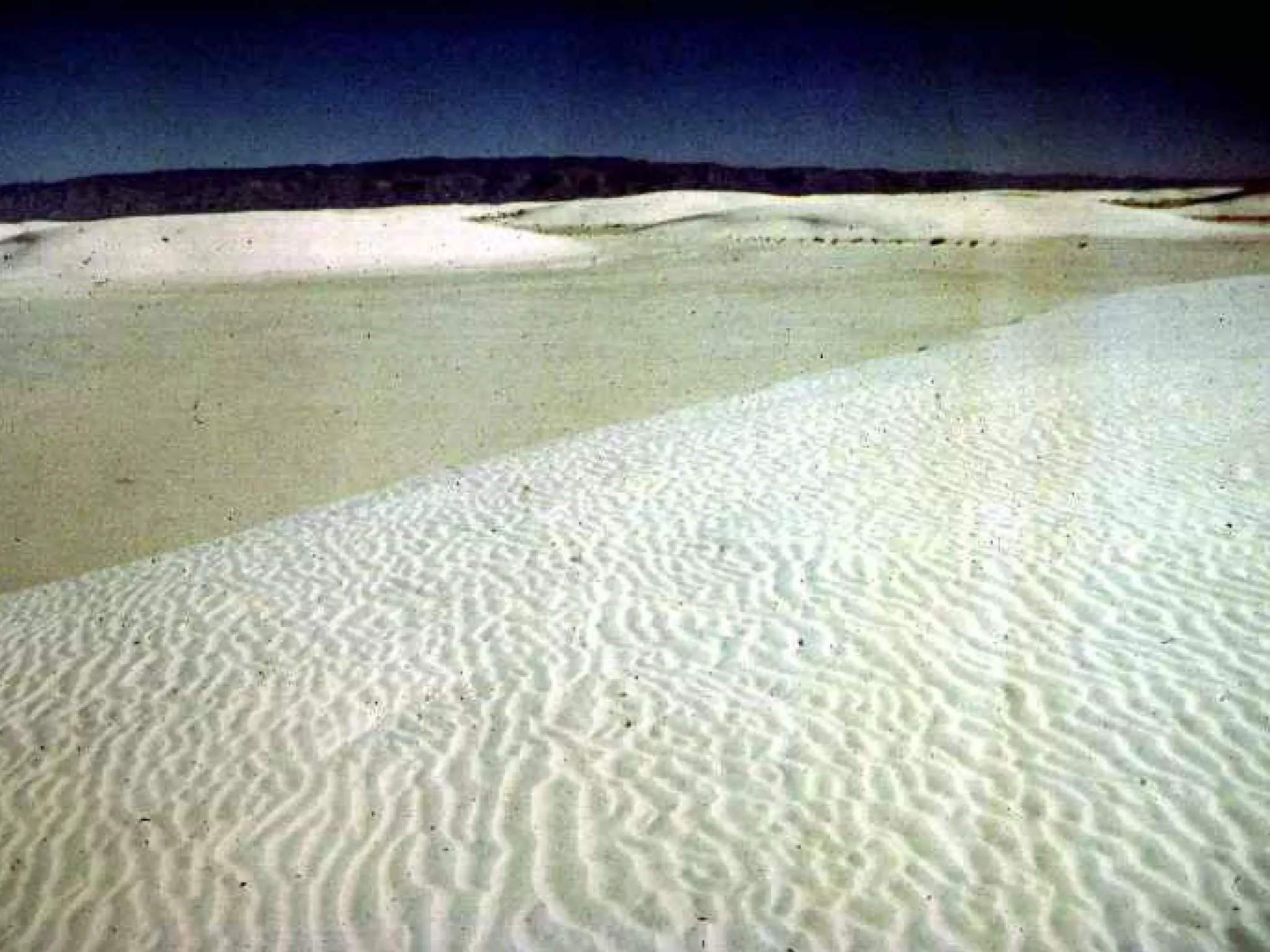
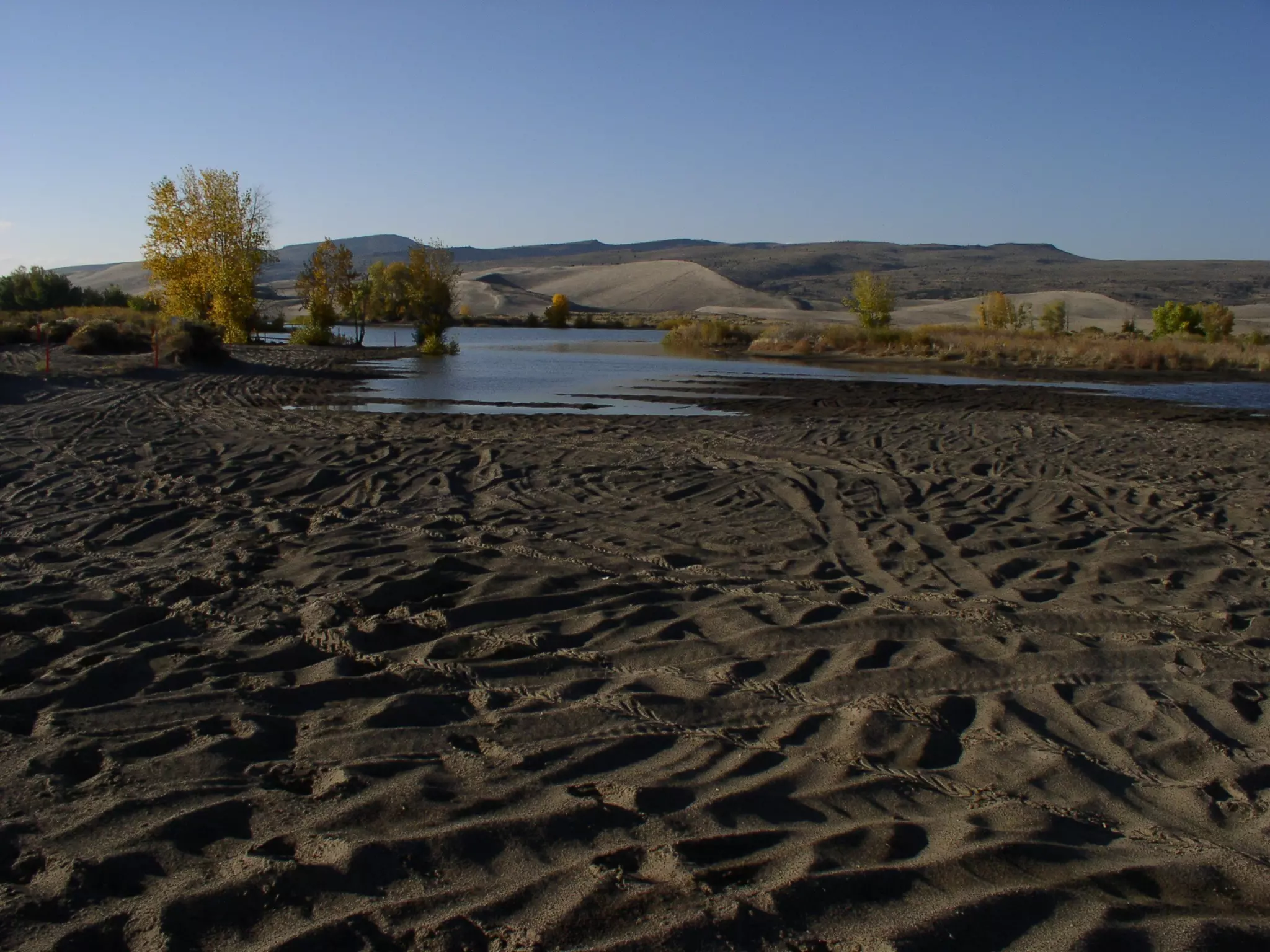
Interdune Ponds
During the wet part of climatic cycles, ponds often form in the troughs
between dunes. Vegetation begins to grow and helps to, at least
temporarily, stabilize the dunes and prevent their migration.
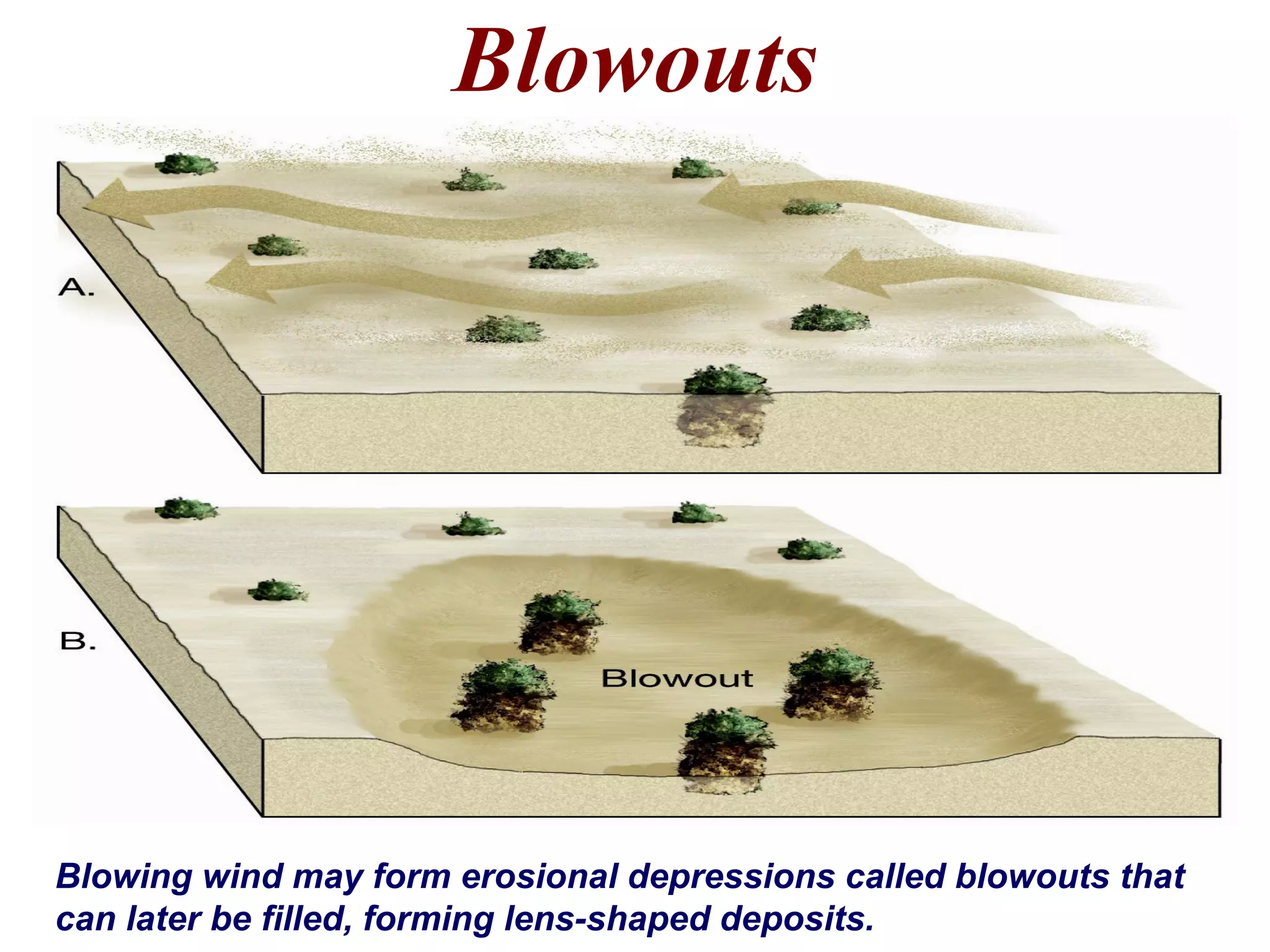
Blowouts
Blowing wind may form erosional depressions called blowouts that
can later be filled, forming lens-shaped deposits.
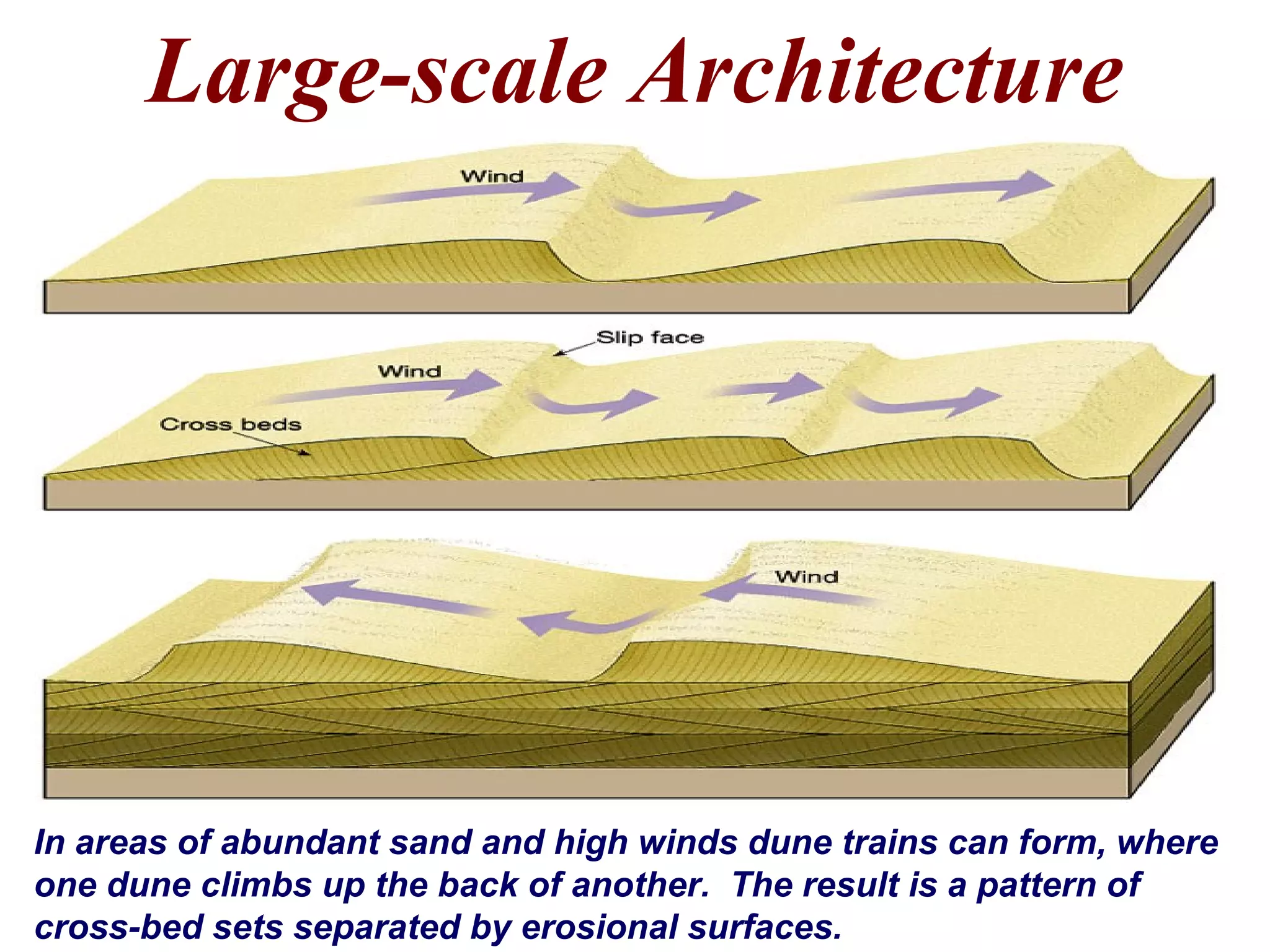
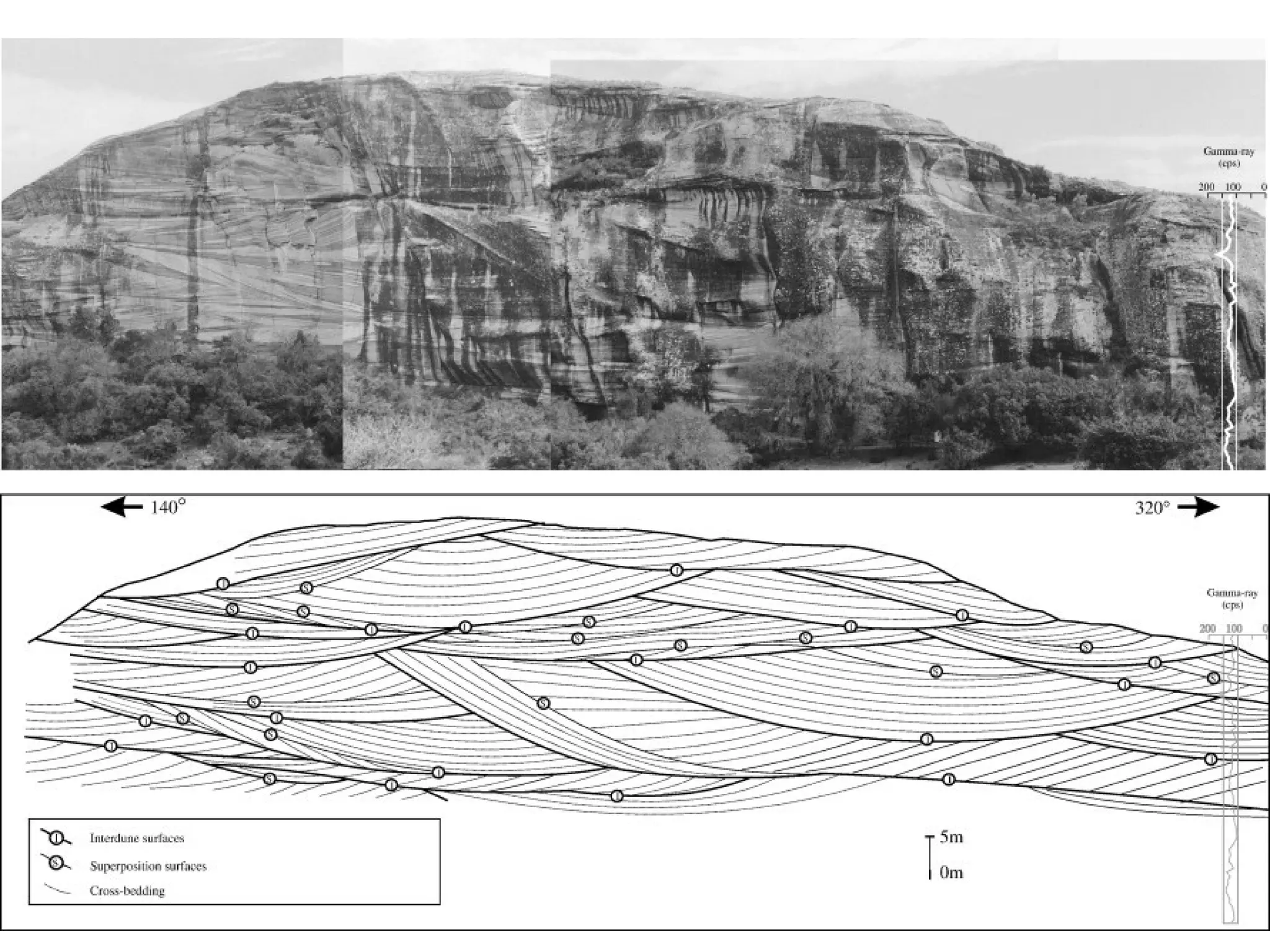
Large-scale Architecture
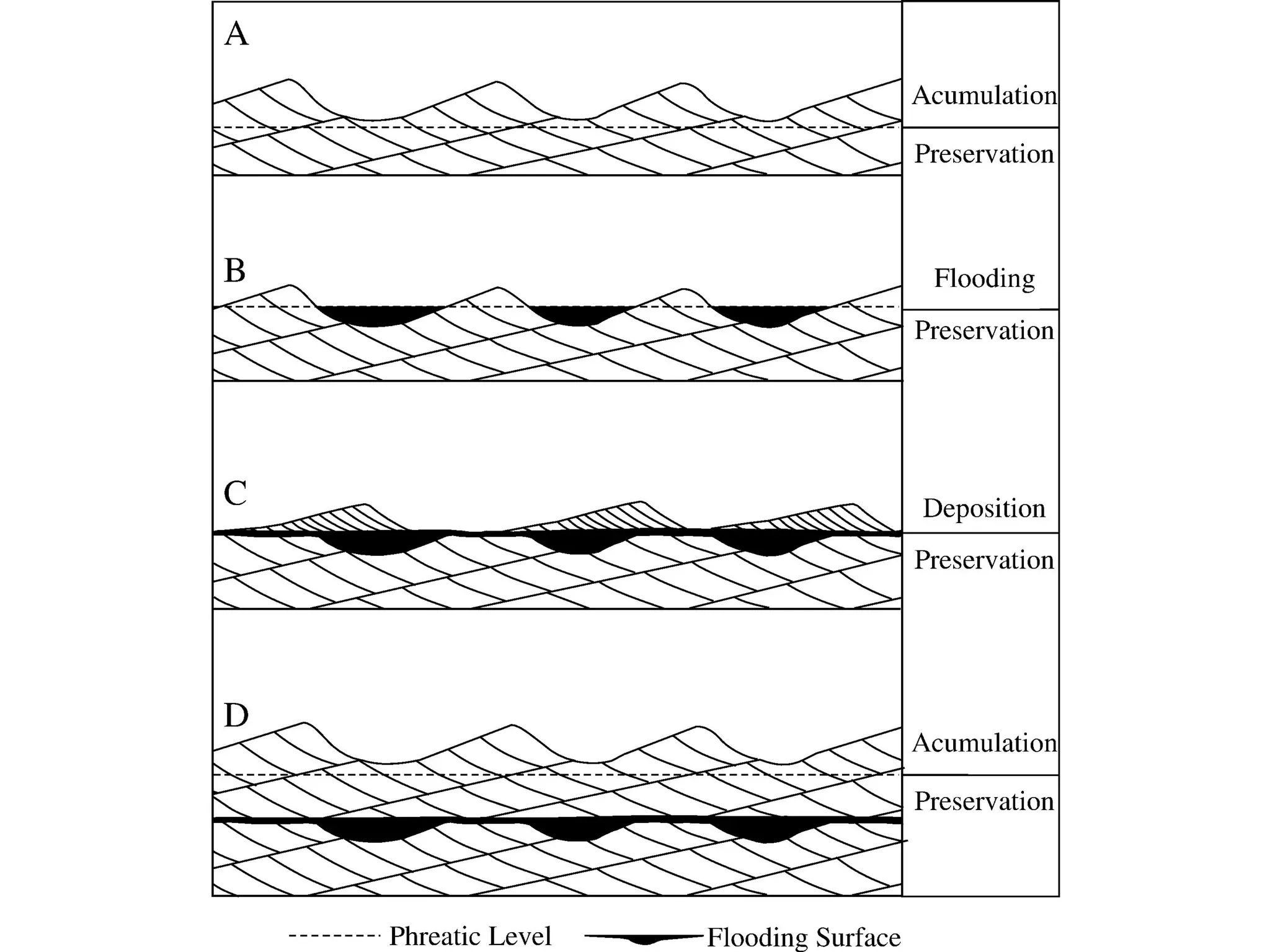
In areas of abundant sand and high winds dune trains can form, where
one dune climbs up the back of another. The result is a pattern of
cross-bed sets separated by erosional surfaces.
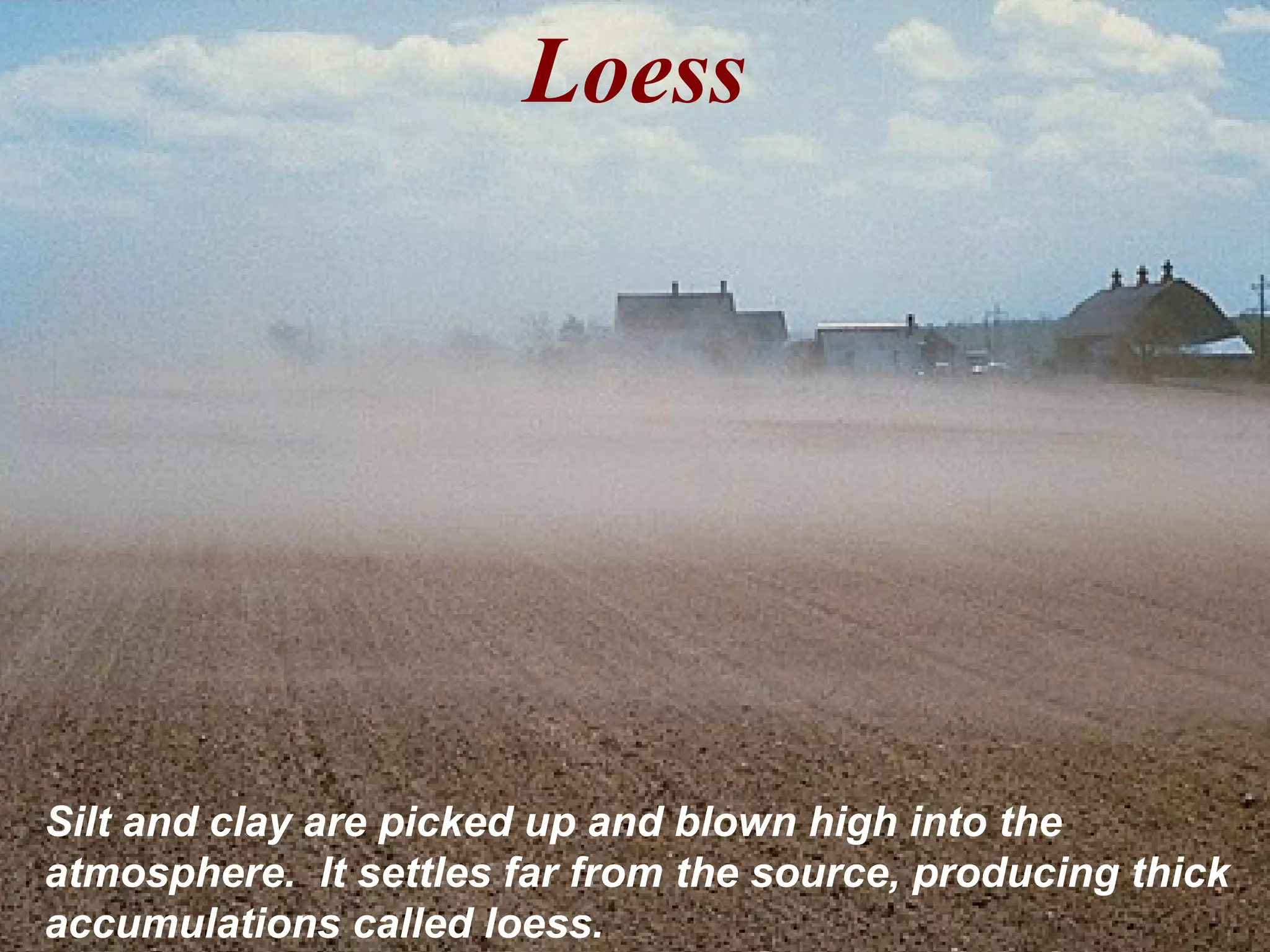
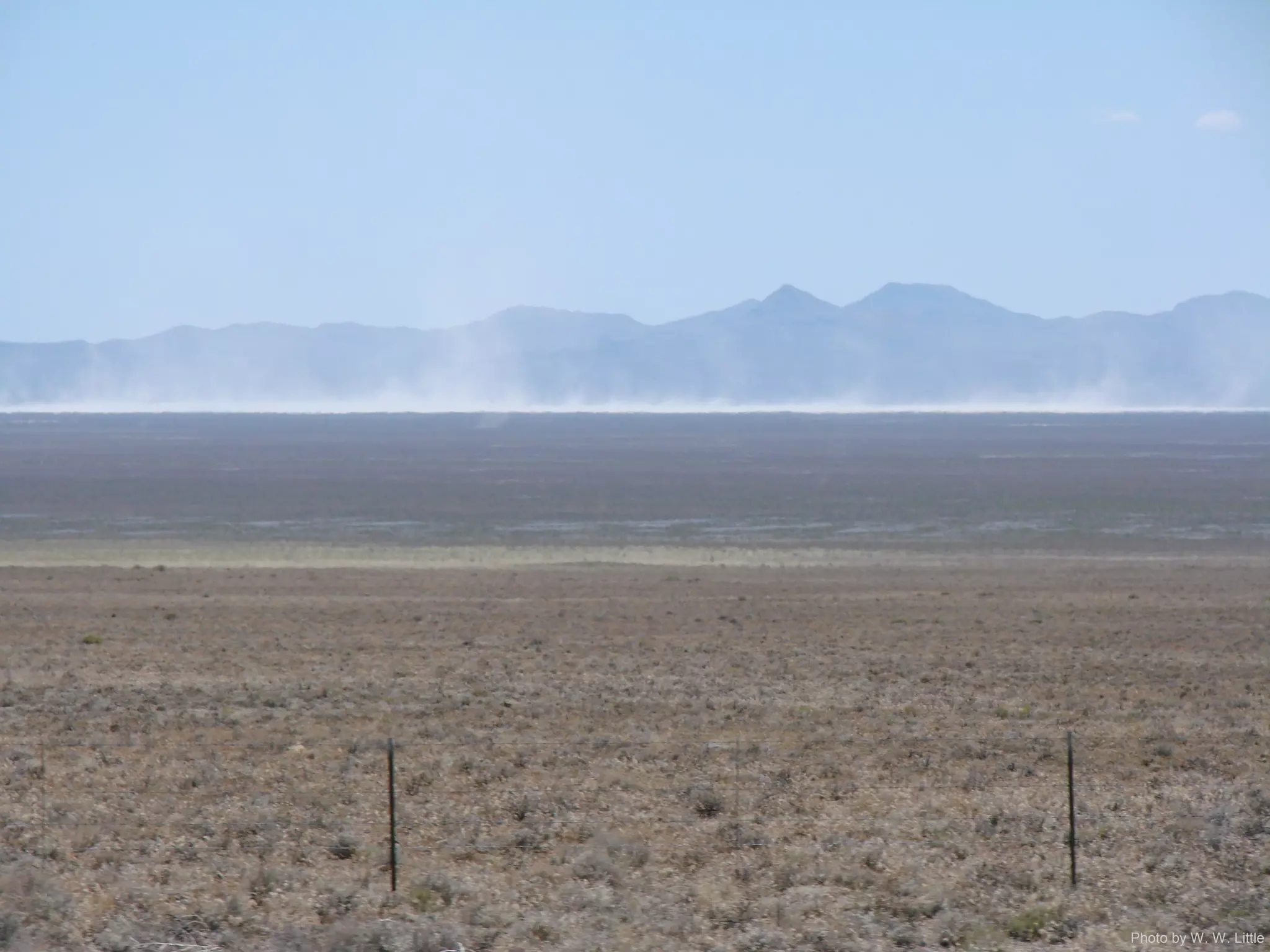
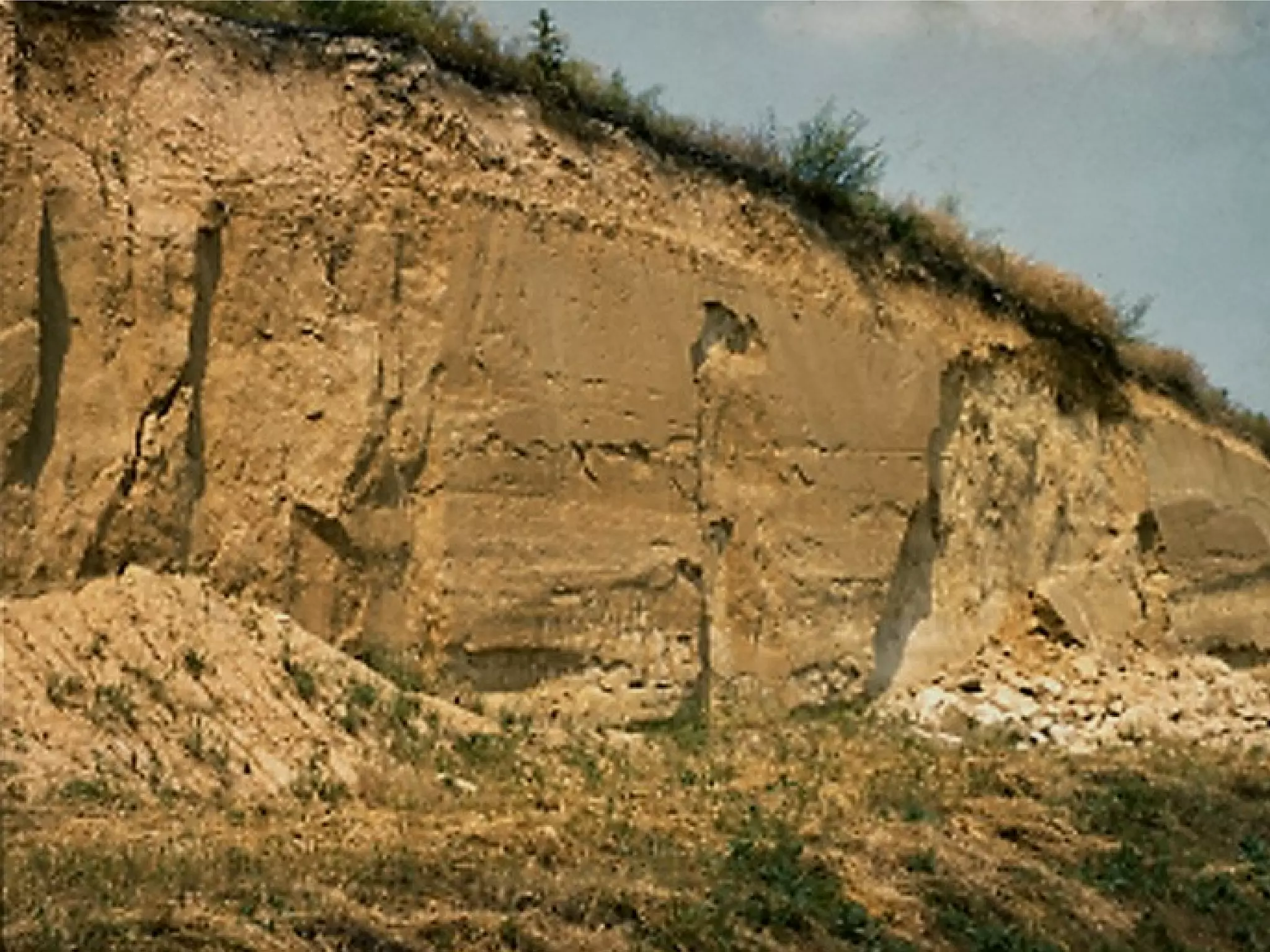
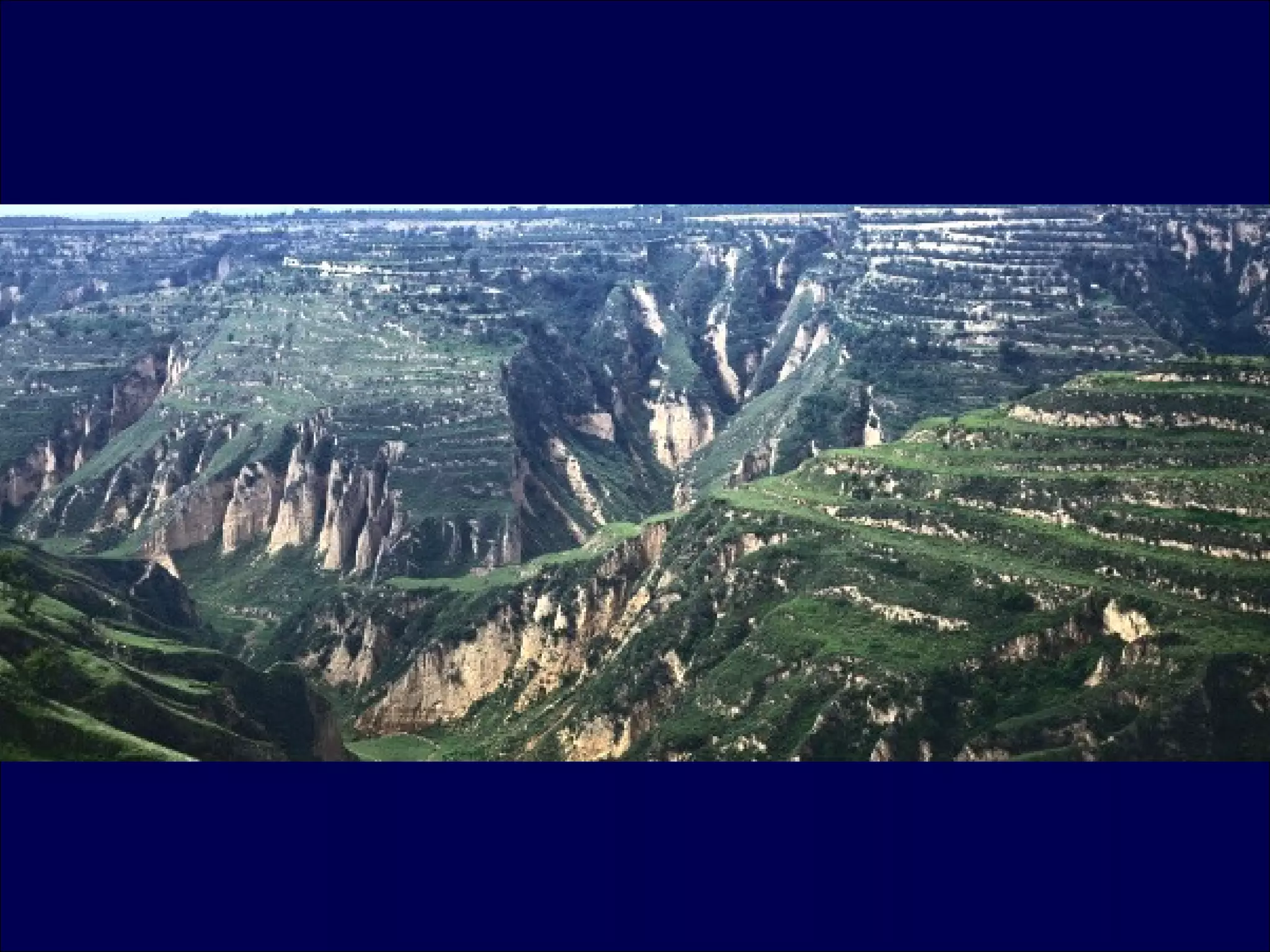
Loess
Silt and clay are picked up and blown high into the
atmosphere. It settles far from the source, producing thick
accumulations called loess.
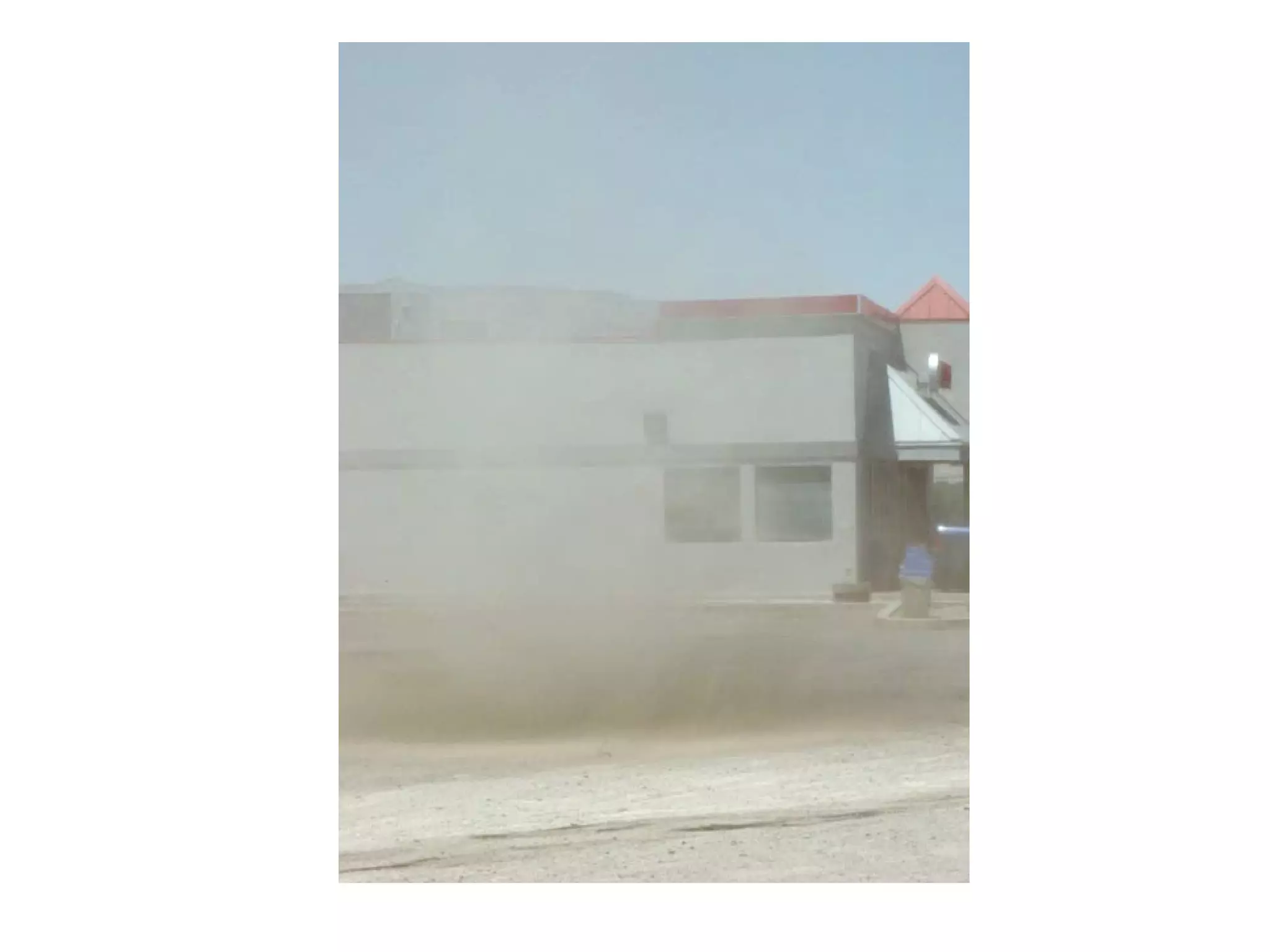
Photo by W. W. Little
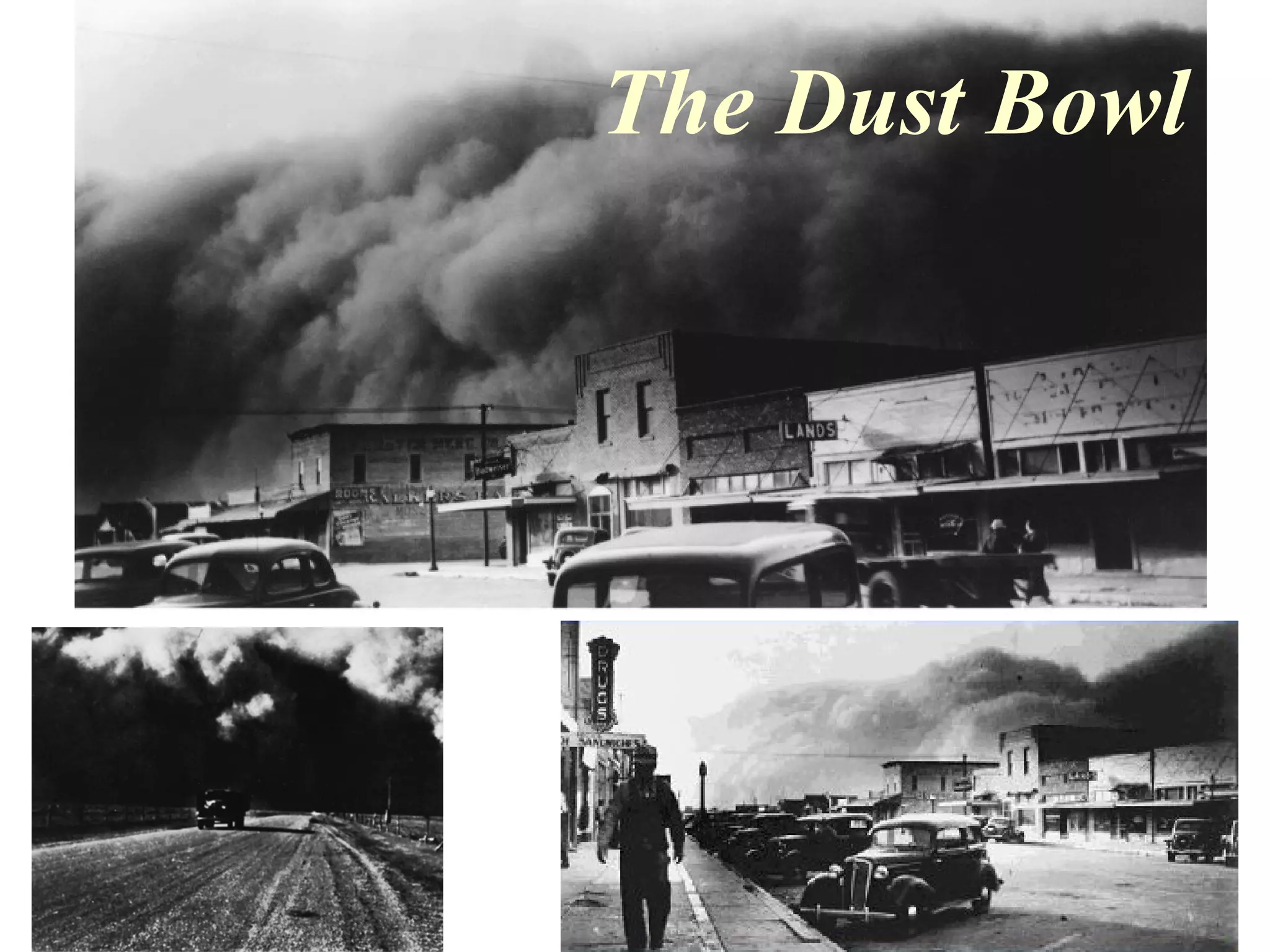
The Dust Bowl
Eolian Systems
Eolian Systems

Eolian Systems

  • 1.
  • 2.
    Locations of MajorDeserts Deserts are found primarily in latitudinal belts between 100 and 200 north and south of the equator.
  • 3.
    Changing Environments Climatic conditionscan vary between humid and arid at a single location because of actual fluctuations in the climate or by migration of plates through different climatic belts.
  • 5.
    Photo by W.W. Little
  • 6.
    Rain Shadows Mountain rangescan create barriers that force humid air higher into the atmosphere where it condenses and falls as precipitation. Dry air then descends on the opposite side absorbing moisture from the air and surface.
  • 7.
    Coastal Dune System Dunefields are common features in sandy coastal regions, where fine- grained material is blown landward from beaches.
  • 8.
    Photo by Ian& Tonya WestPilot Point (Shell Bay)
  • 9.
    Simplified Model Eolian depositstend to be relatively uniform in character, consisting of a single major facies association.
  • 10.
    Eolian Processes Wind isthe primary hydrologic agent operating in desert regions. The low viscosity of wind makes it a highly effective sorting agent. Particles that cannot be transported, such as gravel and course sand are left behind as desert pavement. Medium and fine sand are piled into dunes. Silt and clay are blown high into the atmosphere and settle elsewhere as loess.
  • 11.
    Dune Processes Dunes arethe primary depositional feature related to eolian processes and are formed as sand grains migrate up the stoss side of the macroform and avalanche down the lee face.
  • 12.
    Saint Anthony SandDunes at Egin Lakes
  • 13.
    Dune Origin Sand willoften begin to accumulate behind a barrier, such as a fence post, a rock, or a bush, that creates a wind shadow.
  • 19.
    Dune Growth Once asmall pile of sand has accumulated, it begins to move as single mass, called a dune. Small dunes coalesce into larger dunes.
  • 21.
    Dune Fields Because smalldunes migrate more rapidly than large dunes, they eventually combine to form a larger body called a dune field, which migrates very slowly relative to the smaller features.
  • 23.
    Sand Seas (draas) Verylarge sand bodies, such as that which covers the Sahara Desert, are referred to as sand seas.
  • 24.
    Dune Field Margins Themargins of dunes and dune fields are often very sharp and distinct.
  • 26.
    Dune Migration Dunes areasymmetrical features. Sand is eroded from and blown upward along the gentle side of the dune, where It piles up at the crest before avalanching down the steep “slip face.” This forms a diagonal pattern referred to as cross-bedding.
  • 27.
    Flow Separation Already well-sortedsediment becomes even better sorted at the dune crest, where finer grains are suspended by momentum and settle onto the back of a leading dune; whereas, coarser particles avalanche down the dune front.
  • 28.
    Eolian cross-bed setscan be exceptionally thick, potentially exceeding 15 m.
  • 29.
    Common Eolian Facies Eoliandeposits are dominated by very fine-grained, trough or planar (depending upon dune morphology) cross-bedded sand that is both compositionally- and texturally-mature. Thin beds of parallel-laminated sand can separate major cross-bed sets. Occasional interdune lacustrine deposits can also be found. In some areas, alluvial fan, braided stream, and playa deposits can be found in association with eolian deposits.
  • 30.
    Planar Cross-stratified Sand Planarcross-stratified sand forms by migration of straight-crested (transverse) dunes.
  • 33.
    Straight-crested (transverse) Dunes Transversedunes are elongate ridges with relatively-straight fronts oriented perpendicular to wind direction. These dunes form under conditions of an abundant sand supply and a consistent wind direction.
  • 35.
    Trough Cross-stratified Sand Troughcross-stratified sand forms by migration of sinuous-crested (barchan, barchanoid, & parabolic) dunes.
  • 37.
    Sinuous-crested (barchanoid) Dunes Barchanoiddunes are elongate ridges with curved fronts oriented perpendicular to wind direction. These dunes form under conditions of a moderate sand supply and a consistent wind direction. They are a transitional form between barchan and transverse dunes.
  • 39.
    Barchan Dunes Barchan dunesare crescent-shaped with the horns pointing down wind. These dunes form under conditions of a limited sand supply and a consistent wind direction.
  • 42.
    Parabolic Dunes Parabolic dunesare crescent-shaped with the horns pointing up wind. These dunes form under conditions of a limited sand supply and a consistent wind direction. The horns are reversed from barchan dunes because of anchoring by vegetation.
  • 43.
    Dune Morphology There areseveral common shapes for sand dunes. These shapes are controlled by sand abundance, wind velocity and duration, consistency of wind direction, and presence of vegetation.
  • 44.
    Longitudinal Dunes Longitudinal dunesare narrow, elongate ridges oriented parallel to wind direction. These dunes form under conditions of a limited sand supply and at least two prominent, sub-parallel wind directions.
  • 47.
    Star Dunes Star dunesform central peaks with three or more arms that radiate outward. These dunes form under conditions of an abundant sand supply and a variable wind direction.
  • 51.
    Ripple-bedded Sand The mostcommon feature on the surface of sand dunes in ripple marks. These are essentially small-scale dunes that form from gentler winds between major storms.
  • 56.
    Avalanche Structures Sand onthe dune slip face accumulates at the angle of repose, leading to common avalanching during and between storm episodes.
  • 58.
    Contorted-bedding in Sand Themost common feature on the surface of sand dunes in ripple marks. These are essentially small-scale dunes that form from gentler winds between major storms.
  • 59.
    Tracks & Trails Despitethe arid conditions, many plants and animals make their home on sand dunes. Because of the very fine nature of the sand, great detail can be preserved.
  • 69.
  • 70.
    Interdune Ponds During thewet part of climatic cycles, ponds often form in the troughs between dunes. Vegetation begins to grow and helps to, at least temporarily, stabilize the dunes and prevent their migration.
  • 73.
    Blowouts Blowing wind mayform erosional depressions called blowouts that can later be filled, forming lens-shaped deposits.
  • 74.
    Large-scale Architecture In areasof abundant sand and high winds dune trains can form, where one dune climbs up the back of another. The result is a pattern of cross-bed sets separated by erosional surfaces.
  • 82.
    Loess Silt and clayare picked up and blown high into the atmosphere. It settles far from the source, producing thick accumulations called loess.
  • 83.
    Photo by W.W. Little
  • 84.
    Photo by W.W. Little
  • 86.