Quality byDesign is a concept first outlined by Joseph M. Juran in various
publications. He supposed that quality could be planned.
The concept of QbD was mention in ICH Q8 guidelines, which states that, “To
identify quality can not be tested in products, i.e. Quality should be built into product
by design.”
Quality by Design (QbD) is a strategic approach employed in various industries,
including pharmaceuticals, manufacturing, and product development, to ensure the
consistent delivery of high-quality products.
It involves a systematic and proactive process of integrating quality considerations
throughout the entire product lifecycle, from conception to production.
Introduction
4.
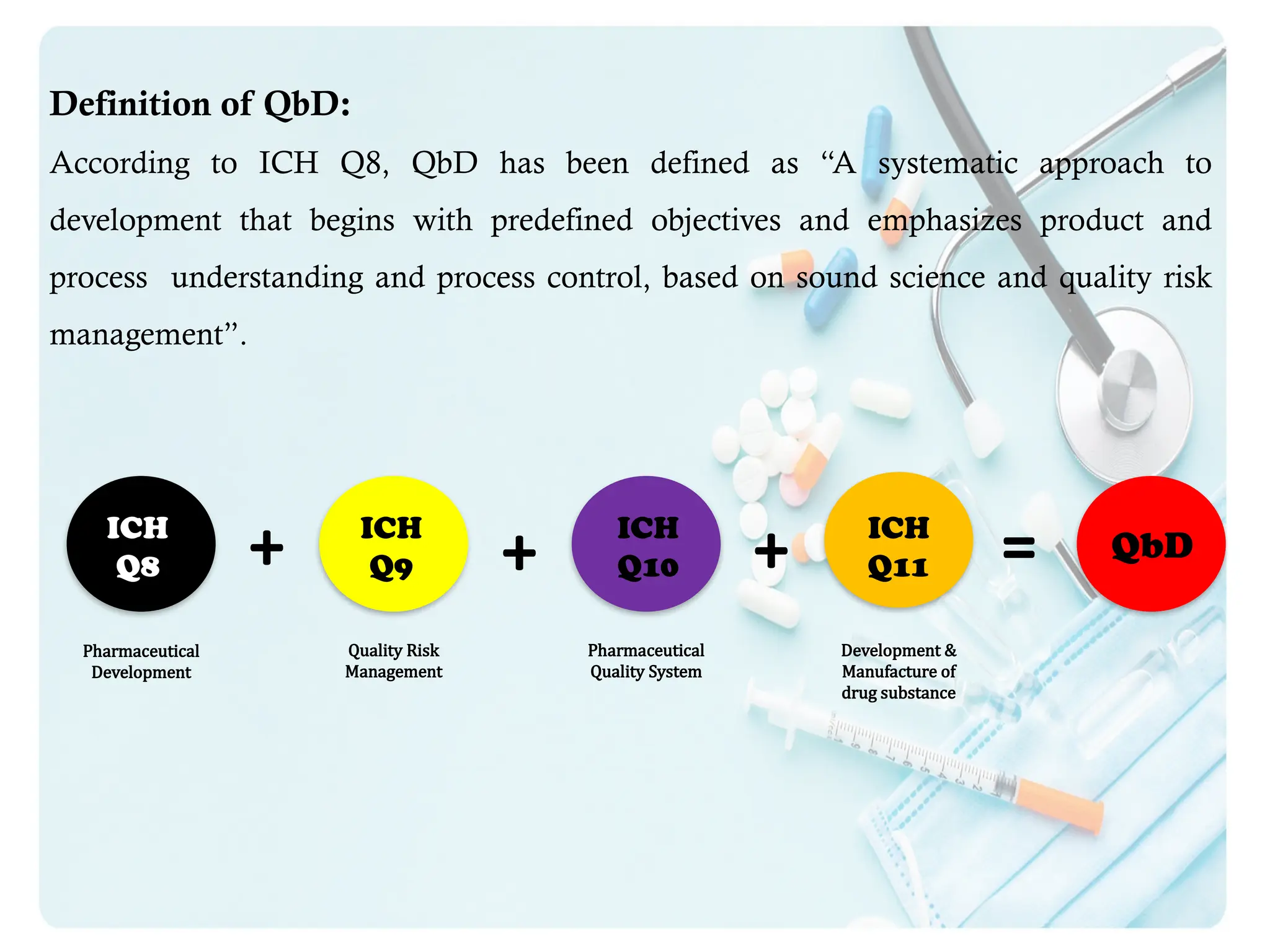
Definition of QbD:
Accordingto ICH Q8, QbD has been defined as “A systematic approach to
development that begins with predefined objectives and emphasizes product and
process understanding and process control, based on sound science and quality risk
management”.
Pharmaceutical
Development
Quality Risk
Management
Pharmaceutical
Quality System
Development &
Manufacture of
drug substance
ICH
Q8
ICH
Q9
ICH
Q10
ICH
Q11
QbD
+ + + =
5.
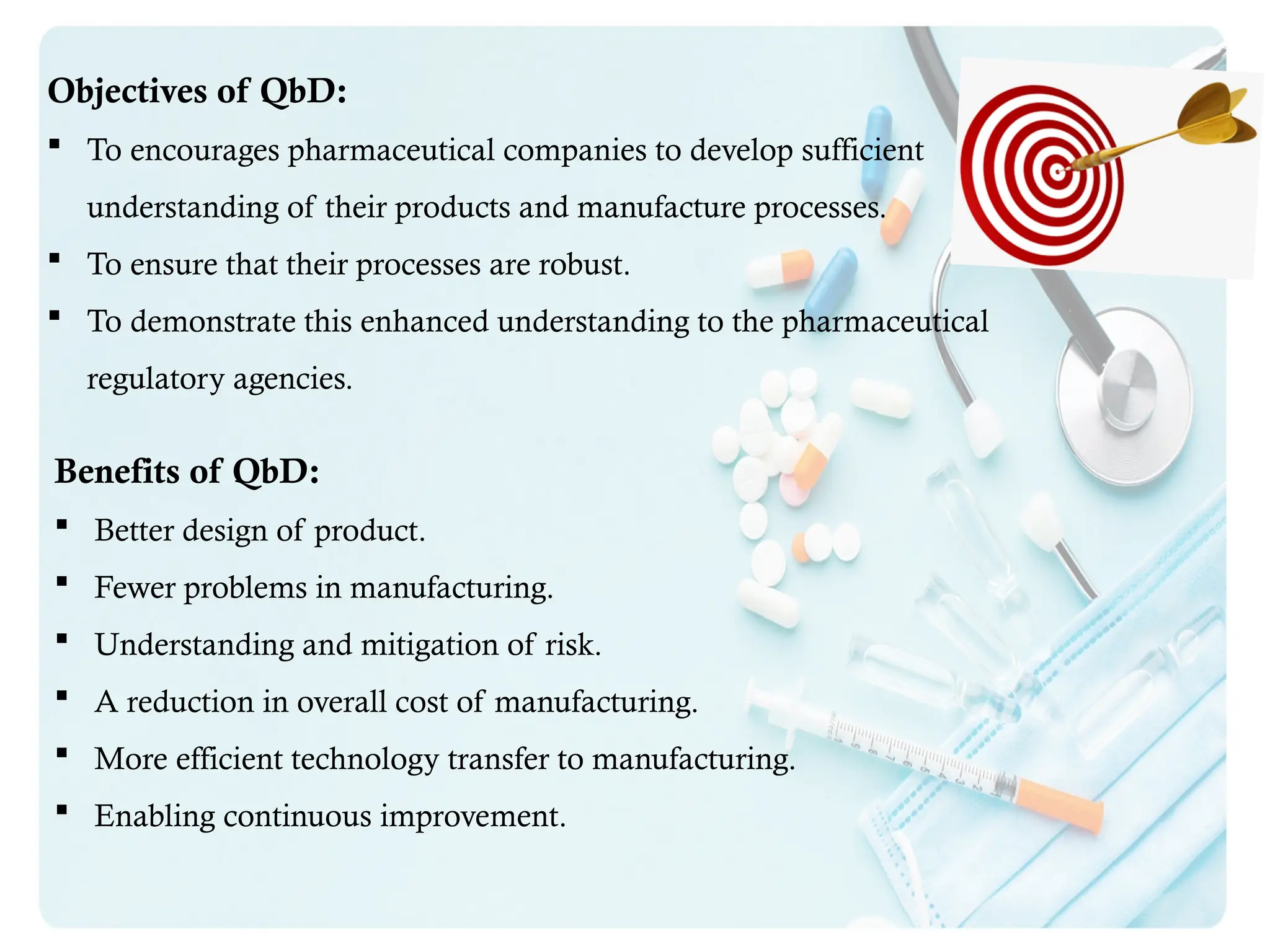
Objectives of QbD:
To encourages pharmaceutical companies to develop sufficient
understanding of their products and manufacture processes.
To ensure that their processes are robust.
To demonstrate this enhanced understanding to the pharmaceutical
regulatory agencies.
Benefits of QbD:
Better design of product.
Fewer problems in manufacturing.
Understanding and mitigation of risk.
A reduction in overall cost of manufacturing.
More efficient technology transfer to manufacturing.
Enabling continuous improvement.
6.
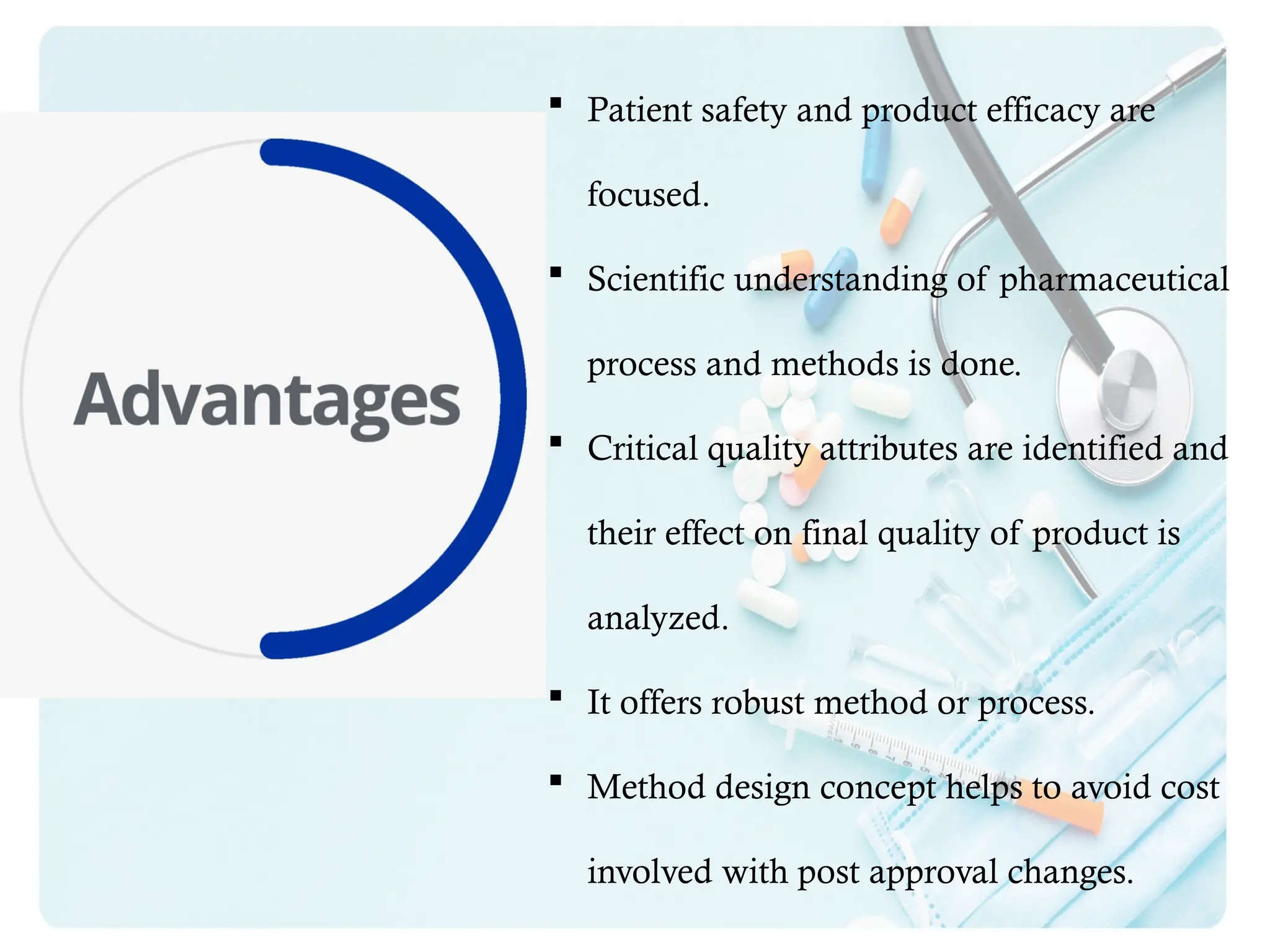
Patient safetyand product efficacy are
focused.
Scientific understanding of pharmaceutical
process and methods is done.
Critical quality attributes are identified and
their effect on final quality of product is
analyzed.
It offers robust method or process.
Method design concept helps to avoid cost
involved with post approval changes.
8.
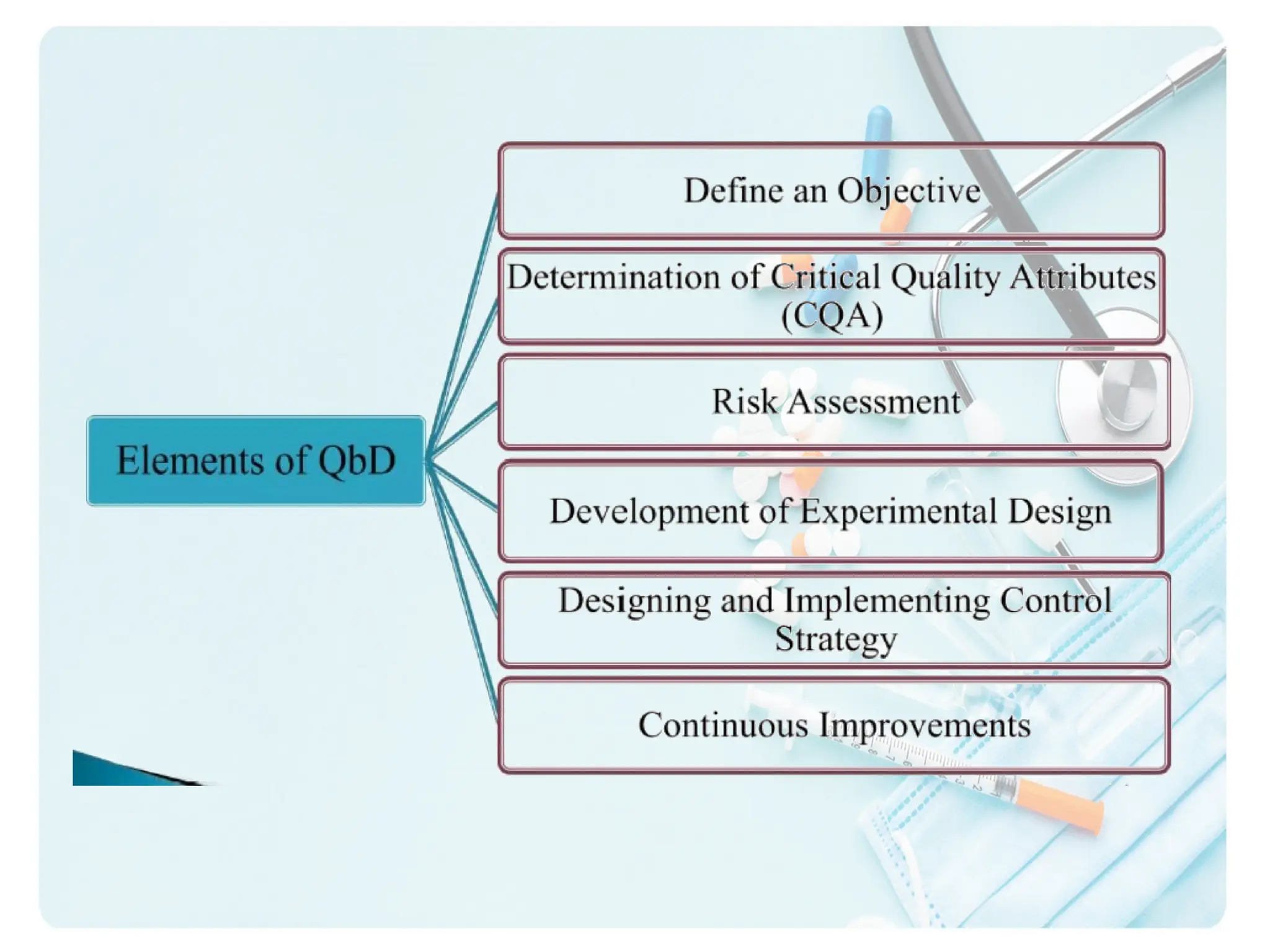
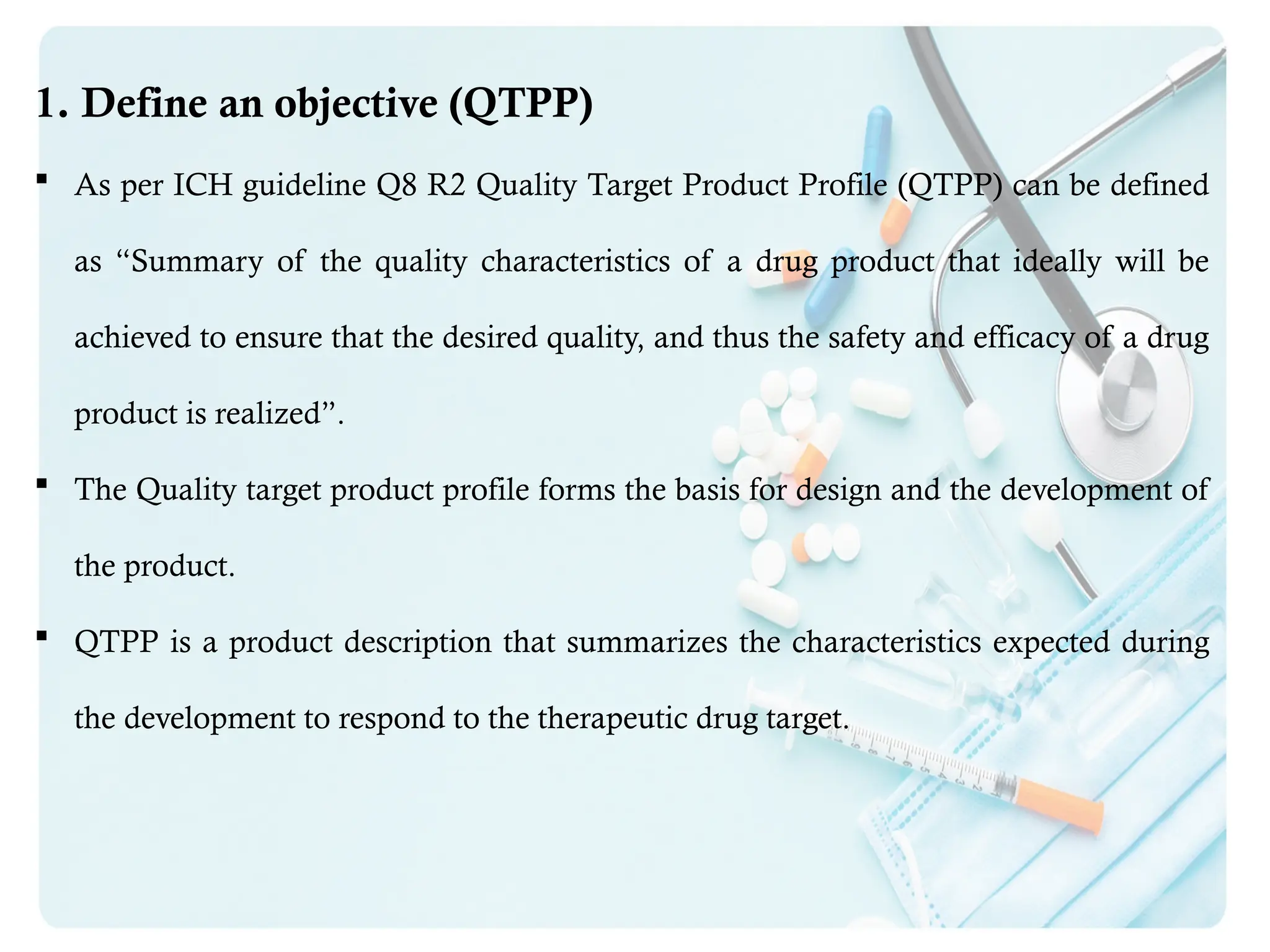
1. Define anobjective (QTPP)
As per ICH guideline Q8 R2 Quality Target Product Profile (QTPP) can be defined
as “Summary of the quality characteristics of a drug product that ideally will be
achieved to ensure that the desired quality, and thus the safety and efficacy of a drug
product is realized”.
The Quality target product profile forms the basis for design and the development of
the product.
QTPP is a product description that summarizes the characteristics expected during
the development to respond to the therapeutic drug target.
9.
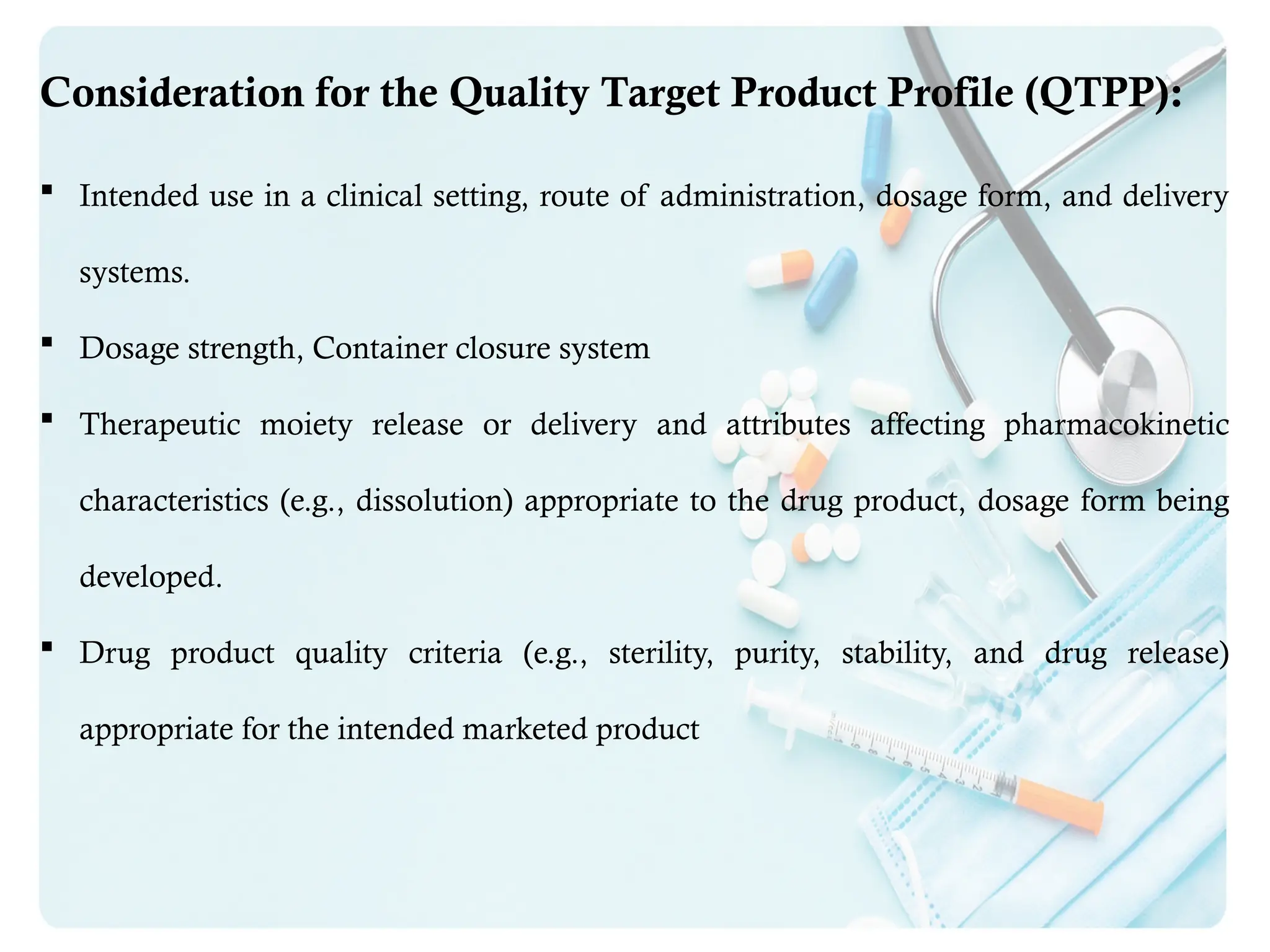
Consideration for theQuality Target Product Profile (QTPP):
Intended use in a clinical setting, route of administration, dosage form, and delivery
systems.
Dosage strength, Container closure system
Therapeutic moiety release or delivery and attributes affecting pharmacokinetic
characteristics (e.g., dissolution) appropriate to the drug product, dosage form being
developed.
Drug product quality criteria (e.g., sterility, purity, stability, and drug release)
appropriate for the intended marketed product
10.
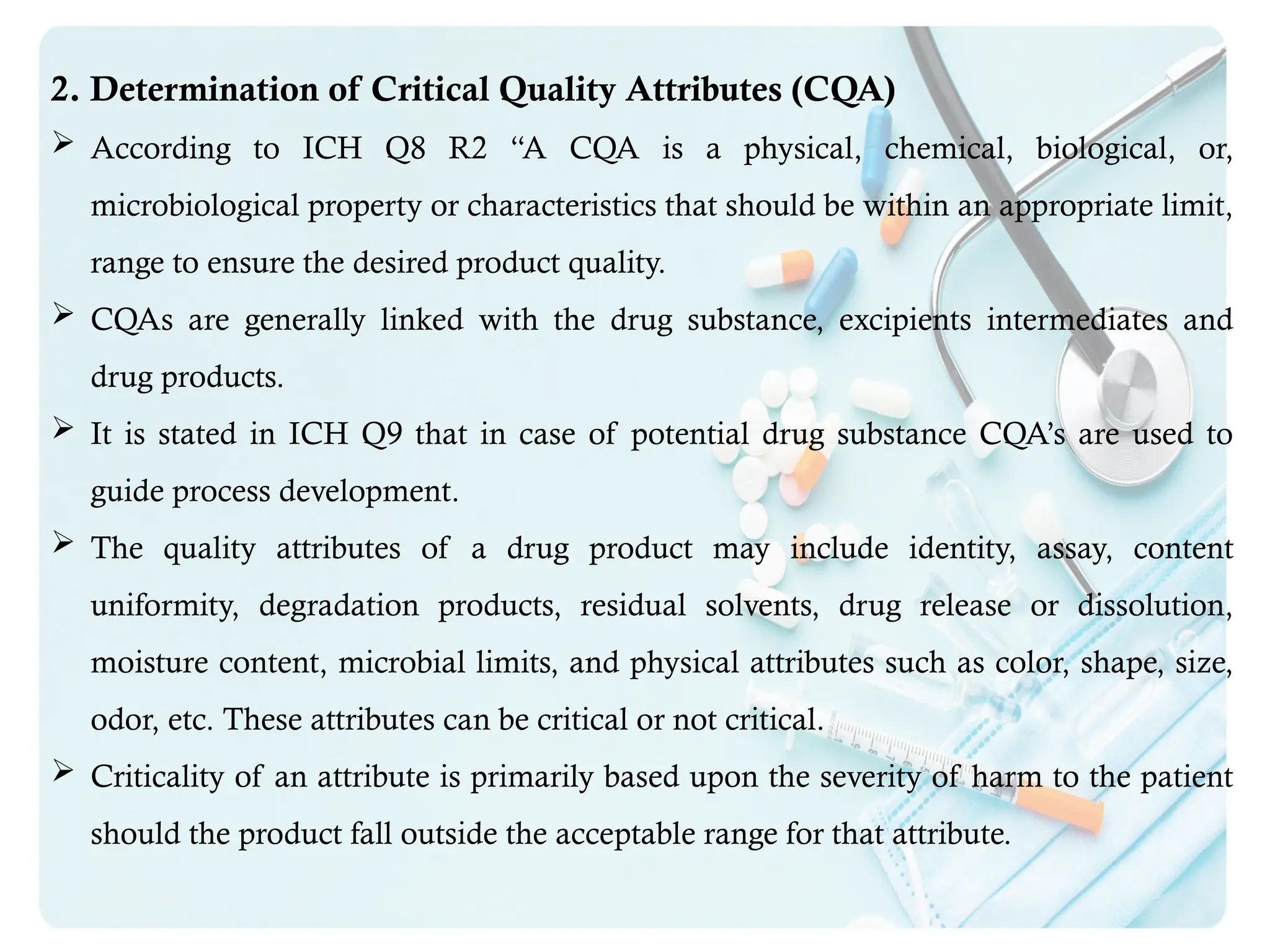
2. Determination ofCritical Quality Attributes (CQA)
According to ICH Q8 R2 “A CQA is a physical, chemical, biological, or,
microbiological property or characteristics that should be within an appropriate limit,
range to ensure the desired product quality.
CQAs are generally linked with the drug substance, excipients intermediates and
drug products.
It is stated in ICH Q9 that in case of potential drug substance CQA’s are used to
guide process development.
The quality attributes of a drug product may include identity, assay, content
uniformity, degradation products, residual solvents, drug release or dissolution,
moisture content, microbial limits, and physical attributes such as color, shape, size,
odor, etc. These attributes can be critical or not critical.
Criticality of an attribute is primarily based upon the severity of harm to the patient
should the product fall outside the acceptable range for that attribute.
11.
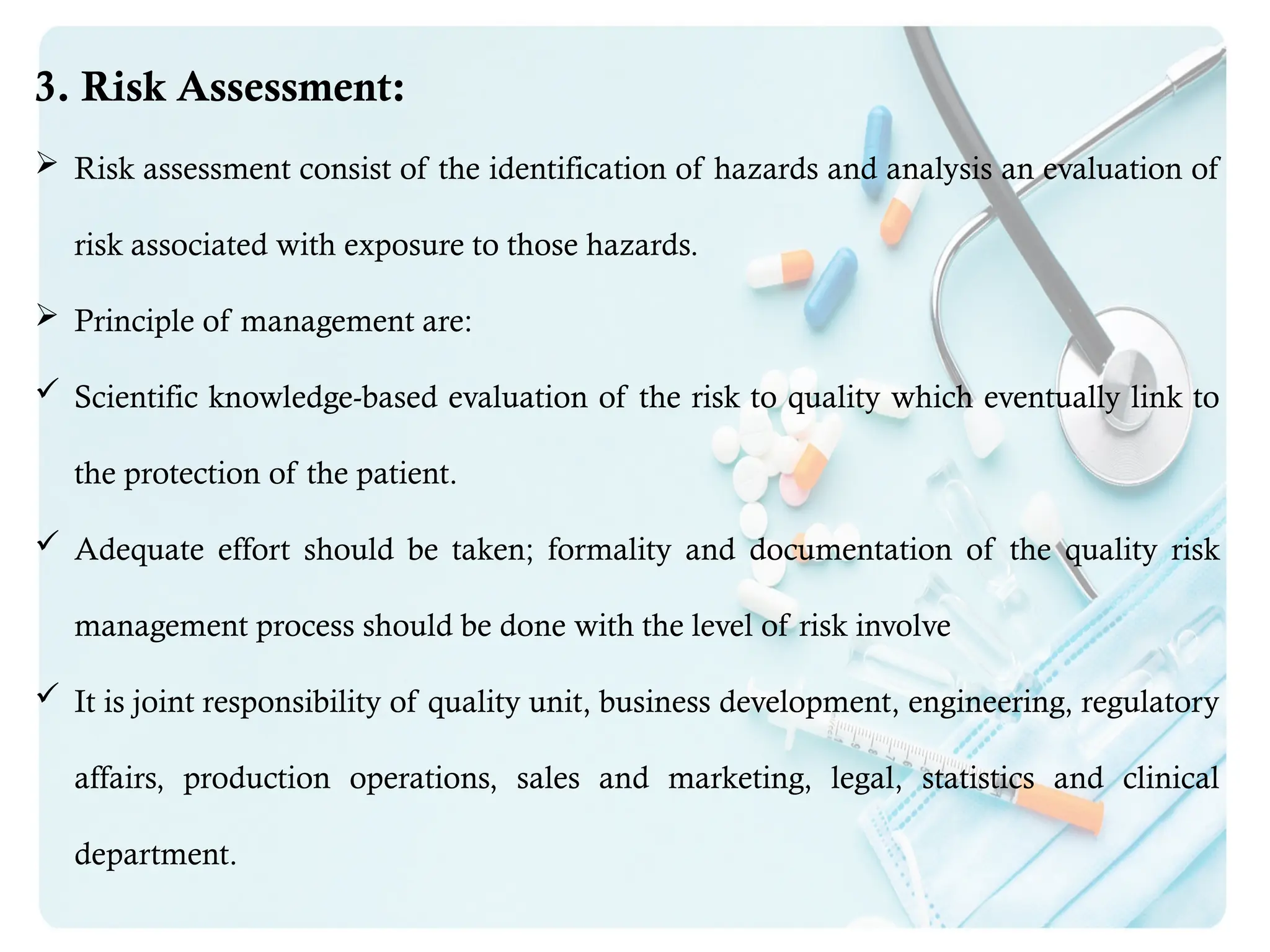
3. Risk Assessment:
Risk assessment consist of the identification of hazards and analysis an evaluation of
risk associated with exposure to those hazards.
Principle of management are:
Scientific knowledge-based evaluation of the risk to quality which eventually link to
the protection of the patient.
Adequate effort should be taken; formality and documentation of the quality risk
management process should be done with the level of risk involve
It is joint responsibility of quality unit, business development, engineering, regulatory
affairs, production operations, sales and marketing, legal, statistics and clinical
department.
12.
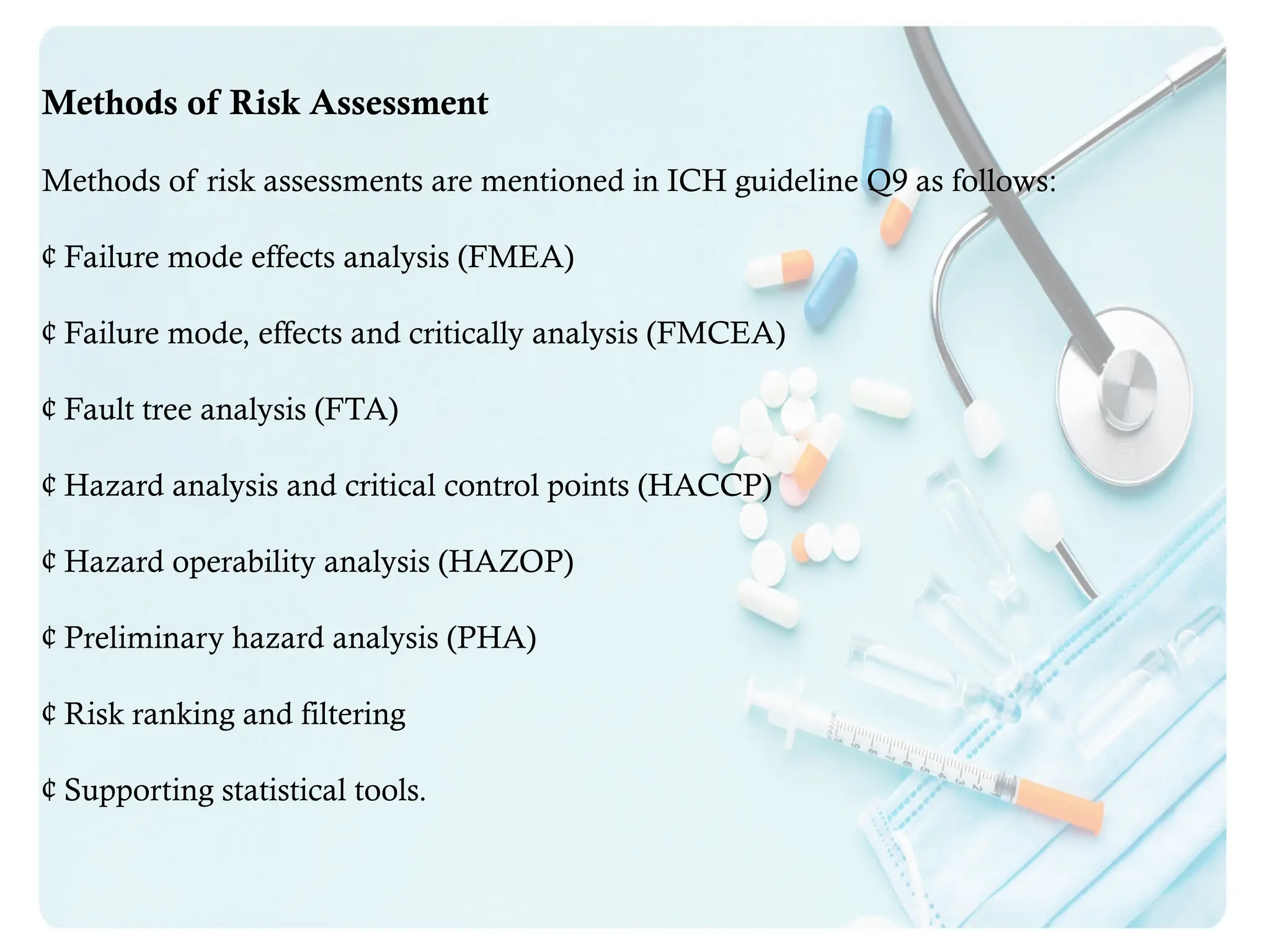
Methods of RiskAssessment
Methods of risk assessments are mentioned in ICH guideline Q9 as follows:
¢ Failure mode effects analysis (FMEA)
¢ Failure mode, effects and critically analysis (FMCEA)
¢ Fault tree analysis (FTA)
¢ Hazard analysis and critical control points (HACCP)
¢ Hazard operability analysis (HAZOP)
¢ Preliminary hazard analysis (PHA)
¢ Risk ranking and filtering
¢ Supporting statistical tools.
13.
4. Development ofExperimental Design
Experimental design is the multidimensional combination and interaction of input
variables and process parameters that have demonstrated to provide assurance of
quality.
Pharmaceutical development scientist have just began to making use of computer-
aided process design (CAPD) and process simulation to support process
development and optimization of manufacturing.
Over the years, QbD's focus has been on the process design, understanding, and
control, as discussed in the ICH Q8 (R2) guidance.
It should be emphasized that product design, understanding, and control are equally
important.
14.
Product designdetermines whether the product is able to meet patients’ needs, which
is confirmed with clinical studies.
Product design also determines whether the product is able to maintain its
performance through its shelf life, which is confirmed with stability studies.
The key objective of product design and understanding is to develop a robust product
that can deliver the desired QTPP over the product shelf life
Process parameters are referred to as the input operating parameters (e.g., speed and
flow rate) or process state variables (e.g., temperature and pressure) of a process step
or unit operation.
A process parameter is critical when its variability has an impact on a critical quality
attribute and therefore should be monitored or controlled to ensure the process
produces the desired quality.
15.
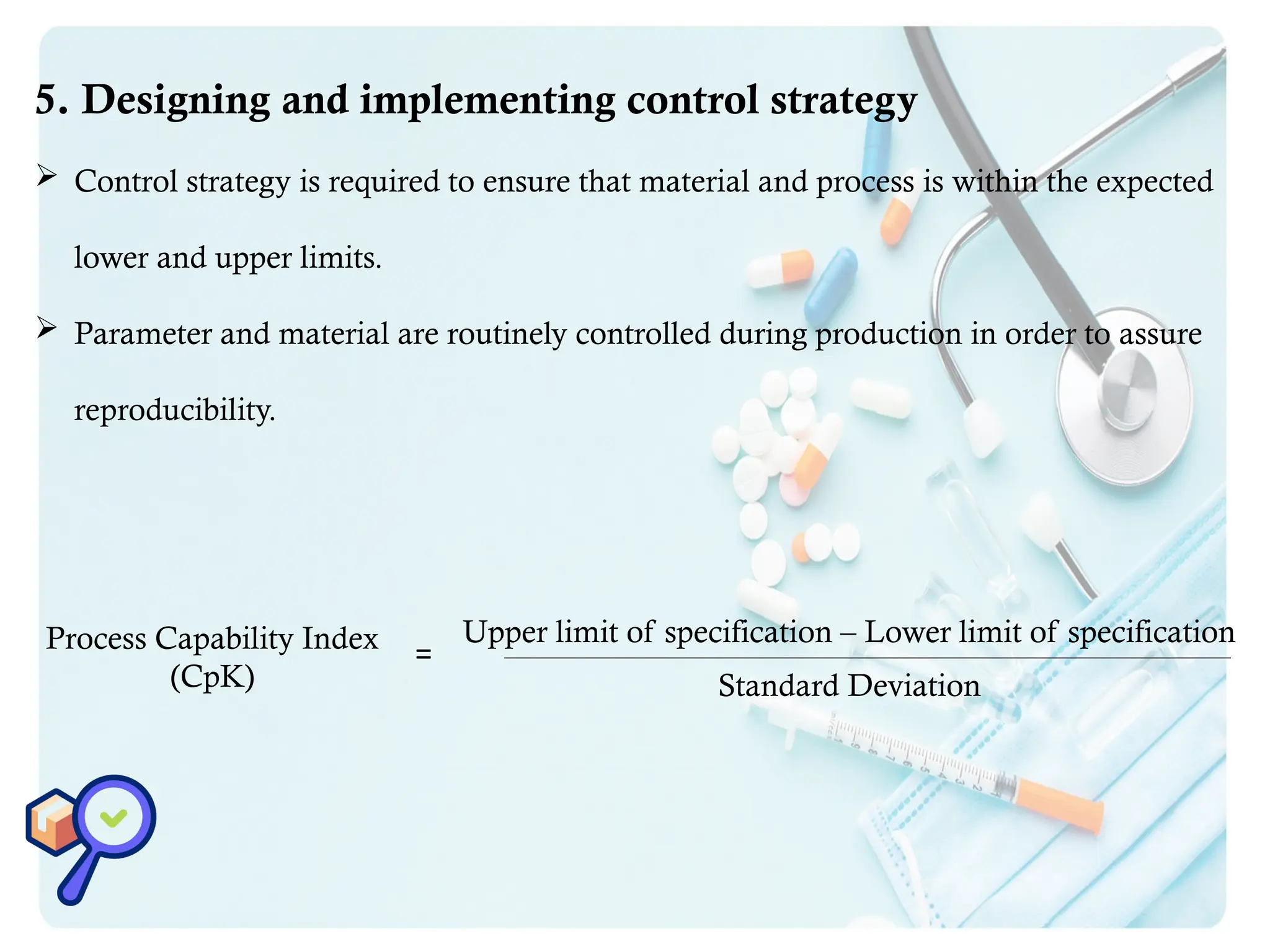
5. Designing andimplementing control strategy
Control strategy is required to ensure that material and process is within the expected
lower and upper limits.
Parameter and material are routinely controlled during production in order to assure
reproducibility.
Process Capability Index
(CpK)
Upper limit of specification – Lower limit of specification
Standard Deviation
=
16.
6. Continuous Improvements
Itis a set of activities that the applicant carries out in order to enhance its ability to meet
requirements
Continual improvements typically have five phases as follows:
1. Define the problem and the project goals, specifically
2. Measure key aspects of the current process and collect relevant data
3. Analyze the data to investigate and verify cause-and-effect relationships. Determine
what the relationships are, and attempt to ensure that all factors have been
considered. Seek out root cause of the defect if any.
4. Improve or optimize the current process based upon data analysis using techniques
such as design of experiments to create a new, future state process. Set up pilot runs
to establish process capability.
5. Control the future state process to ensure that any deviations from target are
corrected before they result in defects. Implement control systems such as statistical
process control and continuously monitor the process.
17.
DESIGN TOOLS
Priorknowledge
Design of Experiments
Risk assessment
Process analytical technology (PAT)
Prior knowledge
Prior knowledge can only be obtained through experience, not education.
Prior knowledge in the QbD framework generally refers to Knowledge that stems
from previous experience that is not in publically available literature.
Prior knowledge may be the proprietary information, understanding, or skill that
applicants acquire through previous studies.
18.
Design of Experiments(DoE)
DoE is an excellent tool that allows pharmaceutical scientists to systematically
manipulate factors according to a prespecified design. The DoE also reveals
relationships between input factors and output responses. A series of structured
tests are designed in which planned changes are made to the input variables of a
process or system. The effects of these changes on a predefined output are then
assessed.
When DoE is applied to formulation or process development, input variables
include the material attributes (e.g., particle size) of raw material or excipients and
process parameters (e.g., press speed or spray rate), while outputs are the critical
quality attributes of the in-process materials or final drug product (e.g., blend
uniformity, particle size or particle size distribution of the granules, tablet assay,
content uniformity, or drug release).
DoE can helps to identify optimal conditions, CMAs, CPPs, and, ultimately, the
design space.
19.
Process analytical technology(PAT)
ICH Q8 (R2) identifies the use of PAT to ensure that the process remains within an
established design space.
PAT can provide continuous monitoring of CPPs, CMAs, or CQAs to make go/no
decisions and to demonstrate that the process is maintained in the design space.
In-process testing, CMAs, or CQAs can also be measured online or inline with PAT.
Both of these applications of PAT are more effective at detecting failures than end-
product testing alone.


![iStat Menus 7.20 Crack for MacOS 2026 Full Version [Latest] pptx](https://cdn.slidesharecdn.com/ss_thumbnails/softwareoverview-251207191544-22b737dc-thumbnail.jpg?width=640&height=640&fit=bounds)
![PowerISO 9.2 Mac Crack + Serial Key Free Download 2026 [Latest] Software.pptx](https://cdn.slidesharecdn.com/ss_thumbnails/software-251207185653-5d5700e6-thumbnail.jpg?width=640&height=640&fit=bounds)

![AnyTrans for iOS 8.9.14.20251127 With Crack for MacOS [Latest] pptx](https://cdn.slidesharecdn.com/ss_thumbnails/softwareoverview-251207190907-2316965f-thumbnail.jpg?width=640&height=640&fit=bounds)
![CleanMyMac X v5.2.8 Crack for MacOS Full Version [Latest] pptx](https://cdn.slidesharecdn.com/ss_thumbnails/softwareoverview-251207194121-a81f0142-thumbnail.jpg?width=640&height=640&fit=bounds)


![Moho Pro 14.4 Crack for MacOS Works Until 2050 [Latest] pptx](https://cdn.slidesharecdn.com/ss_thumbnails/softwareoverview-251207192639-797289c4-thumbnail.jpg?width=640&height=640&fit=bounds)


![Soundtoys Mac v5.5.5.0 Crack for MacOS Full Version [Latest] pptx](https://cdn.slidesharecdn.com/ss_thumbnails/softwareoverview-251207193711-91d8ae6b-thumbnail.jpg?width=640&height=640&fit=bounds)
