
Downloaded 1,408 times
The document discusses lesson planning, defining it as a teaching tool that helps teachers decide what, why, when and how to teach. It outlines the key components of an effective lesson plan, including learning objectives, instructional strategies, assessment, and materials. The document also presents the 5Es model for lesson planning and emphasizes the importance of planning for effective teaching and productive use of instructional time.
Presented by Javed Iqbal Anjum, defining the role of a Professional Development Teacher at AKU-IED for the EDIP Project.
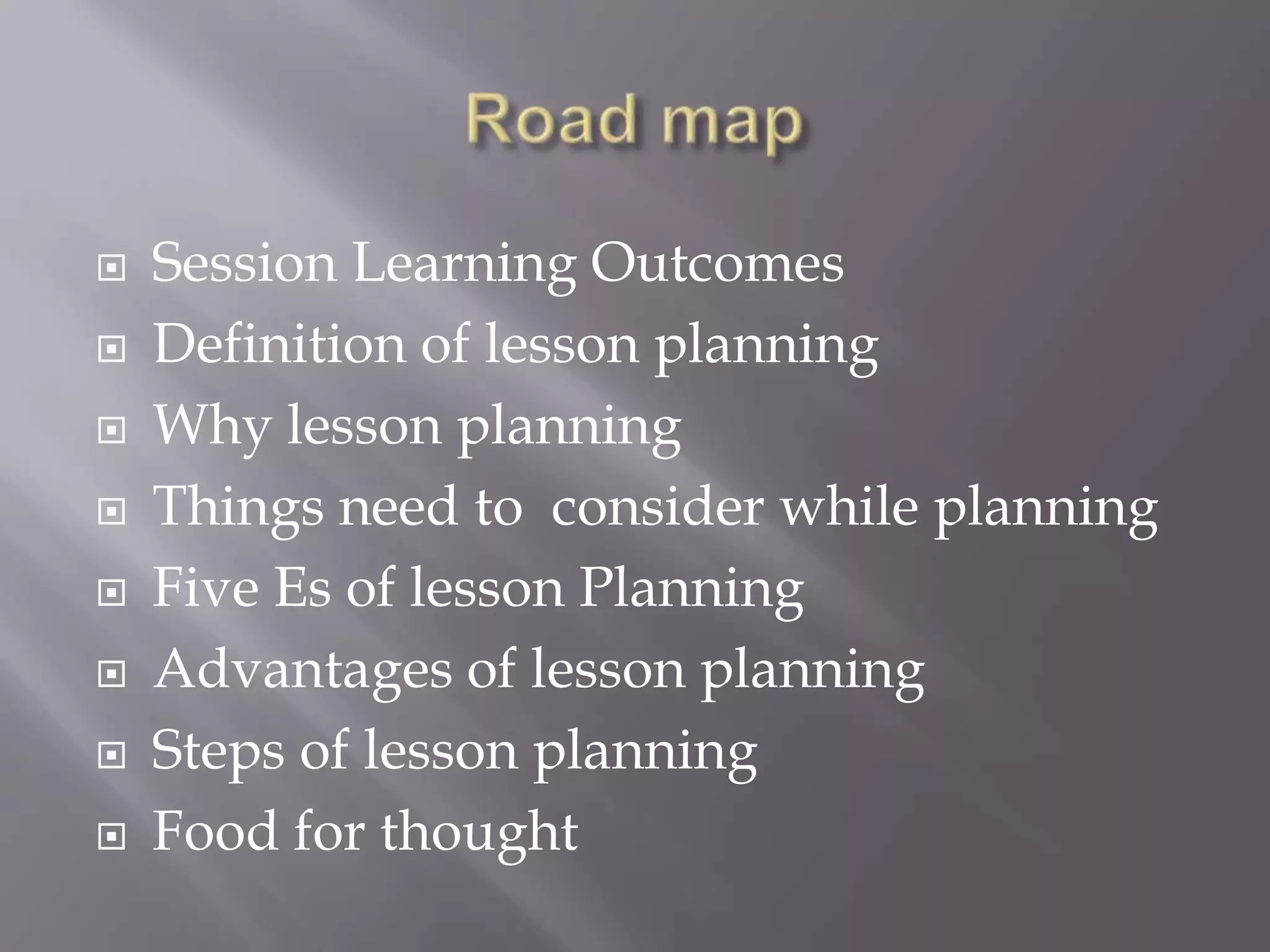
Session covers definition, importance, considerations, steps, and advantages of lesson planning.
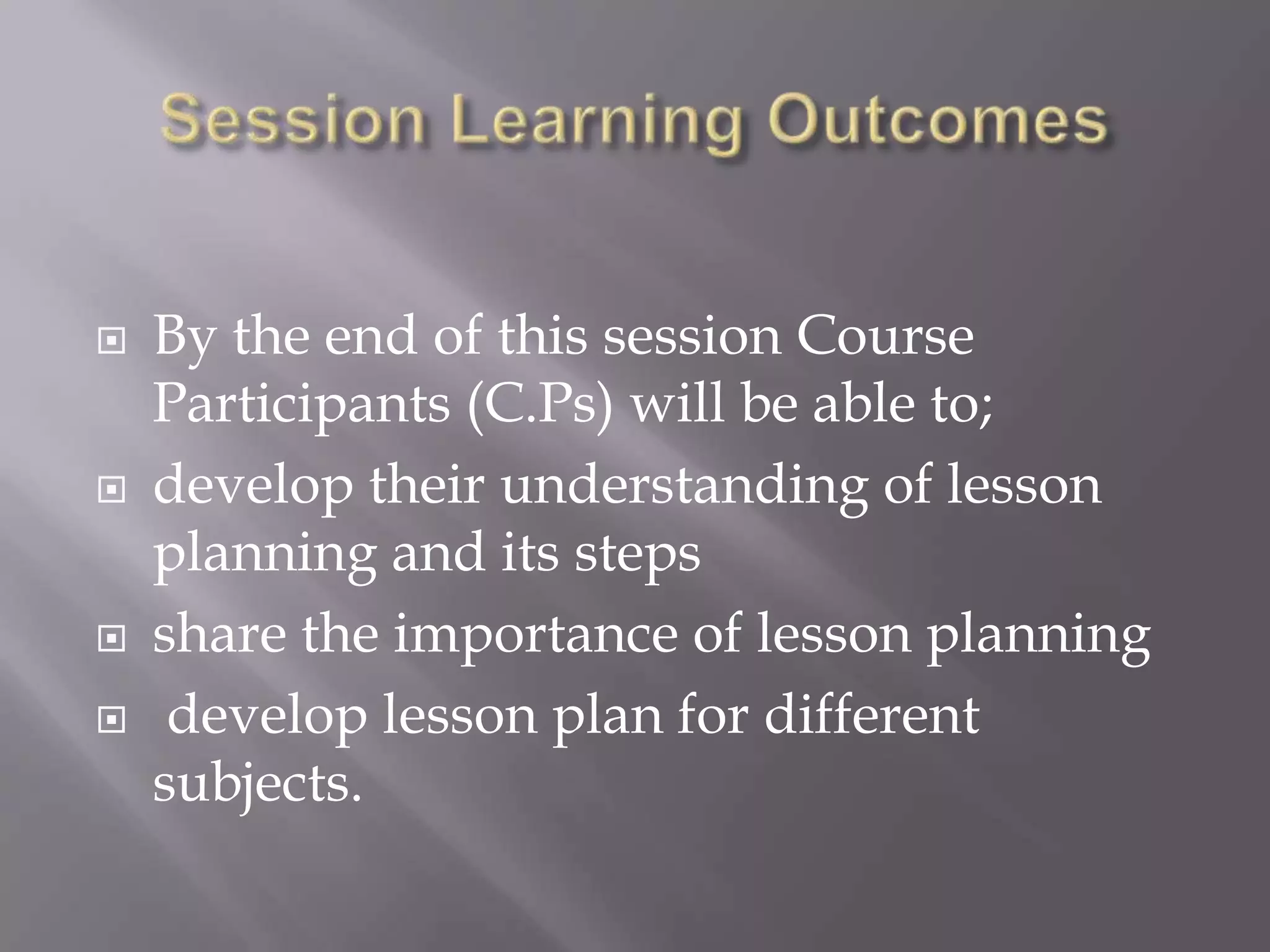
Participants will develop understanding and share importance, plus create lesson plans for various subjects.
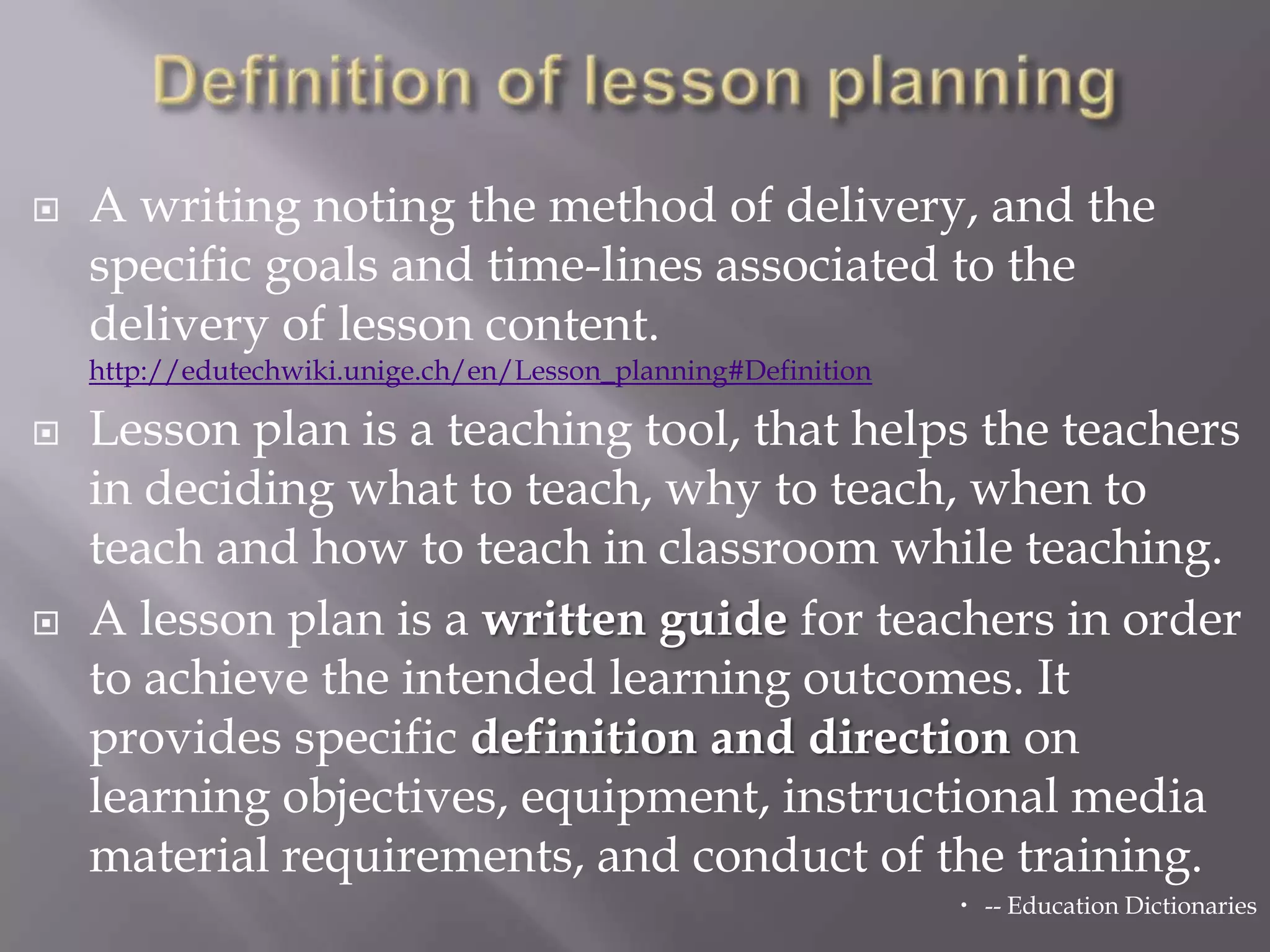
Lesson planning as a teaching tool guiding objectives, content, and instructional methods.
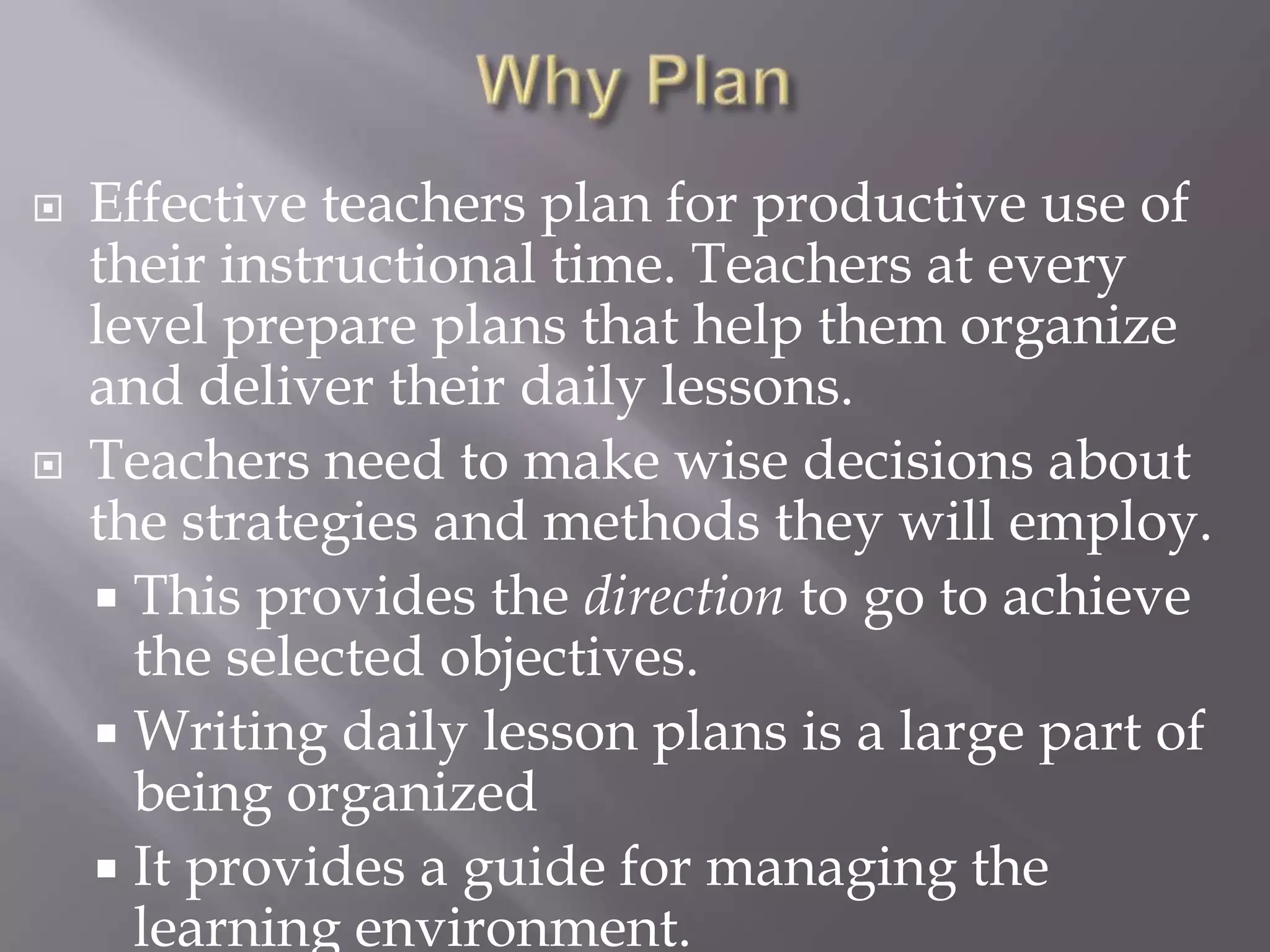
Effective teacher planning for instructional time, decision-making on strategies, and organizing lessons.
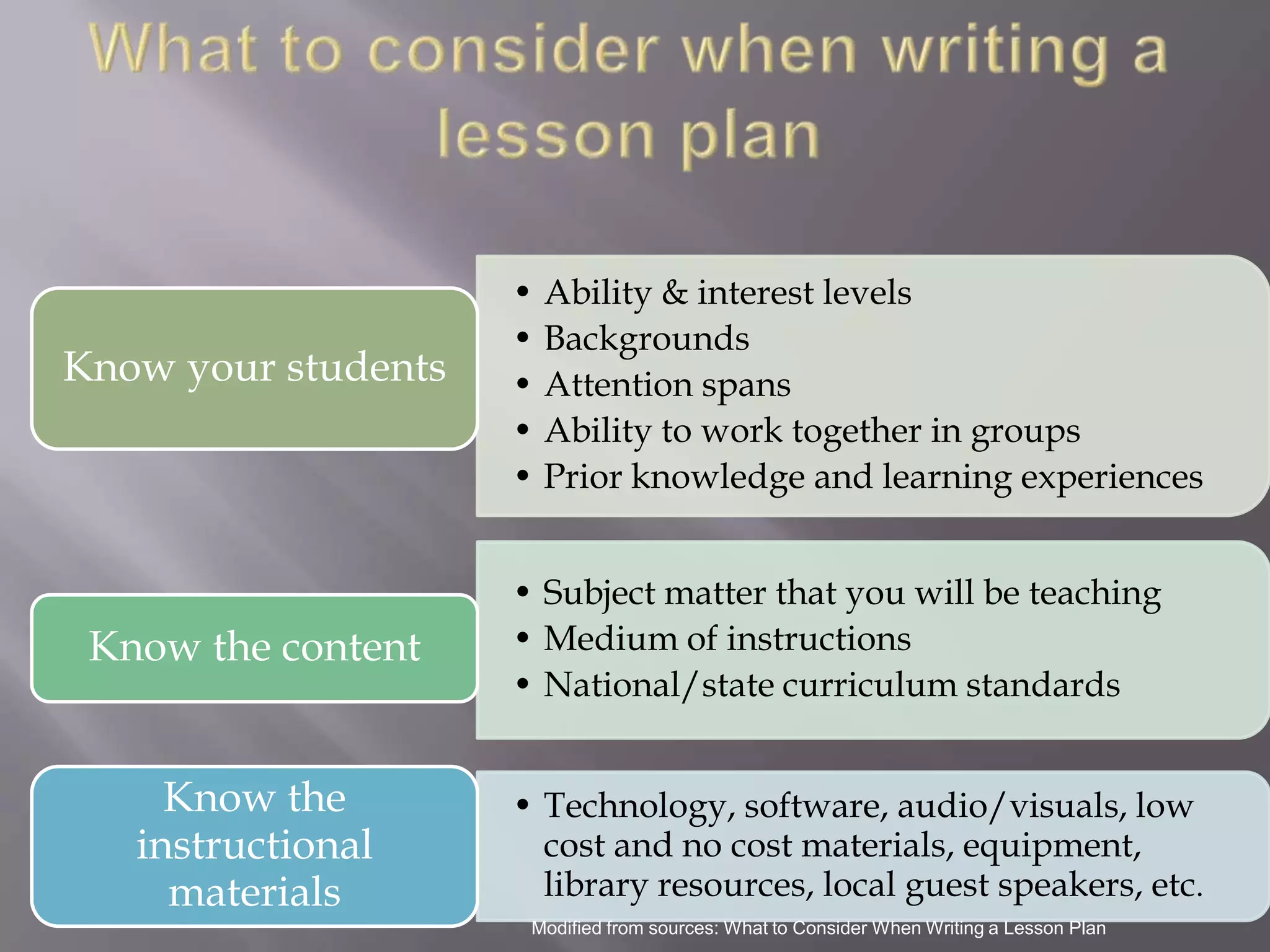
Emphasizes knowing student backgrounds, content to teach, and instructional materials.
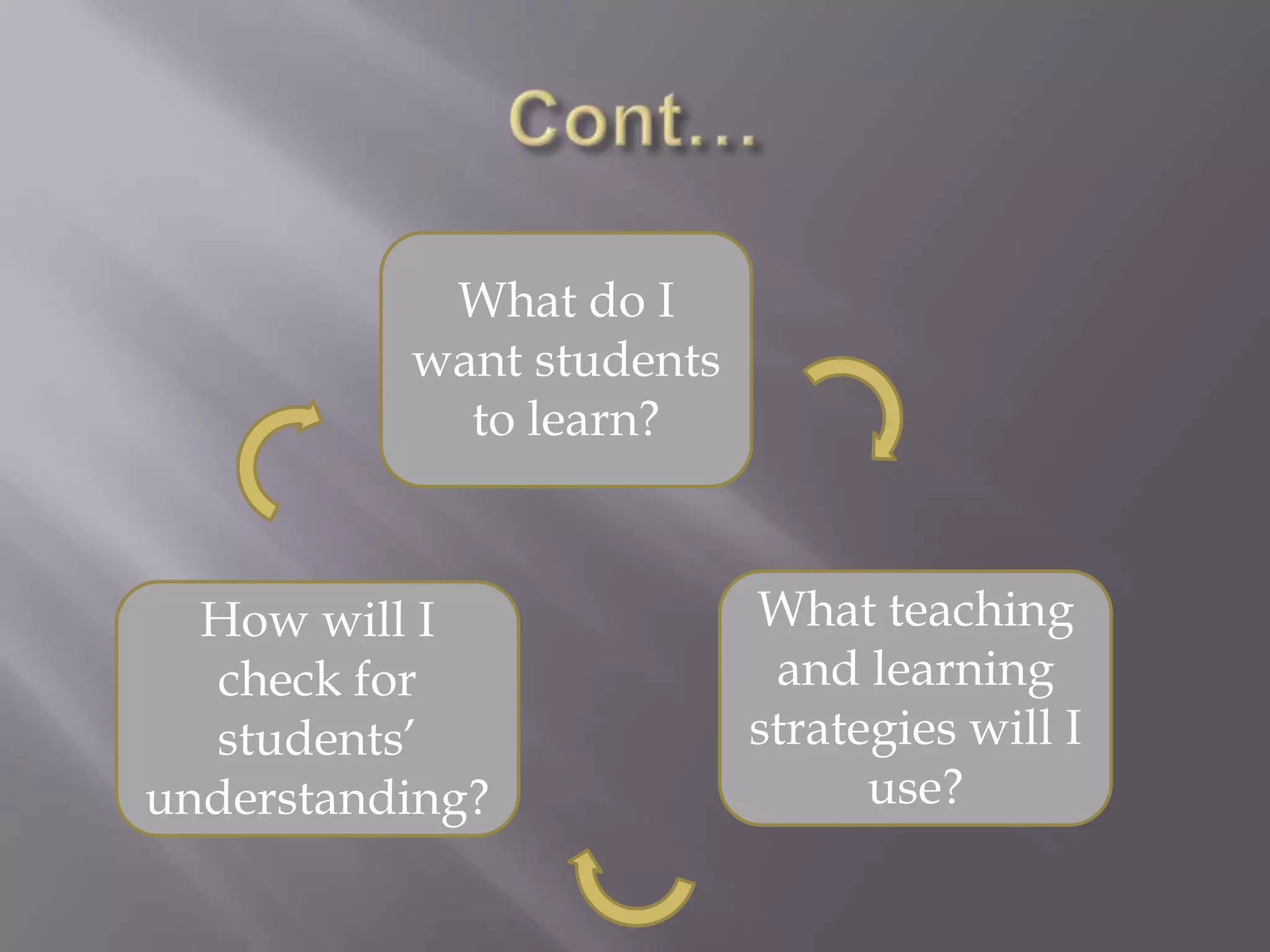
Focus on learning objectives and strategies to assess student understanding.
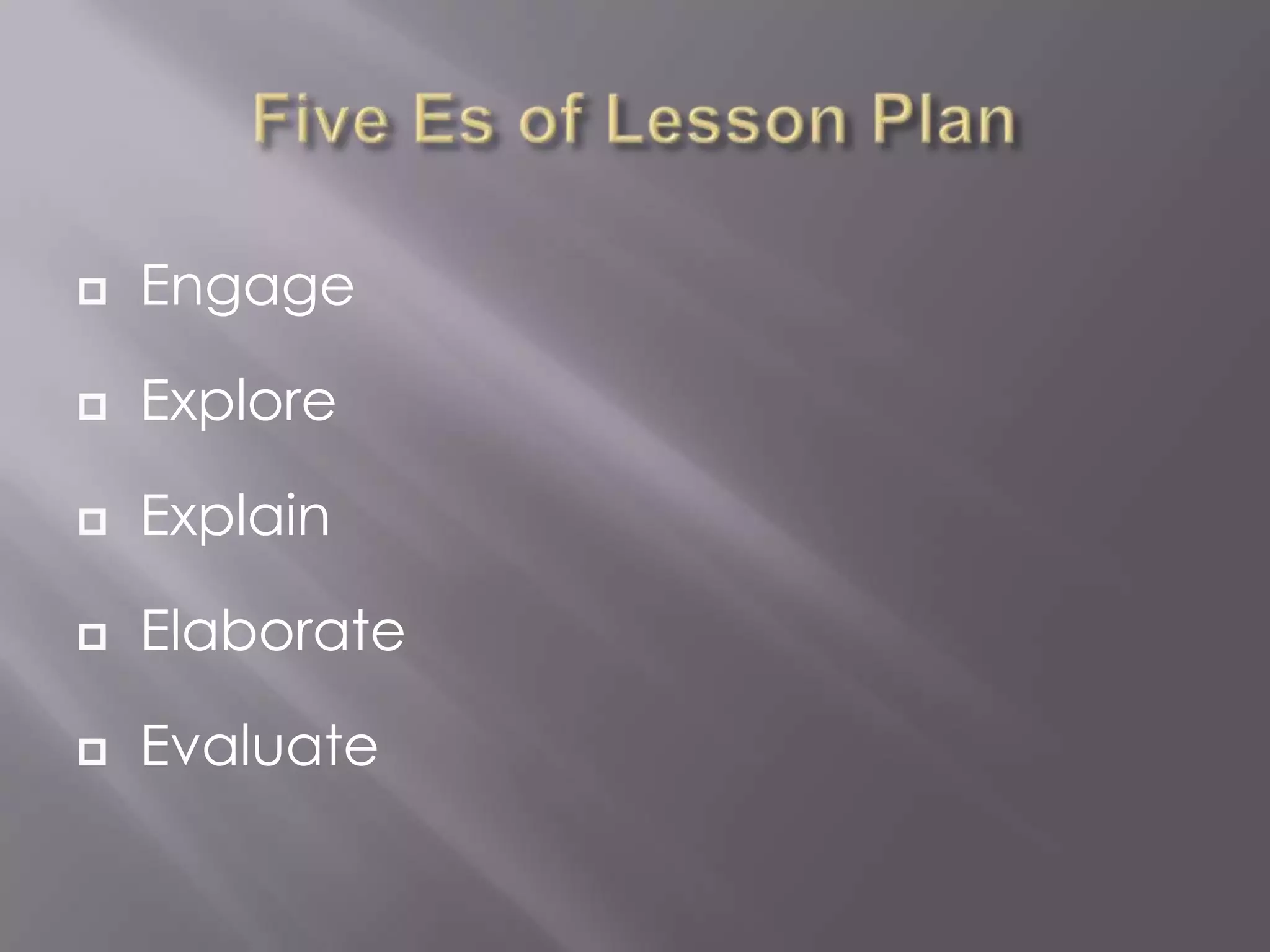
Engage, Explore, Explain, Elaborate, Evaluate as the framework for effective lesson planning.
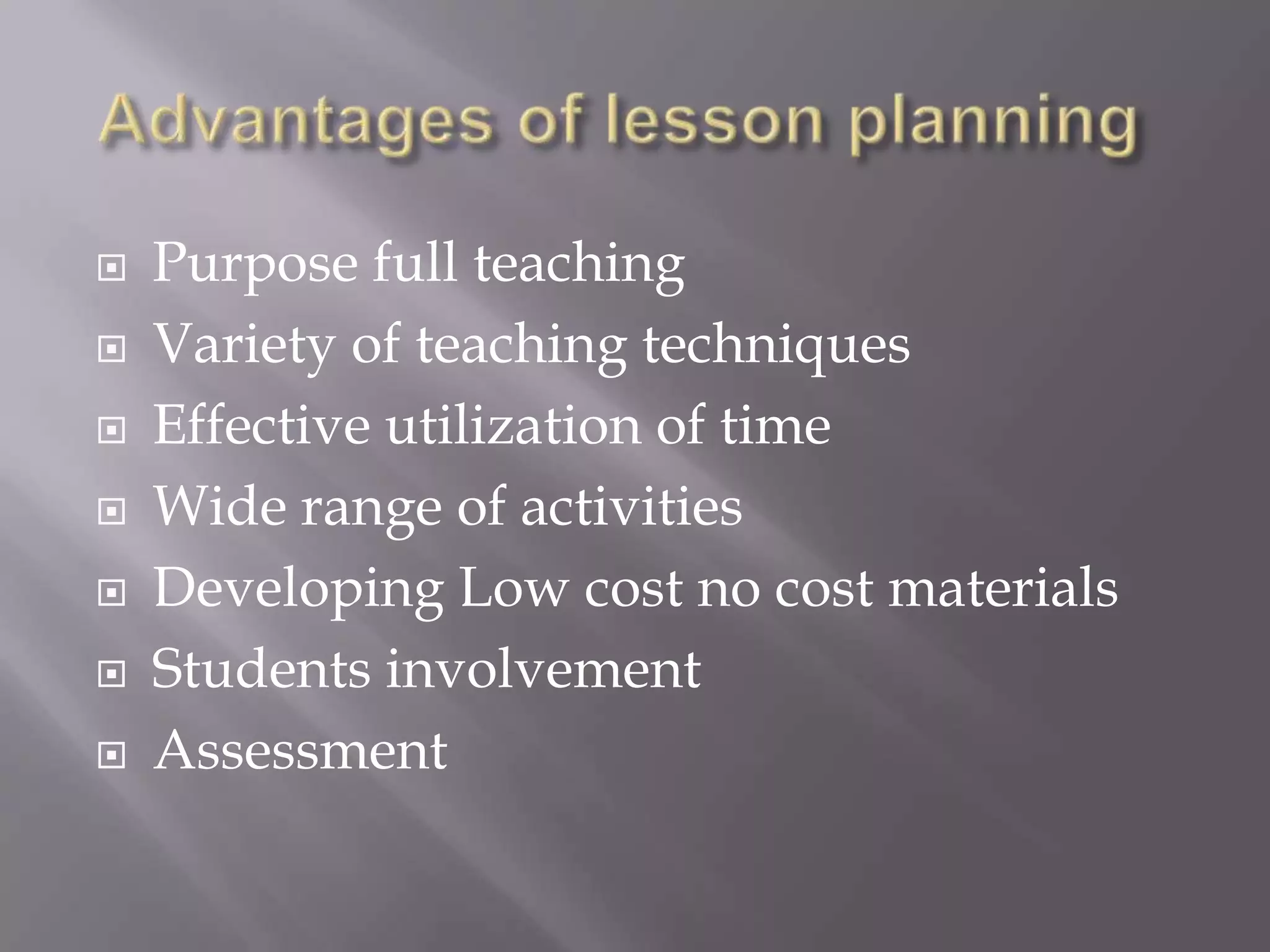
Purposeful teaching, varied techniques, effective time use, and student involvement.
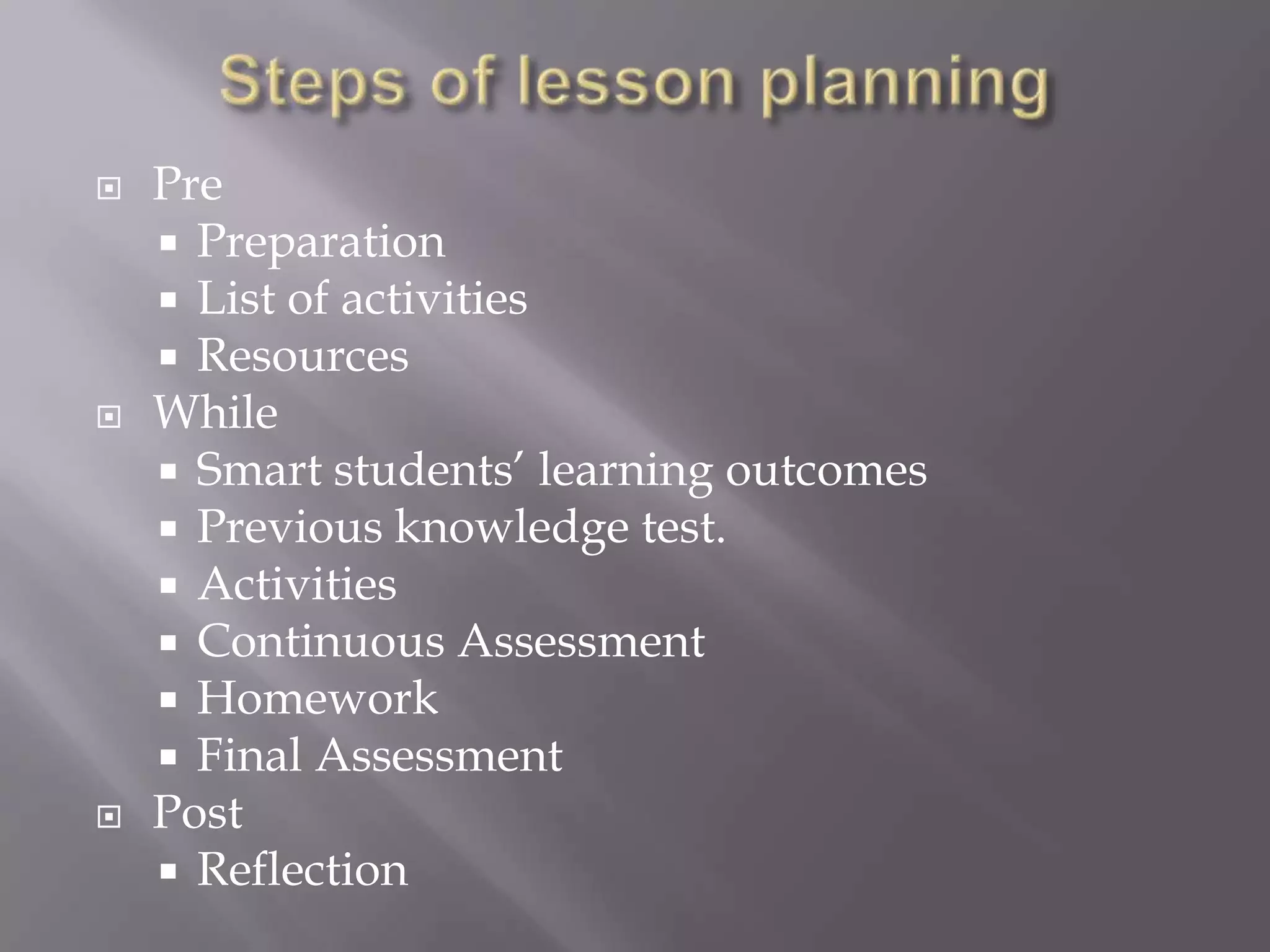
Detailed steps before, during, and after lesson delivery including assessment and reflection.
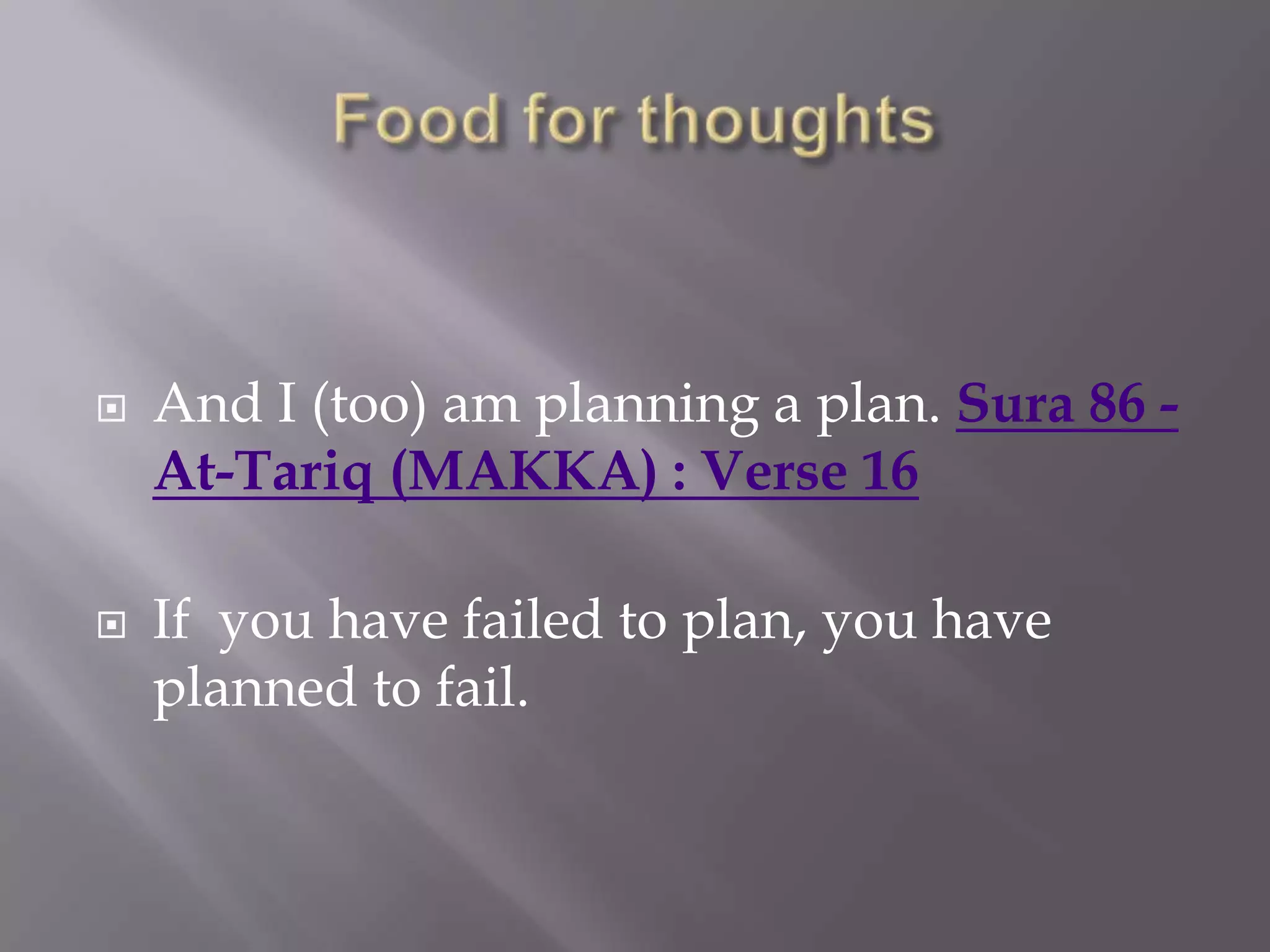
Scriptural reference on planning and motivational quote emphasizing planning's vital role.


