

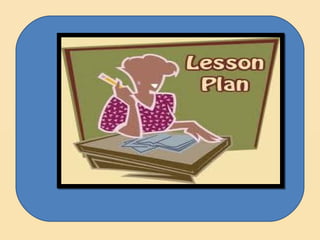


Lesson
 Plan
Lesson Plan is…


   One of the most important
    aspects of instructional
 planning considered as a blue
 print of what the teacher and
 students intend to accomplish
   after a teaching- learning
            episode.
Written outline of instructional
 objectives, activities, methods
  and strategies on how stated
objectives will be achieved with
     the help of appropriate
  instructional materials to be
              used.
Why Lesson
  Plan is
Important?
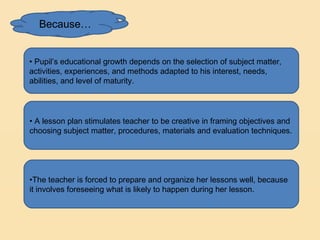
Because…


• Pupil’s educational growth depends on the selection of subject matter,
activities, experiences, and methods adapted to his interest, needs,
abilities, and level of maturity.


• A lesson plan stimulates teacher to be creative in framing objectives and
choosing subject matter, procedures, materials and evaluation techniques.


•The teacher is forced to prepare and organize her lessons well, because
it involves foreseeing what is likely to happen during her lesson.
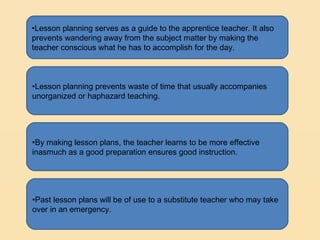
•Lesson planning serves as a guide to the apprentice teacher. It also
prevents wandering away from the subject matter by making the
teacher conscious what he has to accomplish for the day.


•Lesson planning prevents waste of time that usually accompanies
unorganized or haphazard teaching.


•By making lesson plans, the teacher learns to be more effective
inasmuch as a good preparation ensures good instruction.


•Past lesson plans will be of use to a substitute teacher who may take
over in an emergency.
Prerequisit
e to Lesson
 Planning
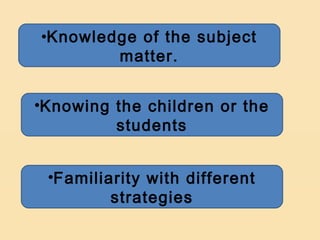
•Knowledge of the subject
        matter.


•Knowing the children or the
         students


 •Familiarity with different
         strategies
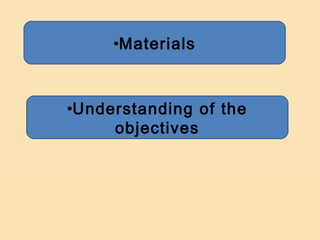
•Materials


•Understanding of the
     objectives
Parts of
Lesson
 Plan
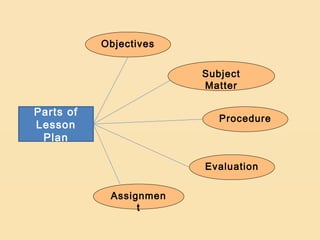
Objectives


                        Subject
                        Matter

Parts of
                           Procedure
Lesson
 Plan

                        Evaluation


            Assignmen
                 t
Objective
    s


    Provides goals to be
  attained, gives direction
  to the class discussion,
      and call for what
    outcomes to expect.
Subject Matter


 A topic itself, or what the
teacher wants to discuss.
Procedure

   Description of what you will do in
     teaching the lesson, and, as
appropriate, includes a description of
 how you will introduce the lesson to
       the students, what actual
instructional techniques you will use,
and how you will bring closure to the
 lesson. Include what specific things
  students will actually do during the
                 lesson.
Evaluation


Describe how you will determine
  the extent to which students
 have attained the instructional
 objective. Be sure this part is
    directly connected to the
    behavior called for in the
     instructional objective.
Assignment


        Indicate how other
activities/materials will be used
   to reinforce and extend this
   lesson. It may be in form of
   homework about the recent
 lesson or an advance study of
         the next lesson.
                  
Types of
 Lesson
  Plans
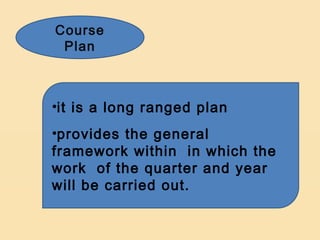
Course
 Plan


•it is a long ranged plan
•provides the general
framework within in which the
work of the quarter and year
will be carried out.
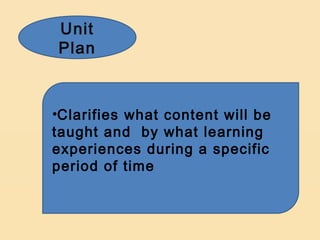
Unit
Plan


•Clarifies what content will be
taught and by what learning
experiences during a specific
period of time
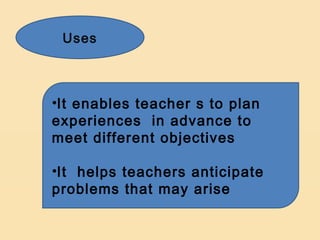
Uses


•It enables teacher s to plan
experiences in advance to
meet different objectives

•It helps teachers anticipate
problems that may arise
The Daily Lesson
Plan


   • refers to each day plan which has to do
    with the specific part of the unit to be
   dealt with during a given class period.


   •Covers a small part of a larger
   experiences extending over days.  
Types of
  Daily
 Lesson
  Plan
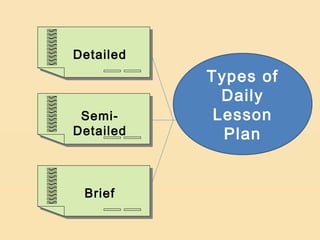
Detailed
Detailed
           Types of
             Daily
 Semi-
 Semi-      Lesson
Detailed
Detailed     Plan


 Brief
 Brief
Detailed

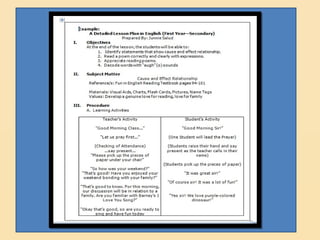
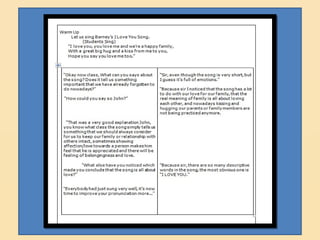
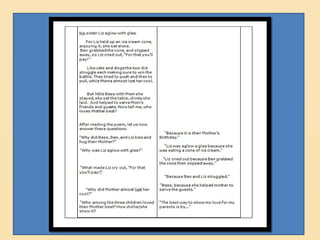
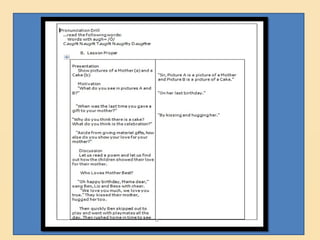
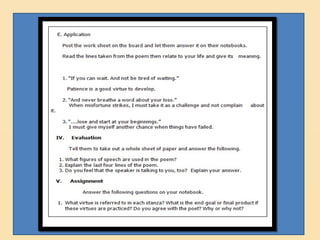
   •The detailed lesson plan is anticipatory
      teaching. It puts down in writing all
  classroom activities that may occur. The
  teacher writes down all the questions she
  is going to ask under the column Teacher
   Activity, and the expected answers from
 the pupils under the column Pupil Activity.
    The teacher tries to visualize how the
children will react, what difficulties they are
  likely to encounter, and how they may be
       guided to achieve desired results.
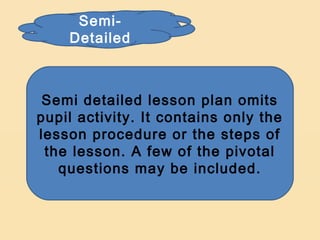
Semi-
    Detailed


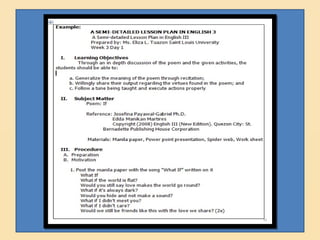
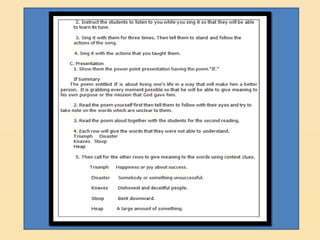
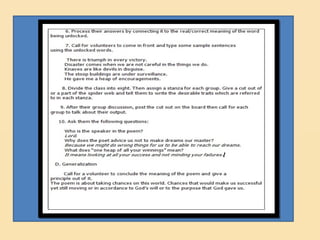
 Semi detailed lesson plan omits
pupil activity. It contains only the
lesson procedure or the steps of
 the lesson. A few of the pivotal
   questions may be included.
Brief


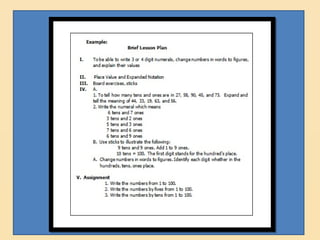
It is even shorter than the semi
  detailed. Teachers who have
   taught the same subject for
years usually make brief plans.
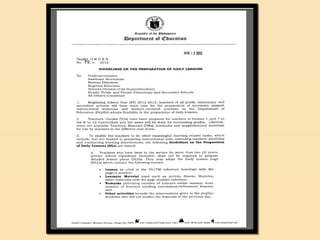
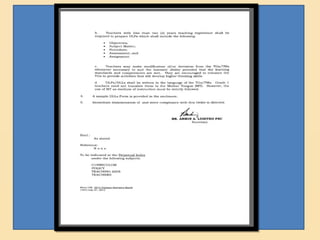
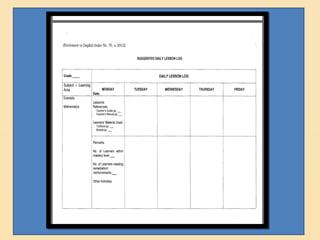
DepEd ORDER
No. 70, s. 2012

     Guidelines on the
preparation of daily lessons
  Dated: August 13, 2012
References:

•Principles and strategies of Teaching
      By: Dr. Helen F. Delos Santos
           Dr. Lydia L. Hilbero

•Curriculum Development
      By: Dr. Helen F. Delos Santos
           Ma. Corazon B. Sigua

•www.deped. gov.ph
Presented By:
 Ortega, Shane Pearlh L.
  Rotulo, Mary Rose L.


        Researchers:
Castillo, Marianne Portia P.
     Edillo, Jocelyn M.
  Vega, Ma. Jeralyn M.
THANK YOU

Shane Pearlh

  • 2.
  • 3.
    Lesson Plan is… One of the most important aspects of instructional planning considered as a blue print of what the teacher and students intend to accomplish after a teaching- learning episode.
  • 4.
    Written outline ofinstructional objectives, activities, methods and strategies on how stated objectives will be achieved with the help of appropriate instructional materials to be used.
  • 5.
    Why Lesson Plan is Important?
  • 6.
    Because… • Pupil’s educationalgrowth depends on the selection of subject matter, activities, experiences, and methods adapted to his interest, needs, abilities, and level of maturity. • A lesson plan stimulates teacher to be creative in framing objectives and choosing subject matter, procedures, materials and evaluation techniques. •The teacher is forced to prepare and organize her lessons well, because it involves foreseeing what is likely to happen during her lesson.
  • 7.
    •Lesson planning servesas a guide to the apprentice teacher. It also prevents wandering away from the subject matter by making the teacher conscious what he has to accomplish for the day. •Lesson planning prevents waste of time that usually accompanies unorganized or haphazard teaching. •By making lesson plans, the teacher learns to be more effective inasmuch as a good preparation ensures good instruction. •Past lesson plans will be of use to a substitute teacher who may take over in an emergency.
  • 8.
  • 9.
    •Knowledge of thesubject matter. •Knowing the children or the students •Familiarity with different strategies
  • 10.
  • 11.
  • 12.
    Objectives Subject Matter Parts of Procedure Lesson Plan Evaluation Assignmen t
  • 13.
    Objective s Provides goals to be attained, gives direction to the class discussion, and call for what outcomes to expect.
  • 14.
    Subject Matter Atopic itself, or what the teacher wants to discuss.
  • 15.
    Procedure Description of what you will do in teaching the lesson, and, as appropriate, includes a description of how you will introduce the lesson to the students, what actual instructional techniques you will use, and how you will bring closure to the lesson. Include what specific things students will actually do during the lesson.
  • 16.
    Evaluation Describe how youwill determine the extent to which students have attained the instructional objective. Be sure this part is directly connected to the behavior called for in the instructional objective.
  • 17.
    Assignment Indicate how other activities/materials will be used to reinforce and extend this lesson. It may be in form of homework about the recent lesson or an advance study of the next lesson.  
  • 19.
  • 20.
    Course Plan •it isa long ranged plan •provides the general framework within in which the work of the quarter and year will be carried out.
  • 21.
    Unit Plan •Clarifies what contentwill be taught and by what learning experiences during a specific period of time
  • 22.
    Uses •It enables teachers to plan experiences in advance to meet different objectives •It helps teachers anticipate problems that may arise
  • 23.
    The Daily Lesson Plan • refers to each day plan which has to do with the specific part of the unit to be dealt with during a given class period. •Covers a small part of a larger experiences extending over days.  
  • 24.
    Types of Daily Lesson Plan
  • 25.
    Detailed Detailed Types of Daily Semi- Semi- Lesson Detailed Detailed Plan Brief Brief
  • 26.
    Detailed •The detailed lesson plan is anticipatory teaching. It puts down in writing all classroom activities that may occur. The teacher writes down all the questions she is going to ask under the column Teacher Activity, and the expected answers from the pupils under the column Pupil Activity. The teacher tries to visualize how the children will react, what difficulties they are likely to encounter, and how they may be guided to achieve desired results.
  • 35.
    Semi- Detailed Semi detailed lesson plan omits pupil activity. It contains only the lesson procedure or the steps of the lesson. A few of the pivotal questions may be included.
  • 40.
    Brief It is evenshorter than the semi detailed. Teachers who have taught the same subject for years usually make brief plans.
  • 43.
    DepEd ORDER No. 70,s. 2012 Guidelines on the preparation of daily lessons Dated: August 13, 2012
  • 47.
    References: •Principles and strategiesof Teaching By: Dr. Helen F. Delos Santos Dr. Lydia L. Hilbero •Curriculum Development By: Dr. Helen F. Delos Santos Ma. Corazon B. Sigua •www.deped. gov.ph
  • 48.
    Presented By: Ortega,Shane Pearlh L. Rotulo, Mary Rose L. Researchers: Castillo, Marianne Portia P. Edillo, Jocelyn M. Vega, Ma. Jeralyn M.
  • 49.