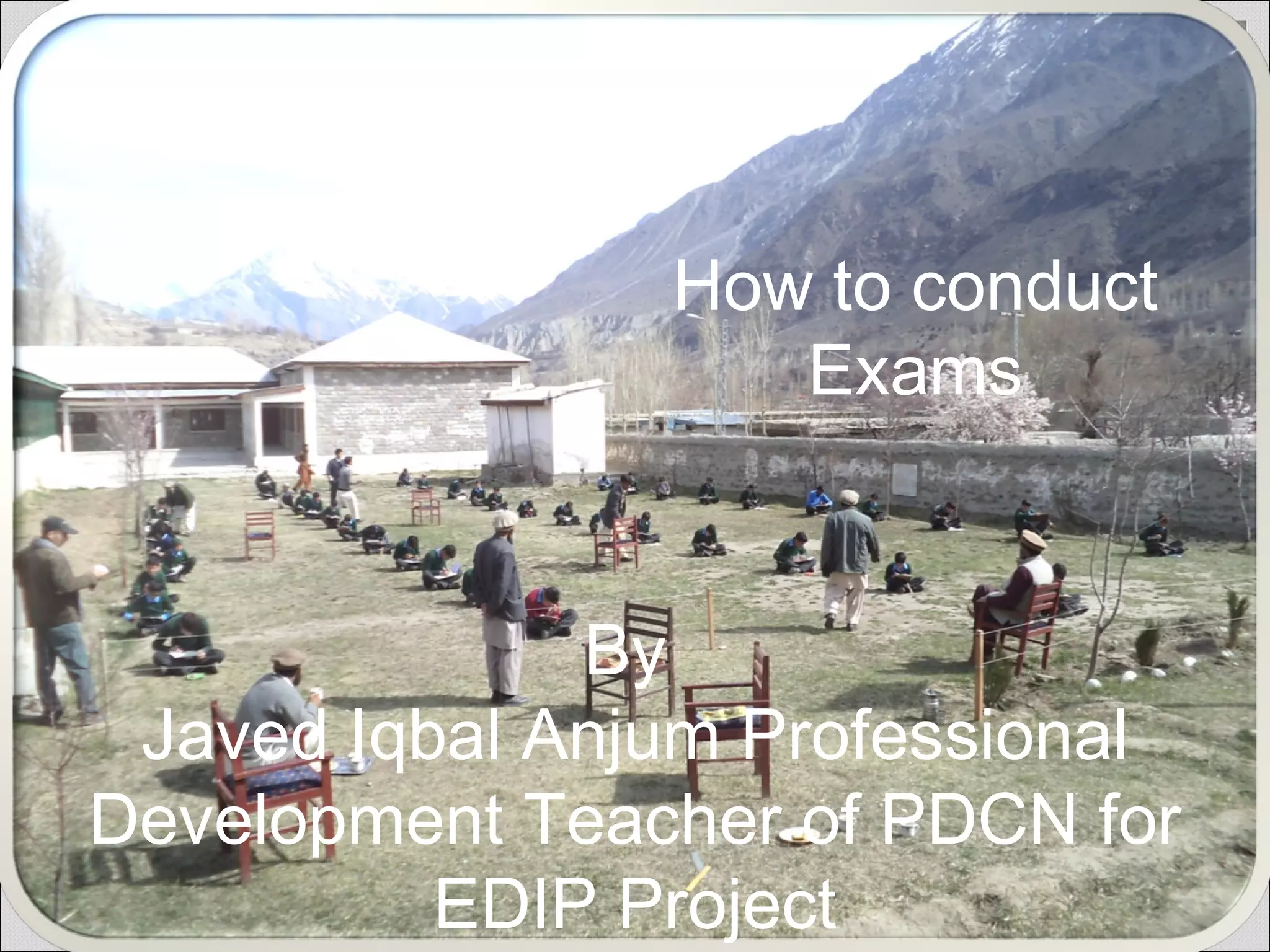
How to conduct
Exams

By
Javed Iqbal Anjum Professional
Development Teacher of PDCN for
EDIP Project


Session learning outcomes



Why Exams?



Pre Exams



While Exams



Post Exams



Food for thought


By the end of this session C.Ps could be able to;
• Share their practices regarding conducting

exams.
• Develop their understanding regarding

conducting exam,
• To be able to conduct exams effectively
‫۔ پرچہ ۵ گھنٹے اور ۰۵ نمبر کا کیا جاے۔۱‬
‫۔ ۲۔ ہر ۰۳ منٹ کے بعد مشورے کے لیے وقت دیا جاے‬
‫۔ ایک فری ہٹ دی جاے تاکہ اپنی مرضی کا سوال حل کیا جاے۳‬
‫۔ پہلے ۰۳ منٹ کا پاور پلے جس میں تمام نگران حال سے باہر ۴‬
‫چلے جاے‬
‫۔ اگر کسی سوال کا جواب غلط ہو تو ریویو کا اپشن دیا جاے۵‬
Share your bitter experiences
while appearing in and
Conducting exams.


It determines the progress of students during an
academic year



It helps in shifting from one class to another class.



It also examines the performance of teachers.



Exams play the role of motivating factors students
for further studies.



Students are awarded with degree upon the
successful completion of exams


Group No 1. Things need to do before exam



Group No 2. Things need to do after exam



Group No 3. Things need to do after exam.



Group No. 4 Code of conduct for exam


Establish an Examination committee two weeks
earlier than exams



Let the committee to develop Terms of Reference
(TOR) for themselves.



Give them the autonomy.
Ensure that all arrangements for the Examinations
are made.



Develop sitting plan on daily basis.




Adjust the sitting plan according to climatic conditions.



Develop a code of conduct for exam.



Exam schedule should be pasted on notice board.



Ensures that all students are duly registered.



Check the questions papers of each subject.


Invigilators are required to be present at the place of
Examination 30 minutes before the session starts.



The identity of students should be scrutinized with
extra care.



Answer scripts envelop need to opened before
students



Give the instructions to students on very first day.


Distribute rows and rooms amongst invigilators.



Invigilators should not be allowed to talk loudly.



Ensures total compliance with the prescribed code of
conduct by Examiners, Invigilators and Candidates



Candidates under temporary permission to leave the
examination room must be closely monitored


Candidates shall occupy their own seats.



Any material which help the students in copying
should not be allowed.



An invigilator has the authority to confiscate such
items.



Invigilators must review students roll No while signing
the answer scripts.


Maximum care must be given to ensure
confidentiality.



Invigilators are not allowed to punish students in
case of using unfair means.



All Examination Scripts shall be counted, enveloped
and signed at the end of each session.


It must be ensured that all the students have submitted
the answer scripts prior to leaving the exam hall.



The numbers of answer scripts should be compare with
the attendance list.



The envelope of solved answer scripts should be
signed by Examiner and Assistant.



De briefing session daily basis.
Nathaniel N-A Okine PhD Chairman, Examinations Audit Committee
Any ??????

How to conduct exam

  • 1.
    How to conduct Exams By JavedIqbal Anjum Professional Development Teacher of PDCN for EDIP Project
  • 2.
     Session learning outcomes  WhyExams?  Pre Exams  While Exams  Post Exams  Food for thought
  • 3.
     By the endof this session C.Ps could be able to; • Share their practices regarding conducting exams. • Develop their understanding regarding conducting exam, • To be able to conduct exams effectively
  • 4.
    ‫۔ پرچہ ۵گھنٹے اور ۰۵ نمبر کا کیا جاے۔۱‬ ‫۔ ۲۔ ہر ۰۳ منٹ کے بعد مشورے کے لیے وقت دیا جاے‬ ‫۔ ایک فری ہٹ دی جاے تاکہ اپنی مرضی کا سوال حل کیا جاے۳‬ ‫۔ پہلے ۰۳ منٹ کا پاور پلے جس میں تمام نگران حال سے باہر ۴‬ ‫چلے جاے‬ ‫۔ اگر کسی سوال کا جواب غلط ہو تو ریویو کا اپشن دیا جاے۵‬
  • 5.
    Share your bitterexperiences while appearing in and Conducting exams.
  • 6.
     It determines theprogress of students during an academic year  It helps in shifting from one class to another class.  It also examines the performance of teachers.  Exams play the role of motivating factors students for further studies.  Students are awarded with degree upon the successful completion of exams
  • 7.
     Group No 1.Things need to do before exam  Group No 2. Things need to do after exam  Group No 3. Things need to do after exam.  Group No. 4 Code of conduct for exam
  • 8.
     Establish an Examinationcommittee two weeks earlier than exams  Let the committee to develop Terms of Reference (TOR) for themselves.  Give them the autonomy. Ensure that all arrangements for the Examinations are made.  Develop sitting plan on daily basis. 
  • 9.
     Adjust the sittingplan according to climatic conditions.  Develop a code of conduct for exam.  Exam schedule should be pasted on notice board.  Ensures that all students are duly registered.  Check the questions papers of each subject.
  • 10.
     Invigilators are requiredto be present at the place of Examination 30 minutes before the session starts.  The identity of students should be scrutinized with extra care.  Answer scripts envelop need to opened before students  Give the instructions to students on very first day.
  • 11.
     Distribute rows androoms amongst invigilators.  Invigilators should not be allowed to talk loudly.  Ensures total compliance with the prescribed code of conduct by Examiners, Invigilators and Candidates  Candidates under temporary permission to leave the examination room must be closely monitored
  • 12.
     Candidates shall occupytheir own seats.  Any material which help the students in copying should not be allowed.  An invigilator has the authority to confiscate such items.  Invigilators must review students roll No while signing the answer scripts.
  • 13.
     Maximum care mustbe given to ensure confidentiality.  Invigilators are not allowed to punish students in case of using unfair means.  All Examination Scripts shall be counted, enveloped and signed at the end of each session.
  • 14.
     It must beensured that all the students have submitted the answer scripts prior to leaving the exam hall.  The numbers of answer scripts should be compare with the attendance list.  The envelope of solved answer scripts should be signed by Examiner and Assistant.  De briefing session daily basis.
  • 16.
    Nathaniel N-A OkinePhD Chairman, Examinations Audit Committee
  • 17.