Downloaded 20 times

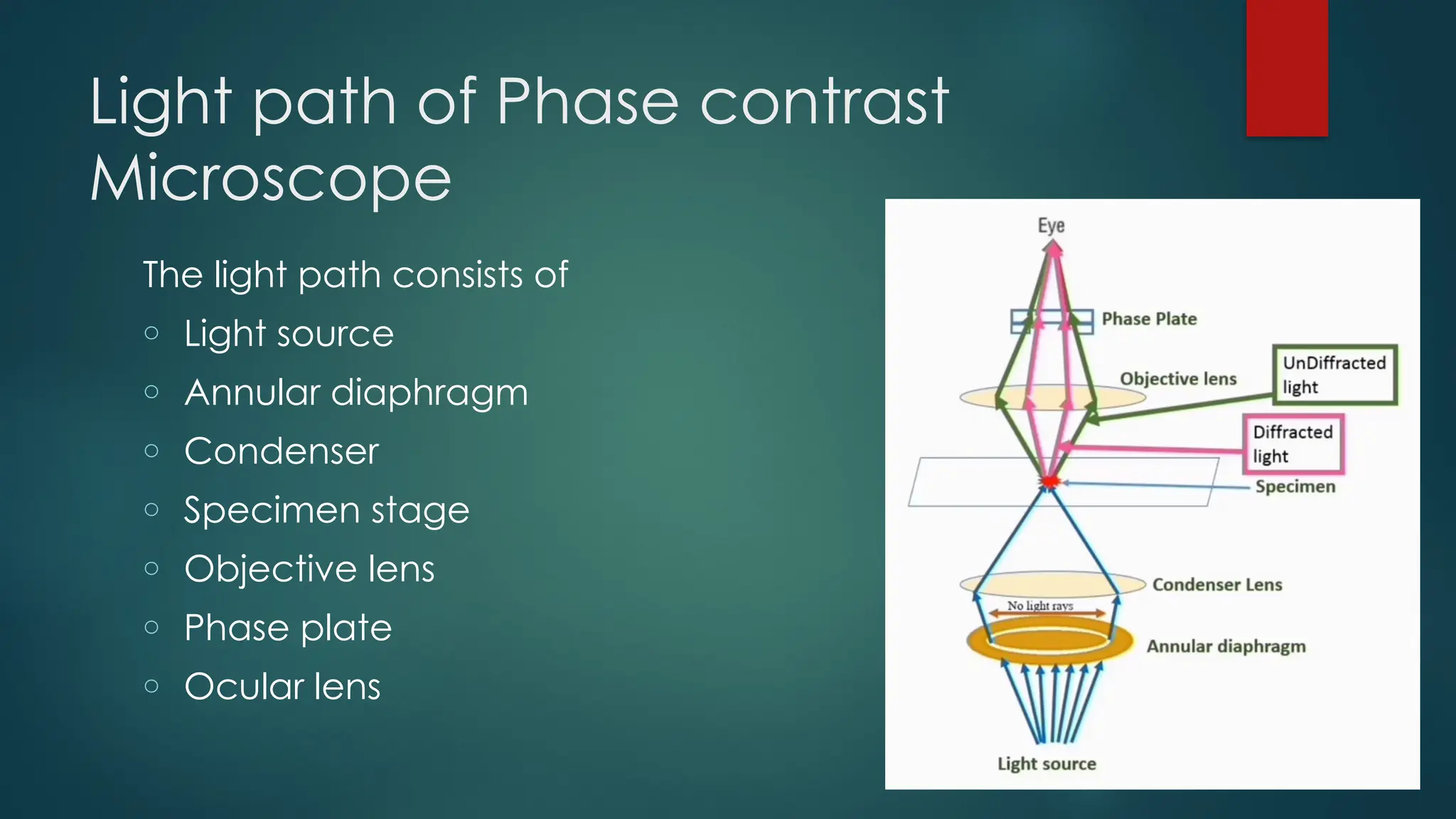


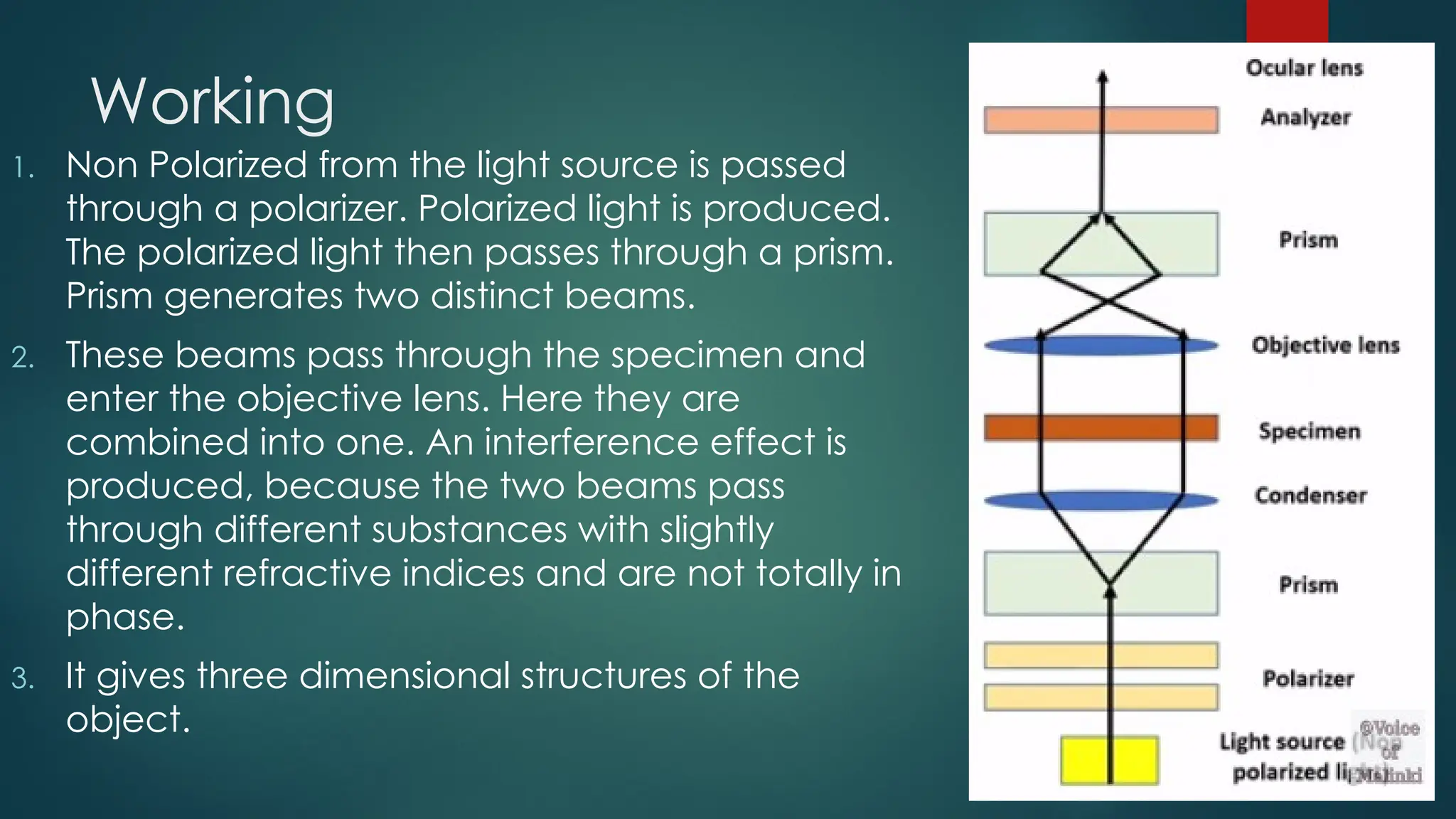

Phase contrast microscopy is a technique that combines light rays of different phases to visualize cell components based on their refractive indices, allowing for the observation of live, unstained cells. It produces high-contrast images of transparent specimens and is used for studying dynamic cellular processes. Differential interference contrast microscopy (DIC) enhances this by using polarized light and two beams to generate high-contrast, three-dimensional images but is limited by higher costs and the requirement for transparent specimens.


